More than 50 Special Forces Attack Ward 12 of Urmia Central Prison

Human Rights Activists News Agency (HRANA) – In the latest of a long string of power abuses at Urmia Central Prison, more than 50 special forces responded to prisoner objections with severe beatings, breaking prisoners’ bones, and sending a number of them to solitary confinement on the night of October 15th.

A close source told HRANA that a large-scale reprisal was set into motion when three prisoners went to the guard’s office to check in on their wardmate Hamid Rahimi, who had been beaten there by four personnel and transferred to solitary confinement after a verbal altercation with staff. Rahimi is from Ward 12, designated for political prisoners.

Once arrived, the wardmates — identified as Kamal Hassan Ramazan, Ahmad Tamooie, and Osman Mostafapour — were met with their own violent beatings. Authorities started in on Tamooie, while additional prisoners, on orders from personnel members “Eskandar” and “Rezaie,” assaulted all three with a sharp object. Prisoner Touraj Esmaili was also beaten in the attack.

Authorities reportedly looked on as the attackers cut Esmaili, broke Ramezan’s nose, and busted the teeth of Tamooie, who has since gone on hunger strike to protest the assault.

When authorities were met with outcry over the assaults, they moved to disperse the victims and their comrades among different wards; when that measure, too, was met with resistance, prison authorities sent for reinforcements.

Prison guards and dozens of special forces stormed Ward 12 armed with batons, tasers, and tear gas, laying into Ramezan, Tamoo’i, Mostafapoor, and two more Ward-12 bystanders, Hassan Rastegari and Kamran Darvishi. The latter two were then transferred to solitary confinement; Rastegari has since been returned to Ward 12. “Hassan Rastegari was badly bruised all over,” the source said, adding that additional prisoners had attacked the men on orders from prison authorities.

Shortly thereafter, authorities established a perimeter around Ward 12. Crowded around the ward’s door were all those in charge of the prison, its investigations and protection unit, and Intelligence Security of West Azerbaijan Province. Inside the ward, dozens of special forces took up watch, while still more stood armed guard roof.

The special forces dispersed a few hours later, with the exception of a few that remained in the main prison hall.

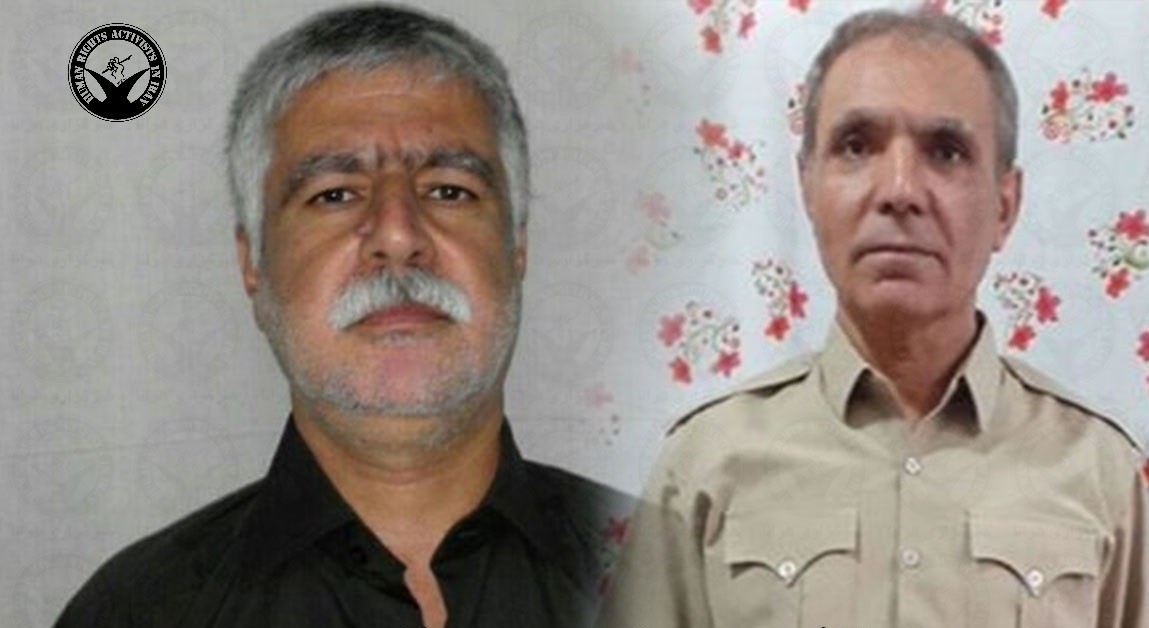
Kamal Hassan Ramezan is on death row for political charges. Ahmad Tamooie is serving a 15-year sentence, and Osman Mostafapour is serving a 35-year sentence. As of the date of this report, the health statuses of the assaulted prisoners have yet to be confirmed.

Iran’s Prison Bureau stipulates that prisoner and prison-cell inspections must be carried out with respect to prisoners’ safety, i.e. to uncover and confiscate contraband items such as weapons and narcotics. Increasingly common, however, are inspections that lead to insults or destruction of prisoner property, and political detainees have proven to be popular targets. HRANA previously reported on the September 18th storming of Ward 12 by special forces, where guards pilfered and destroyed the prisoners’ personal belongings, including food they had purchased themselves.

Compounding harassment and pilfering at Urmia Central Prison is its authorities’ liberal use of corporal punishment. On October 8, 2018, prisoner Morteza Zohrali’s right arm was broken in a beating by prison officials; On September 23rd, Youth Ward inmate Javad “Arash” Shirzad was sent to an outside hospital for treatment of a concussion sustained at the hands of “Bayramzadeh,” the prison’s internal director; in July, Saeed Seyed Abbasi was beaten and sent to solitary confinement without treatment of his injuries, all for arriving late to the prison yard for recreation time; and in May, according to HRANA reports, prisoner Saeed Nouri, a former IRGC lieutenant, was beaten by two personnel in the internal director’s office.

Inside Account of Zanyar Moradi, Loghman Moradi and Ramin Hossein Panahi’s Final Days

Human Rights Activists News Agency (HRANA)- New details on the executions of Kurdish political prisoners Zanyar Moradi, Loghman Moradi, and Ramin Hossein Panahi has been brought forward by a staff member at the Iranian Prisons Organizations who asked to remain anonymous.

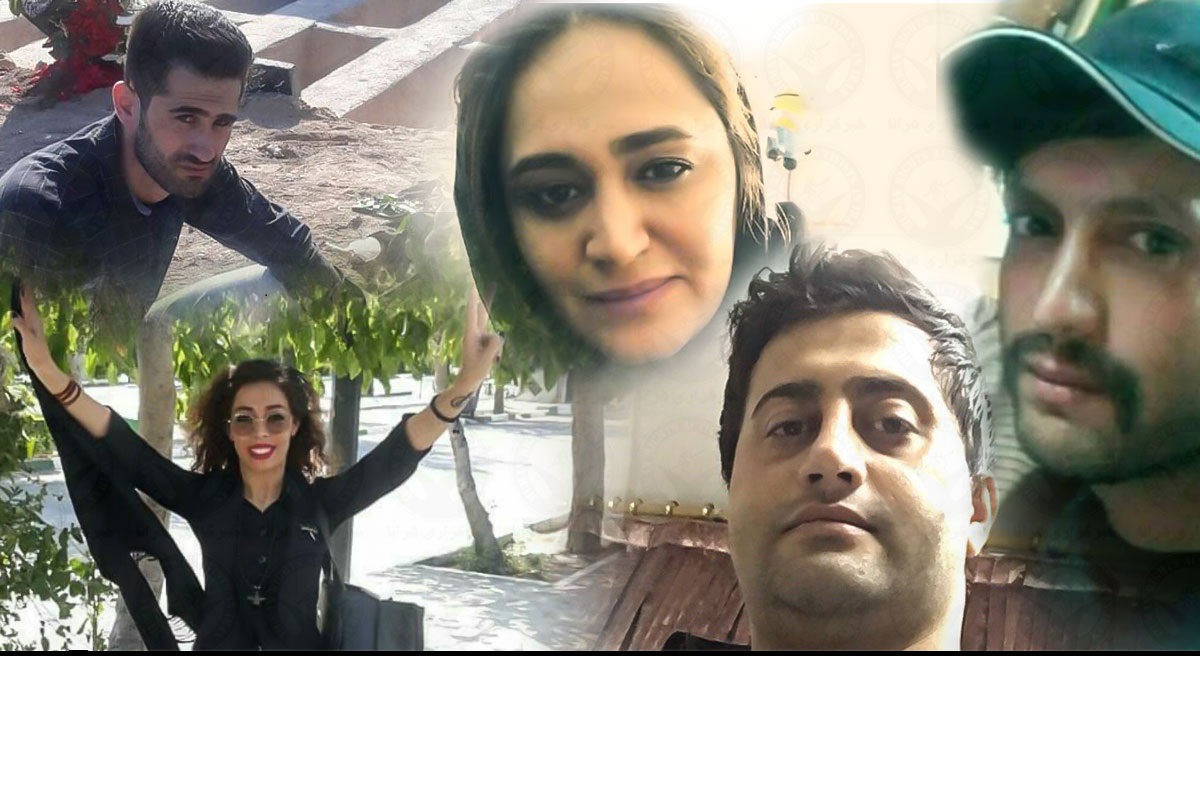
Moradi, Moradi, and Hossein Panahi were hanged September 8th and buried in undisclosed locations without prior notice to their families or attorneys, throwing the international human rights community into an uproar over the Iranian judicial system’s chronic fits of caprice.

According to HRANA’s source, the three young men were battered before their transfer to the gallows; and per the observations of the source’s colleagues, Hossein Panahi, in particular, looked terribly ill.

“Zanyar Moradi and Loghman Moradi caught sight of Ramin Hossein Panahi while they were being transferred in handcuffs and shackles for execution,” the source explained. “When they saw [Hossein Panahi] was only half-conscious and spoke up in his defense, prison staff including Gholamreza Ziaie, Maghsoud Zolfali, and Nader Bagheri lay into them.”

The source explained that Loghman and Zanyar’s loved ones were distressed on September 7th when the men were sent to quarantine, which, while ominous, ran counter to the pre-execution protocol of sending the condemned to solitary confinement.

“The lawyers and families of these two prisoners were not sure whether they were scheduled to be executed,” the source said, adding that they were killed six hours after their family’s final visit at 10 a.m. on the 8th. “Even Rajai Shahr Health Services Administrator Hassan Ghobadi, who was present during their last visit, would not confirm that their execution was imminent.”

According to HRANA’s source, the men’s hangings were atypical even for the Iranian prison system. Their gallows were mounted outside the designated execution quarters, known as “the silo;” it happened not at dawn, per Iranian custom, but at midnight; and the prison’s computer system shows no record of what were to be their very last movements on earth, i.e. their transfers. “We had heard that an execution had been carried out,” the personnel explained, “[but] since security officials took over the execution, even we don’t know exactly where that execution happened.”

Indeed, the details play out like a grim procedural: the Judiciary announced that the executions were carried out in “Tehran,” while a source close to the Moradi families confirmed to HRANA that Zanyar and Loghman’s bodies bore notes reading “executed in Rajai Shahr.” A visible presence on the night of the hangings was a Marivan Friday Prayer Imam notorious for his ties to the Iranian security apparatus, whose son had allegedly been murdered.

“I heard through my colleagues that the prisoners wanted to string the noose around their neck with their own hands,” the personnel said. “There was a scuffle when officials refused this request; Zanyar Moradi even claimed that Hassan Ghobadi had promised him that right.”

Clashing Zahedan Prisoners Beaten, Forcefully Undressed

Human Rights Activist News Agency (HRANA) – On Friday, October 12th, fights that broke out amid the stifling conditions of Zahedan Prison landed 29 prisoners in quarantine. The next day, quarantined prisoners were taken to the prison yard, forcefully undressed, beaten by prison guards, and left outside until morning.

According to one of the prisoner’s relatives, tensions had reached a breaking point in Zahedan’s Youth Ward, also known as Ward 1, which has a capacity of 140 but currently houses 350.

The source added that 17 youth were injured in the scuffle, and authorities cut the phone lines to Ward 1 immediately after the incident.

The overpopulation of Iranian prisons a systemic issue exacerbated by authorities’ laxity in addressing requests for furlough and sentence reductions, even for lawfully eligible prisoners. Meetings intended to review requests for commutation and conditional release are routinely postponed.

Afshin Hossein Panahi Released on Furlough

Human Rights Activists News Agency (HRANA) – Political prisoner Afshin Hossein Panahi was released on furlough from Sanandaj Prison on Saturday, October 13, 2018.

A source closed to Panahi told HRANA that Panahi purchased a few days’ freedom with a 4 billion IRR (approximately $30,000 USD) bail.

On March 26, 2018, HRANA reported on the upholding of his eight-year, six-month sentence in the Kurdistan Province Appeals Court. He was initially sentenced October 2017 by judge Saeedi in the Sanandaj Revolutionary Court on charges of “propaganda against the regime” and “collaboration with a Kurdish opposition group through participation in a Nowruz ceremony.”

Panahi, who has a history of working with local environmental institutions, was arrested in his home on June 26, 2017, following the arrest of one of his brothers, Ramin Hossein Panahi. He was also detained for inquiring into the suspicious death of another one of his brothers, Ashraf Hossein Panahi, in 2011, which earned him a charge of “propaganda against the regime.”

Pursuant to a legally ambiguous process that drew outcry from human rights institutions internationally, Panahi’s brother Ramin was hanged to death alongside Zanyar Moradi and Loghman Moradi at an undisclosed location in Tehran on September 8th, 2018.

Urmia Prisoner Dies by Suicide

Human Rights Activists News Agency (HRANA)- On the night of Wednesday, October 10, 2018, Mohammad Ahoupah, 33, died by suicide in Urmia prison.

Ahoupah was a native of Urmia, northwestern Iran, serving his sixth of a 25-year sentence in Ward 15 of the prison on drug-related offenses. He is survived by his wife and two children.

An informed source related to HRANA the running theory among Ahoupah’s ward mates: that when he took his own life in the showers of Ward 15, he had lost hope of stepping foot outside the prison before his time was up. “Four months ago, he submitted a request to be transferred to Zanjan prison from Urmia, and had requested furlough several times to resolve family problems,” the source said. “His requests were denied every single time.”

Recent months have seen the suicides of several prisoners who, despite family emergencies and lawful eligibility, were repeatedly denied the right to furlough. In Sanandaj, western Iran on August 18th of this year, five prisoners desperate to attend to family problems outside the prison made attempts at their own lives when their furlough requests were denied by the supervising judge. One of the five, 36 -year-old Eghbal Khosravi of Ward 6, did not survive the attempt. In another case just three days earlier in Zahedan, southeastern Iran, a prisoner completed suicide by pill overdose when, racked with exasperation over authorities’ continued neglect of his case, his name was removed from a list of prisoners scheduled for a sit-down with the prison prosecutor.

Subscribe to Our Newsletter

Now is definitely not the time to stop reading!

Forty-four Ahwazi Detainees Identified in Wake of Parade Attack

Human Rights Activists News Agency (HRANA) – Since last month’s attack on an Ahvaz military parade, dozens of Ahwazi Arab citizens of Iran have been rounded up, arrested, and transferred to unknown locations in the Khuzestan province.
Public urgency to find those responsible for the attack — which claimed the lives of several civilians, including women and children — is matched only by mounting concern that Iran’s security establishment, with its history of questionable investigation methods, might be searching too aggressively for a scapegoat.
HRANA has identified 44 of the arrestees detained near Ahvaz in recent weeks: 1. Jamil Heidari, 33, 2. Majed Heidari, 25, 3. Ahmad Hamari, 29, 4. Seyed Jasem Rahmani (Mousavi), 33, 5. Majed Chaldavi, 6. Seyed Hamood Rahmani (Mousavi), 7. Ali Savari, 23, 8. Hatam Savari, 9. Adnan Savari, 10. Hossein Heidari, 11. Ahmad Bavi, 12. Abdolrahman Khosraji, 32, 13. Mahdi Saedi, 27, 14. Javad Badvi, 26, 15. Riaz Zahiri, 16. Zamel Heidari, 17. Mahdi Kooti, 18. Ali Kooti, 19. Sattar Kooti, 20. Ali Mansouri, 21. Mohammad Momen Timas, 55, 22. Ahmad Timas, 28, 26. Osama Timas, 26, 24. Adel Afravi, 25. Mohammad Savari, 26. Mokhtar Masoudi, 27. Abdollah Silavi, 28. Khaled Silavi, 29. Ali Albaji, 30. Maher Masoudi, 31. Javad Hashemi, 32. Yousef Khosraji, 33. Abbas Badvi, 34. Mohsen Badvi, 35. Hassan Ben Ali, 36. Jador Afravi, 37. Milad Afravi, 38. Ali Albaji, 39. Mohammad Masoudi, 40. Alireza Deris, 41. Adel Zahiri, 42. Adel Afravi, 43. Ahmad Heidari, 44. Fahad Neisi
The attack in question was a violent interruption to a military parade in Ahvaz on September 22nd, commemorating the Iran-Iraq war. Mid-ceremony, gunmen suddenly opened fire on soldiers and spectators alike.
Mojtaba Zolnour, member of the Iranian parliamentary committee for national security and foreign affairs, announced 29 deaths and 57 wounded. Several civilians, including a 4-year-old child, figured on the list of victims released by state-run news agencies.
It has yet to be determined which group is responsible for the attack, and on Iranian airwaves, theories abound. Not long after the attack took place, Iran’s Ministry of Intelligence released a video recording of blindfolded, unidentified detainees facing a wall, accompanied with the announcement that the Ministry had 22 suspects in custody.
Local sources have countered the Ministry’s report, estimating the tally of those detained so far to be closer to 300. The majority of these arrests have taken place in the cities of Ahvaz, Khorramshahr, Susangerd, and Abadan, all located in Khuzestan province.
Security measures now loom large over the Arab-majority neighborhoods south of Khuzestan, local sources say, while the families of those detained have been unable to obtain any indication from authorities on the status or location of their loved ones.
Previously, Iranian Minister of Intelligence Mahmoud Alavi made the public claim that “the terrorists who opened fire on the crowd have been killed,” adding, “Every single person behind the attack […] will be identified, and the majority of them have already been apprehended.”
Many of the arrestees have a previous track record with police, reinforcing public speculation that security forces are applying the timeworn approach of haranguing past offenders into culpability, current or relevant evidence be damned.

Prison Authorities Withhold Medical Care from an Ailing Arash Sadeghi

Human Rights Activists News Agency (HRANA) – Per orders from Assistant Prosecutor Rostami, who manages the political prisoners of Rajai Shahr, imprisoned civil rights activist and bone cancer patient Arash Sadeghi has been denied transfer to a hospital despite a severe infection to the surgical site on his arm.

A close source told HRANA that Sadeghi was recently sent to Imam Khomeini hospital after his infection and biopsy results were flagged for concern. “If the infection does not go away, it will lead to a bad outcome for him,” the source said. “Yet it’s been more than two weeks, and Rostami is still ordering that all political prisoners be denied transfers for outside medical treatment.”

Against the orders of his doctor, Sadeghi was returned to prison just three days after a September 12th surgery for chondrosarcoma at Imam Khomeini hospital. His surgical site would contract a severe infection soon after, prompting his return to the hospital September 22nd at noon. Despite his decline into critical condition, he was again returned to prison, reportedly due to the absence of an appropriate specialist to treat him.

Chondrosarcoma is the most prominent malignant bone cancer in youth, affecting an estimated 100 patients per year in Iran. In this type of cancer, malignant tumors are composed of cartilage-producing cells.

Amnesty International issued a statement on Wednesday, September 26, 2018, saying “The Iranian authorities are torturing jailed human rights defender Arash Sadeghi, who has cancer, by deliberately depriving him of the specialist medical care health professionals have said he desperately requires.”

On July 21st of this year, HRANA reported on Sadeghi’s transfer to the hospital under tight security controls. Saying that the doctor was not present, hospital officials turned him away, postponed his scheduled treatment, and returned him to the prison.

Arash Sadeghi was sentenced to 19 years’ imprisonment by Tehran Revolutionary Court. In December 2016, he staged a 72-day hunger strike to protest the continued imprisonment of his wife, Golrokh Iraee.

Prisoner of Conscience Voices Support for Striking Truckers

Human Rights Activist News Agency (HRANA) – Rajai Shahr prisoner of conscience Ebrahim Firoozi has written an open letter in support of Iranian truck drivers, who authorities have arrested in droves since they began striking September 22nd.

As the trucker strikes approach their 21st consecutive day, 261 arrestees face “corruption on earth,” “disrupting public order”, and “robbery” charges. As the country’s top prosecutor Mohammad Jafar Montazeri has emphasized to strikers, some of these charges carry the death penalty.

In his letter, Firoozi tells authorities that continued arrests “won’t stop truck drivers from pursuing their rights,” and criticizes them for “arresting the drivers rather than solving problems rooted in [authorities’] incompetence and lack of foresight.” The truckers are demanding more affordable truck parts, better compensation, and a crackdown on bribery in the industry.

Firoozi, a Christian convert, has a long history of imprisonment due to his religious activities, including a September 16, 2013 arrest. He was convicted in Spring 2016 of “forming a group with intent to disrupt national security” by Judge Moghiseh in Tehran Revolutionary Court Branch 28. Tehran Appeals court later upheld his five-year prison sentence.

Writer and Activist Abbas Vahedian Arrested in Mashhad

Human Rights Activists News Agency (HRANA) – Abbas Vahedian Shahroudi, a writer and activist, was arrested at his Mashhad residence and transferred to an unknown location by security forces on October 11, 2018.

As of the date of this report, no further information was available on his location or the reasons behind his arrest.

A source close to the matter confirmed Vahedian’s arrest and told HRANA that he, along with a number of other activists in Mashhad, had recently been providing financial support to the families of several prisoners.

Vahedian’s works include “The Return of the Genghis Khan Mongol,” published by Khatam Publications in Mashhad.

On World Day Against Death Penalty, Women in Evin Prison Urge UN Special Rapporteur to Visit Iran

Human Rights Activist News Agency (HRANA) – From the walls of Evin Prison’s Women’s Ward, political prisoners Maryam Akbari Monfared, Golrokh Irayee, and Atena Daemi wrote a letter dated October 10th — the World Day Against the Death Penalty — urging the United Nations Special Rapporteur Javaid Rehman to come and witness Iranian human rights violations in person.

In observance of the same occasion, Human Rights Activists in Iran (HRAI) recently published its annual report on the death penalty, pending, and carried out since October 2017. According to this report, 256 executions were carried out in Iran between October 10, 2017, and October 9, 2018, a 50% decrease from last year due likely to newly-ratified laws precluding death-sentence rulings on drug-related cases. Due process is glaringly absent from the judicial processes leading up to executions in Iran.

Recently, another group of prisoners from Rajai Shahr in Karaj wrote to Rehman, requesting that members of the United Nations place on their dealings with Iranian authorities a condition: demonstrate further respect for human rights by abolishing the death penalty, which the prisoners called a “weapon of terror.”

The complete text of Akbari, Irayee, and Daemi’s letter, translated into English by HRANA, is below:

“To Mr. Javaid Rehman, United Nations Special Rapporteur on the Situation of Human Rights in Iran,

As the World Day Against the Death Penalty approaches, we decided to report to you a summary of the countless instances of human rights violations that took place over the last decade in our country.

News agencies announced the elimination of the death penalty for drug-related offenses some time ago, yet killings on such accounts are still happening outside of the media spotlight. Drug dealing and homicide remain the judicial justification for a majority of the executions in Iran.

Current statistics — which you most certainly have seen — indicate that defendants, men & women alike, are sentenced to death every year on homicide and manslaughter charges, and lose their lives very soon after their convictions are delivered.

Alongside prisoners convicted on criminal charges, many prisoners of conscience and political prisoners have been executed by firing squad or in the gallows over the last four decades.

According to available documentation, these executions were at their peak in the first decade of the Islamic Republic (1978-1988). People were often executed without trial, their bodies piled in unmarked mass graves on the fringe of the city. (Meanwhile, those who oppose capital punishment have no license to speak, and are currently behind bars because of their dissent).

As the World Day Against the Death Penalty drew near, authorities carried out the execution sentence of Zaynab Sakavand, a 24-year-old woman who had spent many years in prison since being convicted as a minor. This was but one example among the thousands carried out over the past few years on charges of smuggling, theft, killing, […]. As long as the death sentence can be meted, its pool of victims will be populated by alleged offenders of this type, many of whom are victims of poverty and socioeconomic class struggle, or political and ideological activists who are victims of a corrupt system whose policies are rigged against them.

The current administration began selling in 2013 the well-known figurative promise to provide keys to unlock problems and free prisoners of politics and conscience. Yet executions [on these grounds] have pressed on. Sherko Moarefi, Ehsan Fattahian, and Gholamreza Khosravi were all executed shortly after the administration undertook its [“key”] project.

The summer of 2016 conjured memories of the 1980s. Prisoners of conscience (Sunni Kurds) were executed en masse, leading to the overnight evacuation of a Rajai Shahr Prison hall. Exactly one month before the World Day Against the Death Penalty, Ramin Hossein Panahi, Zanyar Moradi, and Loghman Moradi were executed without the slightest shred of evidence to support their conviction. Their bodies, like the bodies of Farzad Kamangar (the hanged teacher), were buried in an unknown location. They suffered the same fate as Roghiyeh Akbari Monfared, Mojtaba Mohseni, Mehrzad Pakzad, Abdolreza Akbari Monfared, the Behkish Family, and thousands of others who lost their lives in the mass executions of the 1980’s, many of whose names have been documented by the Committee for Enforced Disappearance of the United Nations.

Over the past few years, many Kurdish and Arab activists, as well as a number of ideological activists, have been arrested for subscribing to beliefs that countered those of the ruling body. They were accused of baseless crimes, and — with the ultimate intention of creating fear and repressing public unrest — were tortured, forced to implicate themselves by false confession, and hanged. Mohammad Salas was the most recent of these victims.

The Islamic Republic’s apology for the death sentence is its [supposed] role in preventing criminal recidivism and in setting an example for others. While experience has proven that execution is not and never will be an effective preventative measure, the Islamic Republic continues to argue for its necessity and consonance with Sharia law. This fact alone demonstrates their abuse of the religious spirit of Iranian society, with the intention of oppressing and deceiving the public mind. If Iranian authorities can actually produce reliable documentation in support of their position on these cases, which are only a few among countless cases like them in Iran, they should certainly welcome you in Tehran.

We the undersigned, political activists held at the Women’s Ward of Evin Prison, on this World Day Against the Death Penalty, express our abhorrence of the executions that have already taken place in Iran, and request that you — Special Rapporteur on the Situation of Human Rights in Iran, Mr. Javaid Rehman — travel to Iran to investigate violations of human rights, and advocate for a wholesale abolition of the death sentence, regardless of the crimes it aims to punish, be they political, ideological, or criminal. Your arrival in Iran and plea for accountability from authorities will clarify many ambiguities. The Islamic Republic’s refusal to welcome you would demonstrate their determination to eliminate human beings in their death machine and would confirm the criminal scope of their actions. While we harbor no delusions that things will improve, since we view the current administration as beyond reform, we nevertheless wish for an immediate halt on capital-punishment verdicts, and for a change to Iran’s oppressive penal law.

Signed:

Maryam Akbari Monfared, Golrokh Irayee, and Atena Daemi
Women’s Ward of Evin Prison, October 2018”

About the authors: Maryam Akbari Monfared was detained on December 31, 2009 following a widespread Ashura demonstration during the holy month of Muharram. In June 2010, Judge Salavati sentenced her to 15 years’ imprisonment in Branch 15 of Tehran Revolutionary Court. She was convicted of enmity against god, gathering and colluding against national security, and propagating against the regime through working with the Mujahedin-e Khalq (MEK). She has denied these charges.

Golrokh Ebrahimi Irayee was arrested along with her husband on September 6, 2014. She was first held at an IRGC safe house for two days and then spent 20 days in the solitary cells of Evin’s Section 2A, which is under IRGC jurisdiction. She was released on a bail of 800 million rials. On October 24, 2016, the IRGC arrested Irayee again, without a warrant. Her husband Arash Sadeghi, who was sentenced to 19 years in prison, is currently in Karaj’s Rajai Shahr prison, and has undergone operations for cancer. Irayee was sentenced to six years in prison, which was reduced to 2.5 years based on amnesty and Article 134 of Islamic Penal Code. She was convicted of insulting the sacred and gathering and collusion against the regime.

Atena Daemi was detained October 21, 2014, and was transferred to Evin’s Women’s Ward January 14, 2015 after spending 86 days in a solitary cell of Ward 2-A. On May 15, 2015, she was sentenced by Judge Moghiseh of Revolutionary Court Branch 28 to 14 years’ imprisonment on charges of assembly and collusion against national security, propaganda against the regime, and Insulting the supreme leader. On February 15, 2016, she was released on a bail of 5500 million rials. Her appeals court convened in July of 2016, and reduced her sentence to seven years. She learned of the appeals decision two months later. After being arrested again in her parents home on November 26, 2016, her sentence was reduced to five years, pursuant to article 134 of Islamic Penal Code.

Earlier this month, HRANA reported on verbal orders from an Evin Warden that barred these women from having visitors for three weeks.