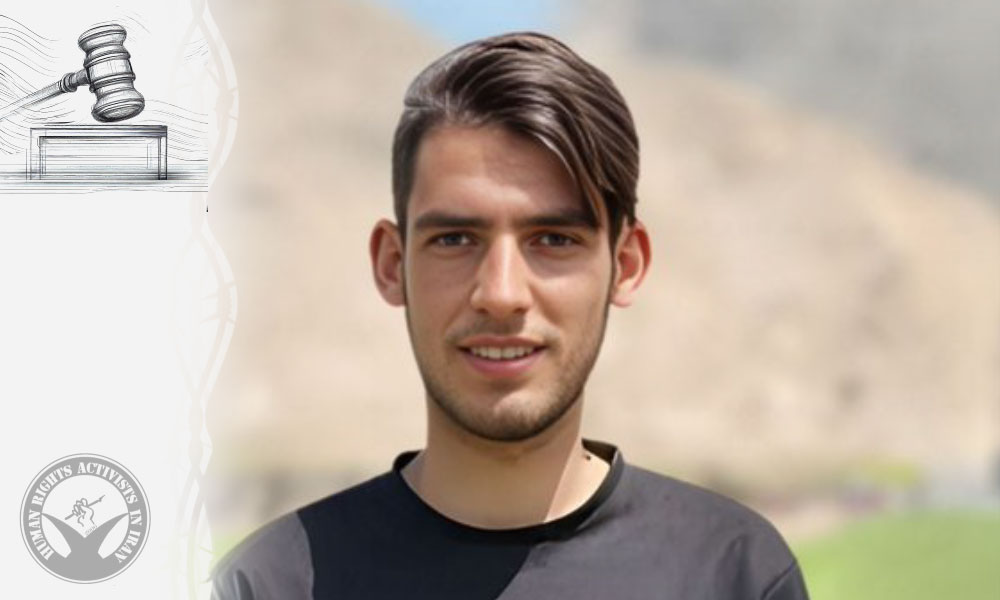
Execution of Two Prisoners, Including a Juvenile Offender, in Sepidar Prison, Ahvaz

HRANA – At dawn on Monday, October 20, the death sentences of two prisoners, including a juvenile offender, were carried out in Sepidar Prison, Ahvaz. Both individuals had previously been convicted of murder.

HRANA has identified the executed prisoners as Ali Aghajeri Peyvand, a resident of Behbahan, and Sajad Shokri.

According to information obtained by HRANA, five years ago, when Aghajeri was 17 years old, he was arrested following a group altercation over farmland that led to one person’s death. He was subsequently sentenced to death by a criminal court.

A source close to the prisoner’s family confirmed the execution, noting that despite years of efforts by Aghajeri’s family to obtain the victim’s family’s consent and pay blood money (diya), these efforts were ultimately unsuccessful.

Based on HRANA’s findings, Mr. Shokri had also been arrested on a murder charge and later sentenced to death by a criminal court.

As of the time of this report, judicial and prison authorities have not officially announced the executions.

Families of Six Executed Prisoners in Ahvaz Threatened Against Holding Mourning Ceremonies

HRANA – Security forces in Khuzestan Province have severely threatened the families of six executed Arab prisoners, warning them not to hold mourning ceremonies or communicate with media outlets and human rights organizations.

The six men – Ali Mojaddam, Mohammadreza Moghaddam, Moein Khanfari, Habib Deris, Adnan Ghobeishavi, and Salem Mousavi – were executed at dawn on Saturday, October 4, 2025, in Sepidar Prison, Ahvaz, without prior notice to their families or lawyers.

According to HRANA, agents of the Ministry of Intelligence contacted the families by phone on the day of the execution to inform them of the death of their loved ones. Prior to these calls, the families had received no information regarding the scheduled execution or the prisoners’ transfer to solitary confinement.

Sources close to the families told HRANA that, following the executions, security authorities summoned several relatives and tribal elders to intelligence offices, including the local headquarters of the Ministry of Intelligence, and explicitly forbade them from holding mourning ceremonies in mosques or public halls. The authorities also prohibited the recitation of the Quran, poetry, or other religious rituals over loudspeakers – traditional mourning practices among the Arab community in Khuzestan.

According to information obtained by HRANA, family members and tribal elders were compelled to sign written pledges promising not to organize any public gatherings. They were further warned that any communication with media or international human rights organizations would result in punitive measures.

The six Arab prisoners were arrested by security forces in February 2019 and later sentenced to death by a branch of the Ahvaz Revolutionary Court in March 2023. The judiciary of the Islamic Republic accused them of “membership in the armed wing of Harakat al-Nidal al-Arabi li-Tahrir al-Ahwaz and armed action against the foundations of the Islamic Republic.”

As of two days after the executions, the families remain unaware of the burial locations or the circumstances under which the sentences were carried out.

More than Two Decades Behind Bars, Prisoner Profiles – No. 9: Ali Halafi

HRANA – Numerous political and religious prisoners in Iran have spent more than two decades in detention. To ensure their stories are not lost amid the constant churn of daily news, HRANA publishes a series of reports dedicated to them. Each report reviews the prisoner’s case history, prison conditions, access to basic rights, and urgent needs.

In this report, HRANA, the news agency of Human Rights Activists in Iran, examines the latest situation of Ali Halafi after two decades of imprisonment.


Information Sheet

• Name: Ali Halafi
• Year of Arrest: 2005
• Charges Announced: “Acting against national security, moharebeh (enmity against God), and corruption on earth”
• Initial Sentence: 30 years in prison in exile
• Current Sentence: 30 years in prison in exile
• Prison Locations: After sentencing, he spent one year in Karun Prison in Ahvaz. He was then exiled to Gonabad Prison, where he served ten years. In 2016, Halafi was transferred to Masjed Soleyman Prison and later to Sheiban Prison in Ahvaz, where he has since been held without observance of the principle of separating prisoners by offense.
• Furlough / Access: No furlough has been reported in recent years; access to family and lawyer has been limited.
• Current Status: Still in long-term imprisonment despite legal changes that could allow for review or sentence reduction.

Case Narrative and Judicial Process

Ali Halafi was arrested in 2005 by security forces in connection with the so-called “Salman Farsi Street explosion in Ahvaz.” Although not one of the main defendants in the case, he was later sentenced by the Ahvaz Revolutionary Court to 30 years in prison in exile on charges of “acting against national security, moharebeh, and corruption on earth.” This sentence was upheld in full by the Court of Appeals.

The ruling placed him among prisoners with de facto indefinite terms, a status that can extend incarceration for many years and severely restrict access to mechanisms of legal review.

Key Points in the Process:

• Heavy Security Charges: The “moharebeh” charge is one of the most severe in Iran’s political-security cases, carrying wide-reaching judicial and executive consequences.
• Continued Imprisonment Despite Legal Changes: Although legal reforms have allowed for retrials, sentence reductions, or conditional release in some moharebeh cases, Halafi remains imprisoned.

Prison Conditions and Transfers

Over his imprisonment, Halafi has been held in Karun Prison (Ahvaz), Gonabad Prison, Masjed Soleyman Prison, and Sheiban Prison (Ahvaz). After sentencing, he spent one year in Karun Prison, then ten years in Gonabad Prison. In 2016, he was moved to Masjed Soleyman Prison, and shortly thereafter transferred to Ward 5 of Sheiban Prison in Ahvaz, where he remains, without proper separation of offenses.

Observations on Detention Standards

• Frequent Transfers: Repeated relocations between wards and prisons disrupt family contact, legal access, and medical care.
• Exposure to Violence in Prison: Reports indicate verbal abuse and beatings. During his arrest, Halafi suffered broken ribs from beatings by security agents, requiring surgery. In April 2024, he was reportedly beaten by guards in Ward 5 of Sheiban Prison. In December of the same year, after protesting poor conditions, denial of medical care, and the transfer of violent-crime prisoners to his ward, he was threatened with solitary confinement or exile to a remote prison. These instances highlight the urgent need for independent documentation and legal follow-up.
• Denial of Medical Care: Despite suffering from stomach ulcers, intestinal infections, and lung problems, Halafi has consistently been denied hospital transfers and specialized treatment for over two decades. Denying prisoners access to medical care constitutes inhumane treatment and violates the right to health—and in some cases, even the right to life—recognized under Iranian law, international standards, and human rights instruments. It is also used as a tool of coercion and repression.

Access to Family, Lawyer, and Furlough

Halafi has not received furlough in recent years, and his access to family and legal counsel has been limited. Such restrictions carry severe psychological and social consequences, while also undermining his ability to mount an effective defense or pursue retrial mechanisms.

Potential Legal Avenues (General Recommendations):

1. Retrial: Review based on new evidence or substantive/procedural flaws.

2. Request for Sentence Reduction or Commutation: If legal conditions allow.

3. Conditional Release / Suspension of Sentence: If criteria such as time served, good conduct, or health are met.

4. Addressing Rights Violations in Prison: Including the right to healthcare, protection from violence, regular visitation, and legal counsel.

5. Documentation and International Advocacy: Utilizing international reporting and human rights mechanisms where domestic remedies are blocked.

Timeline Summary

2005: Arrest; charges of “acting against national security, moharebeh, corruption on earth.”
Initial Sentence: 30 years in prison in exile.
2005: Reports of beating during arrest; severe rib fractures requiring surgery.
Post-sentencing: One year in Karun Prison (Ahvaz).
2006: Exiled to Gonabad Prison for ten years.
2016: Transferred to Masjed Soleyman Prison.
April 2024: Reported beating in Ward 5 of Sheiban Prison.
Recent years: No furlough, denial of proper medical care, limited access to family and lawyer.
Current Status: Continued imprisonment despite legal changes that could affect case review.

Conclusion and Importance of Case Review

Despite legal changes that provide avenues for retrial, sentence reduction, or release for those convicted of moharebeh, Halafi remains imprisoned. His case exemplifies long-term political-security imprisonment in Iran, highlighting the importance of legal review to secure justice and possible release.

His file underscores both the difficulties of accessing fundamental rights in prison (furlough, visits, legal counsel) and the urgent need to employ all available domestic and international mechanisms for sentence review and reduction.

Urgent Needs:

Regular and non-discriminatory access to lawyer and family.
Independent medical evaluation for alleged beatings and long-term complications.
Examination of eligibility for retrial or other mechanisms for sentence reduction/suspension.
Guarantee of compliance with prison regulations on contact, visits, and furlough.
Access to adequate medical services and treatment.


About This Series

This report is part of the “More than Two Decades Behind Bars” series, which aims to continuously document long-term imprisonment cases and remind the public of the collective responsibility to ensure they are seen and their conditions are pursued.

More than Two Decades Behind Bars, Prisoner Profiles – No. 6: Nazem Barihi

HRANA – Many political and religious prisoners in Iran have endured over twenty years behind bars. To prevent their cases from fading from public memory in the flow of daily news, HRANA has launched a series of reports highlighting their situations. Each installment outlines the prisoner’s legal case, detention conditions, access to rights, and immediate needs.

In this report, HRANA, the news arm of Human Rights Activists in Iran, examines the latest situation of Nazem Barihi after two decades of imprisonment.


Profile Information

• Name: Nazem Barihi
• Year of arrest: 2005
• Charges: “acting against national security, moharebeh (enmity against God), and corruption on earth”
• Initial sentence: life imprisonment
• Current sentence: life imprisonment
• Place of detention: Initially held in Karun Prison, Ahvaz; currently in Ward 5 of Sheiban Prison, Ahvaz.
• Furlough/access: No furlough reported in recent years; limited access to family and lawyer.
• Current status: Still serving a life sentence, despite legal changes that could allow for review or commutation.

Case History and Judicial Process

Nazem Barihi, born in 1986, was arrested by security forces in October 2005. Soon after, Branch 1 of the Ahvaz Revolutionary Court sentenced him to life imprisonment on charges of “acting against national security, moharebeh, and corruption on earth.”
This sentence placed him among prisoners serving indefinite terms, effectively prolonging incarceration for many years while limiting opportunities for judicial review.

Key Points in the Process

• Severe security charges: The charge of moharebeh is one of the gravest in Iran’s political-security cases, usually carrying harsh judicial and executive consequences.
• Continued imprisonment despite legal changes: Although amendments now allow for retrial, commutation, or conditional release in some cases, Mr. Barihi remains imprisoned.

Detention Conditions and Transfers

During his imprisonment, he has been held in Karun and Sheiban prisons in Ahvaz. After sentencing, he spent several years in Karun Prison. Reports indicate that in February 2019 and January 2025, he was subjected to verbal abuse and violence by Sheiban Prison officials. In January 2025, after protesting the authorities’ failure to uphold the principle of separation of crimes, he was threatened with solitary confinement or exile to remote prisons. Since then, he has remained in Sheiban Prison.

Observations on Standards of Detention

• Repeated transfers: Moves between wards and prisons disrupt access to family, lawyer, and medical services.
• Exposure to violence: In February 2019, Sheiban officials exploited prisoners’ religious differences and ignored separation-of-crimes standards, leading to pressure and violence against him.
• Denial of medical treatment: Despite suffering from a skin condition during his two decades in prison, he has been repeatedly denied hospital transfer and specialist treatment under various pretexts. Denial of medical care violates the right to health and life, and amounts to inhuman treatment often used as a means of further repression.

Access to Family, Lawyer, and Furlough

In recent years, Mr. Barihi has not received furlough, and his access to family and legal counsel remains restricted. Such limitations not only affect his psychological and social well-being but also hinder his right to mount an effective defense and pursue retrial mechanisms.

Potential Legal Avenues (General Recommendations)

1. Request retrial based on new evidence or procedural/substantive flaws in the verdict.

2. Seek commutation or conversion of the sentence if legal grounds exist.

3. Evaluate eligibility for parole or suspension of sentence (considering time served, conduct, and health).

4. Pursue remedies for violations in prison, including denial of medical care, exposure to violence, and restricted visits.

5. Engage international human rights mechanisms if domestic legal routes remain blocked.

Timeline Summary

• 2005: Arrest; charged with “acting against national security, moharebeh, and corruption on earth.”
• Initial sentence: life imprisonment.
• Post-sentencing: several years in Karun Prison, Ahvaz.
• Feb 2019: Reports of assault linked to failure to enforce separation of crimes in Sheiban Prison.
• Jan 2025: Threatened with solitary confinement or exile after protesting the same issue.
• Recent years: No furlough, inadequate medical care, restricted family and lawyer access.
• Current status: Still serving life sentence, despite potential eligibility for legal review.

Conclusion and Need for Review

Although legal changes could enable retrial, commutation, or release for those charged with moharebeh, Mr. Barihi remains in prison. His case highlights both the long-term use of harsh security sentences and the urgent need for consistent review of such cases.

His file underscores the dual challenges of denied fundamental rights in prison (furlough, visits, legal counsel) and the necessity of utilizing all domestic and international mechanisms to secure a reduction of his sentence and eventual release.

Urgent Needs

Regular and non-discriminatory access to family and lawyer.
Independent medical evaluation in light of reported violence and ongoing health issues.
Review of retrial or other legal mechanisms for reduction or suspension of sentence.
Enforcement of prison regulations regarding contact, visits, and furlough.
Access to proper medical services and treatment.

About this Series

This report is part of the “Two Decades Behind Bars” series, which aims to document the cases of long-term prisoners and to highlight the collective responsibility to ensure their visibility and pursue their rights.

Political Prisoner Yousef Savari Denied Medical Care in Sheiban Prison

HRANA – Yousef Savari, a political prisoner held in Sheiban Prison, Ahvaz, has been denied transfer to medical facilities and access to healthcare despite his poor physical condition and suffering from a respiratory illness.

This political prisoner suffers from a lung disease and has recently experienced repeated shortness of breath attacks. According to a family member, Mr. Savari experiences choking sensations when lying down and, due to his lung condition, is unable to sleep. Despite this situation, prison officials have refused to transfer him to a hospital outside the prison. His family has repeatedly requested his transfer to a hospital from both prison authorities and the Ahvaz Revolutionary Court, but these requests remain unanswered.

Mr. Savari was arrested on November 8, 2018, by IRGC intelligence agents at his father’s home and transferred to the IRGC Intelligence’s detention facility in Ahvaz. On April 29, 2020, he was released from Sheiban Prison on bail. Ultimately, last year, the Ahvaz Revolutionary Court sentenced him to 10 years in prison on charges of having ties to groups opposed to the Islamic Republic. He is currently being held in Ward 5 of Sheiban Prison, Ahvaz.

Yousef Savari, 37, married and father of three, is from Dasht-e Azadegan County, Khuzestan Province.

Subscribe to Our Newsletter

Now is definitely not the time to stop reading!

More than Two Decades Behind Bars, Prisoner Profiles – No. 5: Saeed Masouri

HRANA – Many political and religious prisoners in Iran have endured over twenty years behind bars. To prevent their cases from fading from public memory in the flow of daily news, HRANA has launched a series of reports highlighting their situations. Each installment outlines the prisoner’s legal case, detention conditions, access to rights, and immediate needs.

In this installment, HRANA, the news agency of Human Rights Activists in Iran, reviews the current situation of Saeed Masouri after more than two decades in prison.


Profile

• Name: Saeed Masouri

• Year of Arrest: 2000 (1379 in the Iranian calendar)

• Declared Charge: Moharebeh (enmity against God) through membership in the People’s Mojahedin Organization of Iran (PMOI)

• Initial Sentence: Death

• Current Sentence: Life imprisonment (commuted by one degree)

• Detention Locations:

◦ 14 months in solitary confinement at the Ahvaz Ministry of Intelligence detention facility

◦ Ward 209 of Evin Prison

◦ Several years in Rajai Shahr Prison (Karaj), including transfers between wards

◦ June 2015: moved to the IRGC-controlled ward of Rajai Shahr

◦ August 2017: forcibly transferred from Ward 12 to Ward 10 of Rajai Shahr

◦ August 2023: after Rajai Shahr’s closure, moved to Ward 8, Hall 10 of Evin Prison, then a month later to Ghezel Hesar Prison

◦ September 2023: transferred from the secure unit (Ward 3) of Ghezel Hesar to Dar al-Quran Hall (Ward 4), designated for drug-related prisoners

◦ August 2025: exiled from Ghezel Hesar to Zahedan Prison; after rejection there, secretly transferred and ultimately returned on August 5, 2025, to solitary confinement in Ghezel Hesar

• Furlough/Access: No furlough reported in recent years; limited access to family and lawyer

• Current Status: Serving life imprisonment despite legal changes that could allow review or sentence reduction

Case History

Dr. Saeed Masouri, born in 1965, lived in Norway for his studies. Upon returning to Iran, he was arrested in Dezful on January 8, 2001, on charges of membership in the PMOI. His family was informed in May 2001.

In 2002, the Revolutionary Court in Tehran sentenced him to death on charges of moharebeh. His sentence was later commuted to life imprisonment. While this prevented execution, it effectively placed him among those serving indefinite sentences, limiting opportunities for judicial review or relief.

Key points in the case:

• Severe security charges: Moharebeh is among the most serious charges in Iran’s political-security cases, carrying broad judicial and punitive consequences.

• Sentence commutation: The initial death sentence and its later reduction to life imprisonment demonstrate both the severity of the charge and the judiciary’s capacity for intervention, but do not necessarily address concerns over fairness of proceedings.

• Continued imprisonment despite legal reforms: Although recent legal changes allow retrial, sentence reductions, or conditional release, Masouri remains imprisoned.

Detention and Transfers

Throughout his imprisonment, Masouri has been repeatedly moved: from solitary confinement in Ahvaz, to Ward 209 of Evin, to Rajai Shahr, and later to Ghezel Hesar and Zahedan. These transfers have often involved violence, including beatings during moves in 2017, 2023, and 2025.

He has staged hunger strikes in protest, including after being beaten and transferred without warning in 2017. Following Zahedan Prison’s refusal to accept him in August 2025, he was held in an unknown location for several days before being returned to Ghezel Hesar.

Observations on Conditions

• Repeated transfers: Frequent relocations disrupt access to family, lawyer, and healthcare.

• Solitary confinement as punishment: He spent 14 months in solitary in Ahvaz, and has repeatedly been returned to solitary in later years, including in 2013, 2017, 2023, and 2025.

• Exposure to violence: Reports document physical and verbal abuse in Ahvaz, Rajai Shahr, Evin, Ghezel Hesar, and during forced transfers.

• Medical neglect: Despite suffering from chronic back pain, eye and dental problems, a broken ankle, urinary bleeding, and needing ultrasound examinations, prison authorities have systematically obstructed his access to specialized care. Denial of medical treatment is considered inhuman treatment and a violation of the right to health and even life.

Access to Family, Lawyer, and Furlough

In recent years, Masouri has been denied furlough. His access to family and his lawyer remains limited, negatively affecting both his mental well-being and his ability to pursue legal remedies.

Potential Legal Avenues (General Recommendations)

1. Retrial (Eda‘e Dadrasi): Based on new evidence or substantive/procedural flaws.

2. Sentence reduction or commutation: If legal grounds exist.

3. Conditional release/suspension: If requirements such as served time, conduct, or health conditions are met.

4. Remedying rights violations in detention: Including access to medical care, freedom from ill-treatment, and regular visitation rights.

5. International documentation and advocacy: In case domestic legal remedies are blocked.

Timeline Summary

• 2000 (1379): Arrest on charges of moharebeh through PMOI membership

• 2002 (1381): Sentenced to death; commuted to life imprisonment

• 2000–2001: 14 months in solitary, Ahvaz Intelligence facility

• 2000s–2010s: Long-term detention in Rajai Shahr Prison

• 2013: Solitary confinement reported; beatings in Rajai Shahr

• 2015: Moved to IRGC ward in Rajai Shahr

• 2017: Beaten and transferred to Ward 10, Rajai Shahr

• 2023: Transferred from Rajai Shahr to Evin, then Ghezel Hesar; solitary confinement and beatings reported

• 2025: Violently exiled to Zahedan Prison; after refusal there, returned to Ghezel Hesar solitary

• Recent years: No furlough, inadequate medical care, restricted access to family/lawyer

• Present: Still serving life sentence

Conclusion

Despite legal reforms enabling retrial, sentence reduction, or release for those convicted of moharebeh, Saeed Masouri remains imprisoned. His case exemplifies the plight of long-term political-security prisoners in Iran. Reviewing such cases is a vital step toward securing their rights and release.

Urgent Needs

Regular, unrestricted access to lawyer and family

Independent medical evaluation, especially after reported abuse

Judicial review of case in light of legal reforms

Compliance with prison regulations on visits, furloughs, and communication

Adequate medical treatment

About this Series

This report is part of the “Two Decades Behind Bars” series, which aims to document the cases of long-term prisoners and to highlight the collective responsibility to ensure their visibility and pursue their rights.

More than Two Decades Behind Bars, Prisoner Profiles – No. 4: Abdul-Zahra Halichi

HRANA – Many political and religious prisoners in Iran have endured over twenty years behind bars. To prevent their cases from fading from public memory in the flow of daily news, HRANA has launched a series of reports highlighting their situations. Each installment outlines the prisoner’s legal case, detention conditions, access to rights, and immediate needs.

In this installment, HRANA, the news agency of Human Rights Activists in Iran, examines the latest status of Abdul-Zahra Halichi (Haliji) after more than two decades of imprisonment.


Case Information

• Name: Abdul-Zahra Halichi (Haliji)

• Year of arrest: 2005

• Charges: “Acting against national security, moharebeh (enmity against God), and efsad-e fel-arz (corruption on earth)”

• Initial sentence: Life imprisonment

• Current sentence: Life imprisonment

• Places of detention: Served his sentence in Karun Prison, Ahvaz; currently held in Ward 5 of Sheiban Prison, Ahvaz.

• Leave / access: No prison leave reported in recent years; limited access to family and lawyer.

• Current status: Still serving a life sentence despite legal changes that could allow for review or commutation.

Case Background and Judicial Process

In 2005, Abdul-Zahra Halichi was arrested by security forces. Shortly thereafter, Branch 1 of the Revolutionary Court of Ahvaz convicted him of “acting against national security, moharebeh, and corruption on earth,” sentencing him to life imprisonment. This verdict placed him among those serving indefinite terms, effectively extending incarceration for decades and severely limiting access to judicial review.

Key points in the process:

• Heavy security charges: The charge of moharebeh is among the most severe in Iran’s political-security cases and typically carries wide-ranging judicial and executive consequences.

• Continued imprisonment despite legal reforms: Although legislative changes allow for retrial, sentence reduction, or parole in some cases, Halichi remains incarcerated.

Conditions of Detention and Transfers

Throughout his imprisonment, Halichi has been held in Karun and Sheiban prisons in Ahvaz. He spent several years in Karun Prison following his sentencing.

• Feb 2019: Reports of beatings in Sheiban Prison.

• Apr 2020: Subjected to torture after being transferred to The Ministry of Intelligence’s detention facility in Ahvaz.

• Apr 2024: Reported beatings by prison guards and intelligence protection officers in Ward 5 of Sheiban Prison.

• Dec 2024: Threatened with solitary confinement or exile to remote areas after protesting authorities’ failure to enforce the principle of separation of crimes.
Since then, he has remained imprisoned in Sheiban.

Observations on Detention Standards

• Frequent transfers: Repeated relocations between wards and prisons disrupt access to family, lawyers, and medical care.

• Violence in custody: Multiple reports of beatings (2019, 2020, 2024) highlight the need for independent documentation and legal follow-up.

• Denial of medical care: Despite suffering from right leg infections, knee pain, and requiring urgent surgery to remove a metal rod from his leg, Halichi has been systematically denied hospital transfer and specialized treatment. Denying prisoners access to healthcare constitutes inhuman treatment and a violation of the right to health and even the right to life, often used as a tool of further pressure and repression.

Access to Family, Lawyer, and Leave

In recent years, Halichi has not been granted leave, and his access to family and legal counsel has been restricted. Such limitations not only have psychological and social consequences but also undermine his ability to mount an effective legal defense or pursue retrial procedures.

Potential Legal Avenues (General Recommendations)

1. Retrial: Assessing new evidence or procedural flaws.

2. Sentence reduction or commutation: If legal grounds are met.

3. Conditional release or suspension: Based on time served, good conduct, or health conditions.

4. Addressing rights violations in custody: Including access to treatment, protection from violence, regular visitation rights, and legal access.

International documentation and advocacy: Utilizing UN reporting mechanisms when domestic avenues are blocked.

Timeline (Summary)

• 2005: Arrested; charged with “acting against national security, moharebeh, and corruption on earth.”

• Initial verdict: Life imprisonment.

• Following years: Held in Karun Prison, Ahvaz.

• Feb 2019: Reported beating in Sheiban Prison.

• Apr 2020: Tortured in The Ministry of Intelligence’s detention facility, Ahvaz.

• Apr 2024: Beaten by prison guards and intelligence officers in Sheiban Prison.

• Dec 2024: Threatened with solitary confinement or exile after protesting non-segregation of prisoners.

• Recent years: No leave granted; deprived of adequate medical care; limited access to family and lawyer.

• Current status: Continues to serve life imprisonment despite potential eligibility for legal review.

Conclusion and Need for Review

Despite legal reforms enabling retrial, sentence reduction, or release in moharebeh cases, Halichi remains behind bars. His case exemplifies long-term political-security imprisonment in Iran, underscoring the urgent need for review mechanisms.

Halichi’s situation highlights both the systematic denial of fundamental rights in detention (such as visitation, legal access, and healthcare) and the importance of using all available domestic and international legal avenues to reduce sentences and secure freedom.

Urgent Needs

Regular, unrestricted access to lawyer and family.

Independent medical evaluation following allegations of torture and long-term health issues.

Review of eligibility for retrial or other mechanisms to reduce/terminate his sentence under current law.

Enforcement of prison regulations regarding visitation, calls, and leave.

Access to appropriate medical care and treatment.

About this Series

This report is part of the “Two Decades Behind Bars” series, which aims to document the cases of long-term prisoners and to highlight the collective responsibility to ensure their visibility and pursue their rights.

More than Two Decades Behind Bars, Prisoner Profiles – No. 3: Abdolemam Zaeri

HRANA – Many political and religious prisoners in Iran have endured over twenty years behind bars. To prevent their cases from fading from public memory in the flow of daily news, HRANA has launched a series of reports highlighting their situations. Each installment outlines the prisoner’s legal case, detention conditions, access to rights, and immediate needs.

In this installment, HRANA – the news arm of Human Rights Activists in Iran – reviews the current situation of Abdolemam Zaeri after two decades in prison.


Information Summary

• Name: Abdolemam Zaeri

• Year of Arrest: 2005

• Charges Announced: “Acting against national security, moharebeh (enmity against God), and corruption on earth”

• Initial Sentence: Life imprisonment

• Current Sentence: Life imprisonment

• Detention Facilities: Initially held in Karun Prison of Ahvaz; later transferred to Ward 5 of Sheiban Prison in Ahvaz, where he remains.

• Furlough/Access: No furlough reported in recent years; access to family and lawyer reported as limited.

• Current Status: Still serving a life sentence despite legal changes that could allow for review or reduction.

Case History and Judicial Process

Zaeri was arrested by security forces in 2005. Shortly after, Branch 1 of the Ahvaz Revolutionary Court sentenced him to life imprisonment on charges of “acting against national security, moharebeh, and corruption on earth.”

This life sentence placed him among prisoners with indefinite incarceration—effectively subjecting him to decades of confinement while restricting his access to review mechanisms.

Key Points:

• Severe security charges: The label moharebeh is one of the most severe charges in political-security cases in Iran and carries broad judicial and executive consequences.

• Continued imprisonment despite legal reforms: Although legal changes allow for retrials, sentence reductions, or parole in some cases, Zaeri has remained in prison.

Detention Conditions and Transfers

Over the course of his imprisonment, Zaeri has been held in Karun and Sheiban prisons in Ahvaz. He spent several years in Karun Prison before being transferred.

Reports from February 2019 and April 2024 indicate that he was beaten by prison guards and the intelligence protection unit of Sheiban Prison. He remains incarcerated in Sheiban.

Observations on Detention Standards

• Frequent transfers: Moving between wards and prisons can disrupt access to family, lawyers, and medical care.

• Exposure to violence: Documented beatings in 2019 and April 2024 highlight the need for independent monitoring and legal follow-up.

• Denial of medical care: Despite suffering from stomach bleeding, prostate inflammation, infection and bleeding in the left ear, and stomach ulcers, Zaeri has repeatedly been denied transfer to a hospital or access to specialized treatment. Prison authorities have obstructed care on various pretexts.
Denial of medical treatment is a violation of the fundamental right to health and can amount to inhumane treatment, even endangering life. It is often used as a tool of additional pressure and repression against prisoners.

Access to Family, Lawyer, and Furlough

Zaeri has not been granted furlough in recent years. His access to family visits and legal counsel has been restricted. These limitations, beyond their psychological and social toll, also undermine his ability to mount an effective defense or pursue retrial mechanisms.

Potential Legal Avenues (General Recommendations)

1. Retrial: Reviewing new evidence or substantive/procedural flaws in the ruling.

2. Sentence reduction or conversion: If legal conditions apply.

3. Parole or suspension: Based on time served, good conduct, health status, etc.

4. Pursuing violations of rights during detention: Including denial of medical care, exposure to violence, right to visits, and lawyer access.

5. International documentation and advocacy: Using reporting and human rights mechanisms if domestic avenues remain blocked.

Timeline Summary

• 2005: Arrest; charged with “acting against national security, moharebeh, and corruption on earth.”

• Initial ruling: Life imprisonment.

• Following years: Held in Karun Prison, Ahvaz.

• Feb 2019: Reported beating in Sheiban Prison, Ahvaz.

• Apr 2024: Reported beating in Ward 5, Sheiban Prison.

• Recent years: No furlough, denied medical care, restricted family and lawyer access.

• Present status: Still serving life imprisonment despite legal reforms that could allow review.

Summary and Importance of Review

Despite legal changes enabling retrial, sentence reduction, or release for those convicted of moharebeh, Zaeri remains imprisoned.

His case exemplifies the plight of political-security prisoners serving long sentences in Iran. Reviewing such cases is a critical step toward justice and securing their rights.

Zaeri’s file highlights both the deprivation of fundamental rights during incarceration (such as furlough, visitation, and legal access) and the urgent need to utilize all domestic and international mechanisms to seek case review and sentence reduction.

Urgent Needs

Unrestricted and regular access to lawyer and family.

Independent medical evaluation, especially regarding reported beatings and chronic conditions.

Assessment of eligibility for retrial or sentence reduction under updated regulations.

Enforcement of prison regulations on calls, visits, and furloughs.

Access to adequate medical services and treatment.

About This Series

This report is part of the “Two Decades Behind Bars” series, which aims to document the cases of long-term prisoners and to highlight the collective responsibility to ensure their visibility and pursue their rights.

Execution of Two Prisoners in Sepidar Prison of Ahvaz

HRANA – On Wednesday, September 10, Sepidar Prison of Ahvaz carried out the execution of two prisoners convicted of murder.

HRANA has confirmed the identity of one of them as Ahmad Bani Asad, 38 years old, from Susangerd. According to information received by HRANA, Mr. Bani Asad was previously arrested following a fight in which he committed murder. He was later sentenced to death by the criminal court.

The Iran Human Rights Organization confirmed the identity of the other prisoner as Yousef Asadi Kahbad, 31 years old, from the village of Kahbad in Izeh County. He had been arrested seven years ago on a murder charge and was sentenced to death by the criminal court.

At the time of this report, the execution of these prisoners has not been announced by prison authorities or the relevant institutions.

In 2024, according to 812 reports compiled by HRANA, the Iranian regime executed 930 individuals in its prisons—marking the highest number of executions in the past 12 years. Despite the scale of these executions, prison officials and other relevant authorities publicly acknowledged only 6% of them, highlighting the regime’s lack of transparency and accountability.

Abbas Zangeneh-Nezhadi Sentenced to Imprisonment

HRANA– Abbas Zangeneh-Nezhadi, a resident of Ramhormoz, has been sentenced to one year in prison by Branch 2 of the Ahvaz Revolutionary Court. The sentence has been suspended for two years.

This ruling was issued by Branch 2 of the Ahvaz Revolutionary Court and was recently communicated to Mr. Zangeneh-Nezhadi’s lawyer, Hossein Ali Hatami.

Based on the ruling, he was sentenced to one year in prison on the charge of propaganda against the regime. The sentence has been suspended for two years. Additionally, Mr. Zangeneh-Nezhadi was acquitted of the charges of membership in an insurgent group and collaboration with hostile states.

The court session to review this citizen’s charges was held in May of this year at Branch 2 of the Ahvaz Revolutionary Court.

Abbas Zangeneh-Nezhadi, a resident of Ramhormoz County, was arrested in March 2024 and released after about 50 days on bail.