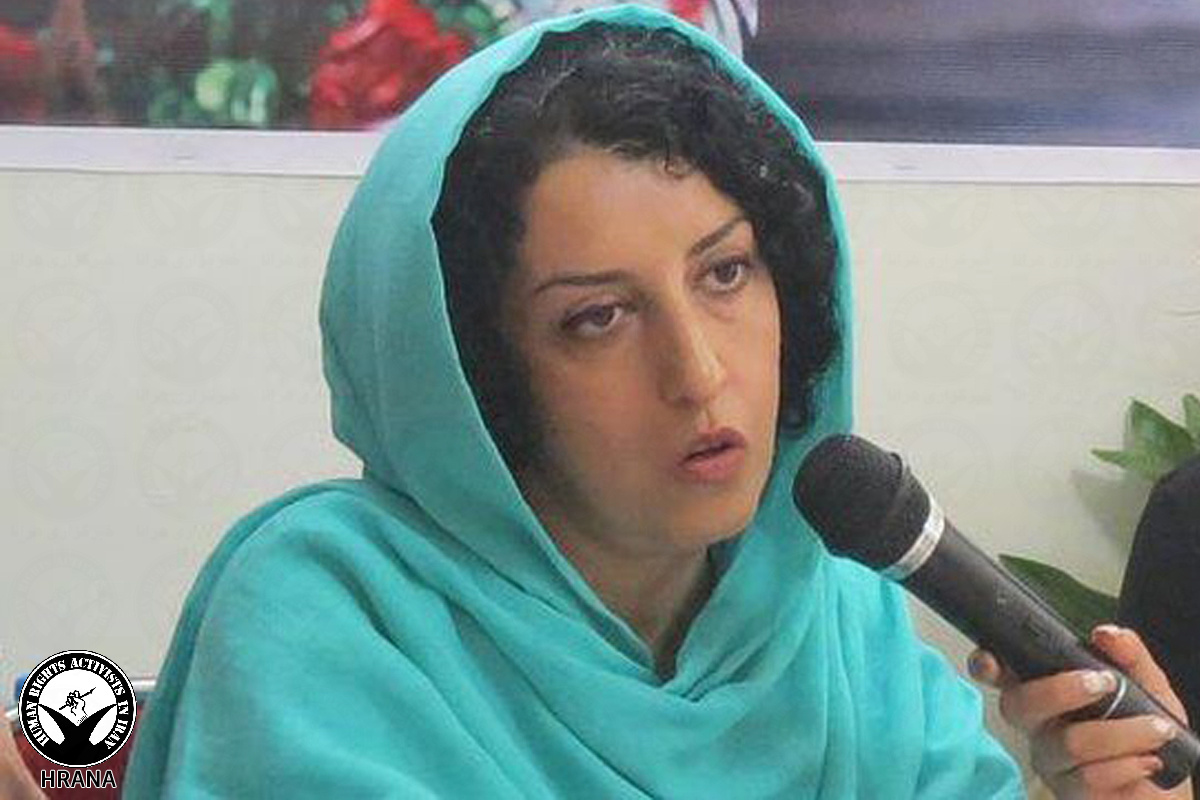
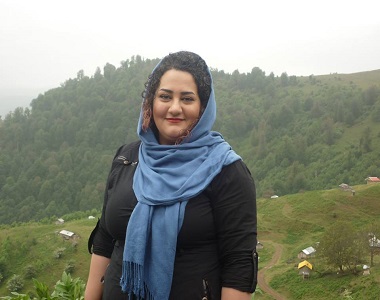
Nasrin Sotoudeh Starts Hunger Strike in Evin Prison

Human Rights Activists News Agency (HRANA) – Nasrin Sotoudeh, prominent lawyer and human rights activist, who has been detained in Tehran’s Evin Prison since June 13th, started a hunger strike on Saturday, August 25th.

Sotoudeh has published an open letter to declare her hunger strike. The arrest and harassment of her family members and friends is the reason behind her protest, she says in the letter.

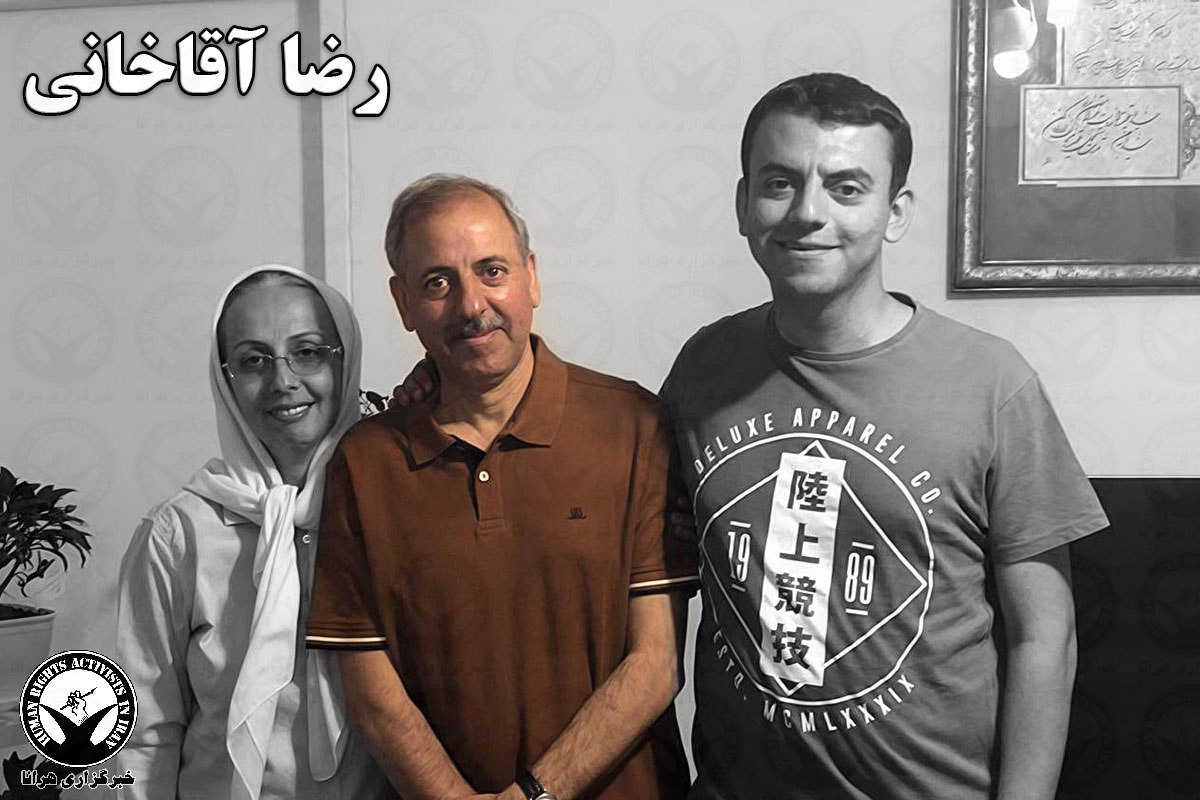
Sotoudeh’s husband, Reza Khandan, published a note to confirm his wife’s hunger strike.

The full text of Nasrin Sotoudeh’s letter, translated by HRANA:

My fellow Iranians,

After I was arrested two months ago, agents of the Ministry of Intelligence undertook the unlawful action of arresting the esteemed citizen, Dr Farhad Meysami. They searched his house and that of his relatives and friends to discover evidence of protest against mandatory veiling.

After they failed to find anything in the house of my husband’s sister, they confiscated a satellite device [instead].

Since none of my correspondences to the authorities has been so far responded to, I have no choice but to embark on a hunger strike to protest against the arrests and judicial pressures brought upon my family, relatives and friends.

In the hope that law and justice will one day prevail in our beloved country, Iran.

Nasrin Sotoudeh
August 2018

<b> —- </b>

Nasrin Sotoudeh had recently refused to appear in court, despite a summons order issued by the authorities. She wrote an open letter to explain why.

According to a report published by HRANA on August 18th, Reza Khandan’s house and the house of other relatives and friends of the family were raided by the authorities.

<b> *** </b>

<h3> UPDATE: </h3> Nasrin Sotoudeh ended her hunger strike on October 3, 2018, her lawyer Mohammad Moghimi told HRANA.

Journalist Hamed Ayinehvand Denied Bail, Moved from Solitary Confinement to General Ward

Human Rights Activists News Agency (HRANA) – Hamed Ayinehvand, a journalist and political activist who was arrested on June 27, 2018, by security forces belonging to the Intelligence unit of Tehran’s Islamic Revolutionary Guard Corps (IRGC), has been transferred from solitary confinement, where he spent 44 days after his arrest, to a general ward in Evin Prison.

The Prosecutor of Branch 7 of the Evin Prosecutor’s office has denied Ayinehvand bail, despite the completion of the investigations process and the judicial proceedings. The charge issued against him is “Propaganda against the regime through cyberspace activities”.

A source close to the case told HRANA: “Mr Ayinehvand’s family is worried about [his] mental condition which was described as inappropriate based on his family’s observation [of him] during their last prison visit.”

Hamed Ayinehvand is a political activist, journalist and PhD student of international relations at the Islamic Azad University’s science and research department. Furthermore, Ayinehvand was a *disqualified candidate in Iran’s most recent Parliamentary election.

*Iran’s Guardian Council is responsible for vetting the qualifications of parliamentary candidates and determines who is eligible to run for Parliament.

Imprisoned Civil Rights Activist Farhad Meysami on Hunger Strike

Human Rights Activist News Agency (HRANA)- Farhad Meysami, who was arrested and transferred to Ward 209 of Evin Prison on July 31, 2018, has been on hunger strike since August 1st. He faces charges of “Collusion and conspiracy to threaten national security”, “Disseminating propaganda against the regime,” and “Insulting the hijab, an essential sacrament of Islam” from Branch 7 of Evin Court.

Reza Khandan, husband of Nasrin Sotoudeh, the human rights lawyer who was previously imprisoned on similar charges, related Mr Mesyami’s case updates to HRANA.

“Farhad Meysami [declared his strike] when he contacted his mother, which was 20 days into his detention,” Mr Khandan said, explaining that news hadn’t spread earlier because Mr Meysami was being held in solitary confinement. In the same phone conversation, according to Mr Khandan, Mr Meysami said he was anticipating a transfer to the prison’s general ward in three days.

Reading from the interrogation sheet intended to elucidate his charges, Mr Meysami cited accusations of “provoking women to appear without hijab in the street”. Mr Khandan conjectures that Mr Meysami’s charges actually stem from his possession of pin-back buttons reading “I protest mandatory Hijab”.

“Farhad Meysami’s mother was extremely worried following the news of his hunger strike and intimated that she wanted to start a hunger strike as well,” Mr Khandan added. “But some friends and I dissuaded her, given her age and her need to take medications on a daily basis.”

Earlier, Arash Keikhosravi — who has been detained in the Great Tehran Penitentiary for the past four days — told HRANA that “on Sunday, August 12th, Mr Meysami’s mother and I went to Branch 7 of Evin court to follow up on his case and to see how he was doing. I planned to register as his lawyer, but the officials at the branch told me that section 48 of the Criminal Procedure Code bars me from doing so.”

Section 48 of the recently-amended Criminal Procedure Code states that those accused of national-security crimes must choose their lawyer from a list approved by the Iranian judiciary. Human Rights Organizations have argued that this new policy gives further license to infringe on the rights of defendants.

Mr Keikhosravi also said that “Mr Meysami’s mother went to see the case investigator after receiving a phone call in which she could hear the sounds of her son’s interrogation and torture.”

The investigator reportedly denied that the call had come from Evin authorities, promising her a phone call from her son to alleviate some of her worries and assure her of his wellbeing.

Security Forces Storm the Residences of Civil Activists

Human Rights Activists News Agency (HRANA) – This morning, Saturday, August 18, 2018, security forces of the Ministry of Intelligence stormed the private residences of Reza Khandan, Mr Khandan’s sister, Mohammadreza (Davoud) Farhadpour and Jila Makvandi. The security forces produced inspection orders issued by Branch 7 of Evin Court, searched the residences thoroughly and confiscated a number of items belonging to the aforementioned individuals.

Reza Khandan, the husband of Nasrin Sotoudeh, told HRANA, “This morning, Saturday, August 18, between 8 and 10 am, security forces of the Ministry of Intelligence entered our home and searched every inch of it. After that, they went to the home of Mr Mohammadreza (Davoud) Farhadpour and searched his home in its entirety as well. At the same time, in an unusual attempt, the security force went to my sister’s home and violently searched the entire place, going so far as individually inspecting every page of her child’s notebook. Two hours later, they arrived at our neighbor’s door and asked them a number of questions about us. It is likely that their invasion of my sister’s privacy is merely an attempt to further pressure my family; there simply is no other explanation for it. The security forces had in hand an order issued by the Branch 7 of Evin Court.”

Reza Khandan added, “The security forces were only looking for [pinback buttons] with [the words] ‘I oppose mandatory veiling’. They also took some of the letters that my wife, Nasrin Sotoudeh, had sent from prison.”

This morning, Jila Karamzadeh Makvandi reported of her home’s inspection in a post affixed with the inspection order. She wrote, “This morning at 10 am agents from the Ministry of Intelligence inspected our home using this order. The inspection was in regards to Dr Maysami’s books and the [lapel pins] with the engraving‘I oppose mandatory veiling.’”

Furthermore, in the order issued by Branch 7 of Evin Court and posted by Jila Karamzadeh Makvandi, in addition to the inspection of her residence, it is stated that Farhad Maysami is being held in solitary confinement.

Fifteen Days after Arrest, Farhad Meysami Still Held Incommunicado

Human Rights Activists News Agency (HRANA) – On August 12th, Farhad Meysami’s mother, along with lawyer Arash Keykhosravi, went to the Public Prosecutor’s Office of Evin Prison to inquire about his status and register Keykhosravi as Meysami’s attorney. Evin’s interrogation branch 7 denied the registration, referencing clause 48 of Iran’s Criminal Procedures Regulations.

HRANA reported on Meysami’s arrest by security forces in his home on the evening of July 31, 2018. He was transferred to Ward 209 of Evin Prison and has not been heard from since.

Keykhosravi confirmed that he was denied the right to represent Meysami on August 12th, adding that Meysami’s mother was frantically seeking answers after receiving a phone call in which sounds of her son’s torture, and supposed confession, could be heard. The interrogator at Branch 7 denied the call was made by prison authorities, and promised her a well-check phone call from her son.

Stating that there is no further information available about Meysami’s charges, Keykhosravi continued, “Many cases involving security charges have no security basis at all. When someone criticizes an issue or actively stands up against something, the government immediately treats it as a national-security case and deprives that person of their basic and fundamental rights. As it concerns Mr. Meysami, we suspect he was arrested for his criticism of the mandatory hijab, which affects neither domestic nor foreign security. Objections like these are the mere expression of differing ideas and perspectives. Elevating such cases into security accusations is a violation of people’s fundamental rights, including the right to choose a lawyer, which is revoked per clause 48 of the Criminal Procedures Regulations.”

According to clause 48 of the new Criminal Procedure, during the initial stages of investigation against those accused of political and national-security crimes, defendants must pick their attorney from a list of lawyers pre-approved by the judiciary. Citizens’ rights organizations claim that this law infringes on the rights of the accused.

Subscribe to Our Newsletter

Now is definitely not the time to stop reading!

Revolutionary Court Racks up Punishments on Journalist Seyed Tabib Taghizadeh

Human Rights Activists News Agency (HRANA) – Seyed Tabib Taghizadeh, journalist and editorial board member of the website Baztab-e-Emrooz, has received a phone call from branch 1 of Evin Prison’s Office of Enforcement summoning him to serve a prison sentence–but that’s not all.

While Taghizadeh had been living in the shadow of the two-year suspended imprisonment issued to him in April 2018 for “acting against national security through connections with antagonistic media,” his attorney Mahmoud Alizadeh Tabatabai told HRANA that new constraints have been tacked onto his client’s sentence, per a request from the bailiff of branch 23 of the Revolutionary Court in Tehran, presided by Judge Shahmirzadi.

“According to the [updated] verdict,” his attorney explained, “Mr. Taghizadeh […] will be banned from professional media activities for five years; he will also be prohibited for three years from traveling, political activity, membership in political parties, and cyber activities.” Per the terms of his amended sentence, Taghizadeh will also be mandated to present himself in Evin court once per year.

Taghizadeh was arrested for working to rehabilitate the Baztab-e-Emrooz website after it was filtered in his home during a February 8, 2016 raid by authorities. Upon his arrest, he was transferred to solitary confinement in ward 209 of Evin prison where he stayed for 36 days. After having a stroke in prison, he was released on bail.

A close source to Taghizadeh previously told HRANA that he proclaimed innocence, denying a relationship with the former editorial board of Baztab-e-Emrooz. However, the court cited instances of [filtered] web content that was later republished, such as news of an attack on Ayatollah Sanei’s office that had appeared in Farsi-language media outside of the country. Such instances were raised and accepted as sufficient evidence of Taghizadeh’s connection to “antagonistic” media.

Reporters Without Borders, a news agency specializing in the restrictions placed on reporters working across the world, identified Iran in its 2017 report as one of the world’s top 5 prison funnels for media activists. As imprisoned reporters are released after completing their sentences, more continue to find themselves on trial or behind bars for their work.

Political Activist Majid Azarpey Arrested, Begins Prison Sentence

Human Rights Activists News Agency (HRANA) – Majid Azarpey, a reformist political activist, was arrested on Wednesday, August 15, 2018, and transferred to the quarantine ward of Evin Prison.

Azarpey was sentenced in November 2015 to six and a half years in prison and fined approximately $300 USD (30,000,000 Rial) by branch 28 of the Tehran Revolutionary Court, presided by Judge Moghiseh. His sentence was reportedly upheld by branch 36 of the Tehran Appeals Court in November 2017.

When he was arrested on Wednesday, he was complying with a phone call he had received on Monday, summoning him to Evin court to pay the $300 fine.

Azarpey was previously arrested in June 2015 by Islamic Revolutionary Guard Corps (IRGC) Intelligence agents and released after eight months on approximately a $70,000 USD (7 billion Rial) bail on February 10, 2016.

Two New Cases Opened Against Nasrin Sotoudeh

Human Rights Activists News Agency (HRANA) – Payam Derafshan, the lawyer of prominent lawyer and human rights activist Nasrin Sotoudeh, has announced that two new case files have been opened against his client. Ms Sotoudeh is currently detained in Tehran’s Evin Prison.

According to a report by the state-run news agency IRNA, Mr Derafshan said: “My client was recently arrested after being convicted in absentia by Branch 28 of the Tehran Revolutionary Court.” According to Ms Sotoudeh’s lawyer, she was charged with “Propaganda against the regime” and “Insulting the Supreme Leader”, but despite this, Branch 28 issued a ruling on the charge of “Espionage”.

According to Payam Derafshan, Nasrin Sotoudeh is currently serving a five-year prison term on the charge of espionage, which is not mentioned in her indictment. Ms Sotoudeh was previously arrested in September 2010 and sentenced to an 11-year prison term, a 20-year ban from practicing law, and a 20-year travel ban. Her sentence was reduced by an appeals court to a six-year prison term and a 10-year ban from practicing law. Nasrin Sotoudeh was released from prison after serving three years. She was arrested again in June 2018.

Narges Mohammadi Transferred to Hospital Following Deterioration of Health

Human Rights Activists News Agency (HRANA) – Narges Mohammadi, Deputy Head of the Centre for Human Rights Defenders who is detained in Evin Prison, was transferred to the hospital early Monday morning following the deterioration of her health. On August 6th, prison authorities reportedly prevented her from seeing a neurologist.

Reza Khandan, husband of Nasrin Sotoudeh (also imprisoned in Evin), said in a note that during his last prison visit, Ms Sotoudeh had informed him of Ms Mohammadi’s critical physical condition and her urgent need to be transferred to the hospital. “Nasrin told me in a phone call that Narges Mohammadi suffered a seizure at 5:00 am and was sent to Imam Khomeini Hospital…” Mr Khandan said.

Narges Mohammadi was previously sent to the hospital on Saturday, June 30th and was returned to Evin prison on Thursday, July 5th after undergoing surgery.

According to Mahmoud Behzadirad, Ms Mohammadi’s lawyer, she suffers from bladder and gallbladder problems. “Six years and four months have passed since my client’s detention and there are around three years and eight months left on her sentence. However, despite the possibility of receiving the conditional release, her requests have not been approved so far,” said Mr Behzadirad.

In May 2016, a revolutionary court sentenced Narges Mohammadi to a 16-year prison term. The main accusation against her (making up 10 years of her sentence) was her cooperation to establish LEGAM, a campaign to abolish the death penalty. The court reportedly called her cooperation with the peaceful campaign as “creating a society aimed at undermining the security of the country”.

Ms Mohammadi stated that during her trial session, the judge was hostile and biased toward her and openly defended the allegations brought against her by Ministry of Intelligence officials. She said the judge accused her of attempting to change “divine laws” through her anti-death penalty activities. The other six years of Ms Mohammadi’s sentence are for the charges of “Gathering and colluding against national security” and “Propaganda against the regime”. The charges against Ms Mohammadi are based on media interviews she gave regarding human rights violations, her participation in peaceful gatherings to support families of prisoners on death row, her contact with other human rights defenders (including Nobel Peace Prize laureate Shirin Ebadi), her participation in peaceful protests to condemn acid attacks against women and her 2014 meeting with Catherine Ashton.

In September 2016, Branch 36 of the Tehran Appeals Court upheld Narges Mohammadi’s prison sentence. In May 2017, her request for a retrial was reportedly rejected by Iran’s Supreme Court.

Appeals Court Date Set for Imprisoned Evangelical Activist

Human Rights Activists News Agency (HRANA) – Majid Reza Souzanchi, 34, Christian convert detained in Evin Prison, has received a summons order to appear before Branch 54 of the Tehran Appeals court on December 11, 2018.

He was tried on April 25, 2018, along with Fatemeh Mohammadi for “Membership in Evangelical Groups and Evangelical Activities”, presided by Judge Ahmadzadeh. Mr Souzanchi was sentenced to five years in prison and Ms Mohammadi received a six-month prison sentence on charges of “Engaging in Evangelical activities” and “Acting against national security through propaganda against the regime”.

A source close to the defendants told HRANA that Mr Souzanchi suffered from broken ribs as a result of being beaten up twice during his interrogation by Intelligence Ministry agents. Souzanchi is also worried that his home was searched while he was in prison and some of his personal belongings and family photos were confiscated. He has written several letters [to the authorities] on the matter but has not received any response. In June, his prison cell was raided by agents who confiscated his personal belonging including a notebook in which he had written excerpts from the Bible.

Prison officials refer to Mr Souzanchi as “impure” and “Daeshi” (a member or ISIS). Mr Rostami, the Prosecutor’s representative, had told Mr Souzachi and Ms Mohammadi that “if we were in you Christians’ hands, you would have executed us”. Samad Hadipour, the investigator of Evin court’s Branch 3, referred to the church as a “casino”.

According to the Iranian Constitution, Christianity is a recognized religion. However, security apparatus in Iran are extremely sensitive toward Muslims converting to Christianity, and aggressively pursue evangelist activists.

Article 26 of the Iranian constitution guarantees religious minorities’ rights: “….recognized religious minorities’ associations are free [to exist]…and no one can be forced to participate in these associations or prevented from participating in one of them”.

Hassan Rouhani, Iranian President, during last year’s presidential election campaign stressed the importance of civil rights, and published a “Civil Rights Charter”. However, these promises have not been carried out.

Article 99 of the Charter states: “Citizens have the right to access facilities to participate in cultural life [of their choice], including the right to found associations, perform religious, cultural, and ethnic ceremonies as long as they respect the laws”.