Iran, an open-air prison for lawyers: A report

Human Rights Activist News Agency (HRANA) – This past week has seen a sharp increase in the arrests of lawyers in Iran, many among them specialists in defending civil rights, women’s rights, and human rights activists.

Nobel Peace Prize laureate Shirin Ebadi shed light on this trend in an exchange with HRANA, stating that Iranian officials and its judiciary aim to create a climate of intimidation in which citizens find it easier to turn a blind eye to government abuses of power.

“[Authorities] prefer no one dare protest [their] unlawful actions,” Ebadi said.

She went on to note that arrests of lawyers not only put innocent people behind bars, but they also leave the lawyer’s clients–often prisoners of conscience and other political detainees–defenseless.

Ebadi drew on historical context to explain that authorities of the early Islamic Republic recognized legal scholars and independent lawyers as “nuisances,” or impediments to illicit activity, from the outset. This wariness on the part of the Iranian authorities led an appointee of the Judiciary to close the Iranian Bar Association for 18 years.

When authorities finally sanctioned elections for the Bar Association’s new board of directors, their permission roughly coincided with the passing of a law mandating all members be pre-approved by a Judiciary-controlled organ called the Disciplinary Court of Judges. Ebadi cites this filtering as the reason behind the Bar Association’s lack of autonomy, as it is known to refrain from advocating for its arrested members.

The following is a list of legal practitioners affected by this recent wave of repression.

Nasrin Sotoudeh, lawyer and human rights activist

Nasrin Sotoudeh was among the first lawyers arrested on June 13th of this year. She was arrested in her home and subsequently taken to Evin Prison.

According to lawyer Payam Derafshan, who was arrested himself on August 31st and has since been released, Sotoudeh is being held on three counts: a five-year sentence for espionage, which does not figure on her formal charge sheet; a lawsuit brought by a prosecutorial interrogator in the central Iranian city of Kashan; and an arrest order issued by Branch 2 of the Interrogations Unit.

The prosecutorial interrogator recently doubled down on his accusations against Sotoudeh, presenting new charges of “helping to form house churches,” “inciting the organization of a referendum,” and “attempts to organize gatherings.”

Sotoudeh declared hunger strike on August 25th to protest both her arrest and the judicial pressures being placed upon her family, relatives, and friends.

Abdolfatah Soltani, lawyer, activist, and human rights defender

Soltani’s September 10, 2011 arrest was followed by a sentence of 18 years in prison and a 20-year ban from the Iranian bar association. According to an Iranian court, his trespasses include his acceptance of the Nuremberg International Human Rights Award, statements he made to the media about his casework, and his role as co-founder of the Center for Supporters of Human Rights (CSHR).

Soltani’s prison sentence was reduced to 13 years in an appeals court. Pursuant to the principle of concurrent sentences per Article 134 of the Islamic Penal Code, his sentence was reduced again to 10 years, and his 20-year Bar-association ban was reduced to two.

Years of enduring poor living conditions in prison, including being cut off from nutritious food and [potable] water, have taken a toll on Soltani: he now suffers from a host of health issues including broken teeth, anemia, irritable bowel syndrome, and [abnormal] blood pressure fluctuations.

The formal record of Soltani’s charges equates his human rights activities to “acting against national security.” Ten of the accusations being levelled against him are listed below:

1- Forming the illegal anti-security body CSHR
2- Giving interviews to counter-revolutionary media and foreign enemies
3- Acting against the regime on the pretext of human rights
4- Waging anti-regime psychological campaigns via published statements
5- Portraying Baha’i cult members as victims
6- Publishing human rights reports, all while cognizant of their adverse impact on Iranian national security and foreign politics and of their potential exploitation by the enemies of the revolution
7- Slandering the judiciary regarding testimonies extracted by torture and intimidation in prison
8- Disseminating disparaging news about the country and compromising public faith in the judiciary
9- Defending human rights cases and extremist clients on a pro bono basis
10-Anti-Islamic propagandizing and violating the principles of Islam by indiscriminately condemning execution sentences and implicitly rejecting the principle of Qesas [retribution] by calling it violent

While Soltani was in prison, his daughter Homa died of a heart attack on August 3rd at the age of 27. He was granted restricted furlough to attend her funeral.

Ghasem Sholeh-Saadi and Arash Kaykhosravi, lawyers and human rights activists

On August 18th, a number of protestors were detained during a public demonstration before Tehran’s Parliament building in protest to both the Caspian Sea treaty and the vetting of election candidates by the Guardian Council. Three lawyers–Ghasem Sholeh-Saadi, Arash Kaykhosravi, and Masoud Javadieh–were among those detained.

Several arrestees were released within hours, and Javadieh was released on bail the following day. Sholeh-Saadi and Kaykhosravi, facing charges from Branch 5 of the Evin prosecutor’s office, were sent to Great Tehran Penitentiary.

On August 21st, Sholeh-Saadi and Kaykhosravi, were sent again to the Evin prosecutor’s office, shackled and in prison garb. They were read their charges (“gathering and collusion against national security”), issued a one-month arrest order, and returned to prison.

Sholeh-Saadi is a legal scholar and former member of parliament. He had previously been convicted and jailed for “insulting the Supreme Leader” in a letter he infamously published in 2002.

Kaykhosravi has taken on such high-profile cases as that of lawyer Mohammad Najafi and Kavous Seyed Emami, the university professor and environmental activist who died in Evin Prison on February 8th. Prison authorities claimed Emami had committed suicide.

Kaykhosravi has since been transferred to Evin Prison.

Payam Dorafshan and Farokh Forouzan, lawyers

Attorneys Payam Dorafshan and Farrokh Forouzan were arrested in the home of their imprisoned colleague Arash Kaykhosravi on August 31st.

Dorafshan was among a group of lawyers suing Bijan Ghasemzadeh, interrogator in Branch Two of the Culture and Media court, for his decision to ban the popular messaging app Telegram. Forouzan works in children’s rights.

Both have since been released. The reason for their arrest remains unclear.

Mohammad Najafi, lawyer and human rights activist

On July 29th, Branch 102 of the Second Criminal Court in the central Iranian city of Arak sentenced lawyer Mohammad Najafi and dozens of other citizens to prison terms for participating in January’s Shazand County protests.

Najafi was convicted of “disrupting order and public peace by taking part in illegal gatherings” and sentenced to one year in prison plus 74 lashes. Prior charges of “publishing false information to disrupt the public conscience” brought the prison sentence to a total of two years.

Najafi is among those investigating the death of a protestor in January’s Shazand protests. He publicly spoke out about the death of Vahid Heydari, a citizen who died while in the custody of authorities after being arrested in Arak.

Zaynab Taheri

Lawyer Zaynab Taheri was arrested on June 19th, one day after the execution of her client Mohammadreza Salas Babajani, a Sufi Dervish prisoner convicted of killing three police officers. She had publicly advocated for Babajani on social media.

She was arrested by the Culture and Media court and convicted of both “publishing falsehoods to disrupt the public conscience” and “propaganda against the regime.” She was released on bail August 8th.

On August 31st, the International Federation of Human Rights, known by its French acronym FIDH, expressed concern over the harassment of Taheri by judicial authorities, asking Iranian officials to cease their harassment of her and other human rights defenders.

Taheri’s clients included Salas Babajani, Mohammad Ali Taheri, and Ahmadreza Jalali.

Hoda Amid, lawyer and women’s rights activist

On the morning of September 10th, security forces arrested Hoda Amid in her home along with Najmeh Vahedi, another women’s rights activist with a formal education in sociology who was with Amid at the time. Amid and Vahedi are known to have organized educational training workshops for women inquiring about their rights in marriage contracts.

The precise reason for Amid’s arrest and her current status remain unknown.

Authorities deny familial visit between cancer-afflicted prisoner of conscience and his detained wife

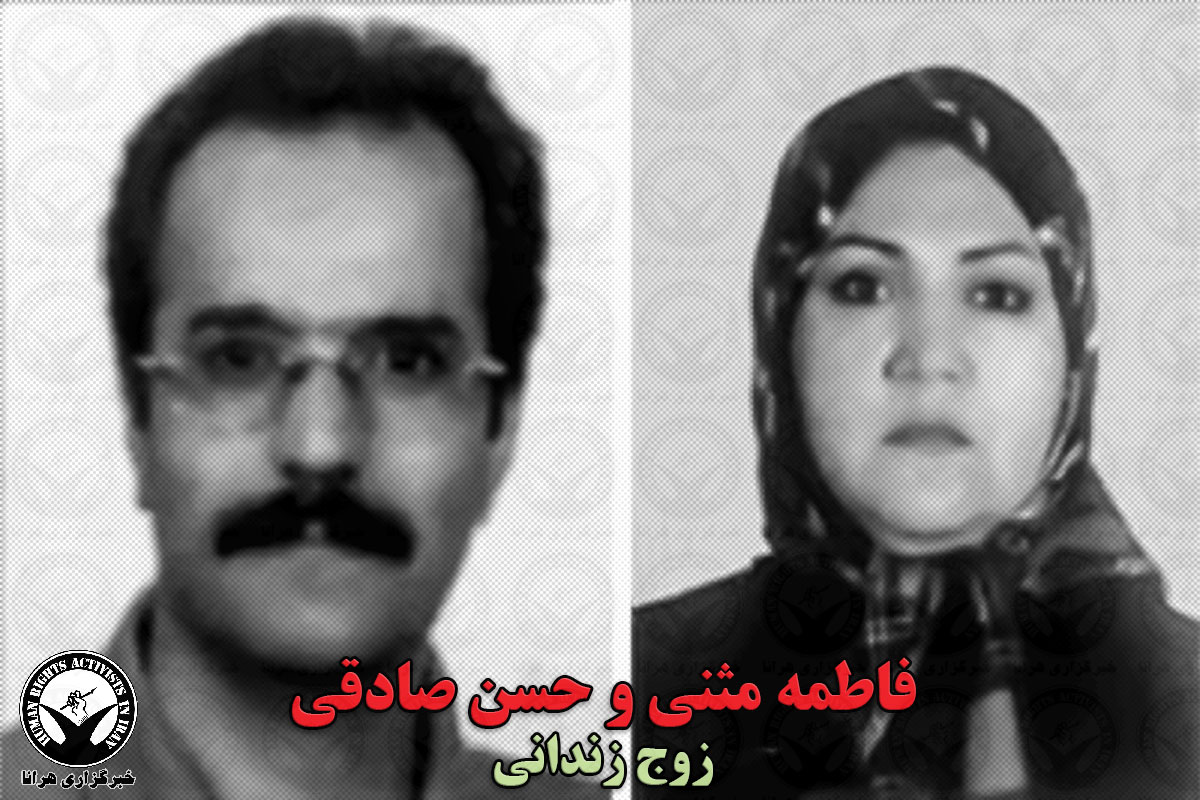
Human Rights Activists News Agency (HRANA) – Arash Sadeghi and Golrokh Iraee, a husband-wife pair of civil rights activists currently serving time in separate prisons, have been denied the right to see each other despite Sadeghi’s recent diagnosis of chondrosarcoma.

Separated by about 30 miles–Sadeghi held in Rajai Shahr in Karaj, and Iraee in the women’s ward of Evin prison in Tehran–have been permitted one visit, in June 2018, arranged in the interest of persuading Iraee to end her hunger strike.

An informed source told HRANA that in the wake of Sadeghi’s recent diagnosis, “Mr. Rostami, the assistant prosecutor in charge of Evin political prisoners, consented to the couple’s visit. [Rajai Shahr Prison Director] Gholamreza Ziaei, however, has opposed Sadeghi’s transfer to Evin for such visit. He cited Sadeghi’s activism in prison as the reason for his objection.”

Sadeghi’s recent diagnosis of chondrosarcoma, a malignant bone and joint cancer, has only heightened his loved ones’ anxiety over an already-shaky prognosis: in addition to bone cancer, Sadeghi suffers from asthma, acute ulcerative colitis, arrhythmia, dilated cardiomyopathy, kidney shrinkage, severe wounds in his large and small intestine, and IBS. His regime of 20 daily medications includes mesalazine, sulfasalazine, warfarin, clopidogrel, propranolol, pantoprazole, suprastine, domperidone, and bismuth subcirate. He went on a 72-day hunger strike in October 2016 to protest his wife’s arrest and incarceration over a story she had written in a private journal, and has yet to fully recover from the physical fallout of long-term starvation.

Sadeghi is serving a 19-year prison sentence imposed by the Revolutionary Court, while Iraee began serving her six-year sentence on October 24th, 2016. Since the recent Iranian New Year, or “Nowruz” celebration in March, her sentence was reduced to two and a half years.

On the orders of Evin Prison Director Chaharmahali, Sadeghi was previously transferred from Evin Prison to Rajai Shahr as a punitive measure. Iranian law has provisions allowing for monthly inter-prison visits between kin who are detained within the jurisdictions of Tehran and Alborz Province.

Authorities Charge Reza Khandan, Husband of Imprisoned Civil Rights Activist Nasrin Sotoudeh

Human Rights Activists News Agency (HRANA) Reza Khandan, husband of imprisoned lawyer and activist Nasrin Sotoudeh, had continued to speak out in defense of the causes championed by his wife. Today, September 4, 2018, he joins her in Evin Prison.

“Gathering and collusion against national security,” “Propaganda against the regime,” and “Promoting the removal of Hijab in society” are the accusations leveled at Khandan, who was arrested in his home by security forces earlier today before being charged in Branch 7 of the Evin Prosecutor’s Interrogation office. His bail has been set at 7 billion rials (approximately $53,000 USD).

Khandan’s arrest follows a court summons he received by phone, and disregarded, one day prior. He published a note detailing the incident:

“Someone called me on my cell today, saying they were from the Intelligence Ministry and saying I had to go there. No person or organization, other than judicial authorities, has the right to prosecute people, and even then, it has to be in writing,” Khandan said.

Khandan said that when he pointed out that the summons was illegitimate, the caller replied that Khandan would be arrested for non-compliance.

In a brief interview, Khandan’s lawyer Mohammad Moghimi enumerated pieces of evidence that authorities are using to build their case against his client, none of which he says can lawfully substantiate the charges: Khandan’s participation in a sit-in organized by his wife in front of the Iranian Bar Association office, his interviews with foreign media outlets, and pin-back buttons that were seized at his home.

On August 18, 2018, in a raid on Khandan’s home, security forces confiscated pin-back buttons reading “I am against forced veiling,” along with letters that Sotoudeh had written to him from prison. The same day, security forces proceeded to search the homes of Mohammadreza (Davoud) Farhadpour, Jila Karamzadeh Makvandi, and Khandan’s sister, whose name has yet to be confirmed by HRANA.

The day before Khandan’s arrest, the Ministry of Intelligence brought in Farhadpour and Makvandi for interrogation. They were subsequently transferred to Evin Court and charged in Branch 7 of the Prosecutor’s Office.

Farhadpour published a note confirming the news of his arrest and added that he crossed paths with civil rights activist Farhad Meysami while walking the corridors of Evin Court. Meysami was previously arrested in his home library on July 31, 2018, and has been on hunger strike since August 1st.

Teacher Mohammad Habibi Transferred to Evin Prison

Human Rights Activists News Agency (HRANA) – Amid hopes that ailing prisoner Mohammad Habibi would be released for medical treatment, he was instead transferred from the Great Tehran Penitentiary to the Quarantine Ward of Evin Prison on Monday, September 3, 2018.

Despite suffering from a kidney condition, the union activist and member of the board of directors of the Teachers’ Union Association of the Province of Tehran was previously denied care on a prior release to the hospital.

A source close to Habibi’s family confirmed news of the Evin transfer to HRANA, adding that Habibi had updated his family on the phone and told them of a pending transfer from the Quarantine Ward to the General Ward, scheduled for Tuesday.

The source detailed Habibi’s difficulties thus far in getting adequate care. “According to a letter from a supervisory court official dated July 8 of this year, Habibi was to receive urgent medical attention. However, for unknown reasons, this letter was never delivered to Habibi. He only saw the letter ten days ago while seeking care at the internal clinic of Great Tehran Penitentiary, at which point he discussed it with officials and was transferred to Imam Khomeini Hospital.

In absence of a practicing nephrologist at Imam Khomeini Hospital, Habibi was examined by a general practitioner who recommended immediate admission for specialized testing and possible surgery. Though eight days have passed since this exam, authorities have yet to follow up on the recommendation, as his family grows ever more concerned about his health.

On August 4, 2018, Mohammad Habibi’s attorney Amir Raeisiyan reported that his client was sentenced to ten and a half years’ imprisonment, despite the fact that the maximum cumulative prison sentence for all of Habibi’s charges would be seven and a half years. At that time Habibi was subjected to the additional penalties of 74 lashings, a two-year ban on civic activities, and a two-year travel ban.

Prior to this, in separate open letters and press releases, the International Trade Union Confederation, the Council for Coordination of Teaching Syndicates, 6,500 teachers and civil society activists, and over 100 educators — all alumni of Shahid Rajai University– demanded his immediate release, and that attention is paid to his medical condition.

Habibi was previously arrested at his place of employment on March 3, 2018, and jailed for 44 days. On April 15, 2018, he was released on a bail of approximately $50,000 USD.

On May 10, 2018, the Council for Coordination of Teaching Syndicates urged teachers, be they retired or employed, to assemble in protest across the country. In Tehran, several of those who responded to the call were arrested and transferred to Evin Prison; all but Habibi were released on bail three days later.

Mohammad Habibi has remained in custody since, and according to a letter from his HR office, is no longer receiving his salary.

Ebrahim Nouri’s Imprisonment begins in Evin’s Quarantine Ward

Human Rights Activists News Agency (HRANA) – Ebrahim Nouri, an Azerbaijani civil rights activist from Ahar, has entered the first days of a six-month prison sentence for a case opened against him in 2016.
After being arrested during a gathering at Babak Fort, he was denied the right to post bail and imprisoned in Ward 209 of Evin Prison on July 2, 2018. An informed source told HRANA that Nouri contacted his family from Ward 209 at that time, informing them of the $29,000 USD bail set for him.
In July, HRANA reported on Ebrahim Nouri’s arrest by security forces at the Babak Fort gathering.
In a press release on August 11, 2018, Amnesty International called the recent arrests of Azeri people “arbitrary” and unlawful, and demanded the immediate release of Ebrahim Nouri and all other individuals detained for their participation in an Azerbaijani Turkic cultural gathering.
Stemming from a 2016 arrest, Nouri was sentenced by Branch 1 of the Criminal Court of Ahar to his current sentence of 6 months’ imprisonment, on a charge of “Propaganda against the regime”. In February 2018, this sentence was confirmed by Branch 26 of the Appeals Court of East Azerbaijan Province, under the supervision of Mikaeil Khoubiarpour.
Nouri, a law student, has a record of being detained for civic activities, beginning in 2005 when he was arrested and interrogated by an IRGC Intelligence unit. In 2009 he was sentenced to ten months’ imprisonment, suspended over five years, on a charge of propaganda against the regime. He was arrested again by security forces on January 17, 2013, and released on a bail of approximately $24,000 USD five days later.

Subscribe to Our Newsletter

Now is definitely not the time to stop reading!

Mohammad Habibi Returns to Prison from Hospital without Adequate Medical Care

Human Rights Activists News Agency (HRANA) – On Sunday, August 26, 2018, Mohammad Habibi’s medical leave from prison was cut short when he was returned to detention before receiving adequate care.

The union activist and member of the board of directors of the Teachers’ Union Association of the Province of Tehran was being treated at Imam Khomeini Hospital. He was recently sentenced to a ten-year prison term and 74 lashings.

Sedigheh Pakzamir, a close associate of Habibi, stated in an online post that it took 45 days for prison authorities to act on the order for Habibi to be transferred to an outside medical clinic. When they finally carried out the order — which stipulates that Habibi receive medical attention — he was returned to the prison without receiving any.

Pakzamir added that Habibi is symptomatic for lung and urinary tract infections. As such, the doctor recommended he undergo a battery of specialized medical tests, including a sonography, on Monday.

Fatemeh Saeidi, Member of Iran’s Parliament (representing Tehran) and of the Parliament’s Education and Research Commission, previously stated that Habibi was being held in a ward housing violent criminals, and that a letter outlining his predicament containing a request for his sentence to be reduced was signed by a number of Parliament representatives and addressed to the head of the Judiciary.

On August 4, 2018, Habibi’s attorney Amir Raeisiyan reported that his client was sentenced to ten and a half years’ imprisonment. Given that the maximum cumulative prison sentence for all of Habibi’s charges would be seven and a half years, he cannot be required to serve longer. Habibi was subjected to the additional penalties of 74 lashings, a two-year ban on civic activities, and a two-year travel ban.

Prior to this, the International Trade Union Confederation issued a letter to the Islamic Republic in objection to Habibi’s heavy sentence, demanding his immediate and unconditional release. Education International, a teachers’ union federation, has also protested the verdict and demanded Habibi’s release.

In a statement, the Council for Coordination of Teaching Syndicates protested Habibi’s sentence, calling it a litmus test for the justice meted by the Iranian Judiciary. This council demanded the immediate and unconditional release of Habibi, stating, “It is as if the judge intended with his verdict to put society on guard, sending the message that if you pursue justice, you will face prison and lashings.”

On July 16, 2018, over 100 teachers, all alumni of Shahid Rajai University, met with a Mr. Abdi, the Minister of Education’s advisor in Union Affairs, and delivered him a letter in defense of Mohammad Habibi. In the letter, the signatories expressed “great concerns regarding Mr. Habibi’s health”, and requested he be transferred to Evin Prison in accordance with his charges. It also implored the Ministry of Education to pursue the demands of the letter to the furthest degree possible, and to keep the signatories and Habibi’s family abreast of their findings.

A letter signed by 6,500 teachers and civil society activists demanding the release of Mohammad Habibi was delivered to Iranian Parliament on July 25, 2018.

On May 10, 2018, the Council for Coordination of Teaching Syndicates urged teachers, be they retired or employed, to assemble in protest across the country. In Tehran, several of those who responded to the call were arrested and transferred to Evin Prison; all but Mr. Habibi were released on bail three days later.
Mohammad Habibi was previously arrested at his place of employment on March 3, 2018 and jailed for 44 days. On April 15, 2018, he was released on a bail of approximately $50,000 USD.

Mohammad Habibi is currently imprisoned in Tehran’s Evin Prison, and according to a letter from his HR office, is no longer receiving his salary.

Narges Mohammadi Back in Evin Prison after Hospitalization

Human Rights Activists News Agency (HRANA) – Narges Mohammadi, imprisoned deputy head of Iran’s Center for Supporters of Human Rights who had been transferred to Imam Khomeini hospital on August 13th due to her grave health condition, has been sent back to Evin Prison.

Taqi Rahmani, Mohammadi’s husband, released a statement to announce his wife’s return to prison: “Narges needs sick leave to continue her treatment,” Rahmani wrote. “Yesterday, her children were waiting for their mother to call, and the call never came. She has the right to treatment.”

Mohammadi had previously been hospitalized on June 30th, and shortly after undergoing surgery was sent back to Evin on July 5th. On August 6th, prison authorities denied her transfer to see a neurological specialist outside the prison.

According to Mohammadi’s lawyer Mahmood Behzadirad, her requests for conditional medical release are consistently denied. Four years remain of the ten-year sentence she is currently serving.

Mohammadi was sentenced in Tehran’s Revolutionary Court in May 2016 to two concurrent imprisonments of ten and six years. Mohammadi reported that the trial judge displayed an openly hostile attitude toward her while endorsing the allegations of the Ministry of Intelligence. The ten-year sentence stemmed from a charge of “forming a society to disrupt national security,” for campaigning to end capital punishment in Iran. Her six-year sentence was for “organizing and colluding against national security” and “propaganda against the regime.”

Among the pieces of evidence used against her on the latter counts were her media interviews, participation in peaceful protests supporting prisoners on death row, her correspondence with fellow activists like Nobel Peace Laureate Shirin Ebadi, and her 2013 meeting with former European Union Foreign Policy Chief Catherine Ashton.

Branch 36 of Tehran’s Appeals Court confirmed Narges Mohammadi’s sentence in the Fall of 2016. In May 2017, Iran’s Supreme Court refused to appeal the decision.

Nasrin Sotoudeh Starts Hunger Strike in Evin Prison

Human Rights Activists News Agency (HRANA) – Nasrin Sotoudeh, prominent lawyer and human rights activist, who has been detained in Tehran’s Evin Prison since June 13th, started a hunger strike on Saturday, August 25th.

Sotoudeh has published an open letter to declare her hunger strike. The arrest and harassment of her family members and friends is the reason behind her protest, she says in the letter.

Sotoudeh’s husband, Reza Khandan, published a note to confirm his wife’s hunger strike.

The full text of Nasrin Sotoudeh’s letter, translated by HRANA:

My fellow Iranians,

After I was arrested two months ago, agents of the Ministry of Intelligence undertook the unlawful action of arresting the esteemed citizen, Dr Farhad Meysami. They searched his house and that of his relatives and friends to discover evidence of protest against mandatory veiling.

After they failed to find anything in the house of my husband’s sister, they confiscated a satellite device [instead].

Since none of my correspondences to the authorities has been so far responded to, I have no choice but to embark on a hunger strike to protest against the arrests and judicial pressures brought upon my family, relatives and friends.

In the hope that law and justice will one day prevail in our beloved country, Iran.

Nasrin Sotoudeh
August 2018

<b> —- </b>

Nasrin Sotoudeh had recently refused to appear in court, despite a summons order issued by the authorities. She wrote an open letter to explain why.

According to a report published by HRANA on August 18th, Reza Khandan’s house and the house of other relatives and friends of the family were raided by the authorities.

<b> *** </b>

<h3> UPDATE: </h3> Nasrin Sotoudeh ended her hunger strike on October 3, 2018, her lawyer Mohammad Moghimi told HRANA.

Journalist Hamed Ayinehvand Denied Bail, Moved from Solitary Confinement to General Ward

Human Rights Activists News Agency (HRANA) – Hamed Ayinehvand, a journalist and political activist who was arrested on June 27, 2018, by security forces belonging to the Intelligence unit of Tehran’s Islamic Revolutionary Guard Corps (IRGC), has been transferred from solitary confinement, where he spent 44 days after his arrest, to a general ward in Evin Prison.

The Prosecutor of Branch 7 of the Evin Prosecutor’s office has denied Ayinehvand bail, despite the completion of the investigations process and the judicial proceedings. The charge issued against him is “Propaganda against the regime through cyberspace activities”.

A source close to the case told HRANA: “Mr Ayinehvand’s family is worried about [his] mental condition which was described as inappropriate based on his family’s observation [of him] during their last prison visit.”

Hamed Ayinehvand is a political activist, journalist and PhD student of international relations at the Islamic Azad University’s science and research department. Furthermore, Ayinehvand was a *disqualified candidate in Iran’s most recent Parliamentary election.

*Iran’s Guardian Council is responsible for vetting the qualifications of parliamentary candidates and determines who is eligible to run for Parliament.

Imprisoned Civil Rights Activist Farhad Meysami on Hunger Strike

Human Rights Activist News Agency (HRANA)- Farhad Meysami, who was arrested and transferred to Ward 209 of Evin Prison on July 31, 2018, has been on hunger strike since August 1st. He faces charges of “Collusion and conspiracy to threaten national security”, “Disseminating propaganda against the regime,” and “Insulting the hijab, an essential sacrament of Islam” from Branch 7 of Evin Court.

Reza Khandan, husband of Nasrin Sotoudeh, the human rights lawyer who was previously imprisoned on similar charges, related Mr Mesyami’s case updates to HRANA.

“Farhad Meysami [declared his strike] when he contacted his mother, which was 20 days into his detention,” Mr Khandan said, explaining that news hadn’t spread earlier because Mr Meysami was being held in solitary confinement. In the same phone conversation, according to Mr Khandan, Mr Meysami said he was anticipating a transfer to the prison’s general ward in three days.

Reading from the interrogation sheet intended to elucidate his charges, Mr Meysami cited accusations of “provoking women to appear without hijab in the street”. Mr Khandan conjectures that Mr Meysami’s charges actually stem from his possession of pin-back buttons reading “I protest mandatory Hijab”.

“Farhad Meysami’s mother was extremely worried following the news of his hunger strike and intimated that she wanted to start a hunger strike as well,” Mr Khandan added. “But some friends and I dissuaded her, given her age and her need to take medications on a daily basis.”

Earlier, Arash Keikhosravi — who has been detained in the Great Tehran Penitentiary for the past four days — told HRANA that “on Sunday, August 12th, Mr Meysami’s mother and I went to Branch 7 of Evin court to follow up on his case and to see how he was doing. I planned to register as his lawyer, but the officials at the branch told me that section 48 of the Criminal Procedure Code bars me from doing so.”

Section 48 of the recently-amended Criminal Procedure Code states that those accused of national-security crimes must choose their lawyer from a list approved by the Iranian judiciary. Human Rights Organizations have argued that this new policy gives further license to infringe on the rights of defendants.

Mr Keikhosravi also said that “Mr Meysami’s mother went to see the case investigator after receiving a phone call in which she could hear the sounds of her son’s interrogation and torture.”

The investigator reportedly denied that the call had come from Evin authorities, promising her a phone call from her son to alleviate some of her worries and assure her of his wellbeing.