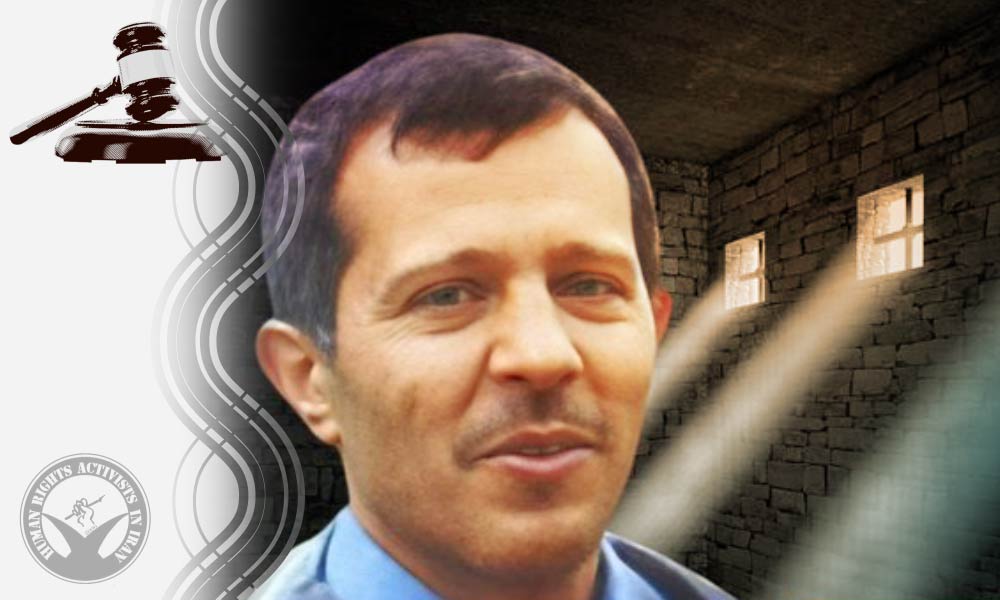
Mehdi Mohebi Sentenced to Five Years in Prison

Mehdi Mohebi, arrested during the 2022 nationwide protests, has been sentenced to five years in prison by the Tehran Revolutionary Court, as reported by HRANA, Human Rights Activists News Agency.

Mohebi was arrested by security forces during the nationwide protests and subsequently incarcerated at the Great Tehran Penitentiary following the indictment process.

Iman Afshari, the judge presiding over the case, sentenced Mohebi to five years for “assembly and collusion against national security.”
An informed source told HRANA that Mohebi was denied access to a lawyer throughout the entire legal proceedings.

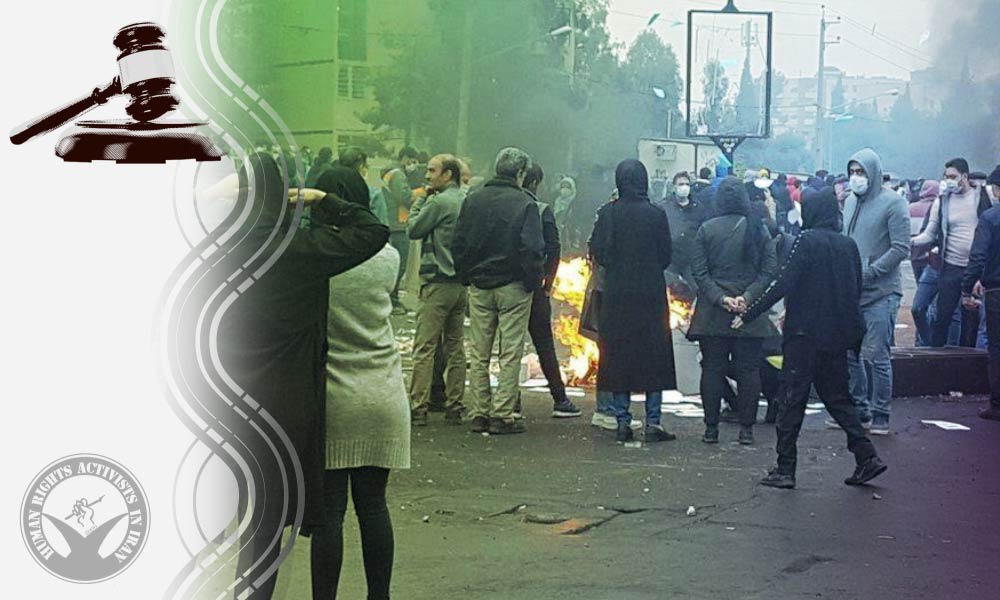
Background on the 2022 Nationwide Protests

The arrest of Mahsa Amini by Tehran Morality Police for her improper hejab and her suspicious death on September 16 sparked protests sweeping across Iran. Protesters came to the streets with the central slogan “Women, Life, Freedom” in protest against the performance, laws and structure of the regime.


Political Prisoner Habib Asivad Executed

On May 6, 2023, Habib Chaab, a political prisoner also known as Habib Asivad, was executed in Iran after being accused of “spreading corruption on earth” through his alleged involvement with a group called Harekat Nezal.

According to HRANA, the news agency of Human Rights Activists, quoting the Iranian Judiciary’s news agency, on May 6, 2023, Mizan, political prisoner Habib Chaab was executed.

Branch 26 of the Tehran Revolutionary Court, led by Judge Iman Afshari, sentenced Chaab to death for “spreading corruption on earth” through his supposed role in commanding Harekat Nezal. The verdict was upheld by the Supreme Court of Iran.

Asivad was abducted in Turkey in October 2020 and transported to Tehran. Subsequently, in a report, Iran State TV accused him of leading Harekat Nezal and orchestrating a terrorist attack on a parade of armed forces on September 22, 2018.

In 2022, the Department of Statistics and Publication of Human Rights Activists in Iran registered 457 reports related to the death penalty. This included 92 death sentences, including the conviction of 6 people to public execution and 565 execution sentences were carried out, 2 of which have been carried out in public. Based on the announced identifications of some of the executed individuals, 501 were male and 11 were female. In addition, 5 juvenile offenders were executed in 2022, meaning they were under the age of 18 at the time they committed the crime.

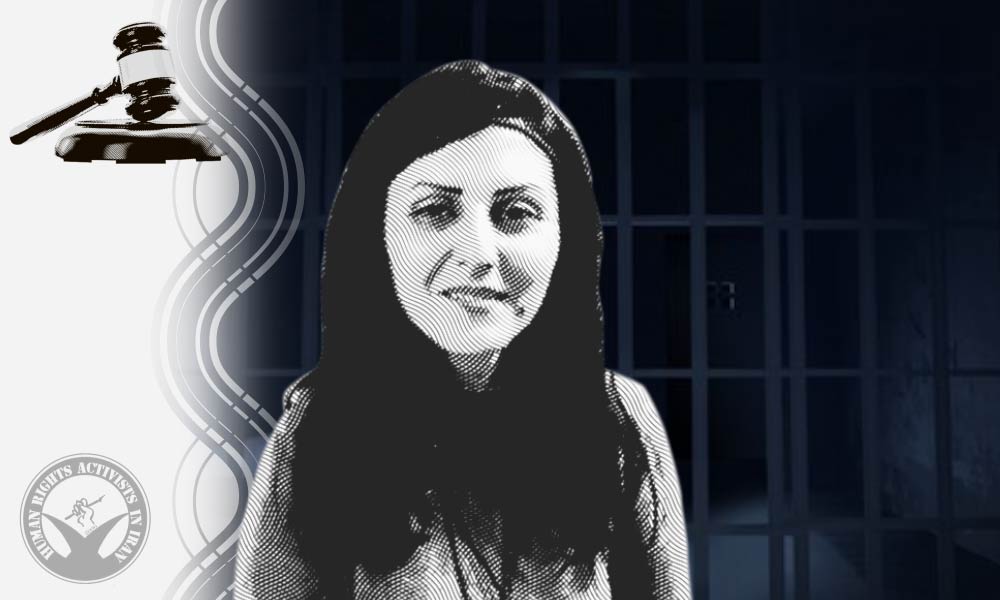
Golrokh Iraee Sentenced to Seven Years in Prison and Additional Punishments

Branch 26 of the Tehran Revolutionary Court sentenced former political prisoner Golrokh Iraee to seven years and additional punishments.

According to HRANA, the news agency of Human Rights Activists, Golrokh Ebrahimi Iraee was sentenced to imprisonment and additional punishments.

Branch 26 of the Tehran Revolutionary Court, presided by Judge Iman Afshari, sentenced Iraee to six years in prison for “assembly and collusion against national security” and one year for “propaganda against the regime.” In addition, she has been banned from leaving the country, travelling to Tehran, and joining political and civil groups for two years. Her cell phone has also been confiscated by the court.

If the verdict is upheld on appeal, based on Article 134 of the Islamic Penal Code, six years in prison for the first charge will be enforceable.

An informed source close to her family told HRANA, “the Judge sentenced Golrokh to six years despite the maximum five years sentence for the charge of assembly and collusion, determined in the Islamic penal code. The judge cited the possibility of reoffending as the reason for the longer sentence, even though Iraee has never been convicted of this crime in her previous legal cases.”

“Iraee and her family were told by security and judicial officials that the only way to avoid incarceration is to submit a written request for a pardon, which Iraee has repeatedly refused to do. As a result, Judge Afshsari has refused to grant her bail,” the source added.

On September 26, 2022, security forces arrested Iraee violently at her home in Tehran.

Iraee faced other arrests and convictions on prior occasions. In the last case, the Tehran Revolutionary Court sentenced her to three years and seven months, which was upheld later on appeal. Applying Article 134 of the Islamic Penal Code, two years and one month was enforceable.

Also earlier, in April 2021, the Tehran Revolutionary Court sentenced her in absentia to one year and additional punishments for “propaganda against the regime.” She was released on Amol Perison on May 9, 2022.


Women’s Rights Activist Akram Nasirian Released from Evin Prison

On March 7, 2023, women’s rights activist Akram Nasirian was released from Evin Prison.

In August 2022, Nasirian was summoned to Evin Courthouse and jailed to serve her two-year-and-three-month sentence in Evin Prison.
The details of her release are still unknown.

On April 29, 2019, security forces arrested Nasirian in Tehran and detained her in solitary confinement under interrogation in Evin Prison for 20 days. In Late May, she was relocated to double cell solitary in this ward.
On May 26, 2019, she was released on 200-million-toman bail until the end of legal proceedings.

On September 4, 2019, along with Nahid Shaghaghi, Nasirian was summoned to the Evin Courthouse investigation office, presided by Judge Nasiripour.

The Branch 26 of Tehran Revolutionary Court, presided by Judge Iman Afshari, sentenced Nasirian and three other women’s rights activists, Asrin Darkaleh, Maryam Mohammadi and Nahid Shaghaghi, each to four years and two months. These verdicts were reduced to two years and three months after the defendants waived their rights to appeal.

In March 2020, Nasirian and three other women’s rights activists were summoned to Evin Courthouse for sentencing, which was postponed until April 3, 2022, due to the Head of Judiciary’s directive to keep health prisons condition in control during the Covid-19 pandemic. In August 2022, she was jailed in Evin Prison.


Political Prisoner Shakila Monfared Goes on Hunger Strike in Qarchak Prison

On March 3, political prisoner Shakila Monfared went on a hunger strike in protest against the housing of political prisoners in the same ward as prisoners of violent crime, the irresponsibility of prison officials towards her safety and the recent threat from one of her fellow inmates.

According to HRANA, the news agency of Human Rights Activists, an informed source told HRANA that one of the prisoners of violent crimes threatened her with a sharpened piece of a can and intended to injure her.

In violation of prison rules, many political prisoners are housed in the same ward as prisoners of violent crimes, which make them subject to threats, battery and even murder.

On August 31, 2020, security forces arrested Monfared while she was leaving her home. They transferred her to a detention centre at the disposal of the IRGC in Tehran. Reportedly, they did not have a warrant for this arrest.

On September 9 of last year she was relocated to the quarantine section of the women’s ward of Evin Prison. On September 14, she was released on a bail of 400 million tomans until the end of legal proceedings.

In January of this year, the joint court trial of Shakila Monfared, Arsham Rezaei, and Mohammad Abolhassani was held in Branch 26 of the Revolutionary Court of Tehran, presided over by Judge Iman Afshari. 27 year old Monfared was sentenced to 6 years in prison and 4 months of probation work in the Agricultural Jihad on charges of “propaganda activities against the system” and “insulting the sanctities of Islam”.

Monfared was granted furlough on August 23 of this year and returned to jail on September 7.

Subscribe to Our Newsletter

Now is definitely not the time to stop reading!

Shakila Monfared Denied Access to Medical Treatment in Qarchak Prison

Political prisoner Shakila Monfared, who suffers from gastrointestinal disease and severe stomach pain, has been denied access to adequate medical treatment in Qarchak Prison in Varamin City.

According to HRANA, the news agency of Human Rights Activists, prison officials have barred her dispatch to a hospital outside the prison as well as leave on furlough for medical treatment.

“For the fifth time, her request for furlough has been rejected,” an informed source told HRANA. “They mentioned a report from the interrogator and judiciary officers on her interview with one of the media as the reason for this rejection. This claim stands at odd with the fact that she never had any interview and the interrogator refuses to provide any proof regarding this claim.”

On August 31, 2020, security forces arrested Monfared while she was leaving her home. They transferred her to one of the detention centers at disposal of IRGC in Tehran. Reportedly, they did not have a warrant for this arrest.

On September 9, of last year she was relocated to the quarantine section of the women ward of Evin Prison. On September 14, she was released on a bail of 400 million tomans until the end of legal proceedings.

In January of this year, the joint court trial of Shakila Monfared, Arsham Rezaei, and Mohammad Abolhassani was held in Branch 26 of the Revolutionary Court of Tehran, presided over by Judge Iman Afshari. 27-year-old Monfared was sentenced to 6 years in prison and 4 months of probation work in the Agricultural Jihad on charges of “propaganda activities against the system” and “insulting the sanctities of Islam”.

Monfared was granted furlough on August 23 of this year and returned to jail on September 7.

New Details Emerge on Inhumane Treatment of Lawyer and Human Rights Activist Payam Derafshan

Saeed Dehghan has revealed more details about the arrest of his colleague, lawyer and human rights activist Payam Derafshan.

According to HRANA, the news agency of Human Rights Activists, Dehghan claims in a note on his personal social media page that on June 7, 2020, 17 security agents raided Derafshan’s office and arrested him.

The post says, the agents took him to a so-called safe house and then, from there, to a solitary confinement cell in detention center No 2A. There they injected him with an unknown drug causing seizure and subsequent hospitalization.

“Not just a human rights activist, (Derafshan) was the secretary of the commission for the Protection of Lawyers, which is devoted to protects the lawyers who face security and judicial issues,” Derafshan’s note reads. “On June 7, 2020, 17 security forces raided his office, inspected the office and confiscated his personal computer and other documents…From the very time of arrest through the interrogation process, the interrogators of IRGC’s intelligence unit wanted to find out why he accepted Kavous Seyed-Emami’s case…They transferred him with a blindfold to a safe house rather than a detention centre. In addition to denying access to a phone call and informing his family and lawyer, his confinement in a dark cell without any windows in summertime put the maximum mental and corporeal pressure on him. Thereafter, they transferred him to detention centre No 2A, which is at the disposal of IRGC.  Being held in a cell with always-on-bright lamps, noisy ventilation and stinky toilet and long interrogation were making sleeping hard for him.”

When Mr. Derafshan complained about this situation, he was reportedly threatened with an electric shocker and then taken to prison healthcare where he was injected with an unknown drug. This injection caused a seizure, tongue biting and subsequent fainting and internal bleeding.

According to the note, they transferred him to the hospital the following day for surgery on his tongue. Thereafter, they extended the detention period and sent him back to the public ward of Evin Prison without providing any medical treatment for recovery time after surgery. When he got seizures again, they hospitalized him in a psychiatric hospital where he received electric shocks, which not only exacerbated his seizure problem, but also caused brain damage and consciousness disorders.

On July 6, 2020,  the Branch 26 of Tehran Revolutionary Court, headed by Judge Iman Afshari sentenced Payam Derafshan to two years and six months imprisonment on the charge of “the propaganda against the regime, spreading lies and disturbing public opinions and carrying illegal shocker and sprays”. He was exonerated on the charge of “assembly and collusion against national security”. The verdict was upheld on appeal but reduced to two years grounded on the applicability of “Punishment Reduction Law”.  After issuing the sentence, he was sent on furlough and after serving one-third of his term, he was released on probation to complete the treatment process.

In a previous case, Branch 1 of Karaj Revolutionary Court had sentenced him to two years imprisonment and two years occupational deprivation as a lawyer on the charge of “offensive statements against the supreme leader of Iran”. The imprisonment was reduced to one year on appeal. The conviction was held in suspension. It is unknown whether, after the last final conviction, this previous conviction will come out of suspension.

Payam Derafshan has been the lawyer of many political prisoners and prisoners of conscience such as Muhammad Najafi, Vida Movahed, Nasrin Sotoudeh,  Kavous Seyed-Emami’s family, Fatemeh Khishavand, Sekineh Parvaneh and a number of arrestees in the nationwide protests of November 2019.

Hojatollah Rafei Sentenced to 6 Years in Prison

Hojatollah Rafei, a native of Shahriar City, was sentenced by Branch 26 of the Revolutionary Court of Tehran to 6 years imprisonment and a two-year ban from leaving the country.

According to HRANA, the news agency of Human Rights Activists, the Revolutionary Court of Tehran, presided by Judge Iman Afshari, sentenced Mr. Rafei to a total of 6 years in prison, 2 years ban from leaving the country, planting 40 saplings, and writing a research paper about the former regime in Iran.

Hojatollah Rafei is a teacher and a native of Fararat village of Shahriar city in Tehran Province.

If this sentence is upheld at the appeal stage, with the application of Article 134 of the Islamic Penal Code, the most severe punishment that will be enforceable to Mr. Rafei will be 5 years in prison on a charge of “gathering and conspiracy to commit a crime against national security”.

Mr. Rafiei was transferred from the Greater Tehran Prison to Branch 26 of the Revolutionary Court of Tehran on August 28 without prior notice. His lawyer was not notified, and the trial took place without the lawyer’s knowledge.


Reza Mehregan on a Hunger Strike in Evin Prison

On Saturday, August 14, civil activist Reza Mehregan went on a hunger strike in Evin Prison, where he is currently serving out a 5 year sentence.

According to HRANA, the news agency of  Human Rights Activists, Mehregan began the hunger strike to protest his transfer to quarantine despite having received a negative corona test result.

Mr. Mehregan was sent on a five-day leave of absence from Evin Prison on Saturday, August 7, and returned to prison at the end of his leave.

Mehregan suffers from heart disease and high blood pressure, and although previously he was  permitted to be sent on medical leave, he had remained in prison as he was not able to provide the required bail.

In December 2019, the Branch 26 of the Revolutionary Court of Tehran, headed by Judge Iman Afshari sentenced Mr. Mehregan to 5 years in prison on the charge of conspiracy against national security, to 1 year in prison on a charge of propaganda activities against the regime, to 1 year in prison and 74 lashes for disturbing public order, and to 2 years of compulsory reside in the Jafarabad district of Arian Shahr in South Khorasan Province.

The sentence was later reduced by Branch 36 of the Tehran Court of Appeals, presided by Judge Ahmad Zargar, to six years in prison from which 5 years imprisonment is enforceable to Mr. Mehregan, after applying Article 134 of the Islamic Penal Code.

Reza Mehregan, along with Mohammad Abolhassani, another civil activist, was sent from Evin Prison to Branch 2 of the Evin Prosecutor’s Office, headed by Judge Haji Moradi, in December 2020, in connection with another case against them. The two civil activists were charged with holding a funeral of the victims of the November 2019 nationwide protests in prison.

Court of Appeals Sentences Keyvan Samimi to 2 Years in Prison

Iranian journalist Keyvan Samimi has been sentenced to two years in prison after a court of appeals overturned the Supreme Court’s  decision to resume Samimi’s case.

According to HRANA, the news agency of Human Rights Activists, quoting Ensaf News, Samimi is the editor of Iran-e- Farda newspaper and a member of the Iranian Writers’ Association.

Mr. Samimi had previously endured six years in prison in 2009 for questioning the 2009 presidential election, participating in protests, and writing articles critical of the Islamic Regime. He is currently being held in Evin Prison, where he has been imprisoned since his arrest on International Workers’ Day in 2019.

Samimi was sentenced by Branch 26 of the Revolutionary Court of Tehran, headed by Judge Iman Afshari, to three years in prison on charges of conspiracy to act against the security of the country. This verdict was upheld by Branch 36 of the Tehran Court of Appeals, presided over by Judge Ahmad Zargar.

Mahmoud Behzadi-Rad, Samimi’s lawyer, said that the Supreme Court accepted the resumption of Mr. Samimi’s trial, but when his case was sent to the Branch 54 of the Court of Appeals, the decision was reversed.

“The judge did not accept the opinion of the Supreme Court,” Behzadi-Rad said, “and they only reduced the three-year imprisonment sentence to two years.”