Baha’i Citizen Susan Badavam Sentenced to Over Four Years in Prison

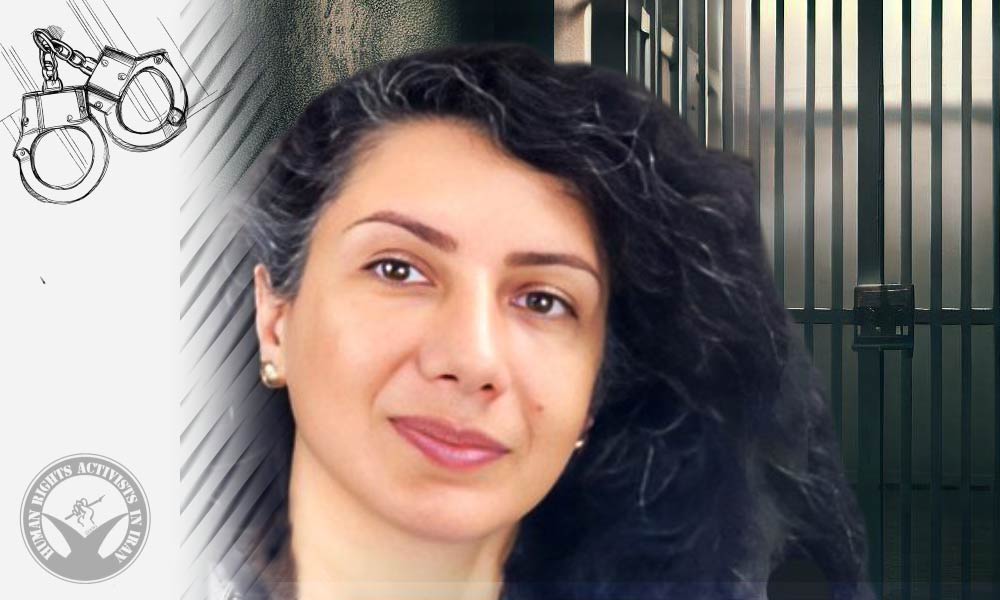
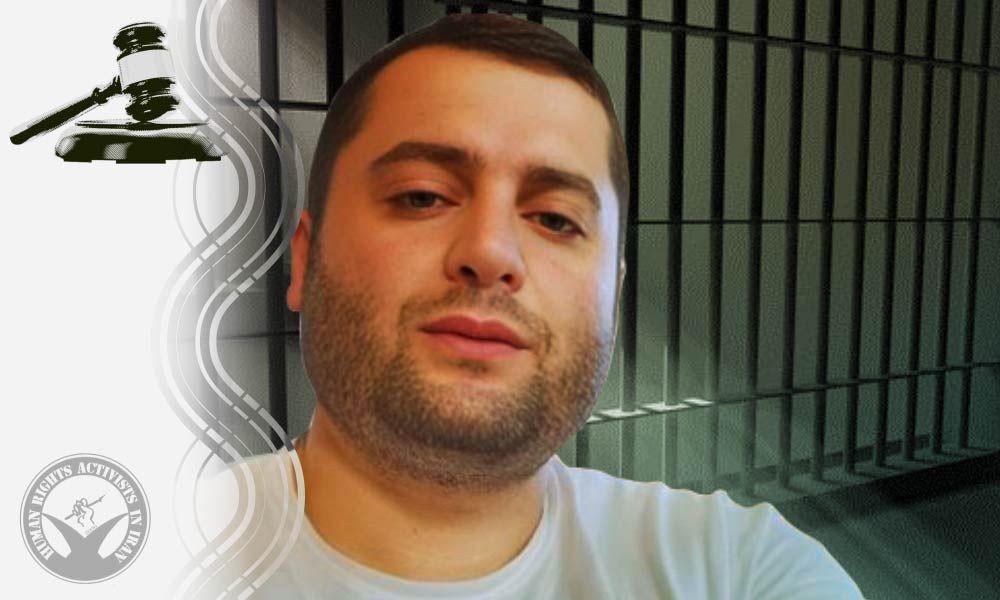
The Rasht Revolutionary Court has handed down a verdict against Susan Badavam (Farhangi), a Baha’i citizen, sentencing her to a total of four years and 47 days of imprisonment, coupled with additional social restrictions.

The court’s ruling, delivered to Badavam on Monday, August 21st, includes a sentence of three years, six months, and one day for her alleged “educational activities associated with religious sects and groups contrary to Islamic Sharia,” alongside an additional seven months and 16 days for purportedly “disseminating propaganda against the regime.” Additionally, she has been deprived of some civil rights for a duration of ten years.

If the verdict is upheld on appeal, three years and six months for the first count will be enforceable to her.

Badavam’s arrest dates back to December 19, 2022, when she was apprehended by intelligence agents from the Islamic Revolutionary Guard Corps (IRGC) in Gilan Province.


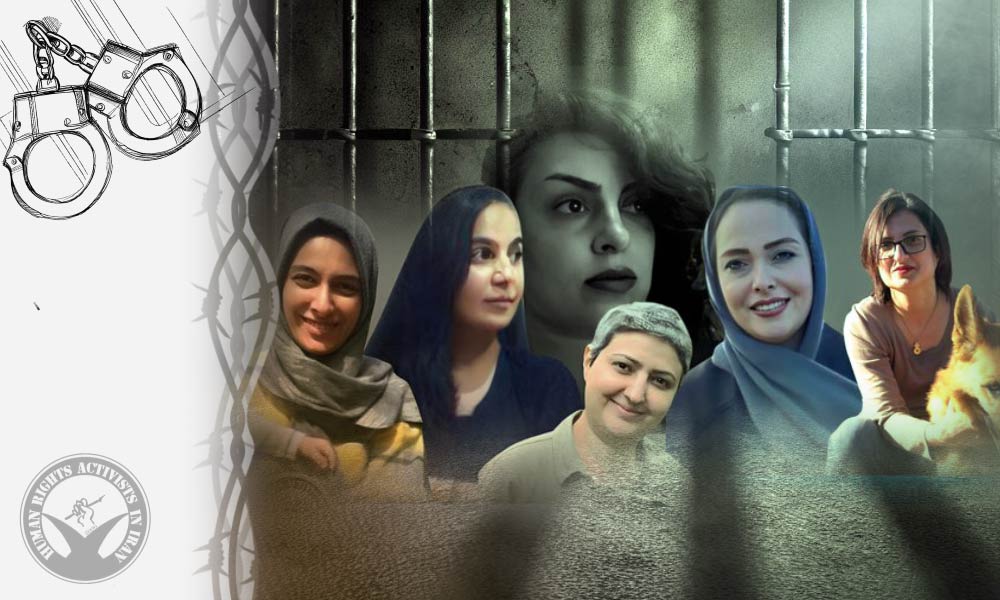
Seven Women’s Rights Activists Arrested in Gilan Province

On August 16, 2023, a total of seven women’s rights activists were apprehended individually in Rasht, Fuman, and Bandar Anzali, subsequently being transported to undisclosed locations. The detained individuals include Zahra Dadras, Zohreh Dadras, Negin Rezaie, Matin Yazdani, Frough Saminia, Jelveh Javaheri, and Yasamin Hashdari.

Zahra and Zohreh Dadras were taken into custody by security forces at their residence in Rasht. However, inquiries made by their family members regarding their condition have gone unanswered thus far. Moreover, Frough Saminia, Yasamin Hashdari, and Matin Yazdani, a photographer, have also been apprehended individually within the same city.

The exact motives behind their arrests, their current locations, as well as the nature of the charges against them, all remain undisclosed at present.

Baha’i Couple’s Sentence Upheld by Court of Appeals

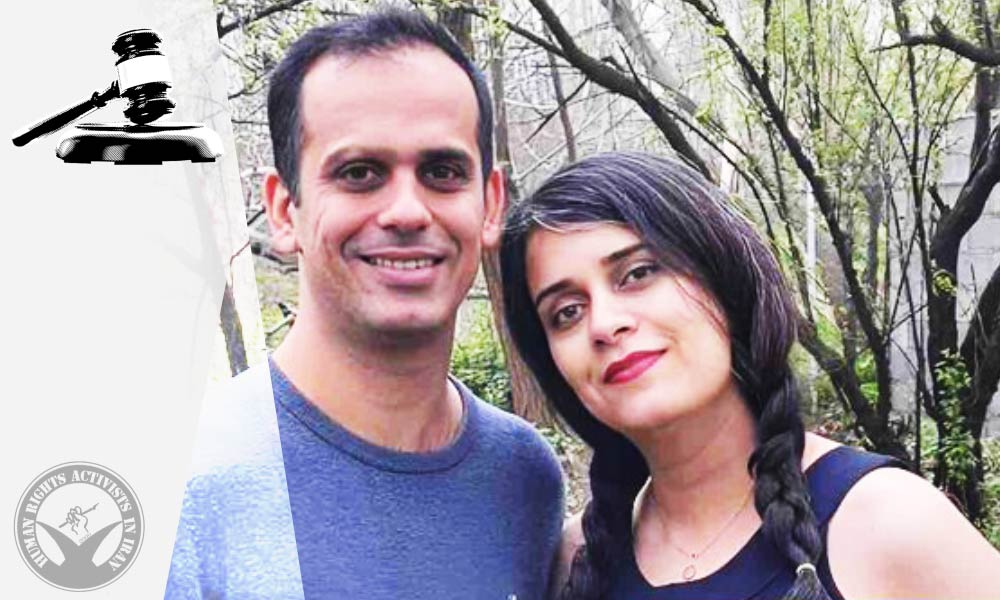
The Gilan Province Court of Appeals has maintained the prison sentence for the Baha’i couple, Vesal Momtazi and Anisa Samieian.

Originally sentenced by the Rasht Revolutionary Court, Momtazi and Samieian received a combined term of nine years and six months. Mrs. Samieian’s sentence encompasses three years and six months for “engaging in educational activities and propaganda against Sharia law,” in addition to seven months and 16 days for “propaganda against the regime.” Meanwhile, Mr. Momtazi has received seven months and 16 days for “propaganda against the regime,” along with one year and three months for “insulting the Supreme Leader of Iran” and three years and six months for “insulting Sharia law.” He is also facing a fine of 38 million tomans. Both individuals are further subjected to social restrictions lasting a decade.

Article 134 of the Islamic Penal Code dictates that each of them will serve three years and six months in prison.

According to an HRANA source close to the family, more than 50 individuals, including friends, colleagues, art students, and their parents, compiled an affidavit attesting to the couple’s adherence to the law. Regrettably, this affirmation was not permitted for presentation during the appellate court proceedings.

On November 4, 2022, security forces searched their residence, resulting in their apprehension. Following his arrest on December 6, 2022, Momtazi was granted bail. Samieian, who was pregnant at the time of her arrest, secured her release on bail after undergoing two interrogation sessions. It’s noteworthy that this Baha’i couple is responsible for the care of two young sons, aged five and about four months.

The Baha’i faith is not recognized as a legitimate religion by Iranian authorities, leading to systematic and longstanding violations of the rights of Baha’is in the country. This includes the denial of their fundamental right to practice their religion, which constitutes a clear breach of both Article 18 of the Universal Declaration of Human Rights and Article 18 of the International Covenant on Civil and Political Rights. The United Nations covenant holds that every person has the right to freedom of religion, freedom of converting religion, as well as freedom of expression, individually or collectively; openly or secretly.


Sunni Prisoner Hamzeh Darwish Attempts Suicide, Currently Hospitalized

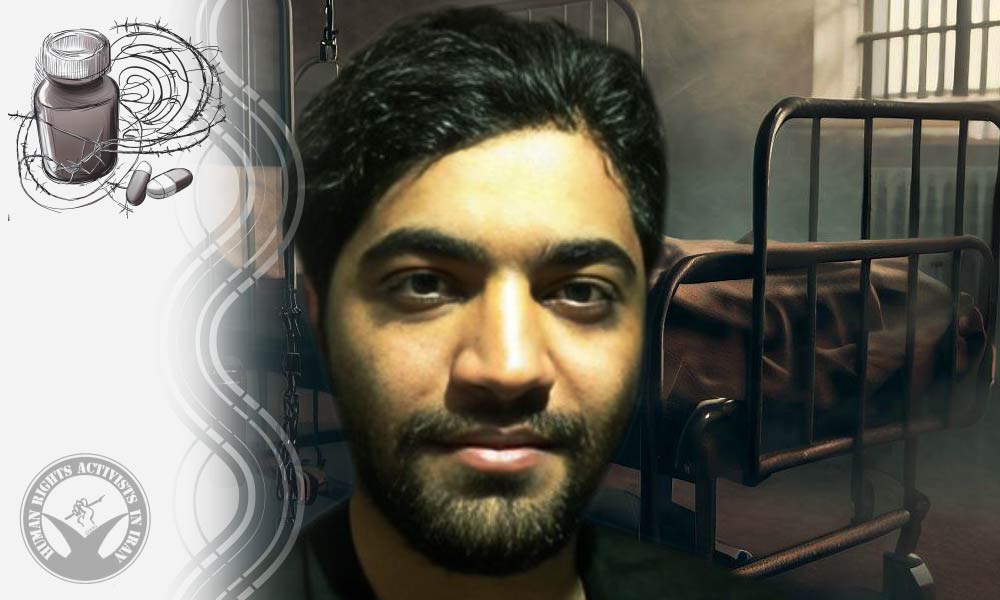
On Thursday, August 10, Hamzeh Darwish, a Sunni prisoner incarcerated at Lakan Prison in Rasht, attempted suicide through a pill overdose. He is presently receiving medical care at a hospital in Rasht.

A relative of the detainee informed HRANA: “On Thursday, around 12:30, our family was notified by a call from Lakan Prison that Darwish had attempted suicide by ingesting 12 diazepam pills. This desperate act was a form of protest against the unjust 14-year exile sentence imposed on him. He has since been transferred to Razi Hospital in Rasht. Despite his critical health condition, he remains physically restrained with handcuffs and ankle cuffs.”

According to the same source, security personnel are impeding the family’s ability to enter the hospital and visit Darwish. “After frequent inquiries,” the source continued, “the family has learned that medical procedures were performed, including gastric lavage, and unfortunately, his level of consciousness has declined to a score of 3.”

The Rasht Revolutionary Court has recently handed a 14-year prison sentence in exile to Darvish. This decision was reached based on a verdict issued by presiding Judge Ahmad Darvish Goftar on July 30. According to the judgment, Darvish has been sentenced to five years for “assembly and collusion against national security,” five years for “assisting in deliberate destruction to defy the regime,” two years for “insulting the Supreme Leader of Iran,” and two years for “insulting the founder of the Islamic Republic of Iran.” Due to the charge of “setting fire to a prison building,” he is to serve his sentence in exile in Ramhormoz, Khuzestan province. The period of his detention has been taken into account.

The verdict restricts visitation rights to only his family and relatives during his time in exile. The ruling stipulates that, upon expressing genuine remorse, he may be eligible for a pardon from the Supreme Leader after serving one year in exile.

The verdict is subject to appeal at the Supreme Court of Iran within 20 days of its issuance.

Darvish’s journey through adversity began in 2014 when he was deceived by ISIS forces into traveling to Turkey and later to Syria, as he claims. Following a period of confinement in an ISIS jail, he managed to escape and returned to Iran, where he surrendered himself to security forces.

After spending a year in detention, he was initially released on bail. However, he was subsequently rearrested and sentenced to 15 years imprisonment. On May 11, 2020, he was transferred from Rajai Shahr Prison to Lakan Prison, where he continues to serve his ongoing sentence.

Hamzeh Darvish Receives 14-Year Exile Prison Sentence

The Rasht Revolutionary Court has handed a 14-year prison sentence in exile to Hamzeh Darvish, a Sunni prisoner who faced charges brought against him while incarcerated.

This decision was reached based on a verdict issued by presiding Judge Ahmad Darvish Goftar on July 30. According to the judgment, Darvish has been sentenced to five years for “assembly and collusion against national security,” five years for “assisting in deliberate destruction to defy the regime,” two years for “insulting the Supreme Leader of Iran,” and two years for “insulting the founder of the Islamic Republic of Iran.” Due to the charge of “setting fire to a prison building,” he is to serve his sentence in exile in Ramhormoz, Khuzestan province. The period of his detention has been taken into account.

The verdict restricts visitation rights to only his family and relatives during his time in exile. The ruling stipulates that, upon expressing genuine remorse, he may be eligible for a pardon from the Supreme Leader after serving one year in exile.

The verdict is subject to appeal at the Supreme Court of Iran within 20 days of its issuance.

Darvish’s journey through adversity began in 2014 when he was deceived by ISIS forces into traveling to Turkey and later to Syria, as he claims. Following a period of confinement in an ISIS jail, he managed to escape and returned to Iran, where he surrendered himself to security forces.

After spending a year in detention, he was initially released on bail. However, he was subsequently rearrested and sentenced to 15 years imprisonment. On May 11, 2020, he was transferred from Rajai Shahr Prison to Lakan Prison, where he continues to serve his ongoing sentence.

Subscribe to Our Newsletter

Now is definitely not the time to stop reading!

Civil Rights Activist Peyman Sokooti’s Six-Year, Nine-Month Sentence Upheld

The Gilan Court of Appeals upheld the initial sentence against civil rights activist Peyman Sokooti.

The Rasht Revolutionary Court had previously found Sokooti guilty on multiple charges, including “propaganda against the regime,” “assembly and collusion against national security,” and “membership in anti-regime groups,” leading to the lengthy sentence.

As per Article 134 of the Islamic Penal Code, he is expected to serve three years and six months of the imposed sentence.

Sokooti’s legal ordeal began on May 23, 2022, when security forces arrested him. Following his arrest, he was held in an IRGC detention facility for ten days before being transferred to Lakan Prison in Rasht.


Baha’i Couple Faces Nine-Year and Six-Month Combined Sentence

Vesal Momtazi and Anisa Samieian, a Baha’i couple, have been collectively sentenced to a nine-year and six-month prison term by the Rasht Revolutionary Court.

According to the verdict issued on June 13 by Branch 3 of the Rasht Revolutionary Court, Mrs. Samieian received a sentence of seven months and 16 days for “propaganda against the regime,” along with three years and six months for “engaging in educational activities and propaganda against Sharia law.” Meanwhile, Mr. Momtazi has been sentenced to seven months and 16 days for “propaganda against the regime,” one year and three months for “insulting the Supreme Leader of Iran,” and three years and six months for “insulting Sharia law.” In addition, he has been fined 38 million tomans. Both individuals are also subjected to social deprivations for a period of ten years. If these verdicts are upheld on appeal, each of them will serve three years and six months in prison.

On November 4, 2022, security forces conducted a search of their residence, resulting in their arrest. Mr. Momtazi was released on bail after his arrest on December 6, 2022. Mrs. Samieian, who was pregnant at the time, was granted release on bail following two interrogation sessions. It is important to note that this Baha’i couple has two young sons, aged five and three months.

According to HRANA annual report, from the total human rights reports regarding the violation of religious minorities’ rights, 64.63% belonged to the breach of the rights of Baha’is.

According to unofficial sources, it is estimated that more than 300,000 Baha’is live in Iran, but the Iranian Constitution recognizes only Islam as the official religion, in addition to Christianity, Judaism, and Zoroastrianism. Bahai faith is not considered legitimate by the authorities, and the rights of Baha’is in Iran have been systematically violated for years.

The deprivation of the freedom to practice their religion is a breach of Article 18 of the Universal Declaration of Human Rights and Article 18 of the International Covenant on Civil and Political Rights. The United Nations covenant holds that every person has the right to freedom of religion, freedom of converting religion, as well as freedom of expression, individually or collectively; openly or secretly.

Alarming Surge in Executions in Iran: At Least 45 Executions in Seven Days

Over the past week, at least 45 prisoners, including two women, have been executed in various Iranian prisons for drug-related crimes and murder, marking a growing trend of execution in the country. HRANA has compiled a statistical analysis of the details of the executions during this period.

According to HRANA, the news agency of Human Rights Activists, there has been a noticeable increase in the execution of prisoners in Iranian prisons over the past week.

Based on the reports compiled by HRANA, the death sentences were carried out in several prisons, including Rajai Shahr (Karaj), Ghezel Hesar (Karaj), Urmia, Ardabil, Dastgerd (Isfahan), Vakilabad (Mashhad), Neishabur, Torbat-e-Jam, Rasht, Yazd, Birjand, Qazvin, Minab, Bandar Abbas, Zahedan, Khorramabad, and Iranshahr.

Out of the 45 executed prisoners, 29 were convicted of drug-related charges, while at least 15 were executed for murder.
At least 19 death-row prisoners were also transferred to solitary confinement in Salmas, Urmia, Khorin, Ghezel Hesar (Karaj), Yazd, Bandar Abbas, Birjand, and Zahedan, which could be a prelude to their execution. HRANA is investigating their fate, and the statistics presented in this report could increase.

As of the time of writing, most of these executions have not been announced by official sources or media inside Iran.

The issuance and execution of death sentences violate the right to live and have been heavily criticized by international organizations, with Iran ranking first globally in execution rate per capita.

In 2022, the Department of Statistics and Publication of Human Rights Activists in Iran registered 457 reports on the execution of 565 people and death sentences for 92 people, six of whom were sentenced to be hanged in public. Of these 565 executions, two death sentences were carried out in public, and five were juvenile offenders who were under 18 years old at the time of committing the alleged crime.

At least 192 people, including 8 women, have been executed in Iran from January 1 to May 5. The majority of these executions were for drug-related offenses and murder. Moreover, 71 death sentences were issued, and 27 other sentences were confirmed by the Supreme Court.

The breakdown of charges for these executions is as follows: 122 individuals were executed for drug-related offenses, 59 for murder, 6 for undisclosed charges, 1 for adultery, 1 for ideological charges, 1 for corruption, 1 for Moharebeh (political security), and 1 for non-political Moharebeh.

Skylar Thompson, the head of Global Advocacy and Accountability of Human Rights Activists, stated that “the surging rate of executions in Iran illustrates an utter disregard for human life. Under no circumstance does the ongoing use of the death penalty, for drug-related offenses in particular, amount to what is permittable under international law. Iranian authorities have an absolute obligation to uphold international human rights standards and instead, there is ongoing impunity for grave violations of the right to life–and more. The international community must not delay in sounding the alarm, they should call for a stay of executions for those currently facing execution and a moratorium on the death penalty, at a minimum, for crimes not amounting to “most serious” under international law.”

Six Inmates Executed in Rasht, Urmia and Khorramabad

According to reports from the Human Rights Activists News Agency (HRANA), on May 4, 2023, six inmates were executed in three different prisons in Iran. Four of the inmates were executed in Lakan prison in Rasht, while one was executed in Urmia and another in Khorramabad prison.

HRANA has identified one of the inmates executed in Rasht as Jalaledin Rahimian Azar, a 23-year-old resident of Mahabad who was convicted of murder. The other three inmates executed in Rasht were convicted of drug-related crimes.

Additionally, on the same day, Faramarz Shakhsi, a resident of Bukan, was executed in Urmia Prison. Also, Khorramabad Prison officials executed an inmate identified as Hamid Emami, convicted of murder.

In addition to these executions, on the same day, Faramarz Shakhsi, a resident of Bukan, was executed in Urmia prison and Hamid Emami, who had been convicted of murder, was executed in Khorramabad prison.

In recent days, the number of executions has surged in various prisons across the country, adding to the growing concern about the use of the death penalty in Iran’s justice system.

None of the official sources and media outlets inside the country has reported these executions at the time of writing.

In 2022, the Department of Statistics and Publication of Human Rights Activists in Iran registered 457 reports related to the death penalty. This included 92 death sentences, including the conviction of 6 people to public execution and 565 execution sentences were carried out, 2 of which have been carried out in public. Based on the announced identifications of some of the executed individuals, 501 were male and 11 were female. In addition, 5 juvenile offenders were executed in 2022, meaning they were under the age of 18 at the time they committed the crime.


Samaneh Nowruz Moradi Arrested in Tehran

On April 24, security forces arrested political prisoner Samaneh Nowruz Moradi at her house in Tehran and took her to an undisclosed location.

According to HRANA, the news agency of Human Rights Activists, on April 24, 2023, political prisoner Samaneh Nowruz Moradi was arrested in Tehran.

The reasons for this arrest and the allegations against Moradi are unknown.

Moradi, age 35, has faced other arrests and incarceration for her civil activities in the past. On April 5, 2021, she was released on bond from Lakan Prison, Rasht, after the representative of the Tehran Prosecutor’s Office agreed on the suspension of the prison sentence.