Ghezel Hesar Prisoners End Strike Following Officials’ Promise to Halt Executions

HRANA – Yesterday, Tuesday, July 28, prisoners in Unit 2 of Ghezel Hesar Prison in Karaj ended their strike after prison officials and judicial authorities pledged to suspend the execution of death sentences for prisoners convicted in drug-related cases while their requests are under review. The strike had begun on July 13 in protest against the transfer of six death row prisoners in such cases to solitary confinement.

According to HRANA, prisoners held in Ghezel Hesar Prison in Karaj have ended their strike.

Information received by HRANA indicates that prisoners in Unit 2 ended their strike today after meeting with prison officials and judicial authorities. During the meeting, officials promised that executions in drug-related cases at the prison would be suspended until the prisoners’ requests are reviewed. The protesting prisoners stated that their decision to maintain the suspension of the strike depends on whether the authorities fulfill these commitments and honor their promises.

The strike began on Monday, July 13, after six prisoners sentenced to death in drug-related cases were transferred to solitary confinement. Since then, the protesters had refused prison food rations and staged a sit-in, demanding an end to executions. Several prisoners also sewed their lips shut as an act of protest.

The strike continued as, on July 22, Hossein Zolfaghari met with the head of Iran’s judiciary to discuss amendments to the Anti-Narcotics Law and existing legal shortcomings. According to reports from the meeting, discussions focused on the government’s proposed bill to amend the law and the need to review regulations concerning drug-related offenses. A significant number of the protesting prisoners in Unit 2 are on death row in drug-related cases, and one of their principal demands has been to halt executions until the law is revised.

The prisoners had resumed their strike despite similar assurances made in October 2025. At that time, following a seven-day collective hunger strike by prisoners in Unit 2, representatives of the head of the judiciary, the head of the Prisons Organization, and the director of Ghezel Hesar Prison met with the prisoners and promised that executions would be suspended for at least six months, that their cases would be reviewed, and that efforts would be made to amend the Anti-Narcotics Law. Based on those assurances, the prisoners ended their strike but emphasized that the agreement depended on the authorities implementing their commitments. The protesting prisoners now say that the resumption of executions and the current situation amount to a breach of those earlier promises.

Seven Sunni Citizens Arrested in Abadan and Mahshahr

HRANA News Agency – Seven Sunni citizens were arrested by agents of the Ministry of Intelligence in the cities of Abadan and Mahshahr and taken to undisclosed locations.

According to HRANA, seven Sunni citizens have been arrested in Abadan and Mahshahr.

The identities of the detainees have been confirmed as:

• Hassan Batrani, 32;

• Mehdi Batrani, 41;

• Mehdi Asakereh, 20;

• Hossein Khanfari, 33;

• Amin Khanfari, 22, all residents of Abadan; and

• Abdolhamid Simari, also known as Abu Abdolsalam, 50; and

• Hatem Mansouri, 46, both residents of Mahshahr.

However, local sources have reported that the number of those arrested is higher than currently confirmed, a matter that HRANA is still investigating.

The arrests took place on Friday, July 24, 2026, when agents of the Ministry of Intelligence detained the individuals in Abadan and Mahshahr. They were subsequently transferred to undisclosed locations, and no information has been made available regarding their current condition or whereabouts.

At the time of this report, no information has emerged regarding the charges brought against these individuals.

Mehdi Rostami Sentenced to Two Years in Prison

HRANA – Mehdi Rostami, a resident of Ashkhaneh who had previously been arrested in connection with the January 2026 protests, has been sentenced to two years in prison by Branch 2 of the Revolutionary Court of Bojnurd.

According to a report by HRANA, citing Kurdpa, Mehdi Rostami, a 25-year-old resident of Ashkhaneh in North Khorasan Province, was sentenced to two years’ imprisonment in July 2026 by Branch 2 of the Revolutionary Court of Bojnurd.

According to the report, the charges brought against him were “assembly and collusion against national security” and “propaganda against the regime.”

Mehdi Rostami was arrested by security forces in  January 2026 without the presentation of a judicial warrant and transferred to an undisclosed location. After several days, he was released temporarily upon posting bail.

Identities of 16 Defendants in the “Shohada Square of Isfahan” Case Confirmed; Legal Uncertainty Continues in Isfahan Prisons

HRANA has confirmed the identities of 16 defendants in the case known as the “Shohada Square of Isfahan” case. The individuals, who were arrested in connection with the January 2026 protests, face charges including “enmity against God (moharebeh)” and other national security-related offenses. They remain in legal limbo in Dastgerd and Dolatabad prisons in Isfahan.

According to HRANA, 16 individuals arrested during the 2026 protests in Isfahan remain in detention.

HRANA has identified the defendants as Armin Gholami, Sajjad Abedi Shapourabadi, Parsa Jafari, Mehdi Jafari, Ahmadreza Saeedi, Navid Elyasi, Abolfazl Dadgostar, Mehdi Mansouri, Hamed Mehralian, Mehdi Asadi, Setayesh Saedi, three brothers, Milad Boveyri (35), Mehrdad Boveyri (32), and Ali Boveyri (28), and 20-year-old twin sisters Taraneh Rahimi and Romina Rahimi. The female defendants are currently being held in Dolatabad Prison, while the male defendants are detained in Dastgerd Prison in Isfahan.

A source familiar with the detainees’ situation confirmed to HRANA:

“Most of these individuals spent time in solitary confinement after their arrests. Many of them had experienced significant weight loss by the time they were transferred out of solitary confinement. They are now permitted to make phone calls and receive family visits.”

According to information received by HRANA, the defendants were tried in July 2026 before Judges Morteza Barati and Mohammadreza Tavakkoli on charges including “enmity against God (moharebeh) through carrying bladed weapons,” “destruction of public property constituting moharebeh,” “assembly and collusion against national security,” and “propaganda against the regime.” No verdict has yet been issued.

Based on HRANA’s documentation, two of the defendants are additionally charged with “complicity in moharebeh” and “complicity in the destruction of public property,” while Setayesh Saedi is charged solely with “assembly and collusion.”

The three Boveyri brothers, Milad, Mehrdad, and Ali, were arrested at 4:00 a.m. on January 24, 2026, when security forces raided their home in Isfahan. Following their arrests, the family’s two shoe stores were sealed by the authorities. Taraneh and Romina Rahimi, the twin sisters charged in the same case, were also arrested in February 2026.

HRANA had previously reported on the case involving these 16 detainees, which has become known as the “Shohada Square of Isfahan” case. Several of the defendants are charged with moharebeh. Their trial was held inside Dastgerd Prison in Isfahan. Defense lawyers reportedly did not receive full access to the case files before the hearing, and one defendant told the judges in court that he had been subjected to torture during interrogation.

According to information obtained by HRANA, the case is also marked by uncertainties regarding the basis for several of the charges. During the events at Shohada Square in Isfahan, two people were killed, one identified as a member of the Islamic Revolutionary Guard Corps (IRGC) and the other as a homeless civilian. However, the indictment against the defendants contains no specific murder charges related to either death. Instead, the proceedings have focused on charges including moharebeh, complicity in moharebeh, destruction of public property, assembly and collusion, and propaganda against the regime.

A source familiar with the proceedings told HRANA that no evidence was presented during the trial specifically demonstrating the defendants’ involvement in the deaths of the two individuals.


Background on the January 2026 Protests

It should be noted that protests and strikes by shopkeepers and bazaar merchants began in Tehran on Sunday, December 28, 2025, and within two days spread beyond markets and commercial centers. With the participation of students, citizens, and various social groups, these protests became one of the largest protest movements of recent years. Following the crackdown by security and law enforcement forces, thousands were killed or injured, and tens of thousands were arrested or summoned by security agencies. For more information, readers may refer to HRANA’s comprehensive report titled “Crimson Winter,” documenting the first fifty days following the outbreak of Iran’s nationwide protests.

January 2026 Protests: Khashayar Rezvani’s Conviction Upheld on Appeal

HRANA – The prison sentence of Khashayar Rezvani, arrested during Iran’s nationwide January 2026 protests, has been upheld in full by the Tehran Province Court of Appeals. He had previously been sentenced in the lower court to four years and three months in prison, along with additional penalties.

According to HRANA, Mr. Rezvani’s conviction was affirmed without modification by the Court of Appeals.

According to information received by HRANA, the Tehran Province Court of Appeals sentenced Mr. Rezvani to three years and seven months of discretionary imprisonment on the charge of “assembly and collusion against the country’s internal and external security,” and eight months of discretionary imprisonment on the charge of “propaganda against the regime.” As additional punishments, he was also sentenced to a two-year ban on leaving the country and a two-year ban on online activities.

Mr. Rezvani had previously received the same sentence from Branch 26 of the Tehran Revolutionary Court, presided over by Judge Iman Afshari. According to the court ruling, a copy of which was obtained by HRANA, the charges against him were based on allegations including writing poems in support of those killed during the protests, communicating with foreign media outlets, and maintaining contact with groups opposed to the government.

Mr. Rezvani was arrested during the nationwide protests in January 2026. He was held for a period in Evin Prison before being transferred to Greater Tehran Penitentiary. He was ultimately released on March 16, 2026, after posting 5 billion tomans in bail.

Khashayar Rezvani, approximately 41 years old, is a married poet and writer originally from Gachsaran who resides in Tehran. Prior to his arrest, he worked in the real estate sector.

Background: The January 2026 Protests

It should be noted that protests and strikes by shopkeepers and bazaar merchants began in Tehran on Sunday, December 28, 2025, and within two days spread beyond markets and commercial centers. With the participation of students, citizens, and various social groups, these protests became one of the largest protest movements of recent years. Following the crackdown by security and law enforcement forces, thousands were killed or injured, and tens of thousands were arrested or summoned by security agencies. For more information, readers may refer to HRANA’s comprehensive report titled “Crimson Winter,” documenting the first fifty days following the outbreak of Iran’s nationwide protests.

Subscribe to Our Newsletter

Now is definitely not the time to stop reading!

Ali Barati Sentenced to Prison by the Revolutionary Court of Bojnurd

HRANA – Ali Barati, one of the individuals arrested during the January protests, has been sentenced to three years and eight months of discretionary imprisonment by the Revolutionary Court of Bojnurd.

According to a report by HRANA, citing Kurdpa, Ali Barati has been sentenced to prison.

Based on the report, in late June, a branch of the Revolutionary Court of Bojnurd, presided over by Judge Lajevardi, sentenced Mr. Barati to three years and eight months of discretionary imprisonment on the charge of “assembly and collusion against national security.” The verdict was issued despite the fact that he was denied access to legal counsel throughout the proceedings.

Ali Barati was arrested by security forces on January 9, 2026, in connection with the nationwide protests. He was temporarily released on bail on January 15, 2026, after posting bail set at 30 billion tomans.

During his detention, Mr. Barati was denied access to a lawyer, as well as the right to family visits and telephone contact with his family.

It should be noted that protests and strikes by shopkeepers and bazaar merchants began in Tehran on Sunday, December 28, 2025, and within two days spread beyond markets and commercial centers. With the participation of students, citizens, and various social groups, these protests became one of the largest protest movements of recent years. Following the crackdown by security and law enforcement forces, thousands were killed or injured, and tens of thousands were arrested or summoned by security agencies. For more information, readers may refer to HRANA’s comprehensive report titled “Crimson Winter,” documenting the first fifty days following the outbreak of Iran’s nationwide protests.

Isfahan: Abolfazl Sepahi and Amirhossein Safari Publicly Executed

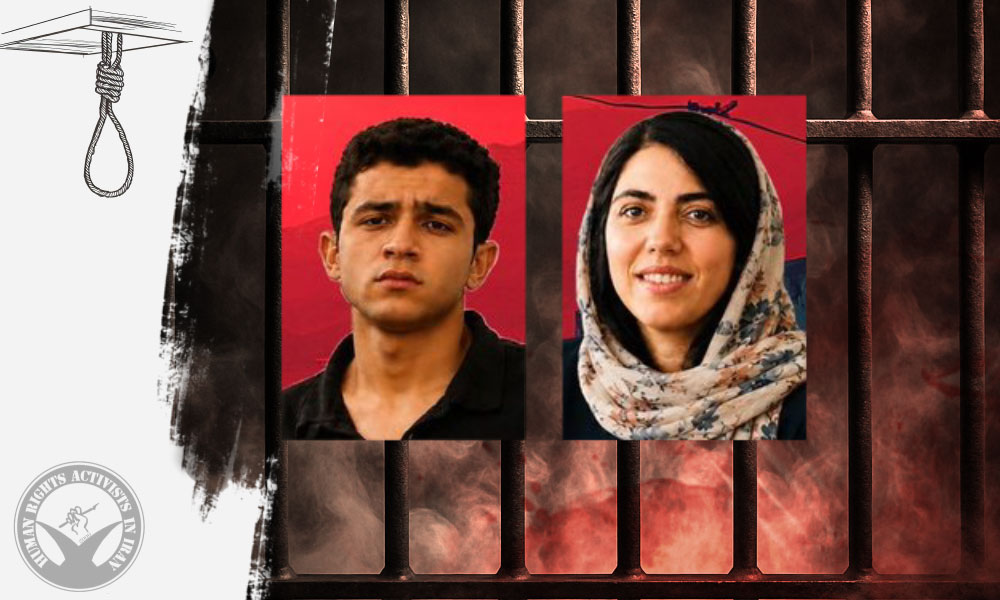
HRANA – Abolfazl Sepahi and Amirhossein Safari, two individuals arrested during the nationwide protests of January 2026, were publicly executed today, July 28, 2026, in Alikhani Square in Isfahan. They had been sentenced to death in the case known as the “Isfahan Alikhani Square” case. Erfan Esfandiari and Gol-Mohammad Mohammadi, two other defendants in the same case, were executed several days earlier.

According to HRANA, the death sentences of Abolfazl Sepahi Badjani and Amirhossein Safari Hosseinabadi, both arrested during the January 2026 protests in Isfahan, were carried out.

Based on information received by HRANA, the executions were carried out at dawn today, Tuesday, July 28, 2026, in Alikhani Square in Isfahan. A knowledgeable source confirmed the news to HRANA, stating:

“The bodies of those executed have not yet been returned to their families. Meanwhile, the families of the other defendants in this case are gathered outside Dastgerd Prison in Isfahan, expressing concern that the death sentences against their children and relatives may also be carried out.”

The Judiciary’s Media Center has claimed that during the protests on January 8, 2026, in Alikhani Square, Isfahan, four law enforcement officers were killed. It further alleged that a number of protesters attacked security forces using firearms, bladed weapons, and incendiary materials, while also damaging public property. The judiciary additionally claimed that, following the attack on law enforcement personnel, the defendants committed violent acts, including setting fire to the bodies of those who had been killed.

According to the Judiciary’s Media Center, Abolfazl Sepahi Badjani and Amirhossein Safari Hosseinabadi were sentenced to death on charges including “membership in rebel groups acting against national security, moharebeh (enmity against God), spreading corruption on earth, destruction and arson of public property,” along with other related charges. The judiciary further claimed that after the verdicts were issued, the case was reviewed by the Supreme Court, which upheld the sentences, and that the executions were carried out following the completion of legal procedures.

However, HRANA has not been able to independently verify the claims made by the Judiciary’s Media Center.

According to information received by HRANA, the judicial proceedings in this case were marked by significant restrictions, including the defense lawyer’s lack of effective access to the case file, court hearings conducted via videoconference, families being denied information about the contents of the verdicts, and the court’s failure to consider defense evidence. Given the well-documented record of the Islamic Republic’s security and judicial institutions in relying on forced confessions, torture, and other forms of ill-treatment in security-related cases, serious concerns remain regarding compliance with fair trial standards and the defendants’ rights.

HRANA had previously reported that the proceedings against Alireza Sepahi and Abolfazl Sepahi were also marred by procedural shortcomings, including ineffective access to the case file by defense counsel, the inability to obtain a copy of the court’s ruling, hearings conducted via videoconference, and the court’s disregard for defense evidence. According to a source close to the family, they also remain uninformed about the details of the charges, the evidence relied upon by the court, and the full contents of the verdicts.

Erfan Esfandiari and Gol-Mohammad Mohammadi, two other individuals sentenced to death in the so-called “Isfahan Alikhani Square” case, were executed in Isfahan on July 19, 2026.

In the initial trial, 15 defendants were sentenced to death. According to information provided by the defense lawyer, the death sentence of one defendant was overturned by the higher judicial authority, while the death sentences of the remaining 14 defendants were upheld.

The identities of 12 of those sentenced to death have been identified as:
Alireza Sepahi, Abolfazl Sepahi, Erfan Esfandiari, Gol-Mohammad Mohammadi, Amirhossein Safari, Ghaem Hosseini, Shervin Bagherian, Amirhossein Maleki, Ali Dashti, Abolfazl Ebrahimi, Alireza Raisi, and Amirhossein Ebrahimi Analoucheh.

Ghezel Hesar Prisoners’ Strike Enters Its Fifteenth Day in Protest Against Death Sentences

HRANA – Yesterday, July 27, 2026, prisoners held in Ward 2 of Ghezel Hesar Prison in Karaj continued their hunger strike and sit-in protest for the fifteenth consecutive day in opposition to the implementation of death sentences.

According to HRANA, prisoners in Ward 2 have continued refusing their prison food rations while maintaining their sit-in protest.

Based on information received by HRANA, the prisoners continued their strike for the fifteenth straight day on Monday, July 27, 2026. By gathering in the ward’s main hall, staging a sit-in, and refusing to accept prison food rations, the protesting prisoners reiterated their opposition to the implementation of death sentences, particularly in cases related to drug offenses.

Yesterday, on the fourteenth day of the strike, approximately 140 prisoners serving sentences other than death were transferred from Ward 2 to Hall 3 of Ward 1 in Ghezel Hesar Prison. Prison authorities have reportedly decided that only death-row prisoners will remain in Ward 2. Over the past week, hundreds of prisoners have been transferred from Ward 2 to other sections of the prison. However, prison officials have yet to provide any explanation regarding the reason for or manner in which these transfers have been carried out.

In recent days, several reports and images from inside Ghezel Hesar Prison have also been published, documenting parts of the prisoners’ hunger strike and sit-in protest.

The strike began on Monday, July 13, 2026, after six prisoners sentenced to death in drug-related cases were transferred to solitary confinement. Since then, the protesting prisoners have refused to accept prison food rations and have continued their sit-in, demanding an end to executions. As part of the protest, some prisoners have also sewn their lips shut.

The renewed protests come despite commitments made last October, when, following a seven-day collective hunger strike by Ward 2 prisoners, representatives of the Head of the Judiciary, the Head of the Prisons Organization, and the director of Ghezel Hesar Prison met with the prisoners. During that meeting, they reportedly promised that executions would be suspended for at least six months and that there would be an opportunity to review the cases of those sentenced to death, while also pursuing amendments to the Anti-Narcotics Law. Following those assurances, the prisoners ended their strike but stressed that continuation of the agreement depended on the authorities fulfilling their commitments. The protesting prisoners now say that the resumption of executions and the current conditions amount to a disregard for those earlier promises and commitments.

The protests also continue as, on July 22, 2026, Hossein Zolfaghari, the President’s representative and Secretary-General of the Anti-Narcotics Headquarters, met with the Head of the Judiciary to discuss amendments to the Anti-Narcotics Law and existing legal shortcomings in this area. According to the published report of the meeting, the government’s proposed bill to amend the Anti-Narcotics Law and the need to review certain regulations concerning drug-related offenses were among the topics discussed. This is particularly significant given that a substantial number of the protesting prisoners in Ward 2 of Ghezel Hesar are on death row for drug-related offenses, and one of their principal demands is the suspension of executions until the law is revised.

Arash Mirzaei Sentenced to Three Years in Prison

HRANA – Arash Mirzaei, a resident of Bojnurd who was arrested during the January 2026 protests, has been sentenced to three years in prison by the Revolutionary Court of Bojnurd.

According to HRANA, Arash Mirzaei has been sentenced to imprisonment.

Based on information received by HRANA, the Revolutionary Court of Bojnurd sentenced Mr. Mirzaei to three years in prison on the charge of “assembly and collusion against national security.” The verdict was issued in absentia in June 2026.

A source close to Mr. Mirzaei’s family confirmed the news, stating: “Mr. Mirzaei had gone to the Bojnurd courthouse to follow up on another legal case when he learned that the Revolutionary Court had convicted him.”

Mr. Mirzaei was arrested by security forces on January 4, 2026, in connection with the nationwide protests. After spending six days in detention, he was released on bail.

Arash Mirzaei, 19, is a resident of Bojnurd County, North Khorasan province.

It should be noted that protests and strikes by shopkeepers and bazaar merchants began in Tehran on Sunday, December 28, 2025, and within two days spread beyond markets and commercial centers. With the participation of students, citizens, and various social groups, these protests became one of the largest protest movements of recent years. Following the crackdown by security and law enforcement forces, thousands were killed or injured, and tens of thousands were arrested or summoned by security agencies. For more information, readers may refer to HRANA’s comprehensive report titled “Crimson Winter,” documenting the first fifty days following the outbreak of Iran’s nationwide protests.

Ali Musa-Nejad Farkoush Arrested in Taleqan

HRANA – On Friday, July 24, 2026, civil activist Ali Musa-Nejad Farkoush was arrested by security forces in Taleqan and taken to an undisclosed location.

According to HRANA, Ali Musa-Nejad Farkoush has been arrested.

Based on information received by HRANA, the activist was arrested on the evening of Friday, July 24, 2026, in Taleqan by the IRGC Intelligence forces.

As of the time of publication, no information has been obtained regarding the reasons for his arrest or his place of detention.

Ali Mousa Nejad Farkoush has previously been arrested and imprisoned due to his civil activism.