210,000 Students Were not Enrolled in the 2020-2021 Academic Year, Deputy Minister for Primary Education Says

210,000 students were, for various reasons, unable to attend school in the 2020-2021 academic year.

According to HRANA, the news agency of Human Rights Activists, quoting the Student News Network, Deputy Minister for Primary Education Rezvan Hakimzadeh announced that 210,000 students were not enrolled in school for the duration of this academic year.

The Deputy Minister has laid out these numbers despite promises from the Interior Ministry last week to address the discrepancy by issuing new letters.

As the registration deadline for the upcoming school year approaches, Afghan immigrants are continuing to experience obstructions from the Bureau for Aliens and Foreign Immigrants Affairs.

“Even children of families who are illegally in Iran can receive an educational support card from the governorates,” Hakimzadeh said, “and start studying after enrolling in school.”

Father Legally Bars 12-year-old Daughter From Attending World Equestrian Championship Abroad

12-year-old athlete Sara Pour-Azima was barred from participating in the World Equestrian Championships because her father legally banned her from leaving the country.

According to HRANA, the news agency of Human Rights Activists, Pour-Azima was scheduled to leave for Russia his week with the rest of her team.

Mehrdad Mehravin, the lawyer of Sara’s mother, said the young athlete’s parents are currently embroiled in a legal battle regarding alimony, and that the father’s move to ban Sara from travel was part of an ongoing dispute with Sara’s mother. Sara reportedly found out that she had been barred from travel to the Championships upon arriving at the airport.

Given the importance of the trip in the athlete’s success and future, legal action was taken to obtain permission from the prosecutor so that Sarah could travel, but legal authorities did not ultimately issue an allowance for her to leave the country.

In Iran, before getting married, women need the legal permission of a father or paternal grandfather to leave the country, and the permission of a husband after marriage.

16-Year-Old Girl Killed by Father in Kermanshah

On Sunday, July 4, 16-year-old Shakiba Bakhtiar was stabbed to death by her father after coming home late in Kermanshah.

According to HRANA, the news agency of Human Rights Activists, quoting the Iran Human Rights (IHR), Iranian law provides for exemptions for those who commit “honor killings”.

It is notable that according to the Islamic Penal Code, a father who kills his child is sentenced to fines and imprisonment, not execution, if convicted in court.

In some cases, fathers have killed their children after learning that under the Islamic Penal Code, a father cannot be executed for the murder of his own child.

Some experts say that the discrimination and weakness of the law has an impact on the frequency of these murders.


Three Inmates Including a Juvenile Offender Executed in Urmia Prison Despite Pleas from Amnesty International

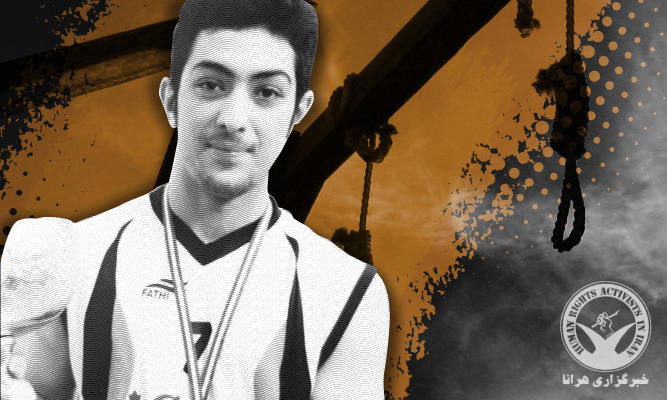
At dawn on Sunday, July 4, three prisoners, one of whom was a juvenile offender, were executed in Urmia Prison despite Amnesty International’s pleas for the execution to be halted.

According to HRANA, the news agency of Human Rights Activists, the three prisoners, who had previously been sentenced to death for murder, were transferred to solitary confinement the day before the sentence was carried out.

HRANA has confirmed the identities of the three prisoners as juvenile offender Baha-al-din Ghasemzadeh, Baha-al-din’s brother, Davood Ghasemzadeh, a native of the Salmas, and  Anwar Abdollahi, a native of Mahabad City in West Azerbaijan Province.

HRANA previously reported on the deteriorating physical condition of the two imprisoned brothers in June of 2018. The Gasemzadeh brothers were executed this Sunday even though Baha al-din was a child at the time of his arrest, and Davood had severe spinal cord injuries from beatings sustained during his detention.

Recently, in an interview with Agence France-Presse, Secretary of the state-run High Council for Human Rights, MajidTafreshi, said that the Islamic Republic executes juvenile offenders “three to four times a year”, and claimed this should not be considered a human rights violation.

Iran ranks first in the world in citizen executions per capita, according to international organizations. The Statistics and Publication Center of the Human Rights Activists in Iran (HRA) reported that between January 1st and December 20th of 2020, at least 236 citizens were executed. One of these citizens was executed publicly, and two were juvenile offenders. An additional 95 citizens were sentenced to death.

“Iranian authorities must immediately stop the execution of Baha al-din Ghasemzadeh,” Amnesty International tweeted the day before the execution took place.  “The imposition of the death penalty on those who were children at the time of the crime is a gross violation of Iran’s international rights and obligations under the Convention on the Rights of the Child.”

Chahardangeh Head of Education says 20% of the District’s School Buildings are Unsafe

The Head of Education in Chahardangeh, one of the six districts of Sari city in Mazandaran Province, recently commented on the effects that authorities’ infrastructural negligence have had on the area.

According to HRANA, the news agency of Human Rights Activists, Chahardangeh suffers from poor roads, water shortages, healthcare, and waste disposal, besides the lack of proper educational facilities for students in this area.

Chahardangeh Head of Education Hamed Khalili said that 20 percent of the district’s schools have unsafe buildings in the district and that three of the schools’ classrooms in the villages of Peshert, Elyerd, and Vestmin are mobile temporary classrooms.

Several schools in this section also need to be demolished and some need building reinforcements.

Khalili stressed the lack of proper educational facilities, worn-out buildings, and the living problems of students in the area. He further said that students’ lives could be endangered by natural disasters such as earthquakes if repairs are not made soon.

Subscribe to Our Newsletter

Now is definitely not the time to stop reading!

Juvenile Defendant Sews his Mouth Closed in Sanandaj Youth Detention Center

On June 19, a teenager in Sanandaj Youth Detention Center sewed his mouth closed to protest the prolonged process of his case by the Second Investigation Branch of Marivan.

According to HRANA, the news agency of Human Rights Activists, quoting Kurdpa, 17-year-old Arman Farahmand is the son of Mokhtar and a resident of Sardush village in Marivan city in Kurdistan Province.

Arman Farahmand is said to have been arrested along with eight others in Marivan in September 2020 following a mass brawl over the murder of a citizen named Pouya Chareh Talab. The rest of the defendants have been acquitted in recent months.

Ali Arjangi, a Juvenile Offender on Death Row, Attempted Suicide in Ardabil Prison

On Saturday, June 12, Ali Arjangifard ghujeh Beiglou, a juvenile offender on death row, attempted suicide in Ardabil Prison.

According to HRANA, the news agency of Human Rights Activists, quoting Iran Human Rights (IHR), prison officials transferred him to the nearest hospital in Ardabil after the attempt. Beiglou is currently in critical condition in Fatemi hospital.

An informed source said, “Ali Arjangi attempted suicide by cutting part of his neck veins with the motive of ending his life before the execution.”

Ali Arjangi was arrested at the age of 17 on murder charges and has been held in the youth prison of Ardabil Central Prison since.

He was previously sentenced to death by Branch 3 of the Special Juvenile Court for murder, and the sentence was upheld by the Supreme Court. The verdict is said to have been issued following a forensic examination confirming his mental development.

According to the HRANA annual report for the year 2020, at least 4 juvenile offenders were executed in Iran last year, and 2 other juvenile offenders have been sentenced to death.

Golpayegani Comments on Ministry of Health’s Failure to Disclose Info on Wound Dressings Given in April 2020

Hamidreza Golpayegani, founder and CEO of the charity foundation EB Health House, gave a statement on the Ministry of Health’s handling of a delivery of 5.8 tons of wound dressings.

According to HRANA, the news agency of Human Rights Activists, Golpayegani specifically commented on the lack of communication and regulation from the Ministry.

“In April 2020, the Ministry of Health and the EB House negotiated with the German government and with the support of Germany and UNICEF, 5.8 tons of wound dressings was delivered to the Ministry of Health to be given to us periodically, but unfortunately there has not been a regulation in timing,” Golpayegani said. “We did not receive any wound dressing last October and November and the Ministry never told us how many wound dressings were received from Germany.”

EB Home Foundation is a charity foundation that assists patients with specific skin problems.

“An expert at the General Directorate of Medical Equipment said all 5.8 tons of dressings have been received,” Golpayegani added, “But they also need dressings for burns and diabetic wounds.”


Student is Injured Attempting to Climb Mountain to Access Internet for Virtual Learning

A student in Pichkan village of Zirkuh city in the South Khorasan Province fell from a mountain and was severely injured in the face and eyes.

According to HRANA, the news agency of Human Rights Activists, quoting Rokna News, the student had gone to the mountains to access the internet and use virtual learning networks.

Talebi, the director of Zirkuh education confirmed the incident happened and said the injured  is a student of Hajiabad vocational school in Zirkuh.

Since the outbreak of COVID-19, virtual learning has played a critical role in Iran’s education system, but access to the necessary materials remains limited. Students in many villages of Iran are forced to face the environmental hazards in the highlands to access the internet due to the poor network coverage in their area.

The head of the country’s Exceptional Education Organization stated that 30% of students do not have equipment for e-learning; he said: “5 million students in the country do not have access to smartphones and tablets.”

Javad Hosseini also expressed that 8% of students use their parent’s devices for e-learning which does not provide the students with stable access to learning equipment.


16 Rallies in 2 Days: Students and Workers Across the Country Protest Unsafe Conditions

On May 5th and May 6th, several protests broke out that were related, in various ways, to political and economic institutions’ disregard for the safety and wellbeing of their members. High school students in at least 14 cities gathered to protest mandatory physical attendance for their final exams. In Tehran, a group of Tehran Metro workers gathered to demand that their medical and economic demands be met. A group of operators of the West Regional Electricity Company in Kermanshah protested the lack of wage regulation in the new year.


Police beat the protest students


On May 6, 2021, high school students in at least 14 cities including Boroujerd, Tehran, Qazvin, Semnan, Karaj, Shahr-e Kord, Shiraz, Zanjan, Khorramabad, Yazd, Tabriz, Birjand, Ardabil, and Fooladshahr, protested mandatory physical attendance for final exams.  To prevent further spread of COVID-19 and to ensure their own and their families’ safety, these students are calling for “final exams to be held virtually /online”.

Below is footage of students protesting in-person exams


The protesting students gathered in front of their respective education department buildings and chanted slogans such as “Do not be afraid, we are all in this together”, and “We do not want to physically attend”.

At some of these demonstrations, police physically assaulted peaceful student protestors. Several student protesters in Yazd and Fooladshahr were reportedly beaten by officers.

Since the Coronavirus outbreak in Iran, conducting exams that require physical attendance has raised concern among students and their families. On the Monday before the protests, the Corona Management Committee in Iran claimed that final exams were to be held in person in large and ventilated places.

Jafar Pashaei, Director General of Education in Tabriz Province responded to the protests. “Holding exams in person for the ninth and twelfth-grade is a national decision,” Pashaei said, “And it will definitely be held under protocols and distancing.”

Despite ongoing demands to be given a remote option, and despite the May 6th protests, education officials have maintained the in-person exam schedule.


Protests from Tehran Metro Employees


According to the official channel of railway workers and technical maintenance staff, a group of Tehran Metro personnel gathered in the company courtyard to protest the lack of attention to their demands for fair treatment,

The protesting workers’ main demands are “Expertise allowance, hardship allowance, prioritized COV-19 vaccination, Job title modification, full implementation of labor wage increase based on the decree of Supreme Labor Council, stop the plan of removing the trains’ co-driver, modify the formula for calculating the personnel salary tax, elimination of discrimination between operational and administrative staff as well as the revival and implementation of mandates to provide personal equipment for drivers.”


Protests from West Regional Electricity Company Operators


According to ILNA, on May 5, a group of operators of the West Regional Electricity Company in Kermanshah protested in front of the regional electricity office building in Kermanshah.

The operators said in a statement, “The wage decree of the Ministry of Labor is not being implemented well for us. Our wages and benefits are much lower than those of officials and contractors, and the wage increase has not been properly applied to us in the new year. Our wages are very low considering the inflation and what we do.”

The spokespeople added that what the Regional Ministry of Energy and Regional Electricity Office pay to companies as personnel salaries often do not end up going to the workers. These operators, who carry out dangerous work handling high-voltage electricity, want to sign a contract with the regional electricity itself, rather than the contractors.