After Retrial; Political Prisoner Naser Bakrzadeh Sentenced to Death for the Second Time

HRANA – Naser Bakrzadeh, a political prisoner held in Urmia Prison, has been sentenced to death for the second time by Branch Two of the Revolutionary Court of Urmia. He had previously received a death sentence from Branch Three of the Revolutionary Court of Urmia, which was overturned by the Supreme Court and referred to another branch for retrial.

Based on the ruling recently issued by Branch Two of the Revolutionary Court of Urmia, presided over by Judge Shahini, Mr. Bakrzadeh has been sentenced to death on charges of espionage for Israel.

In November 2024, he had initially been sentenced to death by Branch Three of the Revolutionary Court of Urmia on charges of “espionage for Israel and collaboration with Mossad intelligence services.” That ruling was overturned by the Supreme Court in April 2025, which referred the case to another branch for reconsideration.

Naser Bakrzadeh, about 26 years old, was arrested in January 2024. He was held for a period in the IRGC’s intelligence detention facility in Urmia, where he was subjected to interrogation. According to a source close to his family, this process involved violations of his basic rights, including being denied contact and visits with his family.

Drug-Related Charges: Two Prisoners Executed in Gorgan Prison

HRANA – On September 10, the death sentences of two prisoners previously convicted on drug-related charges were carried out in Gorgan Prison.

HRANA has confirmed the identities of those executed on Wednesday, September 10, as Behzad Parsa and Abdollah Mohseni.

A source familiar with the case told HRANA: “Behzad Parsa, a member of the Bakhtiari Lur ethnic group, was arrested in 2019 on drug-related charges and sentenced to death by the Revolutionary Court. Abdollah Mohseni, a resident of Gorgan, was arrested four years ago on similar charges and also sentenced to death.”

At the time of this report, the execution of these prisoners has not been officially announced by prison authorities or judicial bodies.

According to HRANA’s report, in 2024, over 52 percent of executed prisoners had been convicted on drug-related charges. Over the past ten years, individuals convicted of drug trafficking have accounted for 40 percent of all executions. Unfortunately, HRANA’s statistics show no progress in reducing executions for drug-related offenses.

Execution of Two Prisoners in Sepidar Prison of Ahvaz

HRANA – On Wednesday, September 10, Sepidar Prison of Ahvaz carried out the execution of two prisoners convicted of murder.

HRANA has confirmed the identity of one of them as Ahmad Bani Asad, 38 years old, from Susangerd. According to information received by HRANA, Mr. Bani Asad was previously arrested following a fight in which he committed murder. He was later sentenced to death by the criminal court.

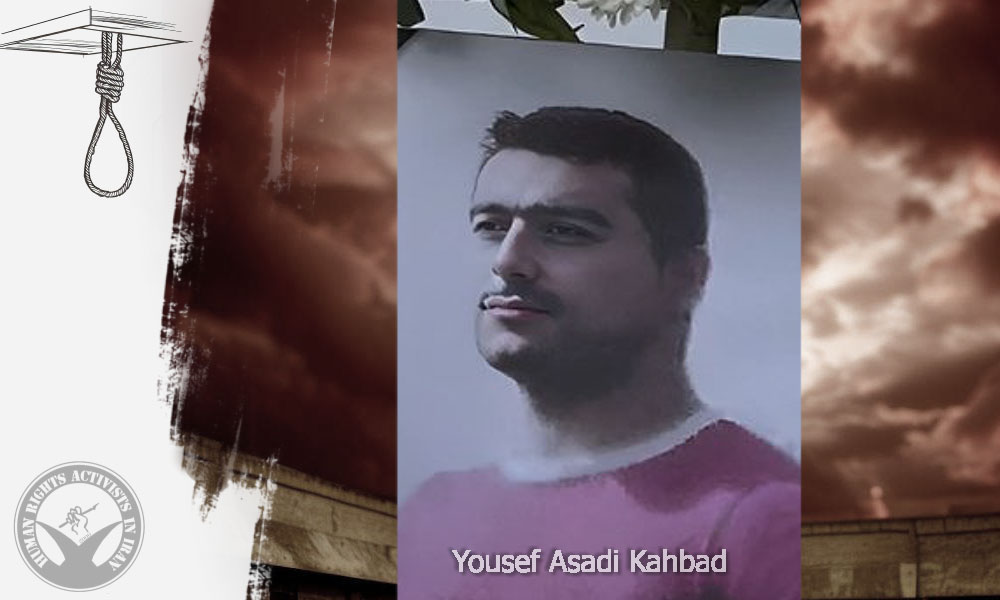
The Iran Human Rights Organization confirmed the identity of the other prisoner as Yousef Asadi Kahbad, 31 years old, from the village of Kahbad in Izeh County. He had been arrested seven years ago on a murder charge and was sentenced to death by the criminal court.

At the time of this report, the execution of these prisoners has not been announced by prison authorities or the relevant institutions.

In 2024, according to 812 reports compiled by HRANA, the Iranian regime executed 930 individuals in its prisons—marking the highest number of executions in the past 12 years. Despite the scale of these executions, prison officials and other relevant authorities publicly acknowledged only 6% of them, highlighting the regime’s lack of transparency and accountability.

Two Prisoners Executed in Kermanshah Prison

HRANA – On Monday, September 8, the death sentences of two prisoners previously convicted on drug-related charges were carried out in Kermanshah Prison.

HRANA has been able to confirm the identity of one of the executed prisoners as Kamyar Najafzadeh.

According to information received by HRANA, the two prisoners had previously been arrested on drug-related charges and later sentenced to death by the Revolutionary Court.

Further details, including the identity of the second prisoner, are under investigation by HRANA.

As of the time of this report, the executions have not been announced by prison officials or relevant authorities.

According to HRANA’s report, in 2024, over 52 percent of executed prisoners had been convicted on drug-related charges. Over the past ten years, individuals convicted of drug trafficking have accounted for 40 percent of all executions. Unfortunately, HRANA’s statistics show no progress in reducing executions for drug-related offenses.

Lakan Prison in Rasht; 3 Prisoners Transferred to Solitary Confinement for Execution

HRANA – In recent days, three prisoners in Lakan Prison of Rasht, previously sentenced to death on murder charges, were transferred to solitary confinement in preparation for the implementation of their sentences.

Two of the prisoners were transferred on Tuesday, September 9, for the execution of their death sentences, while another death row prisoner was transferred on Sunday, September 7.

Based on information obtained by HRANA, all three had previously been arrested on murder charges and later sentenced to death by the judiciary.

Further details, including the identities of these prisoners, are under investigation by HRANA.

Subscribe to Our Newsletter

Now is definitely not the time to stop reading!

Drug-Related Charges; A Prisoner Executed in Qom Prison

HRANA– At dawn yesterday, September 9, the death sentence of a prisoner previously convicted on drug-related charges was carried out in Qom Prison.

HRANA has identified the prisoner executed at dawn on Tuesday, September 8, as Javad Mohammad-Panah. Based on information obtained by HRANA, Mr. Mohammad-Panah had earlier been arrested on drug-related charges and subsequently sentenced to death by the Revolutionary Court.

As of the time of this report, the execution has not been announced by prison officials or judicial authorities.

According to HRANA’s report, in 2024, over 52 percent of executed prisoners had been convicted on drug-related charges. Over the past ten years, individuals convicted of drug trafficking have accounted for 40 percent of all executions. Unfortunately, HRANA’s statistics show no progress in reducing executions for drug-related offenses.

A Prisoner Executed in Malayer Prison

HRANA – At dawn on Monday, September 8, the death sentence of a prisoner previously convicted of murder was carried out in Malayer Prison, Hamadan province.

HRANA has identified him as Mohammadali (Mohammad-Ali) Gholizadeh. Based on information obtained by HRANA, Mr. Gholizadeh had earlier been arrested on charges of murder and subsequently sentenced to death by a criminal court.

As of the time of this report, the execution has not been announced by prison officials or judicial authorities.

In 2024, according to 812 reports compiled by HRANA, the Iranian regime executed 930 individuals in its prisons—marking the highest number of executions in the past 12 years. Despite the scale of these executions, prison officials and other relevant authorities publicly acknowledged only 6% of them, highlighting the regime’s lack of transparency and accountability.

Drug-Related Offenses; Execution of Two Prisoners in Arak Prison

HRANA – At dawn on Sunday, September 7, the death sentences of two prisoners who had previously been convicted on charges related to drug offenses were carried out in Arak Prison.

The identities of the prisoners, executed at dawn on Sunday have been confirmed by HRANA as Ahmad Rafiei and Abdolreza Karimi.

Based on information obtained by HRANA, the two prisoners had earlier been arrested on charges related to drug offenses and subsequently sentenced to death by the Revolutionary Courts.

As of the time of this report, the executions of these prisoners have not been announced by prison officials or the relevant authorities.

According to HRANA’s report, in 2024, over 52 percent of executed prisoners had been convicted on drug-related charges. Over the past ten years, individuals convicted of drug trafficking have accounted for 40 percent of all executions. Unfortunately, HRANA’s statistics show no progress in reducing executions for drug-related offenses.

Seven Prisoners Executed in Tabriz Prison

HRANA – On Sunday, September 7, the death sentences of seven prisoners convicted in separate cases on drug-related charges were carried out in Tabriz Prison.

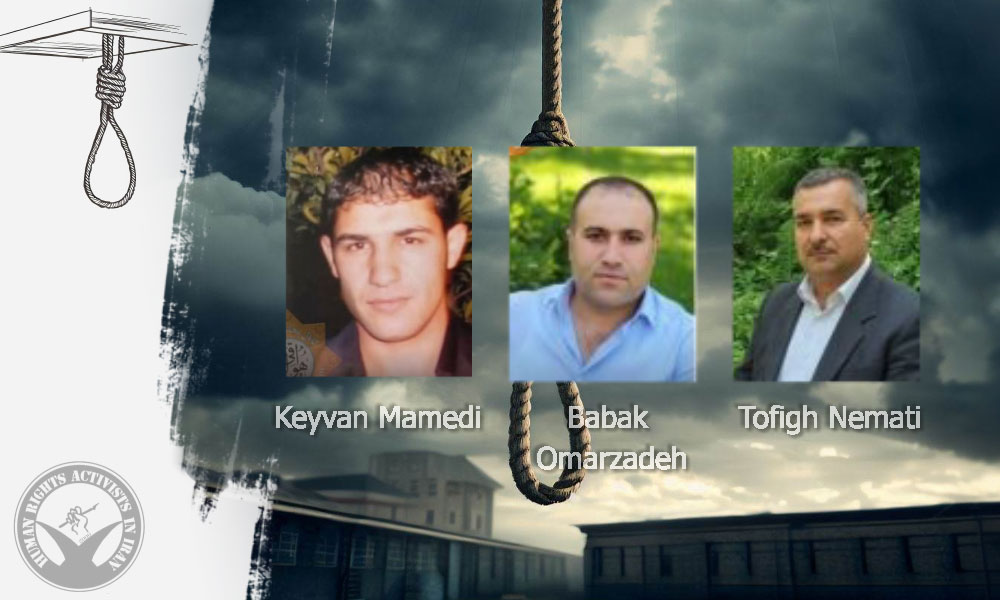
HRANA has confirmed the identities of five of the executed prisoners as Tofigh Nemati, Hooshang Henareh, Babak Omarzadeh, Keyvan Mamedi, and Najib Azarm. The Iran Human Rights has reported the identities of the other two as Sadegh Bahmani and Mojtaba Salemi.

Details available include: Tofigh Nemati, from Bardizi village near Urmia; Hooshang Henareh, from Khalian village near Urmia; Babak Omarzadeh, 45, from Gonbad village near Urmia; and Keyvan Mamedi, 43, from Derik village in Salmas. Najib Azarm was identified as the son of Haj Ali Kalankani. According to Iran Human Rights, both Bahmani and Salemi were residents of Tabriz.

The prisoners had been arrested in separate cases on charges related to drug offenses and were subsequently sentenced to death by Revolutionary Courts.

As of the time of this report, prison authorities and other relevant institutions have not publicly announced these executions.

According to HRANA’s report, in 2024, over 52 percent of executed prisoners had been convicted on drug-related charges. Over the past ten years, individuals convicted of drug trafficking have accounted for 40 percent of all executions. Unfortunately, HRANA’s statistics show no progress in reducing executions for drug-related offenses.

Eskandar Bazmandegan and Mohammad Kashefi Executed on Charge of Moharebeh

HRANA – Eskandar Bazmandegan and Mohammad Kashefi, two prisoners previously sentenced to death on the charge of moharebeh (enmity against God), were executed at dawn on Sunday, August 24, in Adelabad Prison, Shiraz.

The two prisoners, both Sunni, have been identified as Eskandar Bazmandegan, from Bandar Khamir in Hormozgan Province, and Mohammad Kashefi, from Khour in Fars Province.

They were arrested approximately two years ago and later sentenced to death by Revolutionary Courts on the charge of moharebeh. According to information obtained by HRANA, authorities accused them of membership in an operational support team connected to the attack on the Shah Cheragh Shrine in Shiraz. Their families, however, have consistently stated that both men denied the allegations throughout interrogation and trial.

A source close to the families told HRANA: “During their detention, these two prisoners were denied access to legal counsel. Their trial was conducted behind closed doors.”

Reports received by HRANA indicate that the executions of Mr. Bazmandegan and Mr. Kashefi were carried out without prior notice to their families, who were therefore deprived of the right to a final visit. Additionally, their bodies have not yet been returned to their families since the execution.

According to HRANA’s statistics, in 2024, Adelabad Prison in Shiraz witnessed the execution of 92 inmates — an 88% increase compared to the previous year. This sharp rise places Adelabad as the second deadliest prison in Iran after Ghezel Hesar Prison in Karaj.