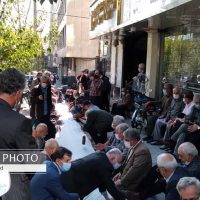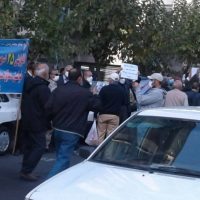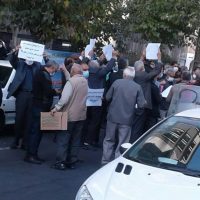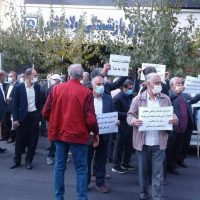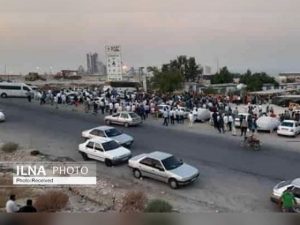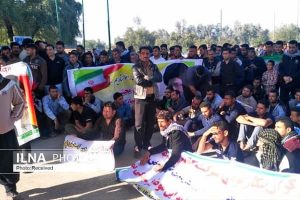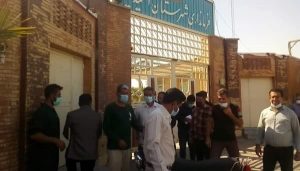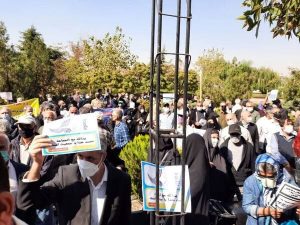
Iranian Trucker Strikes Push into Second Straight Week

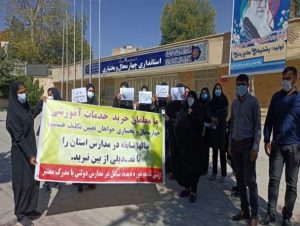
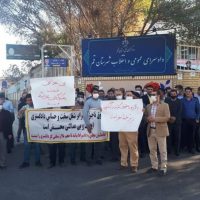
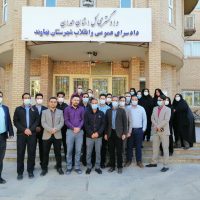
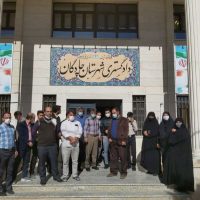
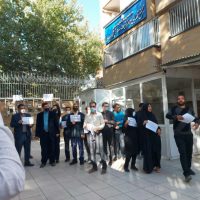
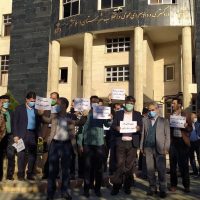
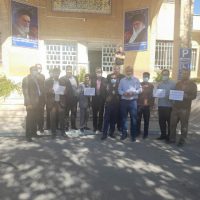
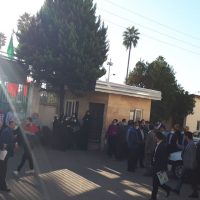
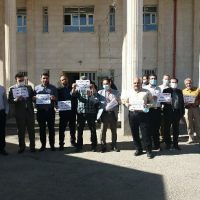
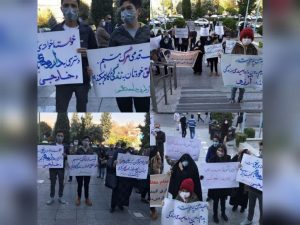
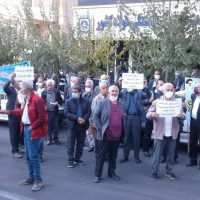
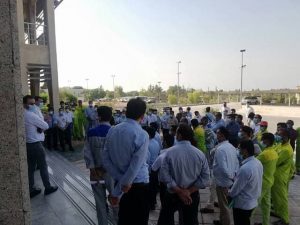
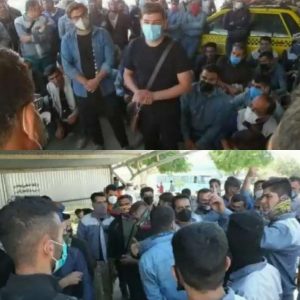
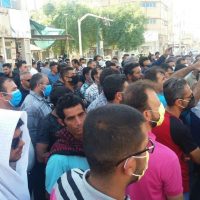
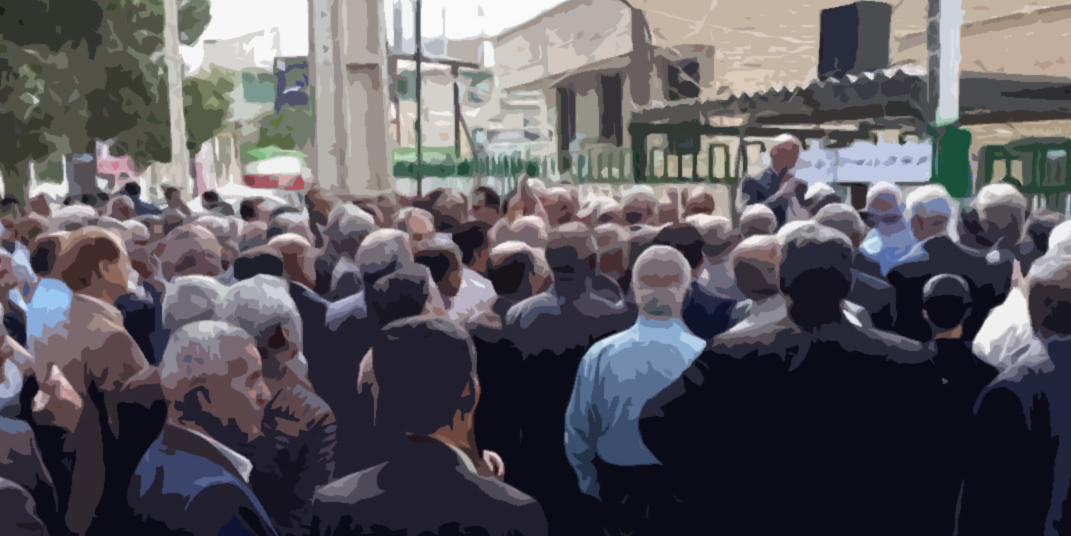
Human Rights Activist News Agency (HRANA) – As they make it past the two-week mark, Iranian trucker strikes look nowhere near relenting, and authorities are taking notice.

As of the date of this report, 244 individuals have been arrested in connection to trucker strikes across multiple cities, including but not limited to Shahr-e Kord, Bandar-e Imam Khomeini, Ahvaz, Susangerd, Najaf Abad, Isfahan, Shiraz, Bushehr, Aligudarz, Urmia, Yazd, Zarrin Shahr, Bandar Abbas, Tiran, Miyaneh, Behshahr and Ghuchan.

While broadcasts from state-sponsored news agencies declared on October 6th that the protests were losing steam, the truckers have yet to back down. The same day, the General and Revolutionary Prosecutor of Shahr-e Kord announced that six more protestors had been detained.

Prior to October 6th, 238 individuals connected with the strike had already been detained and booked on charges of corruption on earth, disturbing public order, and banditry. Prosecutor Mohammad Jafar Montazeri previously threatened the detainees with heavy sentences, reminding them that their charges are punishable by death. Strikers in multiple provinces are taking the risk: Qazvin, Alborz, Ardabil, Isfahan, Fars, Semnan, Kermanshah, Zanjan, Hamadan, Northern Khorasan, and cities of Nahavand, Bujnurd, Kangan, Pakdasht, Nishabur, Shirvan, Azarshahr, Gorgan, Bandar-e Gaz, Izeh, Razan, and Zaran provinces have seen arrests so far.

At a ceremony for the opening of a tunnel connecting Karaj to Chalus, Minister of Roads and Urban Development Abbas Akhoundi acknowledged truck drivers’ role in the construction of the tunnel, telling a reporter, “the demands of the truck drivers will definitely be addressed.”

The Ministry of Roads and Urban Development showed less compassion toward the strikers in an October 6th response to Tehran-based Friday prayer imam Kaze Sadeghi, who stated that the Ministry should answer to their responsibilities and address the issue rather than “saying irrelevant things.” The Ministry’s retort statement read, “truck drivers are hardly struggling.”

In an interview with Mehr news agency, Deputy Head of the Iran Road Maintenance and Transportation Organization (IRMTO) Dariush Amani spoke of his organization’s initiative to meet drivers’ demands for tires, including cheaper import prices on cotton-based tires. “Tires have been placed on the list of essential items which will henceforth be imported at the government-subsidized price of 4200 Tomans [$1 USD].”

Ali Khaneghai, a general manager of the Sistan and Baluchestan provincial transportation and terminals department, acknowledged that high tire prices were one of the industry’s most dire needs, and claimed that 1200 subsidized tires have been distributed to drivers. “The drivers can purchase tires at fair prices through the Ministry of Industry, Mine and Trade with the presentation of their welcome letter from the Driver’s Union.”

Ahmad Jamshidi, Transportation and Terminals Manager of Chahar Mahal and Bakhtiyari province, also commented on tire influx, stating that 2711 tires had thus far been distributed among regional truckers.

HRANA previously reported on authorities’ reactions to the truckers’ continued strikes, which have been active since September 23rd. On that date, the Iran National Truck Driver’s Trade Union called on truckers to cease their operations until authorities fulfilled a list of 15 conditions, including an increase in pensions, a decrease in part prices, a 70-percent increase in wages, a decrease in insurance premiums, and a crackdown on bribery in the industry.

Telegram Admin Faces 11 More Years Behind Bars

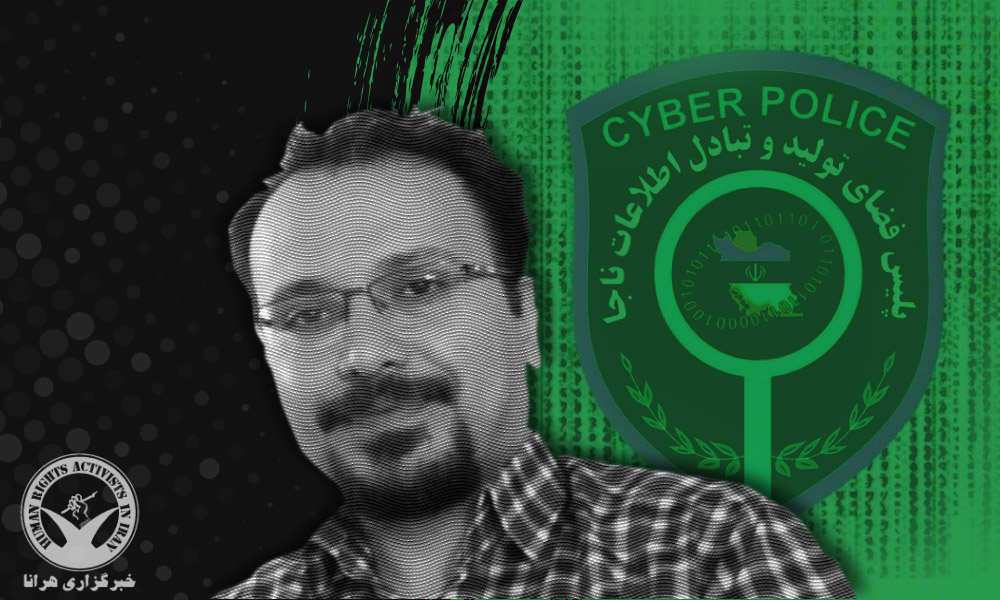
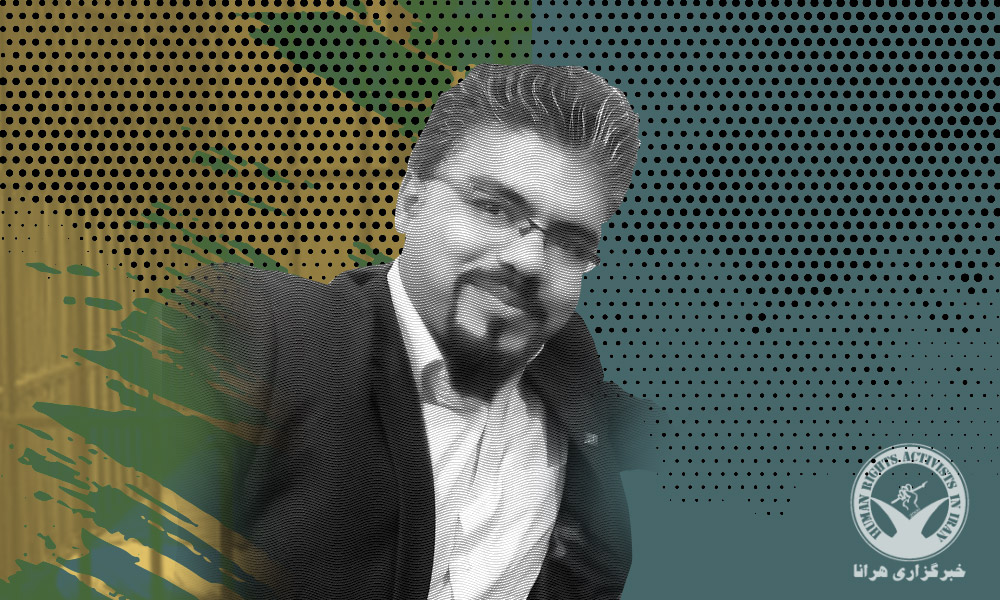
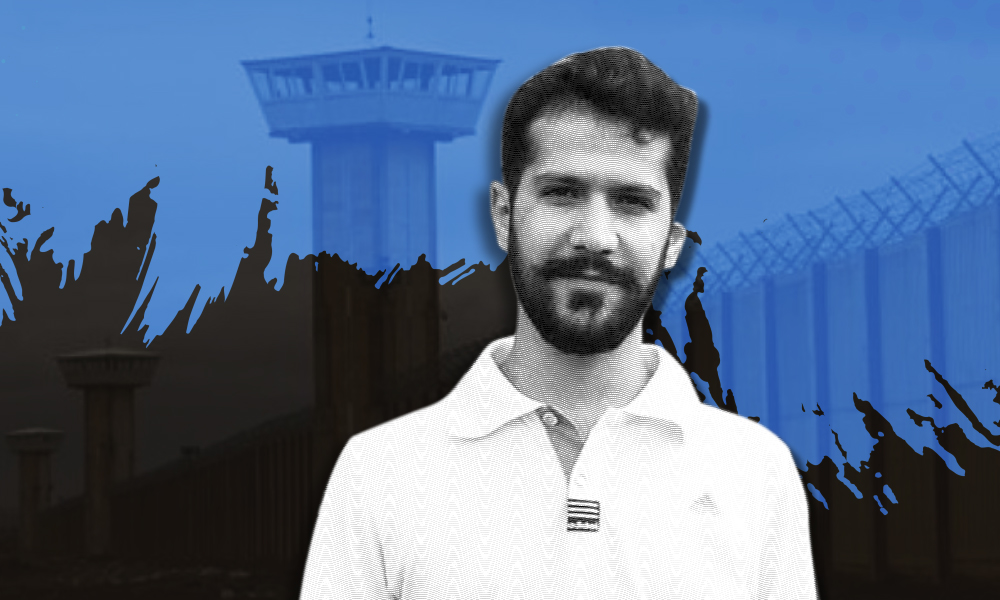
Human Rights Activists News Agency (HRANA) – Tehran Revolutionary Court Branch 15 ruled October 3rd to sentence Telegram channel administrator and current prisoner Hamidreza Amini to eleven more years in prison. Judge Salavati presided over the hearing, and Amini’s lawyer was present.

Amini has been detained since December of last year on charges of “disseminating lies”, “blasphemy” and “insulting high-ranking officials of the Islamic Republic.”

An informed source updated HRANA on Amini’s fate as of yesterday’s trial: five years in prison for charges of “assembly and collusion against national security,” one year in prison for ”propaganda against the regime,” and two years in prison for “insulting the supreme leader.” He was acquitted of “insulting the prophet.”

The “insulting the prophet” charge was previously deliberated in August of this year in Tehran Criminal Court Branch 9, presided by Judge Kashkuli. HRANA previously reported on the court hearing, which tried Amini for both “insulting the prophet” and “blasphemy.” Amini’s lawyer Mohammad Hossein Aghasi correctly predicted at the time that the former charge would be dropped.

Earlier, in June, HRANA reported on the postponement of hearing that had been scheduled to try Amini for “insulting the supreme leader and high-ranking officials” in Branch 15 of Tehran Revolutionary Court. The session, which would have been presided by Judge Salvati, was postponed pursuant to Article 48 of Islamic Penal Code, which grants defendants more time to select their attorney.

On May 30th, Amini was ordered to pay a fine of 40 million IRR [approximately $400 USD] by Branch 57 of a new court focused on media crimes. He was charged with “spreading misinformation with intent to disturb the public mind.” His lawyer explained to HRANA that his client was charged pursuant to Article 18 of the Computer Crime Code.

Amini has been detained in Evin Prison since December 2, 2017. It has yet to be determined if his prison sentences could be reduced with the application of Article 134 of the code, which limits defendants’ prison terms to the longest among their multiple sentences.

Appeals Court Convenes for 11 January Protest Detainees

Human Rights Activist News Agency (HRANA) – On Wednesday, October 3rd, Branch One of Markazi Province Appeals Court convened to review the sentences of 11 defendants charged in relation to the nationwide protests that broke out in January of 2018.

Among the accused is attorney and human rights activist Mohammad Najafi, who stated that “economic problems” compelled him and his co-defendants to join the ranks of the January protestors. Najafi’s co-defendants are Ali Bagheri, Abbas Safari, Behzad Ali Bakhshi, Mohammad Yaghoubi, Yousef Shirilard, Neda Yousefi, Davoud Rahimi, Massoud Ajlou, Mohammad Torabi, and Kian Sadeghi.

Discovery into these protestors’ case file began March 13, 2018 in Branch One of Arak Investigation Court, by which point all 11 had already been interrogated by the Intelligence Office. Ten of the eleven were present during discovery, where an investigator deliberated on charges from disrupting the peace to gathering and conspiring. Though all of the accused were detained amid the protest site in Shazand city where all of them are residents, authorities inexplicably forwarded their case to the judicial office of Arak. All denied the charges brought against them.

Investigation court settled on a charge of “disrupting public peace through participating in an illegal gathering,” which according to HRANA reports incurred them one year of imprisonment and 74 lashings each, per the ruling of Judge Mohammad Reza Abdollahi in Arak Criminal Court No. 2, Branch 102.

Their sentence allows for detention time already served to be counted towards their pending prison terms, a particular boon to Najafi, Bagheri, Safari, and Sadeghi who received two additional years of prison time for “publishing lies with intent to disrupt the public mind.” Bagheri’s prison term was further compounded by another six months for “insulting a police chief in cyberspace.”

Independent of the January protests case file, Najafi, Bagheri, Safari, Ajilou, and Bakhshi all have individual cases pending in the Revolutionary Court of Arak.

Najafi was previously detained for inquiring into the death of civilian Vahid Heydari, who passed away while in custody of Arak authorities amid the January protests in Police Detention Center No. 12. While Iranian judicial authorities had claimed Heydari was a drug dealer who committed suicide during his detainment, Najafi’s field research, including interviews with Heydari’s family and friends, concluded that Heydari was a peddler with no criminal record; what’s more, his autopsy revealed no physical marks suspect for suicide. Buried under security supervision, Heydari had head injuries consistent with blunt-force trauma.

The court tried Najafi for his inquiries on June 9, 2018, in Arak Criminal Court No. 2, Branch 102. His hearing had previously been delayed due to the absence of the judge.

Tehran MP Mahmoud Sadeghi accused security authorities of fabricating the grounds for Najafi’s case, arguing that Najafi had simply proven that Heydari was not a drug dealer.

A large number of participants in recent protests, referred to as the January protests, were detained and interrogated across the country. The protests resulted in the death of 25 individuals and the detention of around five thousand.

Ministry of the Interior Abdolreza Rahmani Fazli previously stated that public demonstrations “turned violent” in 40 of the 100 cities where the January protests broke out.

Lawyer Mostafa Daneshjoo Remanded to Evin Prison

Human Rights Activists News Agency (HRANA)- Judge Moghiseh has extended the temporary detention period of lawyer and imprisoned Dervish activist Mostafa Daneshjoo, denying his request for bail despite the severe progression of his cardiac and lung disease.

Symptoms of Daneshjoo’s asthma were exacerbated by his stay in Evin Prison’s Ward 250 between 2011 and 2015, on charges of “membership in the Dervish cult,” “acting against national security,” “propaganda against the regime,” and “disturbing the public mind.” Despite orders from the assistant prosecutor that Daneshjoo is sent to a healthcare facility, Evin Prison authorities have barred his transfer.

Seven armed agents arrested Daneshjoo in his mother’s home on July 7th, taking him to solitary confinement in Evin Prison’s Ward 209 — which is under Intelligence Ministry management — where he stayed for 45 days. He was then sent to Ward 4, typically designated for convicts of financial crimes.

Daneshjoo was arrested pursuant to a case file against him in 2017 in Tehran’s Security Investigation Court, in connection to a violent clash that took place February 2018 near the Dervish spiritual leader’s residence on Golestan Avenue in the capital city.

Per a letter from the security office at Azad University, Daneshjoo’s alma mater, he has been barred from continuing his studies. Citing his defense of the Gonabadi Dervish religious minority, security authorities have revoked his permit to practice law.

In a note dated October 2nd, attorney Ali Sharifzadeh announced that he had been retained as Daneshjoo’s lawyer in Branch 28 of Revolutionary Court.

Soheil Arabi Sentenced to More Prison Time

Human Rights Activist News Agency (HRANA) – Pursuant to a new case brought against him by Judge Ahmadzadeh of Tehran Revolutionary Court Branch 26, Soheil Arabi, a prisoner of conscience in Great Tehran Penitentiary, was sentenced September 22nd to three years in prison, three years in exile, and a fine of approximately 40 million IRR [approximately $400 USD] on charges of “propaganda against the regime” and “disturbing the public mind.” His lawyer did not learn of the verdict until eight days later.

A source close to Arabi told HRANA that the courts pursued new charges against him because of voicemail messages he left from prison; in one of these, he reportedly compared the Great Tehran Penitentiary to a torture chamber.

Arabi’s mother Farangis Mazloum told HRANA, “When I went to Great Tehran Penitentiary to see Soheil this morning, prison authorities told me that they had taken my son to court and that he is banned from having visitors,” she said.

Judge Moghiseh previously sentenced Arabi, along with his ex-wife Nastaran Naeimi, to prison time: six years for Arabi on charges of “blasphemy” and “propaganda against the regime,” and a year and a half for Naeimi, for “propaganda against the regime” and “aiding and abetting.”

Soheil Arabi, a 33-year-old photographer, was arrested by Sarallah-based agents of the Islamic Revolutionary Guards Corps (IRGC) on November 7, 2013, for comments he had posted on his Facebook page. Judge Siamak Modir Khorasani cited the Facebook posts as evidence of “insulting the prophet” — a charge that can incur capital punishment — in Branch 76 of Tehran’s Criminal Court.

Arabi’s lawyers subsequently appealed to Branch 36 of Supreme Court, pleading Article 263 of the Islamic Penal Code. While Article 262 recommends the death sentence for those who insult the prophet, Article 263 reduces the death sentence to 74 lashes for defendants whose statements “have been under coercion or mistake, or in a state of drunkenness, or anger or slip of the tongue, or without paying attention to the meaning of the words, or quoting someone else…”.

Unmoved by the Article-263 argument, the Supreme Court upheld the death sentence, unlawfully adding to his case file the charge of “corruption on earth.”

A retrial request was later accepted in Supreme Court Branch 34, which acquitted him of “insulting the prophet” and commuted his death sentence to seven and a half years’ imprisonment, plus a two-year travel ban and two years of religious probation to evaluate his repentance upon his release.

Arabi had not seen the end of his legal troubles, however — in 2014, Branch 10 of Iran’s Court for Government Employees would sentence him to a 5 million IRR fine [approximately $50 USD] and 30 lashings for insulting the following three people with his Facebook posts: Ayatollah Ahmad Jannati, Gholamali Haddad Adel, and the Director of Allameh Tabatabai University. That same year, Judge Abolghassem Salavati of Revolutionary Court Branch 15 would sentence him to three years in prison for “insulting Ali Khamenei, Supreme Leader of the Islamic Republic” and “propaganda against the regime.” Branch 54 of Appeals Court upheld the latter sentence a short time later.

Arabi has been in prison without furlough since November 7, 2013.

Subscribe to Our Newsletter

Now is definitely not the time to stop reading!

Iran: Actor’s Online Comments Incur Summons from Intelligence Ministry

Human Rights Activists News Agency (HRANA) – Renowned cinema and theater actor Hamid Farrokhnezhad was summoned Sunday, September 30th to the Ministry of Intelligence Office, presumably in relation to his cyber activities.

In a note, Farrokhnejad said he was being called to “to explain some issues,” elaborating that authorities wanted to follow up on critical comments and information he had published online about the state of the country.

Hamid Farrokhnejad, born in 1969 in Abadan, Southwestern Iran, is an actor, screenwriter, and director of cinema and theater productions. He obtained a degree in theatre direction from Tehran University’s College of Fine Arts.

Update: Women’s Rights Activist Rezvaneh Mohammadi Transferred to Evin Prison

UPDATE:

Rezvaneh Mohammadi was released on bail on Saturday October 20, 2018.

Human Rights Activists News Agency (HRANA) – On Saturday, September 29th, women’s rights activist Rezvaneh Mohammadi was transferred to the Women’s Ward of Evin Prison at the end of her interrogation. She had been in custody in an undisclosed location since her arrest by security forces September 3rd.

Mohammadi is among a group of women’s and civil rights activists who in recent months have been pursued with renewed fervor by authorities. Najmeh Vahedi, Hoda Amid, and Maryam Azad, also women’s rights activists, have all been detained for unknown reasons during this period.

Vahedi and Amid had reportedly held educational training workshops for women inquiring about their rights in marriage contracts. Previously, in a brief interview with HRANA, Vahedi’s brother Reza said, “In a one-minute phone conversation with my sister on Tuesday, September 4th, she was only able to tell us that she didn’t know her charges or why she had been arrested. We keep inquiring [with authorities], and are getting anxious because it’s been 11 days and we still don’t know what’s going on.”

More than 750 domestic and foreign civil activists issued a statement over the weekend in protest of the increasing pressures on Iranian women’s rights activists, demanding their immediate and unconditional release.

Human Rights Watch issued a statement on September 5th of this year asking Iranian authorities to stop the repression of human rights defenders like Hoda Amid and Najmeh Vahedi and to immediately release those who are in custody for peaceful expressions of dissent.

Amnesty International also voiced their opposition to this civil crackdown last month, demanding that affected prisoners be immediately released and that defendants not be limited to a list of regime-designated attorneys.

Kurdish Student Massoud Karimi Barred from Education

Human Rights Activists News Agency (HRANA) – After placing among the nation’s top 20 on the competitive college entrance exam, Kurdish student Massoud Karimi, from the city of Javanrood in Kermanshah province, has been barred from continuing his studies due to a purported deficiency in his student file. Karimi was pursuing a master’s degree in political science.

A week before the examination results were released, Kermanshah’s Intelligence Office had summoned Karimi and interrogated him about his student activism, a source told HRANA. He was then told that he wouldn’t be allowed to study, so that “others could learn.”

After several follow-ups, the National Examination Office — which first claimed not to know the reason for Karimi’s disqualification — confirmed that he was rendered ineligible for political reasons.

Detained Political Activist Hamed Ayinehvand Spends 3 Months in Legal Limbo

Human Rights Activists News Agency (HRANA) – Hamed Ayinehvand, a detained journalist and political activist who was arrested June 28, 2018 by security forces from the Intelligence unit of Tehran’s Islamic Revolutionary Guard Corps (IRGC) and transferred to the general ward (Ward 4, Hall 3) of Evin Prison, has been in a state of legal limbo for the past three months.

Despite the completion of both the investigation process and the judicial proceedings, the Prosecutor of Branch 7 of the Evin Prosecutor’s office has denied Ayinehvand bail. He has been charged with “propaganda against the regime through cyberspace activities.” He reportedly spent 44 days in solitary confinement between his arrest and his transfer to Evin’s general ward.

Hamed Ayinehvand is a political activist, journalist, and Ph.D. student of international relations at Islamic Azad University’s science and research department. He was disqualified as a candidate in Iran’s most recent Parliamentary election [via the controversial vetting process of Iran’s Guardian Council].

Journalist Kazem Imanzadeh Summoned to Court

Human Rights Activist News Agency (HRANA) – Kazem Imanzadeh, a journalist from Sanandaj, western Iran, was summoned by Branch 1 of Criminal Court on September 28, 2018.

An informed source told HRANA that Imanzadeh is facing charges of “spreading misinformation with intent to slander the regime,” “disturbing public opinion by disseminating false statements about the regime,” “publishing content to sow ethnic, racial, and religious divisions” and “insulting Islamic sanctities and imams.”

HRANA recently reported on the conviction of Sanandaj-based journalist Ejlal Ghavami, a human rights activist who was released on bail after being read his charges on August 20th, 2018. Ghavami was sentenced in absentia to eight months in prison by Branch 109 of the Sanandaj Criminal Court 2, for “spreading misinformation with intent to disturb public opinion.”