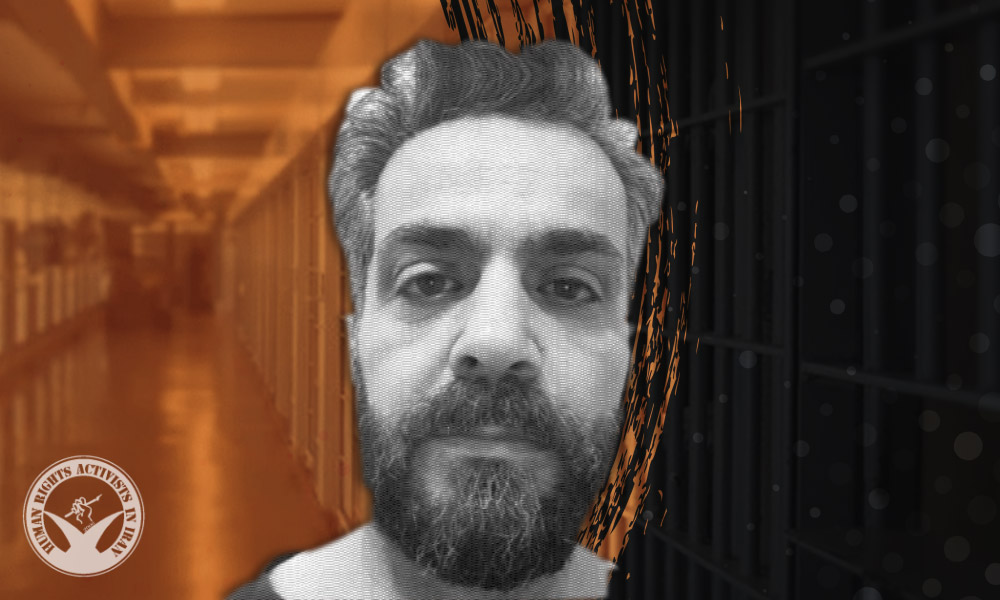
Once-Buried Case Pulls Abdolreza Ghanbari Back to Evin Prison

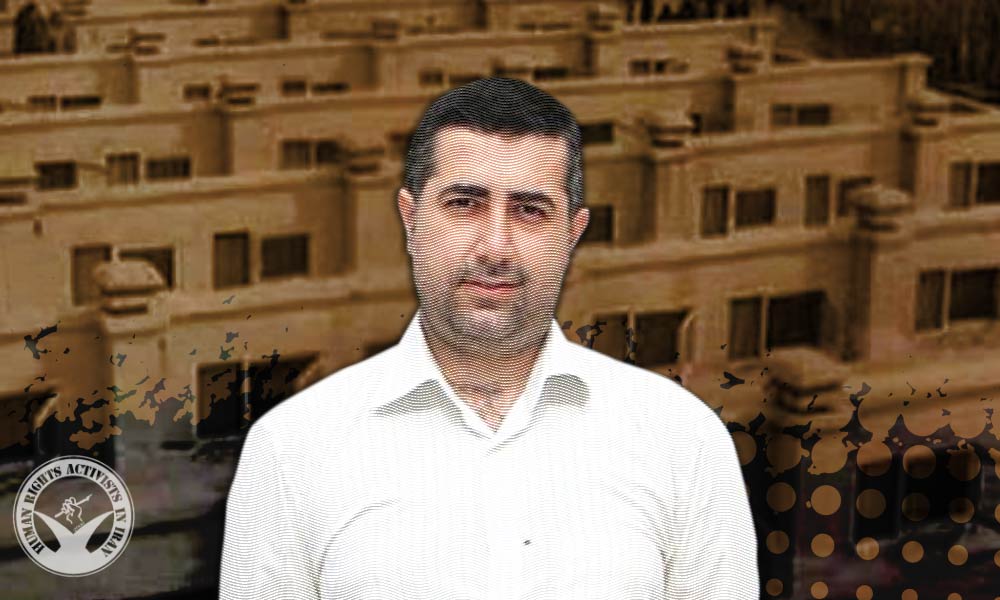
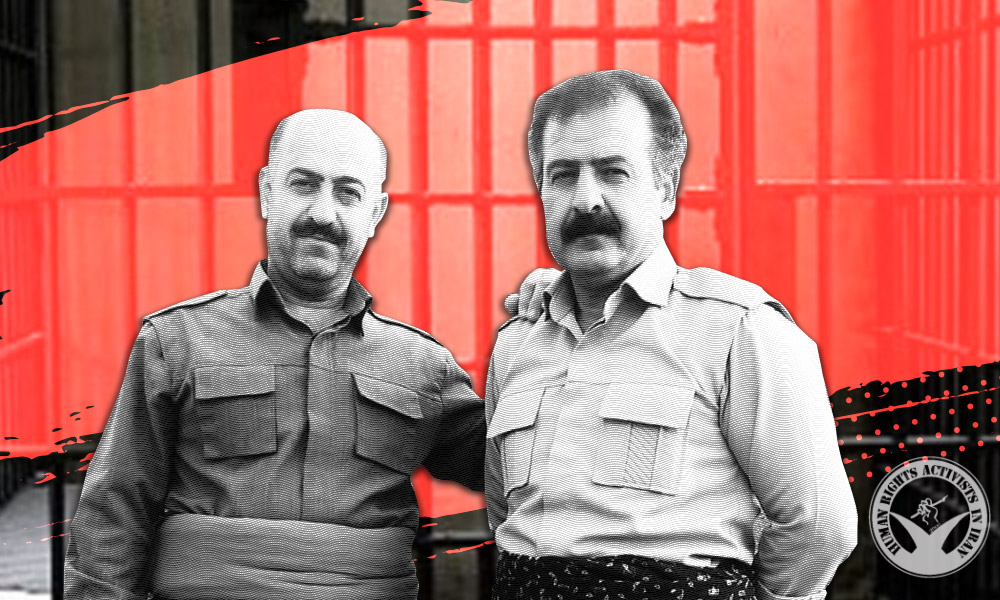
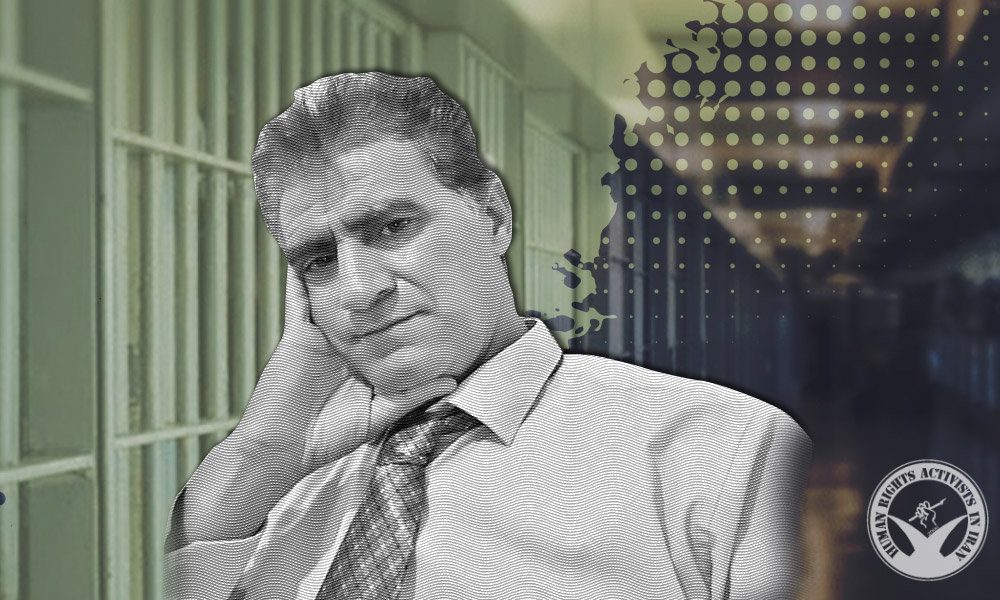
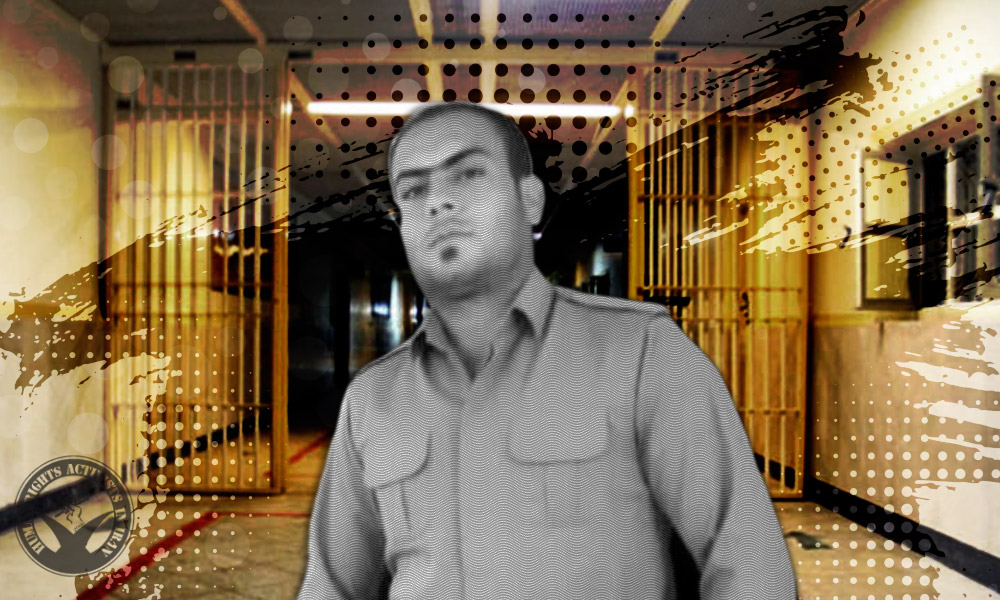
Human Rights Activists News Agency (HRANA) – Teacher and former political prisoner Abdolreza Ghanbari was arrested Saturday, October 13th, and transferred to Ward 8 of Evin Prison to serve the remainder of a recently-resurrected prison term.

Amid re-reviews and permutations of his case under a changing penal code, Ghanbari has been pulled through the judicial wringer since his initial arrest in 2009, when he was detained in his workplace amid widespread “Ashura” demonstrations following the contentious Iranian election cycle of that year.

In February 2010, after two months of interrogation, Judge Salavati of Revolutionary Court Branch 15 sentenced him to death for “Moharebeh” [enmity against God],” through his alleged ties to the opposition group People’s Mujahedin of Iran (MEK).

Four years later, in June 2013, Ghanbari’s death sentence was reversed in Supreme Court and commuted to 15 years’ imprisonment by Revolutionary Court Branch 1.

When Article 186 of the Islamic Penal Code was eliminated, Ghanbari requested and obtained a retrial, which resulted in the suspension of his sentence. He was released March 16, 2016 after having served more than six years in prison.

The return to normal life was relatively short-lived, as a close source explained to HRANA: “In September 2017, his prison sentence was reviewed again by Branch 28 of [Tehran’s] Revolutionary Court, presided by Judge Moghiseh, and increased from 10 years to 15 years in prison.”

Ghanbari’s new scheduled release date has yet to be confirmed by HRANA.

Accused of Posing “Security Risk,” Iranian Actress Barred from Limelight

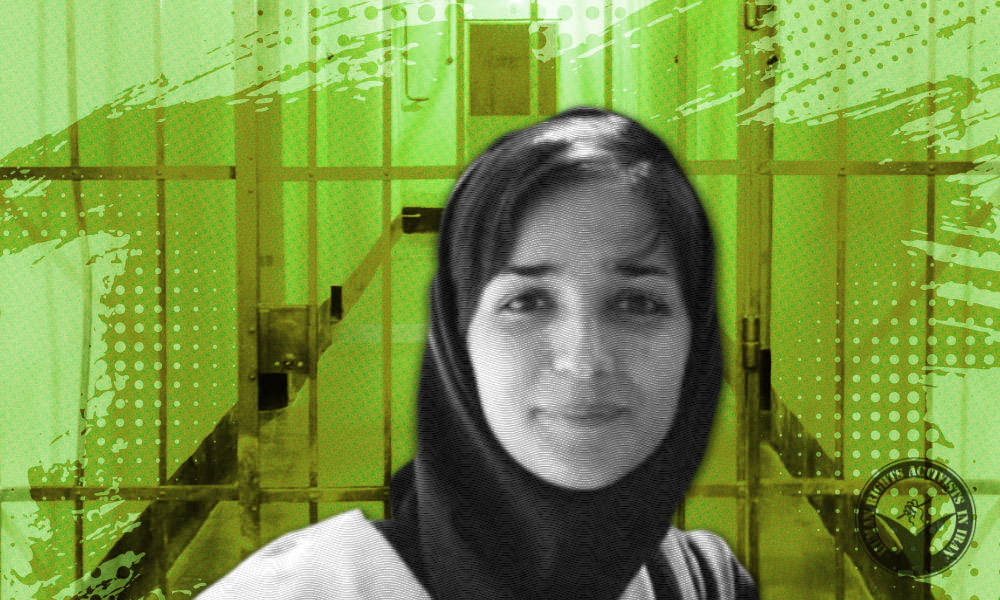
Human Rights Activists News Agency (HRANA) – After being interrogated twice for her social media publications, Iranian actress Parastoo Salehi says that Iranian security forces are barring her from making public appearances.

Salehi said that she was first interrogated on August 19 of this year, when she was summoned by the Iranian judiciary surveillance unit to explain her public commentary on Iran’s social and economic setbacks.

In a video she recently published online, Salehi said she was called again on October 2nd to the Ministry of Intelligence facility on Khajeh Abdollah Ansari street. “The public wasn’t to have knowledge of this meeting. But now I am being told again and again that I can’t appear in public for ‘security reasons.'”

Salehi questioned the intent behind Iranian authorities’ citation of “security reasons,” asking at the conclusion of her video, “How do I pose a security risk? Should I not act? Should I not speak? How can I get paid? How can I make a living?”

Salehi reported that she was being censured for using her public Instagram profile to decry issues such as embezzlement, the drop in value of the Iranian currency, political detainees, rape, child abuse, and the Caspian Sea agreement, a highly-contentious diplomatic agreement that was recently finalized.

Arak January Protestors Sentenced to Imprisonment and Lashings

Human Rights Activists News Agency (HRANA) – Six Arak residents arrested amid the January protests were sentenced to one year in prison and 74 lashes each for “disrupting the public peace through participation in an illegal gathering” in Arak’s Criminal Court No.2, Branch 102. The defendants’ sentences allow for detention already served to be counted towards their pending prison terms.

Lawyer and civil rights activist Mohammad Najafi told HRANA that, barring any new infractions, only one of the defendants will actually be serving his time. “One of [the defendants], grocer Hossein Agha Alidadi, did not appeal his initial sentence of one year in prison and 74 lashes, and that sentence was finalized. He had also been accused of espionage but was acquitted of that charge. Five others who requested an appeal had their sentences suspended by the Appeals Court of Markazi Province.”

As of the date of this report, the identities of those five others have yet to be confirmed.

In July of this year, 11 residents detained in Shazand city in connection to the January protests, including Mohammad Najafi, were tried and sentenced to imprisonment and lashings in Arak Criminal Court No.2, Branch 102, presided by Judge Mohammad Reza Abdollahi.

The International Covenant on Civil and Political Rights (ICCPR) explicitly prohibits inhumane and degrading punishments like lashings.

Five thousand people were detained and interrogated across the country in connection to nationwide demonstrations in January 2018 that came to be referred to as the “January protests.” These economic protests led to skirmishes with police forces and the deaths of 25 individuals. Of the January protests, Ministry of the Interior Rahmani Fazli said, “A number of protests took place in 100 Iranian cities; in forty of those cities, the protests turned violent.”

Golrokh Iraee Calls Citizens to the Defense of Persecuted Activist Soheil Arabi

Human Rights Activist News Agency (HRANA) – Golrokh Ebrahimi Iraee, a civil rights activist imprisoned at Evin, has written an open letter in response to the recent re-sentencing of Soheil Arabi, a prisoner of conscience in Great Tehran Penitentiary who has been held without furlough since November 7, 2013.

On new charges of “propaganda against the regime” and “disturbing the public mind,” Tehran Revolutionary Court Branch 26 sentenced Arabi to three more years of imprisonment and three years of exile on September 22, 2018. Cited as evidence against him were voice files he allegedly sent from inside the prison, in which he can be heard comparing Evin to a torture chamber.

In her letter, Iraee accuses authorities of using the exile sentence to banish dissidents like Arabi from public memory.

Golrokh Iraee pictured here with husband and fellow prisoner of conscience Arash Sadeghi

While behind bars on separate charges in June of this year, Arabi was issued a six-month prison sentence by Judge Moghiseh on charges of “blasphemy” and “propaganda against the regime.” The charges stemmed from a case file opened up against Arabi and his ex-spouse Nastaran Naimi, who was sentenced to 18 months’ imprisonment for “blasphemy” and “aiding and abetting.”

Iraee’s letter warns the Iranian public that apathy towards the extension of Arabi’s detainment would be ignoring symptoms of a malaise for which all Iranian citizens are responsible.

The full text of her letter, translated into English by HRANA, is below:

“He has been behind bars for years without having committed a crime. He is held captive by a vengeful system that has no tolerance for dissenting views, that stifles them instead in bondage, with physical and mental tortures.

Soheil Arabi was first detained on a misunderstanding that devolved into a blasphemy charge. After spending years behind bars and nearing the end of a sentence that tore his family apart (after the immoral and inhumane pressures they submitted him to, to break his spirit), yet another case file emerges, yet another prison sentence is leveled against him. After compounding his suffering with a ban on visits from his daughter, they now want to do with him what they did with Arjang Davoudi and Gholamreza Kalbi: exile him to the middle of nowhere, remove him from public memory, and let his existence perish into the abyss.

After the hunger strikes and beatings he endured in prison, Soheil’s condition is worrisome indeed. It is fitting that we be reminded, after commemorating the World Day against the Death Penalty, of Soheil’s initial execution sentence. He was made to suffer for a long time under the threat of execution, and the [long-term] imprisonment to which his death penalty was commuted, yet we are still witnessing concerted efforts to annihilate him with continued torture and new case files extending his imprisonment.

This method of eliminating activists, protesters, and dissenters may be the current status quo of the judicial system, but it is critical we consider these actions as the red flags that they are, and that we increase public sensitivity and attract the attention of international organizations so that we can put a stop to the annihilation of political and ideological activists. Abandoning them in this state renders us guilty of spreading the disease of our judicial system, and condoning the repetition of such crimes.

Golrokh Ebrahimi Iraee, Women’s Ward of Evin Prison, October 2018.

***

Golrokh Iraee was arrested along with her husband on September 6, 2014. She was first held at an IRGC safe house for two days and then spent 20 days in the solitary cells of Evin’s Section 2A, which is under IRGC jurisdiction, before being released on a bail of 800 million rials. On October 24, 2016, the IRGC arrested Iraee again, without a warrant. Her husband Arash Sadeghi, who was sentenced to 19 years in prison, is currently in Karaj’s Rajai Shahr Prison and has undergone operations for cancer. Iraee was sentenced to six years in prison, which was reduced to 2.5 years based on amnesty and Article 134 of the Islamic Penal Code. She was convicted of “insulting the sacred” and “gathering and collusion against the regime.”

Authorities Intimidate National Front of Iran into Cancelling Meeting

Human Rights Activists News Agency (HRANA) – Before it could assemble for the first time in 12 months, the National Front of Iran again had to cancel a meeting due to threats of detainment from security forces, who have been impeding the group’s gatherings for the past three years.

The political group had intended to hold leadership elections on Monday, October 15th in the home of one of its members. A close source told HRANA that the elections were scheduled to fill the position of late central council chairman Adib Boroumand.

The National Front of Iran is a nationalist political organization that has faced restrictions to its activities since it was founded in 1949.

Subscribe to Our Newsletter

Now is definitely not the time to stop reading!

Activist Mohammad Najafi Charged with Visiting the Family of Ramin Hossein Panahi

Human Rights Activists News Agency (HRANA) – Attorney and human rights activist Mohammad Najafi was charged with “spreading lies with intent to disrupt the public mind” after travelling to Iran’s Kurdish region to meet with the family of Ramin Hossein Panahi, a political prisoner who was recently executed.

Najafi confirmed to HRANA that he was read his charges in Branch 1 of Shazand’s General and Revolutionary Investigation Court on October 14th, pursuant to a summons he received the day before.

Though Shazand Criminal Court No. 2 recently opted not to suspend Najafi’s internet activity, he said more charges would be forthcoming against him for content he posted online.

Najafi was previously detained for inquiring into the death of civilian Vahid Heydari, who died in Police Detention Center No. 12 amid the January protests. Najafi challenged Iranian judicial authorities who had claimed Heydari was a drug dealer that committed suicide while in custody. Najafi’s interviews with Heydari’s loved ones suggest that Heydari was a street peddler with no criminal record, whose autopsy report showed none of the typical markers of suicide, but did indicate head injuries consistent with blunt-force trauma.

When news of Najafi’s situation reached Tehran MP Mahmoud Sadeghi, he accused security forces of fabricating the grounds for his case, and defended Najafi by saying he had only gone as far as clearing Heydari’s name of a drug-dealing charge.

Najafi was detained in July 2018 along with 10 others who participated with him in the January protests in Shazand. The group was charged with “disturbing the public peace and spreading lies with intent to disrupt the public mind.” Judge Mohammad Reza Abdollahi of Criminal Court No. 2 Branch 102 of Arak, the provincial capital of Markazi Province, convicted and sentenced the group to three years of imprisonment and 74 lashes each.

The sentence is currently being appealed in hearings that began October 3rd in Markazi Province Appellate Court Branch 1.

Shazand is located in Markazi Province, central Iran.

Zahra Majd Sequestered for Opinions of her Dissident Spouse

Human Rights Activists News Agency (HRANA)- Upon her arrival to Iran via the Isfahan airport on Thursday, October 11th, security forces arrested Zahra Majd — wife of Mohammad Hedayati, a critic of Iran’s ruling clergy — along with her children, ages three and five.

The children were put in the care of relatives late that night, Hedayati said, and Majd was transferred to an undisclosed location in Tehran the next morning.

The Secretary-General of the Traditional Cleric’s Association of America, Hedayati is a vocal dissident of the Iranian regime who lives in the United States with Zahra and their two children.

Hedayati confirmed the news of his family’s arrest to HRANA, adding that Majd and their children had previously traveled to Iran for family visits without running into any trouble.

“Last week, our three-year-old daughter was hospitalized for six days in the United States because she fell into critical condition from diabetes,” Hedayati said. “She was hospitalized again this morning, after being arrested with her mother, because she missed the insulin she needs to get after each meal.”

Majd was initially told she was being arrested on a personal civil case, Hedayati said, until it was revealed that her detainment was ordered by Iran’s Special Clerical Court. “The condition of her release is that I go to Iran and present myself to this Court,” Hedayati explained.

According to Hedayati, Zahra was scheduled for transfer to the Clerical Court on Saturday, October 13th at 9 a.m.

The Special Clerical Court has been trying cases involving the clergy, as well as graduates of Iran’s Islamic seminaries, since its establishment at the time of the Iranian Revolution. HRANA previously published a report marking the 40th anniversary of this judicial institution.

Citing Constitutional Trespass, Abbas Lasani Rejects Court’s Second Summons

Human Rights Activists News Agency (HRANA) – Azerbaijani activist Abbas Lasani’s public dissent with the Iranian judicial system continued this week with his spurning, via open letter, of a second court subpoena that he decries as illegitimate. “I will not abide by the rule of tyranny, and thus I express my protest and rebellion against this illegal process, and against your oppressive conduct unbecoming of a court,” he wrote.
Via SMS on September 24th, Lasani learned he had been convicted in absentia in Branch 2 of Tabriz Revolutionary Court. On October 10th, a writ summoned him to hear the conviction in court within the next ten days.
“My verdict was delivered by a totally illegal and unlawful process that is neither reasonable nor acceptable,” Lasani wrote, explaining that constitutional article 168 stipulates that verdicts in political, press, or conscience cases must be tried in public and in the presence of the media.
HRANA reported September 16th on Lasani’s refusal to respond to an initial summons via text message from the same court. “It’s impossible to ignore that the summons is illegitimate, arriving by text message with no official hard copy,” Lasani said in a public statement.
Abbas Lasani was among a group of four Azerbaijani (Turk) activists residing in Ardebil arrested by Intelligence agents July 2, 2018, a few days before an annual gathering at Babak Fort, a site that has acquired symbolic importance for Azerbaijani rallies in recent years. Prior to his arrest, he had shared a video encouraging people to attend the gathering. He was released on 500 million rials [$3,500 USD] bail July 11, 2018. More than 80 Azerbaijani activists were arrested throughout Ardabil, West Azerbaijan, and East Azerbaijan provinces at the time of the Babak Fort gathering.
Amnesty International issued a statement on August 11th of this year, calling the arrests of Azerbaijani activists “arbitrary” and unlawful, and demanded the immediate release of all individuals detained for their participation in Azerbaijani Turkic cultural gatherings.

Writer and Activist Abbas Vahedian Arrested in Mashhad

Human Rights Activists News Agency (HRANA) – Abbas Vahedian Shahroudi, a writer and activist, was arrested at his Mashhad residence and transferred to an unknown location by security forces on October 11, 2018.

As of the date of this report, no further information was available on his location or the reasons behind his arrest.

A source close to the matter confirmed Vahedian’s arrest and told HRANA that he, along with a number of other activists in Mashhad, had recently been providing financial support to the families of several prisoners.

Vahedian’s works include “The Return of the Genghis Khan Mongol,” published by Khatam Publications in Mashhad.

Teachers’ Association Sounds Call to General Strike on October 14th & 15th

Human Rights Activists News Agency (HRANA)- The Coordinating Council of Teachers Syndicates in Iran (CCTSI) has issued a statement critical of the Ministry of Education, drawing public attention to a trend of paltry compensation for teachers.

The statement calls for teachers and other pedagogical staff to stage sit-ins in the administrative offices of schools this coming October 14th and October 15th [the work week in Iran runs from Saturday to Thursday]. It also asks teachers to sensitize students by explaining to them in advance the civic impetus behind the sit-ins to come.

The full text of their letter, translated into English by HRANA, is below:

Dear Iranian teachers,
Cherished students,
Esteemed parents,

Teachers both active and retired have been scraping by on painfully low wages for years. They protest cuts to school budget allocations and the unconstitutional shift of educational duties from the shoulders of schools to the shoulders of the people. Teachers have stood their ground in civic and community actions [on behalf of concerns] that officials never deign to acknowledge. No, it seems they are preoccupied with staying in power, defensively clutching their spoils. They think only of their own interests, those of their small inner circle, and those of some citizens in other countries.

Out-of-control inflation and climbing prices have gripped the country, and the purchasing power of teachers, like that of many other hard-working classes, has fallen significantly. What’s more, the cost of education is on the rise, and the Iranian government and parliament have failed to answer to teachers’ faltering quality of life and the ailing education system. The time has come for us to protest this systemic disorder.

All have come to feel that the Ministry of Education, as the face and custodian of this system encompassing millions of people, is without a practical program or vision for improving our educational infrastructure. Instead of attending to the quality of formation and to teachers’ livelihoods, the ministry opts increasingly for monetizing education and impoverishing teachers.

The Public Service Law, which was passed in 2007, has yet to be implemented 10 years later.

The bill on teacher ranking is postponed month after month.
The Teachers’ Savings Fund has been looted, and according to the Fund’s inquiry committee, 18 million tomans [approximately $1,200 USD] is missing from each teacher’s share.

Teacher’s salaries have not kept up with the rate of inflation, and in practice, a majority of teachers live below the poverty line. At the same time, there are fewer and fewer public schools, and those still in operation [depend on separate funding] to run.

The security apparatus and judiciary, rather than pursuing those responsible for corruption and the robbery of our society, prefer to threaten, exile, fire, and imprison teachers who express their needs and pursue justice.

On behalf of workers in the education system both active and retired, CCTSI has exhausted available paths for bettering our current conditions. Teachers have voiced their demands in meetings and letters to officials, published them in statements, launched them as campaigns, and hosted syndical rallies for them. But the regime and the government refuse to take even a single step towards addressing those issues.

Honorable People of Iran,
Imprudent Iranian officials,

We are going to stage sit-ins because teachers can’t go to class in these conditions. In any case, classes held in makeshift camps, overcrowded to the extreme, can hardly be put to any use.

For the reasons discussed above and the many others we have voiced before, CCTSI calls on educational staff of all levels across the country to stage sit-ins in the offices of their schools on Sunday, October 14 and Monday, October 15. We ask that they refuse to go to classes and that they raise students awareness on the factors compelling this initiative.

We ask the school principals to join in and to refrain from harsh treatment of our colleagues. We warn security offices and institutions not to retaliate against the teachers taking part in demonstrations. We have tasted detention and incarcerations, and some of our brave colleagues are still in chains today. We ask that you lay down your weapons of repression.

This October sit-ins are only the beginning: if we don’t see swift, constructive, and concrete changes to the pay slips of active and retired educational employees, and to per-capita funding of students, we will escalate our general strikes come November.

We ask our retired comrades to come visit their local colleagues carrying a flower. Employed colleagues who are off on [the strike days] must also join in, at a school close to their home or in the school where they work.
Teachers believe in the common right to a dignified life, and in access to free, fair, and quality education for all children.

The Coordinating Council of Teachers Syndicates in Iran
October 10th, 2018