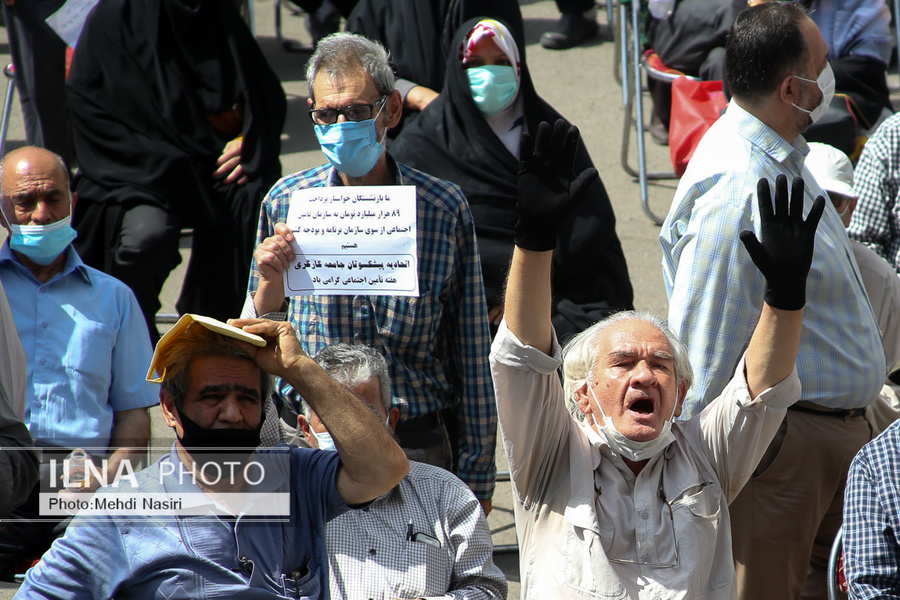
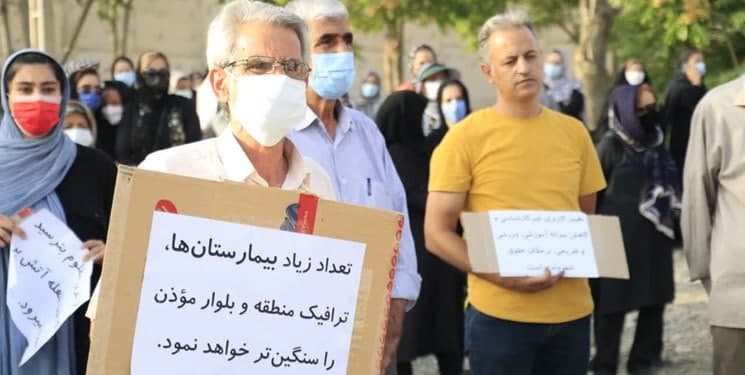
Today, July 20, the widespread protests in Khuzestan over the ongoing water crisis continued for a sixth consecutive day. Since the start of the protests on Thursday, provincial authorities have confirmed that at least two civilians have been killed by military forces.
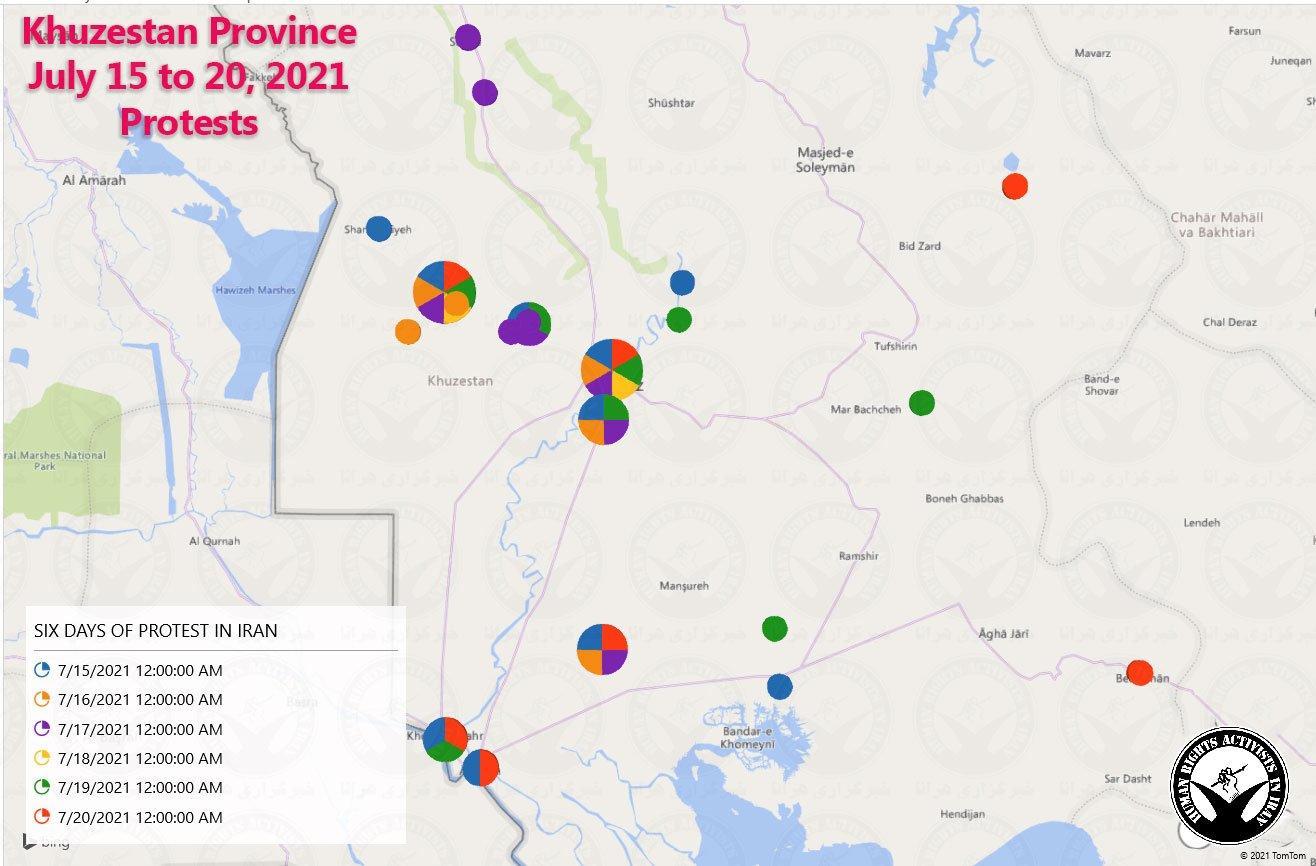
According to HRANA, the news agency of Human Rights Activists, today’s protests took place in the cities of Izeh, Khorramshahr, Ahvaz, Shadegan, Abadan, Susangard, and Behbahan. HRANA received reports of shootings and internet shutdowns in some areas, as well as a report of the death of a protester, but neither have been confirmed as of this writing.
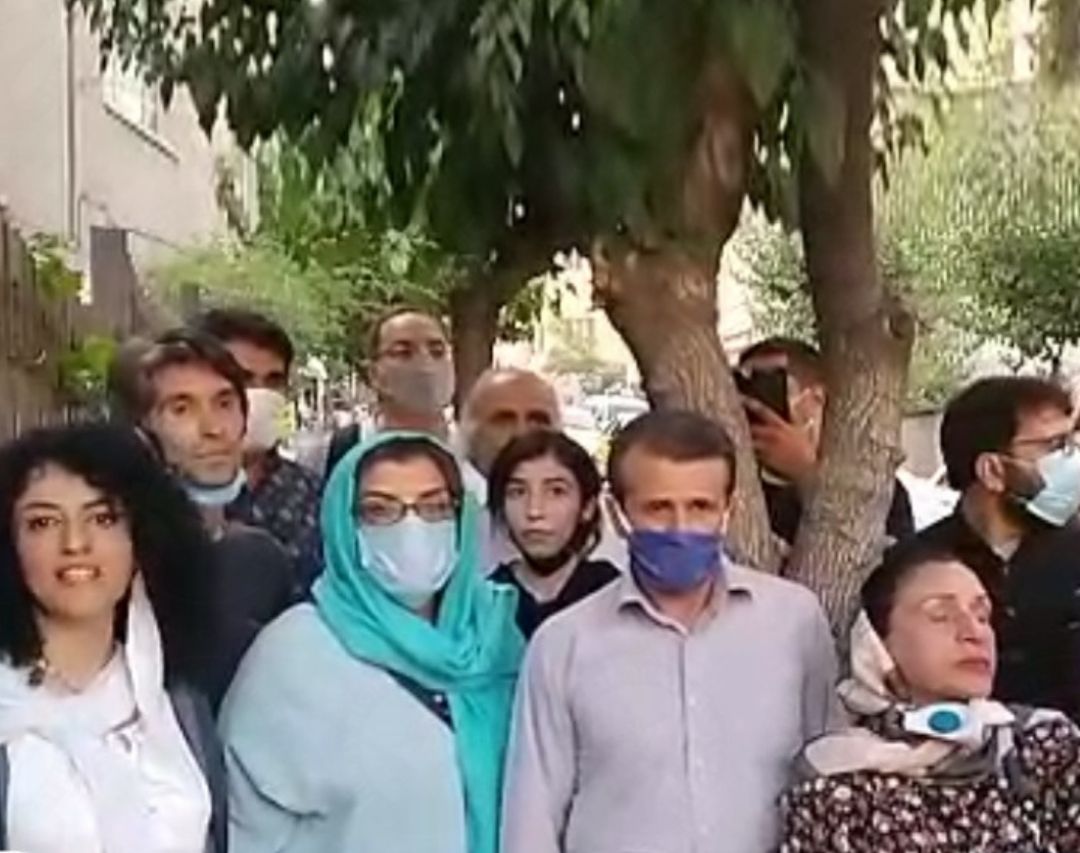
Today a number of prominent civil activists also gathered in Tehran to voice their support for the protesters in Khuzestan, and were met with violence from security forces. Activists Narges Mohammadi, Arash Sadeghi, Arash Kaykhosravi, Ruhollah Mardani, Jafar Azimzadeh, Rasoul Bodaghi, Pooran Nazemi, Hamid Asefi, and Behzad Homayouni were arrested by security forces in Tehran and taken to an unknown location.
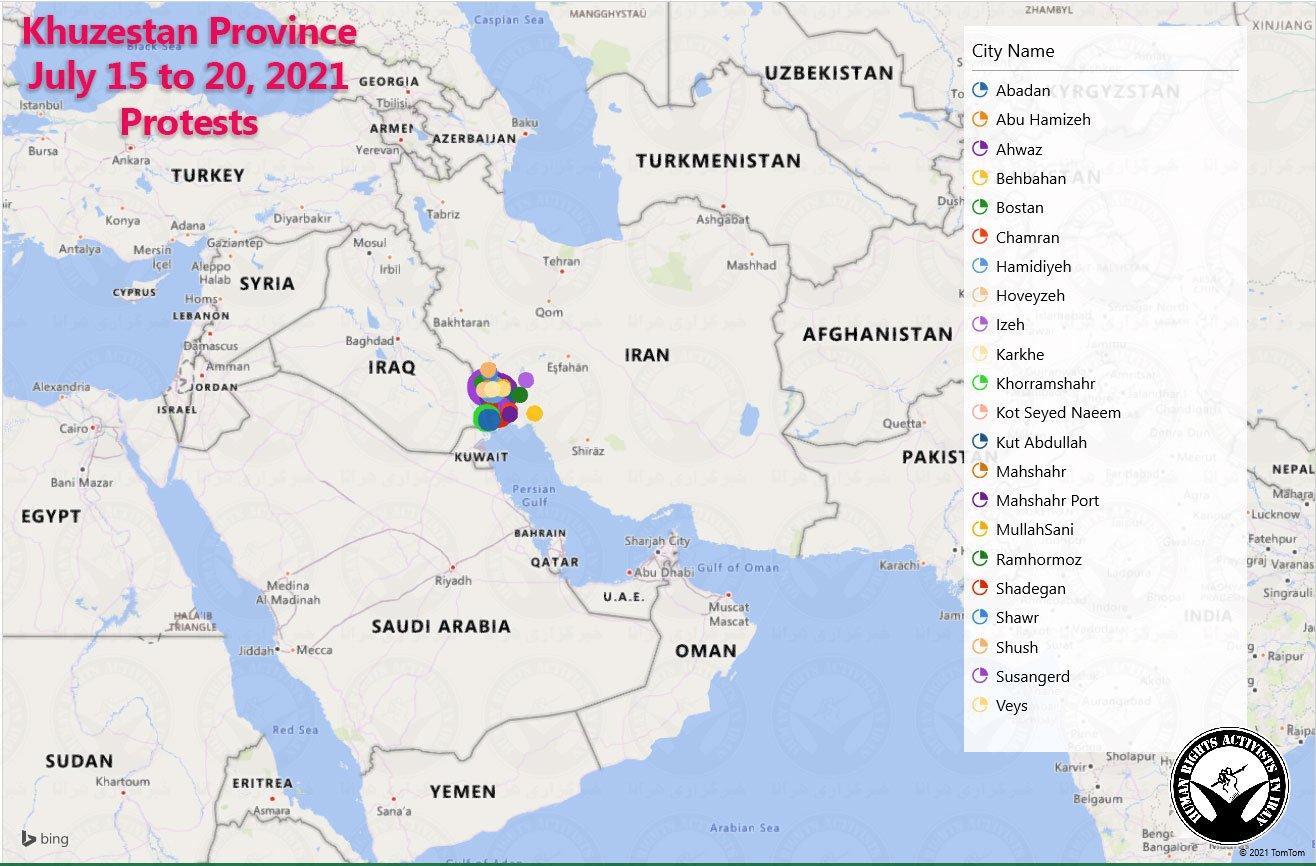
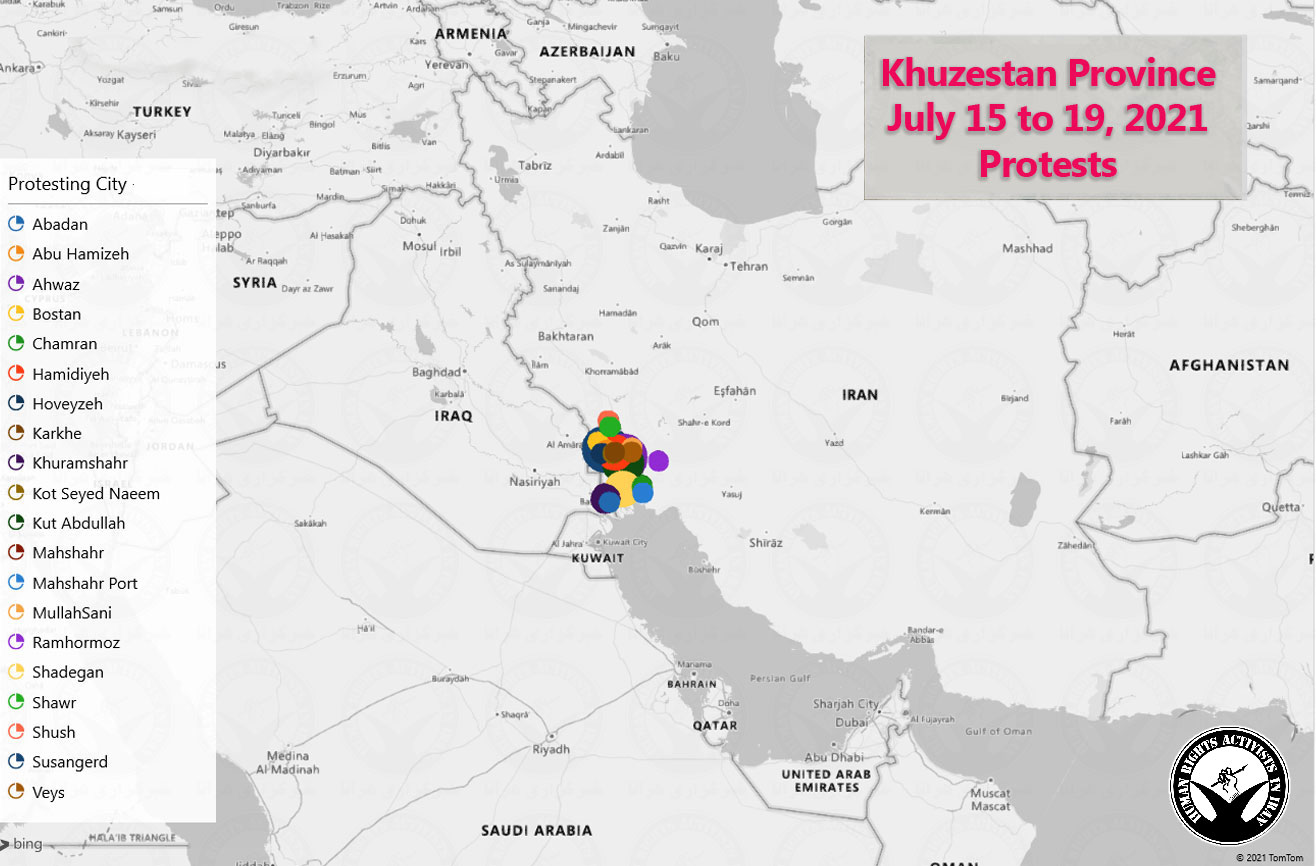
Below is our updated map of the protests of the last five days.
Several activists were arrested in Tehran following a rally in support of the citizens of Khuzestan amidst the ongoing protests over water shortages in the province.
According to HRANA, the news agency of Human Rights Activists, the arrested activists have been identified as Narges Mohammadi, Arash Sadeghi, Arash Kaykhosravi, Ruhollah Mardani, Jafar Azimzadeh, Rasoul Bodaghi, Pooran Nazemi, Hamid Asefi, and Behzad Homayouni.
The detention of these citizens was violent and accompanied by beatings. Earlier today, in a video, Narges Mohammadi stated, “We wanted to gather in front of the Ministry of Interior to protest the killing of innocent – thirsty people in Khuzestan, but we were treated violently by security forces and some of us were beaten. Now we are marching in a street in Tehran to support the people of Khuzestan.”
During the last six days, people in Khuzestan Province have been protesting the frequent water cuts and mismanagement of water sources in at least 20 cities.
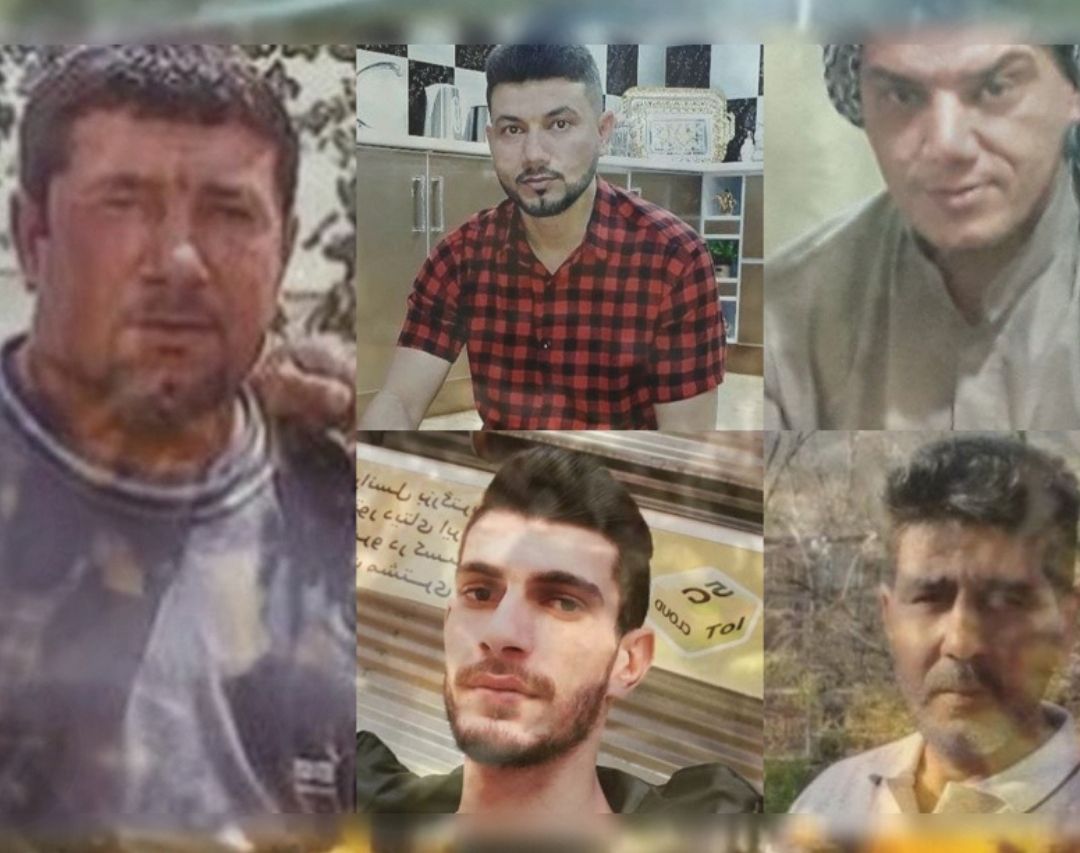
Since the second day of the protests, provincial officials have confirmed that two citizens, 30-year-old Mostafa Naeemawi from Shadegan, and 17-year-old Ghasem Naseri (Khaziri) from the Kut Abdollah area of Ahvaz, were killed during the protests. HRANA has received reports, which have yet to be verified, of a third civilian additionally being shot dead by military forces.
The exact status of the detained activists and their whereabouts are unknown at the time of writing.
More than 130 documentarians signed a statement entitled “And water crisis ignited, again” regarding the widespread protests in Khuzestan.
According to HRANA, the news agency of Human Rights Activists, the statement condemned acts of violence against the people of Khuzestan.
“We, the documentary directors, have always reflected the difficulties and will of our people based on our work tradition,” the signatories wrote in the statement, “and today we stand by the thirsty people of Khuzestan and strongly condemn the repression of the people.”
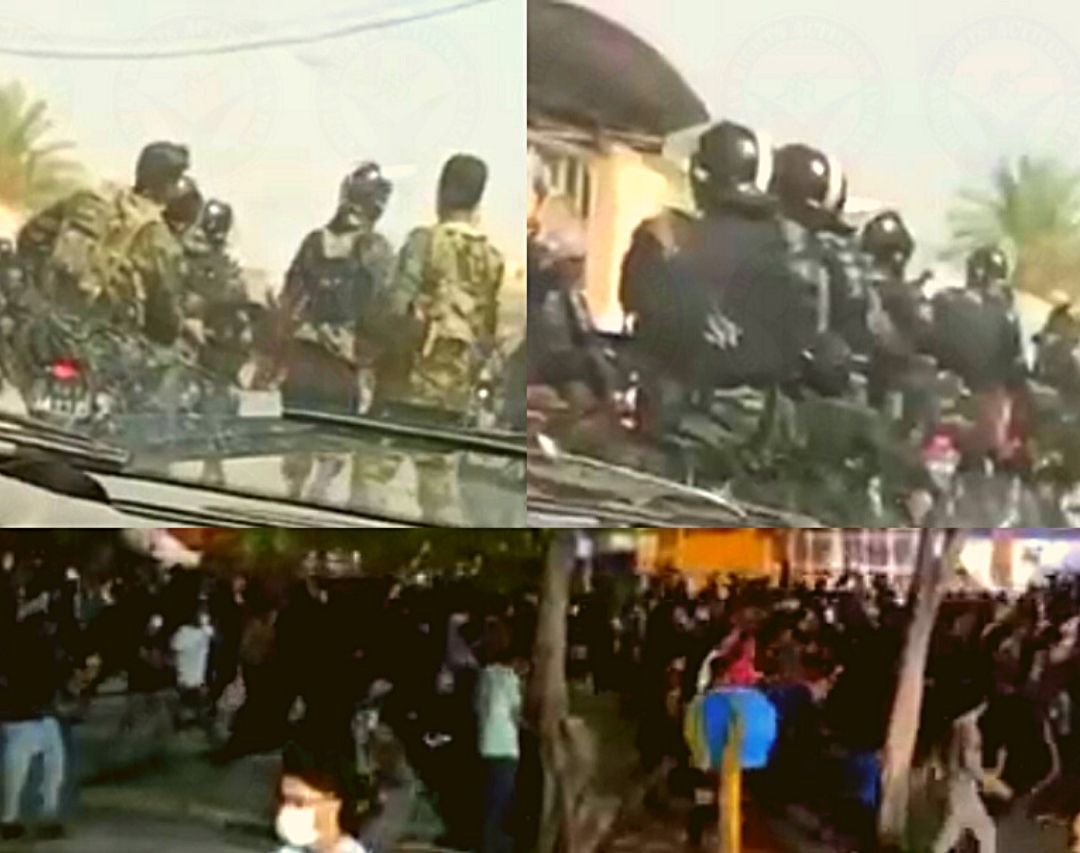
Since the night of Thursday, July 15, dozens of rallies have been held in protest of the mismanagement that has led to water cuts in Khuzestan cities. Military and police forces have responded violently to the protests, and, in a few cases, opened fire on civilians.
Today, July 19, the widespread protests in Khuzestan over the mismanagement of officials regarding the ongoing water crisis continued for a fifth consecutive day. Since the start of the protests on Thursday, provincial authorities have confirmed that at least two civilians have been killed by military forces.
According to HRANA, the news agency of Human Rights Activists, today’s rallies in Khuzestan took place in Hamidiyeh, Ahvaz, Kut Abdullah, Susangard, Ramhormoz, Mahshahr, Khorramshahr, Veys, and Chamranhere. There were no reports of violence or shootings by government forces except a report from Chamran city, which seems to be aerial shooting.
The weekend’s demonstrations also saw heavy escalation. As shown in videos previously published by HRANA, the Susangard protests were responded to with violence from on-duty military forces this Sunday. In multiple areas police opened fire on unarmed protesters.
The protestors blocked the roads connecting Ahvaz to Khorramshahr and Ahvaz to Shush by lighting fires. There have also reportedly been sporadic internet outages across the province.
Since the second day of the protests, provincial officials have confirmed that two citizens, 30-year-old Mostafa Naeemawi from Shadegan, and 17-year-old Ghasem Naseri (Khaziri) from the Kut Abdollah area of Ahvaz, were killed during the protests. HRANA has received reports, which have yet to be verified, of a third civilian additionally being shot dead by military forces.
Previously, the governor of Khuzestan said, “The published videos of the protests in the province are fake and no protest has taken place.”
“Some seek to provoke the people and publish fake images of the protests in cyberspace,” the governor further stated. “For example, nothing has happened in the cities of Khorramshahr and Susangard, but clips related to the past events are published in cyberspace!”
Public rallies to protest the water cuts and lack of access to drinking water began on the night of Thursday, July 15, and have spread to at least 17 cities so far.
During the last four days, people protested in at least 17 cities, including Shavur, Karkheh, Kut Seyed Naeem, Shush, Ahvaz, Abadan, Hamidiyeh, Bostan, Susangard, Bandar Mahshahr, Khorramshahr, Shadegan, Kut Abdollah, Mollasani, Hoveyzeh, and Abou Homeyzeh in Khuzestan Province and Mashhad. In some of the released videos, the sounds of gunfire can be heard, and a recurring theme across the footage is the heavy presence of armed military and security forces.
Local sources published reports, as of yet unverified, that several protesting citizens were injured and many others were detained in the city of Khorramshahr. So far, Abdolreza Soleimani, Darem Soleimani, Mansour Soleimani, Yarullah Soleimani and his son Ali Soleimani, all residents of Khorramshahr, are reportedly detained.
Workers at the Haft Tappeh Sugarcane Agro-Industry Company supported protests in Khuzestan during their rally and march on Sunday, July 18.
A resident of Ahvaz told HRANA about the situation in the city, “Special forces from other places are quickly (being) deployed to Ahvaz to suppress young protestors. Access to drinking water is one of the most basic civil rights. While Khuzestan was once considered the most water-rich province in the country, the mismanagement has led to the crisis of supply of drinking water in Khuzestan to become a serious challenge for people.”
Mahmoud Ahmadi Bighash, a representative of Shazand City in Parliament, said that providing water and development is an immediate responsibility of the entire government. Bighash wrote in a tweet:
“The situation in Khuzestan is concerning, I point it out indirectly, be very careful about what happened in Khuzestan; open all the [Karun River’s] water sources to quench Khuzestan’s thirst and put out the fire.”
Abdullah Izad Panah, Speaker of the House of Representatives of Khuzestan, also gave a statement in a recent meeting about crisis management in which he criticized the water transfer projects in the province.
“Water transfer projects should be stopped,” the representative said. “Drought is just one side of the issue. The transfer of water has caused Khuzestan to fall to this condition.”
Earlier, Jalil Mokhtar, the representative of Abadan, considered the problems caused by the transfer of water from Khuzestan province to other provinces, and mismanagement.
“Unfortunately, we have witnessed the water transfer from Khuzestan to other areas based on government approvals,” Mokhtar said. “Khuzestan, which was a fertile plain, is now on a desertification path.”
The Human Rights Defenders Association wrote an open letter to the UN High Commissioner for Human Rights expressing concern about the suppression of protesters of the water crisis by security officials and calling for an end to the suppression.
“Khuzestan province, despite having rich oil resources, is among the most deprived provinces in Iran, and its residents are facing a high range unemployment, losing water sources, polluted air, and frequent power outages, so their protests are completely justified, and the response must not be bullets and imprisonment.”
Watch our compilation of video footage taken at various protests throughout the province.
According to HRANA, the news agency of Human Rights Activists, a number of protests took place in different parts of the country this week. Below is a quick recap and footage from the demonstrations.
Friday July 9 and Saturday July 10
Several civil and political activists in Tehran, several bakers in Qazvin, a group of women from Nasir Mahalla and Shalma villages located in Shaft county, a group of pest control workers from Haft Tappeh Sugarcane Company, residents of Marqa village from the central part Izeh city, a group of employees of Qom Health Care Services, workers of rural telecommunication agents in Mashhad, a group of taxi drivers in Marivan, Kurdestan, residents of Ahvaz concerned about the drying rivers in Khuzestan province, workers of Kut Abdullah municipality, and a number of bakery workers in Neyshabur all held protest rallies on Friday and Saturday of last week.
Qazvin bakers:
Civil and political activists in Tehran in support of Manouchehr Bakhtiari:
Women from Nasir Mahalla and Shalma villages:
Haft Tappeh sugarcane workers:
Marqa village residents in Izeh:
Employees of health services in Qom:
Workers of rural telecommunication agents in Mashhad:
Taxi drivers in Marivan, Kurdestan:
Residents in Ahvaz protesting rivers in danger of drying, in Khuzestan:
Workers of Kut Abdullah municipality:
Sunday, July 11
A group of shareholders of Cryptoland exchange in Tehran, a group of pest control workers of Haft Tappeh Sugarcane Company for the 16th consecutive day, Mashhad bakery workers, a group of retirees the Steel of Isfahan, retirees seeking social security in the cities of Rasht and Ahvaz, a group of water and sewage workers from the Azadegan plain in Khuzestan called on their demands to be addressed through protest rallies. Also, the strikes of contract workers of several companies affiliated with the oil, petrochemical, and power plants companies are still expanding, and so far, workers of 105 industrial units in different provinces of the country have stopped working and joined the strikes.
Cryptoland shareholders:
Pest control workers of Haft Tappeh:
Bakers in Mashhad:
Retirees the Steel of Isfahan company:
Retirees of social security in the cities of Rasht and Ahvaz:
Water and sewage workers from the Azadegan plain in Khuzestan:
Monday, July 12
A group of pharmacists in Tehran and Shiraz, contract workers of Kut Abdollah municipality, a group of pesticide workers of Haft Tappeh Sugarcane Company for the 17th day in a row, drivers of Urmia minibus fleets, several workers of Khorasan Petrochemical Company, A group of people from Chabahar city in Sistan and Baluchestan province, a group of doctors, faculty members andresidents of the dermatology field, and a group of workers from Urmia Municipality all held protest gatherings.
Residents of Chabahr in Sistan and Baluchestan Province:
Pharmacists in Tehran:
Pharmacists in Shiraz:
Contract workers of Kut Abdollah municipality:
Workers of Haft Tappeh Sugarcane Company:
Physicians in Tehran
Workers of Khorasan Petrochemical Company:
Tuesday July 13
Several bakery workers in Mashhad, workers of Haft Tappeh Company from all sectors, a group of Ahvaz Municipality workers held protests this Tuesday. Additionally, marches against frequent water and electricity cuts were held in the cities of Khorramshahr and Qasr-e-qand.
Residents of Khorramshahr:
Workers of Ahvaz municipality:
Bakers in Mashhad
Workers of Haft Tappeh Company from all sectors:
Wednesday, July 14
Ranchers in four cities, including Shahrekord, Neyshabur, Birjand, and Torbat Heydariyeh, a group of workers from Haft Tappeh Company from all sectors for the second day and workers of the pest control department for the nineteenth consecutive day protested this Wednesday. A group of people from the western Hume, a number of social security workers and retirees, as well as a group of farmers in the villages of Janadaleh and Khazrajin Hamidiyeh in Khuzestan Province, drivers of tankers truck and fuel trucks in Qasr Shirin held demonstrations of protest as well.
Ranchers in Neyshabur:
Workers from Haft Tappeh Company from all sectors:
Pest control workers of Haft Tappeh:
Residents of western Hume:
Retirees of social security:
Farmers in Khuzestan:
Drivers of tanker trucks:
Thursday July 15
at least 13 rallies protest were held this Thursday. A group of workers of Ahvaz Municipality, workers of Jahan Pars Company, bakers and workers in Bojnourd in of North Khorasan, a group of workers of Haft Tappeh Company from all sectors and workers of the pest control department of this company for the twentieth day protested. Several environmental activists in Isfahan, residents in Sepehr town located in Karaj, farmers in the villages of Bavi district of Ahvaz city – Masjed Soleiman, some cities of Khuzestan including Abadan, Hamidiyeh, Bostan, Susangard and Mahshahr port due to water cut and lack of access to Drinking water also separately marched and protested in their respective cities.
Workers of Ahvaz Municipality:
Workers of Jahan Pars Company:
Gathering of bakers and bakery workers in Bojnourd:
Rally of Haft Tappeh workers
Residents in Sepehr town in Karaj:
Farmers in Bavi village:
Protesters in Khuzestan Province (including Hamidiyeh, Bostan, Susanger, Shadegan) in light of ongoing water shortages:
On Sunday, July 11, environmental reporter Javad Heydarian was summoned and informed of the charges against him by the Yasuj Prosecutor Office on behalf of Branch 22 of the Shiraz Judiciary Complex.
According to HRANA, the news agency of Human Rights Activists, Heydarian has been charged by Branch 22 of the Shiraz Prosecutor’s Office with “publishing lies on online media with the intention of disturbing the public mind” and has been charged by the Yasuj Prosecutor’s Office.
His case was referred to Branch 22 of the Judiciary of Shiraz for a final verdict. At the end of this hearing, he was temporarily released on bail until the end of the proceedings.
On June 22, Christian convert Nasser Navard Gol-Tapeh’s request for conditional release from Evin Prison was rejected.
According to HRANA, the news agency of Human Rights Activists, quoting the news website Article 18, the rejection of the request for parole was given to Navard Gol-Tapeh without the provision of any specific reason.
In September 2020, the Supreme Court rejected Navard Gol-Tapeh’s request for a retrial. Navard Gol-Tapeh has been in Evin Prison for the past three years and six months without leave.
Navard Gol Tappeh was arrested in a private gathering in July 2016 and later was sentenced by the Revolutionary Court of Tehran to 10 years in prison on charges of “acting against national security by forming and running an illegal organization of a house church”. The verdict was later approved by the Court of Appeals.
Although Christians are recognized as a religious minority under Iranian law, security services nevertheless pursue the issue of Muslims converting to Christianity with particular sensitivity and deal harshly with activists in this field.
The Iranian regime targets Christian converts despite Article 18 of the Universal Declaration of Human Rights and Article 18 of the International Covenant on Civil and Political Rights, which states that every individual has the right to freedom of religion and the freedom to express their religious beliefs.
On Monday, July 12, political prisoners Nayeb Hajizadeh Yangjeh, Kayhan Mokaram Al-Nabi, and Nayeb Askari were faced with new charges after protesting the beating of Hajizadeh Yangjeh.
According to HRANA, the news agency of Human Rights Activists, per an informed source, the lawsuit was filed at the request of Urmia Prison director Amir Sohrabi after several political prisoners protested the beating of Nayeb Hajizadeh by two prisoners accused of violent crimes.
It is said that one of the assailants was also summoned to the court as a witness in the case.
During the briefing session, the three accused were briefed on the alleged charges of “disturbing the order of the prison” and “blasphemy”.
Nayeb Hajizadeh was arrested by security forces in August 2019 and sentenced to 7 years and six months in prison shortly after being charged for membership in an opposition group. Kayhan Mokarram Al-Nabi was arrested by security forces in January 2020 and sentenced to five years in prison on charges of membership in an opposition group.
Nayeb Askari was arrested by IRGC intelligence agents in Urmia in April this year and was transferred to prison in June. Mr. Askari has been charged with collaborating with an opposition party.
12-year-old athlete Sara Pour-Azima was barred from participating in the World Equestrian Championships because her father legally banned her from leaving the country.
According to HRANA, the news agency of Human Rights Activists, Pour-Azima was scheduled to leave for Russia his week with the rest of her team.
Mehrdad Mehravin, the lawyer of Sara’s mother, said the young athlete’s parents are currently embroiled in a legal battle regarding alimony, and that the father’s move to ban Sara from travel was part of an ongoing dispute with Sara’s mother. Sara reportedly found out that she had been barred from travel to the Championships upon arriving at the airport.
Given the importance of the trip in the athlete’s success and future, legal action was taken to obtain permission from the prosecutor so that Sarah could travel, but legal authorities did not ultimately issue an allowance for her to leave the country.
In Iran, before getting married, women need the legal permission of a father or paternal grandfather to leave the country, and the permission of a husband after marriage.
A prisoner in the city of Jiroft in Kerman Province, who had previously been sentenced to death for the murder of his brother, was released from the gallows after his family expressed their forgiveness.
According to HRANA, the news agency of Human Rights Activists, quoting Rokna News, a prisoner in the city of Jiroft in Kerman Province was saved from execution following the pardon of his parents.
Mohammad Reza Sharifi, head of the Jiroft Prison Administration, commented on the reversal of the prisoner’s fate.
“With the efforts of the Dispute Resolution Council and the Peace and Reconciliation Committee of the prison, the family of the victim, including his parents, wife, and children, expressed their consent and forgiveness,” Sharifi added, “and the prisoner was released from execution.”
Sharifi stated that the prisoner had murdered his brother with a firearm in one of the villages of Jiroft city in September 2019 due to family disputes, and had been in Jiroft Prison for almost 2 years.
“Due to the consent of the parents, the imprisonment due to the general aspect of the crime was reduced from ten years to three years with a reduction of the sentence, and during the meeting of the prison classification council, it was agreed to employ this prisoner.”