Report on the Arrest of 17 Citizens in Various Cities

HRANA – In connection to the nationwide protests, security forces arrested 17 individuals in various cities.

According to HRANA, citing Kurdpa, one citizen was arrested in Tehran. His identity was reported as Saeed Piri, a resident of Abdanan County. Based on this report, Mr. Piri was arrested on January 7 in Tehran’s Narmak district by security forces without the presentation of a judicial warrant.

Kurdpa also reported in a separate account the arrest of 13 other citizens in various cities of Ilam Province. According to this report:

• Farzad Moradi on January 8 in Abdanan;

• Mehdi Kasaei on January 9 in Ilam;

• Meraj Shirkhani on January 9 in Ilam;

• Hamed Nazarian on January 10 in Ilam;

• Nima Khorki on January 10 in Ilam, all by security forces.

• Hamid Larti on January 15 in Ilam;

• Mohammad Zeynivand was arrested on January 16 in Darreh Shahr;

• Sohrab Alidousti on January 24 in Karzan;

• Mohammad-Hossein Baralk on January 25 in Lumar;

• Behrouz Valibeigi on January 30 in Lumar;

• Behzad Valibeigi on February 2 in Lumar;

• Mohammad-Amin Safari on February 2 in Abdanan;

• Farshad Aieni on February 3 in Dehloran;

Among these citizens, Mr. Khorki has been transferred to Ilam Prison, while no information is available regarding the place of detention of the other 12 individuals.

The Telegram channel United Students reported that Saeed Javanbakht, a student at Shiraz University of Medical Sciences originally from Yasuj, was arrested by security forces. His arrest occurred during the January protests due to providing assistance to injured individuals. The report did not specify the date of his arrest.

The Telegram channel Amirkabir Newsletter also reported the arrest of two sisters, Tara Davoudi and Kimia Davoudi, by security forces. According to the report, the two sisters were arrested on 14 January in Tehran and were subjected to beatings at the time of arrest. Since their detention, no information has been obtained regarding their whereabouts.

So far, no information has been made available regarding the charges brought against these 17 citizens.

Among them, Farshad Aieni had previously faced judicial action due to his activities.

It should be noted that gatherings and strikes by shopkeepers and bazaar merchants began in Tehran on 28 December. After two days, they expanded beyond marketplaces and commercial centers. With the participation of students, citizens, and various social groups, these protests became one of the most widespread demonstrations of recent years. For more information, readers can refer to HRANA’s detailed report published last night on the thirty-eighth day since the start of the protests.

Nationwide Protests: 247 Citizens Arrested in Various Cities

HRANA – The General Directorate of Intelligence of Yazd and Chaharmahal and Bakhtiari provinces, in two separate statements, announced the arrest of 188 and 85 citizens respectively in connection with the nationwide protests of January 2026. Meanwhile, Mahmoud Heydarian, an art teacher at schools in Bojnord, was arrested on January 10 during nationwide protests in the city of Ashkhaneh and has recently been transferred to Bojnord Prison.

According to Etemad Online, the Intelligence Department of Yazd Province announced that so far 188 individuals identified as the main activists in the January protests, more than 70 of whom were described as “street leaders and primary saboteurs involved in setting fire to public places and government offices”—have been identified, arrested, and had judicial cases opened against them.

According to Nournnews, in a separate report, the General Directorate of Intelligence of Chaharmahal and Bakhtiari Province also announced the identification and arrest of more than 85 citizens in connection with the nationwide January protests. In a statement, this security body described these individuals as leaders of the protests in the province.

Additionally, in another report, the Coordinating Council of Iranian Teachers’ Trade Associations announced that Mahmoud Heydarian, an art teacher in Bojnurd, was arrested by Intelligence Ministry agents at his home in the city of Ashkhaneh around midnight on January 10, during the nationwide protests. According to the council, after undergoing interrogation at the provincial intelligence office, he was transferred to Bojnurd Prison.

University of Essex Human Rights Centre Hosts Event on Pursuing Accountability for IRGC Violations

HRANA- In Colchester, UK, The University of Essex hosted a private lecture on Friday, January 30, 2026, examining pathways to accountability for serious human rights violations and alleged international crimes attributed to Iran’s Islamic Revolutionary Guard Corps (IRGC), and in light of ongoing events where it is clear the IRGC is the main perpetrator and where the Pasdaran Documentation Project (PDP) database has already established a preliminary assessment qualifying the IRGC as complicit in crimes against humanity. The lecture also drew on HRA’s and UpRights’ work on the Pasdaran Documentation Project and its Pathways to Accountability memo.

The event, titled “Pursuing Accountability for Serious Human Rights Violations and International Crimes Implicating Iran’s Islamic Revolutionary Guard Corps (IRGC),” was held at the Colchester Campus and organized by HRA in collaboration with Essex Law School and the Human Rights Centre. It brought together legal experts, human rights practitioners, and members of the academic community to discuss documentation, legal strategies, and international mechanisms for justice.

The panel was chaired and moderated by Dr. Matthew Gillett, Senior Lecturer at the University of Essex Law School and United Nations Special Mandate Holder, serving as Vice-Chair and Rapporteur of the UN Working Group on Arbitrary Detention. In his opening remarks, Dr. Gillett emphasized the central role of credible, structured documentation in pursuing accountability where domestic remedies are unavailable. He noted that international legal processes increasingly depend on high-quality evidence and rigorous methodological standards.

Skylar Thompson, Deputy Director of Human Rights Activists in Iran (HRA), introduced the Pasdaran Documentation Project (PDP), a long-term initiative developed by HRA with legal support from the organization UpRights. Thompson explained that PDP maps the IRGC’s institutional structure, operational units, and chains of command, and links this architecture to documented incidents of human rights abuses in Iran and abroad.

According to Thompson, the project is already being used by national jurisdictions to better understand the IRGC in support of prosecutorial processes, and it is designed to support investigations, legal analysis, and informed policy responses. “Accountability requires a sustained focus on grassroots documentation at the early stage,” she said, adding that PDP seeks to transform fragmented information into an integrated framework of institutional responsibility.

Valérie Gabard, Co-Director of UpRights, addressed the legal and practical challenges of pursuing accountability in the Iranian context. She outlined how international legal avenues, such as universal jurisdiction, targeted sanctions regimes, and UN mechanisms, can be activated when supported by systematic documentation. Gabard stressed that while accountability within Iran remains unrealistic under current conditions, external legal processes offer meaningful opportunities to advance justice for victims, while also noting their inherent difficulties.

Participants raised questions about data verification and the ethical challenges of documenting abuses in highly repressive environments.

The event concluded with reflections on the long-term nature of accountability work and the need for sustained international engagement. Speakers underscored that structured documentation initiatives such as PDP can play a critical role in ensuring that allegations of abuse are preserved and made usable for future legal and policy processes.

The gathering demonstrated interest in practical, evidence-based approaches to addressing alleged international crimes linked to the IRGC and reinforced the role of universities as key spaces for advancing research, dialogue, and accountability initiatives.

Learn more about the project and read the memo at IranPDP.org

Nationwide Protests: At Least 1,098 Citizens Arrested

HRANA – During the nationwide protests, at least 706 citizens were arrested in the cities of Dezful, Yazd, Borujen, Borujerd, and Nur. In addition, the Public Security Police of FARAJA reported the arrest of 327 protesters nationwide since December 28. The General Directorate of Intelligence of Hormozgan Province also announced the arrest of 65 citizens in connection with the protests in the province.

According to IRNA, the Lorestan Police Information Center claimed that an individual accused of killing a Basij member named Seyed Mohammad Javad Monavvar and injuring his son, Seyed Mohammad Naeim Monavvar, in the city of Borujerd, had been identified and arrested. It was alleged that the accused confessed to the killing during interrogations.

In another report, IRNA announced the arrest of 13 protesting citizens in Nur County, claiming that a large number of bladed weapons were confiscated from them and that they were accused of damaging public property.

IRNA also reported the arrest of 452 protesting citizens in Dezful County. According to this report, 19 individuals were arrested under the charge of being “main leaders of the protests,” and 21 others for being “responsible for spreading protest calls.”

The Dezful police commander claimed that firearms, bladed weapons, and incendiary materials were discovered and confiscated from the accused.

Meanwhile, the state broadcaster reported that the Public Security Police of FARAJA had arrested 327 protesting citizens nationwide since December 22, 2025. The media outlet claimed that these individuals were members of 57 organized networks and were accused of damaging public property. Allegations of discovering weapons and incendiary materials were also raised in connection with these arrests.

Additionally, the broadcaster reported the arrest of 27 citizens in Yazd on charges described as “filming and sending content to hostile media outlets.”

Ahmad Negahban, the commander of Yazd Province’s law enforcement forces, claimed that these individuals had filmed and photographed damage to public property and sent the images to Persian-language media outlets based outside the country.

In another report, the state broadcaster announced the arrest of 213 protesting citizens in Borujen, stating that 30 of them were detained under the charge of being “main leaders of the protests.”

The General Directorate of Intelligence of Hormozgan Province also announced, in a statement, the arrest of 65 citizens in connection with the protests. These individuals were accused of “setting fire to mosques, public and service facilities, buses, and attacking military and law enforcement centers in the province.”

These reports do not mention the identities of the detained citizens or their places of detention.

It should be noted that gatherings and strikes by shopkeepers and bazaar merchants began in Tehran on Sunday, December 28, 2025, and after two days spread beyond bazaars and commercial centers. With the participation of students, citizens, and various social groups, these protests have become one of the most widespread demonstrations in recent years. For more information, readers can refer to HRANA’s detailed report published last night on the thirty-second day since the start of the protests.

At least 759 Citizens Arrested or Summoned Nationwide

HRANA – During the nationwide protests, at least 22 citizens were arrested in the cities of Kerman, Tehran, Semnan, and Lumar in Ilam Province. Additionally, a video containing forced confessions from five of these citizens has been released, though it is unclear under what conditions the footage was recorded. Meanwhile, Abdolreza Ghandehari, a teacher, and Mohsen Baveri were arrested in recent days in the cities of Neyshabur and Abdanan. Furthermore, the IRGC Intelligence announced the arrest or summoning of at least 735 individuals across the country.

According to Mehr News Agency, two citizens were arrested in connection with the protests in Kerman. This media outlet claimed that one of them was the main figure involved in cooperation with Mossad and was arrested in Kerman by agents of the IRGC Intelligence Organization.

Channels close to security institutions also reported the arrest of three individuals in Semnan. According to these reports, the arrests were carried out in connection with the nationwide protests, and the detainees have been accused of cooperating with Mossad.

The Islamic Republic of Iran Broadcasting (IRIB) also announced that 16 citizens were arrested in Tehran by agents of The Ministry of Intelligence’s detention facility. These individuals were accused of damaging public property. The Ministry of Intelligence further claimed that “40 firearms, a number of homemade bombs, and a large quantity of alcoholic beverages” were discovered in their possession.

Separately, Tasnim News Agency, citing the IRGC Intelligence, reported that at least 735 individuals have been arrested or summoned nationwide.

The IRGC Intelligence described these arrests and summonses under charges such as “elements linked to anti-security networks and members of networks cooperating with foreign intelligence services.” The organization also claimed that 46 of these individuals were members of foreign intelligence services and alleged that 743 unauthorized military and hunting weapons were confiscated from them. This security-affiliated media outlet further reported that one citizen from Lumar in Ilam Province was arrested by security forces.

These reports have also included videos of forced confessions from five individuals, with no information available regarding the conditions under which the recordings were made.

In addition, Abdolreza Ghandehari, a teacher from Neyshabur, was arrested in that city. According to reports by a teachers’ union channel, Mr. Ghandehari was arrested on January 17 during the nationwide protests in Neyshabur. Since then, he has had no contact with his family, and no information has been obtained regarding his condition or place of detention, raising serious concerns among his family. Abdolreza Ghandehari has previously faced judicial action due to his activities.

Kurdpa News Agency also reported on the continued detention and lack of information regarding a citizen named Mohsen Baveri from Abdanan. According to this report, he was arrested on January 17 in Abdanan, and no information has since been made available about his condition. Despite the family’s follow-ups with judicial authorities, officials have refused to provide clear answers regarding his fate, further intensifying the concerns of his family and relatives.

As of the time of this report, no information is available regarding the charges against these individuals or their place of detention.

It should be noted that protests and strikes by shopkeepers and bazaar merchants began in Tehran on Sunday, December 28, and after two days spread beyond bazaars and commercial centers. With the participation of students, citizens, and various social groups, these protests turned into one of the most widespread movements in recent years. For more information, readers may refer to HRANA’s detailed report on the twenty-sixth day of the protests, published last night.

Subscribe to Our Newsletter

Now is definitely not the time to stop reading!

Arrest of 169 People in Various Cities Across Iran

HRANA – Media outlets close to security institutions have reported the arrest of seven protesters, including one woman, in the cities of Qom, Talesh, Sabzevar, and Shahreza. At the same time, videos of the “confessions” of two of these citizens have been released, though it is unclear under what conditions these recordings were made. Meanwhile, 162 protesting citizens were arrested by security forces in the cities of Shiraz, Marvdasht, Kovar, Kazerun, Nourabad, Pasargad, Abadeh, Fasa, Darab, and Neyriz.

According to the state broadcaster (IRIB), a female protester was arrested during the protests in Qom. In this report, she is accused of setting fire to a mosque in the city.

Separately, Young Journalists Club, quoting the police commander of Talesh, claimed that a 30-year-old citizen who allegedly set fire to a bank in the city was arrested. At the same time, Fars News Agency reported the arrest of one individual in Sabzevar.

Tasnim News Agency also announced that four citizens were arrested by security forces in the city of Shahreza. According to this outlet, the detainees were accused of setting fire to a mosque and, after case files were formed, were referred to judicial authorities for legal proceedings.

In these reports, videos of the “confessions” of two of the detainees were published, although it remains unclear under what circumstances they were recorded.

In another report, the state broadcaster announced the arrest of 162 citizens by security forces in the cities of Shiraz, Marvdasht, Kovar, Kazerun, Nourabad, Pasargad, Abadeh, Fasa, Darab, and Neyriz.

This report has accused the detained individuals of damaging banks and government centers and property, including municipal buildings.

These reports do not mention the identities of the detainees or their place of detention.

It should be noted that gatherings and strikes by shopkeepers and bazaar merchants began in Tehran on Sunday, December 28, and after two days spread beyond markets and commercial centers. With the participation of students, citizens, and various social groups, these protests became one of the most widespread demonstrations in recent years. For more information, readers can refer to HRANA’s detailed report on the twenty-fourth day of protests, published last night.

Reports of the Arrest of at Least 186 Citizens During Nationwide Protests

HRANA – IRGC Intelligence in Qazvin Province announced the arrest of 166 citizens under the label of “leaders” of the protests. In Fars Province, at least 18 protesting citizens were arrested. Meanwhile, a number of protesters in Mashhad were detained on charges of killing a security force member. Several citizens were also arrested in Ilam Province, where the provincial Intelligence Organization reported the arrest of one citizen on charges of killing the police commander of Holilan County.

According to  Tasnim News Agency, a number of protesting citizens were arrested in Mashhad. The report, without specifying the identities or number of those detained, claims that these arrests were carried out on charges related to the killing of Farajollah Shoushtari during the nationwide protests in Mashhad.

Separately, the state broadcaster IRIB reported that the IRGC Intelligence in Qazvin Province had arrested 166 protesting citizens. These arrests were carried out under the designation of “agents of the main protest leaders.”

Mehr News Agency also reported the arrest of a woman in the city of Sabzevar. At the same time, a video of her forced confession was released, though it remains unclear under what conditions it was recorded.

Daneshjoo News Agency likewise aired a video reporting the arrest of a number of citizens in Fars Province. At least 18 individuals can be seen in the footage. Simultaneously, videos containing forced confessions from some of these citizens were also published.

IRIB further announced that several citizens who protested on January 8 in the cities of Sarableh, Asmanabad, Holeylan, Arkavaz-e Malekshahi, and Abdanan were arrested. The media outlet claimed that these individuals were responsible for damaging public and government property, banks, setting fire to the Friday prayer leader’s office and the main mosque of Sarableh, blocking roads, armed intimidation, and threatening shopkeepers in these cities.

In the same report, the Ilam Province Intelligence announced the arrest of one citizen on charges of killing the police commander of Holeylan County. In addition, it was claimed that several citizens in Darreh Shahr County were arrested under accusations of “links to group elements and ethnic separatists.”

None of these reports provided information regarding the identities or places of detention of the arrested citizens.

It should be noted that gatherings and strikes by shopkeepers and bazaar merchants began in Tehran on Sunday, December 28. After two days, the scope of these actions expanded beyond bazaars and commercial centers. With the participation of students, citizens, and various social groups, these protests became one of the most widespread demonstrations in recent years. For more information, readers may refer to HRANA’s detailed report on the twenty-third day of protests, published last night.

IRGC Intelligence Announces Arrest of a Foreign National on Charges of “Espionage”

HRANA – The Intelligence of the Islamic Revolutionary Guard Corps (IRGC) has announced the arrest of a foreign national over what it described as “gathering information for Israel.”

According to Tasnim News Agency, the IRGC Intelligence Organization claimed: “This foreign national had deliberately entered the country under cover, sent by the intelligence service of the Israeli regime. He was arrested by the IRGC Intelligence while collecting information and assessing the status of terrorist actions by his affiliates. Additionally, during inspections of his belongings and hideout, definitive documents proving his espionage were discovered.”

The statement did not provide further details, including the identity of the detainee, or the time and place of the arrest, or the location where the individual is being held.

Although countering espionage is not in itself considered a human rights violation, given the Iranian government’s record of instrumentalizing such accusations to target political opponents, such claims, especially when details and judicial procedures remain unclear, are consistently met with skepticism.

Detailed Report on the Seventh Day of Protests; Increase in the Arrest of Teenagers and Broadcast of Forced Confessions

HRANA – Protests and strikes in cities across Iran entered their seventh day today, January 3. Analysis of updated and verified data indicates that despite an intensified security climate, the expanded presence of law enforcement-security forces, and continued on-the-ground confrontations in some areas, the nationwide scope of the protests has remained extensive, with demonstrations continuing in diverse forms. Over the past seven days, protests have been recorded at least 174 locations in 60 cities across 25 provinces. During this period, at least 582 individuals were arrested, and at least 15 protesting citizens lost their lives.

Protests that initially began with strikes and trade-related gatherings continued into their seventh consecutive day, taking the form of street demonstrations, limited trade actions, and student protests at several universities. As on previous days, reports indicated that law enforcement–security forces resorted to violence, employed crowd-control measures, carried out arrests, and imposed a heightened security atmosphere in a number of cities.

Background of the Protests

The protests emerged in a context where economic pressures on broad segments of society have reached a critical stage, and clear signs of disruption in the cycle of daily livelihoods are visible. Repeated surges in exchange rates, prolonged market instability, and the continuous decline in purchasing power have darkened and rendered unpredictable the economic outlook for households and trade activists alike, turning financial insecurity into a widespread experience.

In the days leading up to the start of the protests, reports indicated that exchange rates had crossed new thresholds, alongside a downturn in the capital market and capital outflows. Analysts have interpreted this trend as a shift of liquidity toward safer markets such as gold and foreign currency, and a decline in public trust in economic policies. At the grassroots level, the consequences have included the closure or partial shutdown of trade units, increasing difficulty in sustaining small businesses, and the spread of protest and strike waves in various cities, protests rooted not in a single short-term factor, but in the long-term accumulation of livelihood pressures and the erosion of hope for improved conditions.

Geography of the Protests

Based on updated and aggregated information, at least 174 locations in Iran have witnessed protests, street gatherings, or trade strikes over the past seven days. These protests have been reported across 25 provinces, and during this period, 18 universities have also seen student protest activities.

In the past 24 hours, which constitute the seventh day of protests, protest gatherings were recorded in 12 cities across 8 provinces, including Kazerun, Malekshahi, Kermanshah, Shiraz, Mashhad, Arkavaz, Isfahan, Tehran, Hafshejan, Karaj, Shahrekord, and Fardis. Among these, two protest actions on the seventh day were reported by university communities, falling within the same 18 universities included in the cumulative seven-day statistics. Available data indicate that despite daily fluctuations in the intensity and spread of protests, universities have continued to serve as one of the focal points of dissent.

An examination of the geographic distribution of protests shows that these activities have not been limited to major metropolitan areas, but have also encompassed smaller cities and various regions of the country, reflecting the horizontal expansion of the protests and the participation of diverse social groups in this wave of demonstrations.

According to verified reports up to the time of publication, a total of 174 protests have been reported over the past seven days in 60 cities across 25 provinces. Eighteen student gatherings at 15 universities are also included in these figures.

Methods of Protest and Slogans

A review of verified videos and reports indicates that, as in previous days, the protests on the seventh day reflected a broad spectrum of demands. The slogans voiced during these gatherings ranged from livelihood and economic grievances to criticism of governance, opposition to restrictions on individual and social freedoms, and calls for justice.

In some gatherings, protests took the form of trade strikes, the closure of commercial units, or short-term street assemblies, while in others, limited and dispersed marches were reported. The repetition and prevalence of these themes across different cities indicate that the boundary between trade-related and everyday demands and political demands has become blurred, and that the ongoing protests have taken shape on the basis of accumulated, multilayered grievances.

Within the framework of its human rights mission, HRANA focuses its reporting on slogans and demands that are directly related to violations of or calls for human rights, fundamental freedoms, and citizens’ civil rights. The persistence of these demands in various parts of the country reflects the depth of public discontent and the overlap of economic, social, and political demands within the context of the ongoing protests.

Conduct of Law Enforcement-Security Forces and Details of Violence

On the seventh day of nationwide protests, published reports and videos continue to indicate the persistence of a heavy security atmosphere and the use of repressive measures by law enforcement- security forces to prevent the formation or expansion of protest gatherings. Videos released from various cities show violent confrontations, gunfire, the use of tear gas, and the arrest of protesters.

In a number of cities, reports have emerged of citizens being injured as a result of gunfire by law enforcement-security forces. In some cases, citizens have refrained from seeking medical treatment out of fear of arrest. Videos have also been published showing the violent arrest of citizens, including women protesters, in public spaces, indicating the use of physical force during arrests.

Field reports suggest that in some cities, protest gatherings have extended into symbolic spaces or main thoroughfares, prompting law enforcement-security forces to use crowd-control tools to disperse protesters. At the same time, the widespread deployment of security forces in main streets, squares, and around sensitive urban centers has been reported, with the security atmosphere intensifying in parts of these cities.

Alongside these developments, official accounts provided by local authorities regarding some of the deaths have been met with doubt by eyewitnesses and contradicted by unofficial reports. Details surrounding the circumstances of these deaths remain under review and subject to verification.

Fatalities

According to updated information from HRANA, the deaths of at least 16 people during the seven days of protests have been confirmed. Among the fatalities, at least one was a member of law enforcement-security forces, while the remaining cases involve protesting citizens.

In several instances, official narratives presented by authorities have conflicted with eyewitness accounts and unofficial information, and details regarding how these individuals lost their lives are still being investigated and verified. For example, on the evening of Friday, January 2, 2026, during popular protests in the city of Qom, one protester lost their life. While the Provincial Security Council confirmed the death of this citizen, it claimed that the individual died as a result of the explosion of fireworks they were carrying. However, eyewitnesses have challenged the official account, stating that the protester’s death occurred as a result of actions by security forces present at the scene.

Separately, the political and security deputy governor of Qom reported the death of a 17-year-old teenager from Qom during protests the previous night, claiming that the teenager was killed by gunfire from protesters.

HRANA has also been able to confirm the identities of two other protesting citizens who died as a result of violence by law enforcement–security forces: Amirhossein Bayati in Hamedan and Ahad Ebrahim-Pour in Delfan.

The agency emphasizes that due to severe restrictions on information, security pressure on families, and a closed media environment, the number of fatalities may increase or details in some cases may change. This section will be updated if new information becomes available.

Arrests and Security Pressures

Over the past seven days of protests, at least 582 protesting citizens have been arrested, although the actual number of detainees is estimated to be significantly higher.

Simultaneously with street protests by citizens, reports received by HRANA from Karaj Central Prison indicate that prisoners in Wards 15 and 16 were forcibly transferred to other wards by prison authorities, and these two wards have been designated to hold detainees from the recent protests.

Today, HRANA also received reports from Qom Prison indicating that approximately 200 detained citizens have been transferred to this facility. These individuals were arrested during the protests, and HRANA is currently investigating their identities.

Meanwhile, reports from Yasuj indicate that at least 81 people have been arrested in recent days, 70 of whom are under the age of 18 and have been transferred to the Juvenile Rehabilitation Center and Yasuj Prison. Eleven other detainees remain held in security detention facilities.

According to published information, a significant portion of those arrested are teenagers. In Sabzevar, Zahra Mahdavi, Faraz Ziaei, Meysam Zakeri, Nazanin Zahra Mousavi, Saba Mahroomi, and Houman Balashabadi, all 17 years old, were arrested and transferred to the Mashhad Juvenile Rehabilitation Center. In Izeh, Shahpour Alborzi and Hessam Mohammadi, both 16 years old, were arrested by security forces. In Yasuj, Ilya Akvanian, a 15-year-old teenager, was also arrested.

Intelligence forces of the IRGC in Isfahan arrested two teenage girls during yesterday’s protests in the city. At the same time, a video of their forced confessions was published, though it is unclear under what conditions it was recorded. In the video, the two teenagers claim they received money from an individual to participate in street protests.

As arrests continued, a number of students and citizens were detained in various cities. Majid Jamshidzadeh, an undergraduate industrial design student at Iran University of Science and Technology, was arrested in Tehran and transferred to an unknown location. Amir Mohammad Rostami, an architecture student approximately 26 years old, was arrested during protests in Nazi Abad, Tehran, and was beaten at the time of arrest. Mohammad Saebi, a former member of the University of Tehran’s student trade council, was arrested by security forces in Yazd. Amirhossein Khaleghi, a law student at Rajaee University in Qazvin, was arrested at Khayyam Square in Qazvin, and Yousef Rezaei, a petroleum engineering student in Yasuj, was also arrested in the city. No information is available regarding the location of detention or charges against these two students. In addition, Erfan Tajabadi, Erfan Abed in Sabzevar, and Pouria Keyshams, Arman Soleimani, Nemat Heydari, and Mohammad Karimi in Masjed Soleyman; Peyman Yousefi in Dezful; and Parsa Akaber in Yasuj are among other reported detainees.

In Mashhad, Mohammad Taheri Parsa; in Nahavand, Amir Mohammad Khazaei and Alireza Khazaei; in Kashmar, Reza Abdi; and in Esfarayen, Ali Ghavidel, Abbas Beidi, Arian Heydari, Issa Shakouri, Peyman Mirzaei, and Alireza Ja’fari were arrested. In Kermanshah, Sepideh Kermanshahi, Setareh Mohammadi, Sayeh Shooshtari Kermanshahi, and Reza Shooshtari were among those detained and later released on bail. In Dehloran, Reza Seifi and Ilya Ghasemi were arrested, while in Darreh Shahr, Mohammad Taha Zeynivand, Peyman Hassanvand, Amin Shokri-Pour, Shahrooz Shokri-Pour, and Esmail Zohrabi were detained. In Zahedan, Zobair Barahoui, Hanif Barahoui, Omar Gamshadzehi, Ehsan Naroui, and Abdulrahman Naroui were arrested, and in Gachsaran, Mohammad Miri was also listed among detainees.

Additionally, Soheila Hejab, a civil activist, was violently arrested in Fardis, Karaj, and transferred to Kachouei Prison. Her physical condition has been reported as poor. In Harsin, four citizens, Yousef Safari, Peyman Hosseini, Morteza Hosseini, and Ehsan Hosseini, were arrested on the evening of January 1 and transferred to the IRGC detention facility in Kermanshah. Reza Abdi, 35 years old, from Kashmar and the father of two children, was also arrested today by agents of the Ministry of Intelligence in the city due to his online activities.

With the identification of six additional citizens, Mohammadreza Borichi, Kian Salarnejad, Zobair Barahoui, Hanif Barahoui, Omar Gamshadzehi, Ehsan Naroui, and Abdulrahman Naroui, the number of detainees from yesterday’s protest gathering in Zahedan has risen to 10. Previously, the arrest of three others had been reported. Among them, Kian Salarnejad is a student of industry and mining engineering at the University of Sistan and Baluchestan.

In most of these cases, no information has been released regarding the detainees’ place of detention or the charges against them.

Kurdpa News Agency published the identities of 47 citizens arrested in Kermanshah and Ilam provinces. Among them are four teenagers, Fardin Hatami, Reza Khosravi, Mohammadjavad Zarei, and Abolfazl Zarei, from Moromori in Abdanan, as well as Mohammadmehdi Karami, a 17-year-old teenager arrested in Harsin. According to the report, Arshia Joushan and Omid Beiranvand were arrested in Dehloran. In the same city, Kourosh Nouri along with Alireza Salehi, Farzad Shokri, Milad Kiadi, Omid Malekmohammadi, Sharif Azad, Shayan Momeni, Amirhossein Alizadeh, Fardin Aghaei, Ali-Mohammad Heyati, Abolfazl Jamkhaneh, Sajjad Azad, Abdullah Azad, Erfan Farahmand, Alireza Rahmani, and Amirreza Rahmani were also arrested. Meanwhile, additional arrests were reported in other cities in Ilam Province, including Abolfazl Ghasemi, Sattar Zeidi, Reza Heydari, Saman Gholami, and Shayan Aslmarz in Darreh Shahr, and Rahim Sadeghi in Sarableh, who was transferred to an unknown location. In Kermanshah Province, Younes Jamshidi, Milad Shirazi, and Navid Rostami were arrested, and in Harsin, Rahman Azarang, Sajjad Kakaei, Shapour Rashidi, and Mehdi Bali were arrested along with Mohammadmehdi Karami. Later, Zahed Afshari, Yousef Kakavand, and Noureddin Mousazadeh were also arrested. In Sarpol-e Zahab, seven citizens, Mehdi Karimi, Jabbar Jamshidi, Ghaem Badri, Masoud Aghaei, Ahad Moradi, Esfandiar Sarvari, and Askar Najafi, were arrested by plainclothes security forces and transferred to unknown locations.

During the protests in Esfarayen, Ali Ghavidel, Abbas Beidi, Arian Heydari, Issa Shokouri, Nader Tavakoli, and Peyman Mirzaei were arrested by security forces on the evening of 11 Dey. It has also been reported that Alireza Jafari was arrested today in the city. Additionally, Mohsen Heydarbigy, Morad Haseli, Amin Nourmanesh, and Farhad Mohammad Rashid were arrested in Badreh County.

As part of continued responses by security institutions, the police commander of Shushtar announced the arrest of several protesters during Thursday night protests in the city, claiming that “a handgun, 12 machete blades, and a magazine blade” were seized from them. At the same time, the IRGC “Ruhollah” Public Relations Office in Markazi Province announced the arrest of two citizens by IRGC intelligence agents, alleging that they were “administrators of two hostile and riot-inciting channels.” Images published by state broadcaster IRIB show IRGC intelligence taking control of two Telegram groups and posting messages threatening members with identification and arrest.

Separately, the Public and Revolutionary Prosecutor of Chardavol announced the arrest of several citizens during last night’s protests in Sarableh, stating that others had been identified and “would be arrested today and tomorrow.” Mohammad Sohrabzadeh described these citizens as “organized elements” and claimed they had engaged in “gunfire” during the protests, without specifying their identities or number.

Meanwhile, the IRGC Abolfazl Public Relations Office in Lorestan reported the arrest of three citizens in Khorramabad, alleging that they were in contact with an overseas media outlet with the aim of “destroying public property.” The identities of the detainees were not disclosed, and a video of their forced confessions was released. Another video of a forced confession by a detained citizen was also published by media outlets close to security institutions. In the video, recorded under unclear conditions, a young man expresses regret over posting protest-related content on his personal Instagram account.

Reactions

On the seventh day of protests, Ali Khamenei, the Supreme Leader of the Islamic Republic of Iran, in his first remarks since the start of the new wave of nationwide protests, emphasized the need to confront what he described as “riots.” He stated that protest, in his view, is acceptable and that dialogue with protesters is possible, but added that “a rioter must be put in their place,” stressing that dialogue with “rioters” is futile. In another part of his remarks, he referred to recent protests by shopkeepers and bazaar merchants, describing the bazaar as “one of the most loyal segments to the system.” He claimed that the Islamic Republic cannot be confronted in the name of the bazaar and alleged that some individuals are exploiting the economic demands of merchants to undermine and destabilize the country. He also described sharp fluctuations in exchange rates and the devaluation of the national currency as “unnatural,” attributing them to “the enemy.”

Today, Mai Sato, the UN Special Rapporteur on the situation of human rights in Iran, warned about the escalation of confrontations by security forces against protesters in various parts of the country. She stated that signs of a growing pattern of confrontation and violence nationwide are evident. Emphasizing the need to respect citizens’ fundamental rights, she called on Iranian authorities to uphold freedom of expression, freedom of association, and the right to peaceful assembly, and to refrain from using excessive force against protesters. Sato also warned that a repetition of violent crackdowns similar to those during the “Woman, Life, Freedom” movement could have serious consequences for the country’s civic space, stressing that citizens must be able to express peaceful protests without fear of repression.

Amnesty International also expressed serious concern over reports of protesters being killed in Iran and urged Iranian authorities to respect the rights to freedom of expression and peaceful assembly, and to refrain from using violence and unlawful lethal force against protesters.

Conclusion

The ongoing protests, which began in Tehran’s Grand Bazaar, have entered their seventh day marked by expanded geographic spread, increased public participation, and an intensified security presence. The combination of livelihood and political demands, the rise in arrests, and authorities’ efforts to simultaneously manage the crisis through economic and security measures underscore the government’s heightened sensitivity to the continuation of these protests.

HRANA continues to collect, verify, and complete information related to these protests and will publish supplementary reports should the gatherings persist or expand.


Monthly Report – December 2025: Human Rights Situation in Iran

This report provides a statistical summary of human rights violations in Iran. In December, Iran’s judiciary carried out 369 executions, breaking the execution record of recent years.

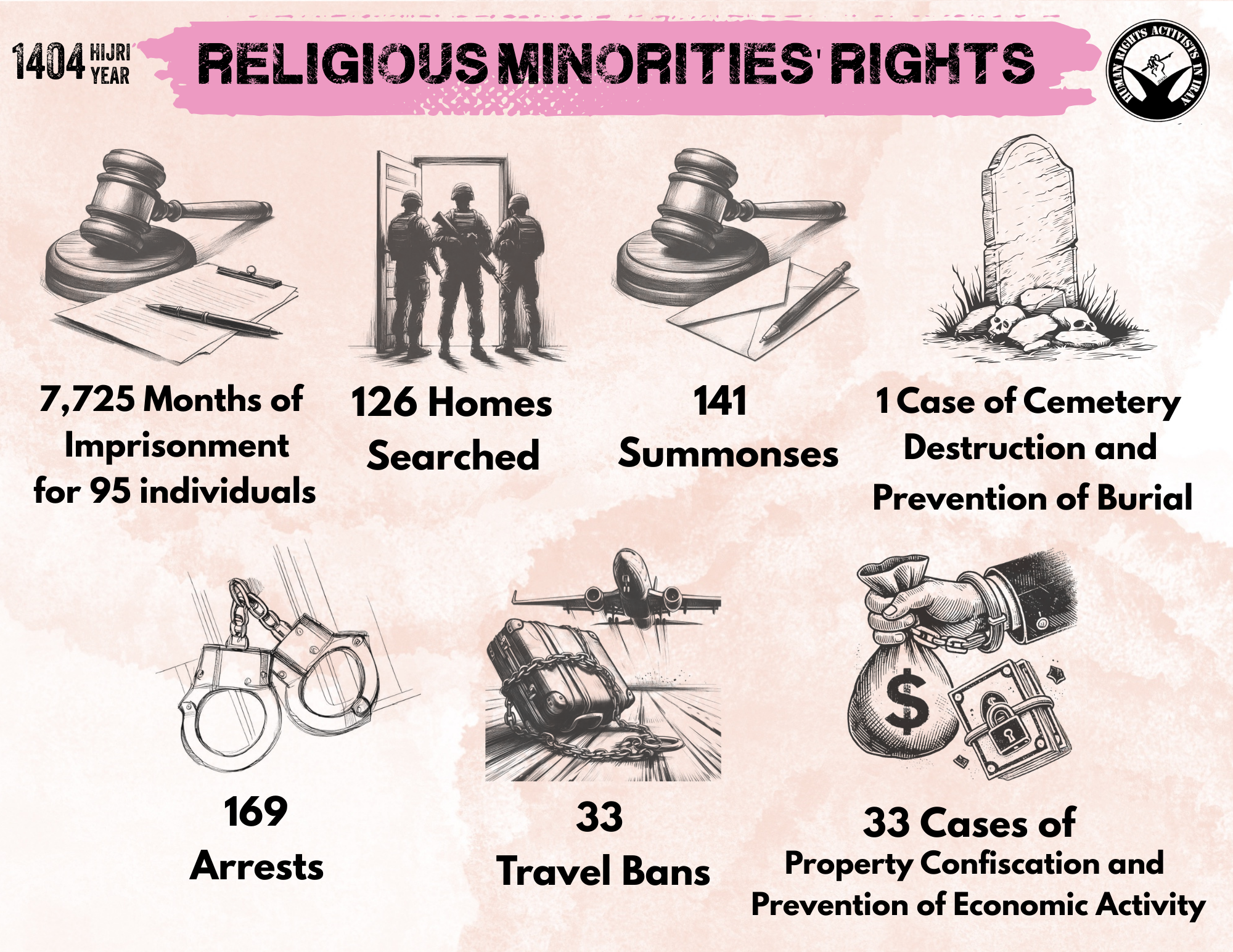
HRANA- This report provides a statistical summary of human rights violations in Iran. In December, Iran’s judiciary carried out 369 executions, breaking the execution record of recent years. The month also saw an increase in arrests related to the exercise of freedom of expression and belief, a rise in labor protests and strikes, and an increase in convictions against religious and ethnic minorities.

Executions

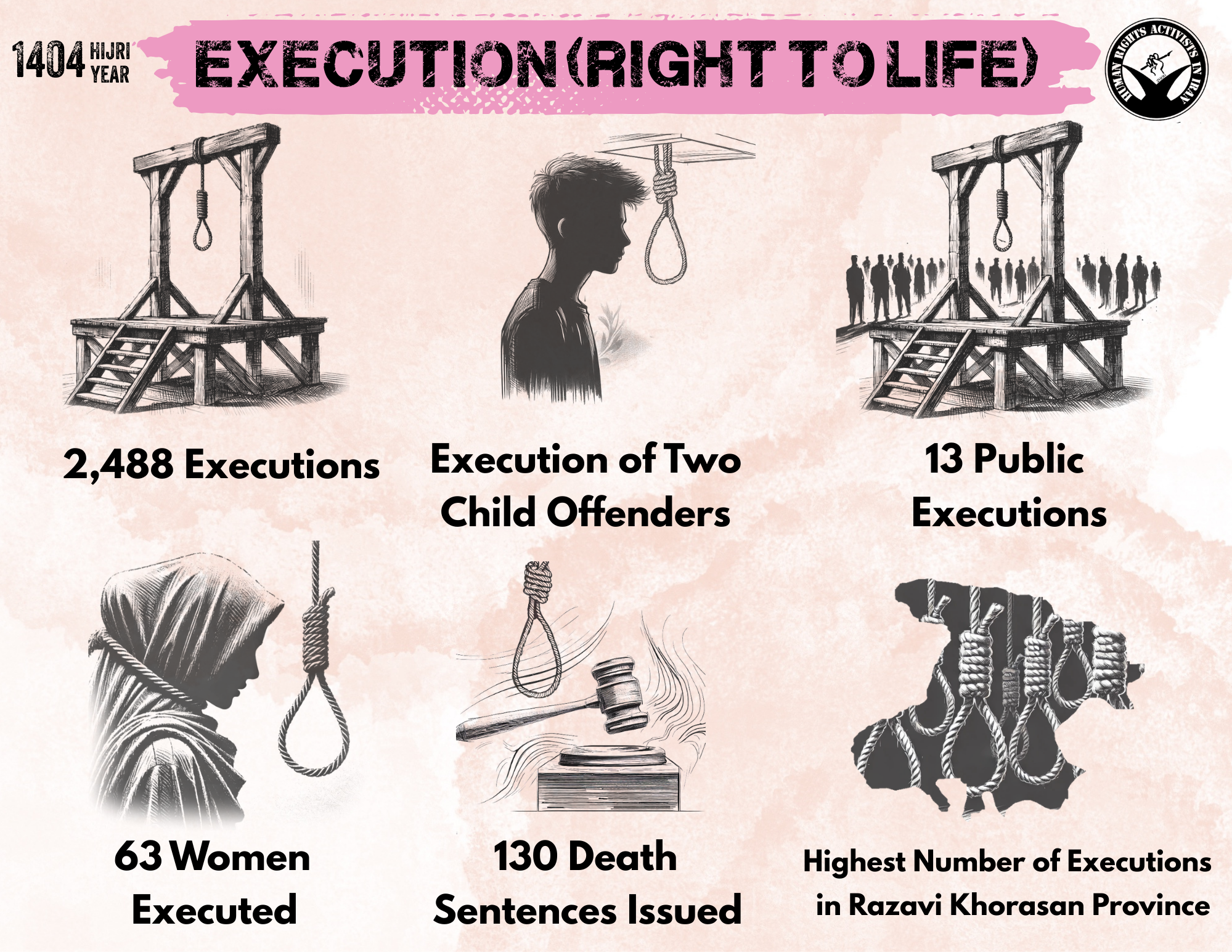
In December, Iran recorded the highest number of executions in 2025, with 369 people put to death. The number of executions began to rise steadily starting in July, reaching its peak in this month.

Among those executed, eight were women and eight were Afghan nationals. Many of these executions were never announced by prison authorities or reported by domestic media; as a result, the gender of 45 of those executed remains unknown. Two executions were carried out in public.

One of the most notable cases this month was the execution of Aghil Keshavarz, an architecture graduate, who was executed on espionage charges in Urmia Prison.

Of those executed, 229 individuals had been convicted of murder and 136 on charges related to drug offenses. Two people were executed on rape charges, one on espionage charges, and one for economic crimes.

During this month, courts issued 16 death sentences; among those sentenced, one was under the age of 18 and one was a woman. In addition, five death sentences were upheld by the Supreme Court. One of the most notable confirmations was the death sentence of Mehrab Abdollahzadeh, upheld by the Supreme Court. Abdollahzadeh had previously been tried by Branch Two of the Urmia Revolutionary Court on charges of “corruption on earth” through “complicity in the intentional killing” of a Basij member.

Freedom of Thought and Expression

During this month, the regime’s security agencies arrested at least 116 individuals for expressing their views and opinions. According to reports, at least six of these arrests were carried out without arrest warrants. In the same context, nine individuals were summoned by security agencies, and eight others were summoned to court.

In addition, the homes of two individuals were searched, and 11 trials were held.

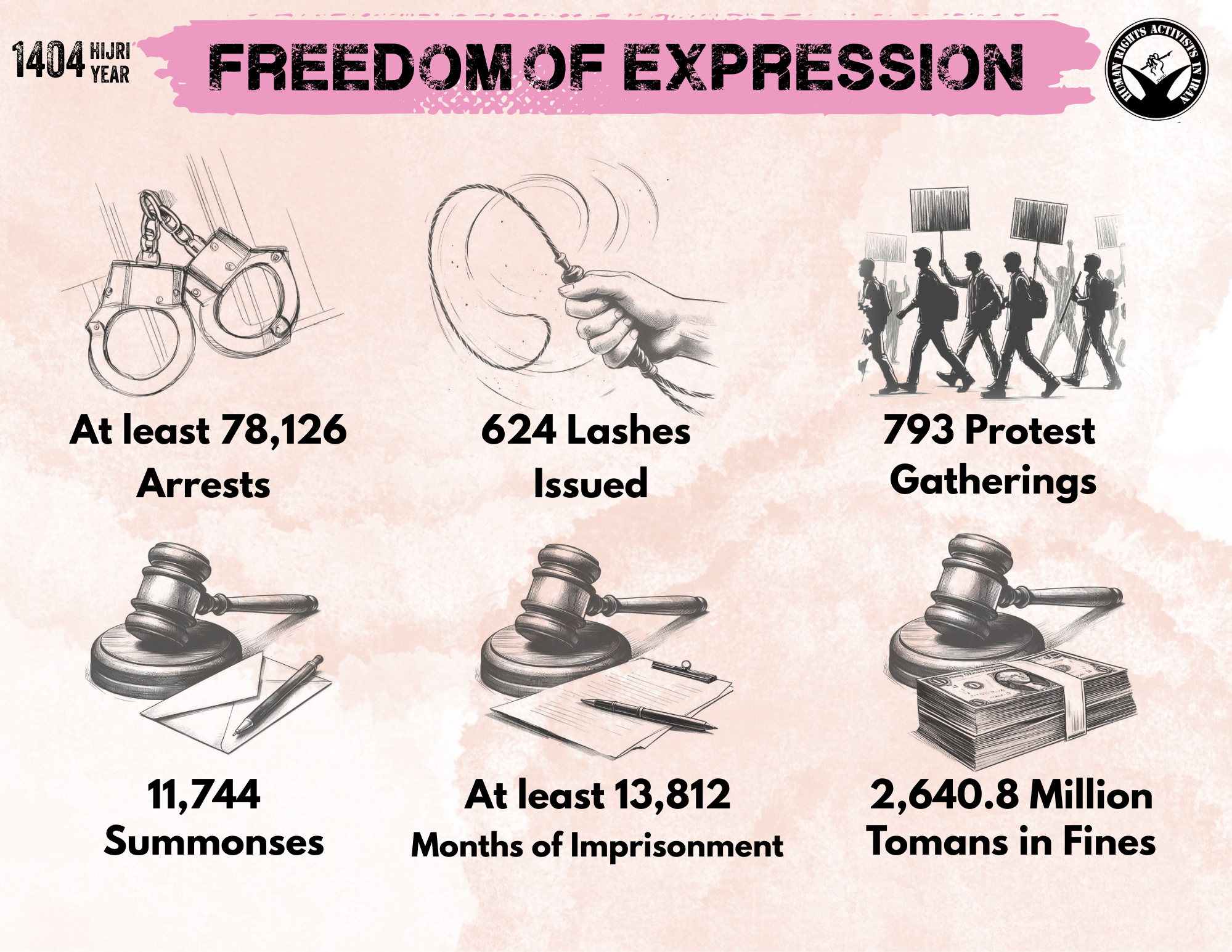
Iranian courts also sentenced 25 citizens this month, in a clear violation of freedom of expression, to a total of 1,064 months in prison. Alongside prison sentences, HRANA recorded 24 months of internal exile, four travel bans, eight cases of social deprivation, and fines totaling 333 million tomans.

Prisoners’ Rights

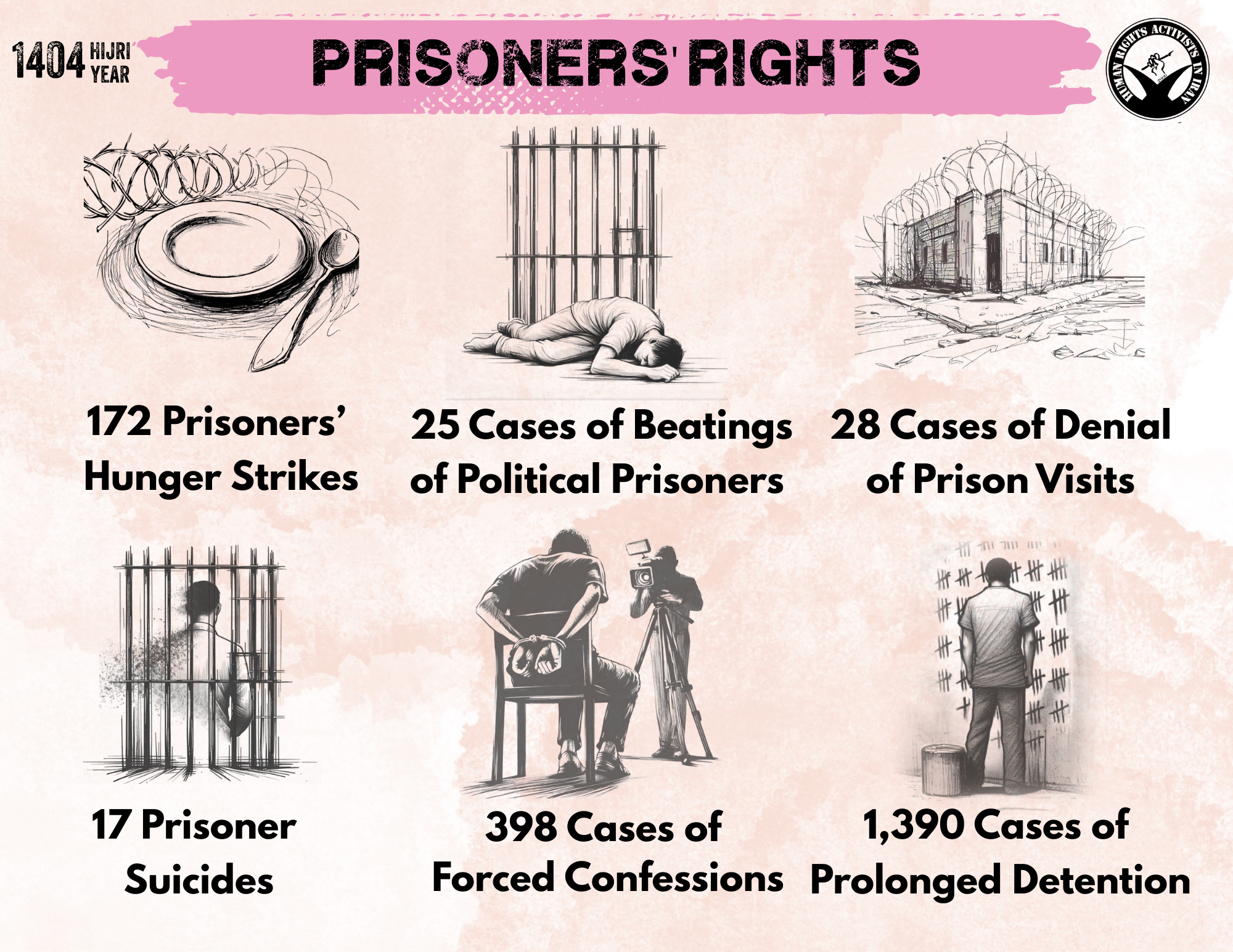
Regarding violations of prisoners’ rights, HRANA published 22 reports documenting the denial of adequate medical treatment, which resulted in the deaths of two prisoners. In one case, the lack of medical care for a prisoner convicted of non-political offenses in Mahabad Prison led to cardiac arrest and his death.

HRANA also reported 164 cases of legal limbo affecting detainees and prisoners, and 61 cases in which families of detainees were not informed of their situation. Additionally, 11 cases of transfer to solitary confinement, 18 cases of denial of access to legal counsel, 10 cases of prisoners being held in harsh conditions, and eight cases of denial of access to fresh air were recorded.

Furthermore, three cases of forced confessions and three cases of physical torture of prisoners were reported.

As a result of harsh prison conditions and violations of prisoners’ rights, HRANA reports indicate that five prisoners resorted to hunger strikes. One prisoner also died by suicide in Vakilabad Prison in Mashhad after consuming narcotics.

Kolbars and Fuel Carriers

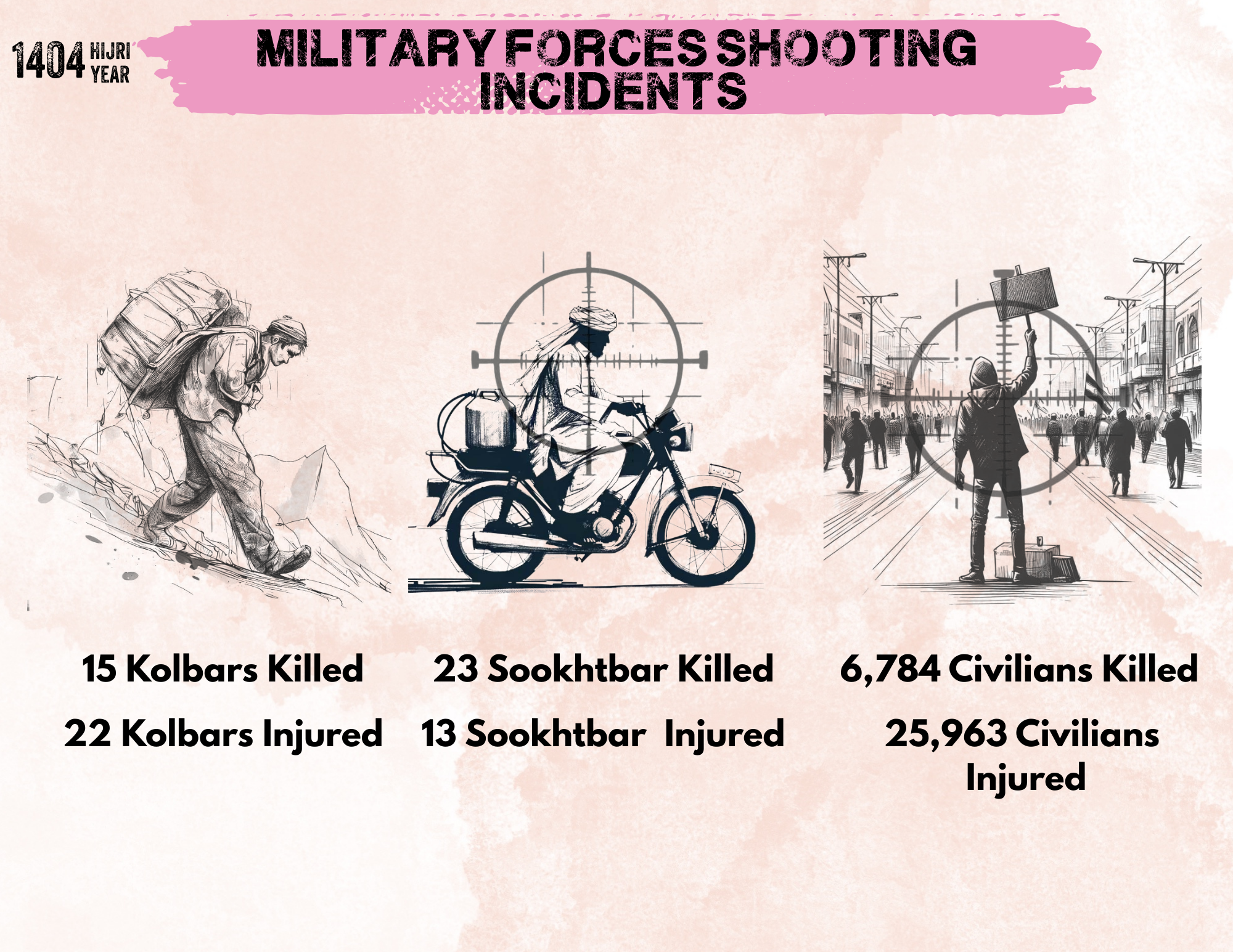
Indiscriminate gunfire by military and law enforcement forces in December claimed the lives of seven civilians and left seven others injured. Among those killed were one kolbar and two fuel carriers. Additionally, two kolbars were wounded.

Kolbars are laborers who, particularly in Iran’s border regions, especially the west, carry goods on foot across the borders to earn a living. Fuel carriers, driven by poverty, transport limited amounts of fuel using personal vehicles for subsistence. Gunfire by military forces targeting kolbars or vehicles suspected of fuel smuggling, often without prior warning, kills or injures dozens of such individuals each year.

Workers’ Rights

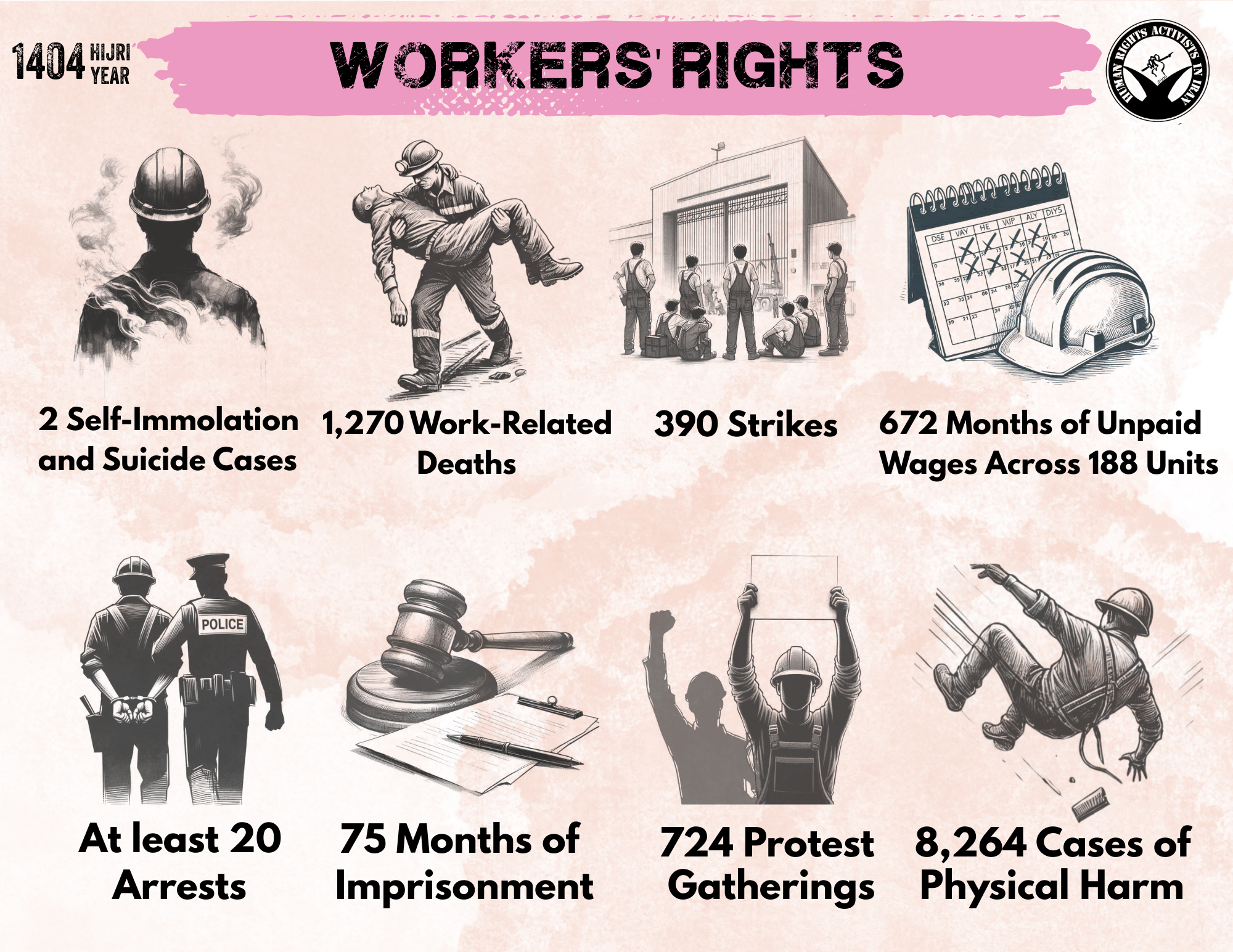
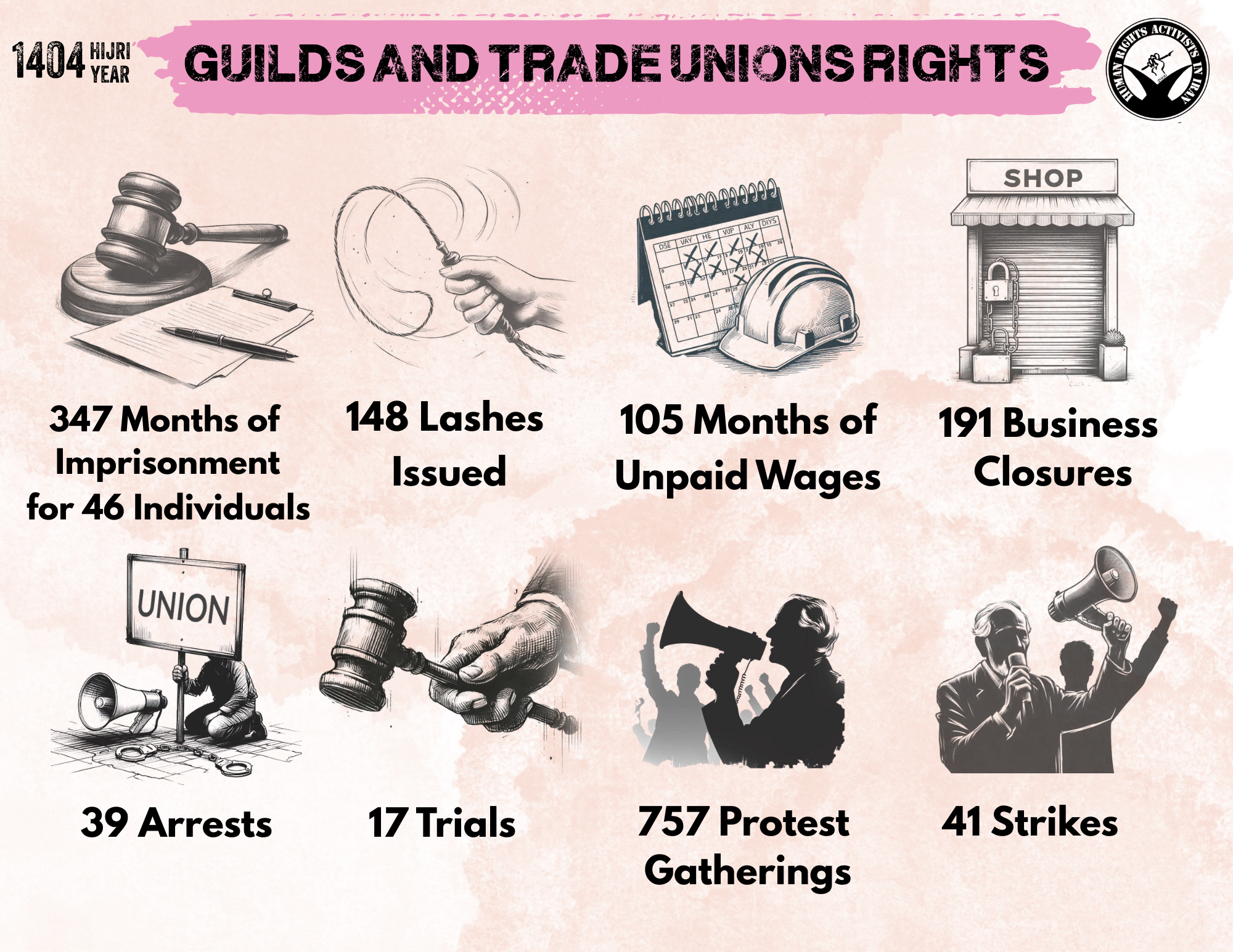
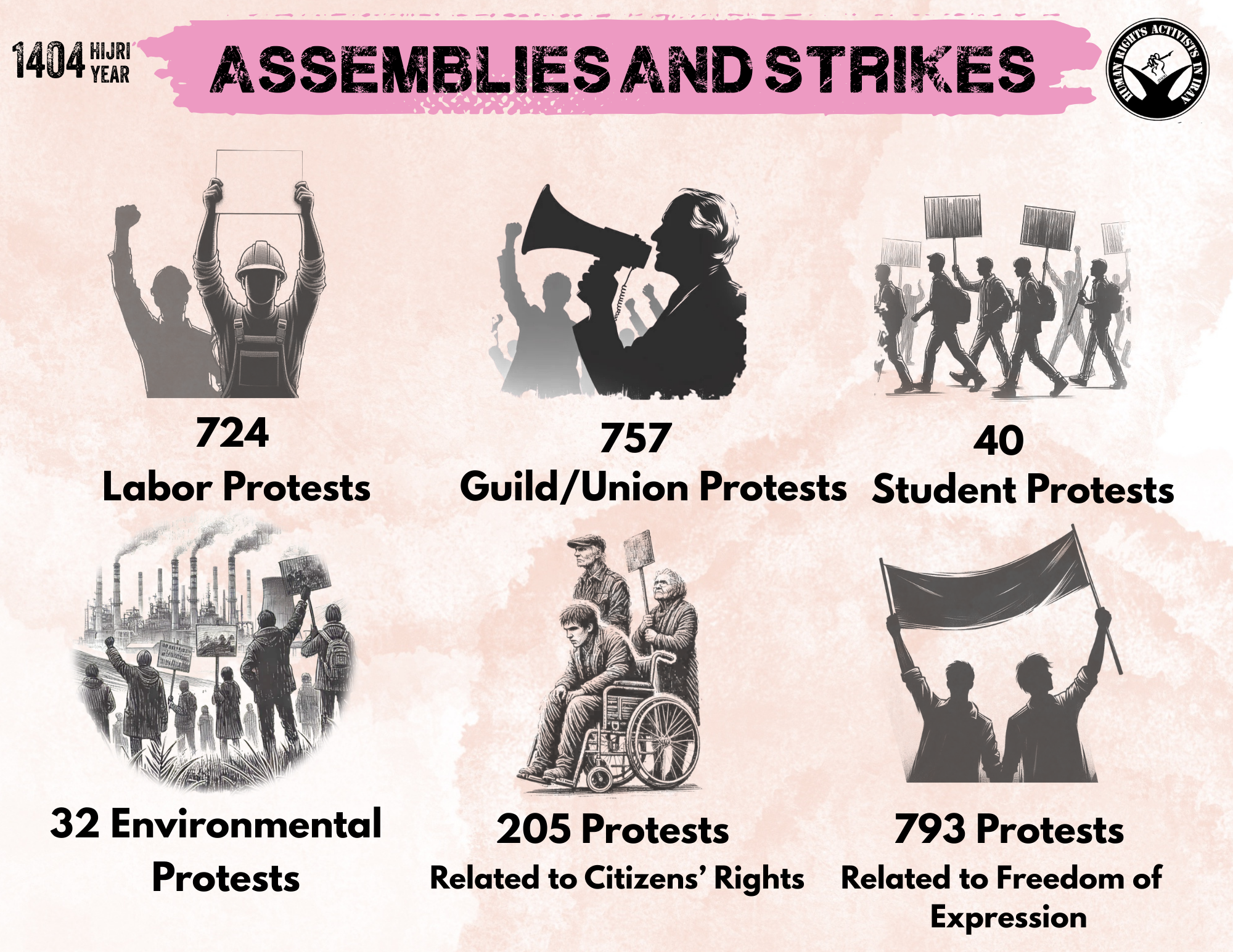
In December, at least 97 labor protests and 33 labor strikes were recorded. During this month, five workers at the Middle East Sugar Factory in Shush were summoned and arrested by security agencies for participating in labor strikes and gatherings.

Workplace accidents during the month resulted in the deaths of 32 workers and injuries to 101 others.

HRANA’s reports for December also documented wage arrears affecting a total of 5,234 workers.

In addition, 115 guild/union gatherings and 14 strikes (prior to the outbreak of the nationwide bazaar strike) were held. HRANA also reported 25 cases of commercial premises being sealed. Two labor activists were arrested, five were summoned to court, and three were summoned by security agencies. Five labor activists were tried, and Mohammad Hassan Davoudi, a teachers’ union activist, was sentenced to 40 months in prison by the court of appeal on political charges. Courts also issued five rulings depriving individuals of social rights.

Women’s Rights

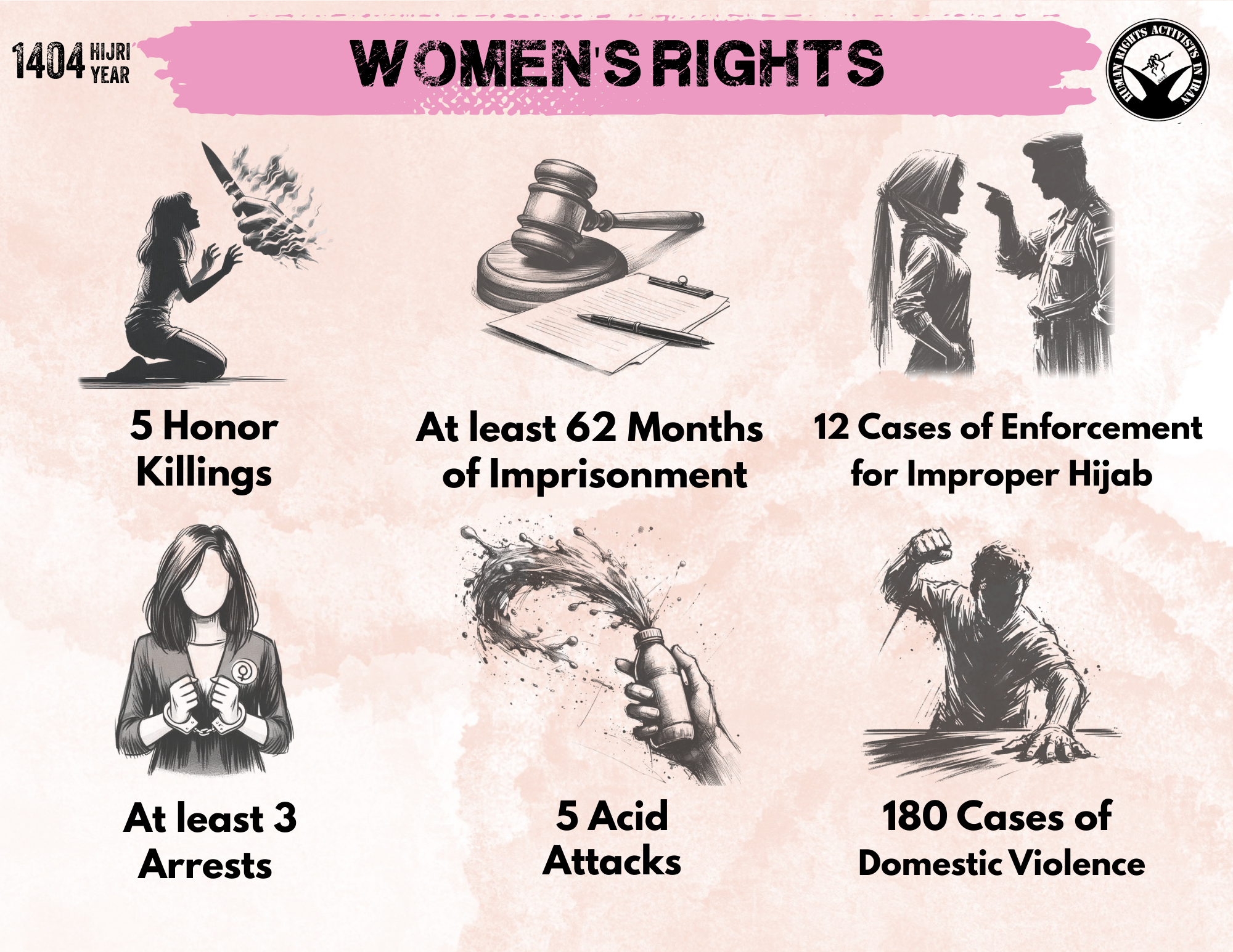
During this month, twelve women were killed, including one case reported by HRANA in which a woman was murdered by her son in Tehran for so-called “honor” reasons. Additionally, 36 cases of rape were reported.

HRANA also documented the sealing of 12 commercial establishments due to failure to comply with compulsory hijab regulations.

Children’s Rights

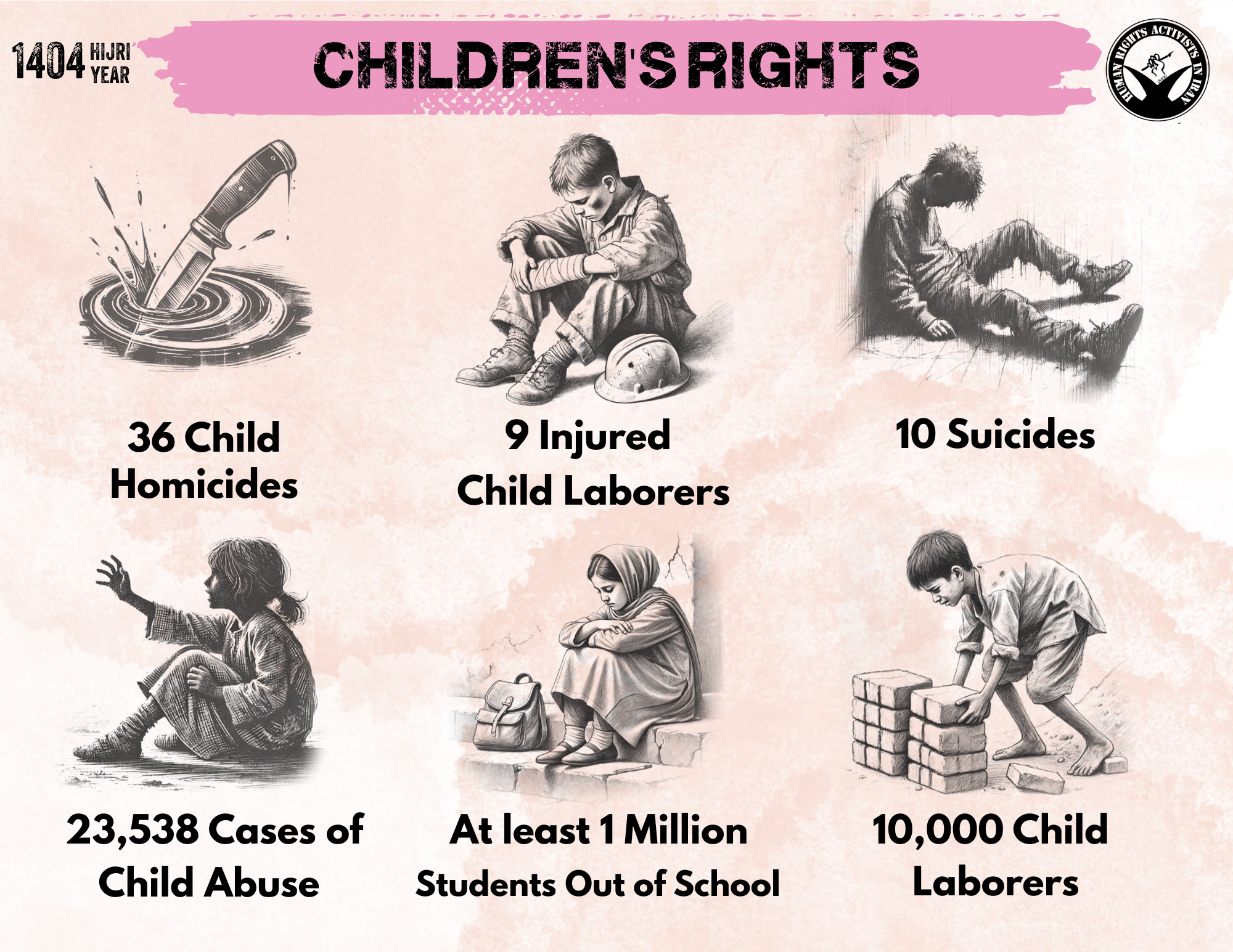
In December, HRANA recorded one case of child suicide and one case of sexual abuse. Two cases of violence and physical punishment against children were also documented, including the severe injury of a student as a result of punishment by a teacher in Baharestan County.

Additionally, one child death and 41 cases of child injury resulting from the negligence of responsible authorities were reported.

During this month, the death sentence of Dariush Atashafrouz, who had committed murder at the age of 17, was also upheld by the Supreme Court. The arrest of one minor was also reported.