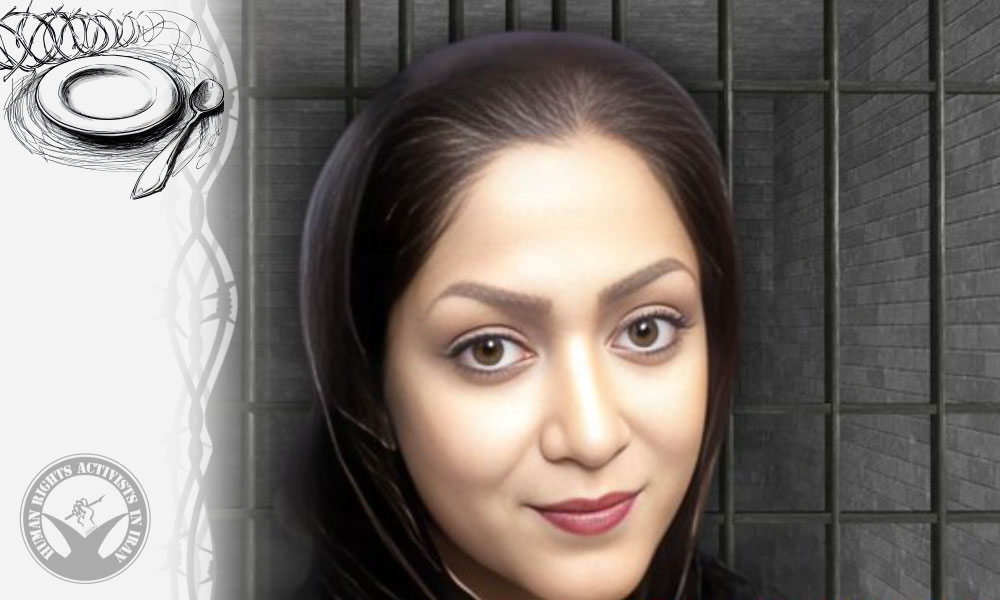
HRANA – The prison sentence of Maryam Zabihi, a Baha’i citizen residing in Qaemshahr, has been reduced by the Mazandaran Province Court of Appeals to three months and one day. She had initially been sentenced to ten months in prison by a lower court.
According to Hyrkani news, Ms. Zabihi’s ten-month prison sentence was reduced to three months and one day by the Mazandaran Province Court of Appeals in late September.
The initial verdict against Ms. Zabihi was issued by Branch 104 of the Qaemshahr Criminal Court (Category Two) on the charge of “educational activities contrary to and disruptive of the sacred Islamic law.”
The charge reportedly stemmed from holding university examination sessions for students of the Baha’i Institute for Higher Education (BIHE) at her private residence. It is worth noting that, since Baha’is are denied access to higher education in Iran, this unofficial university was established by members of the Baha’i community to provide Baha’i students with access to higher education.
On Monday, February 12, 2024, security agents searched Maryam Zabihi’s home, seizing all electronic devices, textbooks, laptops, and tablets belonging to five Baha’i youths who were present at the time.
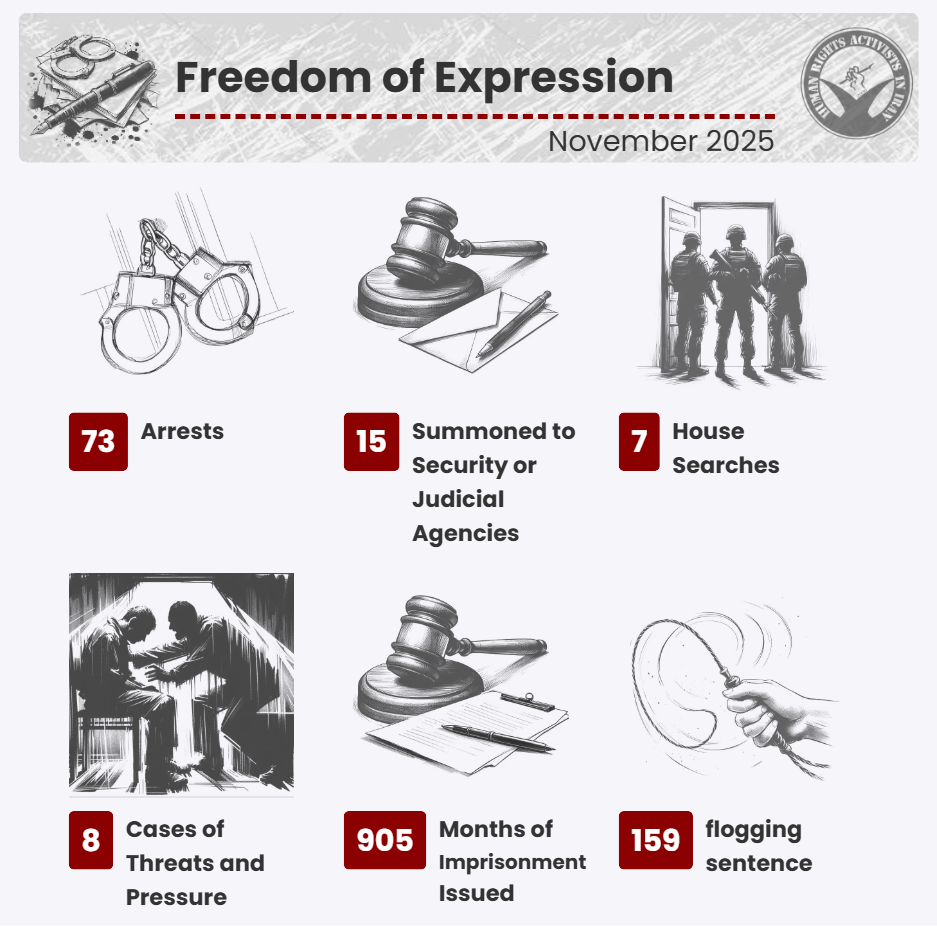
Over the past decade, the Iranian Bahá’í community has been disproportionately targeted by Iran’s security forces and judiciary—more than any other minority group. In the past three years, an average of 72 percent of the reports on religious rights violations collected by HRANA have documented the Iranian regime’s repression of the Bahá’í community.
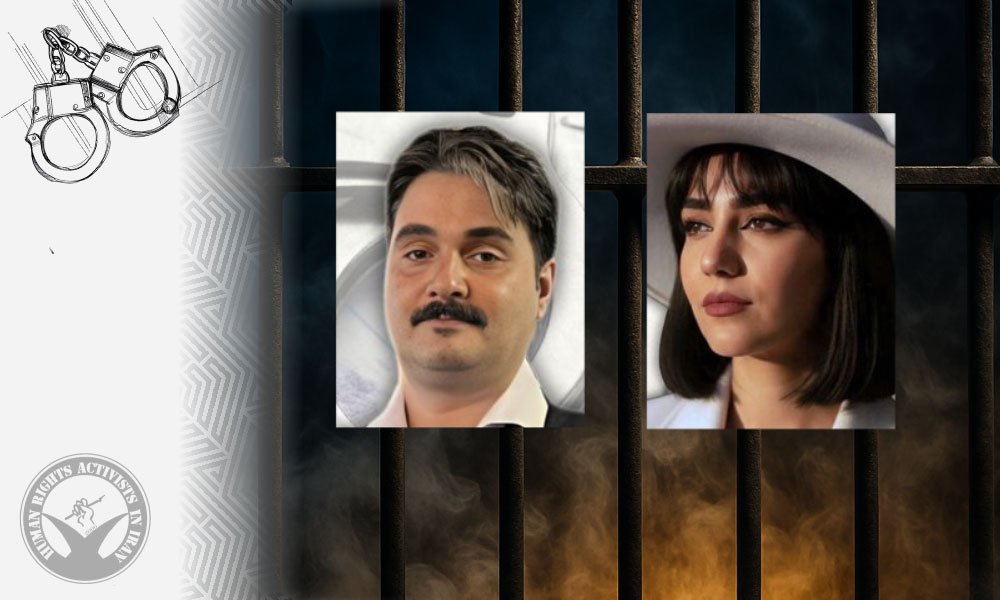
HRANA – Danial Faraji and Amir Ardalān Aghashahi, two rap artists known by their stage names “Meshki” and “Dalu,” have been arrested by the Security Police. Videos of their forced confessions, recorded under unclear circumstances, have been disseminated on their personal social media accounts as well as by state-run media outlets.
According to information obtained by HRANA, the news agency of Human Rights Activists in Iran, the two rappers were detained by security forces. Following their arrest, state media published videos of their forced confessions, which were also shared on the artists’ personal pages under unknown conditions. In one of these videos, Faraji expresses remorse for what he describes as “social and political activities through rap music and insulting the Supreme Leader.”
In a separate video, Aghashahi expresses regret for “displaying cold weapons” and “using profanity in his music videos.”
State media have accused the two of “producing and distributing unconventional and controversial works,” identifying the arresting authority as the Security Police. Official reports have not provided details regarding the time of arrest or location of detention.
It is worth noting that prior to the release of the forced confession videos, Danial Faraji consistently appeared wearing a black mask in his music videos, and no images of his real face had previously been made public.
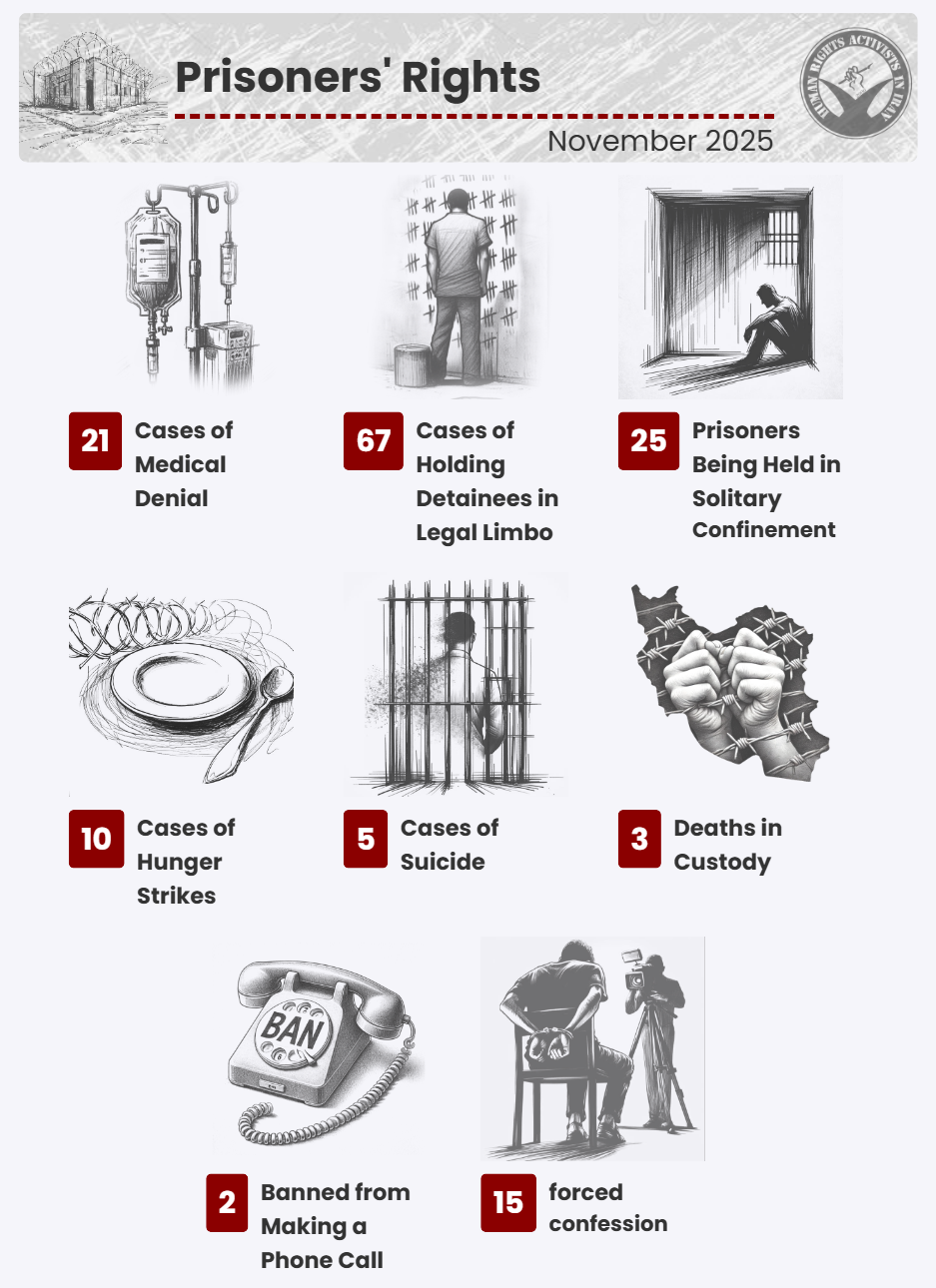
In 2024, HRANA documented 28 cases of forced confessions extracted from prisoners. The practice of obtaining and broadcasting coerced confessions from political dissidents and protesters by the Iranian regime’s security apparatus is as old as the regime itself. In 2022, amid nationwide protests, the number of such forced confessions surged to 391 cases.
HRANA emphasizes that the recording and dissemination of forced confessions violate human dignity and fundamental rights. Furthermore, under the law, every individual is presumed innocent until proven guilty in a court of law. Any punitive measures taken prior to a final conviction constitute a violation of civil and human rights.
HRANA – Fares Kaab Karmalallah, a resident of Shushtar County, was arrested by agents of the Ministry of Intelligence in Shushtar, Khuzestan province, on Tuesday, October 7, and taken to an undisclosed location.
Based on information obtained by HRANA, Mr. Kaab Karmalallah was arrested at his home in the early hours of October 7 by security forces without a judicial warrant. Following his arrest, agents searched his residence and confiscated several digital items, including his cameras, computer, and mobile phone.
As of this report’s publication, the reasons for his arrest, the charges brought against him, and his current whereabouts remain unknown.
Fares Kaab Karmalallah, 30, is a resident of of Shushtar County and the father of two children. Mr. Kaab Karmalallah works as a photographer and videographer for religious events, celebrations, seminars, and local festivals, and is also involved in agricultural work.
A source close to the family told HRANA: “Fares Kaab Karmalallah is known as a cultural activist for sharing visual content on social media aimed at raising public awareness and preserving Arab identity and culture.”
HRANA – Mansour Iranpour, a media activist based in Kerman, has been sentenced to 10 months in prison by Branch 101 of the Kerman Criminal Court.
According to HRANA, the verdict was issued on September 5 on the charge of “spreading false information with the intent to disturb public opinion.”
Mr. Iranpour had previously been interrogated in February 2025 at Branch 5 of the Kerman Revolutionary Prosecutor’s Office, where the investigating prosecutor also imposed a three-month ban on his online activities.
On January 10, 2025, he was summoned to the FARAJA Intelligence Office in Kerman for questioning. He subsequently appeared before the Cybercrime Division of the Kerman Public and Revolutionary Prosecutor’s Office, where he faced accusations of “spreading false information online” and “propaganda against the regime.” Following the session, he was released on bail.
Mansour Iranpour, a resident of Kerman, has previously faced arrest and prosecution in connection with his activities.
HRANA – The Supreme Court of Iran has upheld the death sentence of Ehsan Faridi, a political defendant and student at Tabriz Technical University.
According to information obtained by HRANA, Mr. Faridi’s death sentence, previously issued by Branch 3 of the Tabriz Revolutionary Court, presided over by Judge Hassan Fathpour, was confirmed by the Supreme Court. He had been convicted on the charge of “corruption on earth” (efsad fel-arz).
Three of Mr. Faridi’s trial sessions were held via video conference last year at the Tabriz Revolutionary Court.
In September 2025, a separate hearing related to another part of his case was held at Branch 2 of the Tabriz Criminal Court, where he was subsequently sentenced to 18 months in prison.
Mr. Faridi was arrested on June 18, 2024, after appearing at the Tabriz Prosecutor’s Office, and was transferred to Tabriz Prison.
Ehsan Faridi, 22, a student of Manufacturing Engineering at Tabriz Technical University, had previously been arrested on March 8, 2024, and transferred to Tabriz Prison. He was released ten days later, on March 18, after posting bail.
HRANA – On the evening of Tuesday, October 7, Hossein Gardeshi and Mohsen Gardeshi, two brothers residing in Bukan, were arrested by agents of the Ministry of Intelligence and taken to an undisclosed location.
Based on information obtained by HRANA, on the evening of October 7, intelligence agents arrested Mohsen Gardeshi at his home. His brother, Hossein Gardeshi, was also arrested the same day at his workplace by the same security agency.
A source close to the family confirmed the arrests, telling HRANA that following the brothers’ detention, agents searched their residence and confiscated several personal and electronic items, including their mobile phones and laptops.
The family’s inquiries with judicial and security authorities regarding the brothers’ fate have so far yielded no results, and their continued incommunicado detention has heightened concerns among relatives and friends.
As of this report’s publication, no information is available about the reasons for the arrests or the charges brought against the two brothers.
Hossein Gardeshi had previously been arrested and prosecuted for his activities. In 2020, he was sentenced to imprisonment and a fine on charges of “membership in groups opposed to the regime.” His case was closed after he served his sentence and paid the fine.
HRANA – On the evening of Wednesday, October 8, Khaled Ghaderpour (30), Mohammad Ghaderi (27), and Morad-Rasoul Bahrami (36), residents of the village of Tamarchian in Piranshahr County, West Azerbaijan Province, were arrested by security forces and taken to an undisclosed location.
According to HRANA, quoting Kolbar News, the arrests were carried out by security forces without the presentation of a judicial warrant.
As of this report’s publication, no information is available regarding the reasons for the arrests, the detainees’ whereabouts, or the charges brought against them.
Over the past year, HRANA published 585 reports of human rights violations in West Azerbaijan Province, making it the third province with the highest number of HRANA reports on human rights abuses.
HRANA – On Tuesday, October 7, Keyvan Saeedi, Fakhreddin Khaledi (27), and two 16-year-old teenagers identified as Rebwar Mousavi and Zaher Azeri were arrested by security forces in the city of Oshnavieh. The two detained teenagers were released after 24 hours.
According to Kurdpa, the arrests were carried out by security forces without the presentation of a judicial warrant.
While the two teenagers were released 24 hours after their arrest, Saeedi and Khaledi remain in detention, and no information is available regarding their whereabouts.
As of this report’s publication, the reasons for their arrest and the charges brought against them remain unknown.
Arbitrary arrests, transferring detainees to undisclosed locations, and leaving families in the dark about the fate of their loved ones are routine practices of the Iranian regime’s security agencies, such as the Ministry of Intelligence and the IRGC Intelligence Unit. This pattern of behavior stands in clear violation of the United Nations Standard Minimum Rules for the Treatment of Prisoners, known as the Nelson Mandela Rules.
HRANA – Hossein Shahoozahi, a detainee held in Vakilabad Prison in Mashhad, has been sentenced to death by the Mashhad Revolutionary Court, a verdict that has recently been upheld by the Supreme Court.
Following his arrest by the Islamic Revolutionary Guard Corps (IRGC) Intelligence Organization, Shahoozahi has been accused of attempting to assassinate the Supreme Leader’s representative in Razavi Khorasan Province and of planning an attack on the governor’s office.
According to Haal Vsh, Mashhad Revolutionary Court had previously issued the initial death sentence against Shahoozahi, which has now been upheld by the country’s highest judicial authority.
Hossein Shahoozahi, 29, a native of Zahedan, is currently being held in Vakilabad Prison in Mashhad.
He was arrested by IRGC Intelligence forces at the Mashhad bus terminal. On December 9, 2022, the Public Relations Office of the IRGC in Razavi Khorasan Province confirmed the arrest of several individuals, including Shahouzehi, claiming that they were affiliated with an opposition group. The IRGC’s statement further alleged that “a significant quantity of weapons, ammunition, and explosives was discovered and confiscated from these individuals.”
Following his arrest, Shahoozahi faced multiple charges, including possession of weapons, attempting to assassinate Ahmad Alamolhoda -the Supreme Leader’s representative in Razavi Khorasan Province – and planning an attack on the governor’s office in Mashhad. The Revolutionary Court ultimately sentenced him to death. Throughout the judicial process, he was denied the right to access legal counsel.
According to local media reports, Shahouzehi was held for about six months in the IRGC Intelligence detention facility, where he was subjected to pressure and violent treatment by interrogators. During this period, he was also denied any contact or visits with his family.
Local sources further reported that Shahoozahi had been arrested simultaneously with another individual named Yousef Mohammad-Hosseini, 25, and a native of Mirjaveh. To date, there has been no information about Mohammad-Hosseini’s fate, which remains unknown.
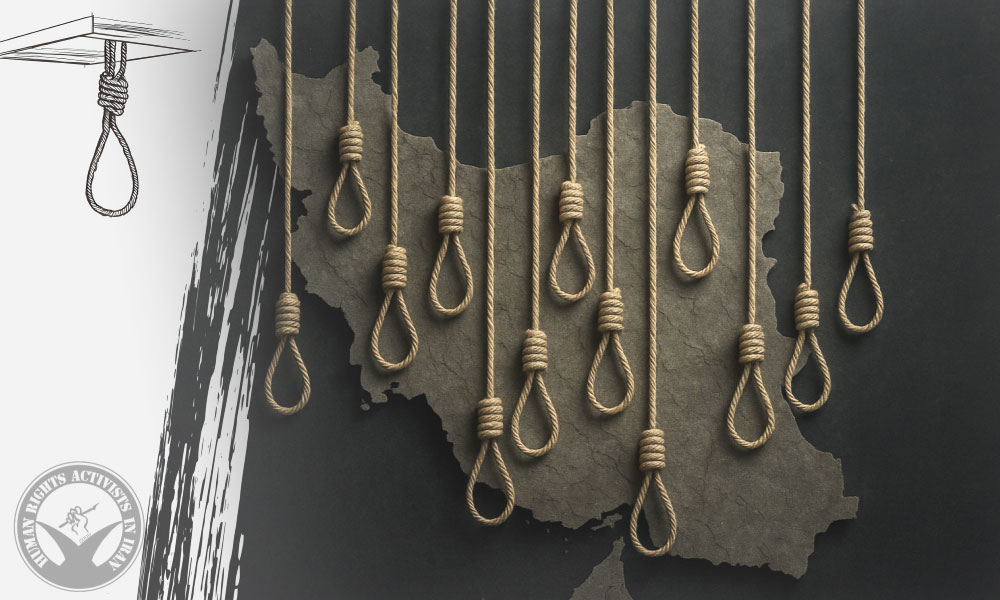
HRANA- On the World Day against the Death Penalty, the Center of Statistics of Human Rights Activists in Iran (HRA) has published its annual report in an effort to inform the public about situation of the death penalty in Iran, particularly thousands of individuals facing the death penalty and awaiting looming executions.
HRA’s Statistics Center relies on the work of HRANA reporters, as well as a network of independent and verifiable sources. It also incorporates the judicial authorities’ announcements or confirmations of prisoner executions on media, and as such, is exposed to a margin of error representing efforts by the Iranian authorities to omit, conceal, or restrict the collection of such data.
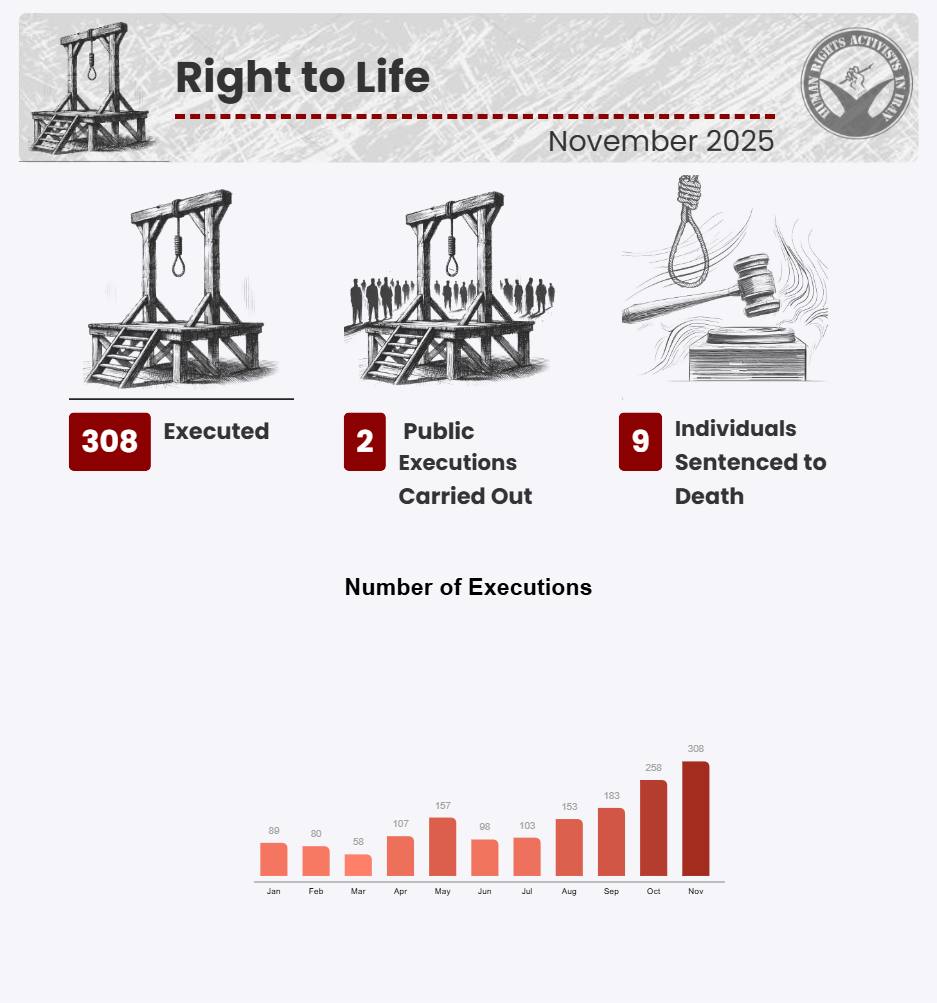
Between October 10, 2024, and October 8, 2025, at least 1537 individuals were executed by hanging in Iran, rising to 86.07% compared to the same period last year. Of these executions, 8 were carried out in public. The defendants were deprived of the right to a fair trial.
HRANA obtained 1314 reports regarding executions and death penalty in Iran during this period. The identified executed individuals, include 49 women and 3 juvenile offenders under the age of 18 at the time of alleged crime. Compared to the last period, the execution of female offenders has increased 113%.
According to the reports obtained by HRANA, over this period, Iranian authorities sentenced at least 191 defendants to death penalty, including at least 14 women, and 4 individuals to public execution. Death sentences issued increased by 2.6% compared to the last year. In the reporting period, the Supreme Court additionally upheld 54 previously imposed death sentences.
As illustrated in the chart below, based on the number of individuals executed, the highest number of reports were published in September 2025, while the most significant drop in the number of reports occurred in October 2025. since only one-third of the month has passed, these statistics may change by the end of the current month.
As illustrated in the chart below, based on the number of collected reports, the highest number of reports on violations in this area were published in September 2025, while the most significant drop in the number of reports was observed in October 2025. since only one-third of the month has passed, these statistics may change by the end of the current month.
Based on the collected information, 48.34% of the executed individuals were sentenced on drug-related charges, and 43.46% on murder charges in Iran. Additionally, 2.15% were executed on charges of rape, 1.89% on unknown charges, 1.69% on Moharebeh or Baghi (political-security related) charges, 0.85% on non-political Moharebeh charges, 0.85% on security-related charges (espionage, terrorism, or bombing), 0.52% on corruption on earth, 0.2% on armed robbery, and 0.07% on ideological, political, or religious charges.
The pie chart below displays execution numbers by the province in which they took place. According to this chart, the Alborz (where three overcrowded prisons are located) had the highest number of executions at 14.57%. Isfahan and Fars Provinces come second and third, with 8.39% and 7.87%, respectively.
The table below shows the execution rate per 100,000 people in the provinces of Iran, based on the number of executions and the population of each province. This table provides a comparison of the implementation of death sentences across different provinces and identifies those with the highest execution rates relative to their population, which can serve as an indicator of the intensity of judicial enforcement in various regions of the country.
Execution Rate per Capita in Iran’s Provinces Based on the Number of Executions and Population
The chart below depicts the distribution of executions’ information sources. The chart indicates that 94.14% of HRANA-confirmed executions were not announced by the official Iranian sources. Undisclosed executions are referred to as “secret” executions.
The chart down shows the execution numbers by gender.
The chart below displays execution numbers by the prison where the executions were carried out. The Qezel Hesar Prison of Karaj And Dastgerd Prison of Esfahan officials have carried out the highest number.
The chart below displays percentage of executions carried out in public vs the number of executions that were carried out in prison. According to statistics, 0.52% of the executions in Iran were carried out in public.
Ten-Year Trend of Executions in Iran (2014–2025)
Although there have been periods of relative decline in the number of executions within the reporting period, the overall trend indicates a continuous increase and a return to high levels of capital punishment enforcement.
According to data from the Statistics Department of Human Rights Activists (HRA), after a noticeable decline between 2015 and 2019, the number of executions began to rise again starting in 2021. This increase peaked in the period of 2024–2025, with at least 1,537 executions recorded, the highest number documented in the past decade.
Compared to the previous year (823 cases), the number of executions has increased by more than 86%, also showing a significant rise compared to the ten-year annual average. These figures have been recorded despite the continued lack of access to official and transparent information in this field, and a substantial portion of executions have been carried out secretly or without public disclosure.
According to data from the Statistics Department of Human Rights Activists in Iran (HRA), over the past ten-year period, drug-related charges and intentional murder have accounted for the highest share of executions carried out in the country. This is despite the fact that, based on the 2017 amendment to the Anti-Narcotics Law, projections had anticipated a decrease in executions in this category.
During this period, a significant portion of executions were related to drug offenses, followed by intentional murder as the second most common charge. Other charges, including rape, armed robbery, moharebeh, corruption on earth, security and political offenses, as well as crimes related to sexual conduct or alcohol—have comprised a smaller share of the total executions.
Download the annual report in PDF format.
On the occasion of the World Day Against the Death Penalty, Human Rights Activists in Iran issued a statement calling for urgent and coordinated action by the international community to halt the ten-year wave of executions, reform domestic laws, hold perpetrators of extrajudicial executions accountable, and take unified international measures to confront the growing wave of executions in Iran. Click here to read the full text of the statement.