Inmate Dies in Urmia Prison Due to Lack of Medical Care

On April 15, 2023, an inmate lost his life due to being denied medical treatment in Urmia Prison.

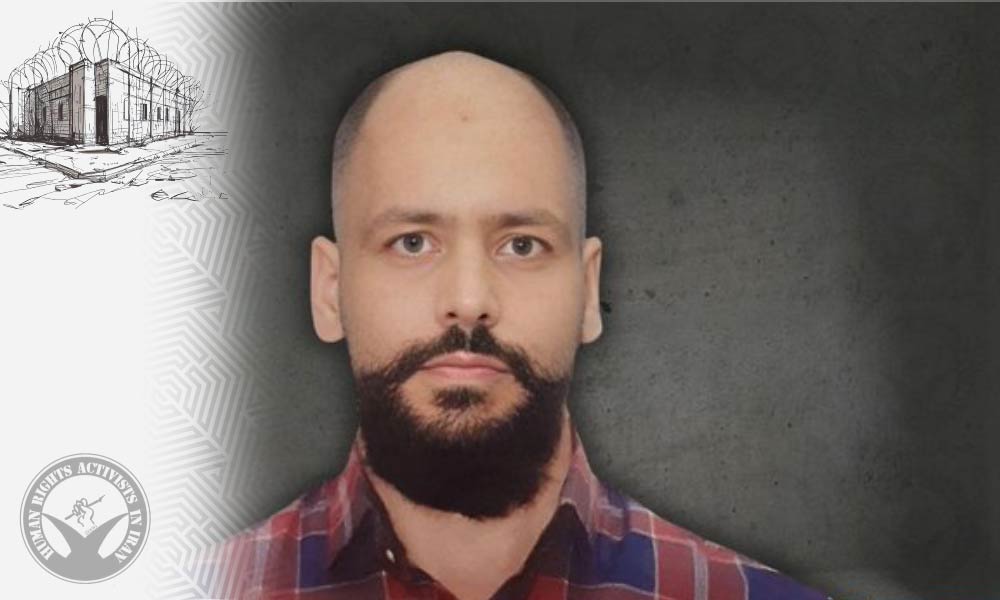
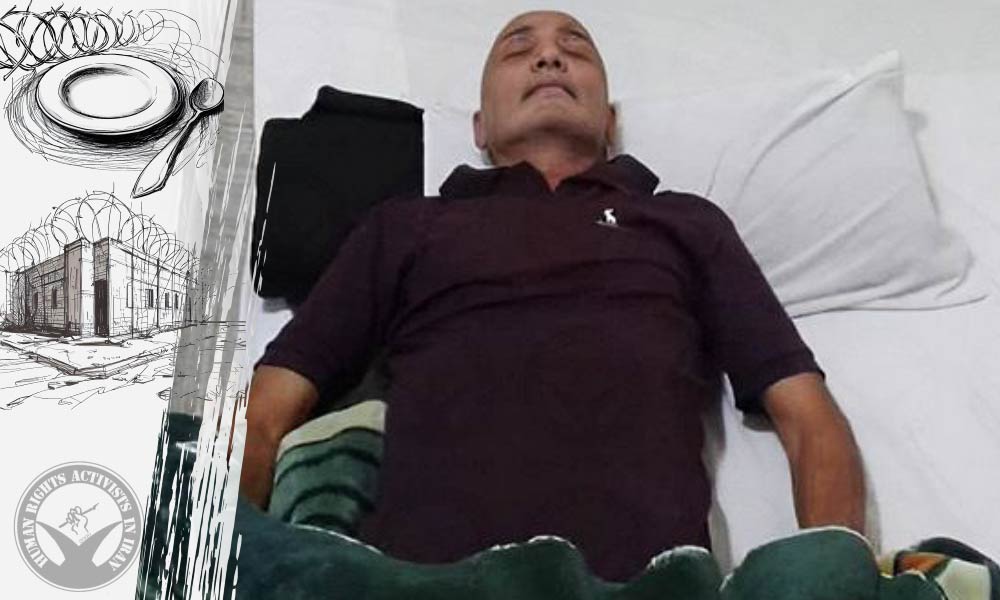
According to HRANA, the news agency of Human Rights Activists, on April 15, 2023, an inmate, identified by HRANA as Abdollah Badavi, died in Urmia prison due to inadequate medical care.

An informed source told HRANA that, suffering from heart and blood sugar diseases, Badavi asked many times for parole or medical furlough, refused every time by prison officials. Ultimately, he died from a stroke in prison.

“In two separate cases, Badavi was sentenced to death for drug-related crimes and two years for collaboration with anti-regime groups. After a while, his death sentence was commuted to life imprisonment,” the source added.

Badavi was imprisoned for eight years.

The Department of Statistics of Human Rights Activists in Iran in 2022 registered 4322 reports on deprivation of medical care and 20 deaths in prison due to illness.

Political Prisoner Nayeb Askari Sentenced to Death for Enmity Against God

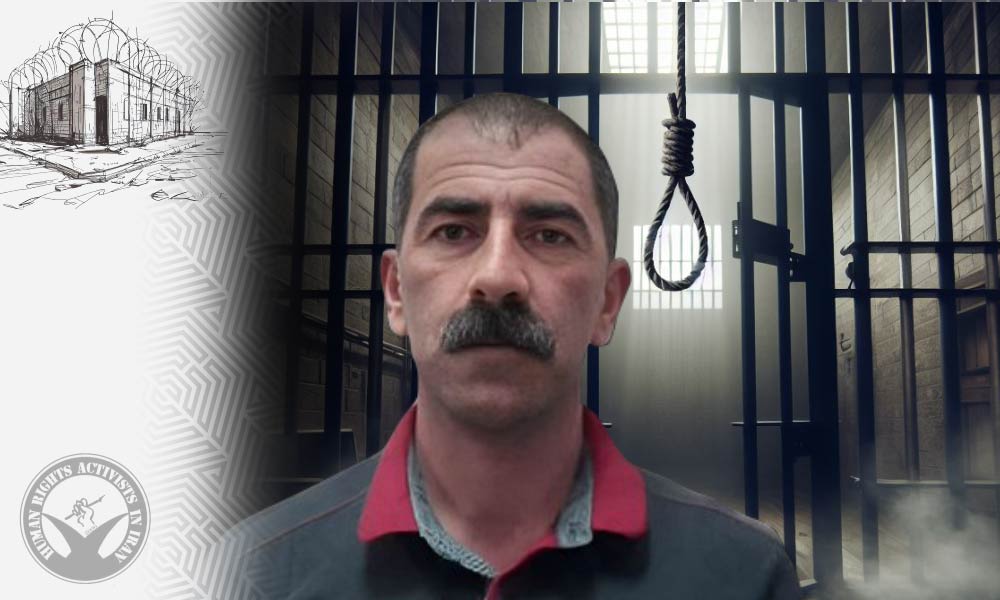
The Branch 2 of the Urmia Revolutionary Court sentenced Nayeb Askari to death for “enmity against God (Moharebeh).”

According to HRANA, the news agency of Human Rights Activists, on April 15, 2023, Urmia judicial officials informed Nayeb Askari’s lawyer that his client had received a death sentence for the charge of “enmity against God (Moharebeh).”

Membership in a Kurdish opposition party was cited as an example of this charge.

On March 27, 2021, IRGC intelligence agents arrested Askari in Urmia and transferred him to a detention facility. On June 17, 2021, he was transferred to Urmia Prison, where he has been detained since.

According to sources close to his family, Askari has reportedly been in poor health during his detention. In February or January 2022, he suffered from a convulsion but was denied proper medical care. The prison infirmary was reportedly ill-equipped and in such cases suffices to the arbitrary prescription of a non-specific pill.

On July 12, 2021, a new case was opened against him following the complaint of the head of Urmia Prison. For this case, he was sentenced to three months more imprisonment and 50 lashes for the charge of “disrupting prison order”.

Masoud Eslaminasab Jailed in Evin Prison

Masoud Eslaminasab, arrested at the 2022 nationwide protests, was transferred to Evin prison to start serving his seven-year sentence. He was arrested in October 2022 and detained in Great Tehran Penitentiary.

According to HRANA, the news agency of Human Rights Activists, Masoud Eslaminasab (Bakhtiari) was jailed in Evin prison for sentencing.

Earlier, the Tehran Court of Appeals sentenced Eslaminasab to seven years in prison and four years of exile for multiple charges, including “arson and destruction of public property,” “assembly and collusion against national security,” and “membership in anti-regime groups.” On trial, he was acquitted of the charge of “carrying a cold weapon.”

Initially, Eslaminasab had received 21 years and six months for these charges.

On October 15, 2022, security forces arrested Eslaminasab at his house. The agents also searched his house and confiscated some of his belonging.

Eslaminasab was held for about one month in solitary confinement at Great Tehran Penitentiary. During detention, he reportedly was forced to make confessions to accept allegations such as ” enmity against God (Moharebeh) through assaulting a police officer.” However, the court dismissed the charge after the injured officer testified that Eslami-Nasab did not have any role in this incident.

It is noteworthy that along with Eslaminasab, dozens of other political prisoners and prisoners of conscience were relocated from Great Tehran Penitentiary to Evin Prison.

About the 2022 Nationwide Protests

The arrest of Mahsa Amini by Tehran Morality Police for her improper hejab and her suspicious death on September 16 sparked protests sweeping across Iran. During the nationwide protests, about 19600 people, including journalists, artists, lawyers, teachers, students and civil rights activists, were arrested.


 Imprisoned British-Iranian National Mehran Raoof: Double Nationals Denied Their Citizen Rights in Iranian Prisons

In an open letter, political prisoner Mehran Raoof sheds light on how he and other political and double national prisoners are denied their fundamental rights in Iranian prisons.

He highlights that governments often use double national prisoners as leverage in negotiations with other countries, so the recent pardon and commutation directive does not include them.

Raoof further speaks out against the violations of his rights during detention, stating that the IRGC intelligence unit held him in detention for eight months without any furlough or access to a lawyer, which is a clear violation of Iranian law. Moreover, for several months, his family was kept in the dark about his condition and whereabouts, and he was not even allowed to contact them.

He ends his letter with these statements:
“This clear discrimination and oppression are not unfamiliar to us, who have lived under the rule of the Islamic Republic for over 40 years. Many of us, including political prisoners, women’s rights activists, environmental activists, and workers’ rights activists are imprisoned on charges of having different beliefs and opinions and protesting against wrong and dictatorial policies and laws. We stand in solidarity with the nationwide protests, demanding the unconditional release of all political prisoners.”

In October 2020, IRGC intelligence agents arrested this 65-year-old British-Iranian national and held him for eight months in a detention facility known as Ward 2A in Evin Prison. Later, he was relocated to Ward 1. In August 2021, Branch 26 of the Tehran Revolutionary Court, presided over by Iman Afshari, sentenced him to ten years and eight months in prison, which was later reduced to seven years and six months.

Prisoners in the Great Tehran Penitentiary Facing Delay and Difficulties in Receiving Medical Care

The Great Tehran Penitentiary officials regularly delay the issuance of permits for medical treatment, putting prisoners’ health at risk. This report sheds light on the violation of prisoners’ health-related rights in this prison and the negative impacts on inmates’ health conditions.

An inmate, recently freed from this prison, explained to HRANA the lengthy process of requesting a permit for medical care: “to receive a permit for medical care, the prison infirmary physician has to deliver a request letter to the Judgement Enforcement Unit. If approved, this unit sends a request letter to Judicial Deputy and the latter to the assistant prosecutor. This process takes a long time resulting in the exacerbation of inmates’ health condition and subsequent denial of medical treatment.”

“In addition to the long process, sometimes the request letters were missing, which frequently happens during the correspondence among prison officials,” another inmate stated.

Asadollah Hadi, Davood Razavi, Shahriar Bayat and Zartosht Ahmadi Ragheb are among the inmates who suffered medical issues due to the prison officials’ delays and impediments.

According to reports obtained by HRANA, in recent days, political prisoner Asadollah Hadi was taken to the prison infirmary. Despite that, only after many twists and turns did the prison officials agree to dispatch him to a hospital outside the prison. Hadi has 60% physical disability and underwent heart surgeries during the last few years. Nonetheless, prison officials still delay medical treatments.

Another inmate, 20-year-old Amir-Hossein Ghena’atgar, who was arrested during the nationwide protests, is in poor health condition and has been denied medical care. In this regard, an informed source told HRANA, “he has been injured in eyes, neck, arm and chest by pellet guns. Despite having an infection from the pellets still in his body, he has been denied adequate medical care.”

In 2022, the Department of Statistics of Human Rights Activists in Iran registered 4,322 deprivation of medical care and 20 deaths due to illness.

According to Articles 102 and 113 of the Executive Regulations of the Iranian Prisons Organization, the prison infirmary is obliged to perform the medical examination of prisoners at least once a month, which in practice happens rarely. Also, in a case where medical treatment is not possible inside prison, with permission from the head of the prison and supervising judge, the inmate can be dispatched to a hospital as soon as possible. The rules unfortunately do not exempt emergency cases from the judge’s permission, causing unnecessary delays and jeopardizing the inmate’s lives.

Subscribe to Our Newsletter

Now is definitely not the time to stop reading!

About 550 Jailed Protestors Held in Poor Conditions in Great Tehran Penitentiary

Ward 3, Type 6 of the Great Tehran Penitentiary, currently houses around 500 individuals who were arrested during the nationwide protests of 2022. This ward is overcrowded, and inmates suffer from poor living conditions, including unhealthy drinking water, inadequate sanitation, and insufficient food portions. Additionally, prison officials are not returning prisoners’ belongings upon their release, causing further distress.

According to HRANA, the news agency of Human Rights Activists, about 550 individuals arrested during the 2022 nationwide protests are held in poor conditions in Great Tehran Penitentiary.

They are held in Ward 3, Type 6, which is twice its intended capacity.
According to one family member of an inmate, “this ward has about 250 beds, and more than half of the inmates have to sleep on the floor.”
In addition to the lack of sleeping accommodations, prison officers do not provide any toiletries, and inmates must purchase these items from the overpriced prison store.
Another inmate’s family member expressed concern about the poor quality of drinking water, saying that “inmates have to purchase water from the prison store” and that “meals are also of low quality and insufficient.”

Furthermore, released prisoners are not receiving their personal belongings back, such as wristwatches and cell phones, and inquiries about these items have gone unanswered. One prisoner, who was recently released, reported this issue to HRANA.

Update on Political Prisoner Mehdi Meskinnavaz’s Condition

Political prisoner Mehdi Meskinnavaz is currently serving his seven-and-a-half-year sentence at Great Tehran Penitentiary. He has recently faced a new legal case while in prison.

According to HRANA, the news agency of Human Rights Activists, political prisoner Mehdi Meskinnavaz faced new charges while in prison.

An informed source told HRANA, “this new legal case is related to incidents during his incarceration in Rajai-Shahr Prison. On March 14, the court held a session addressing the charges. Meskinnavaz refused to appear at the court in protest against unfair due process.”

On January 30, 2023, Meskinnavaz was relocated from Rajai Shahr Prison to Ward 209 of Evin Prison. Meanwhile, intelligence agents arrested his 17-year-old daughter, Asal Meskinnavaz. After 14 days, Meskinnavaz was transferred to Great Tehran Penitentiary.

On May 5, 2019, security forces arrested Meskinnavaz in Bandar Anzali for “running a Telegram channel advocating the overthrow of the regime.”

In August 2019, the Tehran Revolutionary Court sentenced Meskinnavaz to 13 years for “assembly and collusion to act against national security, insulting the Supreme Leader of Iran, and Propaganda against the regime.” He was also banned from membership in political parties and groups and two-year compulsory residence in exile in Fahraj, Kerman. Applying Article 134 of the Islamic Penal Code, seven years and six months in prison for one charge was enforceable.


Update on Mehdi Fathi’s Condition in Adelabad Prison

Teacher union activist Mehdi Fathi, imprisoned in Adelabad Prison, was denied adequate medical care and medical furlough, despite suffering from heart failure and high blood pressure.

According to HRANA, the news agency of Human Rights Activists, teacher union activist Mehdi Fathi is currently serving his sentence in Adelabad Prison, Shiraz.

An informed source close to his family told HRANA, “Fathi suffers from heart failure and high blood pressure. Yet, prison officials deny him adequate medical care and refuse to dispatch him to a medical furlough.”

“Recently, prison officials promised him a medical leave. However, at the last minute, for unknown reasons, they changed their minds. Also, Fathi’s access to call his family was restricted in recent weeks.”

In March 2022, the court sentenced him to 12 years in prison on the charges of “assembly and collusion against national security,” “propaganda against the regime,” and “insulting the former and current Supreme Leader.” He was also sentenced to a two-year exile and banned from leaving the country for two years.

This sentence was reduced to eight years on appeal. Applying Article 134 of the Islamic Penal Code, five years for one charge was enforceable.

On June 8, 2022, security forces arrested him to start serving his sentence in Adelabad Prison.

Fathi is a history teacher, teacher union activist, and resident of the Kordshul village, Fars Province.


Six Prisoners Go on Hunger Strike in Protest against Sentences

Six prisoners facing national-security-related charges, Rahman Parhazoo, Aran Omri, Amir Moshtagh Gangachin, Fakhreddin Doodkanloo, Milan and Ashkan Othmanzadeh, went on hunger strike against received death penalties and long sentences in Urmia Prison.

According to HRANA, the news agency of Human Rights Activists, on March 14, 2023, six prisoners of Urmia Prison went on hunger strike.

An informed source told HRANA, “they went on hunger strike to protest against the received sentences. Last month, Branch 3 of the Urmia Revolutionary Court sentenced Aran Omri and Rahman Parhazoo to death on the charge of spying for Israel. Amir Moshtagh Gangachin, Fakhreddin Doodkanloo, Milan and Ashkan Othmanzadeh received ten years for the same charge.”

In October-November 2021, security forces arrested these individuals accused of espionage. On March 11, 2021, they were jailed in Urmia Prison.

In May 2022, media outlets published a video of a man, allegedly an IRGC member interrogated by Israeli forces inside Iran, confessing that he was potting to hit on Israel. Later, this man called himself Mansour Rasouli denied his confession, claiming he is just a farmer who was abducted and forced to state these false statements.

Three weeks later, IRGC announced the arrest of several people who were working for Israel and kidnapping people to force them to extract false confessions.

On May 22, 2022, IRGC announced that the members of a network spying for Israel have been apprehended.


Inmate Died in Prison due to Delay in Medical Care

On March 8, an inmate died in Urmia Prison due to the lack of medical care and prison officials’ delay in dispatching him to a hospital.

According to HRANA, the news agency of Human Rights Activists, an inmate identified as Farhad Naghizadeh died in Urmia prison due to a delay in medical care.

An informed source told HRANA that “Naghizadeh suffered from heart disease. Last Wednesday, he fell ill severely. Prison officials, however, delayed his dispatch to a hospital. He died while they were transferring him out of the ward.”

For Five years, Naghizadeh was imprisoned for drug-related crimes.

In 2022, the Department of Statistics of Human Rights Activists in Iran registered 1127 reports of violations of prisoner’s rights including; 133 physical assaults of prisoners, 4322 of deprivation of medical care, 204 of illegal transfer to solitary confinement, 102 of attempted hunger strikes, 166 of forced transportation or exile, 4983 of threats against prisoners, 46 of banning prisoners from having visitors, 652 of psychological and physical torture, 20 prisoners died due to illness, 2 arrestees were killed by prison authorities, and 14 prisoners committed suicide.