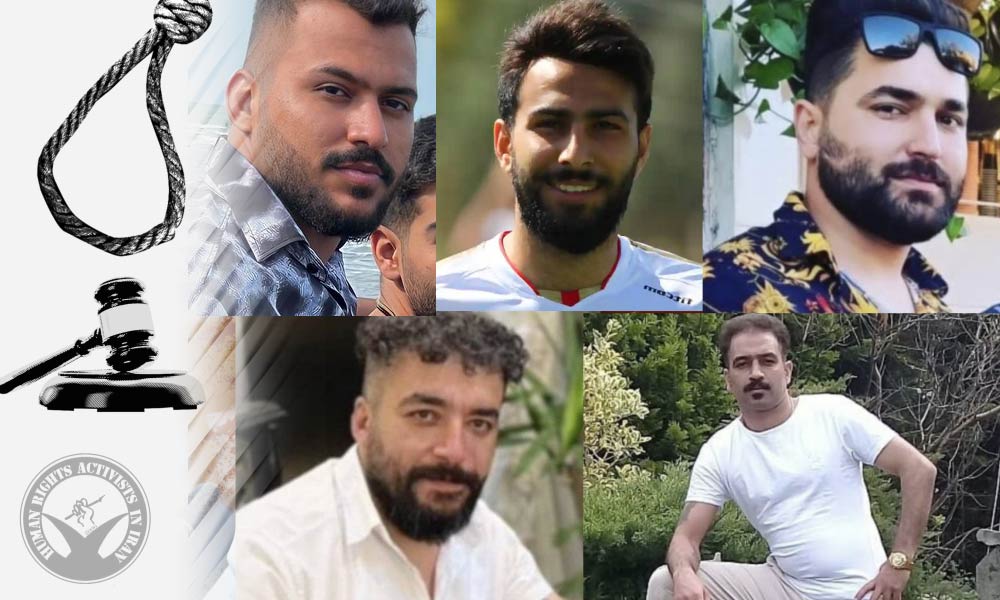
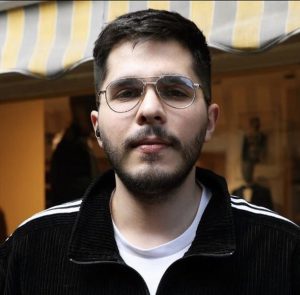
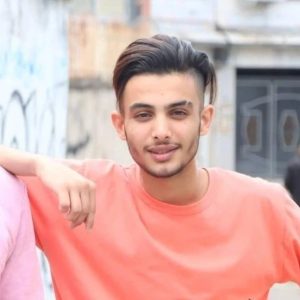
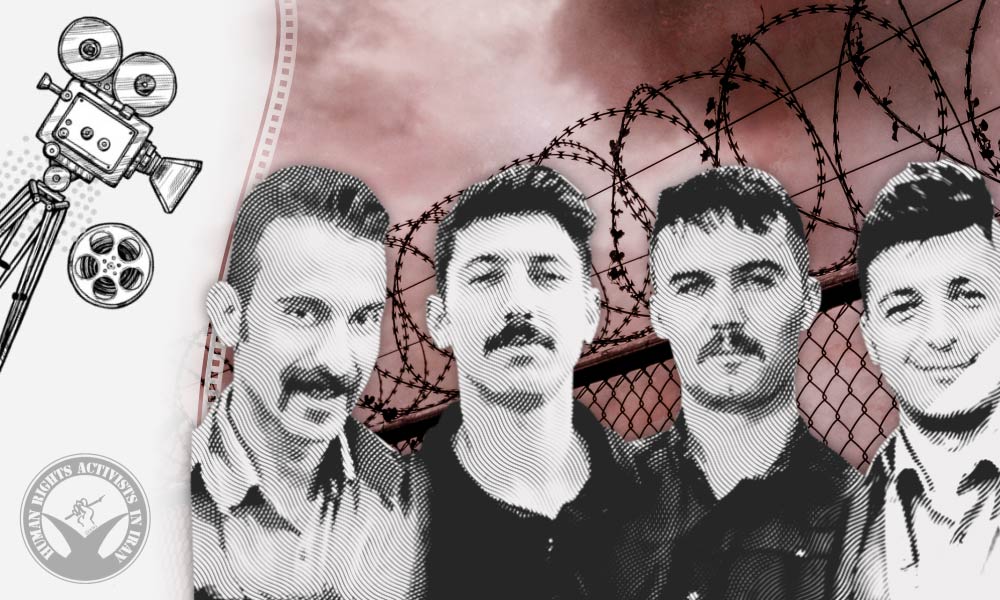
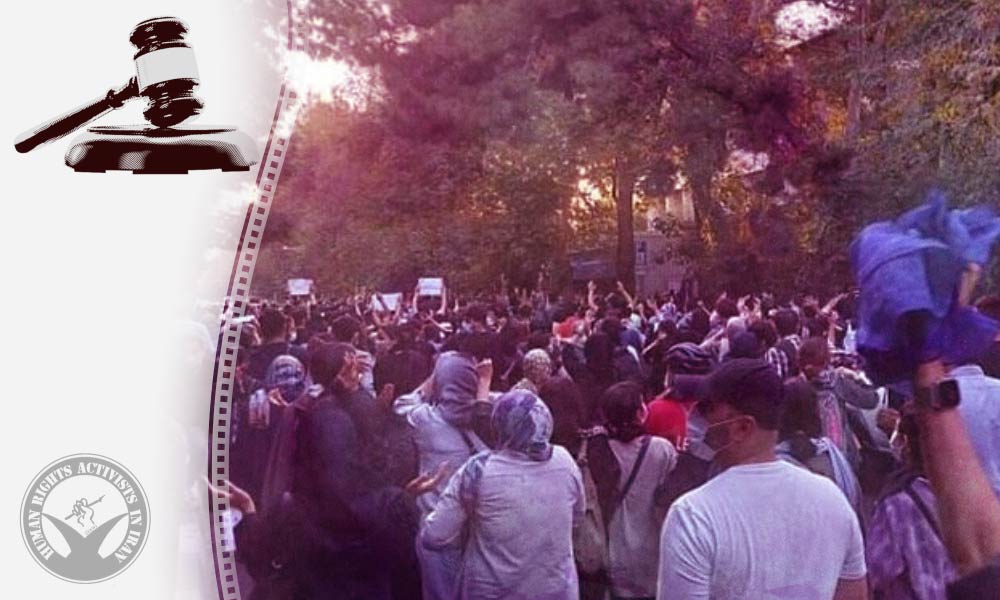
In a legal case over protests in Isfahan, Saleh Mirhashemi, Majid Kazemi, and Saeed Yaghoubi were sentenced to death and a total of 30 years in prison on several charges, including “enmity against God” (Moharebeh). Also, two other co-defendants, football player Amir Nasr Azadani and Soheil Jahangiri, were sentenced to 26 years and 2 years, respectively.
According to HRANA, the news agency of Human Rights Activists, quoting Mizan, Saleh Mirhashemi, Majid Kazemi, and Saeed Yaghoubi, were sentenced to death.
On November 16, 2022, during Isfahan protests in Mahallah Khaneh and Malek Shahr districts, Colonel Esmail Cheraghi and two Basij Militia Forces Mohammad-Hossein Karimi and Mohsen Hamidi were killed.
According to these verdicts, each of these individuals was sentenced to death on “enmity against God” and ten years for “membership in illegal groups to act against national security” and “assembly and collusion against national security.”
The fourth-row defendant Amir Nasr Azadani was sentenced to 16 years for “assisting in enmity against God”, 5 years for “membership in illegal groups to act against national security,” and 5 years for “assembly and collusion against national security.”
The fifth-row defendant Soheid Jahangiri was sentenced to two years for “assembly and collusion against national security.” The sixth-row defendant Jaber Mirhashemi was acquitted of all counts.
Fifteen women arrested at recent protests have been on hunger strike for five days in Kachooie Prison, Karaj.
HRANA has identified these women as:
Elham Modarresi
Armita Abbasi
Fatemeh Harbi
Jasmin Haj-Mirza Mohammadi
Fatemeh Nazari-Nejad
Shahrzad Derakhshan
Fatemeh Jamalpour
Nilloofar Shakeri
Hamideh Zeraei
Niloofar Kardooni
Somayeh Masoumi
Ansieh Mousavi
Maedeh Sohrabi
Fatemeh Mosleh Heidarzadeh
Marzieh Mirghasem
An informed source told HRANA they went on hunger strike in protest against prolonged detention in uncertainty, poor sanitary conditions, inadequate medical care, being held in an overcrowded ward, the lack of access to a lawyer and unjust verdicts.
“The court hearing to examine the charges against Hamideh Zeraei, Fatemeh Harbi and Ansieh Mousavi was held through a video call in prison. Their attorneys were not present, and they were not given enough time to defend themselves,” the source added.
According to this source, Harbi received five years, of which she will be in prison in exile for two years. Zeraei and Mousavi are still awaiting the verdict.
According to other reports obtained by HRANA, pre-trial detention’s Elham Modarresi was extended for one month on January 3. Also, another informed source told HRANA that Modarresi was beaten by prison guards to end her hunger strike.
In Iran’s prisons, despite their physical and mental impairments, hunger strikes are common among prisoners. Hunger strikes are used as a last resort for protesting unlawful detention without trials, violations of prisoners’ rights and infringement on due process.
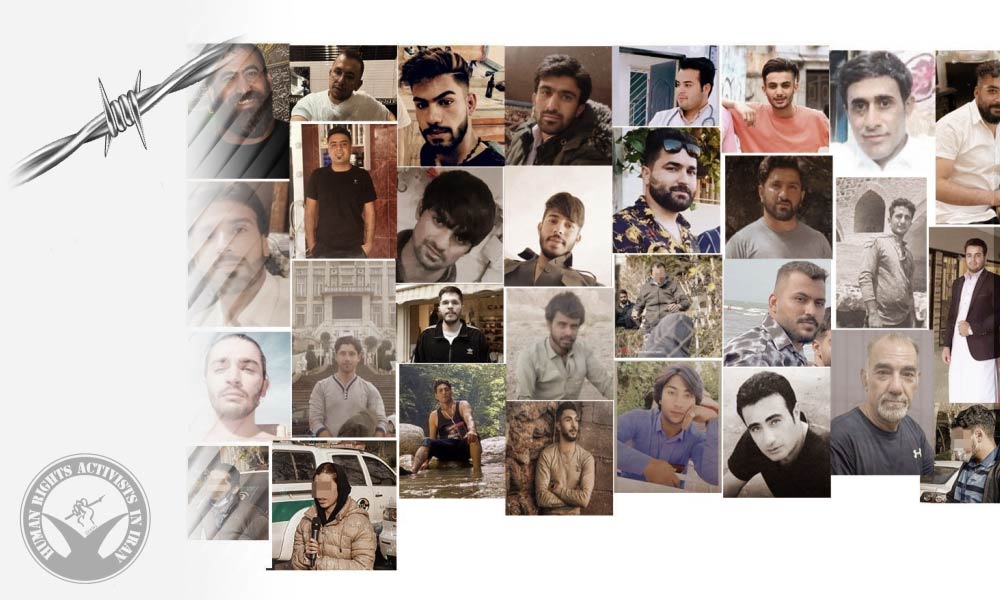
Dozens of Iranian people arrested at recent protests either have been sentenced to death or have faced charges such as “armed insurrection against the regime (Baghi)”, “enmity against God (Moharebeh)”, or “spreading corruption on the earth”. Charges which may result in death penalty. At the time of this writing, 2 protestors have been executed, 11 others have been sentenced to death and 47 others are facing charges that could lead to death sentences. This report provides the legal case details of 58 of these individuals.
Several arrested individuals have been accused of “leading protests” by the Judicial officials. Allegations that have resulted in charges such as Baghi, Moharebeh, and Spreading Corruption on earth.
At the time of this writing, HRANA can verify the issuance of 11 death sentences against imprisoned protestors as enlisted in this report. The other 47 people listed below are under the impending threat of death sentence.
Due to the lack of transparency in the judicial process, in many cases opened by security institutions against the protestors, the identities of some co-defendants remain undisclosed. For example, reports obtained by HRANA about a legal case over an incident during protests in the Ekbatan town of Tehran that led to the death of a Basij Militia agent, Arman Aliverdi, indicate that there are nine co-defendants. Nonetheless, HRANA has been able to identify only two of them. Similarly, in another legal case regarding protests in two neighborhoods in Isfahan that led to the death of three security forces (Col. Esmail Cheraghi, Mohammad Hossein Karimi, and two Basij Militia individuals Mohammad-Hossein Karimi and Mohsen Hamidi), HRANA could identify only 6 out of 10 co-defendants.
It is worth noting that at the time of this writing, the executions of two protestors, Mohsen Shekari and Majid-Reza Rahnavard, were carried out following an extremely quick and non-transparent judicial process, Mohsen and Majid-Reza did not even have access to chosen lawyers at their trials. Mohsen Shekari was executed in Tehran after 74 days of detention on December 8, 2022, and Majid-Reza Rahnavard was publicly executed by being hanged in Mashhad on December 12, 2022, only 23 days after his arrest.
The following enlists legal case details of 58 detainees who are either sentenced to death or at risk of receiving a death sentence.
Mahan Sadrat Marni
1. Mahan Sadrat Marni (Madani)
Case Name: Tehran Protests (Sadrat Marni vs Mohammad-Reza Qanbartalab) Province: Tehran The most serious charge: Enmity against God (Moharebeh) Other charges:(as stated by judicial authorities)
blocking the street, setting fire to Qanbartalab ‘s motorcycle and smashing his cell phone. Stabbing intentionally Qanbartalab. The latest situation according to the reports obtained by HRANA:
Sentenced to death by Branch 26 of the Tehran Revolutionary Court/ temporary suspension of execution of the sentence /The case delivered to Branch 9 of the Supreme Court
Sahand Nour-Mohammadzadeh
2. Sahand Nour-Mohammadzadeh Case Name: Tehran Protests ( Ashrafi Esfahani Expressway) Province: Tehran The most serious charge: Enmity against God (Moharebeh) Other charges: (as stated by judicial authorities)
Blocking the Ashrafi Esfahani Expressway by dismantling the street fences and burning the car tires and trash containers. The latest situation according to the reports obtained by HRANA:
Sentenced to death by Branch 29 of the Tehran Revolutionary Court
Mohammad Ghobadloo
3. Mohammad Ghobadloo Case Name: Tehran Protests Province: Tehran The most serious charge: Spreading Corruption on Earth Other charges: (as stated by judicial authorities)
Running over the police by car which leading to the death of chief warrant officer Farid Karampour and injuring of five other police agents. The latest situation according to the reports obtained by HRANA:
Sentenced to death by Branch 15 of the Tehran Revolutionary Court/ reviewing the case in Branch 1 of the Criminal Court.
Mohammad Boroughani
4. Mohammad Boroughani Case Name: Tehran Protests (fire in the Pakdasht governorate building) Province: Tehran The most serious charge: Enmity against God ( Moharebeh) (the first defendant) Other charges: (as stated by judicial authorities)
Using a cold weapon, setting fire to the Pakdasht governorate building and injuring a police officer. The latest situation according to the reports obtained by HRANA:
Sentenced to death by Branch 15 of the Tehran Revolutionary Court
Manuchehr Mehman-Navaz
5. Manuchehr Mehman-Navaz Case Name: Tehran Protests (fire in Qarchak District administration) Province: Tehran The most serious charge: Enmity against God ( Moharebeh) (the first defendant) Other charges: (as stated by judicial authorities)
Arson attacks on buildings to confront the regime. Assembly and collusion against national security. Disturbing public order by creating unrest and chaos. Participating in illegal protests, throwing Molotov cocktails toward the premises of Qarchak District administration, its security room and six vehicles. The latest situation according to the reports obtained by HRANA:
Sentenced to death by Branch 28 of the Tehran Revolutionary Court
Mohammad-Mehdi Karami
6. Mohammad-Mehdi Karami Case Name: The incidents on the 40th day of Hadis Najafi’s death led to the death of a Basij Militia force Ruhollah Ajamian Province: Alborz The most serious charge: Spreading Corruption on Earth (the first defendant) Other charges (as stated by judicial authorities):
Acting against national security; Assaulting Basij forces, Assembly and collusion against national security; Spreading the calls for protest on the Internet The latest situation according to the reports obtained by HRANA:
Sentenced to death by Branch 1 of the Alborz Revolutionary Court/ the case delivered to the Supreme Court of Iran
Seyed-Mohammad Hosseini
7. Seyed-Mohammad Hosseini Case Name: The incidents on the 40th day of Hadis Najafi’s death led to the death of a Basij Militia force Ruhollah Ajamian Province: Alborz The most serious charge: Spreading Corruption on Earth (the second defendant) Other charges (as stated by judicial authorities):
Acting against national security; Assaulting Basij forces and the police, Assembly and collusion against national security The latest situation according to the reports obtained by HRANA:
Sentenced to death by Branch 1 of the Alborz Revolutionary Court/ the case delivered to the Supreme Court of Iran
Hossein Mohammadi
8. Hossein Mohammadi Case Name: The incidents on the 40th day of Hadis Najafi’s death led to the death of a Basij Militia force Ruhollah Ajamian Province: Alborz The most serious charge: Spreading Corruption on Earth Other charges (as stated by judicial authorities):
Acting against national security; Assembly and collusion against national security The latest situation according to the reports obtained by HRANA:
Sentenced to death by Branch 1 of the Alborz Revolutionary Court/ the case delivered to the Supreme Court of Iran
Reza Arya
9. Reza Arya Case Name: The incidents on the 40th day of Hadis Najafi’s death led to the death of a Basij Militia force Ruhollah Ajamian Province: Alborz The most serious charge: Spreading Corruption on Earth Other charges (as stated by judicial authorities):
Acting against national security; Assaulting Basij forces and the police; disturbing public order; Assembly and collusion against national security The latest situation according to the reports obtained by HRANA:
Sentenced to death by Branch 1 of the Alborz Revolutionary Court/ the case delivered to the Supreme Court of Iran
Hamid Ghara-Hassanlu
10. Hamid Ghara-Hasanlu Case Name: The incidents on the 40th day of Hadis Najafi’s death led to the death of a Basij Militia force Ruhollah Ajamian Province: Alborz The most serious charge: Spreading Corruption on Earth Other charges (as stated by judicial authorities):
Acting against national security; Assaulting Basij forces and the police; Assembly and collusion against national security; assisting in blocking the highway connecting Karaj to Qazvin The latest situation according to the reports obtained by HRANA:
Sentenced to death by Branch 1 of the Alborz Revolutionary Court/ the case delivered to the Supreme Court of Iran
Mohsen Rezazadeh Gharagholou
11. Mohsen Rezazadeh Gharagholou Case Name: Tehran Protests Province: Tehran The most serious charge: Enmity against God ( Moharebeh) Other charges (as stated by judicial authorities):
Collaboration in setting fire to public property; disturbing public order, Assembly and collusion to act against national security; Making Molotov cocktails; Throwing stones at security forces The latest situation according to Judiciary news agency reports:
Briefed on charges and indicted by Branch 15 of the Tehran Revolutionary Court
12.Abolfazl Mehri Hossein Hajiloo Case Name: Tehran Protests Province: Tehran The most serious charge: Fighting against the regime Other charges (as stated by judicial authorities):
Setting fire to public property; disturbing public order The latest situation according to Judiciary news agency reports:
Briefed on charges and indicted by Branch 15 of the Tehran Revolutionary Court
Saeed Shirazi
13. Saeed Shirazi
Case Name: Tehran Protests Province: Tehran The most serious charge: Spreading corruption on earth Other charges (as stated by judicial authorities):
Inciting people to violence and committing crimes against national security and disturbing the public order The latest situation according to Judiciary news agency reports:
Briefed on charges and indicted by Branch 15 of the Tehran Revolutionary Court
Saman Seydi
14. Saman Seyedi (Yasin) Case Name: Tehran Protests The most serious charge: Enmity against God (Moharebeh) Other charges (as stated by judicial authorities):
Using Colt firearm and shooting three times; Assembly and collusion against national security The latest situation according to Judiciary news agency reports:
Briefed on charges and indicted by Branch 15 of the Tehran Revolutionary Court
Toomaj Salehi
15. Toomaj Salehi Case name: none Province: Isfahan The most serious charge: Spreading corruption on earth Other charges (as stated by judicial authorities):
Spreading falsehood causing major damage; propaganda against the regime; forming and running illegal groups to endanger national security in collaboration with hostile counties. Disturbing public opinion on the Internet; inciting people to violence. The latest situation according to Judicial authorities’ statements:
Briefed on charges and indicted by Branch 15 of the Tehran Revolutionary Court
Amir Nasr Azadani
16. Amir Nasr Azadani Case Name: Isfahan Protests in Mahallah Khaneh and Malek Shahr, at which, on November 16, 2022, Col. Esmail Cheraghi, Mohammad Hossein Karimi and two Basij Militia individuals Mohammad-Hossein Karimi and Mohsen Hamidi were killed. The most serious charge: Armed insurrection against the regime (Baghi) (the fifth defendant) Other charges (as stated by judicial authorities):
Membership in illegal groups to disrupt national security; assembly and collusion to commit crimes against national security. Assisting in enmity against God (Moharebeh) The latest situation according to Judiciary news agency reports:
Being indicted and impending verdict by the Isfahan Revolutionary Court
Saleh Mirhashemi
17. Saleh Mirhashemi Case name: Isfahan Protests in Mahallah Khaneh and Malek Shahr, at which, on November 16, 2022, Col. Esmail Cheraghi, Mohammad Hossein Karimi and two Basij Militia forces Mohammad-Hossein Karimi and Mohsen Hamidi were killed. Province: Isfahan The most serious charge: Unknown (under investigation) Other charges (as stated by judicial authorities):
Membership in illegal groups to disrupt national security The latest situation according to the reports obtained by HRANA:
Being indicted and impending verdict by the Isfahan Revolutionary Court
Soheil Jahangiri
18. Soheil Jahangiri Case name: Isfahan Protests in Mahallah Khaneh and Malek Shahr, at which, on November 16, 2022, Col. Esmail Cheraghi, Mohammad Hossein Karimi and two Basij Militia forces Mohammad-Hossein Karimi and Mohsen Hamidi were killed. Province: Isfahan The most serious charge: Unknown (under investigation) Other charges (as stated by judicial authorities):
Membership in illegal groups to disrupt national security The latest situation according to the reports obtained by HRANA:
Being indicted and impending verdict by the Isfahan Revolutionary Court
Saeed Yaghoubi
19. Saeed Yaghoubi Case name: Isfahan Protests in Mahallah Khaneh and Malek Shahr, at which, on November 16, 2022, Col. Esmail Cheraghi, Mohammad Hossein Karimi and two Basij Militia forces Mohammad-Hossein Karimi and Mohsen Hamidi were killed. Province: Isfahan The most serious charge: Unknown (under investigation) Other charges (as stated by judicial authorities):
Membership in illegal groups to disrupt national security The latest situation according to the reports obtained by HRANA:
Being indicted and impending verdict by the Isfahan Revolutionary Court
Majid Kazemi
20. Majid Kazemi Case name: Isfahan Protests in Mahallah Khaneh and Malek Shahr, at which, on November 16, 2022, Col. Esmail Cheraghi, Mohammad Hossein Karimi and two Basij Militia forces Mohammad-Hossein Karimi and Mohsen Hamidi were killed.
Province: Isfahan The most serious charge: Unknown (under investigation) Other charges (as stated by judicial authorities):
Membership in illegal groups to disrupt national security The latest situation according to the reports obtained by HRANA:
Being indicted and impending verdict by the Isfahan Revolutionary Court
21. Mehdi Mashayekhi Case name: Isfahan Protests in Mahallah Khaneh and Malek Shahr, at which, on November 16, 2022, Col. Esmail Cheraghi, Mohammad Hossein Karimi and two Basij Militia forces Mohammad-Hossein Karimi and Mohsen Hamidi were killed. Province: Isfahan The most serious charge: Unknown (under investigation) Other charges (as stated by judicial authorities):
Membership in illegal groups to disrupt national security The latest situation according to the reports obtained by HRANA:
Being indicted and impending verdict by the Isfahan Revolutionary Court
22. As-yet unidentified (Male) Case name: Isfahan Protests in Mahallah Khaneh and Malek Shahr, at which, on November 16, 2022, Col. Esmail Cheraghi, Mohammad Hossein Karimi and two Basij Militia forces Mohammad-Hossein Karimi and Mohsen Hamidi were killed. Province: Isfahan The most serious charge: Unknown (under investigation) Other charges (as stated by judicial authorities):
Membership in illegal groups to disrupt national security The latest situation according to the reports obtained by HRANA:
Being indicted and impending verdict by the Isfahan Revolutionary Court
23. As-yet unidentified (Male) Case name: Isfahan Protests in Mahallah Khaneh and Malek Shahr, at which, on November 16, 2022, Col. Esmail Cheraghi, Mohammad Hossein Karimi and two Basij Militia forces Mohammad-Hossein Karimi and Mohsen Hamidi were killed. Province: Isfahan
The most serious charge: Unknown (under investigation) Other charges (as stated by judicial authorities):
Membership in illegal groups to disrupt national security The latest situation according to the reports obtained by HRANA:
Being indicted and impending verdict by the Isfahan Revolutionary Court
24. As-yet unidentified (Male) Case name: Isfahan Protests in Mahallah Khaneh and Malek Shahr, at which, on November 16, 2022, Col. Esmail Cheraghi, Mohammad Hossein Karimi and two Basij Militia forces Mohammad-Hossein Karimi and Mohsen Hamidi were killed. Province: Isfahan
The most serious charge: Unknown (under investigation) Other charges (as stated by judicial authorities):
Membership in illegal groups to disrupt national security The latest situation according to the reports obtained by HRANA:
Being indicted and impending verdict by the Isfahan Revolutionary Court
25. As-yet unidentified (Male) Case name: Isfahan Protests in Mahallah Khaneh and Malek Shahr, at which, on November 16, 2022, Col. Esmail Cheraghi, Mohammad Hossein Karimi and two Basij Militia forces Mohammad-Hossein Karimi and Mohsen Hamidi were killed. Province: Isfahan The most serious charge: Unknown (under investigation) Other charges (as stated by judicial authorities):
Membership in illegal groups to disrupt national security The latest situation according to the reports obtained by HRANA:
Being indicted and impending verdict by the Isfahan Revolutionary Court
Akbar Ghafari
26. Akbar Ghafari Case name: Tehran Protests Province: Tehran The most serious charge: Enmity against God (Moharebeh) Other charges (as stated by judicial authorities):
Killing a security force (the victim is unidentified) The latest situation according to the Amnesty International reports:
Indicted/ jailed in Great Tehran Penitentiary
Farhad Tahazadeh
27. Farhad Tahzadeh
Case name: Oshnavieh protests Province: West Azerbaijan The most serious charge: Enmity against God (Moharebeh) The latest situation according to Kurdpa’s reports:
The case was delivered to the Urmia Revolutionary Court/ jailed in Urmia Central Prison
Farzad Tahazadeh
28. Farzad Tahzadeh Case name: Oshnavieh protests Province: West Azerbaijan The most serious charge: Enmity against God (Moharebeh) The latest situation according to Kurdpa’s reports:
The case was delivered to the Urmia Revolutionary Court/ jailed in Urmia Central Prison
Dena Sheybani
29. Dena Sheybani Case name: Shahcheragh 2 Province: Fars The most serious charge: Assisting in (foiled) bomb plot The latest situation according to the reports obtained by HRANA:
detained in uncertainty
Mohammad Khiveh
30. Mohammad Khiveh Case name: Shahcheragh 2 Province: Fars The most serious charge: Assisting in (foiled) bomb plot The latest situation according to the reports obtained by HRANA:
detained in uncertainty
Eshragh Najafabadi
31. Eshragh Najafabadi Case name: Shahcheragh 2 Province: Fars The most serious charge: Assisting in (foiled) bomb plot The latest situation according to the reports obtained by HRANA:
detained in uncertainty
Amir-Arsalan Mahdavi
32.Amir-Arsalan Mahdavi Case name: Shahcheragh 2 Province: Fars The most serious charge: Assisting in (foiled) bomb plot The latest situation according to the reports obtained by HRANA:
detained in uncertainty in a Shiraz detention center known as Facility No. 100
Hesamedin Mousavi
33. Hesamedin Mousavi Case name: Shahcheragh 2 Province: Fars The most serious charge: Assisting in (foiled) bomb plot The latest situation according to the reports obtained by HRANA:
detained in uncertainty in a Shiraz detention center known as Facility No. 100.
Milad Armoun
34. Milad Armoun Case name: Protests in Ekbatan town of Tehran leading to the death of a Basij militia force Arman Aliverdi Province: Tehran The most serious charge: Assisting in killing a Basij militia individual The latest situation according to Judiciary news agency reports:
detained in the detention facility of a police station (Fateb)- crime scene reconstruction process
Nastouh Nikkhah
35. Nastouh Nikkhah Bahrami Case name: Protests in Ekbatan town of Tehran leading to the death of a Basij militia force Arman Aliverdi Province: Tehran The most serious charge: Assisting in killing a Basij militia individual The latest situation according to Judiciary news agency reports:
detained in the detention facility of a police station (Fateb)- crime scene reconstruction process
Alireza Kafai
36. Alireza Kafai Case name: Protests in Ekbatan town of Tehran leading to the death of a Basij militia force Arman Aliverdi Province: Tehran The most serious charge: Assisting in killing a Basij militia individual The latest situation according to Judiciary news agency reports:
detained in the detention facility of a police station (Fateb)- crime scene reconstruction process
37. As-yet unidentified (Female) Case name: Protests in Ekbatan town of Tehran leading to the death of a Basij militia force Arman Aliverdi Province: Tehran The most serious charge: Assisting in killing a Basij militia individual The latest situation according to Judiciary news agency reports:
detained in uncertainty – crime scene reconstruction process
38. As-yet unidentified (Male) Case name: Protests in Ekbatan town of Tehran leading to the death of a Basij militia force Arman Aliverdi Province: Tehran The most serious charge: Assisting in killing a Basij militia individual The latest situation according to Judiciary news agency reports:
detained in uncertainty in the detention facility of a police station (Fateb) – crime scene reconstruction process
39. As-yet unidentified (Male) Case name: Protests in Ekbatan town of Tehran leading to the death of a Basij militia force Arman Aliverdi Province: Tehran The most serious charge: Assisting in killing a Basij militia individual The latest situation according to Judiciary news agency reports:
detained in uncertainty in the detention facility of a police station (Fateb) – crime scene reconstruction process
40. As-yet unidentified (Male) Case name: Protests in Ekbatan town of Tehran leading to the death of a Basij militia force Arman Aliverdi Province: Tehran The most serious charge: Assisting in killing a Basij militia individual The latest situation according to Judiciary news agency reports:
detained in uncertainty in the detention facility of a police station (Fateb) – crime scene reconstruction process
41. As-yet unidentified (Male) Case name: Protests in Ekbatan town of Tehran leading to the death of a Basij militia force Arman Aliverdi Province: Tehran The most serious charge: Assisting in killing a Basij militia individual The latest situation according to Judiciary news agency reports:
detained in uncertainty in the detention facility of a police station (Fateb) – crime scene reconstruction process
42. As-yet unidentified (Male) Case name: Protests in Ekbatan town of Tehran leading to the death of a Basij militia force Arman Aliverdi Province: Tehran The most serious charge: Assisting in killing a Basij militia individual The latest situation according to Judiciary news agency reports:
detained in uncertainty in the detention facility of a police station (Fateb) – crime scene reconstruction process
43. Meysam Mobarhan Case name: Malekan County Protests Province: East Azerbaijan The most serious charge: Enmity against God (Moharebeh) Other charges: (as stated by judicial authorities)
Leading protests; setting fire to trash containers and car tires; setting fire to the I.R.I flag; making and throwing Molotov cocktails at security forces. The latest situation according to reports obtained by HRANA:
detained in uncertainty in Maragheh Prison
Ebrahim Rigi
44. Ebrahim Rigi Case Name: Zahedan bloody Friday 2022 Province: Sistan and Baluchestan The most serious charge: Enmity against God (Moharebeh) and “Spreading Corruption on Earth” Other charges: (as stated by judicial authorities)
Leading Protests The latest situation according to Haal Vash:
detained in uncertainty in Zahedan Central Prison
Farshid Hassan-Zehi
45. Farshid Hassan-Zehi Case Name: The attack on a police station in Cheshmeh Ziarat Rural District on November 21, 2022, led to the death of the soldier Behzad Barahooi Province: Sistan and Baluchestan The most serious charge: Enmity against God (Moharebeh) The latest situation according to Haal Vsh:
detained in uncertainty
Jamshid Hassan Zehi
46. Jamshid Hassan-Zehi Case Name: The attack on a police station in Cheshmeh Ziarat Rural District on November 21, 2022, led to the death of the soldier Behzad Barahooi Province: Sistan and Baluchestan The most serious charge: Enmity against God (Moharebeh) The latest situation according to Haal Vsh:
detained in uncertainty
Omid Hassan Zehi
47. Omid Hassan-Zehi Case Name: The attack on a police station in Cheshmeh Ziarat Rural District on November 21, 2022, led to the death of the soldier Behzad Barahooi Province: Sistan and Baluchestan The most serious charge: Enmity against God (Moharebeh) The latest situation according to Haal Vsh:
detained in uncertainty
Esmail Hassan-Zehi
48. Esmail Hassan-Zehi Case Name: The attack on a police station in Cheshmeh Ziarat Rural District on November 21, 2022و led to the death of the soldier Behzad Barahooi Province: Sistan and Baluchestan The most serious charge: Enmity against God (Moharebeh) The latest situation according to Haal Vsh:
detained in uncertainty
Behzad Hassan-Zehi
49. Behzad Hassan-Zehi Case Name: The attack on a police station in Cheshmeh Ziarat Rural District on November 21, 2022, led to the death of the soldier Behzad Barahooi Province: Sistan and Baluchestan The most serious charge: Enmity against God (Moharebeh) The latest situation according to Haal Vsh:
detained in uncertainty
Karvan Shahi Parvaneh
50. Karwan (Hamin) Shahi (Shah) Parvaneh Case Name: Oshnavieh protests Province: West Azerbaijan The most serious charge: Enmity against God (Moharebeh) The latest situation according to Kurdpa:
detained in uncertainty/ transferred from Urmia Central Prison to an unidentified location
Shahram Marouf Mula
51. Shahram Marouf Mula (Bangini) Case Name: Oshnavieh protests Province: West Azerbaijan The most serious charge: Enmity against God (Moharebeh) The latest situation according to Kurdpa:
detained in uncertainty/ transferred from Urmia Central Prison to an unidentified location
Hazhar Hamidi
52. Hazhar Hamidi Case Name: Oshnavieh protests Province: West Azerbaijan The most serious charge: Enmity against God (Moharebeh) The latest situation according to Kurdpa:
detained in uncertainty/ transferred from Urmia Central Prison to an unidentified location
53. Reza Eslamdoost Case Name: Oshnavieh protests Province: West Azerbaijan The most serious charge: Enmity against God (Moharebeh) The latest situation according to Kurdpa:
detained in uncertainty/ transferred from Urmia Central Prison to an unidentified location
Ayoub Aghliani
54. Ayoub Aghliani Case Name: Oshnavieh protests Province: West Azerbaijan The most serious charge: Enmity against God (Moharebeh) The latest situation according to Kurdpa:
Detained in uncertainty/ transferred from Urmia Central Prison to an unidentified location
Makan Davari
55. Ali (Makan) Davari Case name: unknown Province: Gilan The most serious charge: Enmity against God (Moharebeh) and spreading corruption on earth The latest situation according to the Center for Human Rights in Iran:
Detained in uncertainty in Lahijan
Sajad Iman Nejad
56. Sajad Iman-Nejad Case Name: Tehran Protests Province: Tehran The most serious charge: Enmity against God (Moharebeh) The latest situation according to the reports obtained by HRANA:
Detained in uncertainty in Great Tehran Penitentiary
Reza Rasaei
57. Reza Rasaei Case Name: Sahneh Protests (incidents on anniversary ceremony of Seyyed-Khalil Ali-Nejad on November 18, 2022) The most serious charge: Enmity against God (Moharebeh) The latest situation according to the reports obtained by HRANA:
Detained in uncertainty
Shuaib Mirbalouch-Zehi Rigi
58.Shuaib MirBaloch-Zehi (Rigi) Case name: Unknown Province: Sistan and Baluchestan The most serious charge: Spreading Corruption on Earth The latest situation according to the reports obtained by Haal Vsh:
Sentenced to death by Shahid Nouri Judicial Complex, Zahedan
For further inquiries please contact Skylar Thompson, Senior Advocacy Coordinator Human Rights Activists in Iran (HRA) at [email protected]
On December 18, 2022, unrest and a clash between inmates and prison guards occurred in Qaem Shahr Prison, Mazandaran Province. Prison guards got into a fight with prisoners when they wanted to take a death-row inmate to carry out his execution.
According to the news agency Young Journalists Club, the clash occurred following the relocation of an inmate convicted of murder to carry out his execution the next day, on Monday, morning.
Chief Justice of Mazandaran claimed one of the prisoners started the fight and the unrest was quelled with prison special forces’ interference.
Also, on December 17, a similar clash occurred in The Central Prison of Karaj following prisoners’ resistance against executing several death-row inmates.
An informed source, however, told HRANA that more than 100 prisoners were injured during the unrest, and prison forces used guns to crush the unrest.
As HRANA already reported that this crackdown most likely has been deadly, the Chief Justice of Alborz stated that one inmate was killed during the clash.
Following this incident, several prisoners’ families gathered before the prison to inquire about the prisoners’ conditions, which remained unanswered by prison officials.
Recently, Iran’s state TV broadcasted coerced confessions of four political prisoners Mohsen Mazloum, Pejman Fatehi, Vafa Azarbar and Hajir Faramarzi. On July 23, 2022, these individuals were arrested in Urmia County. After three months of detention, their lawyer is still denied access to the clients and legal case documents.
According to HRANA, the news agency of Human Rights Activists, Iran’s state TV broadcasted a forced confession video of four political detainees, raising concerns about their conditions and subsequent severe punishments.
After 136 days of detention, these individuals’ families are not informed about their whereabouts and the charges. They have also been denied any access to their lawyer.
On July 23, 2022, security-institution-affiliated news agency Tasnim reported the arrest of “a network of Israeli spies” referring to these individuals. Tasnim also claimed that “having operational and communication equipment and explosive materials, they crossed into the country from the Kurdistan region to carry out unprecedented terrorist operations in some secure-sensitive locations.”
In response, Komalah (CPI-a Kurdish oppositional political party) issued a statement denying all these allegations and warned about intelligence institutions’ conspiring against detainees.
One of the detainees’ wife told HRANA: “Since the arrest, we have been worrying about torturing them to extract confessions. As of yet, we do not even know if they are alive or dead.”
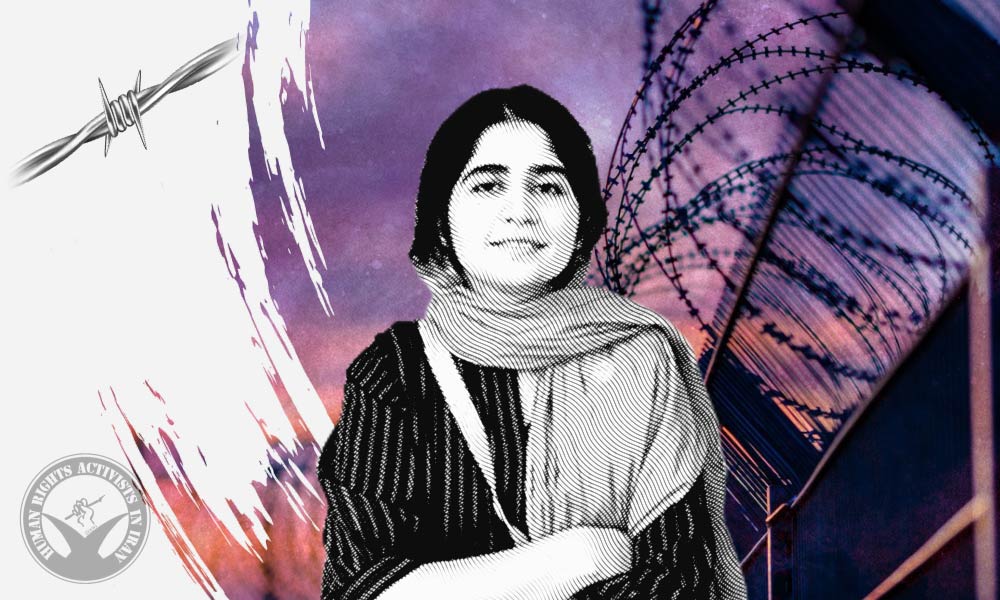
Imprisoned civil rights activist Sepideh Gholian was briefed on the charges of a new legal case following the complaint of the Bushehr General Directorate of Prisons.
According to HRANA, the news agency of Human Rights Activists, imprisoned civil rights activist Sepideh Gholian was faced with the charges of “spreading falsehood, blasphemy, insulting and slandering government officials.”
His brother wrote on social media that prison officials have denied Gholian access to phone calls since November 19.
On November 18, 2018, Sepideh Gholian was arrested along with at least 19 others, including members of the Assembly of Representatives of Haft-Tappeh workers, and several workers’ activists by security police in Shush city. She was released on bail on December 18, 2018.
After broadcasting her forced confession as well as some other workers’ activists, including Esmail Bakhshi on state TV, they announced that the “confessions” were extracted under duress. Soon after this announcement, the security police arrested them.
On October 26, 2019, Gholian was released on bail until the end of legal proceedings. On December 14, 2019, she was sentenced to 5 years imprisonment by Tehran Appellate Court.
On June 21, 2020, Gholian began serving her prison term in Evin prison. On March 10, 2021, she was exiled to Bushehr Prison, where she was held until she was granted leave.
On September 10 as a protest against her imprisonment in exile and away from her city. Three days later, she was hospitalised due to her hunger strike.
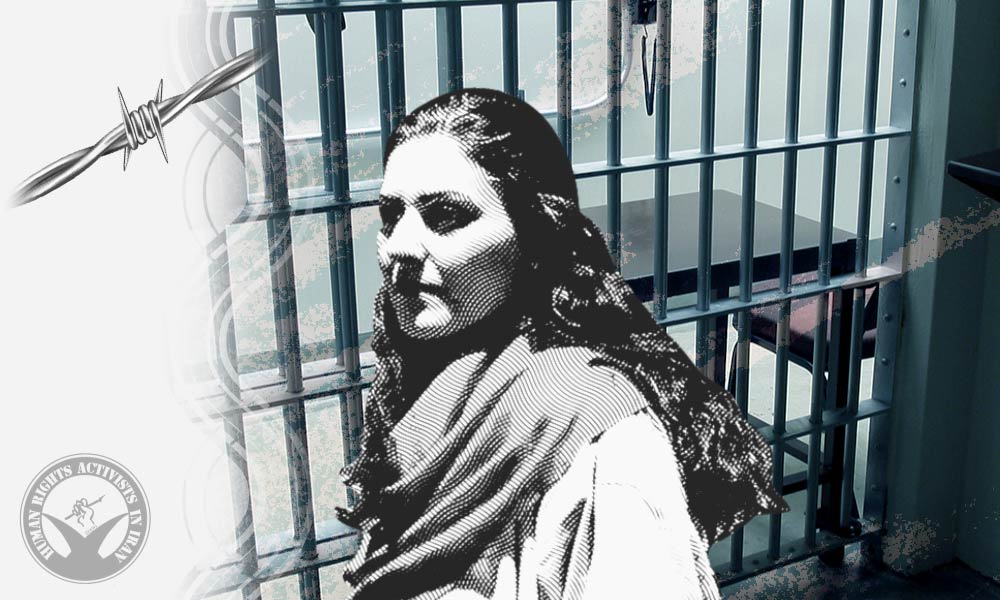
Former political prisoner Golrokh Iraee is still in detention in poor conditions in the quarantine section of Qarchak Prison. A while ago, she was briefed on her charges.
According to HRANA, the news agency of Human Rights Activists, Golrokh Iraee is still detained, awaiting further legal proceedings after 52 days.
Recently, she has been notified about the charges of “assembly and collusion” and “propaganda against the regime.”
According to an informed source, Iraee is currently held in an ill-equipped, overcrowded ward in Qarchak Prison in Varamin.
On September 26, 2022, security forces arrested Iraee violently at her house in Tehran.
According to the judiciary’s statements, since the beginning of nationwide protests, five people arrested at protests have been sentenced to death on the charges of “enmity against God” and “spreading corruption on earth.” Moreover, several other citizens have faced the same charges, which can result in a death sentence.
According to HRANA, the news agency of Human Rights Activists, quoting Mizan Online, Judiciary media centre, five protestors have been sentenced to death.
Although the judicial officials did not disclose these individuals’ identities, based on previous reports obtained about ongoing legal cases in Branch 15 of the Revolutionary Court, two of these five people are likely Mohammad Borooghani and Mohammad Ghobadlu.
The judicial authorities claimed that one of these individuals ran over a police/security agent in a car leading to his death, and the second injured a police agent. The third detainee has been accused of “closing the roads, creating terror and damaging public property.”
At least nine other individuals have faced the same charges in Alborz and Tehran Provinces.
The Chief Justice of Markazi Province announced the indictment against 276 people arrested during the protests in this province.
According to HRANA, the news agency of Human Rights Activists, in Markazi Province, 276 people have been indicted for participating in protests.
This Chief Justice claimed that 40 individuals were identified as leaders of the protests. A hundred minors or young arrestees were released without pressing any charges after signing a commitment letter.
Since the outbreak of nationwide protests, over 15000 people have been arrested. For more details and statistics on the nationwide protest across Iran, read HRANA’s comprehensive report here.
The Tehran Court of Appeals acquitted eight former political prisoners of the charges they faced in prison. These individuals include Alireza Farshi, Shapour Ehsanirad, Akbar Faraji, Shahab Soltanian, Esmail Gerami, Akbar Bagheri, Pouya Ghobadi Bistooni and Davoud Abdollahi.
According to this verdict issued on November 7, all defendants are acquitted of the charge of “fight and assault” and “disturbing prison order.” Initially, each had been sentenced to 11 months and 15 days in prison and 50 lashes.
In violation of the prison laws, these political prisoners were housed in the ward of prisoners of violent crimes in the Great Tehran Penitentiary. As a result, on October 8, 2021, a quarrel occurred between these political prisoners and their fellow inmates.