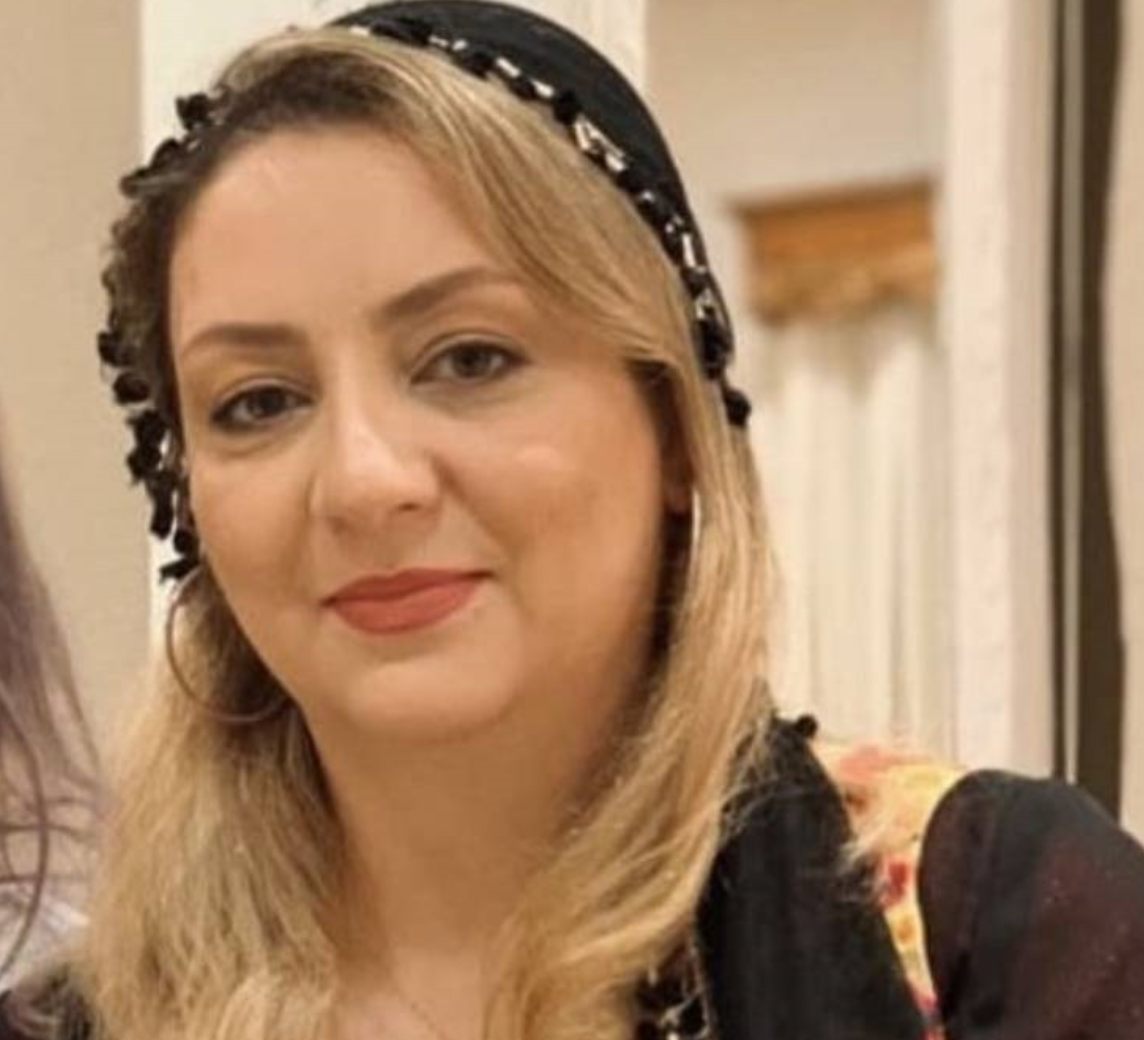
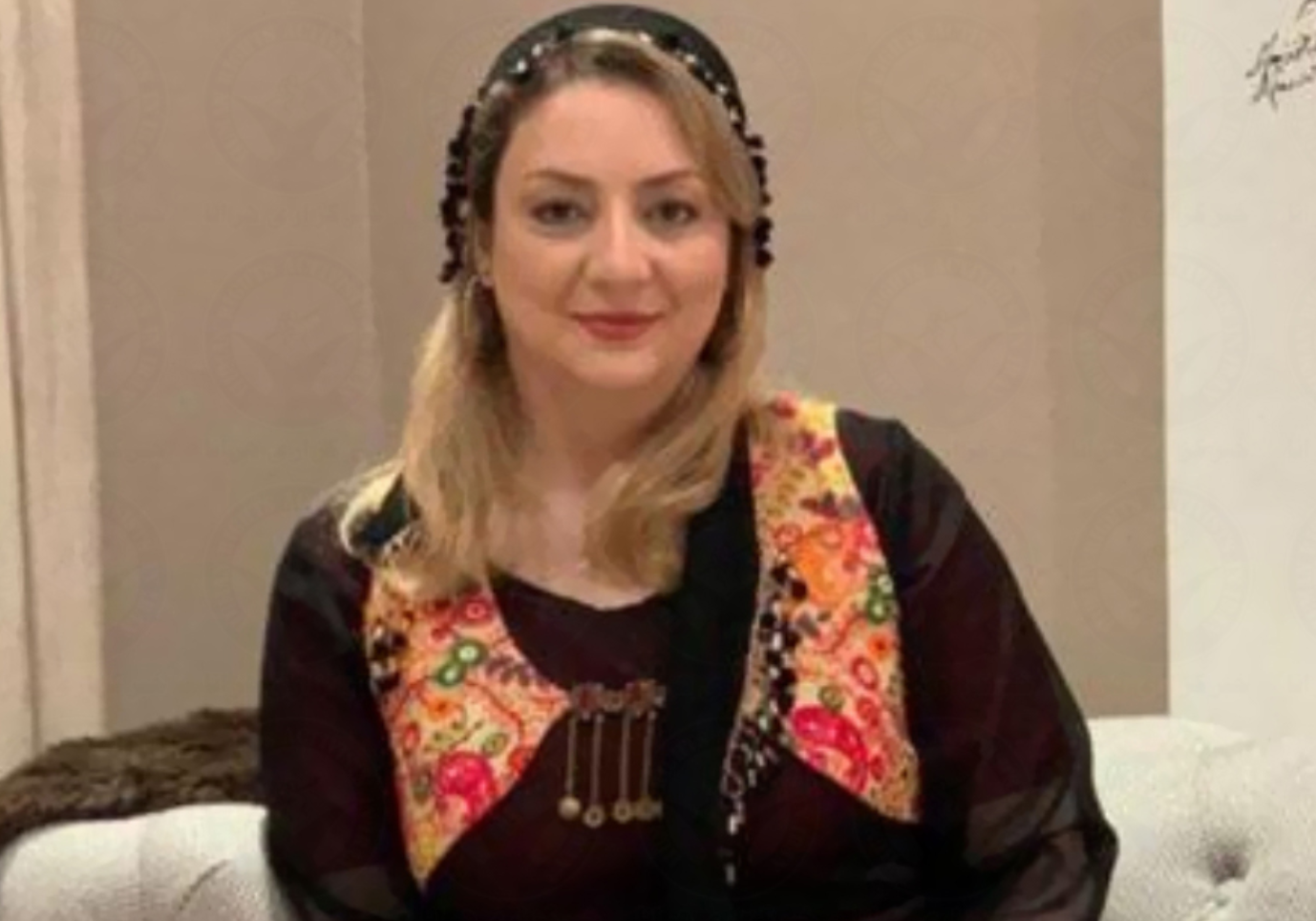
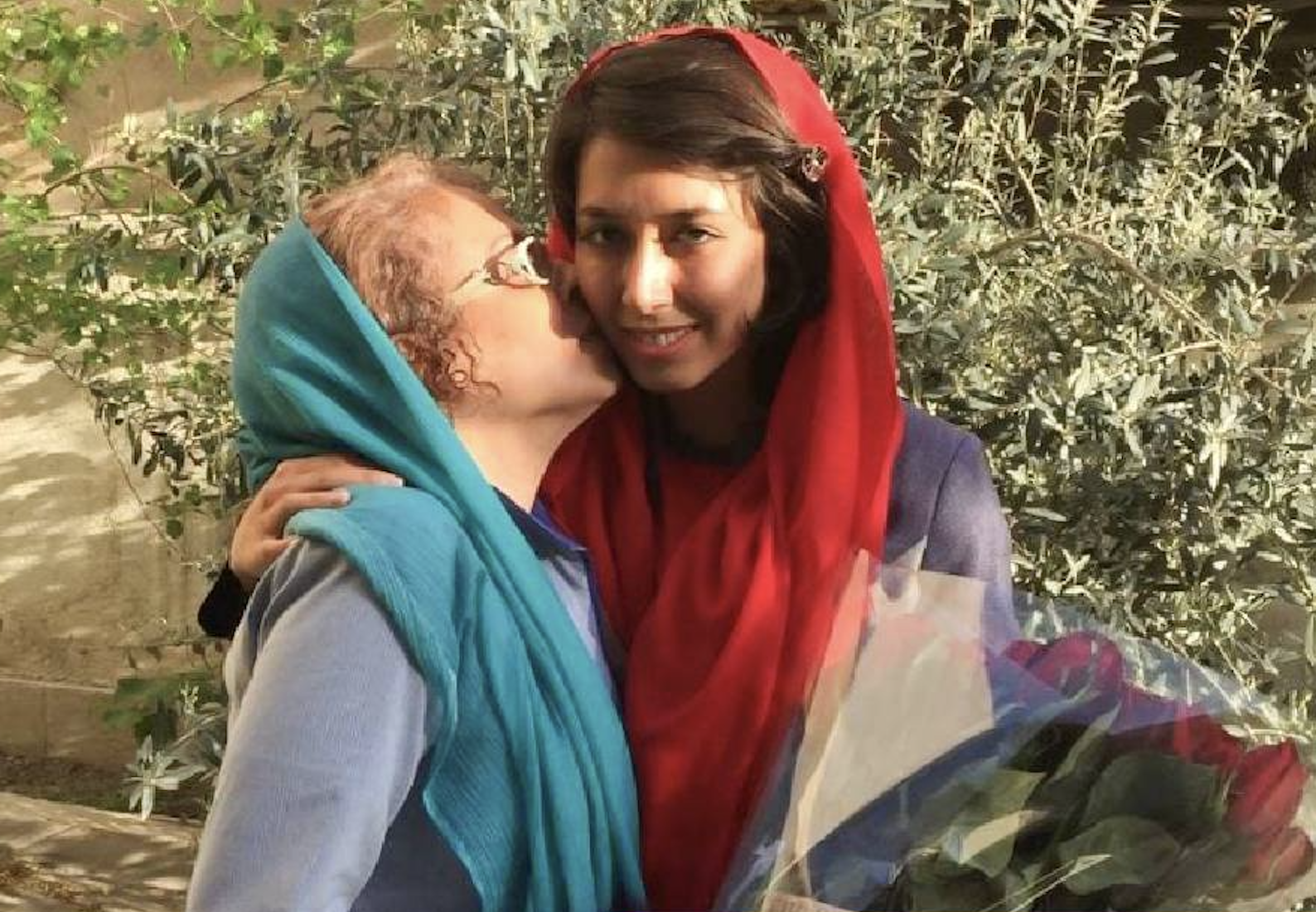
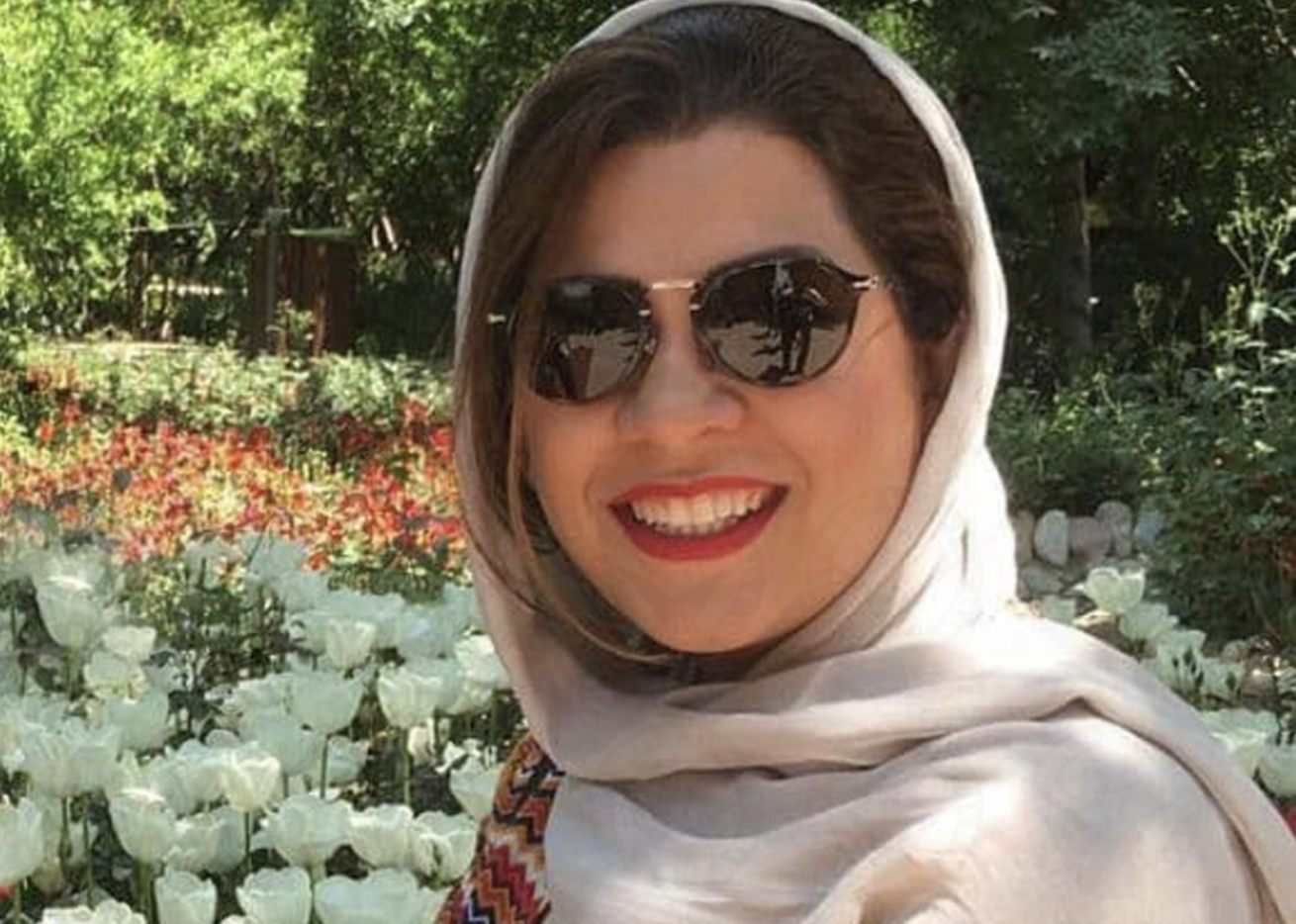
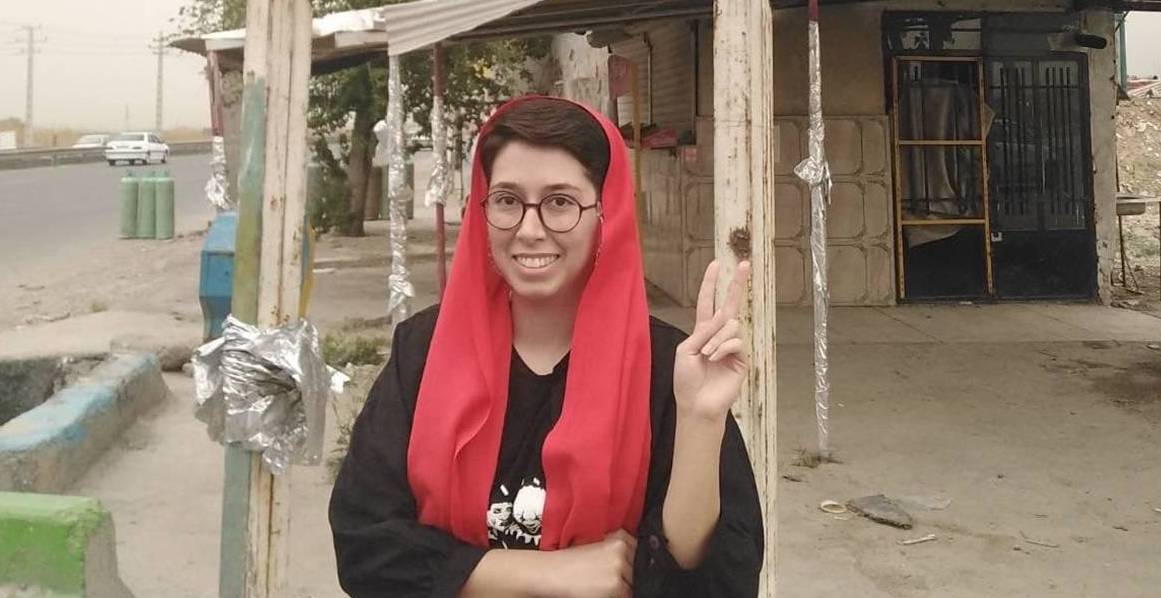
Mojgan Kavousi Ends Hunger Strike After 10 Days

On the evening of May 25, political prisoner Mojgan Kavousi ended her hunger strike in Evin Prison.

According to HRANA, the news agency of Human Rights Activists, Kavousi had been on hunger strike since May 16 in protest of prison officials’ arbitrary behavior sending prisoners on leave during the outbreak of COVID-19.

Kavousi has been incarcerated for more than a year without leave. Her family has traveled from out of town to visit her but have been denied in-person visits and has only been permitted to meet through a cabin, behind glass.

Baha’i Women of Baharestan: 6 Remaining Baha’i Women Released on Bail from Dolatabad Prison in Isfahan

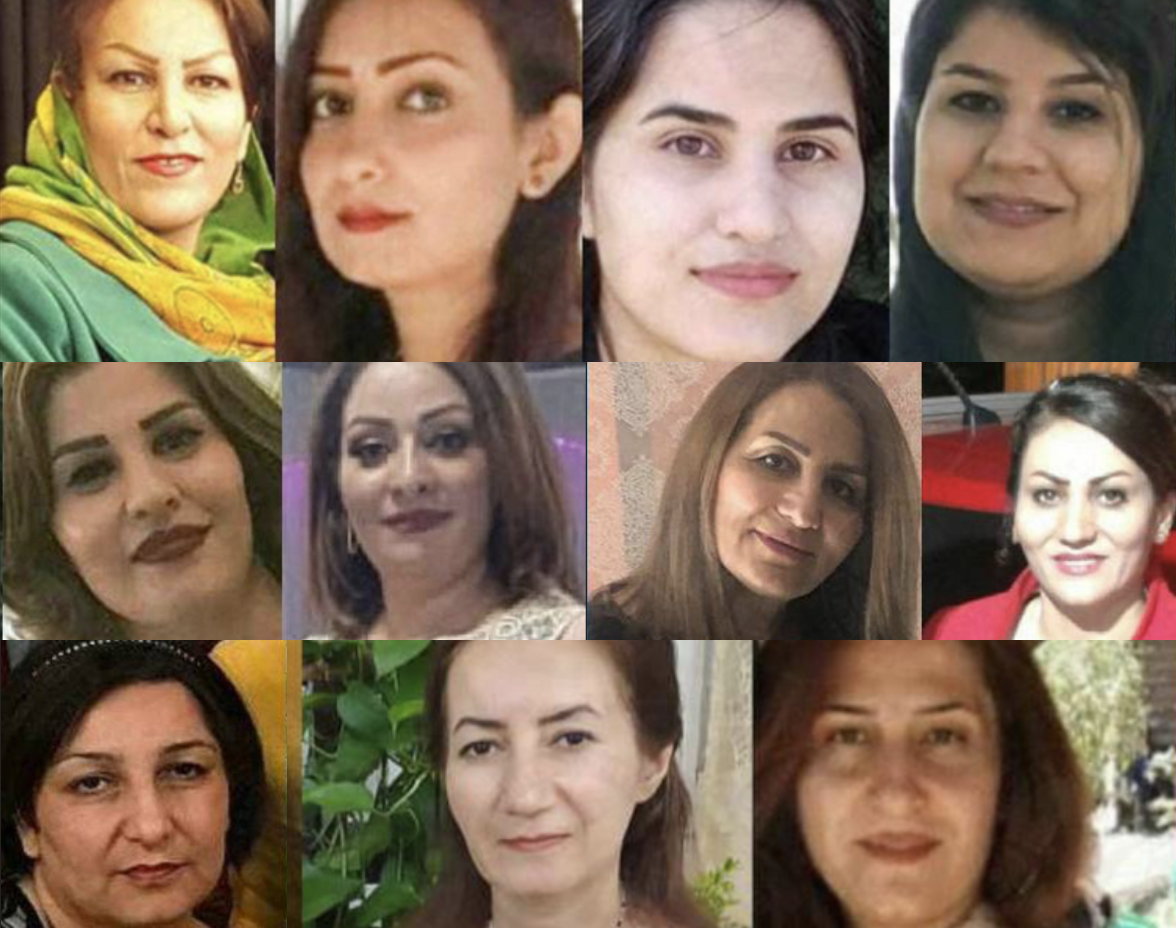
On Monday and Tuesday of this week, the remaining six of the 11 Baha’i women arrested in Baharestan, Isfahan, were released on bail from Dolatabad Prison.

According to HRANA, the news agency of Human Rights Activists, on May 22,  Nooshin Hemmat, Shurangiz Bahamin, Sara Shakib, Azita Rezvani, and Sholeh Ashouri were released from Dolatabad Prison. The following day, Mojgan Pourshafie, the last of the 11 women, was released as well.

More than 300,000 Baha’is live in Iran, unofficial sources say, but the Iranian constitution recognizes only Islam, Christianity, Judaism, and Zoroastrianism. Because their faith is not considered legitimate by authorities, the rights of Baha’is in Iran have been systematically violated for years.

This deprivation of the freedom to practice their religion is a violation of Article 18 of the Universal Declaration of Human Rights, and Article 18 of the International Covenant on Civil and Political Rights.

The United Nations covenant holds that every person has the right to freedom of religion, freedom of converting religion, as well as freedom of expression, individually or collectively; openly or secretly.

Mojgan Kavousi Finishes 9th Day of Hunger Strike in Evin Prison

Yesterday, May 24, was the ninth consecutive day of hunger strike for political prisoner Mojgan Kavousi.

According to HRANA, the news agency of Human Rights Activists, Kavousi has been on hunger strike since May 16 in protest of prison officials’ arbitrary behavior sending prisoners on leave during the outbreak of COVID-19.

45-year-old Kavousi is the daughter of Akbar and mother of two girls. Ms. Kavousi is a researcher, translator, and follower of the Yarsan faith.

The activist was arrested by security forces at her home in Nowshahr during the nationwide November Protests of 2019. She was released on a bail and later  sentenced to two years in prison on charges of “inciting the people to disrupt the order and security of the country”.  Ms. Kavousi was banned from leaving the country in September 2019, according to the Nowshahr Intelligence Office.

In May 2020, Kavousi was summoned to the women’s ward of Evin Prison to serve out her sentence, where she has been held since. Kavousi suffers from gastrointestinal disease, hemorrhoids, and cardiac arrhythmias. Given her previous conditions, a hunger strike of this duration could cause permanent damage.

Female Prisoner Kobra Fatemi Executed in Yazd Prison Under Qisas (Eye-for-an-Eye) Principle of Shariah Law

On May 23, Kobra Fatemi was executed in Yazd Prison on a charge of murder under the Qisas (loosely translated as “eye for an eye”) principle of Shariah Law.

According to HRANA, the news agency of Human Rights Acvitists, quoting Iran Human Rights (IHR),  41-year-old Fatemi had been in prison since 2015 for the murder of her husband.

Based on the report, an informed source stated: “The victim’s family were going to grant forgiveness but the victim’s paternal uncle, who is a member of the Islamic Revolutionary Guards Corps, insisted that the sentence be carried out and refused diya (blood money) on behalf of the victim’s family.”

“Kobra Fatemi had been married for three years and did not have any children,”  the source added. “Family disputes led her to the murder of her husband,”

According to international organizations, Iran ranks first in the world in citizen executions per-capita. The Statistics and Publication Center of the Human Rights Activists in Iran (HRAI) reported that between January 1st and  December 20th of 2020, at least 236 citizens were executed. One of these citizens was executed publicly, and two were juvenile offenders. An additional 95 citizens were sentenced to death.

The report states that more than 72% of executions in Iran are not reported by the government or the judiciary. Human rights organizations call these “secret executions.”

At the time of writing, her execution has not been reported by domestic media or officials in Iran

Narges Mohammadi Sentenced to 30 Additional Months in Prison, Flogging, and Fines

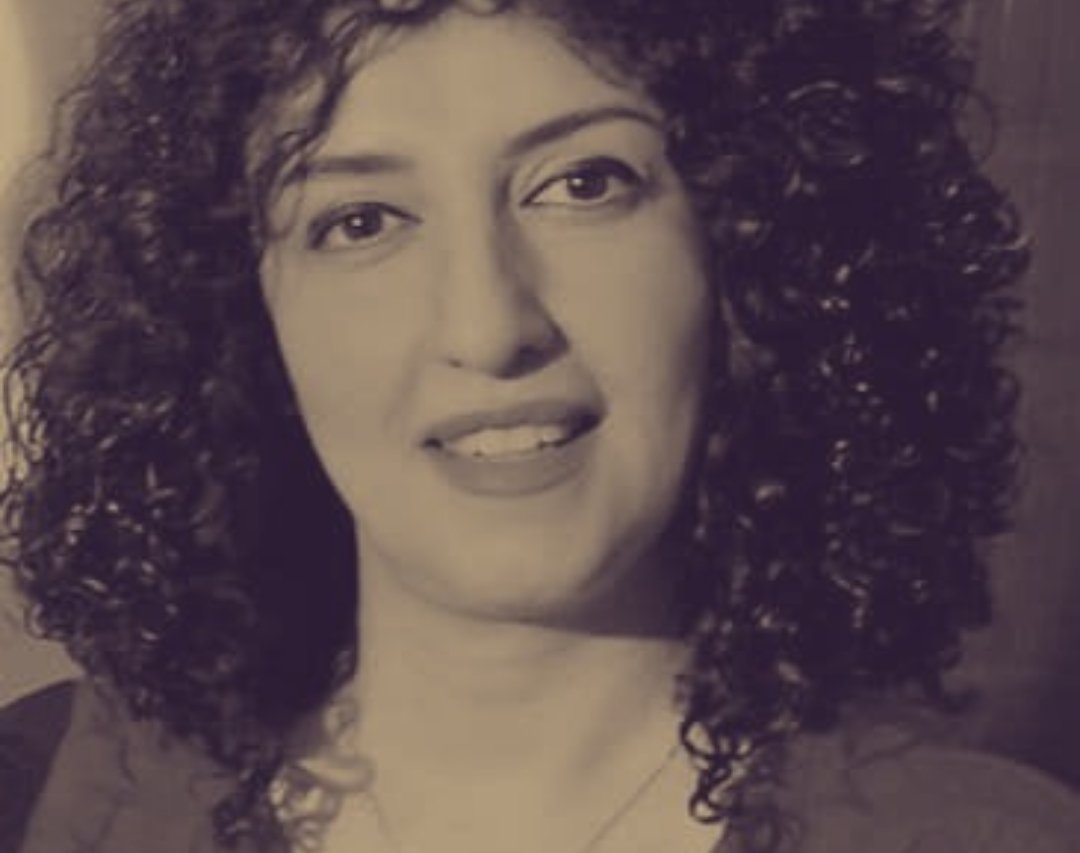
On May 19, less than a year after completing a five year sentence and being released from Zanjan Prison, human rights activist Narges Mohammadi was sentenced by Branch 1177 of the Criminal Court in the Quds Judicial Complex in Tehran to 30 more months in prison, 80 lashes, and two fines.

In March, HRANA, the news agency of Human Rights Activists, reported that Narges Mohammadi had published an open letter in response to her latest summons to the Evin Courthouse.

“I have not attended any hearing,” Mohammadi said in the letter. “I will not accept the verdict issued by the court and I definitely will disobey.”

According to HRANA, Mohammadi is facing a slew of protest-related charges, including “Propaganda activities against the Islamic Republic of Iran through the issuance of a statement against the death penalty”,  “Sit-down strike in the prison office”, “Breaking glass”, “Libel and assault”, and “Rebelling against the prison administration who asked to end the sit-down strike”.

In December 2019, Mohammadi and seven other political prisoners in the women’s ward of Evin Prison announced in a letter that they would go on a sit-down strike in support of bereaved families who lost loved ones in November 2019 national protests. Evin Prison officials threatened to deport Mohammadi and others who participated in the strike to prisons known for their harsher conditions. She was transferred from Evin Prison to Zanjan Prison in December 2019.

After five years and six months in prison, Narges Mohammadi was finally released from Zanjan in October 2020. Mohammadi has since been denied a passport and barred from leaving the country to visit her husband and children even though her previous conviction did not mention a supplementary ban on international travel.

Whether Mohammadi’s latest sentence is carried out given her refusal to accept the charges remains to be seen.

Subscribe to Our Newsletter

Now is definitely not the time to stop reading!

Baha’i Women of Baharestan: Sanaz Rasteh and Firoozeh Rastinejad are Temporarily Released, 6 Others Still in Detention

On May 20, Baha’i citizens Sanaz Rasteh and Firoozeh Rastinejad were released on bail from Dolatabad Prison in Isfahan after their arrest in Baharestan.

According to HRANA, the news agency of Human Rights Activists, 11 Baha’i women, including Rasteh and Rastinejad, were detained by security forces on April 25, April 30, and May 5.

Three of the detained women (Roya Azad Khosh, Nasrin Khademi, and Maryam Khorsandi) were released on bail earlier this week, while six others (Shurangiz Bahamin, Sara Shakib, Azita Rezvani, Mojgan Pourshafi, Noushin Hemmat, and Shola Ashouri) are still in the detention center.

In recent months, the homes of at least 29 Baha’i families have been searched by security forces. During the searches, belongings have been confiscated and, reportedly, in a few cases residents have been beaten.

According to unofficial sources, more than 300,000 Baha’is live in Iran, but the Iranian constitution recognizes only Islam, Christianity, Judaism, and Zoroastrianism. Because their faith is not considered legitimate by authorities, the rights of Baha’is in Iran have been systematically violated for years.

This deprivation of the freedom to practice their religion is a violation of Article 18 of the Universal Declaration of Human Rights, and Article 18 of the International Covenant on Civil and Political Rights. The United Nations covenant holds that every person has the right to freedom of religion, freedom of converting religion, as well as freedom of expression, individually or collectively; openly or secretly.

Saba Kord Afshari Gives Statement Upon End of Hunger Strike

Saba Kord Afshari, an activist imprisoned in Qarchak Prison in Varamin, has given a statement since ending her hunger strike on May 17.

According to HRANA, the news agency of Human Rights Activists, 22-year-old Kord Afshari had been on a hunger strike since May 8 to protest the increasing pressure on her family and family of fellow political prisoners, and to demand the release of her mother, Raheleh Ahmadi.

Kord Afshari has written a letter explaining her physical condition and the reasons why she ended the strike. Below is the full letter, which was provided to HRANA to be published:


” For years, protests and strikes have been answered with beatings and bullets. For years, when we have opened our mouths to talk about the oppression of our rights and beliefs, the only answers we have received have been arrest, solitary confinement, physical and mental torture, imprisonment, and execution.

It has been years of families seeking justice for the murder and imprisonment of their children, and then receiving nothing but the same treatment.

For years [the regime] has been trying to destroy thoughts, reason, and the right to choose. It has tried to spread dogmatism and to turn its people into unquestioning robots.

But they can never inject us with what is in their rusty brains. They cannot impose upon us the ideas that even they themselves do not believe. They treat our raised fists with guns and weapons, and they destroy the pens that express our beliefs and aspirations.

The same goes for prisons. They use a variety of methods to silence the prisoner, whose only tool to fight is hunger strike and sit-down strike. Demands are met with violence.

 You destroyed our bodies and our pens; but how can you destroy the thoughts that we are not afraid to express? The struggle for freedom does not end with pressure or threats, but instead finds a way to prevail in a stormy environment.

On May 8, 2021, I started a hunger strike demanding an end to the pressure on families of political prisoners and the release of my mother, Raheleh Asl Ahmadi; but unfortunately, my physical condition is not good.

I am fully aware that human lives are of no value to the Islamic Republic, so I am ending my hunger strike, but I am still seeking to fulfill my demands.

Oppression has never lasted and it never will.”


Saba Kordafshari / May 17, 2021 / Qarchak prison in Varamin.

Court Trial Held for Baha’i Citizen Kiana Shoaei

The trial of Kiana Shoaei, a Baha’i resident of Shiraz, was held at the Revolutionary Court in Shiraz on May 15.

According to HRANA, the news agency of Human Rights Activists, the trial referred the case to the prosecutor’s office to rectify incomplete documents. Another hearing will be held after the deficiencies are fixed.

Kiana Shoaei was previously summoned to Branch 1 of the Revolutionary Court of Shiraz on May 5. In this citation, she was asked to appear at the branch on the 15th regarding a lawsuit that had been lodged against her for “forming dissident groups with the intention to disrupt the security of the country, membership in dissident groups with the intention of disrupting security, and propaganda against the regime”.

Shoaei had been awaiting trial since 2019,  after being arrested by the Ministry of Intelligence in October and released on bail in November of that year.

According to unofficial sources, it is estimated that more than 300,000 Baha’is live in Iran, but the Iranian constitution recognizes only Islam, Christianity, Judaism, and Zoroastrianism. Because their faith is not considered legitimate by authorities, the rights of Baha’is in Iran have been systematically violated for years.

This deprivation of the freedom to practice their religion is a breach of Article 18 of the Universal Declaration of Human Rights, and Article 18 of the International Covenant on Civil and Political Rights. The United Nations covenant holds that every person has the right to freedom of religion, freedom of converting religion, as well as freedom of expression, individually or collectively; openly or secretly.

Iranian Women Want to Use Motorcycles: Nearly 6000 People Sign Campaign Calling on Parliament to Remove Barriers to Issuance of Licenses

Over the past few days nearly 6,000 people have signed a campaign calling on the speaker and members of Parliament to remove barriers surrounding the issuance of motorcycle licenses to Iranian women.

According to HRANA, the news agency of Human Rights Activists, quoting the Asr-e-Iran, citizens wrote in the statement, “We, the women of this land, demand one of our most basic citizenship rights: the use of vehicles such as motorcycles.”

In light of the staggering increase in car prices in recent years and the inability of many women to afford them,  the petition calls on lawmakers to take appropriate action as soon as possible to oversee the proper implementation of anti-discriminatory laws and regulations.

Years ago, Branch 31 of the Administrative Court of Justice passed a ruling that obligated the NAJA traffic police to “issue motorcycle licenses for qualified women”,  but police appealed the vote on the grounds that, according to Article 20 of the Traffic Violations Law, driver’s license issuance falls under their jurisdiction. In this law, the qualifications for obtaining a license are explained in detail, but there is no mention of gender. So while there is no explicit legal discrimination on the basis of sex,  the very police forces tasked with enforcing the process have a pattern of making it very difficult for women to receive their certification.

The day after a photo of the women riding a motorcycle in Tabriz was published, Masoumeh Ebtekar, Vice President for Women and Family Affairs, put it plainly on her Instagram: “[The motorcycle] is a good vehicle for women as long as safety instructions are followed.”

Unlike driving, motorcycle riding is considered by some conservative Muslims to violate principles of female modesty. The campaign attempts to debunk the notion that Islamic practices are necessarily at odds with women utilizing this convenient and affordable mode of transportation.  The signatories wrote in a statement addressed to the speaker of the Parliament, “In the history of Islam, many chaste women were involved in equestrianism and there was no jurisprudential denial based on this practice.”

It is worth mentioning that this campaign is currently collecting signatures at the site linked below: (https://www.karzar.net/motorcycle-license).

Civil Activist Saba Kord Afshari on Hunger Strike in Qarchak Prison

According to HRANA, the news agency of Human Rights Activists, civil activist Saba Kord Afshari went on a hunger strike on Saturday, May 8th.

22-year-old Kord Afshari, currently imprisoned in Qarchak Prison in Varamin, went on said strike to protest the increasing pressure on her family and other political prisoners in the aftermath of her public criticism of the compulsory hijab.

Kord Afshari demands the release of her mother, Raheleh Ahmadi, who was sent to Evin Prison for giving information about her daughter’s [Saba’s] living conditions in Qarchak.

While in Evin Prison, Raheleh Ahmadi developed a ruptured disc which relegated her to a walker, likely due to chronic stress after her daughter’s imprisonment. Ahmadi was granted medical leave on bail on March 14th, but was denied by prison authorities the two-month recovery period recommended for her surgery.

On April 3, 2021, Saba Kord Afshari was granted a short-term leave on a bail and returned to prison on April 10. On that same day, Ahmadi was returned to Evin Prison.

Kord Afshari’s embroilment in the penal system has been ongoing . In February 2019,  the young activist was released from the women’s ward of Evin Prison from her previous conviction. In June 2019, she was again detained by security forces and was later transferred to prison after interrogations.

In August 2019, Branch 26 of the Revolutionary Court of Tehran, presided over by Judge Iman Afshari, sentenced Saba to 15 years imprisonment on the charge of “spreading depravity by uncovering a hijab and walking without a hijab”; 1 year and 6 months in prison on the charge of “Propaganda against the regime;” and 7 years and 6 months in prison for “Gathering and colluding with the intention of committing a crime against the security of the country”– a total of 24 years in prison along with other social deprivations.

Due to the multiplicity of offenses and previous criminal record, each of the charged sentences were cumulative, of which 15 years in prison was enforceable.

With a correction of judicial misconduct that had caused two and half times to increase in the sentences, and with punishment reduction law, 7 years and 6 months imprisonment will be enforceable.

Saba Kord Afshari has suffered from gastrointestinal bleeding several times before. This, along with the hunger strike has raised concerns about her health among her family members.