Human Rights Activists News Agency (HRANA)- A prisoner in his eighth year of a 30-year sentence is in urgent need of medical care.
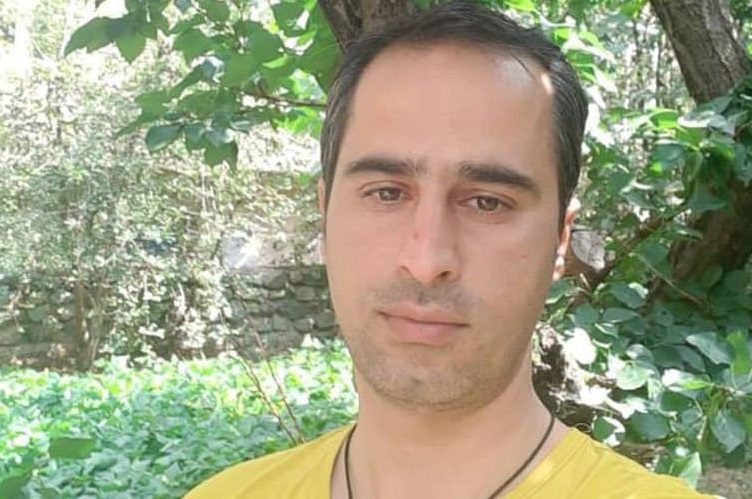
Evin prisoner Motaleb Ahmadian, 31, suffers from orchitis [infection and inflammation of the testes]. The infection recently spread to his bladder, a close source revealed, adding that the diagnosis was confirmed during ultrasonography tests Ahmadian underwent while on transfer to Telaghani hospital. His illness requires treatments that would drain excess fluid from the infection sites; uncontrolled, an infection of this type could lead to cancer. He is currently on the prison doctor’s waiting list for a medical transfer to undergo surgery, which he must pay out of his own pocket at an estimated 20 million tomans [approximately $1,500 USD].
Ahmadian was convicted on multiple counts: Moharebeh [enmity against God] through membership in a Kurdish opposition group; illegal entry into the country while armed and supporting a military group; and aiding and abetting murder. The charges stem from armed clashes in Saghez in 2010 that resulted in the death of a policeman and a civilian.
In August 2018, Branch 1 of Kurdistan provincial criminal court sentenced Ahmadian to eight years in prison for “aiding and abetting murder” and ordered him to pay half of the murder victims’ “blood money” [a designated sum owed to the families of homicide victims]. He was given an additional year and fined 20 million tomans [approximately $1,500] USD] on assault charges. Initially ordered to serve his sentence in exile in the southern city of Minab, he was instead transferred from Sanandaj to Tehran’s Evin Prison for reasons that were not disclosed.
Ahmadian, a Baneh native, was originally arrested October 5, 2010, after which he spent 230 days in solitary confinement. On May 3, 201,6 he was transferred to Saghez Prison after another prisoner made statements linking him to a weapon that was found there. This charge held water for some time, despite the material implausibility of smuggling a weapon from Sanandaj, where Ahmadian was held, to Saghez, more than 120 miles away. He was eventually acquitted and transferred back to Sanandaj.
Further back, Ahmadian was fined 100,000 tomans [approximately $300 USD] and sentenced to a year in prison for illegal border crossings in 2008 and 2011.
Saghez, Sanandaj, and Baneh are located in the province of Kurdistan on Iran’s border with Iraq. It is home to Iran’s Kurdish minority.
Category: Prisoners
Internal Prisoner Transfer Leads to Bloody Brawl in Rajai Shahr
Human Rights Activists News Agency (HRANA)- On Monday, October 22, 2018, a bloody brawl that broke out in Rajai Shahr Prison led to the hospitalization of two prisoners who sustained serious injuries.
The victims were identified as Amir Akbari and Moslem Karimpour, both from hall 19 of Ward 7, and both incarcerated on murder charges.
Akbari suffered from massive blood loss after sustaining multiple lacerations with a sharp object and slipped into critical condition when his transfer to the hospital was delayed. Karimpour returned to Rajai Shahr on Wednesday, October 24th after getting treatment for wounds sustained his abdomen and chest.
Well aware that ward transfers in Rajai Shahr — primarily a holding facility for violent crimes — have the potential to devolve into violent clashes, authorities there initiated the skirmish when they attempted to transfer Akbari to a different ward. Prison personnel, namely Gholamreza Ziaei, the Rajai Shahr director, and Vali Alimohammadi, president of the prison’s internal affairs, were met with protests from a group of prisoners when they continued to push for the transfer.
Akbari was subsequently transferred to a “suite,” while Ziaei insisted that he intended the transfer to prevent prisoner-on-prisoner violence, citing the example of Vahid Moradi, a prisoner killed in gang conflicts in July of this year. “What happened when Vahid Moradi died?” he reportedly said. “If you die, it’s on me.”
Prison security has been known to fan flames of division among prison gangs by conducting its business with the help of incarcerated violent offenders. Such meddling by security personnel was reportedly a factor in Moradi’s death.
A notorious point of exile for political and common criminals, Rajai Shahr’s reputation precedes it as one of the most cutthroat environments for prisoners in Iran. Human rights organizations have published numerous reports of Rajai Shahr managers’ misconduct, including arbitrary and inhumane punishments, participation in organized crime, mafia activity, and smuggling, and the premeditated murders of prisoners.
HRANA reports indicate that Gholamreza Ziaei and Vali Alimohammadi are the most oft-cited and seasoned perpetrators of human rights violations in Rajai Shahr. Valimohammadi, who is also the Ward-4 Warden, is reportedly in cahoots with prison gangs facilitating intra-prison drug trafficking.
Ziaei headed the Kahrizak camp, where several political prisoners were tortured and killed during his tenure.
Earlier this year, the US Department of the Treasury designated Gholamreza Ziaei as an individual “acting on behalf of the Government of Iran who is responsible for or complicit in, or responsible for ordering, controlling, or otherwise directing, the commission of serious human rights abuses against persons in Iran or Iranian citizens or residents.”
Karaj is located 30 miles west of Tehran and is the capital of Alborz province.
Canadian Resident Saeed Malekpour Transferred to Hospital After Heart Attack
Human Rights Activist News Agency (HRANA) – Evin Prison approved the transfer of prisoner Saeed Malekpour to the cardiology department of Taleqani Hospital last week after he suffered from a heart attack.
A Canadian resident and alumna of the elite Sharif University in Tehran, Malekpour has a growing list of medical complaints that authorities have ignored over the course of 10 years of imprisonment. His requests for medical treatment and furlough have repeatedly been denied.
Now, photographs taken during his recent hospitalization show a worrying mass on Malekpour’s right knee, MRI results on which are pending. Malekpour has also developed kidney stones and prostate issues during his time behind bars.
With an arm and a leg uncomfortably restrained to the gurney, his sister Maryam told HRANA that Malekpour had trouble getting restorative sleep during his three-day stay. Sources indicate he was banned from hospital visits and subjected to mistreatment by security forces.
In 2008, the Cyber Unit of the Islamic Revolutionary Guard Corps (IRGC), accusing Malekpour of managing Persian-language pornographic websites, arrested him during a trip to Iran to see family. Branch 28 of Tehran’s Revolutionary Court sentenced him to death plus seven and a half years in prison, on counts of “propaganda against the regime,” “blasphemy,” “insulting the Supreme Leader,” “insulting the president,” “contacting opposition groups” and “corruption on earth.”
Malekpour’s death penalty sentence, though confirmed by the Supreme Court and sent to the Enforcement Department, was eventually reduced to a life sentence. Throughout his legal proceedings, Malekpour has insisted that case analysis by a computer and internet expert would absolve him of the aforementioned charges.
In a letter written from prison, Malekpour said he was previously isolated in solitary confinement for 320 days, during which time he was subject to torture, and given only a Qur’an, a Turbah [prayer clay tablet], and bottle of water.
Malekpour’s family has also borne the pain of his legal ordeal. Promising him that it would facilitate a bail release, authorities coerced Malekpour to provide a taped confession which was televised shortly after his father’s death in 2009. Malekpour learned of his father’s passing in a five-minute phone call 40 days after the fact.
Still no Answers for Sequestered Baha’is of Karaj
Human Rights Activist News Agency (HRANA) – Thirty days have passed since security forces first swept through Karaj and began arresting its Baha’i residents, sending eight of them to prison after inspections of their homes between September 16th and October 17th.
From the walls of Evin Prison, these eight await definitive answers to why, and for how long, they will have to stay there. They were previously identified as Parvan Manavi, Elham Salmanzadeh, Hooman Khoshnam, Payam Shabani, Peyman Manavi, Maryam Ghaffarmanesh, Jamileh Pakrou (Mohammad Hossein) and Kianoush Salmanzadeh.
“The Baha’i detainees said over the phone that they had been transferred to Evin Prison […],” an informed source told HRANA. “Despite inquiries from their families, no information is currently available regarding their status.”
Parvan Manavi and Elham Salmanzadeh became the seventh and eighth Baha’is to be arrested in Karaj after authorities confiscated some of their books and personal belongings during a raid of their homes Tuesday, October 16th. Khoshnam and Shabani were arrested on September 25th and 26th of this year, and Peyman Manavi, Kianoush Salmanzadeh, Ghafarmanesh, and Pakrou were arrested September 16th.
The threat of arbitrary detainment loomed larger than ever over Iran’s Baha’i religious minority this past month, as Iran’s security and judiciary establishment whisked away a number of its members in a surge of arrests that has yet to be explained. HRANA also reported on the arrests of Baha’i citizens in the central cities of Shiraz and Isfahan over this time period.
Iranian Baha’i citizens are systematically deprived of religious freedoms, while according to Article 18 of the Universal Declaration of Human Rights and Article 18 of the International Covenant on Civil and Political Rights, everyone is entitled to freedom of religion and belief, and the right to adopt and manifest the religion of their choice, be it individually, in groups, in public, or in private.
Based on unofficial sources, more than 300,000 Baha’is live in Iran. Iran’s constitution, however, recognizes only Islam, Christianity, Judaism, and Zoroastrianism, and does not acknowledge the Baha’i faith as an official religion. Consequently, the rights of Baha’is are systematically violated in Iran.
Open Letter: Atena Daemi Lauds the Emotional Labor of Iranian Mothers
Human Rights Activist News Agency (HRANA) – Atena Daemi, a civil rights activist imprisoned since October 21, 2014, has written an open letter to her mother marking her fourth year of incarceration.
In the note, Daemi describes the difficulties endured by her family — particularly her mother — who she characterizes as one of her most important sources of strength in recent years.
With fellow political prisoners Maryam Akbari Monfared and Golrokh Iraee, Daemi was punished October 3rd with a three-week ban on family visits, per verbal orders from the Women’s Warden at Evin. All three were told the ban served to punish them for refusing an unlawful interrogation this past September.
HRANA has translated the full text of Daemi’s letter below:
Four years ago to this day, I was on my way to work on a cold autumn morning. You had gone to buy fresh bread for us. I was running late, so I didn’t get to see you before dad and I left the house. Before we could reach the end of the alley, they blocked our way, arrested me, put me in another car, and returned to the house with dad, all 11 of them. I don’t know how you reacted when you saw them. After an hour, they brought me back home. I was shocked to see you. I was shocked by your screams at the agents.
“Go on and take my daughter too. You took all of these young people – and how far did that get you? You know what? Go ahead and kill my daughter too. You killed Sattar Beheshti [a blogger who died in prison in 2012] and all those other young people. And what came of it?”
They threatened to detain you too, and you shot back, “Take me! You’ve outdone yourselves putting mothers behind bars and bereaving them.”
I thought you would be scared, but you weren’t; I thought you would blame and reproach me, but you didn’t. In our own language, you told me to go– that this would be the first night I would spend away from home, but that you were still behind me, still with me, and that one day no child would be separated from their mother. That lifted a weight off my shoulders; it felt as though you had given me wings. I went, but you never left me for a moment; we were bonded more than ever, together, united.
I remember your face that day in the Revolutionary Court when I was sentenced to 14 years in prison. Giddily and sarcastically, you quipped, “14 years is nothing– we expected the death penalty!” I know you felt a quiver of fear, but you didn’t show it. Sixteen months later, I returned home and you were in good spirits, though you knew I wouldn’t be staying long. They came back for me nine months later. You weren’t in Tehran then. I called you to let you know they were taking me. You told me to put you on speakerphone so that they could hear you. You were screaming “What do you want from our children? What have they done? What did they ever ask of you? The day will come when us mothers will hold you accountable…”
After I went, they opened cases against your other two daughters, convicting them. You laughed and said that we should ask them to set up a family suite in the prison that would house us all!
I went on hunger strike. I will not forget the concern in your eyes, but your words, filled with hope and promise, only made me more steadfast. Your daughters were acquitted, and I stayed. They filed new cases and lawsuits against me, one after the other. Then, they dragged me to Gharchak Prison, beating me and insulting me. That following Thursday I called home. You were happy to hear my voice and asked how the prison administrators had come to be so charitable on a Thursday [the beginning of the weekend in Iran].
I laughed and said, “I’m calling you from Gharchak Prison.” You replied that it was only right that I see the women held in Gharchak as well. “Let’s see how far they want to go!” you said.
When I contacted you a few days later, you did not answer. I was told that you went to the Prosecutor’s office to see about my case. The more time passed without any news from you, the more worried I became. You finally replied after 7 p.m. and told me that they had detained you along with Hanieh [my sister]. You told me how they beat you both and shocked you with stun guns. My body trembled at that thought.
You told me they shocked your leg when you refused to get into their car. You said it didn’t hurt, that it felt like stinging nettles. I was trembling with anger, but you were laughing and said that you didn’t back down and gave them a piece of your mind.
My phone rights and visits were cut.
Then came your little girl’s wedding day– my sister Hanieh was getting married…
They did not let me go on furlough to come to the wedding. You came to visit me in Gharchak. Hanieh was restless but you calmed her down, telling her not to cry but to laugh and be joyous so that the authorities wouldn’t get the idea that their tactics can break [me]. I remember that you reminded her that Fariba Kamalabadi [Baha’i prisoner of conscience] hadn’t been granted furlough to attend her own daughter’s wedding. You asked me to distribute sweets to my cell and ward mates to celebrate my sister’s wedding inside the prison. What a memorable night that was!
I was returned to Evin Prison. Then we heard news of the execution of Zanyar, Loghman, and Ramin. You went on a hunger strike, wore black, and came to visit me in tears. They had harassed me that day, but the three of us just held hands and sang a song for our fallen brothers. Again, they cut me off from family visits.
Mother, would you look at how pathetic and short-sighted they are? When Zanyar Moradi hadn’t seen his mother in nine years when he was killed, and they think they’re going to break me by withholding my visiting rights for a while? The pain of mothers never ends. If they think they can reform us, silence us, or make us remorseful with such childish measures, they are sorely mistaken. We won’t be disciplined; rather, we will carry on with more resolve than before.
It has been three weeks since we last saw each other. You’ve gone to visit with Ramin’s mother, Zanyar and Loghman’s families, and the family of Sharif, who died in the fire[Kurdish activist who died fighting wildfires in western Iran]. You visited Narges [Mohammadi] and the family of Homa [Soltanpour]. While we haven’t seen each other, you have embraced the pains and sorrows of fellow mothers.
Send my regards to all the mourning and bereaved mothers of Iran and tell them I shall call for justice for them as long as I live!
Atena Daemi
October 21, 2019
Evin Prison
___________________________________________________________________________
After her arrest on October 21, 2014, Atena Daemi spent 86 days in solitary confinement before being transferred to the Women’s Ward of Evin prison. In May 2015, Judge Moghiseh of Revolutionary Court Branch 28 sentenced her to 14 years’ imprisonment on charges of assembly and collusion against national security, propaganda against the regime, and insulting the supreme leader. She was released February 2017 on 5.5 billion IRR [approximately $140,000 USD] bail. Her sentence was then reduced to seven years on appeal. She was detained November 26, 2016 to serve her sentence, which since been reduced to five years.
Tyranny on Prisoners of Conscience at Rajai Shahr
Human Rights Activists News Agency (HRANA)- This past August, Rajai Shahr Prison authorities ordered the transfer of political prisoners to Ward 10, where prisoners’ already-tight rations on climate control, fresh air, and nutrition have reportedly been cut even slimmer.
It is a running suspicion that prison authorities seek to dismantle the political ward, breaking down these prisoners’ spirits so that they will be more amenable to being dispersed among different wards.
Ward 10 currently houses 18 prisoners charged with political and security-related crimes. Four more political prisoners are being held in lateral sections. Of these 22, seven are in need of medical care.
A cold chill is already creeping through the walls of the hillside prison, boding the incoming flu season from which political prisoners stand unprotected, a close source told HRANA. “The need for heating equipment is felt all across the prison, but on [Prison Head] Gholamreza Ziayi’s orders, the political prisoners can’t have access to heaters. While prisoners pay for heaters out of their own pockets, the director has forbidden their delivery or use in the political ward.” Prison authorities have reportedly even gone as far as banning heaters in common areas that political prisoners might flock to for refuge, i.e. the prison library, gym, or store.
A letter underlining the dire need for climate control addressed to Ziyai from a previous prosecution assistant responsible for overseeing prison affairs, did nothing to change his mind, the source said.
Political prisoners got the brunt of the opposite heat extreme this past summer when they were denied access to any form of a cooling system. While their repeated requests managed to obtain three refrigerators for the ward, Ziyai underlined that they would have access to more equipment and amenities if they requested to be transferred to different wards.
Political detainees have thus far held fast to regulations requiring prisoners charged with different offenses to be housed in separate wards. Their resistance against integrating with prisoners accused of petty theft, drug-related crimes, or violent offenses has contributed to continued daily frictions between authorities and their cohort.
Meanwhile, the assessment of food provided to these political prisoners is even more scathing than the Rajai Shahr usual. Sources say that prisoners eat vegetarian by default, limited to plain rice with soy or lentils at lunchtime. Though the dinner menu promises to be more substantial — bean or lentil stew, or Ash [a thick Iranian soup] — sources say that the dishes hardly live up to their names, and prisoners in the cohort are rarely, if ever, served produce.
Deprivation of fresh air is also being leveraged against them, sources say. The regular 2-to-5:30 recreation period previously enjoyed by political prisoners in mixed groups has been eliminated entirely since their transfer to Ward 10. “Fresh airtime has been denied [to them] on direct orders from Ziayi, despite the fact that the recreation area is empty between 10 a.m. and 2 p.m.”, an anonymous source said.
Warden and Internal Director Vali Ali Mohammadi has abdicated from addressing prisoners’ complaints, stating that he defers to the authority of Ziayi and his secretary/chauffeur. “In other words,” a source said, “the slightest request, like for food or stationary, has to pass by Ziayi and his secretary.”
Though seasoned in-group attrition tactics, authorities at Rajai Shahr have not shied away from more targeted brutality to get their point across. Multiple sources have reported aggressive body searches, harassment and verbal abuse of prisoners’ families, and the placement of arbitrary, extreme restrictions to wear down individual inmates. In one such instance, Supervising Prosecution Assistant Rostami placed a long-term prohibition on visits between Hassan Sadeghi and his imprisoned wife; in another, medical attention to the bone cancer and infected surgery site of Arash Sadeghi were repeatedly postponed and denied. Deprivations like Sadeghi’s may become more widespread: two weeks ago, an official prison order came into effect, invalidating all approved transfers of ailing prisoners to [outside] medical facilities.
The respective situations of a number of Rajai Shahr prisoners of conscience are compiled in the lists below
1. Majid Assadi, accused of assembly and collusion [against national security]. Arrested in 2016, sentenced to 6 years. Anticipated release date: 2021. Has been incarcerated for two years without furlough.
2. Afshin Baimani, accused of Moharebeh [enmity against God] through cooperation with the MEK. Arrested in 2000, sentenced to life. Currently in 18th year of incarceration without furlough.
3. Mohammad Banazadeh Amirkhizi, accused of being a MEK sympathizer, and of assembly and collusion against the regime. Arrested on 2016, sentenced to 11 years. Anticipated release date: 2027. Has been incarcerated for two years without furlough.
4. Ebrahim Firouzi, accused of assembly and collusion and propaganda against the regime. Arrested in 2013, sentenced to 7 years. Anticipated release date: 2019. Currently in 5th year of incarceration without furlough.
5. Abolghassem Fouladvand, accused of Moharebeh through supporting the MEK. Arrested in 2013, sentenced to 15 years. Anticipated release date: 2028. Currently in 5th year of incarceration without furlough.
6. Gol Mohammad Jonbeshi, accused of cooperation with the Taliban. Arrested in 2016, sentenced to 3 years. Anticipated release date: 2019. Currently in 2nd year of incarceration without furlough.
7. Latif Hassani, accused of forming an illegal group to act against national security. Arrested in 2012, sentenced to 8 years. Anticipated release date: 2020.
8. Saeed Massouri, accused of Moharebeh through membership in the MEK. Arrested in 2000, sentenced to life. Currently in 2nd year of incarceration without furlough.
9. Mohammad Ali (Pirouz) Mansouri, accused of Moharebeh through support of the MEK. Arrested on 2007, sentenced to 22 years. Anticipated release date: 2028. Currently in 11th year of incarceration without furlough.
10. Asghar Pashayi, accused of espionage. Arrested in 2008, sentenced to 10 years. Anticipated release date: 2018. Release pending his payment of a fine. Currently in 10th year of incarceration without furlough.
11. Farhang Pourmansouri, accused of hijacking a plane. Arrested in 2000, sentenced to life. Currently in 18th year of incarceration without furlough.
12. Shahram Pourmansouri, accused of hijacking a plane. Arrested in 2000, sentenced to life. Currently in 18th year of incarceration without furlough.
13. Houshang Rezaei, accused of Moharabeh through membership in Komele [Kurdish opposition group]. Arrested in 2010, sentenced to death. Currently in 8th year of incarceration without furlough.
14. Arash Sadeghi, accused of propaganda against the regime, assembly and collusion, insulting the supreme leader, and disseminating lies. Arrested in 2016, sentenced to 11.5 years. Anticipated release date: 2027. Currently in 2nd year of incarceration without furlough.
15. Hassan Sadeghi, accused of Moharebeh through cooperation with the MEK. Arrested in 2013, sentenced to 11.5 years. Anticipated release date: 2028. Currently in 5th year of incarceration without furlough.
16. Hamzeh Savari, accused of moharebeh and acting against national security. Arrested in 2005, sentenced to life. Currently in 13th year of incarceration without furlough.
17. Payam Shakiba, accused of assembly and collusion against national security and propaganda against the regime. Arrested in 2016, sentenced to 11 years. Anticipated release date: 2027. Currently in 2nd year of incarceration without furlough.
18. Saeed Shirzad, accused of assembly and collusion against national security, damaging prison property, and disrupting prison order. Arrested in 2014, sentenced to 6.5 years. Anticipated release date: 2020. Currently in 4th year of incarceration without furlough.
Baha’is incarcerated in Ward 11:
1. Vahed Kholousi, accused of assembly and collusion against national security, Baha’i membership, activism, and proselytizing, propaganda against the regime, and activism in defense of Baha’i student rights. Arrested in 2015, sentenced to 5 years. Anticipated release date: 2020. Currently in 3rd year of incarceration without furlough.
2. Afshin Seyyed Ahmad, accused of assembly and collusion and propaganda against the regime. Arrested in 2016, sentenced to 3 years. Anticipated release date: 2019. Currently in 2nd year of incarceration without furlough.
3. Farhad Fahandoj, accused of Baha’i proselytizing and involvement in Baha’i associations. Arrested in 2012, sentenced to 10 years. Anticipated release date: 2022. Currently in 6th year of incarceration without furlough.
4. Afif Naimi, accused of assembly and collusion, blasphemy, and propaganda against the regime. Arrested in 2008, sentenced to 10 years. Anticipated release date: 2018.
Ailing prisoners deprived of medical care:
1. Majid Assadi: gastrointestinal disease, duodenal ulcers
2. Shahram Pourmansouri: herniated disc, syringomyelia requiring immediate surgery (per doctor)
3. Mohammad Banazadeh Amir Khizi: joint pain
4. Hassan Sadeghi: joint pain
5. Aboulghassem Fouldadvand: arterial plaque requiring hospitalization (per doctor)
6. Arash Sadeghi: chondrosarcoma, surgical site infection in the right arm
7. Saeed Shirzad: herniated disk, lower back spasm
Ardabil Prisoner Hanged to Death
Human Rights Activist News Agency (HRANA) – Twenty-seven-year-old Meysam Saber, a prisoner in the Health Ward of Ardabil Prison, was executed in the early morning hours of Sunday, October 21, 2018.
Saber had been detained on murder charges since 2013. He was reportedly transferred to solitary confinement on the eve of his execution.
Saber was the subject of a HRANA report on prisoner abuse last year when he was chained to the bars of the Quarantine Ward for 24 straight hours for complaining about mistreatment by prison guards.
By carrying out Saber’s hanging in silence, authorities — particularly the Judiciary — demonstrate a continued pattern of obfuscation on the topic of prisoner sentencing and executions, in spite of their responsibilities of informing the public.
According to Amnesty International’s annual report, Iran ranks first in the world in executions per capita. On the World Day against the Death Penalty (October 10th), the Center of Statistics at Human Rights Activists in Iran (HRAI) published its annual report, indicating that at least 256 citizens were executed in Iran between October 10, 2017, and October 9, 2018, 15 of which were public hangings. Sixty-eight percent of executions, referred to as “secret executions,” are not announced by the state or Judiciary.
Urmia Prisoners of Conscience End Weeklong Hunger Strike
Human Rights Activist News Agency (HRANA) – A mass hunger strike of Urmia Central prisoners of conscience ended on its fifth day after prison authorities engaged to addressing prisoner complaints of rampant abuse.
Strikes were underway as of October 16th, when prisoners launched a protest against a violent raid of the Political Ward (Ward 12) by special forces that left a number of prisoners wounded.
Divided between Ward 12 and the Youth Ward’s prisoners of conscience, protesters declared that the restoration of their legal rights would put an end to the strike.
In a recently-issued statement, strikers asked inmates’ families to appear at the front gate of Urmia Central on October 21st to demand justice for those inside. The statement impelled the head of the prison to invite groups of strikers for a sit-down in the prosecutor’s’ office– an invitation they declined, a close source said.
During the hunger strike, at least one prisoner, Habib Amini, was sent to the prison clinic for treatment following a decline in his health.
Below is a translation of the aforementioned statement. Its signatories asked to remain anonymous. :
“Pursuant to the hunger strike of political prisoners and prisoners of conscience at Urmia Central Prison that began October 16, 2018, the families of these and other prisoners are asked to appear before the Central Prison of Urmia on Sunday, October 21st to demand restoration of the legal and Shari’a-granted rights of their children, in a show of support for their legal and judicial demands.
This protest is a declaration of dissent with the extraordinary oppression and discrimination faced by prisoners and their families in this city. In a state of material and psychological insecurity, prisoners here live under surmounting pressures. We hope that officials have the compassion to reduce this targeted oppression.
Finally, we ask that all sensible minds be moved by this news, and react with the same power they displayed over the three recently executed Kurdish political prisoners and the missile offensive on Kurdistan.”
*
The Ward-12 raid occurred on the evening of October 15th, when political prisoners came to the defense of one of their comrades who had been physically assaulted for arguing with prison personnel. In response to their objections, authorities and special forces, numbering more than 50 and armed with with batons, tasers, and tear gas, stormed the political ward and laid into the inmates there. That same night, authorities assaulted and injured a number of prisoners of conscience in the Youth Ward.
Kamal Hassan Ramazan, Ahmad Tamooie, Osman Mostafapour, and Touraj Esmaili were among the first prisoners beaten in response to their objections of a group assault on their wardmate Hamid Rahimi. Personnel identified only as “Eskandar” and “Rezaie” reportedly commandeered additional Urmia prisoners to deal blows to the four men, breaking bones and teeth, and cutting one of them with a sharp object.
Ramezan, Tamoo’i, Mostafapoor, and two more Ward-12 bystanders, Hassan Rastegari and Kamran Darvishi, were among those injured in the onslaught that followed. The latter two were transferred to solitary confinement; Rastegari has since been returned to Ward 12. “Hassan Rastegari was badly bruised all over,” the source said, adding that prison authorities then sicced fellow prisoners on political detainees for a second time.
Urmia Central Prison authorities have a history of ruling my corporal punishment. On October 8, 2018, prisoner Morteza Zohrali’s right arm was broken in a beating by prison officials; On September 23rd, Youth Ward inmate Javad “Arash” Shirzad was sent to an outside hospital for treatment of a concussion sustained at the hands of “Bayramzadeh,” the prison’s internal director; in July, Saeed Seyed Abbasi was beaten and sent to solitary confinement without treatment of his injuries, all for arriving late to the prison yard for recreation time; and in May, according to HRANA reports, prisoner Saeed Nouri, a former IRGC lieutenant, was beaten by two personnel in the internal director’s office.
Reports indicate that political prisoners and other prisoners of conscience are more vulnerable than others to the gamut of inmate abuses. HRANA previously reported on a September 18th raid on Ward 12 by special forces, where guards pilfered and destroyed the prisoners’ personal belongings, including food they had purchased themselves.
Zahedan Prisoner Attempts Pill Overdose
Human Rights Activists News Agency (HRANA)- On the morning of October 20, 2018, Zahedan prisoner Saeed Baravi, 26, attempted a pill overdose after authorities refused to address alleged mistreatment of his family by Zahedan personnel.
An unconscious Baravi was transferred to the prison clinic after ingesting the pills.
An informed source told HRANA that Baravi’s family had been met with verbal aggression when they pressed the supervising judge for an update on his request for furlough.
“The judge’s secretary Mr. Nouri insulted the family and had them removed from the office,” the source said. “Mr. Baravi then met with Mr. Khosravi, the Zahedan prison director, to deliver a letter objecting to the secretary’s conduct.”
Baravi has been serving a 15-year sentence on drug-related charges since 2016.
Multiple inmate suicides have been attributed to Zahedan prison’s oppressive and unhygienic living conditions, not least of which include patterns of abuse and neglect by prison authorities. Anguished by authorities’ continued neglect of his case, death-row prisoner Saeed Saberi completed suicide by pill overdose in mid-August of this year when he saw his name removed from a list of prisoners scheduled for a sit-down with the prison prosecutor. On August 5th, 42-year-old Mansour Mohammad Zehi, also on death row, took his own life by swallowing razor blades, having claimed that prison personnel had confiscated his dieh, or “blood money” [a price set by families of murder victims by which some defendants can buy their way out of a death sentence]. In May, HRANA reported on the suicide of Mehdi Kouhkan, who had reportedly been distressed by a transfer order to the quarantine section.
Zahedan Prison is located on the southeastern border city of Zahedan.
Bandar Abbas Authorities Break Fingers of Prisoner Pleading for Furlough
Human Rights Activists News Agency (HRANA)- A Bandar Abbas prisoner has been held in a solitary cell incommunicado since authorities assaulted him October 11, 2018, breaking two fingers on his right hand.
Prison authorities reportedly struck the victim Mohammad Hajizadeh after his visit to the prison social assistance office, where he was protesting the prison’s continued denial of his furlough requests.
A close source told HRANA that Hajizadeh was still yowling in pain long after the assault, adding that his transfer to solitary confinement was likely the prison’s way of blocking attempts to obtain any evidence of the injury that could substantiate a formal complaint.
Hajizadeh, 41, is a married father of one. He has been serving a prison sentence on drug-related charges since 2016.
Iranian President Hassan Rouhani has sloganeered against civil rights repressions, publishing a Civil Rights Charter and verbally pushing for the comprehensive implementation of its provisions. Article 64 of the charter reads, “anyone arrested, convicted, or imprisoned is entitled to their civil rights, including proper nutrition, clothing, health and medical care, educational and cultural services, religious worship and practices.” Thus far, though, Rouhani’s rhetoric has yet to materialize into concrete initiatives.
Bandar Abbas Prison is located in Bandar Abbas on Iran’s southern coast.