Ahwazi Arab Activist Ahmad Neisi Released After Completing Prison Sentence

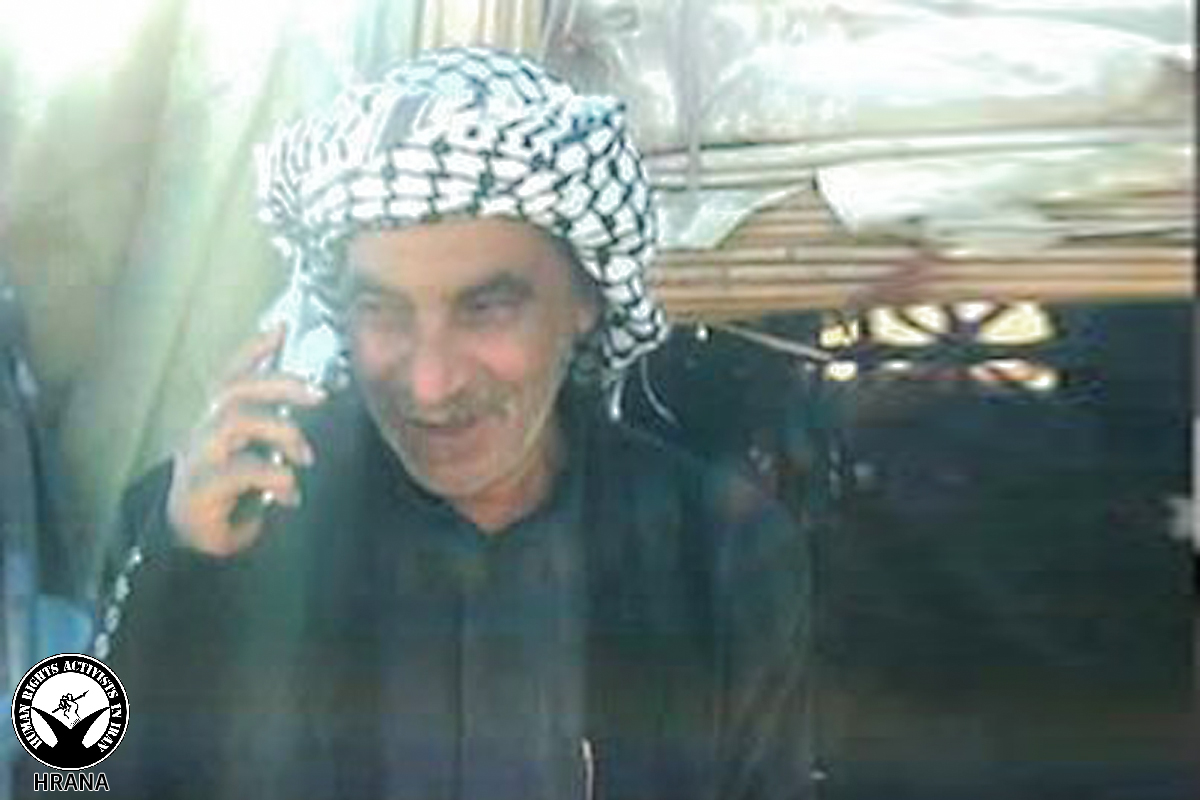
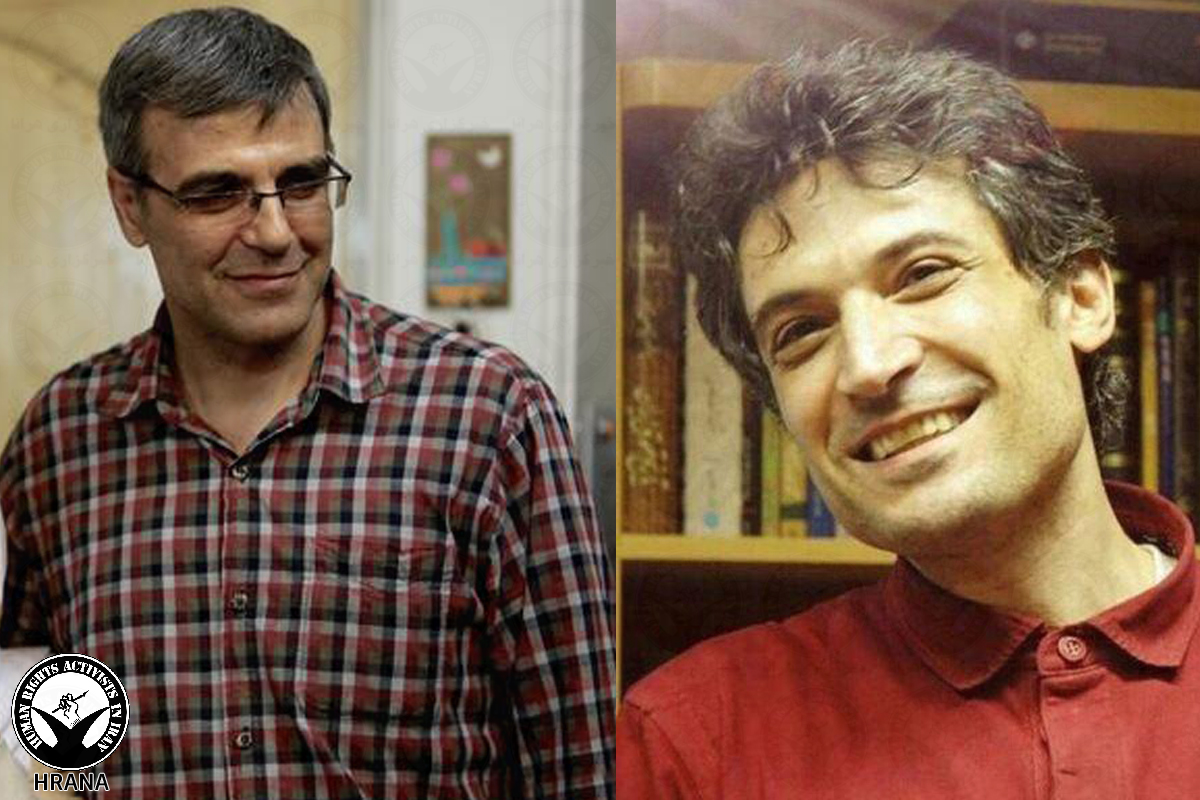
Human Rights Activists News Agency (HRANA) – Ahwazi Arab activist Ahmad Neisi (Tamimi) has completed his two-year prison sentence and was released Tuesday, September 11th from Sheyban Prison in Ahvaz, southwestern Iran.
Neisi, age 32, was among a group of four arrested by Iranian Cyber Police (FATA) in 2016 in Khuzestan province in connection to their social network activity. Along with Taregh Achrash 28, Mohammad Mahavi, 29, and Majed Achrash, 26, he was transferred upon his arrest to Evin Prison in Tehran. All four were transferred to the Ahvaz Sheyban Prison one month later.
Neisi, Achrash, Mahavi, and Achrash’s case was reviewed by Branch 2 of the Ahvaz Revolutionary Court presided by Judge Zare. After four months, they were released on bail of 2,000,000,000 Rials (approximately $15,000 USD).
Shortly afterwards, all four defendants were tried again in the same court on a charge of “acting against national security” for their social network activity, and were each sentenced to a two-year imprisonment. The conviction was upheld in appeals court.
While the conviction was being forwarded to the Enforcement Department, Neisi was unable to post bail in the interim, and turned himself in to Sheyban Prison on August 12th, 2016.

At Home and Abroad, Civil and Union Activists Continue to Rally Behind Detained Teacher Mohammad Habibi

Human Rights Activists News Agency (HRANA)- In the interest of obtaining Mohammad Habibi’s medical treatment and release from detainment, over 1400 Iranian civil and union activists have signed a letter to the attention Iran’s Supreme Leader, as his case steadily gains exposure with syndicates abroad.

Habibi, himself a union activist, educator, and member of the Teachers’ Union Association Board of Directors in the Province of Tehran, is currently serving a 10-year prison sentence ruled Saturday, August 4th in Branch 26 of Tehran Revolutionary Court. In addition to prison time, Habibi’s sentence included a two-years ban on civic activity, a two-year travel ban, and 74 lashings.

Since his detainment, Habibi’s requests for medical furlough have been repeatedly denied. On the one occasion his leave was granted, he was released from Great Tehran Penitentiary, prematurely dismissed from the hospital without receiving treatment, and then transferred to Evin on Monday, September 3, 2018, where he has remained since.

In one letter addressed to Ayatollah Ali Khamenei, the French trade unions SFDT, SGT, FSO, Solidaires, and UNSA called Habibi’s imprisonment a violation of both human rights and the fundamental freedoms of syndicates, and held the Supreme Leader accountable for his fate.

“Prison authorities continue to refuse him the medical treatment he sorely needs. Without proper care, his condition is at risk of rapid decline,” their letter reads. “We mean to impress upon you that as the Supreme Leader of the Islamic Republic of Iran, you are responsible for the life and health of Mohammad Habibi.”

The signatories of the Iranian letter below are currently at 1400 and steadily increasing. Its full text is below, translated into English by HRANA:

“The Noble People of Iran,
Dear Teachers,
Political, Civil, and Union Activists,
Sensible people of the world,

As you know, Mohammad Habibi — member of the board of directors of the Teachers’ Union Association of the Province of Tehran, and protector of the rights of students, retired educators, and currently working teachers– has been subjected to the hostility of authorities and unlawfully detained in the Great Tehran Penitentiary, weakened in body but vigorous in spirit, and was recently sentenced to ten and a half years in prison, a 2-year travel ban, and a 2-year ban on civic activity.

The verdict against this unionist, coupled with the sentences of fellow unionists and political and civil activists, betrays the will to choke freedom of speech with medieval punishments such as lashings, exile, and internment in prisons reminiscent of POW detainment centers– so many efforts to inject fear and trepidation into the civil activist’s drive for justice.

Habibi’s verdict is reminiscent of the heavy sentences imposed on student activists and of the lashes inflicted on Agh Tappeh mine workers, sentences that are the latent dread of every civic society.

These sentences are issued for teachers, workers, students, etc… meanwhile, the thieves, the embezzlers, and the corrupt, in comfort and security, violate and withhold the rights of ordinary people and laborers, continuously lowering the bar on their livelihood.

It is our human duty in such circumstances to raise our collective voice against these cruel punishments, in order to put an end to the imprisonment, flogging, and persecution of sick prisoners.

To intercept a looming human tragedy, the Defense Committee of Mohammad Habibi calls for his immediate medical admission, and with a greater sense of solidarity than ever before will continue to fight for his release as well as the release of other imprisoned teachers.

We call on all free and righteous people to protest the imprisonment and flogging of Mohammad Habibi, and that of other unionists and civil activists, starting with their signature on the “No to Prison and Flogging” petition. Hopefully, this year, Mohammad Habibi’s students will see him again in the classroom, and not behind the bars of a prison.”

****

On May 10, 2018, the Council for Coordination of Teaching Syndicates urged teachers, be they retired or employed, to assemble in protest across the country. In Tehran, several of those who responded to the call were arrested and transferred to Evin Prison; all but Habibi were released on bail three days later.

Mohammad was previously arrested at his workplace on March 3, 2018 and jailed for 44 days in Evin Prison. On April 15, 2018, he was released on a bail of approximately $20000 USD (2.5 Billion Rials) in wait of his trial the following August.

Rajai Shahr Political Prisoners Share Final Memories of Moradis and Hossein Panahi

Human Rights Activists News Agency (HRANA)- Almost one week after the hangings of Loghman Moradi, Zanyar Moradi, and Ramin Hossein Panahi (1), their fellow prisoners have written a letter to condemn their execution and relate the events leading up to it.
Dated Wednesday, September 12th, 2018, the letter was written from the Rajai Shahr Prison grounds in Karaj, on the western outskirts of Tehran, where the men were last known to be held.
The full text of their letter, translated into English by HRANA, is below:
“The tragedy happened Saturday, September 8th. As of Wednesday the 6th, [the mens’] prison visits were stopped, and on different pretexts, their comings and going within the prison, even to the clinic, were restricted. First they called Zanyar, then Loghman, up to the [prison] director’s office. Up to that point, nothing seemed out of ordinary. We paid little attention to the silence of our adjacent ward, which was usually abuzz. Silence meant that inmates there had been denied their courtyard time. Up until 4 p.m. that day, the absence of Zanyar and Loghman did not strike us as abnormal. At 4:30 p.m., though, we started to worry. When looked at all together, the anomalies of that day felt like the pulse of something sinister.
Then we were told that a truck had collided with a telephone cable, resulting in a service outage; a story we had heard before at around the same time a criminal act was about to take place. Hearing it again concerned us even more. Our only hope was that flaws had been found in their case, and that it had just been transferred to the Sanandaj Prosecutor’s Office to assign jurisdiction. In other words, we were clinging to the hope that their criminal case was not yet closed. Little did we know that rulers with snakes on their shoulders (2) were hungry for young brains, and that the court and judiciary of Zahakis are blind to the rule of law and due process.
When the sun sets on a dictatorship, the execution and massacring of prisoners is due course. Such are the workings of fate.
Miserable are those who, in face of these murders, will retreat in fear. Should that happen, the criminals will only gain resolve in their misdeeds. Cowardice conveys to them that the people can, and will, abide crime. Blessed are those who accept Zanyar, Loghman, and Ramin as their own children, children who were hanged in the prime of their youth to uproot the scaffolds and the gallows, to restore a clear skyline for the future.
Us prisoners and co-inmates of the fallen, we brace ourselves for this next, and hopefully last, wave of executions. What greater honor than to be among the last executed, to know that no young people after us will be forced to walk those gallow steps again.
If there were one single reason (although there are many) that this regime is incorrigible and will not be reformed under any circumstances, it is its killing of our nation’s noblest youth, like Zanyar, Loghman, and Ramin.
And so to those delusional people who put us on guard of how things would “get worse” [should the regime be toppled], we have to ask: what situation could conceivably be worse than this?
As fellow inmates of these three courageous martyrs of the gallows, we condemn their executions as criminal acts, and extend our condolences to their families. We have faith that their spilled blood will rattle the gates and guide a fettered nation to the dawn of freedom and justice.
Arash Sadeghi, Ebrahim Firoozi, Payam Shakiba, Pirouz Mansouri, Saeed Shirzad, Saeed Masouri, Javad Fooladvand, Hassan Sadeghi, Majid Asadi, Mohammad Banazadeh Amirkhzai
Rajai Shahr (Gohardasht) Prison
September 12th, 2018

Longtime Political Prisoner Eulogizes Fallen Moradis: “Their slippers are still outside their cells”

Human Rights Activists News Agency (HRANA)- For 10 years, Saeed Massouri, Iran’s oldest political prisoner, was detained in Rajai Shahr with Loghman and Zanyar Moradi, who were executed along with Ramin Hossein Panahi on September 8th, 2018 (1). In response to their hangings, Massouri has written a letter entitled “The Circle of Love and Rebellion.”
The full text of his letter, translated into English by HRANA, is below:
The Circle of Love and Rebellion
In prison, your cellmate and ward mates become your family. They are the one we depend on the most; they are the ones with whom we share the moments, the hours, and the many details of our lives. When I speak of three children, three friends, three brothers like Zanyar, Loghman, and Ramin — especially Loghman and Zanyar, with whom I shared a ward for 10 years — I can barely stand the sound of my own breathing. I shared in their joy and sorrow, their court sessions and solitary confinement, their stress and anxiety, their deprivation and crisis, in each and every condition imposed on us by prison life. In their absence, the prison air is stifling and heavy.
I no longer hear the sound of Zanyar’s laugh; I no longer hear the passing jokes of Loghman as he comes down the hallway. Night falls, and I can no longer visit their cells and graze from their plates. My God… their slippers are still outside their cells, but they will never be back… to think of it all, I feel as though I were the one who’s been buried.
How I wish I could rip from my chest this heavy heart, so weighed down by forty years of injustice and oppression. I wish that by crying I could drain my own veins, tear by tear, and find solace. I wish I could show the whole world what they’re doing, taking our best, most precious youth and slaughtering them, watching their bodies swing from the noose with blank, demonic stares. Then they call the killings an exercise of their authority, ranting against an offensive, threatening that if they are hit once, they will strike back tenfold. Such is their formula for dealing with the populace: when the people, exasperated at the plunder of society, stage peaceful strikes or protests, rulers deem it a “hit” and hit back by killing ten prisoners. They hang them to avenge by terror, laying accusations of “criminal” and “mercenary” upon the dead. Our people know who our children are, despite it all, by the music of their hearts.
In truth, if these three young men, and men and women like them, were not here to pierce through the darkness by offering the light of their lives, the curse of oppression and injustice would be eternal. If it weren’t for their sacrifice, then we would have no recourse but to seek freedom, justice, and human rights beneath the cloaks of mullahs, the likes of Khatami (former President) and Rouhani (current President), and our defeat would be written.
This wretched, oblivious, and eternally delusional class don’t realize that the black-and-blue circles on the necks of the fallen are circles of love, an offering from the dead to the living. They are not unlike the crown of thorns that Jesus wore.
That same vivid contusion will be the axis of concentric rings of revolt and rebellion, waged by freedom fighters against all forms of injustice and oppression.
Saeed Massouri
September 12th, 2018 / Gohardasht (Rajai Shahr) Prison, Karaj
***********
Saeed Massouri was born in 1965. After studying in Norway, he was arrested by Ministry of Intelligence agents in the city of Dezful (province of Khuzestan, southwestern Iran) upon returning to Iran in 2001. He spent 14 months in an Intelligence Office solitary cell in Ahwaz (capital of Khuzestan province) before being transferred to section 209 of Evin Prison. He was sentenced to death in 2002, but in an appeals court his sentence was commuted to life imprisonment. He is currently serving the 18th year of his sentence in the political prisoners’ ward of Rajai Shahr.

Iran: Update on Strike Arestees in Kurdistan

Human Rights Activists News Agency (HRANA) – Iranian authorities continue to detain members of the country’s Kurdish minority, in mounting tensions sparked by the September 8th execution of Kurdish political prisoners Zanyar Moradi, Loghman Moradi, and Ramin Hossein Panahi.

Since September 11th, seventeen civil and political activists have been arrested by security forces in the Kurdish cities of Sanandaj, Marivan, Oshnavieh, Sardasht, and Ravansar. At least twelve were released on bail in the past 24 hours, while the whereabouts or statuses of the others remain unknown.

Earlier this week, Kurdish activists and political parties rallied on social media for a general strike in response to the untimely deaths of Moradi, Moradi, and Panahi, who were hanged to death in dubious circumstances on September 8th, according to HRANA reports.

Security attentions have since zeroed in on Kurdistan, Kermanshah, and West Azerbaijan since merchants of these provinces went on strike to protest the young men’s hangings, protests which are being met by civic arrests and spray-painted threats onto the merchant’s shuttered shops.

The omnipresence of security forces in various Kurdish cities, particularly in the wake of the executions and IRGC’s recent missile attack on Kurdish political parties, has contributed to a growing sense of insecurity for Iranian Kurds.

There is still no update on the whereabouts of Jafar Rasoulpour, who was arrested on September 11th in Sardasht, West Azerbaijan Province, nor on Bagher Safari, age 60, who was taken away on Wednesday September 11th by security forces in Ravansar, Kermanshah.

Khaled Hosseini, Mozafar Salehania, and Mokhtar Zarei, who were arrested by security forces in Sanandaj and transferred to the Central Prison of this city on Tuesday and Wednesday, have reportedly been released on bail. Suran Daneshvar and Aram Fathi, two other activists arrested on Tuesday in Marivan, have been transferred to the detention center of the Islamic Revolutionary Guard Corps (IRGC). Eight other Marivan arrestees have since been released on bail: Moslem Bahrami, Mohammad Azkat, Dalir Roshan, Ahmad Tabireh, Nishervan Rezaei, Nooshirvan Khoshnazar, Aram Amani and Ahsan Partovi.

Oshnavieh resident Rashid Naserzadeh was also detained on Tuesday, and released on bail a few hours later.

On September 13th, HRANA reported on the arrest of 13 civil activists in the Iranian Kurdish cities of Marivan, Oshnavieh, Sardasht, and Ravansar in connection to the merchant strikes. That day, Soraya Khadri, a civil activist from Sanandaj and a member of Kurdistan’s Rojyar Charity Foundation, was arrested by security forces and transferred to an unknown location. Though the reason for her arrest has yet to be confirmed, it is suspected to be tied to the strike crackdown.

Zanyar and Loghman Moradi were put on death row after Iranian authorities accused them of murdering the son of a Friday prayer leader in Marivan, a charge they have always denied. Censured by human rights organizations from the outset for its shoddy documentation and lack of evidence, the Moradi’s case was still incomplete at the time they were put to death.

The Moradis wrote an open letter, published in May 2017, detailing their ordeal along with case facts they alleged were constructed by the Ministry of Intelligence. The letter also described torture they experienced at the hands of authorities.

Ramin Hossein Panahi, the third executed Kurd, was tried and sentenced to death by Branch One of the Revolutionary Court in Sanandaj on a charge of “acting against national security by violating the rights of others” on January 16, 2018. His sentence was upheld in mid-April by the Supreme Court before being forwarded to the Execution of Sentences Unit.

Eventually, these three Kurdish political prisoners were executed on the morning of Saturday, September 8th, after having been transferred to solitary confinement in Karaj’s Rajai Shahr Prison.

Subscribe to Our Newsletter

Now is definitely not the time to stop reading!

Prisoner Attempts Suicide to Escape Rajai Shahr Prison Mafia

Human Rights Activists News Agency (HRANA)- Rajai Shahr prisoner and father of one Ali Ahmadi, 50, has been transferred to a hospital after attempting suicide by pill overdose. As of the date of this report, his medical status is unknown.

According to a close source, Ahmadi attempted suicide to escape the prospect of continuous harassment from the prison mafia, a group of inmates maneuvered by Ward 1 Head “Hassan Kord” (real name Hasan Gord) who physically assaulted him for refusing to pay them, and then got away with it.

“On Kord’s orders, they went to hector Ahmadi into paying two million tomans (approximately 150 USD). When he couldn’t make the payment, they beat him up. When Ahmadi reported the beating and extortion to Kord and the prison authorities, nothing came of it,” the source said.

Currently held in Ward 1 of Rajai Shahr, located in Karaj, Alborz province (30 miles west of Tehran), Ahamdi has spent 13 years in prison on murder charges, and over the course of his sentence has obtained *forgiveness from three out of four of his victim’s family members.

Rajai Shahr is among the most redoubtable prisons of Iran. Though it is classified as a criminal penitentiary with the National Prison Bureau, it has for many years served as an exile for both political and non-political prisoners.

Human rights organizations have published numerous reports on discriminative mistreatment of prisoners, as well as prison authorities’ blatant disregard of regulation by abetting organized crime, smuggling, premeditated murder, and the unlawful directives of security authorities. HRANA previously published an exposé of key players in Iran’s prison system, laying bare the systematic nature of prison corruption.

Ahmadi is not the first prisoner to attempt suicide under Kord’s despotism; HRANA has reported on a number of Rajai Shahr prisoners who declared hunger strike, self-mutilated, or attempted suicide in similar circumstances. In a brief conversation with HRANA, one prisoner revealed that Hassan Kord was behind the assaults of at least five prisoners in the first week of September 2018 alone.

Kord, who collaborates with multiple prison gangs including “Hani Kordeh,” has a history of instigating violent brawls among inmates that have led to prisoner deaths. He plays a central role in Rajai Shahr’s funneling of recalcitrant or quarreling prisoners into an institutional no-man’s-land known as the “bloody ring,” a particular hall of the prison where many were killed in March 2018.

In 2016, HRANA reported on the murder of prisoner Babak Ghyasi, who had allegedly not been amenable to the demands of Kord or his associates. Earlier this year, controversial prisoner Vahid Moradi was also killed in a ward under Kord’s management.

* In Islamic penal code, the family of a murder victim may freely choose between “Qesas” (eye-for-an-eye) punishment (i.e. the execution of the defendant) and a death row pardon, often in return for blood money. In this legal sense, “family” includes parents, siblings, grandparents, aunts, and uncles, but not the victim’s spouse. Often the defendant must obtain unanimous forgiveness from the victim’s legal family in order to be pardoned.

Zahedan Prisoner Hanged on Drug and Weapons Charges

Human Rights Activist News Agency (HRANA)- Arafi Reigi, a 32-year-old prisoner of Zahedan’s Ward 5, was hanged to death early this morning, September 15, 2018.

Reigi had been in prison for six years on charges of drug trafficking and armed clashes, and had always denied the latter charge. According to a confidential source, Reigi was summoned September 12th for a purported transfer to a Ministry of Intelligence detention center. “Instead,” said the source, “he was taken to solitary confinement to await execution.”

Amnesty International annual reports indicate that Iran has the highest rate of execution in the world per capita. The HRANA Statistics Center reported that between March 21, 2017 and March 18, 2018, at least 322 persons have been executed and 236 have received the death penalty in Iran. Among those executed, there were 4 juvenile offenders—under 18 years of age at the time of the offense—and 23 executions carried out in public. More than sixty percent of Iran’s executions are not publicized, and are considered “secret” executions.

Letter from Afshin Hossein Panahi Honors Executed Brother, Supporters

Human Rights Activists News Agency (HRANA)- Following the execution of his brother Ramin, political prisoner Afshin Hossein Panahi has expressed his gratitude and solidarity in the form of a letter, addressed to an international community which continues to champion the memory and cause of his late sibling.
At an undisclosed location in Tehran province on September 8th, Ramin Hossein Panahi was hanged to death alongside Zanyar Moradi and Loghman Moradi, without notice to their respective families or lawyers, and pursuant to a legal process on which human rights organizations had already cried foul.
Once the brothers were hanged to death, their families received threatening messages from the Ministry of Intelligence and were refused the right to inter their bodies.
In the wake of these executions, residents and merchants of several Iranian cities where Iran’s Kurdish population is highest– particularly in the provinces of Kurdistan, Kermanshah, and West Azerbaijan –went on a general strike. In response, civil activists in the cities of Sanandaj, Marivan (Kurdistan), Oshnoviyeh, Sardasht (West Azerbaijan), and Ravansar (Kermanshah) have been taken into custody.
Seven political detainees at Evin Prison, including Atena Daemi, Nasrin Sotoudeh, and Golrokh Iraee, have written letters to express their condolence to the families of Moradi, Moradi, and Panahi.
United Nations High Commissioner for Human Rights Michelle Bachelet responded to the executions in the following statement: “I deeply deplore the executions last week of three Iranian Kurdish prisoners despite the serious concerns raised by Special Procedures mandate holders that they were not afforded fair trials, and were subjected to torture.”
Philip Luther, Amnesty International’s Research and Advocacy Director for the Middle East and North Africa, has also condemned these executions.
The full text of Afshin Hossein Panahi’s letter, translated into English by HRANA, is below:
A whisper echoes through the iron labyrinth
It sings, “endure! dawn is upon us!”

To the dear civil rights activists, and political parties and groups both inside and outside Iran,
I am thankful and grateful for your unfaltering efforts and support over the past year in trying to stay the execution of my innocent yet audacious brother.
I have a heavy heart and tearful eyes in my grief over the loss of Ramin, who died with dignity. He was proud to fight for the freedom of those who would *later rise in [his] defense and honor, those who have peacefully troubled the foundation of despotism.
Fettered in prison, I am no free man. Notwithstanding my innocence, and my faith in the righteousness of the freedom march, I suffer pains common to all Iranian civil and political activists, and my demands have become one with theirs. I demand my rights be realized, and I will not rest or falter until they are restored. I am infinitely thankful to those comrades who strive to raise the voice of Iran’s political hostages.
Let it be known that the strength of our pact and the spirit of our fight will prevail.
Afshin Hossein Panahi,
Sanandaj Central Prison
* Referring to the general strike in Kurdish areas of Iran
*************************
Afshin Hossein Panahi is a political activist who was arrested on June 26th, 2017 in his home. He was sentenced to eight and half years in prison by judge Saeedi of Branch one of Sanandaj Revolutionary Court on charges of “disseminating propaganda against the regime” and “collaboration with a Kurdish opposition group through participation in a Nowruz ceremony.” This sentence was upheld in appeals court. He was also arrested in 2011 for inquiring into the suspicious death of another one of his brothers, Ashraf Hossein Panahi. In that case, he was sentenced to one year in prison for “propaganda against the regime.”

Merchant Strikes Sparked by Recent Executions Lead to Backlash and Arrests

Human Rights Activists News Agency (HRANA) – Kurdish merchants in Iran’s Kurdistan, Kermanshah, and West Azerbaijan provinces have shut down shop and gone on strike, heeding a call from Kurdish activists to organize a rebellion in response to the recent execution of three Kurdish political prisoners.
Loghman Moradi, Zanyar Moradi, and Ramin Hossein Panahi were hanged to death in dubious circumstances on September 8th, sparking international outcry and rebuke from the UN High Commissioner for Human Rights. Kurdish opposition parties reacted to the untimely deaths of Moradi, Moradi and hossein Panahi by sounding the call to strike through Kurdish regions of Iran, inviting fellow Kurds to protest their comrades’ executions, HRANA previously reported.
The Kurdish shop owners began staging strikes September 12th, which have thus far led to the arrest of 16 political and civil activists in the Iranian Kurdish cities of Sanandaj, Marivan, Oshnavieh, Sardasht, and Ravansar. In addition to civic arrests, security forces have responded by spray-painting threats onto shuttered bodegas.
On Tuesday, Labor activist Khaled Hosseini was detained by security forces in Sanandaj–the Iranian city with the largest Kurdish population–along with Mozaffar Salehnia and Mokhtar Zarei, who were arrested one day later. All were transferred to Sanandaj Central Prison with a bail set at approximately $8000 USD (800 million IRR).
Meanwhile, the western border city of Marivan is experiencing the brunt of the crackdown: Moslem Bahrami, Suran Daneshvar, Aram Fathi, Mohammad Azkat, Dalir Roshan, Ahmad Tabireh, Nishervan Rezaei, Nooshirvan Khoshnazar, Aram Amani and Ahsan Partovi were all reportedly arrested there Tuesday.
Oshnavieh resident Rashid Naserzadeh was also detained on Tuesday, and released on bail a few hours later.
Jafar Rasoulpour was arrested the same day in Sardasht, West Azerbaijan Province. Bagher Safari, age 60, was taken in Wednesday by security forces in Ravansar, Kermanshah.
Zanyar and Loghman Moradi were put on death row after the Iranian authorities accused them of murdering the son of a Friday prayer leader in Marivan, a charge they have always denied. Censured by human rights organizations from the outset for its shoddy documentation and lack of evidence, the Moradi’s case was still incomplete at the time they were put to death.
The Moradis wrote an open letter, published in May 2017, detailing their ordeal along with case facts they alleged were constructed by the Ministry of Intelligence. The letter also described torture they experienced at the hands of authorities.
Ramin Hossein Panahi, the third executed Kurd, was tried and sentenced to death by Branch One of the Revolutionary Court in Sanandaj on a charge of “acting against national security by violating the rights of others” on January 16, 2018. His sentence was upheld in mid-April by the Supreme Court before being forwarded to the Execution of Sentences Unit.

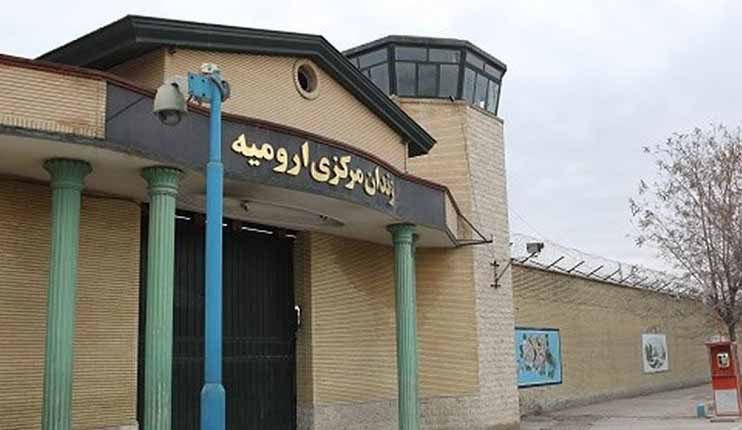
Three More Deaths in Urmia Prison Attributed to Medical Neglect

Human Rights Activists News Agency (HRANA)- Urmia central prisoners Gholamreza Tubaragh Ghaleh, Reza Malek Rezaie, and Sajjad Jamali Fard have died due to authorities’ refusal to arrange for appropriate medical treatment, joining a dismal trend of detainee deaths related to medical neglect.

Fard died on Tuesday, September 11th, 2018 after his transfer to an outside hospital. Rezaie and Ghaleh passed away inside the prison.

Ghaleh was being held on alcohol-related charges; the charges of the other victims have yet to be confirmed.

Prisoner deaths related to detention-related disease and restrictions on hospital transfers have reached a total of five since March 2018, the beginning of the Iranian year. Moloud Vanousheh of Mahabad died of a long-neglected colon condition while being held on alcohol-related offenses. Ghorbanali Mir Esmaeili also died of unattended conditions while in Urmia’s psychiatric ward 2.

Prisoners at Urmia Central Prison continue to be exposed to the elevated health risks of a short-staffed prison clinic without a resident physician. On June 12, 2018, Bahaoldin and Davood Ghassemi, two brothers on Urmia’s death row, requested to be executed as soon as possible when prison authorities refused their transfer to an outside clinic for treatment. Both are suffering from foot infections secondary to spinal injuries which have been further exacerbated by the sanitary conditions of their quarters.