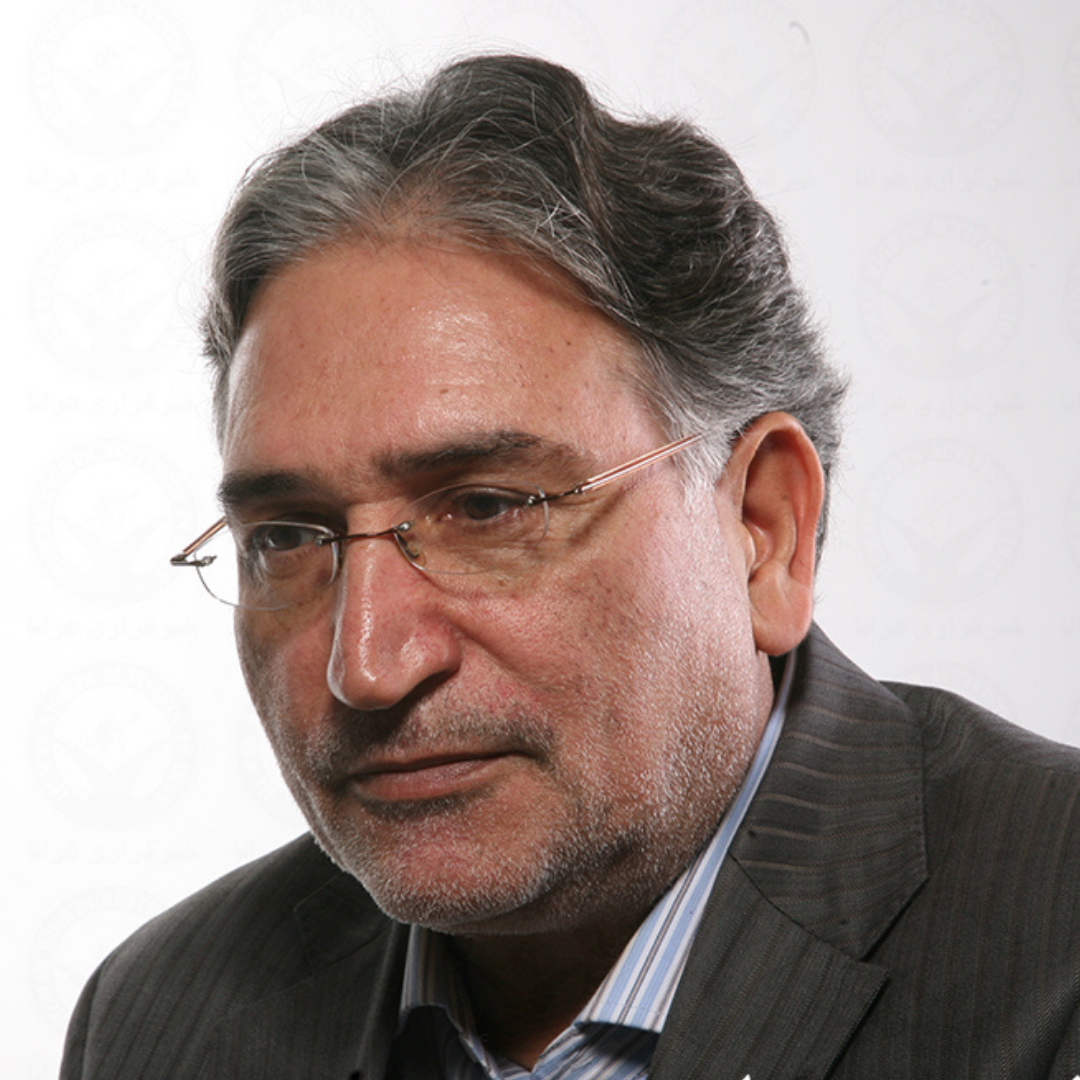
Canadian Resident Saeed Malekpour Transferred to Hospital After Heart Attack

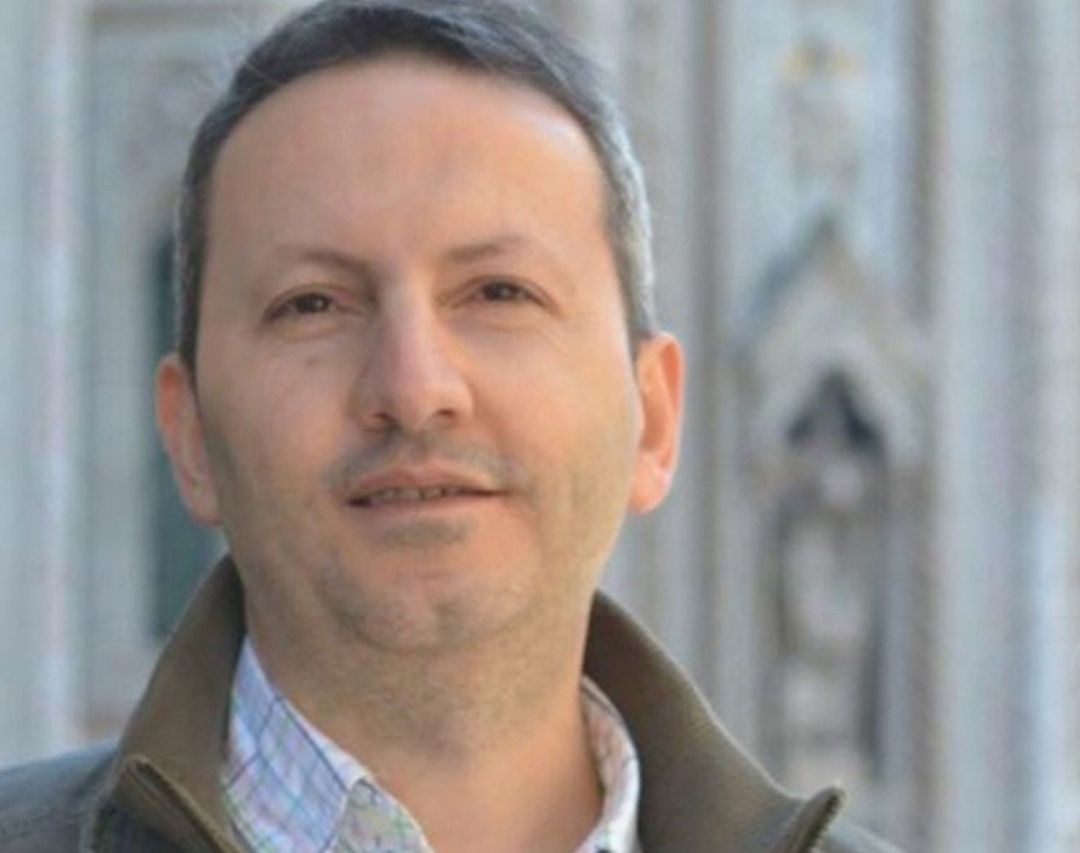
Human Rights Activist News Agency (HRANA) – Evin Prison approved the transfer of prisoner Saeed Malekpour to the cardiology department of Taleqani Hospital last week after he suffered from a heart attack.

A Canadian resident and alumna of the elite Sharif University in Tehran, Malekpour has a growing list of medical complaints that authorities have ignored over the course of 10 years of imprisonment. His requests for medical treatment and furlough have repeatedly been denied.

Now, photographs taken during his recent hospitalization show a worrying mass on Malekpour’s right knee, MRI results on which are pending. Malekpour has also developed kidney stones and prostate issues during his time behind bars.

With an arm and a leg uncomfortably restrained to the gurney, his sister Maryam told HRANA that Malekpour had trouble getting restorative sleep during his three-day stay. Sources indicate he was banned from hospital visits and subjected to mistreatment by security forces.

In 2008, the Cyber Unit of the Islamic Revolutionary Guard Corps (IRGC), accusing Malekpour of managing Persian-language pornographic websites, arrested him during a trip to Iran to see family. Branch 28 of Tehran’s Revolutionary Court sentenced him to death plus seven and a half years in prison, on counts of “propaganda against the regime,” “blasphemy,” “insulting the Supreme Leader,” “insulting the president,” “contacting opposition groups” and “corruption on earth.”

Malekpour’s death penalty sentence, though confirmed by the Supreme Court and sent to the Enforcement Department, was eventually reduced to a life sentence. Throughout his legal proceedings, Malekpour has insisted that case analysis by a computer and internet expert would absolve him of the aforementioned charges.

In a letter written from prison, Malekpour said he was previously isolated in solitary confinement for 320 days, during which time he was subject to torture, and given only a Qur’an, a Turbah [prayer clay tablet], and bottle of water.

Malekpour’s family has also borne the pain of his legal ordeal. Promising him that it would facilitate a bail release, authorities coerced Malekpour to provide a taped confession which was televised shortly after his father’s death in 2009. Malekpour learned of his father’s passing in a five-minute phone call 40 days after the fact.

Open Letter: Atena Daemi Lauds the Emotional Labor of Iranian Mothers

Human Rights Activist News Agency (HRANA) – Atena Daemi, a civil rights activist imprisoned since October 21, 2014, has written an open letter to her mother marking her fourth year of incarceration.

In the note, Daemi describes the difficulties endured by her family — particularly her mother — who she characterizes as one of her most important sources of strength in recent years.

With fellow political prisoners Maryam Akbari Monfared and Golrokh Iraee, Daemi was punished October 3rd with a three-week ban on family visits, per verbal orders from the Women’s Warden at Evin. All three were told the ban served to punish them for refusing an unlawful interrogation this past September.

HRANA has translated the full text of Daemi’s letter below:

Four years ago to this day, I was on my way to work on a cold autumn morning. You had gone to buy fresh bread for us. I was running late, so I didn’t get to see you before dad and I left the house. Before we could reach the end of the alley, they blocked our way, arrested me, put me in another car, and returned to the house with dad, all 11 of them. I don’t know how you reacted when you saw them. After an hour, they brought me back home. I was shocked to see you. I was shocked by your screams at the agents.

“Go on and take my daughter too. You took all of these young people – and how far did that get you? You know what? Go ahead and kill my daughter too. You killed Sattar Beheshti [a blogger who died in prison in 2012] and all those other young people. And what came of it?”

They threatened to detain you too, and you shot back, “Take me! You’ve outdone yourselves putting mothers behind bars and bereaving them.”

I thought you would be scared, but you weren’t; I thought you would blame and reproach me, but you didn’t. In our own language, you told me to go– that this would be the first night I would spend away from home, but that you were still behind me, still with me, and that one day no child would be separated from their mother. That lifted a weight off my shoulders; it felt as though you had given me wings. I went, but you never left me for a moment; we were bonded more than ever, together, united.

I remember your face that day in the Revolutionary Court when I was sentenced to 14 years in prison. Giddily and sarcastically, you quipped, “14 years is nothing– we expected the death penalty!” I know you felt a quiver of fear, but you didn’t show it. Sixteen months later, I returned home and you were in good spirits, though you knew I wouldn’t be staying long. They came back for me nine months later. You weren’t in Tehran then. I called you to let you know they were taking me. You told me to put you on speakerphone so that they could hear you. You were screaming “What do you want from our children? What have they done? What did they ever ask of you? The day will come when us mothers will hold you accountable…”

After I went, they opened cases against your other two daughters, convicting them. You laughed and said that we should ask them to set up a family suite in the prison that would house us all!

I went on hunger strike. I will not forget the concern in your eyes, but your words, filled with hope and promise, only made me more steadfast. Your daughters were acquitted, and I stayed. They filed new cases and lawsuits against me, one after the other. Then, they dragged me to Gharchak Prison, beating me and insulting me. That following Thursday I called home. You were happy to hear my voice and asked how the prison administrators had come to be so charitable on a Thursday [the beginning of the weekend in Iran].

I laughed and said, “I’m calling you from Gharchak Prison.” You replied that it was only right that I see the women held in Gharchak as well. “Let’s see how far they want to go!” you said.

When I contacted you a few days later, you did not answer. I was told that you went to the Prosecutor’s office to see about my case. The more time passed without any news from you, the more worried I became. You finally replied after 7 p.m. and told me that they had detained you along with Hanieh [my sister]. You told me how they beat you both and shocked you with stun guns. My body trembled at that thought.

You told me they shocked your leg when you refused to get into their car. You said it didn’t hurt, that it felt like stinging nettles. I was trembling with anger, but you were laughing and said that you didn’t back down and gave them a piece of your mind.

My phone rights and visits were cut.

Then came your little girl’s wedding day– my sister Hanieh was getting married…

They did not let me go on furlough to come to the wedding. You came to visit me in Gharchak. Hanieh was restless but you calmed her down, telling her not to cry but to laugh and be joyous so that the authorities wouldn’t get the idea that their tactics can break [me]. I remember that you reminded her that Fariba Kamalabadi [Baha’i prisoner of conscience] hadn’t been granted furlough to attend her own daughter’s wedding. You asked me to distribute sweets to my cell and ward mates to celebrate my sister’s wedding inside the prison. What a memorable night that was!

I was returned to Evin Prison. Then we heard news of the execution of Zanyar, Loghman, and Ramin. You went on a hunger strike, wore black, and came to visit me in tears. They had harassed me that day, but the three of us just held hands and sang a song for our fallen brothers. Again, they cut me off from family visits.

Mother, would you look at how pathetic and short-sighted they are? When Zanyar Moradi hadn’t seen his mother in nine years when he was killed, and they think they’re going to break me by withholding my visiting rights for a while? The pain of mothers never ends. If they think they can reform us, silence us, or make us remorseful with such childish measures, they are sorely mistaken. We won’t be disciplined; rather, we will carry on with more resolve than before.

It has been three weeks since we last saw each other. You’ve gone to visit with Ramin’s mother, Zanyar and Loghman’s families, and the family of Sharif, who died in the fire[Kurdish activist who died fighting wildfires in western Iran]. You visited Narges [Mohammadi] and the family of Homa [Soltanpour]. While we haven’t seen each other, you have embraced the pains and sorrows of fellow mothers.

Send my regards to all the mourning and bereaved mothers of Iran and tell them I shall call for justice for them as long as I live!

Atena Daemi
October 21, 2019
Evin Prison

___________________________________________________________________________

After her arrest on October 21, 2014, Atena Daemi spent 86 days in solitary confinement before being transferred to the Women’s Ward of Evin prison. In May 2015, Judge Moghiseh of Revolutionary Court Branch 28 sentenced her to 14 years’ imprisonment on charges of assembly and collusion against national security, propaganda against the regime, and insulting the supreme leader. She was released February 2017 on 5.5 billion IRR [approximately $140,000 USD] bail. Her sentence was then reduced to seven years on appeal. She was detained November 26, 2016 to serve her sentence, which since been reduced to five years.

Doctors, Coroner Plead Furlough for Sadeghi’s Chemo

Human Rights Activists News Agency (HRANA) – Prison authorities continue to jeopardize the post-operative course of imprisoned civil rights activist Arash Sadeghi, who was finally transferred to the hospital October 13th. Now his best hope of recovery, doctors say, is the slim chance that those same authorities will consent to a medical furlough.

So far, according to HRANA reports, Sadeghi’s urgent need for specialized care has done little to inspire sympathy from the prison powers that be. When doctors urged that he remain under hospital supervision after his September 12th bone cancer surgery, he was hastily whisked back to Evin Prison only three days later.

Back at the prison, a prosecutor’s assistant, identified only as “Rostami,” delayed Sadeghi’s follow-up for two weeks, during which time an infection took hold in the surgery site on Sadeghi’s right arm. Indeed, Sadeghi’s October 13th transfer was the sole successful among several hospital visits that authorities deliberately thwarted, i.e. postponed until afternoon hours when a qualified team of specialists was no longer available.

Immediately prior to his latest hospital visit, Maghsoud Zolfali, the head of the prison’s security unit, told Sadeghi that prosecutors had ordered all political prisoners on medical transfer to remain in prison garb. Sadeghi’s refusal to do so led to a verbal altercation, after which authorities placed him in a cold room as a punitive measure from 7:00 to 10:30 pm.

The chill followed Sadeghi to the hospital, where guards insulted him, twisted his arm, tightened his handcuffs, and punched him in the arm that had undergone surgery, reportedly because he had returned the greeting of medical personnel. When hospital staff protested the manhandling, agents responded that they were following the orders of the prison director to treat Sadeghi according to his status of a “security prisoner.”

When after his medical exam Sadeghi’s doctor advised he begin chemotherapy, Sadeghi expressed doubt that the treatment would work, citing the physically and mentally abusive dynamics of the prison. To ensure optimal results from this strenuous therapy, medical sources say, chemo patients must undergo treatment in the utmost comfort and calm. Citing this reason, doctors strongly advised against Sadeghi undergoing chemo outside of the hospital.

Upon Sadeghi’s return to Evin, the head of the prison medical clinic noted signs of injury to the surgical wound where he was punched at the hospital, including increased inflammation and discoloration due to bleeding. In the face of documentary evidence of this injury, prison authorities have done nothing to address it in the past five days.

Pursuant to the doctor’s chemotherapy recommendation, prosecutors ordered Sadeghi’s transfer to the coroner’s office. The coroner had no access to Sadeghi’s medical files; from a visual examination alone, they concluded that furlough from prison would be a necessary requisite for his chemo.

Golrokh Iraee Calls Citizens to the Defense of Persecuted Activist Soheil Arabi

Human Rights Activist News Agency (HRANA) – Golrokh Ebrahimi Iraee, a civil rights activist imprisoned at Evin, has written an open letter in response to the recent re-sentencing of Soheil Arabi, a prisoner of conscience in Great Tehran Penitentiary who has been held without furlough since November 7, 2013.

On new charges of “propaganda against the regime” and “disturbing the public mind,” Tehran Revolutionary Court Branch 26 sentenced Arabi to three more years of imprisonment and three years of exile on September 22, 2018. Cited as evidence against him were voice files he allegedly sent from inside the prison, in which he can be heard comparing Evin to a torture chamber.

In her letter, Iraee accuses authorities of using the exile sentence to banish dissidents like Arabi from public memory.

Golrokh Iraee pictured here with husband and fellow prisoner of conscience Arash Sadeghi

While behind bars on separate charges in June of this year, Arabi was issued a six-month prison sentence by Judge Moghiseh on charges of “blasphemy” and “propaganda against the regime.” The charges stemmed from a case file opened up against Arabi and his ex-spouse Nastaran Naimi, who was sentenced to 18 months’ imprisonment for “blasphemy” and “aiding and abetting.”

Iraee’s letter warns the Iranian public that apathy towards the extension of Arabi’s detainment would be ignoring symptoms of a malaise for which all Iranian citizens are responsible.

The full text of her letter, translated into English by HRANA, is below:

“He has been behind bars for years without having committed a crime. He is held captive by a vengeful system that has no tolerance for dissenting views, that stifles them instead in bondage, with physical and mental tortures.

Soheil Arabi was first detained on a misunderstanding that devolved into a blasphemy charge. After spending years behind bars and nearing the end of a sentence that tore his family apart (after the immoral and inhumane pressures they submitted him to, to break his spirit), yet another case file emerges, yet another prison sentence is leveled against him. After compounding his suffering with a ban on visits from his daughter, they now want to do with him what they did with Arjang Davoudi and Gholamreza Kalbi: exile him to the middle of nowhere, remove him from public memory, and let his existence perish into the abyss.

After the hunger strikes and beatings he endured in prison, Soheil’s condition is worrisome indeed. It is fitting that we be reminded, after commemorating the World Day against the Death Penalty, of Soheil’s initial execution sentence. He was made to suffer for a long time under the threat of execution, and the [long-term] imprisonment to which his death penalty was commuted, yet we are still witnessing concerted efforts to annihilate him with continued torture and new case files extending his imprisonment.

This method of eliminating activists, protesters, and dissenters may be the current status quo of the judicial system, but it is critical we consider these actions as the red flags that they are, and that we increase public sensitivity and attract the attention of international organizations so that we can put a stop to the annihilation of political and ideological activists. Abandoning them in this state renders us guilty of spreading the disease of our judicial system, and condoning the repetition of such crimes.

Golrokh Ebrahimi Iraee, Women’s Ward of Evin Prison, October 2018.

***

Golrokh Iraee was arrested along with her husband on September 6, 2014. She was first held at an IRGC safe house for two days and then spent 20 days in the solitary cells of Evin’s Section 2A, which is under IRGC jurisdiction, before being released on a bail of 800 million rials. On October 24, 2016, the IRGC arrested Iraee again, without a warrant. Her husband Arash Sadeghi, who was sentenced to 19 years in prison, is currently in Karaj’s Rajai Shahr Prison and has undergone operations for cancer. Iraee was sentenced to six years in prison, which was reduced to 2.5 years based on amnesty and Article 134 of the Islamic Penal Code. She was convicted of “insulting the sacred” and “gathering and collusion against the regime.”

Exile and Death Sentences Await Leila Tajik and her Former Spouse

Human Rights Activists News Agency (HRANA) – Leila Tajik, a prisoner in Evin’s Women’s Ward, was sentenced to 15 years imprisonment in exile on espionage charges. Her ex-husband, who reportedly served in the Islamic Revolutionary Guard Corps (IRGC) and faced the same charge, was sentenced to death.

An informed source confirmed to HRANA that Tajik has been in custody for the past 13 months, and recently learned of her sentencing to exile in Karaj.

HRANA is in the process of confirming the identity of Tajik’s ex-spouse, who was arrested along with her on September 5, 2017, pursuant to a joint case opened up against the two by the IRGC. Following the arrest, Tajik was interrogated for seven months in an IRGC outpost.

An informed source previously told HRANA, “their children, Sabah, 16, and Sahand, 19, are hurting over the breakup of their family, and are feeling additional pressures from IRGC agents.”

News sources, including the Dolat-e Bahar [a news site associated with former president Mahmoud Ahmadinejad], have reported the arrest of a number of security forces, mostly employed by the Ministry of Intelligence or the IRGC, accused of espionage, especially for Isreal.

Security and judicial authorities have been unforthcoming with any further details on Tajik or her ex-spouse’s status.

Subscribe to Our Newsletter

Now is definitely not the time to stop reading!

Kept Apart for 9 Years: a Mother Wishes her Daughter “Happy Birthday” from Evin Prison

Human Rights Activists News Agency (HRANA) – Evin political prisoner Maryam Akbari Monfared wished her daughter a happy 13th birthday in letter she wrote from behind bars, where she has spent every one of her daughter’s birthdays for the past nine years.

Monfared, along with fellow prisoners of conscience Golrokh Ebrahimi Iraee and Atena Daemi, was recently punished with a three-week ban on family visits per verbal orders from the director of the Evin Prison Women’s Ward. All three were told they were being disciplined for protesting authorities’ attempts to unlawfully interrogate them this past September.

The full letter of Monafred’s letter to her daughter, translated into English by HRANA, is below:

In the middle of a cold, rainy December night, they tore you from my arms. You were only three and a half years old, and you had your arms locked around my neck. You were in a deep, angelic sleep.

Nine years have passed since then. All these years, I have celebrated your birthday in the prison visiting room. All my cellmates have shared in my joy. Every year, I prepared for your birthday days ahead of time, as best I could. I have watched you grow from the other side of the visiting room glass, and I drew lines on the concrete for every year that you grew.

While I was in prison you started school, and then you were no longer a little girl. And now, this year, you’re turning 13. We spoke about our wishes a week ago on the phone: you asked me whether you could come for a visit the following week, on your birthday. “Why wouldn’t you?!” I replied. “Of course you can!” Little did I know that our rare joys were being watched with malice from afar.

Before you arrived Wednesday, the Ward Director Ms. Abdolhamidi told me I’d been banned from visits for three weeks. When you came, you jumped into my arms and told me, ‘Mom, it’s my birthday next week! I’ll come to visit you and it will just be you and me.’”

It was more than I could bear to tell you that our visit next week would be canceled. My heart burned with anger and loathing for [the authorities], who would rob even the smile off your face. Flames of rage are still burning inside me.

Tomorrow is your birthday. I’ve been talking to my friends about it all day. I close my eyes and travel back in time to Iran Hospital, October 8th, 2005.

It is 6 a.m., and I am sitting in the hospital lobby. It is 10 days past your due date, but looking back now, it seems you were stalling your arrival in this world, that you foresaw that you would be targeted by the storms of life. But finally, you came, and your very first cries at 12 p.m. brought a smile to my face. I still feel your beautiful face and your first cry, and sense the sweet feeling of taking you into my arms for the first time.

I opened my eyes and there you were, a beautiful doll in a pistachio-green blanket with snowflakes on it. The delight of breastfeeding you, the joy of when you first opened your eyes; the first steps you took towards a beautiful life and future, and the music of your first word.

My dear Nazanin: I was not with you on your 13th birthday. I know that by now you understand why we’re apart. I know that you’ve suffered a lot these past nine years. Yet, we have promised each other to smile until smiles light the faces of all of Iran’s children. We promised each other to cherish our brief visits, for all of the times that we miss being together. We have pledged together to vanquish a monster.

My dear Sara: our future is bright. I hope for the daybreak whose first morning rays will be freedom, when I will tousle your hair and embrace you without the pain and the stress of knowing our visit could end the next moment. Let us laugh until daybreak […]

Maryam Akbari Monfared
October 6, 2018
Evin Prison Women’s Ward

****
Maryam Akbari Monfared was arrested December 2009 during protests following Iran’s contentious election cycle of that year. In June 2010, Judge Salavati of Revolutionary Court Branch 15 sentenced her to 15 years in prison on the charge of “moharebeh” (enmity against God), on the premise that she was a member of the People’s Mujahedin of Iran (MEK). Monfared denied the charge.

Two of Monfared’s brothers were executed in 1981 and 1984 for membership in the MEK after being convicted in revolutionary courts. A younger brother and sister were also executed in 1988 as part of a mass execution of political prisoners.

Governance by Deprivation in Evin Prison: 3 in Women’s Ward Denied Visits for 3 Weeks

Human Rights Activist News Agency (HRANA) – On October 2nd, Evin authorities punished three prisoners with a 3-week ban on visitation.

The head of the Evin Women’s Ward dictated the disciplinary measure to prisoners Maryam Akbari Monfared, Golrokh Iraee, and Atena Daemi, reportedly after the three chanted slogans and got involved in a verbal altercation last September in the prison’s visitation room when they had resisted authorities’ attempts to unlawfully interrogate them. The prison’s disciplinary council condemned them to the three-week ban in absentia.

A source told HRANA that Monfared, Iraee, and Daemi got a “no” when they asked to be shown the ban order in writing. The warden offered the pretext that authorities were acting on a verbal order from Prison Chief Chaharmahali and the prosecutors.

Akbari Monfared is a mother of three daughters, two of whom are currently in college and one of whom is school-age. Though her visitation hours were recently slated to change in accordance with her children’s academic schedules, Prosecution Representative Rostami put a stop to the change. She hasn’t had a furlough day in all of her nine years in prison.

Daemi and Iraee got their own backlash from authorities when the prison chief ordered their bodies to be searched multiple times without cause, presumably in reprisal for their public reaction to the September 8th executions of political prisoners Hossein Panahi, Zanyar Moradi, and Loghman Moradi.

Civil Rights Activist Mehrnaz Haghighi Conditionally Released

Human Rights Activists News Agency (HRANA) – Mehrnaz Haghighi, a civil rights activist and doctor from Bandar Abbas on the Persian Gulf coast, was conditionally released on Monday, October 1st after meeting a minimum detention requirement for previous time spent in custody.

HRANA reported September 22nd on Haghighi’s transfer to Bandar Abbas Prison to serve her six-month sentence for “propaganda against the regime.”

Haghighi was first arrested by intelligence agents in her home on February 19, 2017. For a week after her arrest, she was held in solitary confinement in the city’s intelligence office before being transferred to the Women’s Ward of Bandar Abbas Prison. She was sent to Ward 209 of Evin Prison on April 12, 2017, where she stayed until being released on bail May 28th, 2017.

No Word on Trial Date for Bahraini Citizen and Evin Prisoner Ruqayya Haji Mashallah

Human Rights Activist News Agency (HRANA)- Ruqayya Haji Mashallah, a 37-year-old citizen of Bahrain, was detained on April 20, 2018 by security forces in Mashhad. In custody ever since, she has only been able to speak to her family in Bahrain twice since her arrest.

An informed source told HRANA that Haji-Mashallah’s annual pilgrimage to the Shrine of the Eighth Shi’i Imam, located in Mashhad, has brought her under the suspicion of the Islamic Revolutionary Guard Corps (IRGC). “IRGC Intelligence claims that Ms. Haji-Mashallah has been tasked by the Bahraini government with identifying supporters of Issa Ghasem, a Bahraini opposition leader,” the source said.

Immediately after her April arrest, Haji-Mashallah was held in solitary confinement at an IRGC detention center for 12 days. She was then transferred to Evin’s Ward 2A, also under IRGC jurisdiction. Two months of interrogations later, she was taken to Evin’s general Women’s Ward, where she has remained since.

Severed diplomatic relations between Iran and Bahrain have prevented Haji-Mashallah from contacting her husband and three children with the prison telephone. “Since June 27th, when she was transferred to the Women’s Ward at Evin, she has been taken only twice to the IRGC Ward so that she can contact her Bahraini husband and children using the internet. Her husband has traveled to Iran once to visit her,” the source added.

Judge Salavati is presiding over Haji-Mashallah’s case file. As of the date of this report, her court date has not been set.

Profiles: the Women’s Section of Evin Prison

Human Rights Activists News Agency (HRANA) – The 17 prisoners held on political or security-related charges in the Women’s Ward of Tehran’s Evin Prison live with deplorable conditions, compromised hygiene, and paltry nutrition. The following is a brief exposé of their quality of life, followed by a snapshot of their individual case files.

Many of these prisoners are mothers pained by the distance from their children, a pain that is only exacerbated by the prison chief’s refusal to grant them access to the phone on days of the week that their children are home from school. While the prisoners were granted permission from prosecutors to open the Saturday-to-Wednesday phone schedule to any day of the week, the chief, who goes by “Chaharmahali,” has refused to loosen up the former protocol.

In another blatant disregard of court orders, prison authorities refuse to send prisoners to outside medical clinics even when prosecutors and deputy prosecutors order or grant permission for the transfers. Prison authorities justify their refusal by saying that the prison clinic has its own doctors, or will recruit them as necessary; yet prisoners needing help from a psychologist, eye doctor, or internal specialist wait months to be seen.

These women are effectively hindered from providing even the most basic care to themselves, as clinic authorities refuse to distribute basic medicine or first aid kits to inmates. Many–insulted by the stipulations from Khani, the clinic head, that they take all of their nightly medication in one supervised sitting–have quit their medications in protest, and are experiencing aggravated symptoms as a result.

Evin Prison dentistry operates in less-than-sterile conditions and exposes patients to remarkably high risk for infections. Cavity fillings are expensive there, putting patients out as much as 20 million rials (approximately $114 USD) or preventing them, for lack of means, from getting the fillings they need. Many of the Evin women have trouble footing the bill, as the now-unemployed breadwinners of their households or as the wives of men who are also behind bars.

Prison food rations are growing more pitiful by the day. Forty-day rations of dry food items that are distributed to prisoners are depleted without fail within half that time. In the last six months, meat and vegetables have been cut from the prisoners’ diets.

Hygiene and cleaning items are also in short supply. Most prisoners run out, and those who can’t afford the pricey prison shop simply do without.

Deputy prosecutor Rostami oversees political and security prisoners and recently took up his position in Evin’s prosecutorial office. While he has verbally engaged to welcome prisoner families into his office on Sundays and Tuesdays, complaints from these families suggest that he is chronically unavailable, impassive to their requests, and generally unaccountable. Complaints lead nowhere, families say; requests for furlough or conditional release are routinely ignored.

Prison authorities rarely visit the Women Section, and tend to either lose or ignore any letters from its inmates.

Who are the women of Evin Prison’s Women’s Ward?

1- Maryam Akbari Monfared (born 1975)

Convicted of enmity against god, gathering and colluding against national security and propagating against the regime through working with the Mujahedin-e Khalq (MEK), Monfared is serving a suspended sentence of 15 years.

Monfared was arrested December 31, 2009, following a widespread Ashura demonstration during the holy month of Muharram. She was tried the following May and sentenced by Branch 15 of Tehran’s Revolutionary Court, presided by Judge Salavati. She denied the accusations against her.

Monfared has been shuffled around different penitentiaries over the course of her imprisonment, inducing the solitary cells of Ward 209, the Methadone Ward, the Women’s Ward, Rajai Shahr Prison, and Qarchak Prison in Varamin. After writing several letters to clerics, prison authorities, and Ahmad Shaheed, then the United Nations Special Rapporteur on the Situation of Human Rights in Iran, she was returned to Evin’s Women’s Ward and has remained there since.

Two of Maryam’s brothers were executed in 1981 and 1984 for their connections to the MEK. Another younger brother and a sister were also executed during the 1988 massacre.

Maryam, a mother of two, has been barred from conditional release and has not received a single day of furlough since she began her sentence in 2009.

2- Zahra Zahtabchi (born 1969)

Zahra Zahtabchi was issued a 10-year suspended sentence for Baqi (violation) and enmity against god through support of the MEK.

Zahtabchi was arrested with her husband and daughter on October 16, 2013. She came to Evin’s Women’s Ward after spending 14 months in the solitary cells of Ward 209. On December 8, 2014, Branch 15 of the Revolutionary Courts sentenced her to 12 years in prison. The sentence was reduced to 10 years in appeals court.

Her two daughters are Narges, 22 and Mina, 15.

In 2016, three years after her arrest, she went on furlough for three days.

3- Fatemeh Mosana (born 1967)

Fatemeh Mosana was sentenced to 15 years for Baqi and enmity against god through support of the MEK in Branch 26 of Tehran’s Revolutionary Court, headed by Judge Ahmadzadeh. Her husband Hassan Sadeghi received the same sentence.

Mosana, Sadeghi, and their child were arrested January 28, 2013, by Intelligence Ministry forces. The child was released after six weeks.

Mosana spent 75 days in the solitary cells of Ward 209 before her transfer to the Women’s Ward.

On January 13, 2014, she was temporarily released on bail. Some of her family’s property, including Sadeghi’s shop and their personal house, was seized by the authorities.

On September 30, 2015, she was re-arrested and taken to the Women’s Ward. She has two children who currently live with their ailing grandmothers.

Mosana, who suffers from ulcerative colitis and severe nervous migraines, has never been granted furlough.

4- Narges Mohammadi (born 1972)

Narges Mohammadi is serving a 16-year sentence, compounded by a six-year sentence on a previous case.

Narges was first arrested in 2002 and then released on bail after a week. For that case, she received a one-year sentence.

In May 2010, she was arrested and held for weeks in the solitary cells of Evin’s Ward 209 before being released on a bail of 1 billion rials. In 2011, she was convicted of gathering and collusion against national security and propaganda against the regime, which carried a sentence of 11 years in prison. The sentence was later reduced to six years in appeals court.

She started serving her sentence in 2012, which began with one month in solitary confinement and four months in exile in Zanjan. She was released due to health conditions before being re-arrested in 2015 to resume her sentence. At that point, authorities opened up a new case file against her, convicting her anew of gathering and collusion, and of propaganda against the regime, with the additional charge of establishing LEGAM, a campaign to abolish the death penalty. Collectively her charges earned her 16 years in prison, but by Article 134 of Islamic Penal Code, she should only serve 10 [i.e. the sentence corresponding to the heaviest among her multiple charges].

She has two children, and on the prosecutor’s orders is barred from having contact with her husband.

She suffers from pulmonary embolism and was granted a three-day furlough on September 29th.

5- Reyhaneh Haj Ebrahim Dabagh

Born in 1982, Reyhaneh Haj Ebrahim Dabagh is serving a 15-year exile imprisonment sentence, ruled by Judge Salavati in Branch 15 of the Revolutionary Court on charges of enmity against god through support of the MEK, gathering and colluding, and propaganda against the regime.

Ebrahim Dabagh has been in prison since early 2010. She suffers from ulcerative colitis and has served exile time in Qarchak and Rajai Shahr prisons. Her husband Ahmad Daneshpour and her father-in-law Mohsen Daneshpour are awaiting trial in Evin’s Section 350. They are both said to have been sentenced to capital punishment.

After seven years in prison, Ebrahim Dabagh went on furlough for the first time in December 2016, and was briefly freed on bail. On August 15, 2018, she was sent back to Women’s Ward to serve the rest of her sentence.

6- Azita Rafizadeh (born 1980)

As part of a 2011 crackdown on the Baha’i academic community, security agents raided the homes of managers and professors at the Baha’i Institute of Higher Education (BIHE), including Azita Rafizadeh’s. In the raid, her religious books, personal writings, and electronic devices were confiscated.

Rafizadeh was sentenced in 2014 to four years in prison on charges of acting against national security and membership in “the illegal Baha’i organization.” Her husband Peyman Kooshkbaghi was sentenced to five years in prison at the same time.

She presented hersef to Evin’s prosecutors in 2015 to begin her sentence. On February 28, 2018, her husband was detained without reason in Evin’s section 8 while trying to arrange a visit with her. Rafizade and Kooshkbaghi have a 10-year-old son name Bashir who in absence of his parents has been trusted to the care of another family.

7- Nazanin Zaghari-Ratcliffe (born 1979)

Zaghari-Ratcliffe is serving a five-year suspended sentence on charges of gathering and collusion against national security.

Zaghari-Ratcliffe was arrested at the airport while visiting Iran on holiday in 2016. After a day in IRGC’s detention center, she was transferred to Kerman prison, and two months later to Tehran, where Judge Salavati issued her prison sentence in July of that year. A few months later, she was sent to the Women’s Ward.

On August 23rd, she was granted a three-day furlough after two and a half years in prison. She has a four-year-old daughter.

8- Aras Amiri (born in 1986)

A student of London’s Kingston University, Amiri was arrested by Intelligence Ministry forces on March 14, 2018, and released two months later after posting a 5000 million rial bail. On September 7, 2018, she was summoned and subsequently arrested by Evin prosecutors, after which she was sent to the prison’s Women’s Ward. She has denied the “gathering and collusion against national security” accusations against her and is still awaiting trial.

9- Golrokh Ebrahimi Irayi (born 1980)

Irayi was sentenced to six years in prison, which was reduced to 2.5 years based on amnesty and Article 134 of Islamic Penal Code. She was convicted of insulting the sacred and gathering and collusion against the regime. Earlier this year, she was exiled to Varamin’s Qarchak prison, and was brought back to Evin after going on hunger strike.

On September 6, 2014, Golrokh was arrested along with her husband, Arash Sadeghi. She spent two days in an IRGC safe house and then 20 days in the solitary cells of Evin’s Section 2A, which is under IRGC jurisdiction. She was released on a bail of 800 million rials.

Judge Salavati sentenced her to six year in prison while she was undergoing surgery in the hospital.

On October 24, 2016, the IRGC arrested her without a warrant. Her husband Arash Sadeghi was also arrested and sentenced to 19 years in prison. He is currently in Karaj’s Rajai Shahr prison and has undergone operations for cancer.

Arash and Golrokh have been forbidden from seeing each other for the past 8 months.

10- Nasrin Sotoudeh (born 1963)

According to Sotoudeh’s lawyer, she has been sentenced to five years in prison for espionage (a charge that does not figure on her charge sheet), a complaint from Kashan prosecutorial interrogators, and an arrest order from Branch Two of Evin’s interrogators. She currently awaits trial.

Sotoudeh was first arrested September 2010 and sentenced to 11 year in prison, a 20-year ban from the bar association, and 20-year travel ban. Appeals court reduced these sentences to six years in prison and a 10-year ban from the bar. She was in Evin prison from 2010 to 2013 on charges of “acting against national security.” Upon her release, lawyer’s court banned her from the bar for three years, which she protested in 2014 by organizing a sit-in in front of the Bar Association. Because of her sit-in, her attorney privileges were reinstated.

On June 13th of this year she was arrested in her home and taken to Evin prison. Her husband Reza Khandan is being held in Evin’s Section Four. Two of her children, Mehrave and Nima, are currently in the care of family friends.

11- Negin Ghadamian (born 1983)

Ghadamian was sentenced to a five-year suspended sentence on a conviction of against national security through membership in “the illegal Baha’i organization.”

On May 24, 2011, Negin was arrested by security forces and released on a bail of 500 million rials. In February 2013, along with eight other Baha’i citizens, she was convicted in absentia of working with the Baha’i Institute for Higher Education and sentenced to five years in prison by Judge Moghise. On December 16, 2017, she was arrested at the airport and sent to the Women’s Ward of Evin prison to serve her sentence.

12 – Masoumeh (Mino) Ghasemzade Malakshah (born 1976)

Malakshah and her ex-husband, Amir-Mehdi Tabasi were arrested in 2011 by the Intelligence Ministry agents. Both were detained and later released on bail on espionage charges after travelling to the Israeli embassy in Turkey and applying for residency in Israel. Both Malakshah and Tabasi were sentenced to 10 years, a sentence which was confirmed in appeals court in 2017.

Malakshah was taken to the Women’s Ward of Evin prison. Tabasi is detained in a different ward of same prison.

13- Ruqayya Haji Mashallah (born 1981)

Mashallah is awaiting trial on charges that are currently unclear.

Of Iranian origin, Mashallah is a citizen of Bahrain. She was arrested in May 2018 in Mashhad and taken to Evin’s Women’s Ward on June 27th of the same year. Her Bahraini husband has only been able to meet with her once since her arrest. She a mother to three children.

14- Leila Tajik (born 1973)

Tajik was arrested by IRGC’s Intelligence Department on September 5, 2017. She was taken to the Women’s Ward earlier this year after spending seven months in an IRGC safe house. Her husband, who is said to be a retired employee of IRGC’s Intelligence Department, is also under arrest. She awaits trial on charges of espionage.

Tajik and her spouse have two children aged 16 and 19.

15 – Atena (Fateme) Daemi (born 1988)

Daemi was arrested on October 21, 2014.

On May 15, 2015, Judge Moghise of Branch 28 of the Revolutionary Court sentenced her to 14 year in prison on charges of collusion and gathering against national security, propaganda against the regime, and insulting the Supreme Leader. Her sentence was reduced to five years with application of Article 134 of Islamic Penal Code.

After her arrest and before her trial, she spent 86 days in the solitary cells of Section 2-A. On February 15, 2016, she was released on a bail of 5500 million rials. Her sentenced was reduced to seven years in appeals court in August of 2016.

Daemi was arrested in her father’s house that November, and cases against her two sisters and one of her brother-in-laws immediately followed. She went on hunger strike for 54 days until the charges against them were dropped. So far she has been acquitted of two case files that have been opened against her.

In January of this year, she was taken to Varamin’s Qarchak prison after being assaulted. On May 9th, she was taken back to Evin’s Women’s Ward. She has thus far been denied furlough and has yet to request parole.

16- Elham Barmaki (born 1968)

On December 28, 2011, Barmarki was arrested on the street and spent three months in the solitary cells of Section 209. She was then released on bail and was later acquitted.

On July 23, 2012, she was arrested again, this time spending 14 months Section 209 solitary cells. On September 29, 2013, she was transferred to the Women’s Ward.

In Branch 28 of the Revolutionary Court, headed by Judge Moghise, Barmaki was sentenced to 10 years in prison and fines of 25,000 Euros, 70,000 USD, and 400 million rials. She has two children, Amir-Parviz and Anita, who both live abroad. She was released once on furlough in March 2017 for the Persian New Year. Her request for parole has been rejected.

17 – Sotoudeh Fazeli (born 1953)

Fazeli was arrested in early 2011 by the Intelligence Ministry. She spent 31 days in Evin’s Section 209 before being released on bail in 2011. Branch 15 of the Revolutionary Court, headed by Judge Salavati, sentenced her to three years in prison on charges of “enmity against god by supporting the MEK.” She has been held in the Women’s Ward since June 29, 2016.

Fazeli suffers from eye and muscle problems, among other health conditions. She was released on a short furlough in 2016. Her requests for parole have been repeatedly rejected.

Since the beginning of the new Persian calendar year in 2018, 15 new prisoners have entered the Women’s Ward, including Zahra Zare, Negar Zarei, Mandana Azarmah, Akram Gholami, Aliyah Eghdamdoost, Akram Mirsane, Raha Fasayi, Parisa Rahmati, Batool Ezati and Arefe Aziz. A number of these women have been already released.