At Least 9 Citizens Arrested in Various Provinces

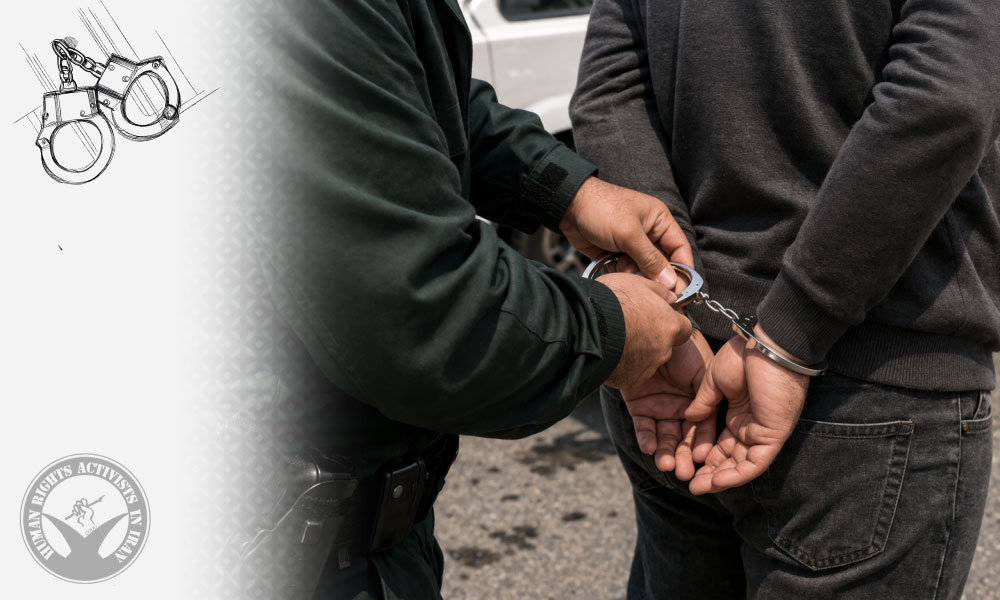
HRANA – Domestic media have reported that nine citizens were arrested in the provinces of North Khorasan, Semnan, and Tehran on accusations of “sending videos and images to foreign media outlets” and “sending information to countries involved in the war.”

According to Mehr News Agency, six citizens were arrested in North Khorasan. In this regard, the Public and Revolutionary Prosecutor of Bojnord claimed that these citizens were arrested on charges of “acting against national security and interests” through “sending images and videos to foreign media outlets, especially Iran International and Manoto, in order to identify locations that could be subject to military attack.”

In another report by Mehr News Agency, the IRGC Intelligence Organization announced the arrest of two citizens in Semnan. This security body claimed that the reason for their arrest was “communication with the Israeli intelligence service and sending information about sensitive sites and centers to Israel” from the time of the 12-day war until now, under accusations of “espionage.”

Also, according to Tasnim News Agency, one citizen was arrested in Tehran. The report states that after returning to Iran and staying at a relative’s house, he was identified and arrested by security forces on accusations of “sending the location of security forces’ deployment sites to the intelligence services of countries involved in the war, including the United States and Israel.”

The report did not provide further details, including the identities of these citizens or where they are being held.

It should be noted that the military attacks by the United States and Israel against Iran began on February 28, 2026. Since the beginning of these attacks, HRANA has been documenting and recording developments related to these conflicts across different parts of the country on a daily basis. For more information, readers may refer to HRANA’s detailed report on the 39th day of the conflict, published last night.

Day 39 of U.S. and Israeli Attacks on Iran: Extensive Damage to the Rail Network and Roads

HRANA– In the last 24 hours, and as of April 7, 2026, at 18:00 ET, HRANA has recorded at least 425 attacks across 177 incidents in 16 provinces, resulting in a total of at least 101 casualties (killed and injured, both civilian and military). The attack on railway routes, key bridges, and several major transportation corridors across the country were among the developments that drew widespread public attention over the past 24 hours.

According to information recorded and verified by HRANA, from the first minutes of the day through the end of April 7, 2026 (Tehran time), at least 36 civilians were killed and 48 others were injured.

Aggregated data since the beginning of the conflict on February 28, 2026, based on incidents recorded in the incident tab and using minimum values for figures marked “more than”:

• Civilian fatalities: 1,701 people (including at least 254 children)

• Military fatalities: 1,221 people

• Unclassified fatalities (civilian/military): 714 people

Note on Official Statements: Alongside HRANA’s independent reporting, several official aggregated figures were also recorded today from state-affiliated media, including:

The Deputy for Family Support and Welfare at the Relief Committee said: “From the beginning of the Ramadan War until today, 32 members of families supported by the Relief Committee have been killed as a result of the criminal attacks by American and Zionist forces against civilian citizens.”
The Red Crescent spokesperson said: “Forty-nine medical and pharmaceutical centers were particularly damaged. Ninety-eight thousand commercial units, 326 medical units, 763 educational centers and schools, and 20 relief workers and rescue/Red Crescent bases were damaged.”
The head of Tehran Province Emergency Services said: “We have had more than 700 fatalities, all of them ordinary civilians. In the past two nights alone, 10 children and 18 women were among the victims across the province. Up to today, more than 8,600 injured people have received services across Tehran Province, 87 percent of whom were ordinary civilians. We have had more than 700 fatalities, all of them civilians, children, and women. In the past two nights, 10 children under the age of 10 and 18 women were added to the number of our fatalities in Tehran Province.”

Since these figures are presented in aggregate form and cannot be precisely matched to specific incidents, they have not been included in the event-based calculations used in HRANA’s independent reporting section of this review. They are mentioned here solely as a record of official statements.

1. Overview of Incidents in the Last 24 Hours

In the last 24 hours, incidents were reported across multiple provinces, reflecting a geographically dispersed pattern of hostilities. In a large portion of the incidents, the method/type of attack has not yet been confirmed and has been recorded as “undetermined.” In cases where the attack type was identifiable, airstrikes and drone attacks were reported.

Preliminary analysis shows that Tehran Province, with a 27% share, ranks first among the provinces that have come under attack. Tehran Province is followed by Alborz Province with a 19% share in second place, and Khuzestan Province with 17% in third. The list continues with the provinces of Isfahan Province, Qazvin Province, and Qom Province, respectively.

Map of Attacks Day 39

2. List of Objects Reported Hit

In the past 24 hours, the recorded attacks have damaged 53 distinct objects or facilities. These include a range of different types of targets. In some cases, damage caused by nearby strikes or secondary consequences of the attacks has also been reported.

Examples of targets recorded over the past 24 hours:

• 8th Division Barracks (Isfahan)

• 4th Tactical Air Base (Dezful)

• Defense Facilities (Khark Island)

• Southern Border Outpost (Minoo Island)

• Ashura Garrison (Najafabad)

For a number of the listed targets, the exact nature of the target (civilian/military/dual-use) is still under review, and classifications may be revised as additional information becomes available.

Facilities Protected Under International Humanitarian Law:

Under international humanitarian law, medical facilities, educational institutions, humanitarian facilities, religious sites, and emergency service centers are among the many objects that maintain special protected status and are afforded special protection. In the past 24 hours, HRANA has preliminarily recorded the following cases:

• Khorasani Jews Synagogue (Tehran)

• Alborz–Zanjan Railway Line (Karaj)

• Haft Cheshmeh Railway Bridge (Mianeh)

• Tabriz–Tehran Freeway (Tabriz)

• Sorkheh Hesar River Bridge (Ray)

3. Civilian Casualties

In the past 24 hours, at least 36 civilian citizens, including 6 children and 3 women, have been killed, and 48 other civilians have been injured. All classifications are preliminary and may be updated if new information becomes available.

4. Military Casualties

During the period covered by this report, no reports of military casualties were received. Military casualties are generally reported in the context of attacks on Army and Islamic Revolutionary Guard Corps (IRGC) bases. Where possible, organizational affiliation and operational context are being assessed; however, not all details have yet been independently verified.

In some incidents, individuals have been killed in the vicinity of military targets; however, their official status has not yet been definitively determined. These cases remain under review, and if reliable information indicating a different status becomes available, the classification may be revised accordingly.

It is believed that military casualties are significantly higher than the figures reported in these reports. However, due to the sensitive nature of military information and the limited access of human rights groups and media to locations where military forces are present, this section largely reflects reports of senior officers or military personnel who were present in urban areas.

5. Confirmed but Unspecified Casualties

Three deaths and 14 injuries reported in the past 24 hours remain classified as undetermined. This means that HRANA has not yet been able to establish with sufficient certainty whether these individuals were civilians or military personnel.

Burials: Today, 1 burial related to attacks from previous days was recorded.

A Note on HRANA Methodology

Note that, in line with HRANA policy, this report reflects only incidents that occurred within the territorial borders of Iran.

The information contained in this report is compiled through HRANA’s established documentation network. Data is collected from a combination of field reports, local contacts, medical and emergency sources, civil society networks, and open source materials, including publicly available images, videos, and official statements where relevant. Each reported incident is logged and assessed through an internal review process before publication.

Given the evolving nature of hostilities, information is gathered on a rolling basis and reflects the status of documentation at the time of publication.

The figures presented in this report may not reflect the full scope of harm. Ongoing hostilities, damage to infrastructure, communication disruptions, restricted access to affected areas, and security risks for sources may limit the ability to document incidents comprehensively.

Delays in medical reporting, difficulties in confirming identities, and restricted access to certain provinces may result in temporary undercounting. As access improves or additional evidence emerges, casualty figures and incident classifications may be revised accordingly.

HRANA remains committed to transparency, methodological rigor, and the continual updating of its findings as new verified information becomes available.

Sardasht: Three Citizens Arrested by Law Enforcement Forces

HRANA – Three citizens have been arrested in Sardasht by law enforcement forces over what was described as “affiliation with groups opposed to the system.”

According to Mehr News Agency, three citizens were arrested in Sardasht, West Azerbaijan province. The report claims that the arrests were carried out by police officers due to the citizens’ alleged “affiliation with anti-government groups and efforts to make the country insecure.”

The report does not provide further details, including the identities of the detainees or where they are being held.

It should be noted that U.S. and Israeli military attacks on Iran began on February 28, 2026. Since the start of these attacks, HRANA has been documenting and recording related developments across different parts of the country on a daily basis. For more information, readers may refer to HRANA’s detailed report on the 38th day of the conflict, which was published last night.

Cécile Kohler and Jacques Paris Leave Iran for France

HRANA – The President of France announced that Cécile Kohler and Jacques Paris, two French citizens, have left Iran and are on their way back to France.

The couple had been released from Evin Prison in November last year after enduring three years of imprisonment, and since then had been staying at the French Embassy in Tehran. At the same time, Iranian domestic media reported that this move was part of an understanding that led to the release of Mahdieh Esfandiari, an Iranian prisoner in France, and the withdrawal of France’s complaint against Iran at the International Court of Justice.

Emmanuel Macron, President of France, announced that “Cécile Kohler and Jacques Paris, after three and a half years of detention in Iran, have been freed and are on their way back to French soil.”
At the same time, IRNA reported that this step was taken as part of an understanding that resulted in Esfandiari’s release in France and France’s withdrawal of its complaint against Iran before the ICJ.

In November last year, Macron had also written in a post that “Cécile Kohler and Jacques Paris, after enduring three years of detention, were released from Evin Prison and are on their way to the French Embassy in Tehran.” Simultaneously, Fars News Agency, a media outlet close to Iran’s security institutions, released a video showing the release of Mahdieh Esfandiari, an Iranian citizen who had been detained in France on charges of supporting a militant group. After their prison release, the two French citizens were not permitted to leave Iran and had remained at the French Embassy in Tehran until now.

In October 2025, Mizan News Agency, the judiciary’s media outlet, reported that heavy prison sentences had been issued for two French citizens on charges of “espionage” and “intelligence cooperation with Israel.” The judiciary statement did not name the defendants. However, independent media reports and official statements by French authorities strongly indicated that these sentences concerned Kohler and Paris. At that time, the judiciary said the rulings could be appealed before the Supreme Court within 20 days of notification.

Ms. Kohler and Mr. Paris were arrested after traveling to Iran in 2022. In late May 2022, Iranian state television aired a report linking the detention of the two French nationals to teachers’ protest gatherings in the country. The report accused Kohler, a member of France’s education and culture labor federation, and her husband Jacques Paris of organizing “chaos and disorder,” and also linked teachers’ union activists Eskandar Lotfi, Masoud Nikkhah, Shaban Mohammadi, and Rasoul Bodaghi to the two.

Throughout their detention, the families of the two French nationals and French officials repeatedly rejected the charges against them and called for their immediate release.

At Least 102 Citizens Arrested Across the Country in Connection with the War

HRANA – Domestic media outlets have reported that at least 102 citizens, including two women, have been arrested by security forces in different parts of the country in connection with the war. At the same time, a video of the forced confession of one of these individuals has been released, although the conditions under which it was recorded remain unclear.

According to ILNA, Ahmadreza Radan, the Commander-in-Chief of the country’s Law Enforcement Command, announced the arrest of 85 citizens in 25 provinces.

According to the report, these citizens were arrested over what was described as “sending the location of facilities, infrastructure, and the deployment sites of security forces to countries involved in the war with Iran.”

The police chief claimed that during these arrests, “a number of specialized and electronic devices, Starlink equipment, weapons, and ammunition” were discovered and confiscated. Based on the report, Radan also announced that in the coming days authorities would release “the confessions of the accused and details of how they cooperated with countries involved in the war”; confessions whose recording conditions remain unknown.

Separately, the IRGC Intelligence Organization released a video announcing that a female citizen had been arrested for “sending images and videos of projectile impact sites to foreign-based media outlets, particularly Iran International.” A video of her forced confession has also been published, with no information about the circumstances of its recording.

According to Student News Network, an 18-year-old man and a 42-year-old woman were arrested in Astara on charges including “contact with Iran International, disturbing public opinion, insulting religious sanctities, anti-security activities in cyberspace, and alignment with groups opposed to the system with the aim of overthrowing the Islamic Republic.”

Also, according to Tasnim News Agency, the West Azerbaijan Police Information Center announced the arrest of 14 citizens for “spreading rumors and sending images to foreign media related to the U.S. and Israeli military attacks on Iran.”

It should be noted that U.S. and Israeli military attacks on Iran began on February 28, 2026. Since the beginning of these attacks, HRANA has been documenting and recording related developments across different parts of the country on a daily basis. For more information, readers may refer to HRANA’s detailed report on the 38th day of the conflict, which was published last night.

Subscribe to Our Newsletter

Now is definitely not the time to stop reading!

Arrest and Broadcast of Confessions from Several Citizens Accused of Collaborating with Israel

HRANA – The Islamic Republic of Iran Broadcasting (IRIB) has released a video, without providing details, reporting the arrest of several citizens on charges described as “collaboration with Israel.” The video includes confessions from the detainees, although the circumstances under which these statements were obtained remain unclear.

At the same time this news was published, a video containing the confessions of these individuals was also released; confessions that were reportedly recorded under unknown conditions.

The video claims that the detained individuals had provided Israel with the coordinates of defense equipment. In their statements, these individuals also say that they had been in contact with some media outlets based outside Iran and had shared information with them.

In the text published by IRIB, these individuals were threatened with execution and confiscation of their property.

As of the time of this report, no information is available regarding the exact number of detainees or the location of their arrest and detention.

Day 38 of U.S. and Israeli Attacks on Iran: Highest Rate of Strikes in the Past Ten Days

HRANA– In the last 24 hours, and as of April 6, 2026, at 17:00 ET, HRANA has recorded at least 573 attacks across 215 incidents in 20 provinces, resulting in a total of at least 109 casualties (killed and injured, both civilian and military). The large scale of strikes over the past 24 hours marks the highest rate of attacks seen in the last ten days. In addition to their intensity and breadth, these attacks also show a strong focus on core industries, including Iran’s energy sector.

According to information recorded and verified by HRANA, from the first minutes of the day through the end of April 6, 2026 (Tehran time), at least 49 civilians were killed and 58 others were injured.

Aggregated data since the beginning of the conflict on February 28, 2026, based on incidents recorded in the incident tab and using minimum values for figures marked “more than”:

• Civilian fatalities: 1,665 people (including at least 248 children)

• Military fatalities: 1,221 people

• Unclassified fatalities (civilian/military): 711 people

Note on Official Statements: Alongside HRANA’s independent reporting, several official aggregate figures were also recorded today from state media, including:

The head of the Medical Council stated: “So far, we have had more than 24 martyrs from the health and medical sector, and more than 300 treatment centers, hospitals, and emergency units have been attacked.”

Miadfar, head of the Emergency Organization, said: “The youngest injured person was a one-month-old baby boy, and the oldest was a 100-year-old man. The number of injured medical staff has reached 117, of whom 77 were emergency personnel injured while on duty. Eighteen percent of the injured were women.”

Zakani, Mayor of Tehran, said: “In Tehran, we have had around 548 impact points; the number of damaged residential units has reached 33,500. More than 13,000 units have been completed and residents have returned to their homes. The homes of more than 4,500 households have sustained more extensive damage and will require more time.”

Alishvandi, Deputy for International Affairs of the Red Crescent, stated: “The number of women killed in the war has reached 251, including two who were pregnant. A total of 217 children and adolescents under the age of 18 have been killed.”

Since these figures are presented in aggregate form and cannot be precisely matched to specific incidents, they have not been included in the event-based calculations used in HRANA’s independent reporting section of this review. They are mentioned here solely as a record of official statements.

1. Overview of Incidents in the Last 24 Hours

In the last 24 hours, incidents were reported across multiple provinces, reflecting a geographically dispersed pattern of hostilities. In a large portion of the incidents, the method/type of attack has not yet been confirmed and has been recorded as “undetermined.” In cases where the attack type was identifiable, airstrikes and drone attacks were reported.

Preliminary analysis shows that Tehran Province ranks first, accounting for 54% of all provinces targeted in the attacks. Fars Province, with a 7% share, ranks second, while Khuzestan Province, accounting for 5%, comes in third. The list is followed, respectively, by Alborz, Isfahan, Hormozgan, Bushehr, and Sistan and Baluchestan provinces.

Map of Attacks Day 38

2. List of Objects Reported Hit

In the past 24 hours, the recorded attacks have damaged 61 distinct objects or facilities. These include a range of different types of targets. In some cases, damage caused by nearby strikes or secondary consequences of the attacks has also been reported.

Examples of targets recorded over the past 24 hours:

• Tactical Air Base (Tabriz)

• Misaq Base Headquarters (Abadan)

• Al-Ghadir Brigade Headquarters (Yazdan Shahr)

• Naval Forces Facilities (Konarak)

• Parchin Military Zone (Tehran)

For a number of the listed targets, the exact nature of the target (civilian/military/dual-use) is still under review, and classifications may be revised as additional information becomes available.

Facilities Protected Under International Humanitarian Law:

Under international humanitarian law, medical facilities, educational institutions, humanitarian facilities, religious sites, and emergency service centers are among the many objects that maintain special protected status and are afforded special protection. In the past 24 hours, HRANA has preliminarily recorded the following cases:

• Sharif University of Technology (Tehran)

• Damand Company, electricity supplier for oil facilities (Asaluyeh)

• Agricultural Silos (Mehran)

• A school (Kermanshah)

• 132 Power Substation (Mashhad)

3. Civilian Casualties

In the past 24 hours, at least 49 civilian citizens, including 4 children and 2 women, were killed, and 58 other civilians, including 1 child, were injured. All classifications are preliminary and may be updated if new information becomes available.

4. Military Casualties

During the reporting period covered here, 2 military personnel were killed. Military casualties are generally reported in the context of attacks on Army and Islamic Revolutionary Guard Corps (IRGC) bases. Where possible, organizational affiliation and operational context are being assessed; however, not all details have yet been independently verified.

In some incidents, individuals have been killed in the vicinity of military targets; however, their official status has not yet been definitively determined. These cases remain under review, and if reliable information indicating a different status becomes available, the classification may be revised accordingly.

It is believed that military casualties are significantly higher than the figures reported in these reports. However, due to the sensitive nature of military information and the limited access of human rights groups and media to locations where military forces are present, this section largely reflects reports of senior officers or military personnel who were present in urban areas.

A Note on HRANA Methodology

Note that, in line with HRANA policy, this report reflects only incidents that occurred within the territorial borders of Iran.

The information contained in this report is compiled through HRANA’s established documentation network. Data is collected from a combination of field reports, local contacts, medical and emergency sources, civil society networks, and open source materials, including publicly available images, videos, and official statements where relevant. Each reported incident is logged and assessed through an internal review process before publication.

Given the evolving nature of hostilities, information is gathered on a rolling basis and reflects the status of documentation at the time of publication.

The figures presented in this report may not reflect the full scope of harm. Ongoing hostilities, damage to infrastructure, communication disruptions, restricted access to affected areas, and security risks for sources may limit the ability to document incidents comprehensively.

Delays in medical reporting, difficulties in confirming identities, and restricted access to certain provinces may result in temporary undercounting. As access improves or additional evidence emerges, casualty figures and incident classifications may be revised accordingly.

HRANA remains committed to transparency, methodological rigor, and the continual updating of its findings as new verified information becomes available.

Ehsan Ghadiri Arrested at a Tehran Checkpoint

HRANA – Ehsan Ghadiri, a Tehran resident, was arrested on Thursday, April 2, 2026, at one of Tehran’s checkpoints and transferred to Greater Tehran Prison.

Based on information received by HRANA, Mr. Ghadiri was arrested on April 2, at the Fadaiyan-e Eslam Street checkpoint, where officers reportedly used violence during the arrest. His mobile phone and identification documents were confiscated at the time of his detention.

He was then transferred to Greater Tehran Prison and is currently being held in Ward 6 of the prison. So far, he has had no contact with his family or relatives.

As of the time of this report, no information is available regarding the charges brought against this citizen.

Ehsan Ghadiri had previously been released from Evin Prison in September 2024 after completing a one-year prison sentence.

At Least 283 Citizens Arrested in Connection With the War

HRANA – Domestic media outlets have reported that 235 citizens in Tehran, 42 in Khuzestan, four in Maragheh, and two in Lorestan have been arrested. Activity on social media and sending images and videos to foreign media outlets were cited as the reasons for these arrests.

According to Student News Network, 235 citizens were arrested in Tehran, 93 of whom were transferred to prison. In this regard, the West Tehran Province Law Enforcement Command stated that these citizens had, through activity on social media, “created psychological insecurity in society, engaged in propaganda in favor of countries involved in the war, including the United States and Israel, incited and organized anti-government groups,” and had also “sent images and videos to Iran International.”

Meanwhile, ISNA reported the arrest of 42 citizens in Khuzestan. The report claims that these citizens had “made phone calls, taken photographs and videos of sensitive military and law enforcement centers, and sent them to foreign media outlets.”

Fars News Agency also reported that four citizens were arrested in Maragheh. The public prosecutor of Maragheh claimed that these individuals were arrested for “espionage through photographing and filming sites damaged in the U.S. and Israeli military attack on Iran and sending them to Iran International.”

According to Fars, the Lorestan Law Enforcement Force also announced the arrest of two citizens, stating that they were detained for “photographing locations struck by air attacks and certain military bases and sending them to foreign media, including Iran International.”

It should be noted that the U.S. and Israeli military attacks on Iran began on 28 February 2026. Since the beginning of these attacks, HRANA has been documenting and recording war-related events across different parts of the country on a daily basis.

For more information, readers may refer to HRANA’s detailed report on the thirty-seventh day of the conflict, published last night.

Day 37 of U.S. and Israeli Attacks on Iran: From Kohgiluyeh and Boyer-Ahmad to Ardabil

HRANA– In the last 24 hours, and as of April 5, 2026, at 17:00 ET, HRANA has recorded at least 168 attacks across 83 incidents in 11 provinces, resulting in a total of at least 7 casualties (killed and injured, both civilian and military). Renewed attacks on petrochemical complexes in the Mahshahr region, as well as heavy clashes in Kohgiluyeh and Boyer-Ahmad Province, were among the developments that drew the attention of the media and public opinion.

According to information recorded and verified by HRANA, from the first minutes of the day through the end of April 5, 2026 (Tehran time), at least six civilians were killed and one other person was injured.

Aggregated data since the beginning of the conflict on February 28, 2026, based on incidents recorded in the incident tab and using minimum values for figures marked “more than”:

• Civilian fatalities: 1,616 people (including at least 244 children)

• Military fatalities: 1,219 people

• Unclassified fatalities (civilian/military): 711 people

Note on official statements: Alongside HRANA’s independent reporting, several official aggregate figures were also recorded today from state media, including:

The head of the Ministry of Education’s Center for Information and Public Relations said: “The number of student martyrs in the Third Imposed War has reached 243.” He added: “In the enemy’s brutal attacks, 58 teachers and education staff members were also killed.” Sadeghi said that “over the past 36 days, 178 students and 24 teachers have also been injured.”

Jalal Maleki, spokesperson for the Tehran Fire Department, said: “Over the past 36 to 37 days, we have managed to rescue 410 people alive from beneath the rubble.”

Figures released by the Lorestan Operations Control and Coordination Center indicate that “2,739 people were injured during this period. The Red Crescent played a direct role in providing aid to 855 people. Ten technical rescue operations were also recorded. On the tragic side of these incidents, 142 people in Lorestan were killed as a result of Zionist and American attacks. The Red Crescent also participated in the transfer of 41 bodies.”

Since these figures are presented in aggregate form and cannot be precisely matched to specific incidents, they have not been included in the event-based calculations used in HRANA’s independent reporting section of this review. They are mentioned here solely as a record of official statements.

1. Overview of Incidents in the Last 24 Hours

In the last 24 hours, incidents were reported across multiple provinces, reflecting a geographically dispersed pattern of hostilities. In a large portion of the incidents, the method/type of attack has not yet been confirmed and has been recorded as “undetermined.” In cases where the attack type was identifiable, airstrikes and drone attacks were reported.

Preliminary analysis indicates that Isfahan Province, accounting for 40 percent, tops the list of provinces that have been targeted. Khuzestan Province, with a 19 percent share, ranks second, while Tehran Province, at 16 percent, places third. The list is followed, respectively, by Bushehr, Hormozgan, and Fars provinces.

2. List of Objects Reported Hit

In the past 24 hours, the recorded attacks have damaged 15 distinct objects or facilities. These include a range of different types of targets. In some cases, damage caused by nearby strikes or secondary consequences of the attacks has also been reported.

Examples of targets recorded over the past 24 hours:

• IRGC base in Sartel (Bushehr)

• Naval Forces base (Bushehr)

• Military barracks (Shiraz)

• Air Force base (Shiraz)

• International airport (Ahvaz)

For a number of the listed targets, the exact nature of the target (civilian/military/dual-use) is still under review, and classifications may be revised as additional information becomes available.

Facilities Protected Under International Humanitarian Law:

Under international humanitarian law, medical facilities, educational institutions, humanitarian facilities, religious sites, and emergency service centers are among the many objects that maintain special protected status and are afforded special protection. In the past 24 hours, HRANA has preliminarily recorded the following cases:

• Boys’ high school (Mobarakeh)

• Petrochemical complex (Mahshahr)

• Gas station (Bandar Kong)

• Road Maintenance Department (Borujerd)

• Sadra Marine Industries (Bushehr)

 3. Civilian Casualties

During the period covered by this report, no reports of civilian casualties were received. All classifications are preliminary and may be updated if new information becomes available.

4. Military Casualties

During the period covered by this report, six military personnel were killed and one other individual was injured. Military casualties are generally reported in the context of attacks on Army and Islamic Revolutionary Guard Corps (IRGC) bases. Where possible, organizational affiliation and operational context are being assessed; however, not all details have yet been independently verified.

In some incidents, individuals have been killed in the vicinity of military targets; however, their official status has not yet been definitively determined. These cases remain under review, and if reliable information indicating a different status becomes available, the classification may be revised accordingly.

It is believed that military casualties are significantly higher than the figures reported in these reports. However, due to the sensitive nature of military information and the limited access of human rights groups and media to locations where military forces are present, this section largely reflects reports of senior officers or military personnel who were present in urban areas.

5. Confirmed but Unspecified Casualties

Burials: Today, 15 burial cases resulting from attacks in previous days were recorded.

A Note on HRANA Methodology

Note that, in line with HRANA policy, this report reflects only incidents that occurred within the territorial borders of Iran.

The information contained in this report is compiled through HRANA’s established documentation network. Data is collected from a combination of field reports, local contacts, medical and emergency sources, civil society networks, and open source materials, including publicly available images, videos, and official statements where relevant. Each reported incident is logged and assessed through an internal review process before publication.

Given the evolving nature of hostilities, information is gathered on a rolling basis and reflects the status of documentation at the time of publication.

The figures presented in this report may not reflect the full scope of harm. Ongoing hostilities, damage to infrastructure, communication disruptions, restricted access to affected areas, and security risks for sources may limit the ability to document incidents comprehensively.

Delays in medical reporting, difficulties in confirming identities, and restricted access to certain provinces may result in temporary undercounting. As access improves or additional evidence emerges, casualty figures and incident classifications may be revised accordingly.

HRANA remains committed to transparency, methodological rigor, and the continual updating of its findings as new verified information becomes available.