Mansour Iranpour Sentenced to Imprisonment

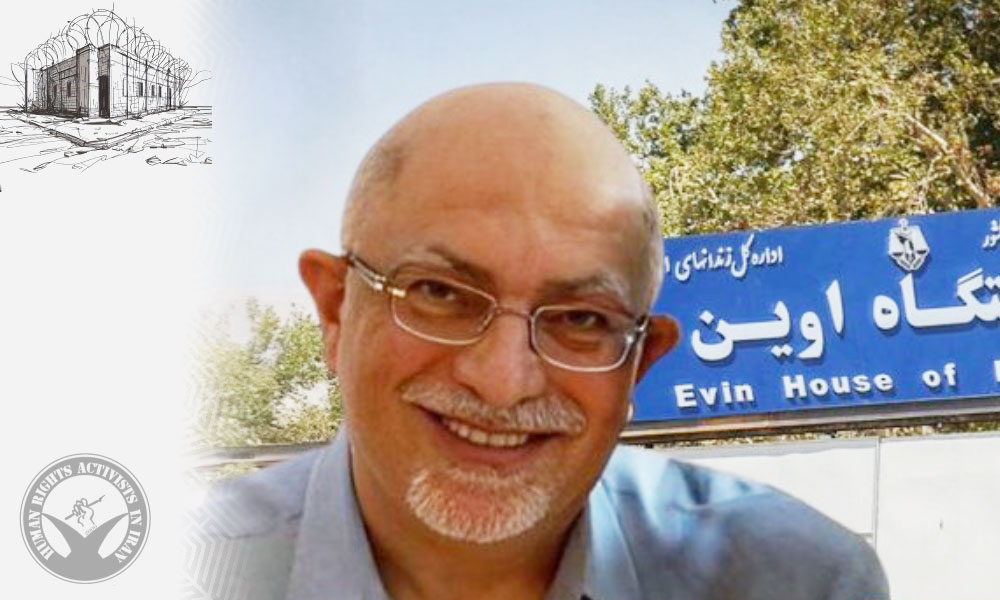
HRANA – Mansour Iranpour, a media activist based in Kerman, has been sentenced to 10 months in prison by Branch 101 of the Kerman Criminal Court.

According to HRANA, the verdict was issued on September 5 on the charge of “spreading false information with the intent to disturb public opinion.”

Mr. Iranpour had previously been interrogated in February 2025 at Branch 5 of the Kerman Revolutionary Prosecutor’s Office, where the investigating prosecutor also imposed a three-month ban on his online activities.

On January 10, 2025, he was summoned to the FARAJA Intelligence Office in Kerman for questioning. He subsequently appeared before the Cybercrime Division of the Kerman Public and Revolutionary Prosecutor’s Office, where he faced accusations of “spreading false information online” and “propaganda against the regime.” Following the session, he was released on bail.

Mansour Iranpour, a resident of Kerman, has previously faced arrest and prosecution in connection with his activities.

Death Sentence of Ehsan Faridi Upheld by Supreme Court

HRANA – The Supreme Court of Iran has upheld the death sentence of Ehsan Faridi, a political defendant and student at Tabriz Technical University.

According to information obtained by HRANA, Mr. Faridi’s death sentence, previously issued by Branch 3 of the Tabriz Revolutionary Court, presided over by Judge Hassan Fathpour, was confirmed by the Supreme Court. He had been convicted on the charge of “corruption on earth” (efsad fel-arz).

Three of Mr. Faridi’s trial sessions were held via video conference last year at the Tabriz Revolutionary Court.

In September 2025, a separate hearing related to another part of his case was held at Branch 2 of the Tabriz Criminal Court, where he was subsequently sentenced to 18 months in prison.

Mr. Faridi was arrested on June 18, 2024, after appearing at the Tabriz Prosecutor’s Office, and was transferred to Tabriz Prison.

Ehsan Faridi, 22, a student of Manufacturing Engineering at Tabriz Technical University, had previously been arrested on March 8, 2024, and transferred to Tabriz Prison. He was released ten days later, on March 18, after posting bail.

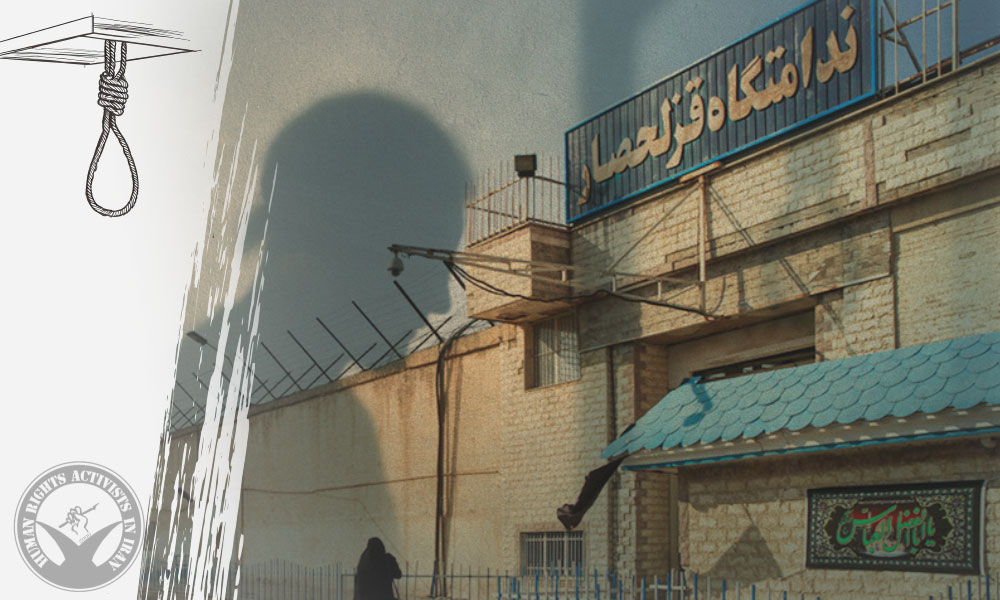
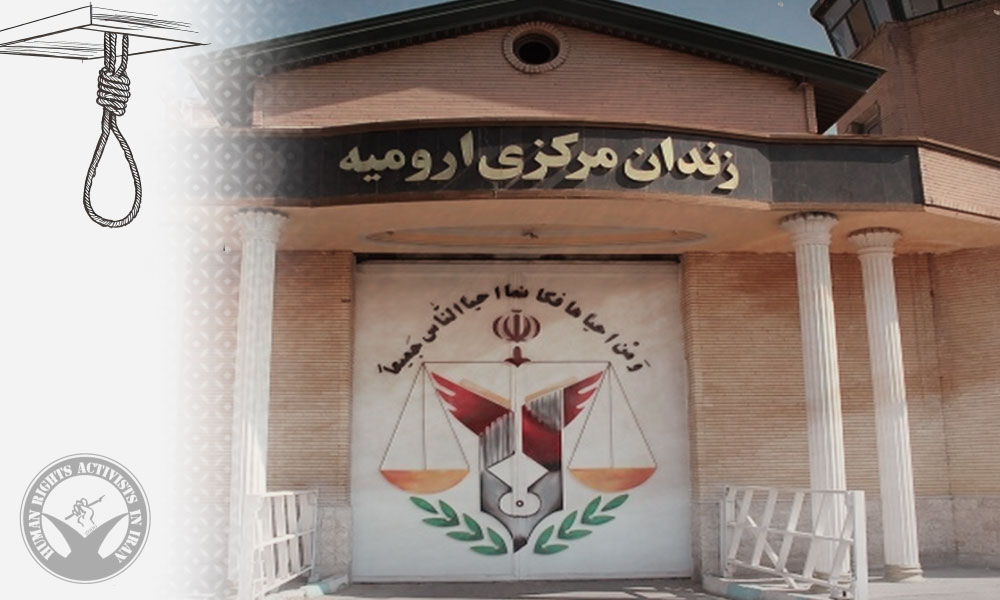
Nine Prisoners Executed in Ghezel Hesar Prison, Karaj

HRANA- On Wednesday, October 8, nine prisoners were executed by hanging in Ghezel Hesar Prison in Karaj.

According to HRANA, four of the executed individuals had been sentenced to death on drug-related charges, four on murder charges, and one on a charge of rape.

The identity of one of the prisoners has been confirmed as Ahmadi Mohammadi, who was convicted on drug-related charges. HRANA has also identified another prisoner as Mahmoud Valiollah, who had been arrested on a murder charge.

A close relative of Mr. Valiollah told HRANA: “Mahmoud was the father of a 16-year-old son and two daughters, aged 6 and 10. He had lived in Tehran for many years. In the summer of 2021, he shot and killed his wife. He was eventually arrested and sentenced to death by the Criminal Court.”

The Hamshahri daily reported that one of the other executed prisoners was a man who, in March 2024, killed the wife of one of his colleagues during a robbery. He was arrested, sentenced to death, and his sentence was carried out in prison.

According to the same source, another executed prisoner was a man named Pedram, who three years earlier had killed the woman he was romantically interested in in order to steal her Tiggo car and buried her body in the Taleqan desert. He was arrested, tried, sentenced to death, and executed at dawn on Wednesday.

Hamshahri also reported that another of those executed was a man who had been arrested about seven years ago on charges of killing a young woman over a financial dispute. Her body was later found along the Tehran–Qom highway. The man was executed early Wednesday morning following his trial and sentencing.

In addition, Hamshahri reported that one of the executed prisoners had been arrested on charges of raping one of his relatives.

Since the beginning of this year, 183 people have been executed in Ghezel Hesar Prison alone, a figure unprecedented in comparison to previous years.

Nahid Behroozi, a Baha’i Citizen, Sentenced to Five Years in Prison

HRANA – Nahid Behroozi (Forouhari), a Baha’i citizen residing in Karaj, has been sentenced to five years in prison and additional penalties by Branch 4 of the Karaj Revolutionary Court.

According to the verdict, which was recently issued and officially communicated to her on Monday, October 6, 2025 (14 Mehr 1403), Ms. Behroozi was sentenced to five years of imprisonment under Article 500 (repeated) of the Islamic Penal Code for “educational or proselytizing activities deemed deviant and contrary to or disruptive of the sacred religion of Islam.”

In addition to the prison term, the court imposed complementary punishments, including ten years’ deprivation of social rights and the confiscation of her seized belongings—such as electronic devices and religious books.

Ms. Behroozi was arrested on July 29, 2024, by agents of the Fardis branch of the Ministry of Intelligence while on a street in Karaj. Following her arrest, security agents searched her home. After completing interrogation at The Ministry of Intelligence’s detention facility, she was transferred to Kachouei Prison on August 15, 2024. She was released from Kachouei Prison on October 1, 2024, upon posting bail.

Four Prisoners Executed in Malayer, Sabzevar, Saveh, and Qom Prisons

HRANA- In recent days, four prisoners were executed in the prisons of Malayer, Sabzevar, Saveh, and Qom on charges related to drug offenses and murder.

According to HRANA, on Sunday, October 5, a prisoner identified as Sobhan Najafi was hanged in Malayer Prison, Hamadan Province. Based on information obtained by HRANA, Mr. Najafi had previously been arrested on a murder charge and later sentenced to death by a criminal court.

The following day, a prisoner named Reza Saqaei was executed in Sabzevar Prison, Razavi Khorasan Province, for drug-related offenses. On the same day, another prisoner, whose last name was verified by HRANA as Hosseini, was executed in Saveh Prison on murder charges.

Finally, on Tuesday, October 7, authorities at Qom Prison executed a prisoner identified as Farzad (last name unknown) for drug-related offenses.

As of this report’s publication, none of these executions have been announced by prison officials or judicial authorities.

From the beginning of this year until the end of September, the Iranian regime has executed 1,028 people, marking an unprecedented increase compared to previous years.

Subscribe to Our Newsletter

Now is definitely not the time to stop reading!

Families of Six Executed Prisoners in Ahvaz Threatened Against Holding Mourning Ceremonies

HRANA – Security forces in Khuzestan Province have severely threatened the families of six executed Arab prisoners, warning them not to hold mourning ceremonies or communicate with media outlets and human rights organizations.

The six men – Ali Mojaddam, Mohammadreza Moghaddam, Moein Khanfari, Habib Deris, Adnan Ghobeishavi, and Salem Mousavi – were executed at dawn on Saturday, October 4, 2025, in Sepidar Prison, Ahvaz, without prior notice to their families or lawyers.

According to HRANA, agents of the Ministry of Intelligence contacted the families by phone on the day of the execution to inform them of the death of their loved ones. Prior to these calls, the families had received no information regarding the scheduled execution or the prisoners’ transfer to solitary confinement.

Sources close to the families told HRANA that, following the executions, security authorities summoned several relatives and tribal elders to intelligence offices, including the local headquarters of the Ministry of Intelligence, and explicitly forbade them from holding mourning ceremonies in mosques or public halls. The authorities also prohibited the recitation of the Quran, poetry, or other religious rituals over loudspeakers – traditional mourning practices among the Arab community in Khuzestan.

According to information obtained by HRANA, family members and tribal elders were compelled to sign written pledges promising not to organize any public gatherings. They were further warned that any communication with media or international human rights organizations would result in punitive measures.

The six Arab prisoners were arrested by security forces in February 2019 and later sentenced to death by a branch of the Ahvaz Revolutionary Court in March 2023. The judiciary of the Islamic Republic accused them of “membership in the armed wing of Harakat al-Nidal al-Arabi li-Tahrir al-Ahwaz and armed action against the foundations of the Islamic Republic.”

As of two days after the executions, the families remain unaware of the burial locations or the circumstances under which the sentences were carried out.

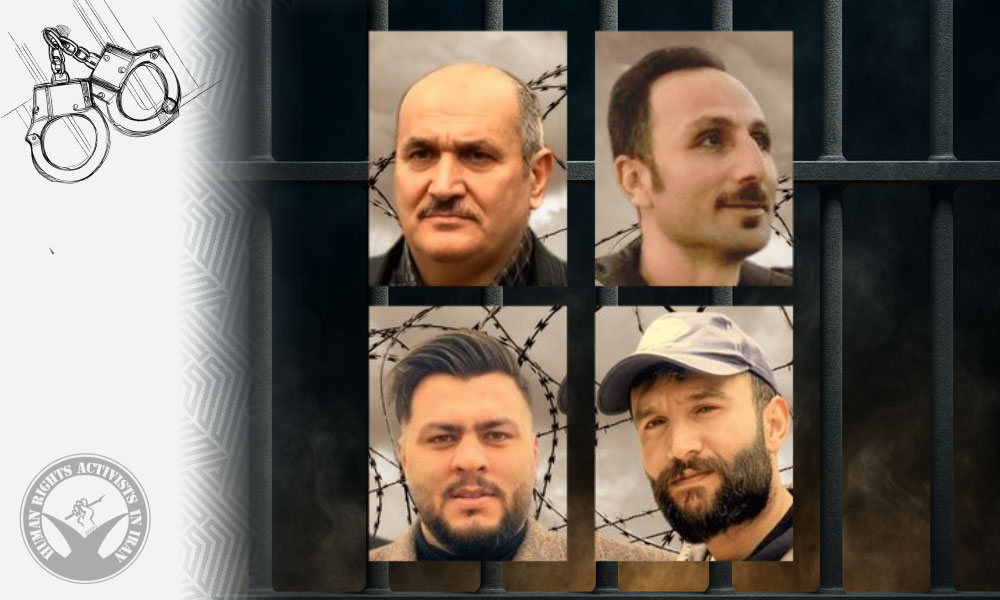
Forced Confessions of Three Rappers Published by Tehran Security Police

HRANA – Three rap artists, Arash Sayyadi, Ashkan Shekarian Moghaddam, and Rasam Sohrabi, were arrested by the Tehran Security and Intelligence Police. Videos of their forced confessions have been circulated on social media while their cases are still pending judicial review.

In the published videos, the three men appear half-naked, apparently to display their tattoos, suggesting the security forces intended to showcase them.

According to HRANA, the news agency of Human Rights Activists in Iran, these rappers, often labeled “underground” musicians for lacking official production licenses, were detained by Tehran’s Security Police. Following their arrests, videos were posted on social media accounts attributed to Arash Sayyadi, Rasam Sohrabi, and Ashkan Shekarian Moghaddam, in which they appear half-naked and confess to “taunting” and “disrupting public order” online.

At the end of the videos, the three express “gratitude and apologies” to “law enforcement, judicial authorities, the Second Base of the Intelligence Organization, and the Prosecutor’s Office of District 5 of Tehran.”

It is worth noting that, beyond violating human dignity, the recording and broadcasting of forced confessions constitute a breach of legal principles: under the law, individuals are presumed innocent until proven guilty in court, and any punitive action before a final conviction is a violation of their civil and human rights.

These three citizens are active in rap music. Arash Sayyadi, known by his stage name “Isin,” and composer Rasam Sohrabi had previously faced security-related confrontations and arrests. Ashkan Shekaryan Moghaddam performs under the stage name “Ashkan Leo.

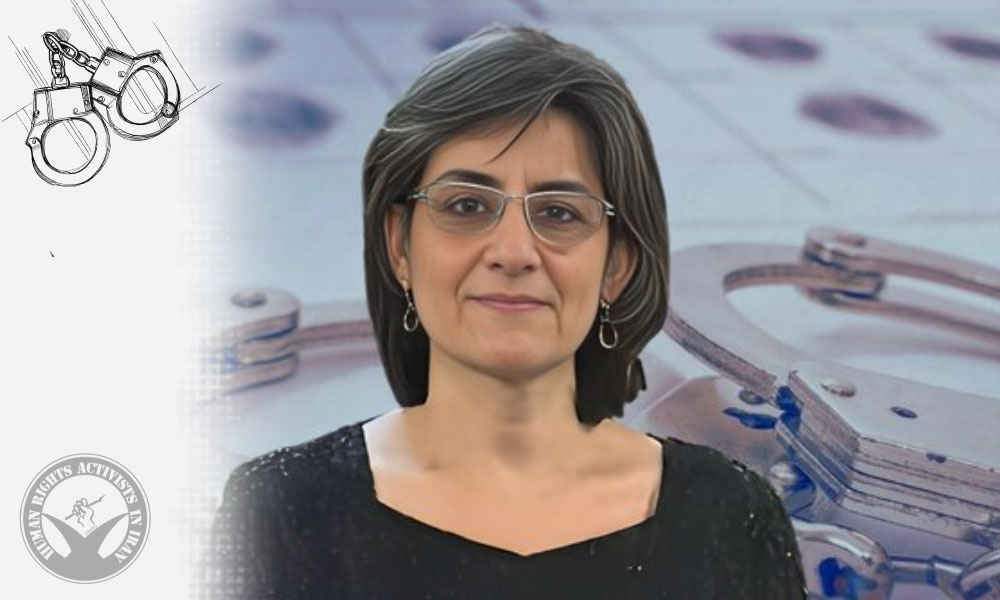
Elham Salehi Sentenced to Prison and Additional Punishments

HRANA – Elham Salehi, a civil activist currently held in Qarchak Prison in Varamin, has been sentenced by Branch 23 of the Tehran Revolutionary Court to one year in prison and a two-year ban on social media activity.

The ruling, handed down by Branch 23 of the Tehran Revolutionary Court, was delivered to Ms. Salehi today. Under the verdict, she has been sentenced to one year of discretionary imprisonment, and as a complementary punishment, she is prohibited from engaging in social media activity for two years.

A source close to her family confirmed the news to HRANA, stating: “The verdict was served to Ms. Salehi this morning after she appeared before the mentioned judicial branch.”

Her trial session was held on Sunday, September 28, 2025. The charges brought against her included “propaganda against the regime,” “spreading false information,” and “appearing in public without hijab.”

The civil activist was transferred to Qarchak Prison on August 26, 2025, after being arrested in early August at her home in Tehran by security forces.

Elham Salehi, a 37-year-old civil activist based in Tehran, has previously faced judicial proceedings over her activism.

Appeals Court Upholds 90-Year Combined Prison Sentence for 10 Baha’i Women in Isfahan

HRANA – The convictions of Negin Khademi, Yeganeh Agahi, Yeganeh Roohbakhsh, Neda Badakhsh, Mojgan Shahrezaei, Shana Shoughifar, Arezoo Sobhanian, Parastoo Hakim, Bahareh Lotfi, and Neda Emadi, ten Baha’i women living in Isfahan, have been upheld in full by Branch 47 of the Isfahan Court of Appeals.

According to HRANA, the news agency of Human Rights Activists in Iran, the women were initially sentenced by the Isfahan Revolutionary Court to a combined 90 years in prison, along with fines and complementary punishments, which have now been confirmed on appeal.

The ruling, issued on September 28, 2025, was delivered to their defense attorney. According to the verdict, the women were convicted of “propaganda against the Islamic Republic” and “participation in deviant promotional and educational activities contrary to Islamic law.” These charges were based on activities such as organizing English, art, music, and yoga classes, and nature trips for children and teenagers, including both Iranian and Afghan participants.

Collectively, they were sentenced to 90 years in prison, 900 million tomans in fines, confiscation of property in favor of the state, and two-year bans on travel abroad and use of social media. Parts of the prison terms and fines were suspended.

A source close to the families told HRANA: “The appeals court session was held without prior notice and in the absence of the defendants. The verdict was issued in absentia and only communicated to their lawyer. The court labeled the case as ‘security-related and confidential.’”

In the initial trial held in October 2024, Yeganeh Agahi, Yeganeh Roohbakhsh, and Negin Khademi each received 10 years in prison and 100 million tomans in fines, with one-third of the sentences suspended. Neda Badakhsh, Mojgan Shahrezaei, Shana Shoughifar, Parastoo Hakim, and Arezoo Sobhanian received similar sentences, with half of the imprisonment and fines suspended.

Neda Emadi and Bahareh Lotfi were each sentenced to five years in prison and 50 million tomans in fines, with four years of the prison term and half of the fine suspended.

As complementary punishments, all ten women were sentenced to the confiscation of seized belongings—including phones, laptops, digital devices, foreign currency, gold, and jewelry – two-year travel bans, and two-year bans on using social media.

The ten Baha’i women were arrested on October 23, 2023, by security forces in Isfahan and released on bail within two months from Dolatabad Prison. During detention, they reportedly endured psychological torture and threats of physical torture.

Yeganeh Agahi had previously been arrested before this case. Yeganeh Roohbakhsh, who was 19 years old at the time of her arrest, is the daughter of Arezoo Sobhanian, another defendant in the case.

Death Sentence of Mohammad-Javad Vafaei Sani Upheld by Supreme Court

HRANA – The death sentence of Seyed Mohammad-Javad Vafaei Sani, a political prisoner held in Vakilabad Prison in Mashhad, has been upheld by Branch 9 of the Supreme Court, after having been overturned twice previously.

Attorney Babak Paknia announced the development on social media, writing: “The death sentence of Mr. Mohammad-Javad Vafaei Sani on the charge of corruption on earth (efsad fel-arz) through arson and destruction of public property has been upheld by Branch 9 of the Supreme Court, despite numerous flaws. Regarding these flaws and the interference of third parties in the judicial process, correspondence has been made with the head of the judiciary. I hope that before it’s too late, his special inspectors will intervene in the case.”

Seyed Mohammad-Javad Vafaei Sani, a 28-year-old political prisoner and boxing coach, was arrested in March 2020 in Mashhad and transferred to Vakilabad Prison. He was initially sentenced to death by the Mashhad Revolutionary Court on the charge of “corruption on earth through intentional destruction.” The Supreme Court overturned the verdict, sending the case back to a parallel branch for retrial.

In the second trial, he was again sentenced to death, but in June 2024, the Supreme Court overturned the ruling once more and remanded the case for a third review.

In September 2024, Branch 3 of the Mashhad Revolutionary Court once again sentenced him to death on the charge of “corruption on earth.”