Two Defendants Sentenced to Death in Tehran

According to HRANA, the news agency of Human Rights Activists, quoting Rokna, two defendants were recently sentenced to death in Tehran.

A defendant named Jalil was sentenced to death by the Second Branch of the Criminal Court of Tehran Province for murder. Another defendant, Kamran, was sentenced to death by the Eighth Branch of the Criminal Court of Tehran Province for murder.

Iran ranks first in the world in citizen executions per capita, according to international organizations.

The Statistics and Publication Center of the Human Rights Activists in Iran (HRA) reported that between January 1 and December 20 of 2020, at least 236 citizens were executed. One of these citizens was executed publicly, and two were juvenile offenders. An additional 95 citizens were sentenced to death.

Several Citizens Including Javad Laleh Mohammadi and Fatemeh Sepehri Arrested During Protest in Mashhad

On Sunday, August 1, during a protest rally in support of the people of Khuzestan a number of citizens, including civil activists Javad La’l Mohammadi and Fatemeh Sepehri, were arrested and taken to an unknown location by security forces in Mashhad.

According to HRANA, the news agency of Human Rights Activists, the rally, which was held in Mashhad’s Mellat Park, faced violence after the arrival of military and security forces.

The protesting citizens gathered in another park in the city of Mashhad and chanted slogans in support of the people of Khuzestan, and demanded the release of political prisoners after being violently confronted by security forces at Mellat Park.

The detained civil activists have not contacted their families as of this writing, which has raised concerns about the condition of detainees. The exact number and identities of other detained citizens during the rally are unknown, and HRANA is still investigating to find names and information about other detainees.

Fatemeh Sepehri and Javad La’l Mohammadi, who were signatories of  the Supreme Leader’s resignation request letter in 2019, had been arrested and convicted for signing that letter.


Three Prisoners Executed in Urmia Prison on Drug-Related Charges

At dawn on Monday, August 2, three prisoners were executed  in Urmia Prison in West Azerbaijan Province.

According to HRANA, the news agency of Human Rights Activists, the three prisoners had previously been sentenced to death on drug-related charges.

HRANA has verified the identities of the executed prisoners as Sepehr Abbasnejad (Beigzadeh), son of Bahman, Eskandar Zar’e, son of Ebrahim, and Hamzeh Rezaei, son of Reza.

Iran ranks first in the world in citizen executions per capita, according to international organizations. The Statistics and Publication Center of the Human Rights Activists in Iran (HRA) reported that between January 1 and December 20 of 2020, at least 236 citizens were executed.

One of these citizens was executed publicly, and two were juvenile offenders. An additional 95 citizens were sentenced to death.
According to the same report, more than 72% of executions in Iran are not reported by the government or the judiciary, which human rights organizations call “secret” executions.

The execution of these citizens has not yet been announced by Iranian media or official sources as of this writing.

Two Prisoners Executed in Mashhad Prison on Charges of Murder

On Sunday, August 1, two prisoners who were previously sentenced to death in separate cases on murder charges were executed in Mashhad Prison.

According to HRANA, the news agency of Human Rights Activists, quoting Rokna, the report identifies the executed prisoners as 57-year-old Hassan and 61-year-old Ali.

Iran ranks first in the world in citizen executions per capita, according to international organizations. The Statistics and Publication Center of the Human Rights Activists in Iran (HRA) reported that between January 1 and December 20 of 2020, at least 236 citizens were executed.

One of these citizens was executed publicly, and two were juvenile offenders. An additional 95 citizens were sentenced to death. According to the same report, more than 72% of executions in Iran are not reported by the government or the judiciary, which human rights organizations call “secret” executions.

HRANA Recap: This Week’s Protests in Iran

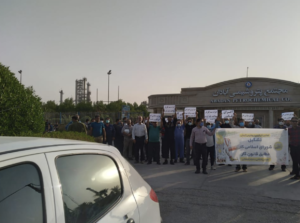
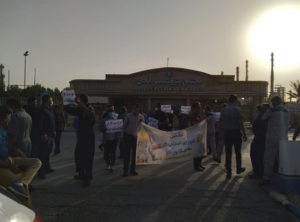
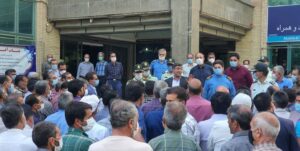
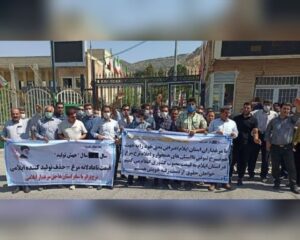
According to HRANA, the news agency of Human Rights Activists, the Khuzestan Water Crisis once again dominated this week’s protests in Iran. Since their start on June 15, citizens in over 41 cities have held rallies in protest of the mismanagement from officials that has led to water shortages throughout the province and the drying of the Karun river. A number of labor protests took place as well, and in some areas the ongoing oil protests continued. Workers of Haft Tappeh Sugarcane Agro-Industry Company also continued their strike into a third week. Below is a recap of this week’s protests in Iran, along with footage from the demonstrations.


Saturday, July 24

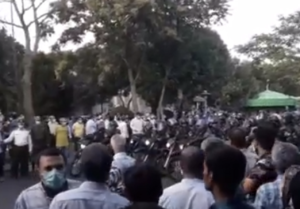
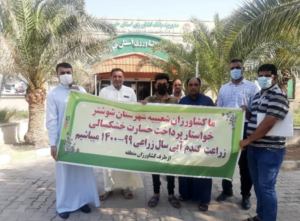
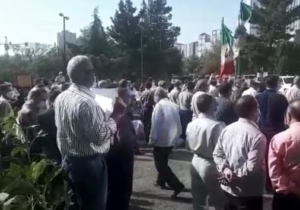
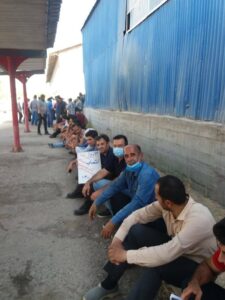
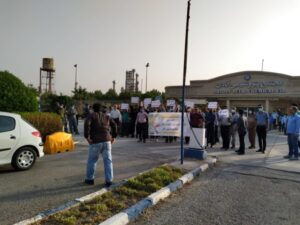
A number of protests took place this Saturday, July 24. A group of farmers in Shoaibiyeh district of Shushtar protested in Ahvaz, several telecommunication workers of East Azerbaijan province, some telecommunication workers of Chaharmahal Bakhtiari province, and employees of Abadan Petrochemical Complex held protests. A group of workers of Haft Tappeh Sugarcane Agro-Industry Company protested for the eleventh day in a row. A group of Shiraz city bus drivers went on strike and refused to work after their demands were not addressed. Citizens living in Tabriz also rallied and marched in support of the Khuzestan protests.


People of Tabriz:
 

Shiraz city bus drivers:

Farmers of Shoaibiyeh:
Telecommunication workers of East Azarbaijan:
Workers of Haft Tappeh Sugarcane Agro-Industry Company:


Workers of Abadan’s Petrochemical Complex:


Sunday, July 25

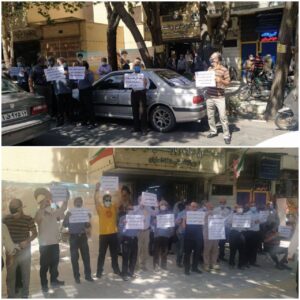
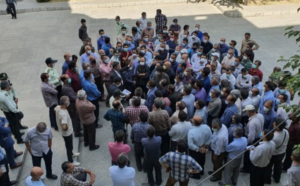
A group of retirees of the Steel Companies of Isfahan and Khuzestan Provinces, several rural area telecom workers in the Hamadan region, and a group of workers from the Haft Tappeh Sugarcane Agro-Industry Co. for the thirteenth day in a row held protest rallies and called on their demands to be met.


Retirees of the Steel company in Isfahan and Khuzestan provinces:


Workers of rural area telecom in Hamadan:


Monday, July 26

A number of workers of Haft Tappeh Sugarcane Agro-Industry Company for the fourteenth day in a row, several employees of Imam Khomeini Hospital in Karaj, a group of poultry farmers in Ilam, urban and rural water supply workers in Baghmalek and Izeh, a group of Isfahani citizens, a group of the retirees of IRIB in Tehran, and candidate students for the master’s degree entrance exam in Tehran all held protest rallies and called on their demands to be addressed. Also, in Tehran and Karaj people protested the current situation in the country by holding rallies and marches and chanting slogans.


Protesting people in Tehran:



Workers of Haft Tappeh Sugarcane Agro-Industry Company:
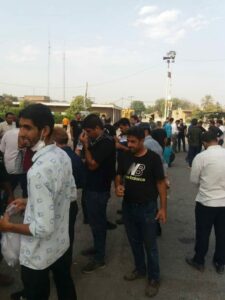


Poultry farmers in Ilam:


Workers of rural water supply in Baghmalek and Izeh:


Students in Tehran:


Tuesday, July 27

Workers of Haft Tappeh Sugarcane Agro-Industry Company protested for the 15th consecutive day this Tuesday. Additionally, a group of workers of Rudbar municipality in Gilan province, a number of cattle breeders of Yazd and Isfahan cities, several workers of natural gas fuel gas stations in Urmia, and many people in Abdanan in Ilam province held protest rallies. Also, a group of retirees in Tehran and Karaj rallied in support of the protests of the people of Khuzestan.


Workers of Haft Tappeh Sugarcane Agro-Industry Company:
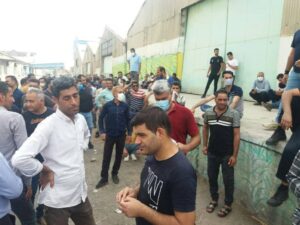


Workers of Rudbar Municipality:


Cattle breeders of Yazd and Isfahan:


Workers of gas stations in Urmia:


Citizens of Abdanan:

Retirees in Tehran and Karaj:

Wednesday, July 28

For the 16th day in a row, workers of Haft Tappeh Sugarcane Agro-Industry Company protested. A group of workers from the Varamin Railway, a group of workers from the Rudbar Municipality for the second day in a row, and a number of truck drivers in Ahvaz all went on strike and called on their demands to be addressed.


Truck drivers in Ahvaz:

Workers of Haft Tappeh Sugarcane Agro-Industry Co:


Workers from the Varamin Railway:

Workers of the Rudbar Municipality:

Thursday, July 29

On their 17th day of protesting, a group of workers of the Haft Tappeh Sugarcane Agro-Industry Company in the yard of the company and another group near the site’s alcohol factory called on their demands be addressed in protest rallies.


Friday, July 30

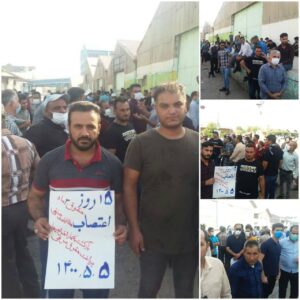
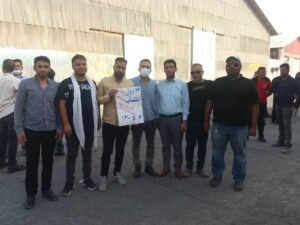
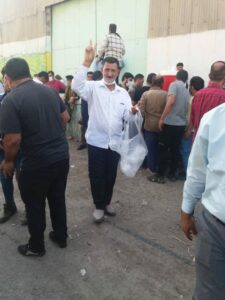
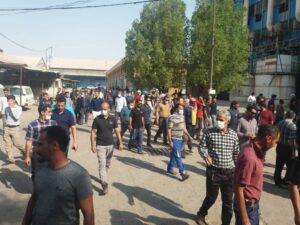
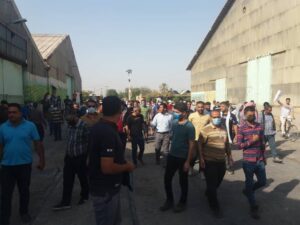
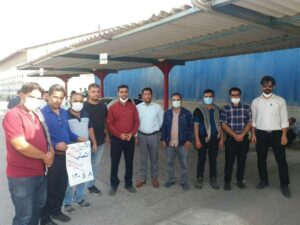
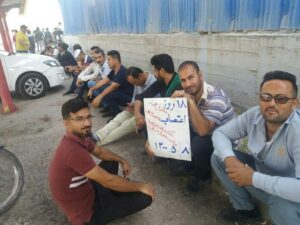
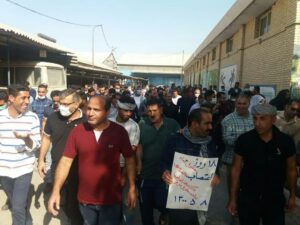
Workers of the Haft Tappeh Sugarcane Agro-Industry Company continued their strike for an 18th day in a row and gathered on the company’s site. The Haft Tappeh workers stated that their main demands are the payment of arrears, the return of fired colleagues, and access to Covid-19 vaccines. They also chanted slogans protesting the Islamic Parliament’s decision to block the Internet in Iran. Also, A number of mothers of those killed during the nationwide protest in November 2019 protests held a protest rally in Tehran’s Azadi Square.


Workers of the Haft Tappeh Sugarcane Agro-Industry Company:
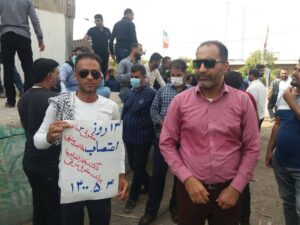
Gathering in Tehran of mothers of those killed in the protests of November 2019:


Subscribe to Our Newsletter

Now is definitely not the time to stop reading!

Three Citizens from Salas-e Babajani County Arrested and Transferred to Detention Center in Kermanshah

Three citizens from Salas-e Babajani County were recently arrested by security forces and transferred to a detention center in Kermanshah for interrogation.

According to HRANA, the news agency of Human Rights Activists, quoting Kurdpa, the citizens have been identified as Arkan Bahrami, Khalil Ramezani and Khaled Mirzaei from the county of Salas-e Babajani.

As of this writing, the reasons for the arrests and the charges against Bahrami, Ramezani, and Mirzaei are not known. The report does state, however, that the security forces detained the three citizens in relation to “propaganda against the regime in cyberspace”.

An informed source said that Khalil Ramezani was released on bail two days ago. Bahrami and Mirzaei are still in detention.

Three Executed in Qazvin Prison on Drug-Related Charges

At dawn on Wednesday, July 28, three prisoners who had previously been sentenced to death on drug-related charges were executed in Qazvin Prison.

According to HRANA, the news agency of Human Rights Activists, quoting the Iran Human Rights (HRI),the three prisoners have been identified as Esmail Fatehi, Mansour Mohammadi, and Mozaffar (unknown surname).

“Esmail Fatehi was arrested and imprisoned five years ago for carrying 300 kilograms of opium,” the report quoted an informed source as saying. “Mansour Mohammadi and Mozaffar have also been in prison for about six years.”

Iran ranks first in the world in citizen executions per capita, according to international organizations. The Statistics and Publication Center of the Human Rights Activists in Iran (HRA) reported that between January 1 and December 20 of 2020, at least 236 citizens were executed.

One of these citizens was executed publicly, and two were juvenile offenders. An additional 95 citizens were sentenced to death.

According to the same report, more than 72% of executions in Iran are not reported by the government or the judiciary, which human rights organizations call “secret” executions.

The execution of these three prisoners has not been announced by Iranian media or official sources.

Prisoner on Day 47 of a Hunger Strike in Greater Tehran Prison

As of today, Thursday, July 29, Alireza Ziba Halat Monfared has been on a hunger strike for 47 days in the Greater Tehran Prison.

According to HRANA, the news agency of Human Rights Activists, Ziba Halat Monfared was imprisoned after being accused of financial crimes.

In February 2020, a spokesman for the judiciary expressed that the 25-year prison sentence of Alireza Ziba Halat had been confirmed and finalized.

He went on hunger strike following his request for meeting with judicial officials, but so far none of the officials has responded to the request. Ziba Halat Monfared has lost about 23 kg during this period.


Death Sentences Issued to Two Men in Tehran

Two death sentences were recently issued to male defendants in Tehran.

According to HRANA, the news agency of Human Rights Activists, quoting Shargh newspaper, a defendant named Farid was sentenced to death by the Second Branch of the Criminal Court of a Tehran province for the murder of his colleague.

Another defendant was sentenced to death by a criminal court in Tehran province for the murder of his aunt.

Iran ranks first in the world in citizen executions per capita, according to international organizations. The Statistics and Publication Center of the Human Rights Activists in Iran (HRA) reported that between January 1 and December 20 of 2020, at least 236 citizens were executed. An additional 95 citizens were sentenced to death.

According to the same report, more than 72% of executions in Iran are not reported by the government or the judiciary, which human rights organizations call “secret” executions.

Christian Convert Hamed Ashouri Sent to Karaj Central Prison

On Tuesday, July 27, Christian convert Hamed Ashouri was sent to Karaj Central Prison to endure his sentence.

According to HRANA, the news agency of Human Rights Activists, quoting the website Article 18, the Court of Appeals upheld Ashouri’s ten-month prison sentence the previous day.

Hamed Ashouri had been arrested by security forces in Fardis city in Karaj, in March 2017, and transferred to Ghezel Hesar Prison in Karaj for interrogation. He was temporarily released after ten days. It is alleged that security forces raided Mr. Ashouri’s home while he was in custody.

A hearing on the charges against this citizen was held in February 2020 in Branch 4 of the Revolutionary Court of Karaj. Finally, in April of this year, Mr. Ashouri was sentenced to 10 months in prison on charges of propaganda against the regime.

Despite the fact that Christians are recognized as a religious minority under Iranian law, security forces nevertheless pursue the issue of Muslims converting to Christianity with particular sensitivity.

The Iranian regime targets Christian converts despite Article 18 of the Universal Declaration of Human Rights and Article 18 of the International Covenant on Civil and Political Rights, which state that every individual has the right to freedom of religion and belief and freedom to express it openly or secretly.