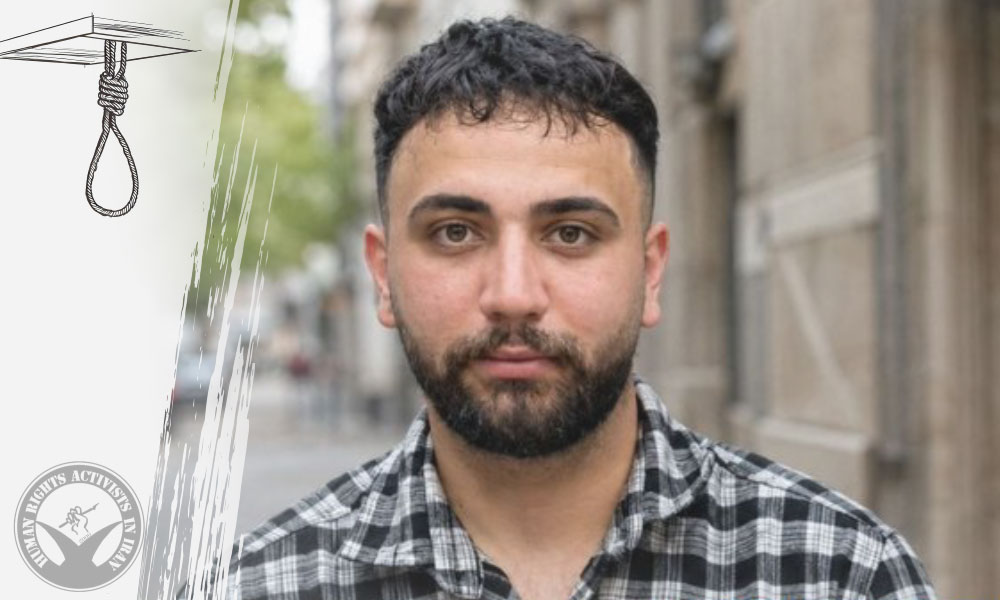
Alireza Sepahi Returned to Prison After Suffering Stroke Ahead of Execution

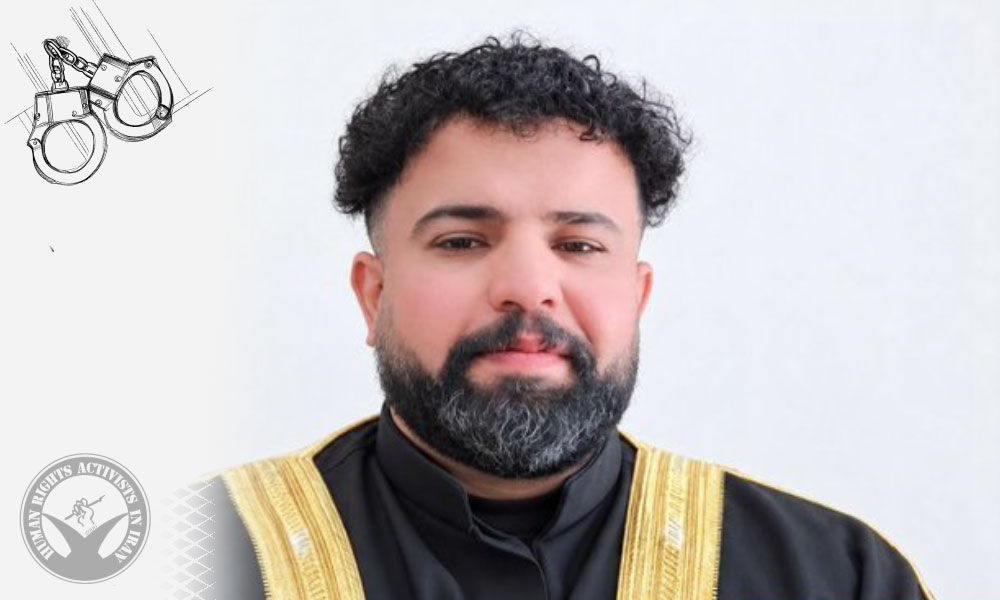
HRANA – Alireza Sepahi, one of those arrested during the January 2026 nationwide protests and among the defendants in the case known as the “Alikhani Square of Isfahan” case, suffered a stroke before being transferred for the implementation of his death sentence. Sepahi, who was scheduled to be executed alongside Abolfazl Sepahi and Amirhossein Safari, was taken to a hospital and, after receiving medical treatment, was returned to Dastgerd Prison in Isfahan.

According to HRANA, Alireza Sepahi, a death row prisoner, was returned to Dastgerd Prison in Isfahan after suffering a stroke and being transferred to a hospital.

According to information received by HRANA, Mr. Sepahi’s execution was scheduled to be carried out in the early hours of Tuesday, July 28, alongside those of Abolfazl Sepahi and Amirhossein Safari at Alikhani Square in Isfahan. However, before being transferred to the execution site, he suffered a stroke and was taken to a hospital by prison officials.

A source close to the prisoner’s family told HRANA that after undergoing medical treatment and being resuscitated at the hospital, Alireza Sepahi was returned to Dastgerd Prison, where he is currently being held. His return to prison has intensified his family’s concerns about both his physical condition and his fate.

Alireza Sepahi, aged approximately 25, was arrested on January 10, 2026, in connection with the nationwide protests. He had previously been transferred from the general ward of Dastgerd Prison to solitary confinement at around 5:00 a.m. on July 18, along with his cousin, Abolfazl Sepahi.

Court hearings in Mr. Sepahi’s case were held inside the prison via video conference. The judicial proceedings were marked by a number of due process concerns, including his lawyer’s inability to effectively access the case file, the authorities’ refusal to provide a copy of the court’s verdict, the family’s lack of information about the details of the charges, and the court’s failure to properly examine evidence submitted in his defense.

According to a source close to the family, surveillance camera footage and other evidence indicate that Alireza Sepahi was not present at Alikhani Square at the time of the incident forming the basis of the case and was elsewhere. Nevertheless, Judge Morteza Barati, who presided over the case, sentenced him to death on four counts without effectively examining this evidence.

Several other defendants in the case have also stated that they were subjected to pressure and torture during interrogations to force them to confirm Alireza Sepahi’s presence at the scene of the incident. Despite these allegations, no independent or effective investigation has been conducted into the possibility that these statements were obtained under coercion.

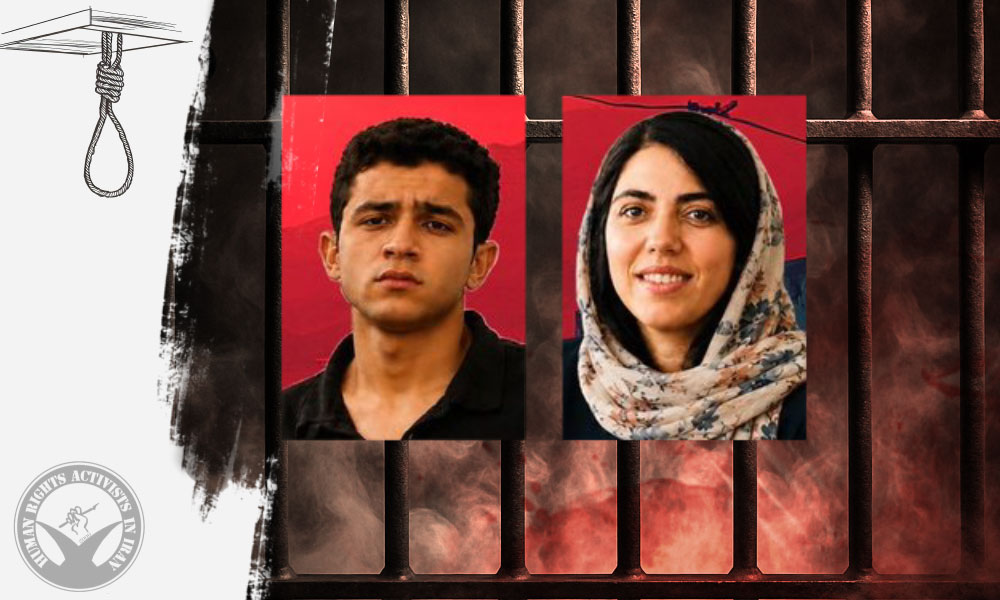
Two other defendants in the case, Erfan Esfandiari and Gol-Mohammad Mohammadi, were executed on July 19. The death sentences of Abolfazl Sepahi and Amirhossein Safari were carried out publicly at Alikhani Square in Isfahan in the early hours of Tuesday, July 28.

In the initial trial, 15 defendants in this case were sentenced to death. According to information provided by their lawyer, the death sentence of one defendant was overturned by the higher judicial authority, while the death sentences of the remaining 14 defendants were upheld.

Five Prisoners Executed in Taybad Prison

HRANA – On Wednesday, July 29, the death sentences of five prisoners who had previously been convicted in separate cases on drug-related charges were carried out in Taybad Prison.

According to HRANA, citing Haal Vsh, five prisoners were executed in Taybad Prison.

One of the prisoners has been identified as Nader Abil, approximately 40 years old, father of four daughters, originally from Sistan and Baluchestan Province and residing in Mashhad.

According to the report, the five prisoners had been arrested in separate cases on charges related to drug offenses and were subsequently sentenced to death by the judiciary.

The report did not identify the other four prisoners but stated that they were Afghan nationals.

As of the time of this report, the executions have not been officially announced by prison authorities or the relevant state institutions.

According to HRA’s Annual Report, in 2025 at least 2,063 citizens, including 61 women and 2 juvenile offenders, were executed. Of these, the sentences of 11 individuals were carried out in public. During the same period, 172 other individuals were sentenced to death.

Behrouz Izanlou and 16-Year-Old Zeynab Izanlou Sentenced to Imprisonment, Flogging, and Fine

HRANA – Behrouz Izanlou, arrested during the nationwide protests in January 2026, has been sentenced by Branch 103 of the Criminal Court Two of Bojnurd to four years and nine months in prison, 80 lashes, and paying a fine. His 16-year-old daughter, Zeynab Izanlou, has also been sentenced to six months and 15 days in prison in connection with the same case.

According to HRANA, Behrouz Izanlou and his 16-year-old daughter, Zeynab Izanlou, have been sentenced to imprisonment, flogging, and a monetary fine.

A source close to the family, who confirmed the information to HRANA, said that Branch 103 of the Criminal Court Two of Bojnurd convicted Behrouz Izanlou on charges including disobeying law enforcement officers while they were performing their duties and disrupting public order and peace through participation in protests. He was sentenced to four years and nine months in prison, 80 lashes, and a fine of 800 million rials (80 million tomans). The source added that his 16-year-old daughter, Zeynab Izanlou, was also sentenced to six months and 15 days in prison in connection with the same case.

Behrouz Izanlou and Zeynab Izanlou were arrested at their home on January 4, 2026, by security forces without the presentation of a judicial warrant. Following his arrest, Mr. Izanlou was transferred to Bojnurd Prison and was later released on bail set at 40 billion rials (4 billion tomans). Zeynab Izanlou was also released on bail some time after her arrest.

During his detention, Mr. Izanlou was denied family visits and access to legal counsel.

Behrouz Izanlou is a 43-year-old construction worker, a father of two, and a resident of Bojnurd.

Background on the January 2026 Protests

It should be noted that protests and strikes by shopkeepers and bazaar merchants began in Tehran on Sunday, December 28, 2025, and within two days spread beyond markets and commercial centers. With the participation of students, citizens, and various social groups, these protests became one of the largest protest movements of recent years. Following the crackdown by security and law enforcement forces, thousands were killed or injured, and tens of thousands were arrested or summoned by security agencies. For more information, readers may refer to HRANA’s comprehensive report titled “Crimson Winter,” documenting the first fifty days following the outbreak of Iran’s nationwide protests.

January 2026 Protests: Supreme Court Upholds Death Sentence of Benjamin Naghdi

HRANA – The death sentence of Benjamin Naghdi (Naqdi), who was arrested during the 2026 nationwide protests, has been upheld by Branch 41 of Iran’s Supreme Court. He had previously been sentenced to death by Branch 1 of the Revolutionary Court of Shiraz on the charge of “spreading corruption on earth” (efsad-e fel-arz).

According to HRANA, citing Emtedad, the Supreme Court has upheld the death sentence issued against Benjamin Naghdi, one of those arrested during the 2026 nationwide protests.

Mustafa Nili, Mr. Naghdi’s attorney, announced that “Branch 41 of the Supreme Court rejected the appeal and upheld the death sentence issued by Branch 1 of the Revolutionary Court of Shiraz on the charge of ‘spreading corruption on earth.'”

According to the attorney, “The ruling was formally served on the defense lawyers yesterday, and we will soon file a request for a retrial.”

Mr. Nili further stated that the trial judges considered all of the charges brought against his client to constitute “spreading corruption on earth,” and on that basis imposed the death penalty.

In June 2026, Branch 1 of the Revolutionary Court of Shiraz had sentenced Benjamin Naghdi to death on the charge of “spreading corruption on earth.”

According to his defense lawyer, Mr. Naghdi was arrested in Shiraz on January 3, 2026, for allegedly igniting a fire extinguisher and directing it toward law enforcement officers during the protests.

Before his arrest, Benjamin Naghdi was active in kickboxing and Muay Thai, and had won championship titles in both sports.

Background on the January 2026 Protests

It should be noted that protests and strikes by shopkeepers and bazaar merchants began in Tehran on Sunday, December 28, 2025, and within two days spread beyond markets and commercial centers. With the participation of students, citizens, and various social groups, these protests became one of the largest protest movements of recent years. Following the crackdown by security and law enforcement forces, thousands were killed or injured, and tens of thousands were arrested or summoned by security agencies. For more information, readers may refer to HRANA’s comprehensive report titled “Crimson Winter,” documenting the first fifty days following the outbreak of Iran’s nationwide protests.

January 2026 Protests: 17-Year-Old Yasin Sarfaraz Sentenced to Prison

HRANA – Yasin Sarfaraz, a 17-year-old resident of Bojnurd who was arrested during the January 2026 protests, has been sentenced by a judicial authority to three years and three months in prison.

According to HRANA, citing Kolbar News, Yasin Sarfaraz has been sentenced to imprisonment.

According to the report, Mr. Sarfaraz was sentenced to three years and three months in prison on the charge of “assembly and collusion against national security.” The verdict was formally served on him in July 2026.

The report further states that throughout his detention and the judicial proceedings, Yasin Sarfaraz was denied access to a lawyer of his choice. His trial was also held without the presence of defense counsel.

Yasin Sarfaraz, 17, is a resident of Bojnurd, North Khorasan province. He was arrested by security forces on January 11, 2026 in connection with the nationwide protests.

Subscribe to Our Newsletter

Now is definitely not the time to stop reading!

Afshin Heyratian Sentenced to 31 Years in Prison

HRANA – Afshin Heyratian, a children’s rights activist imprisoned in Evin Prison, has been sentenced by the Revolutionary Court of Tehran to a total of 31 years in prison and financial penalties. Under Iran’s sentencing rules for multiple offenses, 12 years of his prison sentence, as the most severe punishment, will be enforceable.

According to HRANA, children’s rights activist Afshin Heyratian has been sentenced to prison.

According to the verdict issued by Branch 26 of the Revolutionary Court of Tehran, presided over by Judge Iman Afshari, Mr. Heyratian was sentenced to:

• 12 years in prison for forming an illegal group;

• 11 years in prison for propaganda activities contrary to the sacred law of Islam;

• 6 years in prison and a fine of 330 million tomans for assembly and collusion against national security.

Under the legal provisions governing multiple convictions, if the verdict is upheld on appeal, only the most severe sentence, 12 years in prison, will be enforceable.

He was also sentenced to 2 years in prison and a fine equal to twice the amount received (US$2,000) on the charge of obtaining illicit property, in connection with receiving US$1,000.

Mr. Heyratian’s trial was held on July 18, 2026, before Branch 26 of the Revolutionary Court of Tehran, presided over by Judge Iman Afshari. At the time of the hearing, he had spent more than 250 days in detention without a final legal determination of his case.

Afshin Heyratian was arrested by security forces at his mother’s home in Tehran on November 11, 2025. During the arrest, agents searched the residence and confiscated a number of his personal belongings as well as items belonging to his family members. He was subsequently transferred to Evin Prison.

Afshin Heyratian, an approximately 46-year-old single Baha’i resident of Tehran, is a member of the Society for Protecting the Rights of Child Laborers and Street Children. He has previously faced arrest and judicial prosecution because of his activities and religious beliefs.

According to HRA’s annual reports, over the past three years, an average of 72% of all reported violations of the rights of religious minorities in Iran have involved Baha’i citizens.

January 2026 Protests: Saeed Mohammadyari Sentenced to 8 Years in Prison and Exile

HRANA – Saeed Mohammadyari, a resident of Kuhdasht and one of those arrested during the nationwide protests in January 2026, has been sentenced by the Revolutionary Court of Khorramabad to eight years in prison and two years of internal exile.

According to HRANA, Saeed Mohammadyari has been sentenced to imprisonment and internal exile.

According to the ruling issued by the Revolutionary Court of Khorramabad, he was sentenced to a total of eight years in prison and two years of internal exile to the city of Khoy on charges of “assembly and collusion to commit crimes against national security,” “propaganda against the regime,” and “insulting the Supreme Leader.”

A source familiar with the case confirmed the news to HRANA, stating: “The verdict was formally served on Mr. Mohammadyari today.”

Saeed Mohammadyari, 36, was arrested during the 2026 nationwide protests and was later released on bail. He works as a farmer in Kuhdasht.

Background on the January 2026 Protests

It should be noted that protests and strikes by shopkeepers and bazaar merchants began in Tehran on Sunday, December 28, 2025, and within two days spread beyond markets and commercial centers. With the participation of students, citizens, and various social groups, these protests became one of the largest protest movements of recent years. Following the crackdown by security and law enforcement forces, thousands were killed or injured, and tens of thousands were arrested or summoned by security agencies. For more information, readers may refer to HRANA’s comprehensive report titled “Crimson Winter,” documenting the first fifty days following the outbreak of Iran’s nationwide protests.

Yoroush Mehrali Beiglou Sentenced to More Than Three Years and Seven Months in Prison

HRANA – Yoroush Mehrali Beiglou, an Azerbaijani-Turk activist imprisoned in Tabriz Prison, has been sentenced in a new case by Branch 1 of the Tabriz Revolutionary Court to three years, seven months, and 17 days of discretionary imprisonment.

According to HRANA, Yoroush Mehrali Beiglou has been sentenced to prison.

Based on information received by HRANA, Branch 1 of the Tabriz Revolutionary Court recently sentenced Mehrali Beiglou in a new case to three years, seven months, and 17 days of discretionary imprisonment. The verdict was formally served on him in prison two days ago. Under the ruling, he was sentenced to seven months and 16 days for “propaganda against the regime,” and three years and one day on the charge of “inciting or provoking people to war and killing.”

According to an informed source, this case stems from Yoroush Mehrali Beiglou’s arrest on January 4, 2026.

In May 2025, the East Azerbaijan Provincial Court of Appeals, in a separate branch of his case, sentenced Mehrali Beiglou to six years and two months in prison on the charge of forming an illegal group, and three years and seven months for assembly and collusion against national security. That case is currently under review by the Supreme Court.

In January 2026, Branch 2 of the Tabriz Revolutionary Court had convicted him on the aforementioned charges. Hearings in the case against the Azerbaijani-Turk activist had been held in May 2024.

Yoroush Mehrali Beiglou was transferred to Tabriz Prison in February 2024 and was released on bail a short time later. He had previously been arrested in Jolfa County in November 2023 and transferred to The Ministry of Intelligence’s detention facility in Tabriz. He has previously been arrested and convicted on multiple occasions due to his activism.

Juvenile Offender Executed in Urmia Prison

HRANA – At dawn today, a juvenile offender who had previously been sentenced to death on a murder charge was executed in Urmia Prison.

According to HRANA, citing Kurdpa, a juvenile offender has been executed in Urmia Prison.

The individual has been identified as Farzad Sobhani, from the village of Gerdeh Qeyt, a village in Naqadeh County, West Azerbaijan province.

According to the report, Sobhani was arrested three years ago at the age of 16 on a murder charge and was subsequently sentenced to death by the judiciary.

At the time of writing, prison authorities and the relevant official bodies had not publicly announced the execution.

According to HRA’s Annual Report, in 2025 at least 2,063 citizens, including 61 women and 2 juvenile offenders, were executed. Of these, the sentences of 11 individuals were carried out in public. During the same period, 172 other individuals were sentenced to death.

Ghezel Hesar Prisoners End Strike Following Officials’ Promise to Halt Executions

HRANA – Yesterday, Tuesday, July 28, prisoners in Unit 2 of Ghezel Hesar Prison in Karaj ended their strike after prison officials and judicial authorities pledged to suspend the execution of death sentences for prisoners convicted in drug-related cases while their requests are under review. The strike had begun on July 13 in protest against the transfer of six death row prisoners in such cases to solitary confinement.

According to HRANA, prisoners held in Ghezel Hesar Prison in Karaj have ended their strike.

Information received by HRANA indicates that prisoners in Unit 2 ended their strike today after meeting with prison officials and judicial authorities. During the meeting, officials promised that executions in drug-related cases at the prison would be suspended until the prisoners’ requests are reviewed. The protesting prisoners stated that their decision to maintain the suspension of the strike depends on whether the authorities fulfill these commitments and honor their promises.

The strike began on Monday, July 13, after six prisoners sentenced to death in drug-related cases were transferred to solitary confinement. Since then, the protesters had refused prison food rations and staged a sit-in, demanding an end to executions. Several prisoners also sewed their lips shut as an act of protest.

The strike continued as, on July 22, Hossein Zolfaghari met with the head of Iran’s judiciary to discuss amendments to the Anti-Narcotics Law and existing legal shortcomings. According to reports from the meeting, discussions focused on the government’s proposed bill to amend the law and the need to review regulations concerning drug-related offenses. A significant number of the protesting prisoners in Unit 2 are on death row in drug-related cases, and one of their principal demands has been to halt executions until the law is revised.

The prisoners had resumed their strike despite similar assurances made in October 2025. At that time, following a seven-day collective hunger strike by prisoners in Unit 2, representatives of the head of the judiciary, the head of the Prisons Organization, and the director of Ghezel Hesar Prison met with the prisoners and promised that executions would be suspended for at least six months, that their cases would be reviewed, and that efforts would be made to amend the Anti-Narcotics Law. Based on those assurances, the prisoners ended their strike but emphasized that the agreement depended on the authorities implementing their commitments. The protesting prisoners now say that the resumption of executions and the current situation amount to a breach of those earlier promises.