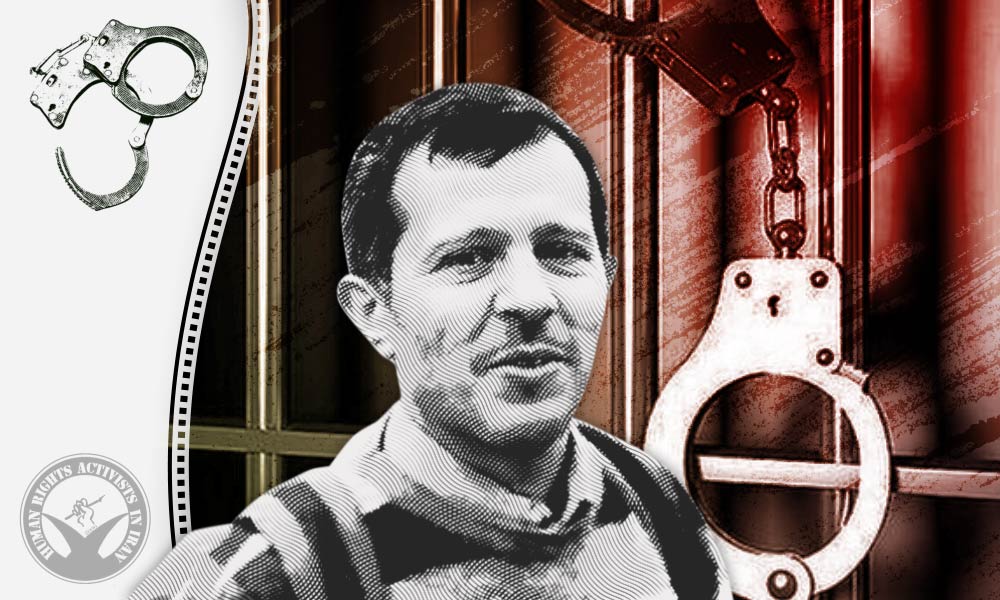
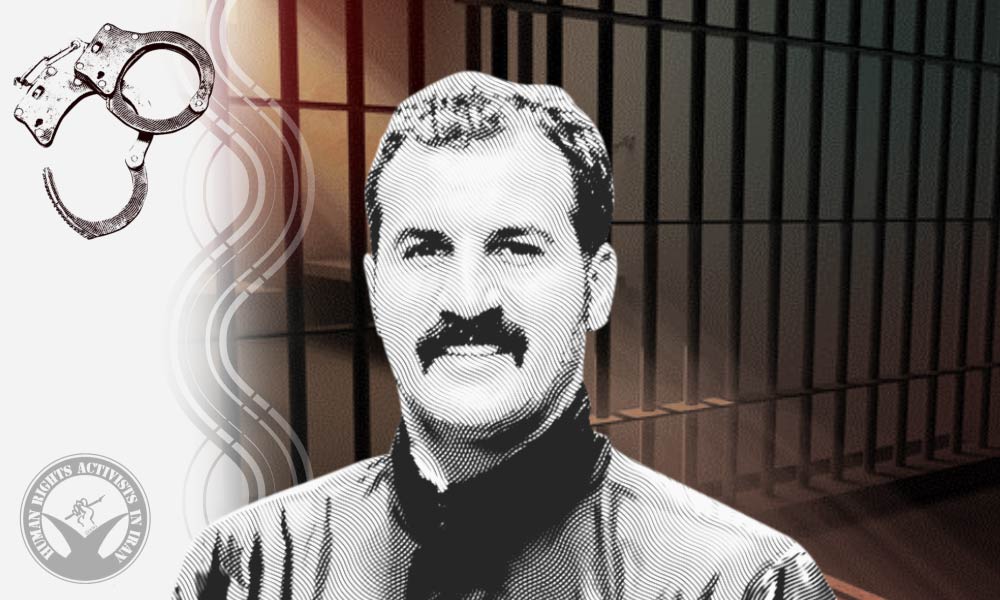
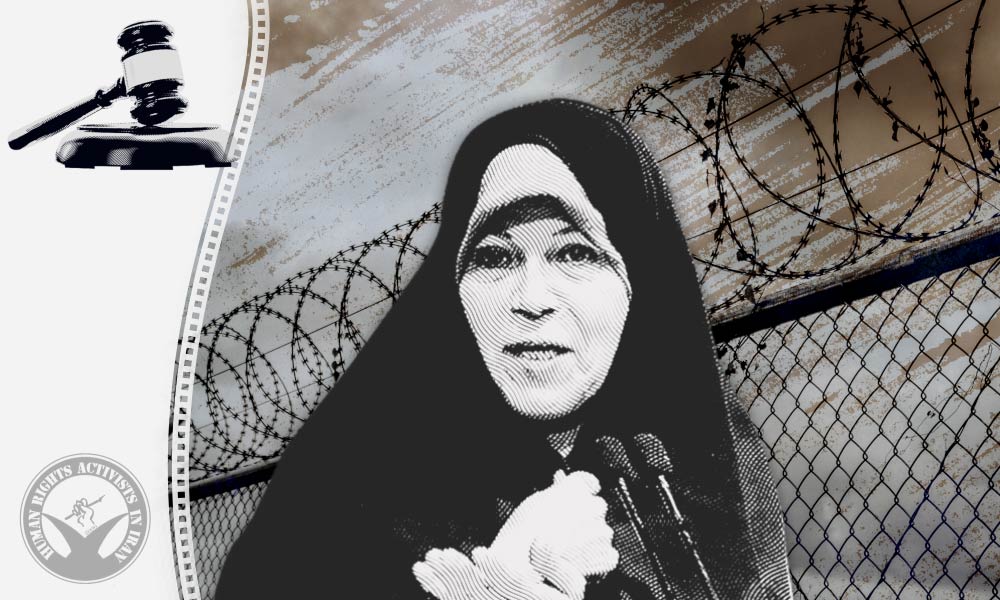
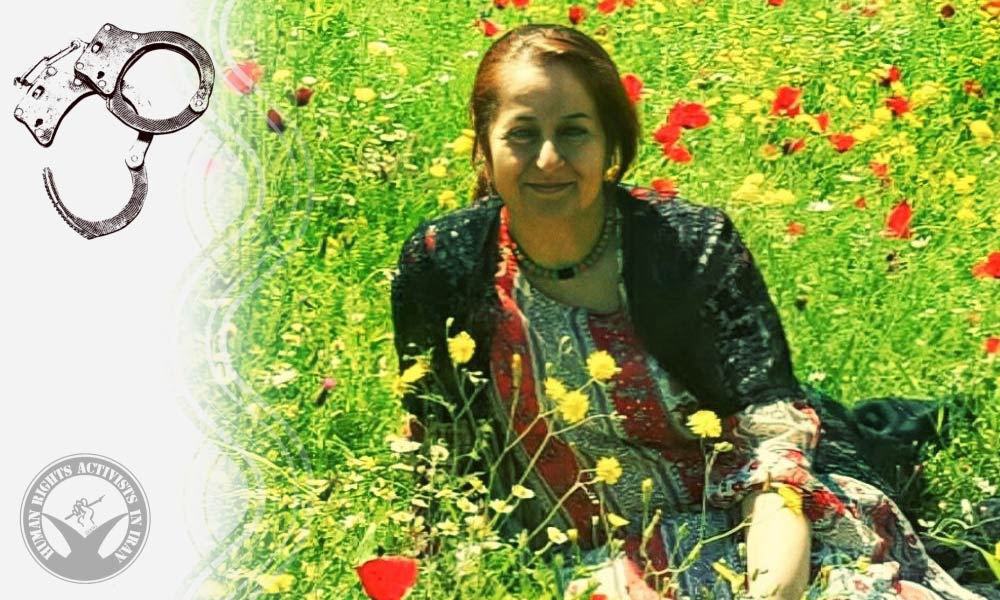
Branch 36 of the Court of Appeals in Tehran upheld the verdict of student activist and former political prisoner, Leila Hosseinzadeh. Hosseinzadeh was sentenced to five years in prison and a two year ban on online social activity by Branch 28 of the Revolutionary Court of Tehran due to her attendance at the birthday ceremony of imprisoned Gonabadi Dervish, Mohammad Sharifi Moghaddam, held at the entrance of the Sharif University of Technology.
According to HRANA, the news agency of Human Rights Activists, Hosseinzadeh’s lawyer, Amir Raisian, was notified about the court;’s decision to uphold the initial verdict.
In February 2021, Branch 28 of the Revolutionary Court of Tehran convicted her on the charge of “assembly and collusion for the purpose of acting against national security”.
Amid the nationwide protests which broke out in December 2017, Hosseinzadeh was arrested alongside other student activists and released on bail after spending 16 days in detention. On March 7, 2018, she was sentenced to five years in prison on the charge of “propaganda against the regime”, as well as one year in prison and a two year ban on leaving the country on the charge of “propaganda against the regime”. The sentence for her first charge was reduced on appeal from five years to two years and six months. Grounded on Article 134 of the Islamic Penal Code, 30 months of this sentence was enforceable.
On July 28, 2019, she was arrested and detained for 10 days in a facility at the IRGC’s intelligence unit. Afterwards, she was sent to Evin prison to serve her sentence.
On March 11, 2020, while on furlough, she was set free due to her “intolerance of punishment”.
Several citizens have posted photos of their faces with bandages over their eyes as an act of protest against the Regime’s brutal crackdown in Isfahan on Friday, during which several were injured from the direct shooting of military and security forces.
According to HRANA, the news agency of Human Rights Activists, local doctors and medical staff have reported high numbers of patients in recent days. Official sources say that at least 19 protesters were injured last Friday, and two are reportedly in critical condition. However, the number of injured people are estimated to be significantly higher.
“In just one hospital, there were about 19 patients who were injured by shooting last Friday and Saturday. Therefore, with all likelihood, contrary to what official media have reported, far more than 19 people have been injured,” a specialist and eye surgeon in Isfahan told HRANA. “The distance of pellets on these patients’ faces indicates that they have been shot from a close range–maybe only a few meters. If the bullets are made of lead, even being hit from a 30-meter distance can cause irreparable damages.”
Military forces using pellet guns against protesters is by no means unprecedented. On February 3, 2018, during a protest of Gonabadi Dervishes in front of the home of their spiritual leader, Noor-Ali Tabandeh, security forces fired pellet guns at the protesters, after which several were injured and some even lost their sight.
Since the widespread use of pellet guns by Chile Police in 2019, which led to the injury of the eye injury of 445 people and permanent blinding of 34, the bandaged eye became a rallying symbol in Chile. Iranian protesters have also used this symbol to express their protest against the regime’s brutality.
On Friday, November 26, a farmers’ protest in Isfahan over water mismanagement turned violent after military and police forces used tear gas and live ammunition on protesters.
According to HRANA, the news agency of Human Rights Activists, internet connection has been intentionally disrupted across the city and in some areas has been completely shut down.
According to video footage obtained by HRANA, numerous military forces attempted to scatter protesters using batons, tear gas, and live ammunition. In this brutal attack, several citizens, some of them elderly, were injured.
The protest began on November 7, when farmers assembled at the office of Hossein Mirzaie, a parliament member who had previously responded to reports of water shortages with directives to simply pray for rain.
“We are waiting for the MP to come here and do rain prayer,” the farmers stated in response. “We (will stay) here on sit-down strike until it rains.”
In the following days, they continued their protest by assembling in dried up stretches of the river Zayandeh-rud to demand their water portion for wheat cultivation and the revival of the river. They also asked for the shut down of a water transfer project which extracts water from the province through two canals, exacerbating the current water shortage. Recently, a video published on social media shows that some farmers are damaging the water pipe, which carries water from Isfahan to Yazd Province, in protest.
Gradually, other citizens joined the farmers until November 19, when thousands of people assembled and marched. The protestors chanted, “Let Isfahan breath, give Zayndeh-rud back”, ” Zayndeh-rud is our inalienable right”, and “We won’t get back home, not until the water gets back to the river”, and “Shame on the police and death to the dictator”.
According to information obtained by HRANA, as of Saturday, at least 214 protesters, including 13 underage citizens, have been arrested. Most of these arrestees have been transferred to the IRGC’s regional quarter known as Saheb-al-Zaman as well as Ghoddusi Basij Base in Isfahan City. Some of these citizens have been released after taking a solemn pledge and confiscating identity cards until the end of the day. About the 150 detainees were relocated to Isfahan, Khomeini Shahr Prisons and Isfahan women’s penitentiary.
In an interview with the Islamic Republic of Iran News Broadcasting (IRIB), The Isfahan chief of police, Mohammad-Reza Mir-Heydari, commended the police, Basij military forces and security agents for suppressing the protest and promised decisive action against the protesters.
The regime’s official and affiliated media outlets, such as Fars News Agency and IRIB, claimed that the protesters are not Isfahan farmers and these protests have been held by the call of “anti-revolutionary groups”.
Last Wednesday, security forces set fire on some of the farmers’ tents, who went on sit-down strike under Khaju Bridge.
In addition to denying the news about the death of one protester, Spokesman of Isfahan University of Medical Sciences stated, “According to the latest reports, all injured people, including police forces, have been discharged from hospital and only 19 people are still hospitalized, of which one is on critical condition.”
Behbahan citizens Mohsen Ghanavati, Amin Moradi, and Payam Jeyhooni were arrested by security forces.
According to HRANA, the news agency of Human Rights Activists, the first arrestee was transferred to Behbahan Prison and two others to a detention center at the disposal of the Intelligence Ministry in Ahvaz. During the arrest, security forces confiscated Mohsen Ghanavati’s cell phone, as well as his wife’s.
Mohsen Ghanavati is the brother of Mohammad-Hossein Ghanavati, who was killed in Behbahan City by regime forces during the nationwide protests of November 2019. On November 10, 2021, he was summoned to Branch 3 of the Public and Revolutionary Court in Behbahan to be indicted for charges of “offensive statements against the supreme leader of Iran and revolutionary institutions like IRGC”, “news coverage of the protests and unrest in July 2020” via his Instagram page, and “advocating anti-regime groups and calling people to assembly and protest”.
Regarding these arrests, an informed source told HRANA, “To honor the second anniversary of the victims of the 2019 protests, some citizens decided to gather at victims’ burial place. To deter this gathering, security forces either called or summoned several people and warned them about attending the gathering and threatened them not to reveal it to media.”
In August 2020, Payam Jeyhooni, 33 years old, was arrested during the protest in Behbahan City against “the poor economic conditions” and “death sentences against those who were arrested during the protest of November 2019”. After spending a while in detention, he was released on a bail of 200 million tomans.
During the protest of November 2019 in Behbahan city, security forces used live ammunition against protestors which led to the death of several protestors including Mehrdad Dashinia, Mahmood Dashtinia, Farzad Ansarifar, Mohammad-Hossein Ghanavati and Mohammad Hashamdar.
NOVEMBER 15, 2019: A sudden and substantial hike in the cost of fuel sparks unrest across Iran. Individuals across the country pour into the streets in what soon becomes mass protests covering a reported 104 cities across Iran.
As the anniversary of the November protests approaches, HRA has spoken with Iranians calling for concrete action against those responsible for violent crackdowns against protesters including arbitrary and incommunicado detention, illegal use of force, and torture among other serious violations. For nearly two years, perpetrators have, for the most part, enjoyed widespread impunity. Domestically, some have even seemingly been rewarded. Indeed, individuals such as now-President Ebrahim Raisi, a known and serious violator, have risen to top positions of power.
Soheila, a 45-year-old mother whose son was shot in the November 2019 protests, highlights the shortcomings of the judiciary in Iran, telling HRA, “I hope that accountability will mean that next time, my child, instead of taking to the streets, can work through established pathways to hold corrupt people accountable for their actions.”
November 2019 saw the deaths of several hundred Iranians (227 were verified by HRA) in what is arguably a state-sanctioned arbitrary deprivation of life. In addition over 7,100 were arbitrarily detained, some remain detained today. Although the violations noted above have been extensively documented, little has been done to hold perpetrators accountable.
Figure 1: reported November 2019 protest points -black denotes locations where the killing of protester(s) were reported (Human Rights Activists in Iran)
Elika, 25, told HRA, “Without accountability for violations that occurred in November 2019, the cycle of repression and violence will not end. Those that intend to perpetrate future abuse [on us] need to see accountability. Maybe then they will take a moment to think before pulling the trigger.” In a recent post in the Atlantic Council IranSource blog, Skylar Thompson, HRA Senior Advocacy Coordinator, stated similarly, “Without concrete action to fight the plague of impunity that covers Iran, these violent events will only continue to occur and the Iranian people will continue to suffer.”
Iran has proven unwilling to investigate and prosecute those responsible through domestic judicial frameworks. This unwillingness is paired with the fact that Iran’s judiciary is in no way impartial and is in fact led by the very perpetrators responsible for the noted violations. Unfortunately, violations of fair trial standards have become status quo.
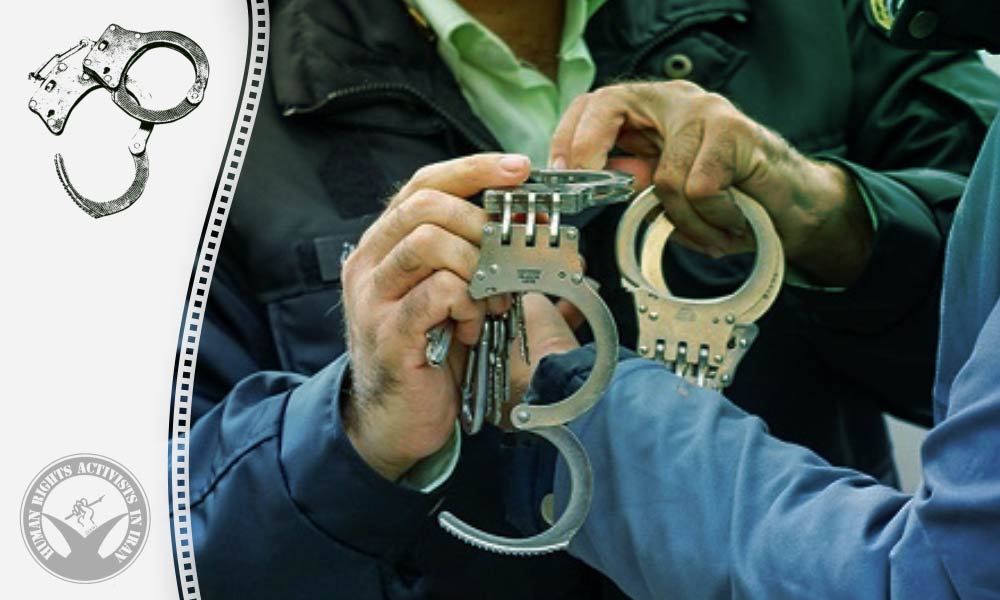
When asked what accountability looks like to him, Hafez, 22, told HRA, “They should handcuff the perpetrators. […]. They should be prosecuted in a public court and imprisoned.” He continued, “Once handcuffed, perpetrators should have to look the victim’s mother in the face to calm her heart.” Nazanin, 32, told HRA that accountability, in her view “is [the Islamic Republic] honestly and openly admitting wrongdoing.”
HRA has identified 54 individual and seven institutional violators connected to the November 2019 protests. It Is noteworthy that a number of those violators have also been complicit in numerous additional acts of repression against protesters including in 1988, 2020 (protests over the shooting down of Ukrainian airliner), 2021 (protests over resource mis-management in Khuzestan), and many instances in between. This repeated action is a direct consequence of the lack of accountability.
The following section lists notable individuals responsible for repeated serious and widespread rights violations. Extensive and credible documentation is readily available. HRA calls on the international community to hear the pleas of Iranians like Hafez, Nazanin, and Elika and utilize available documentation to take concrete action against those responsible.
*For a more in-depth look at the listed violators visit www.spreadingjustice.org or select a name and be directed to a violator profile that includes several data points including an overview of violations, employment history, as well as additional evidentiary documentation.
Government
Mojtaba Raei Special Governor, Najafabad City of Isfahan Province Deputy Governor of Isfahan
Seyed-Ahmad Zargar Judge of the Islamic Revolutionary Tribunal of Tehran
Iman Afshari Judge, Head of Branch 26 of the Revolutionary Court of Tehran
Mohammad Mahdi Mahmoodi Deputy Chief Justice of the General and Revolutionary Courts of Shiraz Head of the 2nd Criminal Court Judge of Branch 101 of the 2nd Criminal Court of Shiraz
Several citizens have reportedly been arrested by an IRGC Intelligence unit in Isfahan.
According to HRANA, the news agency of Human Rights Activists, quoting IRNA, a spokesperson for the IRGC’S Intelligence unit in Isfahan City, known as Sahib al-Zaman IRGC, announced that several members of an “anti-revolutionary group” have been arrested.
“The members of this anti-revolutionary group aimed to act against national security both on social media and in public,” the IRGC’s public relations spokesperson claimed. “These acts include spreading anti-regime tracts on streets to call for protest and unrest, agitating and hiring thugs for their own purposes, planning to disturb public order and security, sabotage and causing chaos and unrest all over the province.”
This report does not reveal the identity and whereabouts of the detainees.
The County Prosecutor of Robat Karim City recently announced the arrest of several citizens by IRGS’s intelligence unit.
According to HRANA, the news agency of Human Rights Activists, quoting Rokna, the citizens were arrested largely on charges of membership in what he called an “anti-revolutionary network”.
“In the last week, IRGS’s intelligence agents could detect and arrest the heads of an anti-revolutionary network in Robat-Karim city”, the County Prosecutor commented. “These arrested people were transferred to the jail after being notified of the charge and the issuance of an arrest warrant.”
He added, “Investigation and identification of the related people to this case is still ongoing.”
This report does not mention the number of arrestees, their identities, or their current whereabouts.
Seventeen people were recently arrested in Behshahr for reasons related to their activity on their personal social media pages.
According to HRANA, the news agency of Human Rights Activists, quoting Rokna News, the Iranian Cyber Police cited “promoting a western lifestyle, publishing obscene pictures and modelling ads” as the reasons for the arrests.
By order of a judge, the police erased all contents of the cited posts and replaced them with FATA’s logo. What the regime labels as “promoting a western lifestyle” has long been a source of tension between the regime and the Iranian people.
Imposing a certain lifestyle on citizens stands in blatant violation of Article 3 of the Universal Declaration of Human Rights which entitles everyone the right to life, liberty and security of person. Additionally, Article 12 of this declaration affirms, “One shall be subjected to arbitrary interference with his privacy, family, home or correspondence, nor to attacks upon his honor and reputation. Everyone has the right to the protection of the law against such interference or attacks.”
Media activist and Ahvaz resident Mehrnoosh Tafian was sentenced to six months and eleven days in prison by the court of appeals in Khuzestan Province.
According to HRANA, the news agency of Human Rights Activists, from this prison term, three months and one day have been suspended for one year.
Mehrnoosh Tafian received three months and one day in prison on charges of “spreading lies with the purpose to disturb public opinions”. On a charge of “propaganda against the regime”, the court of appeal reduced the initial verdict from one year to three months and ten days imprisonment.
For the above-mentioned charges, the initial verdict of the Revolutionary Court of Ahvaz was three months and ten days imprisonment and one year respectively.
In October 2020, the IRGC’s intelligence agents raided and inspected her house. They confiscated her cell phone and some other belongings. After one month, she was summoned to appear at IRGC’s Intelligence Organization in Ahvaz for interrogation. On November 1, 2020, when she appeared at Branch 13 of the Public Prosecutor’s Office and the revolutionary Court, she was sent to Sepidar Prison because she failed to provide the required bail.
Mehrnoosh Tafian is graduated from News College and living with her two sons in Ahvaz.
Branch 31 of the Supreme Court of Iran recently confirmed the death sentence of political prisoner Shaker Behrouz, who is currently being held in Urmia Prison, despite a strong alibi pointing to his innocence.
According to HRANA, the news agency of Human Rights Activists, Branch 31 of the Supreme Court confirmed the death sentence of 33-year-old Shaker Behrouz last Tuesday, October 5. The verdict was confirmed in spite of the alibi statements of 12 witnesses, all of whose testimonies the court refused to hear.
The indictment alleges that Behrouz murdered a member of the Islamic Revolutionary Guard Corps (IRGC).
According to an informed source, security agents threatened the victim’s family’s, who was an IRGC member, to cut their allowance from the Foundation of Martyrs and Veterans Affairs, if they refused to accuse Behrouz.
Another informed source close to the victim’s family also said that the family does not believe he is guilty and are ready to testify to his innocence.
Twelve eye-witnesses signed a statement expressing their readiness to testify that Mr. Behrouz was in his shop when the crime was committed. Despite all the above, the court convicted the defendant without the presence of the family as accusers and hearing of eye-witnesses.