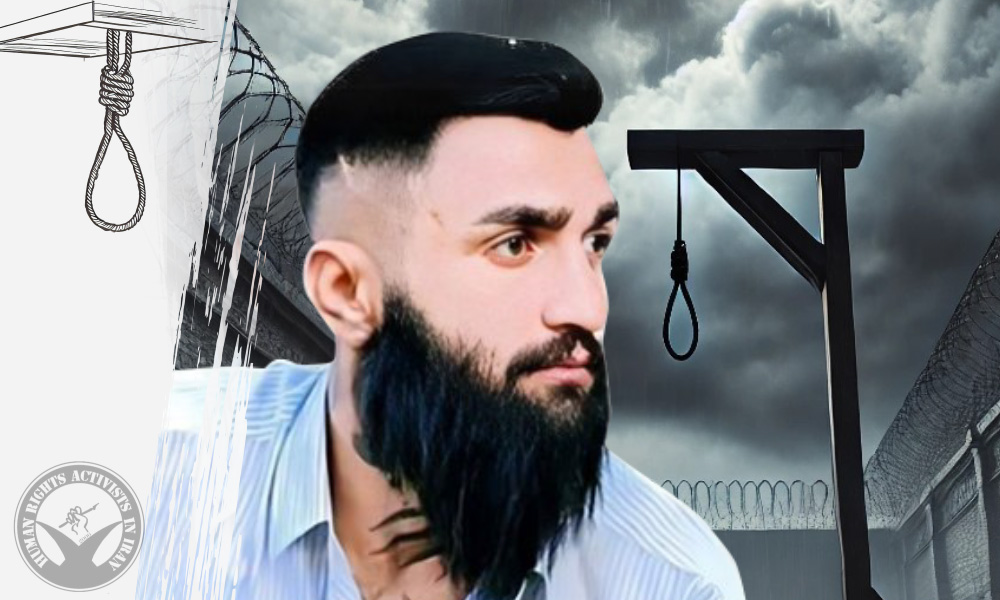
Individual Sentenced to Death in Urmia On Charges of “Espionage”

The judiciary’s news agency, Mizan, has reported that a citizen in Urmia has been sentenced to death by the Revolutionary Court on charges of “espionage for Israel.” Just a day earlier, the judiciary spokesperson announced that three others in Urmia had also been sentenced to death in a separate case on similar charges.

According to the judiciary’s media center, the accused had been under investigation for alleged “espionage for Israel and collaboration with the Mossad intelligence agency.” Following an indictment, the case was submitted to the Revolutionary Court in Urmia, where the defendant ultimately received a preliminary death sentence. The report did not disclose the identity of the accused.

In the separate case, the judiciary spokesperson claimed that, beyond “espionage,” the three other individuals were allegedly involved in “transferring assassination equipment” intended for a senior Iranian nuclear program official, under the cover of alcohol smuggling.

Although espionage charges are not classified as human rights violations, such accusations are often met with skepticism due to Iran’s history of leveraging espionage allegations against political dissidents, especially in cases where legal proceedings and case details remain opaque.

Three Prisoners Executed in Dastgerd Prison, Isfahan

Three prisoners previously convicted on drug-related charges and murder were executed in Dastgerd Prison, Isfahan, on November 2, 2024.

HRANA has identified the prisoners as Moaven Mirjahani, an Afghan national, Shahrokh Saeedkhani, and Mohammad-Javad Karami. Mirjahani and Saeedkhani were sentenced to death on drug-related charges, while Karami had been convicted of murder.

At the time of this report, prison authorities and related institutions have yet to officially confirm these executions.

In 2023, 66% of HRANA’s reports on executions lacked official announcements by judicial authorities and went unreported by media inside Iran, highlighting a troubling lack of transparency in due process.

According to latest HRANA’s annual report over between October 10, 2023, and October 8, 2024, at least 811 individuals were executed by hanging in Iran, rising to 23.06% compared to the same period last year. Of these executions, four were carried out in public. Many of the defendants were denied a fair trial.

Execution of Six Prisoners Carried Out in Mashhad

At dawn on November 5, six prisoners convicted of non-political offenses, primarily drug-related, were executed at Vakilabad Prison in Mashhad, according to Haal Vsh.

Four of the executed prisoners have been identified: Mahmoud Shahraki and Mohammad-Reza Davar, both from Zabol; Zaher Safari, an Afghan national; and Majid Ghadiri from Mashhad. All four had been sentenced to death on drug-related charges.

The identities and charges of the two remaining prisoners remain unknown.

As of this report, prison authorities and relevant institutions have not publicly confirmed the executions.

According to latest HRANA’s annual report over between October 10, 2023, and October 8, 2024, at least 811 individuals were executed by hanging in Iran, rising to 23.06% compared to the same period last year. Of these executions, four were carried out in public. Many of the defendants were denied a fair trial.

At Least Four Prisoners Executed in Ghezel Hesar Prison

Update: With the identification of four more prisoners executed at dawn today in Ghezel Hesar Prison, the number of individuals executed there has risen to at least eight. HRANA has confirmed the identities of seven of them: Ajmal Azizi, Jalil Eghbali, Faramarz Enhesari, Mostafa Sarlak, Mohammad-Hossein Bayat, Mohammad Tajik, and Sadegh (last name unknown). Alongside these individuals, an Afghan national was also executed, whose identity has not yet been confirmed. He had previously been sentenced to death on drug-related charges.

This morning, November 6, at least four prisoners were executed in Ghezel Hesar Prison in Karaj. Among those executed, two had been convicted of murder, while the remaining two, Afghan nationals, were sentenced to death on charges of rape.

The prisoners executed included Mostafa Sarlak and Mohammad-Hossein Bayat, who were sentenced to death for murder. The other two prisoners, identified as Mohammad Tajik and Sadegh (last name unknown), both Afghan nationals, were convicted on charges of rape.

On the day before the executions, these individuals, along with at least six others, were transferred to solitary confinement cells in Ghezel Hesar Prison to await the carrying out of their sentences.

HRANA is actively investigating the status of the additional prisoners who were moved to solitary confinement.

According to data gathered by the Department of Statistics and Publication of Human Rights Activists, Ghezel Hesar Prison in Karaj witnessed the highest number of executions in 2023, with Zahedan Prison following closely behind. For a comprehensive examination of the details and statistics surrounding the executions in Iran, refer to HRANA’s report.

Eight Prisoners Executed in Various Prisons Across Iran

On November 4 and 5, eight prisoners were executed in the prisons of Kahnuj, Hamedan, Yazd, and Adelabad in Shiraz.

According to HRANA, on November 4, Mansour Rastakhiz was executed in Kahnuj Prison on a murder charge. That same day, Alireza Jamshidi from Shiraz and Mohammadreza Sotoodeh from Fasa were executed on drug-related charges in Adelabad Prison, Shiraz.

Additionally, in the early hours of November 5, the death sentences of Dariush Saeedi and Hamed Mehraban, both convicted of murder, were carried out. Dariush Saeedi, 32, had been detained five years earlier for a murder committed during a group conflict and was sentenced to death by the judiciary. He was also sentenced to death in a separate case for allegedly killing another inmate during a prison altercation. Hamed Mehraban, 38, was arrested six years ago for the murder of his wife and later sentenced to death by the judiciary.

According to Haal Vsh, three more prisoners were executed at dawn today, November 5, in Yazd Prison. One of the executed individuals was identified as “Mohsen Nejadi Moghaddam (Sabaki),” 30, married with two children, and a resident of Rigan.

The report states that Mr. Nejadi Moghaddam was arrested in 2021 in Yazd on drug-related charges and subsequently sentenced to death by the Revolutionary Court in Yazd. On Sunday, he and two other prisoners had been transferred to solitary confinement in Yazd Prison in preparation for their executions.

Subscribe to Our Newsletter

Now is definitely not the time to stop reading!

Iran Sentences Three to Death on Alleged Espionage and Assassination Equipment Charges

According to Mizan, the judiciary’s news agency, three individuals have been sentenced to death on charges of “espionage.”

Judiciary Spokesperson Asghar Jahangir reported that eight individuals were initially arrested in West Azerbaijan Province in connection with the case. Out of these, three were brought to trial and sentenced to death on espionage charges.

Jahangir further alleged that these individuals used alcohol smuggling as a cover to transport “assassination equipment” meant for Mohsen Fakhrizadeh Mahabadi, the former Deputy Defense Minister and a senior figure in Iran’s nuclear program. Fakhrizadeh was killed on November 27, 2020, in an attack involving a car explosion and gunfire exchange between his security team and assailants.

The defendants’ case is currently under appeal, and Jahangir indicated that a separate case is also underway regarding other individuals allegedly linked to Fakhrizadeh’s assassination. However, he provided no additional details.

Though espionage prosecution is generally outside the scope of human rights concerns, Iran’s history of leveraging such charges as political tools often raises skepticism about the legitimacy of these accusations.

Samad Dowlatkhah Sentenced to One Year in Prison

Samad Dowlatkhah, a resident of Dehdasht, was sentenced in absentia to one year in prison by Branch 103 of the Criminal Court 2 in Kohgiluyeh County.

On October 8, Judge Saeed Taheri-Nasab of the Criminal Court 2 issued this sentence in absentia, convicting Mr. Dowlatkhah of blasphemy. The ruling was subsequently communicated to him.

Mr. Dowlatkhah was previously detained by security forces in Dehdasht on October 18, 2023, but was released on bail a few hours later.

In a separate case, he faced a hearing on January 23, 2024, at Branch 101 of the Criminal Court 2 in Charam on the charge of “propaganda against the regime.”

Samad Dowlatkhah has a history of legal actions against him due to his activism.

Three Prisoners Transferred to Solitary Cells for Imminent Execution in Ghezel Hesar Prison

Yesterday, November 4, three prisoners in Ghezel Hesar Prison in Karaj, previously sentenced to death for drug-related charges, were moved to solitary confinement in preparation for their execution.

The transfer of these prisoners, sentenced earlier for drug-related offenses, was carried out as part of preparations for their execution. One of the three prisoners is an Afghan national. Further details, including the identities of these inmates, are being investigated by HRANA.

According to data gathered by the Department of Statistics and Publication of Human Rights Activists, Ghezel Hesar Prison in Karaj witnessed the highest number of executions in 2023, with Zahedan Prison following closely behind. For a comprehensive examination of the details and statistics surrounding the executions in Iran, refer to HRANA’s report.

Two Prisoners Executed in Urmia Prison

On Monday, November 4, 2024, two prisoners previously convicted of murder in separate cases were executed in Urmia Prison, according to HRANA.

The two men, identified as Ali Momeni and Ramin Kazem Aliloo, had been moved to solitary confinement on Sunday, November 3, in preparation for their executions.

A third prisoner on death row, who is Ali Momeni’s brother, received a temporary reprieve from the victim’s family and was returned to the general prison ward.

At the time of this report, prison officials and relevant authorities have not officially confirmed these executions.

According to latest HRANA’s annual report over between October 10, 2023, and October 8, 2024, at least 811 individuals were executed by hanging in Iran, rising to 23.06% compared to the same period last year. Of these executions, four were carried out in public. Many of the defendants were denied a fair trial.

Woman Arrested in Iran After Being Assaulted by Motorcyclist

HRANA is closely following reports of increased street violence. Iranian women face not only legal repercussions when it comes to mandatory hijab in Iran but also mounting personal safety risks, as incidents of harassment and intimidation by private individuals have surged.

Reports received by HRANA detail disturbing trends in harassment aimed at women who reject hijab mandates in favor of personal choice, suggesting a coordinated campaign to enforce compliance through fear. This report examines critical incidents, revealing the full scope of pressure exerted on Iranian women in the name of enforcing hijab and societal norms.

In recent months, Iran’s streets have become an even more dangerous environment for women resisting the country’s mandatory hijab laws. HRANA reports indicate a troubling trend: women who choose not to wear the hijab now face increased hostility and threats from individuals on the street, often on motorcycles.

Government campaigns, including the enactment of the “Noor” plan, the new so-called Hijab and Chastity bill and penalties for those opposing mandatory hijab, and the organization of street monitors under names like “Hijab Watchs,” together appear to have emboldened harassers, turning public spaces into areas of fear for women who dare to defy the dress code.

In recent months, HRANA has documented numerous cases of women narrowly escaping what seem to be premeditated, organized scare tactics aimed at enforcing hijab compliance. One young woman recounted her encounter with a motorcyclist who sped toward her on the sidewalk, swerving away only at the last moment. In another case, taxi drivers advised a harassed woman to wear a hijab “for her safety.”

These incidents are not isolated. They represent a broader, systematic effort to instill fear and deter resistance to hijab within the framework of government-led campaigns for mandatory hijab enforcement. While those committing these acts may not be government officials, the timing of these attacks with the recent wave of hijab enforcement raises serious questions about the State’s complicity.

The brazen harassment climaxed on October 31, when a woman on Africa Street in Tehran became the victim of unwelcome sexual harassment by a motorcyclist.

Despite her clear distress, authorities opted to treat her not as a victim, but as a criminal. Tehran’s police swiftly announced charges against both the motorcyclist and the woman herself—for “failing to observe mandatory hijab” and for the motorcyclist’s “driving on the sidewalk,” downplaying his harassment and refusing to highlight her suffering.

This response underscores the judiciary’s priorities: enforcing dress codes over addressing gender-based violence, signaling that women’s safety is secondary to their compliance.

By framing the victim of intimidation as a criminal, the Iranian justice system reveals its allegiance to repressive standards that disregard basic principles of safety and dignity. Such actions not only degrade women

but also reinforce a culture of impunity, where abusers—be they state officials or civilians—operate with confidence, knowing that the law is on their side.

The pattern is unmistakable: when the state’s agenda prioritizes control over compassion, women bear the brunt, and society is deprived of a basic measure of justice.