A Statistical Look at the Situation of Iranian Workers over the Past Year

Iranian labor rights activists and workers face ongoing rights violations. 

“Worsening workers’ livelihood rings the alarm. They have to ration a rice sack for the next three months. Many items have vanished from their […] baskets and they [can] afford nothing else but loaves of bread. In this situation, this year, they […] face new problems such as the plan to remove Social Security booklets, mass layoffs, discrimination in recruitment against native laborers, inflation and sky-rocketing prices.”

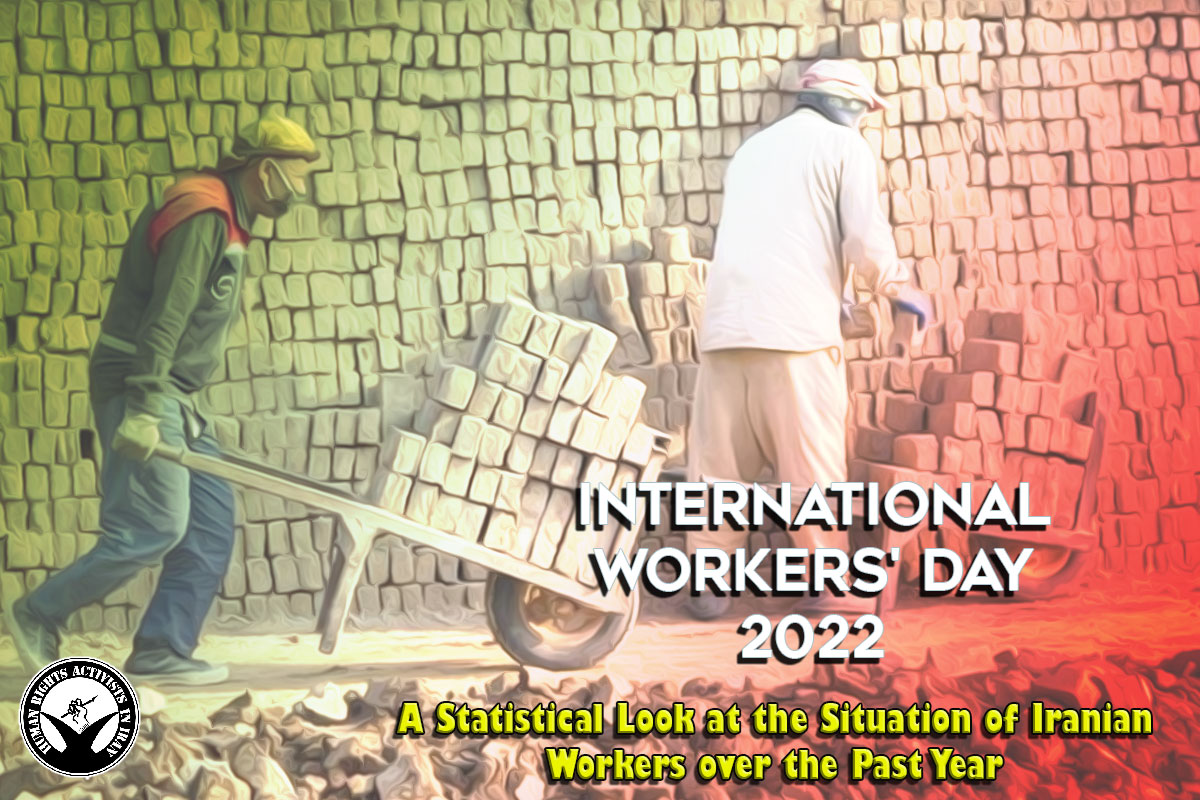
Ahead of International Workers’ Day, Human Rights Activists in Iran (HRA) highlights the most crucial issues faced by the Iranian worker during past year. Specifically, this report details issues related to wages, wage arrears (or withheld wages), workplace safety, and union rights.  

Iran is rank 102nd in the world in terms of occupational safety. According to the Statistics and Publication Center of HRA, over the past twelve months (from May 1, 2021, to April 27, 2022), at least 10,895 workers have been killed or injured in work related accidents. This number is a combination of reports made by State media and workers’ rights organizations.

During this period, at least 10,084 workers were injured at work, of which 9,385 cases have been mentioned in 14 official reports or have been part of comments made by officials at either national or provincial levels, and the remainder, 699 cases, were reported by civil and labor rights associations.

At least 811 workers lost their lives in work related accidents, of which 438 deaths were reported by 13 official reports and the remainder, 373 deaths, were not mentioned by officials, but were reported by independent organizations.

According to official reports, falling from tall heights is a leading cause of death in work related incidents, responsible for 41.5% of workplace deaths over the past ten years. 

It is worth noting that although the above-mentioned statistics are  high and thus are of grave concern, one must consider that the numbers do not cover all cases and that actual numbers are presumed much higher.

The regimes lack of transparency remains a concern. The official figures do not add up. The Iranian Legal Medicine Organization stated that “during the last 10 years (2008-2018), 15,997 workers lost their lives in work accidents, of which 230 were women.” Based on these figures, the average number of work related casualties would be significantly higher than the officially-announced death toll of 438.

Wage Arrears (Withheld wages) 

According to statistics compiled by HRA’s Statistics and Publication Center, at least 45,462 workers have more than 1,366 combined months of wage arrears. 

Figure 1: the distribution of wage arrears

Based on data gathered by HRA’s Statistics and Publication Center figure 1 shows the distribution of wage arrears among various economic sectors. The public sector companies and organizations are responsible for 76%. The private sector and energy industry are  14 and 7% respectively. The nature of the organizations responsible for 3% of these wage arrears remains unknown. 

Unfortunately, many official reports fail to provide the number of workers awaiting wage arrears, which prevents the reporting of an accurate number. 

Peaceful Assembly and Association 

Media and civil society organizations have reported 589 workers’ protests and 1,741 trade union protests, which  have increased by 57.6% and decreased by 0.6% resepctively compared to the previous year.

Major labor events in the country over the past year include the workers protests of Haft Tappeh Sugarcane Company, Kut-e Abdollah Municipality, Railway Services & Technical Construction Engineering Company, and the working and retired teachers and social security pensioners.

Over the past 12 months, numerous cities across the country witnessed a wide range of labour protests with various demands such as addressing insurance issues and wage arrears, the latter sometimes accumulating up to 30 months.

In total, 383 labour strikes and 397 union strikes have been reported, which shows a large increase of 70% and 99% respectively. 

Solidarity among workers in various occupations has grown. Workers have to tackle formidable obstacles of suppression, denial of workers’ rights to protest, suppression of any attempt toward unionization and forming independent labour organizations, and the arrest and imprisonment of labour activists. These challenges present hurdles to many things but notably to organization. 

There are no labour unions in the conventional sense. Workers’ efforts to form an independent workers union are suppressed by security and politically-tainted allegations against workers’ rights activists.  A striking illustration of such allegation and suppression can be seen in the cases of the Syndicate of Workers of Tehran and Suburbs Bus Company, Haft Tappeh SugarCane Syndicate, the Coordination Council of Iranian Teachers’ Trade Associations and the Independent Iranian Workers Union (IIWU).

Many workers have been summoned, arrested or convicted for peaceful activities such as protests against low wages, signing a petition in support of labour unions, posting photos of workers’ demonstrations on the internet or even receiving an invitation letter to attend world trade union meetings.

At least 69 workers and workers’ rights activists have been arrested in the past 12 months. The top three cases are the arrest of 30 citizens during International Labor Day rallies, 9 workers of Municipality of Ahvaz, and 4 workers of Mobin Mining and Road Construction. 

Additionally, 7 workers and workers’ rights activists have been sentenced to a combined total of 248 months imprisonment, a combined total of 124 lashes and paying a combined total fine of 23 million Tomans. In the reporting period, 7 workers committed self-immolation, and 8 workers committed suicide. 2 workers were beaten by the security forces. 20 were summoned by security or judicial institutions. 2,576 workers were subjected to layoffs; 8,250 involuntarily lost their jobs; 1,645,739 workers remain deprived of any labour insurance scheme; 8,978 workers were suspended from work due to factory closure or other reasons for which the employer is liable. 

Moreover, 185 trade union activists were arrested. 7 activists were sentenced to a combined total of 229 months imprisonment. 52 individuals were summoned by security or judicial authorities and 3,555 businesses were closed by Public Security Police or other authorities. 

During the past 12 months, retired and working teachers and educators from dozens of cities across the country staged numerous protests, strikes, and rallies to ask for their demands. 1,030 protest gatherings and 372 labour strikes have been recorded. Following these protests, 50 teachers were summoned, 12 were convicted, 9 were subjected to violence by police and security forces and one teacher committed suicide. 6 teachers and teachers union activists were sentenced to a combined total of 169 months in prison and a combined total fine of 21.5 million Tomans.

Prohibition of child labor and the provision of free education for children, the establishment of the highest level of safety standards in the workplace, and the elimination of discriminatory laws for women and migrant workers are other demands of the working community. “These practices must also be the demands of the international community as they are in fact the States obligations under international law,” says Skylar Thompson, HRA’s Senior Advocacy Coordinator. “Iran must ensure provisions are in place to protect workers rights and that includes their right to peaceful assembly and association.”

Iranian Women’s participation in the labour market is significantly less than men. In addition, women carrying less legal protections broadly in Iran’s judicial framework are less protected by labor law and receive fewer benefits. As a result, female workers have less bargaining power than their male counterparts. Production and industrial employers are also less inclined to employ married women, and in some cases employ single women with a pre-condition not to marry or become pregnant, practices which are in it of themselves discriminatory and vastly problematic. 

The Economic Situation

On raising the minimum wage and its effect the economic situation of the Iranian people, the board member of the Islamic Labour Council of Tehran Province, Alireza Fathi stated: “This begs the question of whether raising the minimum wage at the beginning of each year can catch up with the inflation jump in the first three months of the year, which reduces workers’ purchasing power to one third.”

“As labor law dictates, from 30% insurance contribution, 23% is employer’s share and 7% employee’s. Workers are wondering for which social services, housing or family doctor, these insurance contributions are spent”, he added.

Likewise, the head of the National Center of Construction Workers Associations, Akbar Shokat stated: “high inflation and soaring prices on a daily basis have worsened workers’ livelihood to such an extent that the minimum wage announced for this year can only cover the living costs for a few days in one month.” 

A worker of the Municipality of Mariwan describes their diminishing purchasing power: “We have not eaten meat for many months. We spare the yoghurt only for our guests. Earlier, we could afford tomato or potato omelettes several times a week. Now, with such high prices of eggs, we have to suffice to cooked or fried potatoes.”

The head of the Bushehr Trade Association explains how workers’ problems last year have doubled: “Worsening workers’ livelihood rings the alarm. They have to ration a rice sack for the next three months. Many items have vanished from their consumption basket and they afford nothing else but the loaves of bread. In this situation, this year, they have to face new problems such as the plan to remove Social Security booklets, mass layoffs, discrimination in recruitment against native laborers, inflation and sky-rocketing prices.”

As many experts and workers’ rights activists point out, the minimum wage as announced by The Supreme Labor Council falls lower than the actual inflation rate and consumption expenditure of households. Among other reasons, this explains the increase in workers’ protests and their disempowerment to raise their voices.

Prohibition of child labor and the provision of free education for children, the establishment of the highest level of safety standards in the workplace, and the elimination of discriminatory laws for women and migrant workers are other demands of the working community. “These practices must also be the demands of the international community as they are in fact the States obligations under international law,” says Skylar Thompson, HRA’s Senior Advocacy Coordinator. “Iran must ensure provisions are in place to protect workers rights and that includes their right to peaceful assembly and association.”

As Iranian workers celebrate International Workers’ Day there is little prospect of improvement through domestic reform or remedy nonetheless the State remains obligated to uphold its international human rights obligations under both the ICCPR and the ICESCR. Therefore the State is obligated to respect, protect, and fulfill the rights of workers and labour rights activists both in the workplace and when choosing to take to the streets in peaceful assembly or to gather in association. 


Figure2: Occupational Accident Classification Chart as documented by HRA
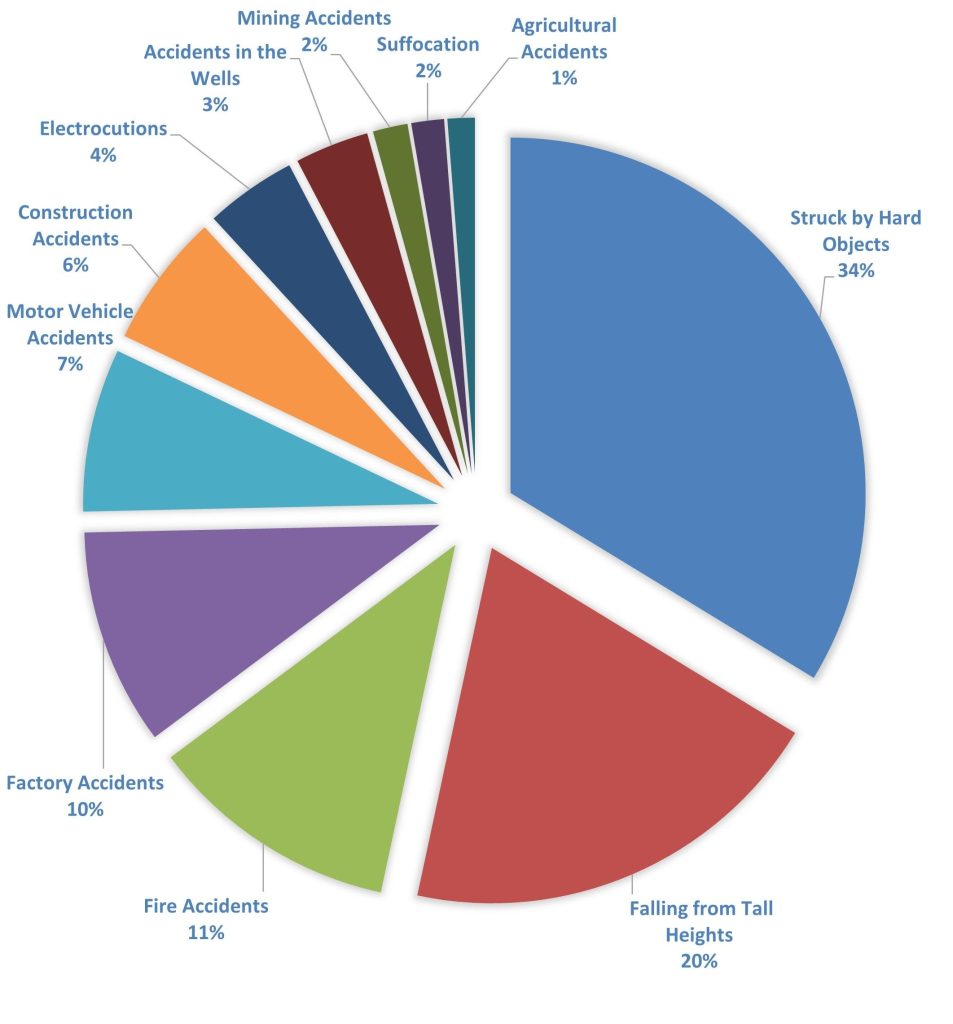
Based on data gathered by HRA’s Statistics and Publication Center, (a collection of 3,730 reports published in the 12 month reporting period) 34% of workplace accidents were caused by being struck by hard objects, 20% by falling from tall heights, 7% by motor vehicle accidents, 6% construction accidents, 10% factory accidents, 10% fire accidents, 3% accidents in the wells, 4% electrocutions, 2% accidents in the mine, 2% suffocation and 1% agricultural accidents.


For further inquiries please contact Skylar Thompson, Senior Advocacy Coordinator Human Rights Activists in Iran (HRA) at [email protected]
HRANA Recap: This Week’s Protests in Iran

According to HRANA, the news agency of Human Rights Activists, a number of protests took place this week in Iran. Read our recap below for details, photos, and videos from the demonstrations.

Friday, April 22

For the thirteen consecutive day, a number of the residents of Saravan village in Rasht Province held protests against waste accumulation in forest areas, which has brought about insects, toxins, and leachate. For about 40 years, the waste of Rasht city and seven other cities are accumulating in the landfills adjacent to this village.

Sunday, April 24

A number of the workers of the Municipality of Shush City gathered in front of the Municipal building to protest against delays in payments.

The pensioners of the Social Security Organization in Ahvaz, Rasht, Arak, Tabriz, Ilam and Kermanshah held protests before the building of this organization. These retirees asked for raising the pensions to stand above the poverty line, closing the wage disparities, addressing supplementary insurance and the end of year bonuses.


The workers of subsidiary companies of The National Iranian South Oil Company gathered before the main entrance of this oil company in Ahvaz. They demanded returning to a 12-hour shift work rather than an 8-hour shift.

A group of workers of Isfahan Tile Company gathered before the governorate building in Isfahan to demand unpaid wages and other benefits. Since February, they have been unemployed due to factory closure. These workers ascribed these issues to the privatization of the company.

The students of the University of Science and Technology gathered and rallied on the university campus to protest against the new strict forced veiling rules.

The personnel of the Gilan Telecommunication Company went on strike in protest against the layoff of several trade union activists. Reportedly, the new manager has fired the Board members of the Telecommunication Workers’ Union. The strike was staged also against the unfair employment contracts. About 700 employees have refused to sign new employment contracts.

The workers of a company which works as a contractor for Kian Petrochemical Company in Asaluyeh City went on a strike. They demanded increasing wages and modifications in shift hours.

Monday, April 25

A number of citizens and civil activists gathered before the Fatah Corps, a subdivision of IRGC, in Yasuj City to protest against the detention of teacher union activist, Ali Hasan Bahamin. They demanded an official apology from the IRGC intelligence for assaulting Mr Ali Hasan Bahamin.

A group of personnel of the State Welfare Organization gathered before the parliament in Tehran. They protested against discrimination in wages and benefits and asked for more transparency in this regard.

A number of seasonal workers of the Sugarcane Agro-Industry Company Haft-Tappeh gathered at the company premises to protest against the company’s refusal to provide them with an employment contract.

For the second consecutive day, a number of the workers of the Municipality of Shush City gathered before the Municipal building of this city. They asked for delayed wages and other demands.

A number of citizens in Saravan County located in Sistan and Baluchestan Province gathered before the governorate building. They protested against introducing a new coding system for fuel cards.

For the sixteen consecutive day, the residents of Saravan village in Rash Province held protests against the pollution of landfills in forest areas, which has brought about insects, toxins, and leachate.

A number of workers of the contractors who are working in petrochemical industry zones in Bushehr and Asalouyeh and Kangan went on strike and assembled at their workplaces. They asked for raising wages and modifications in shift hours.

A number of professors and personnel of the Islamic Azad University of Kermanshah gathered on campus to ask for levelling up their salaries up to their counterparts’ salaries in public universities.


Tuesday, April 26

A group of addiction therapists gathered before Anti-Drug Headquarters. They protested the supply of narcotics in drugstores by the Food and Drug Administration.

A group of stakeholders of Homa Airline Pension Fund gathered before the IranAir company. They protested against the merger of the fund and the Civil Servants Pension Organization.

A number of technician workers gathered before the Ministry of Cooperatives, Labor, and Social Welfare in Tehran to protest against low wages and few benefits despite having a long career up to 15 to 20 years.

A group of students of Payam-e-Noor University gathered on campus to demand addressing some issues.

In Tehran, a number of citizens who lost digital assets in the cryptocurrency exchange Cryptoland gathered before the Tehran Public Prosecutor’s Office to ask for the return of their money. Reportedly, their deposits in the form of cryptocurrencies have been frozen.

Some personnel of Masjed Soleyman petrochemical Company went on strike and blocked the road of the factory. Reportedly, one reason for this strike was the recent changes in management.

A number of Scaffolders of Ardabil Power plant, the workers of Asalouyeh Petrochemical Green Tanks Company, Boo Power plant and Navrood Company went on strike and assembled at the companies’ premises. They demanded an increase in wages and modifications in work shifts.

Wednesday, April 27

A group of workers of Jahanpars Company which are working on the Bidboland Gas Refining field in Behbahan City went on strike.  The workers demanded an increase in wages and modifications in work shifts.

A group of students of Tabriz University of Medical Sciences held protests on campus against imposing strict veiling rules on female students.

A group of workers of the Municipality of Shush gathered before the governorate building. They demanded to be paid for three months of unpaid wages and other improvements in their work conditions.


The residents of the village Saravan located in Rasht Province held protests against the pollution caused by the landfill sites near the village.

A group of workers and personnel of the Municipality of Ahvaz gathered before Ahvaz Islamic Council to protest against the violation of their rights. They asked the municipal officials to resign.

Thursday, April 28

The residents of the village Saravan continued their protests against landfills in forest areas near the village. This protest turned violent following the interference of police and some of the protestors were injured and arrested.

A group of workers of the Shokoofa Sana’at Company gathered before the governorate building in Kerman City to demand their unpaid wage for the last month.

The workers of Galanderoud Coal Mining Company gathered at their workplace. These workers protested against the company’s decision to bring these workers under a new employment contract with the contractor.

About 52 laid-off workers of the Delfan Granite factory protested before the governorate building in Nurabad located in Lorestan Province. They asked for resolving the issues and reopening the factory.

The workers of the Fara-Petrosazan Naft Setareh Company went on strike to demand an increase in wages and modifications in work shifts.


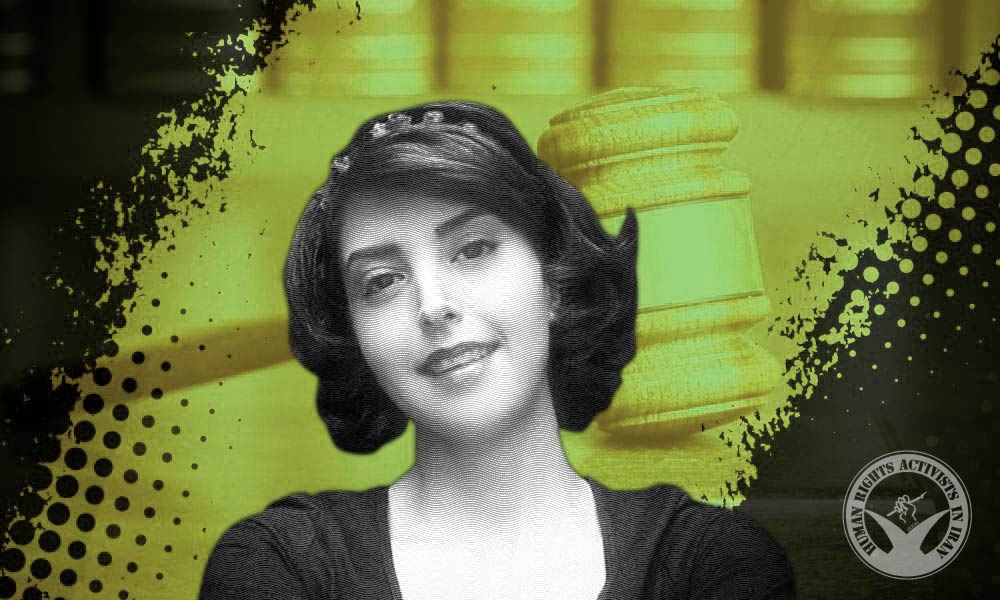
Prison Sentence of Saba Kord Afshari Reduced to Five Years 

Recently, the Supreme Court of Iran commuted the prison sentence of civil activist, Saba Kord Afshari to five years while she was in prison. She was acquitted of the charge of “promoting corruption and obscenity through appearing without a headscarf in public.” Based on Article 134 of the Islamic Penal Code, the five years prison sentence is the maximum punishment enforceable for her.

Afshari is a civil activist and prominent critic of the compulsory hijab in Iran. She was convicted for her civil activities and in February of 2019, she was freed after serving her sentence. On June 1, 2019, she was arrested at her home and transferred to prison after completing an interrogation.

On August 27, 2019, Afshari was sentenced by Branch 26 of the Revolutionary Court of Tehran to 15 years imprisonment for “promoting corruption and obscenity through appearing without a headscarf in public”, 1 year and 6 months of imprisonment for “propaganda against the regime” and 7 years and 6 months in prison for “assembly and collusion to act against national security”. 

This verdict, which was increased two and half times more due to a previous record, was corrected and reduced from 15 years to 7 years and 6 months.

On December 9, 2020, she was transferred from Evin Prison to exile to Qarchak Prison.

Two Inmates Executed in Isfahan

On Wednesday, April 27, 2022, two inmates who had been convicted for drug-related crimes were executed in Dastgerd Prison in Isfahan.

According to HRANA, the news agency of Human Rights Activists, quoting Kurdpa, two inmates identified as Fakhreddin Waledi, Aged 40 and Hossein Joushan, age 37, were executed in Dastgerd Prison.

In this report, an informed source stated, “Fakhreddin Waledi was arrested four years ago and sentenced to death. Hossein Joushan is a father of a six-year-old child. Five years ago, he was arrested and accused of smuggling crystal meth. Subsequently, he was sentenced to death. In the trial, he denied the allegations and insisted that the drug belonged to someone else who ran away after his arrest.”

None of these executions have been reported by official sources and media outlets inside Iran so far.

The most recent report from the Statistics and Publication Center of the Human Rights Activists in Iran (HRA) states that between January 1 of 2021 and December 20 of 2021, at least 299 citizens, including four juvenile offenders, were executed. In addition, 85 citizens were sentenced to death in this period.

As the report points out, Iran’s judicial authorities do not publicly announce over 88% of executions. These unreported executions are known as “secret executions” by human rights organizations.

Seven Citizens Arrested in Baneh City

On Tuesday, April 26, 2022, in Kurdistan Province’s Baneh City, the security forces arrested seven citizens.  One of the individuals was released after a few hours and the rest were transferred to a detention facility in Sanandaj City.

According to HRANA, the news agency of Human Rights Activists, quoting Kurdpa News, seven residents of Baneh were arrested, of which six were transferred to a detention facility in Sanandaj.

The arrestees have been identified as Hassan Ezzati, Nishtman Rahmati, Saeed Mohammadi, Parvin Falahi, Omar Soleimani, Afshin Rahmati, and Fateh Majidi. Nishtman Rahmati, Saeed Mohammadi’s wife, was released after a few hours.

Reportedly, during the arrest, the security forces searched their houses and confiscated some of their personal belongings.

The reason for these arrests and the charges are still unknown.

Subscribe to Our Newsletter

Now is definitely not the time to stop reading!

Ali Kajbaf Sentenced to One Year and Six Months in Prison

On Tuesday, April 27, 2022, Branch 3 of the Revolutionary Court of Ahvaz sentenced Ali Kajbaf to one year and six months in prison. If the verdict is upheld on appeal, based on Article 134 of the Islamic Penal Code, one year is the maximum punishment enforceable for Kajbaf.

According to HRANA, the news agency of Human Rights Activists, Ali Kajbaf, a resident of Ahvaz, was sentenced to one year and six months in prison by the Revolutionary Court.

On Tuesday, April 27, 2022, Kajbaf was notified of the verdict that he was sentenced to one year on the charge of “membership in an anti-regime group” and six months on the charge of “propaganda against the regime”. The court session was held on April 17, 2022.

According to an informed source, Kajbafwas acquitted of the charge of “assembly and collusion against national security and crossing the border illegally.”

On August 18, 2021, the Ministry of Intelligence agents arrested Kajbaf while he was leaving the country. He spent 11 days of his detention in solitary confinement in Urmia. Reportedly, during detention, the agents beat him severely which led to a bone fracture in the chest and a broken tooth.

After completing the interrogation process, Kajbaf was transferred to Sheyban Prison in Ahvaz. On November 1, 2021, he was released on bail.

Women’s Rights Activist Nooshin Keshavarznia Arrested in Tehran

On Monday, April 25, 2022, the security forces arrested women’s rights activist and social researcher Nooshin Keshavarznia and transferred her to an unidentified location. 

According to HRANA, the news agency of Human Rights Activists, on Monday, the security forces arrested women’s rights activist Nooshin Keshavarznia in Tehran. Before the arrest, she had been summoned by an unknown security institution. 

The reasons for this arrest and her whereabouts are still unknown.

Nooshin Keshavarznia is a women’s rights activist and social researcher who in recent years has focused on the issues related to harassment and violence against women.

Prison Sentence of Asal Mohammadi Upheld by Court of Appeals

Branch 36 of the Court of Appeals upheld one year and eight months imprisonment sentence for Asal Mohammadi. Initially, Branch 26 of the Revolutionary Court of Tehran had convicted Mohammadi on the charges of “propaganda against the regime and assembly and collusion against national security.”

According to HRANA, the news agency of Human Rights Activists, the Court of Appeals upheld one year and eight months imprisonment sentence against workers’ rights activist Asal Mohammadi.

Mohammadi’s lawyer, Iman Soleimani, told HRANA, “During the detention, Mohammadi did not have access to a lawyer. During the trial process, I took her case but was not allowed to study the case documents or attend court sessions, which is a violation of Article 48 of the Criminal Procedure Code. Mohammadi was in poor mental condition. Contrary to what the law explicitly states, she had been interrogated without the accompaniment of a lawyer during the interrogation.”

On January 24, 2022, the trial was held and during the trial, participation in online campaigns such as “white torture” or membership in Marxist groups was used as evidence for the charges.

On November 6, 2021, the security forces arrested Mohammadi and Hirad Pirbodaghi in an aggressive manner.

Five days later, on November 11, Mohammadi was transferred to Public Ward 209 of Evin Prison and was released on bond on November 22, 2021.

Kiumars Latifi in Detention after Two Months

Kiumars Latifi, a resident of Sanandaj, is still in detention and uncertain about his legal proceeding after two months. On February 15, 2022, IRGC agents arrested Latifi and after interrogation at a detention facility, transferred him to Sanandaj Prison. On April 10, 2022, he was relocated again to a detention facility for further interrogation.

According to #HRANA, the news agency of Human Rights Activists, Kiumars Latifi, a resident of Sanandaj, is still in detention after two months.

Latifi’s nephew, Farid Latifi, told HRANA, “At the time they sent Kiumars Latifi again to a detention facility from prison, despite frequent family inquiries, both the Ministry of Intelligence and IRGC denied his detention. The prison officials just told us that Latifi had been released by security agents. Since the arrest, Latifi has made only two phone calls to his family from prison and the charges against him are still unknown to us.”

According to Farid Latifi, Kiumars Latifi and four other family members’ bank accounts have been frozen. Also, his sister, Arezoo Latifi has been under pressure or even beaten by agents not to disclose any information about his conditions.

Kiumars Latifi had already faced another arrest. In September of 2019, he was arrested with the same accusation and released on bail on December 26 of that year.

Kiumars Latifi is a Kurdish language teacher and a former member of the Rumi Sanandaj Association.

Behnam Moosivand Hospitalized As a Result of Hunger Strike

On Sunday, April 24, 2022, civil activist Behnam Moosivand was sent to the quarantine section of Evin Prison from Rajai-Shahr Prison. He has been on hunger strike since April 19 and is currently hospitalized for low blood pressure and other side effects.

According to HRANA, the news agency of Human Rights Activists, Civil activist Behnam Moosivand who is still on a hunger strike after seven days, was transferred to the quarantine section of Evin Prison from Rajai-Shahr Prison. On Tuesday, April 26, 2022, he was sent to a hospital for low blood pressure and other side effects.

According to an informed source, last Sunday, while Moosivand was suffering from life-threatening side effects of his hunger strike, without any prior notice, prison officials transferred him to Evin Prison.

On April 19, 2022, Mr Moosivand went on a hunger strike in protest against being beaten by prison officers following his objection to being handcuffed during the dispatching to the hospital.

On February 1, 2018, the intelligence officials raided Behnam Moosivand’s home and transferred him to the detention facility of the Ministry of Intelligence in Evin Prison, known as Ward209. He was released on bail on March 19, 2018.

Subsequently, in September 2019, branch 28 of Tehran’s Revolutionary Court sentenced Moosivand to five years in prison on the charge of “assembly and collusion to act against national security”, and one year on a charge of “propaganda against the regime”. The verdict was upheld on appeal. On June 14, 2020, Moosivand went to Evin for sentencing. In September of 2020, he was sent into exile, to Rajai-Shahr prison in Karaj City.