Three Christian Converts Summoned in Karaj to Endure Their Sentences

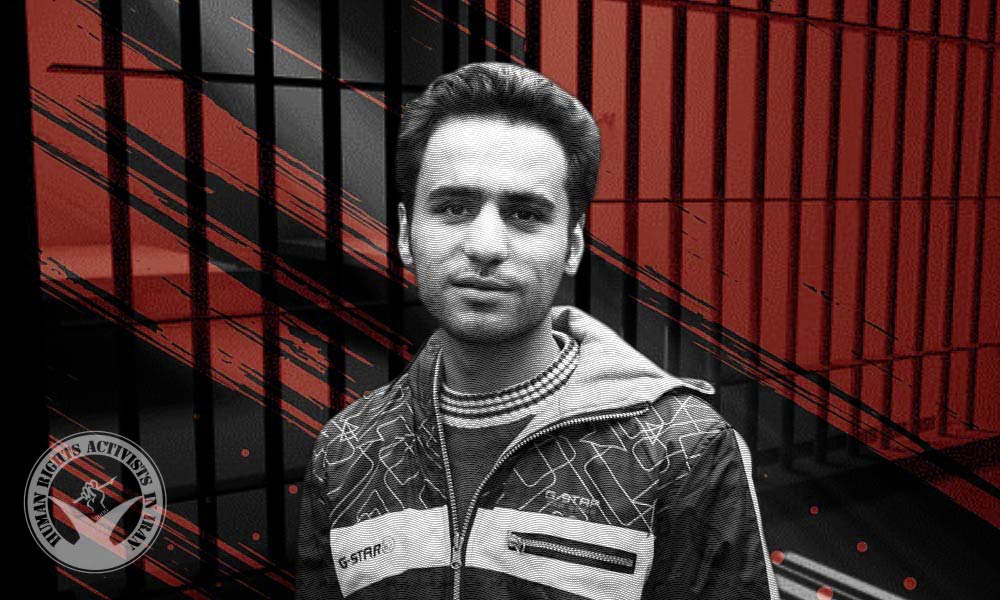
Christian Converts Amin Khaki, Milad Goodarzi, and Alireza Nourmohammadi were summoned to appear today, November 10, at the Executive Unit of the Court of Karaj to endure their sentences.

According to HRANA, the news agency of Human Rights Activists, Branch 12 of the Court of Appeals of Alborz Province had previously sentenced each of these citizens to three years in prison.

In their first trial, which took place on June 26 of this year, they were each sentenced to 5 years imprisonment and paying a fine of 40 million tomans by Branch 4 of the Revolutionary Court of Karaj on charges of “propaganda and catechizing deviant against the holy Sharia of Islam”.  Following the verdict, they were released each on bail of 250 million Tomans. On August 22, the verdict was reduced to three years each on appeal.

Despite the fact that Christians are recognized as a religious minority under Islamic law, nevertheless, the security services pursue the issue of Muslims converting to Christianity with particular sensitivity and deal harshly with the converts of the Christian faith.

The Iranian regime targets Christian converts despite Article 18 of the Universal Declaration of Human Rights and Article 18 of the International Covenant on Civil and Political Rights, which state that every individual has the right to freedom of religion and belief and freedom to express it openly or secretly.


Abbas Vahedian Shahroudi Sentenced to 10 Years Imprisonment by Revolutionary Court in Mashhad

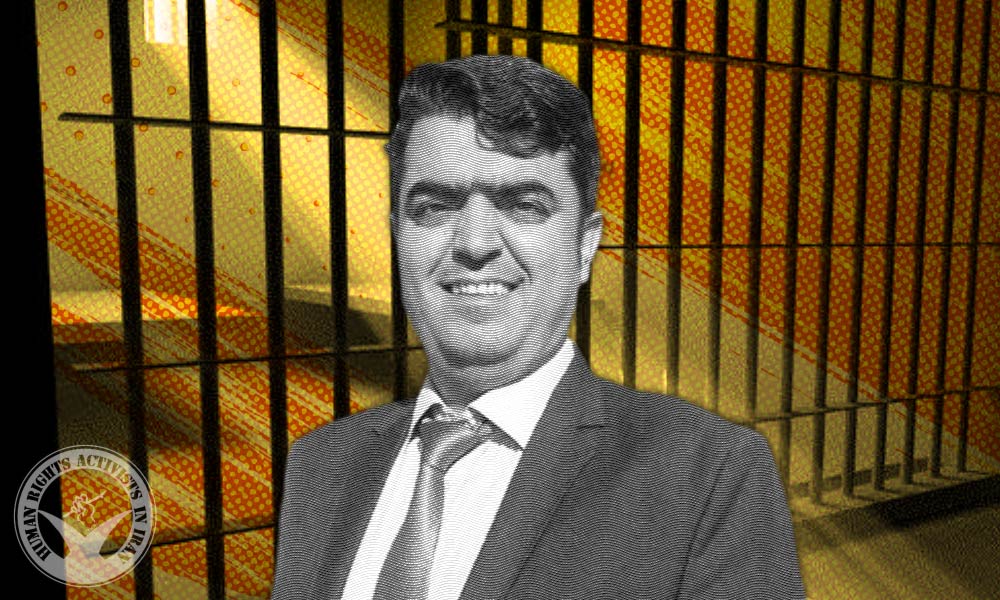
Writer, educator and civil activist Abbas Vahedian Shahroudi was recently sentenced to 10 years by Branch 4 of the Revolutionary Court in Mashhad.

According to HRANA, the news agency of Human Rights Activists, after spending 70 days in detention, Vahedian received the verdict, which was finalized after he refused to request an appeal.

In regard to a case which opened against Vahedian in 2019, the court issued this final verdict for the charge of “organizing in purpose to disturb national security” and in accordance with Article 498 of the Islamic Penal Code. During his 70 days in detention and throughout the introduction of the new case against him, Vahedian has been denied access to a lawyer.

Earlier, HRANA reported about his poor health condition in a solitary confinement cell in a Detention Center at the disposal of the Ministry of Intelligence.

On September 1 of this year, intelligence agents arrested Vahedian in Rezvanshahr County. Two days later, in a phone call to his family, he informed them about the opening of a new case  against him on a charge of “acting against national security.” Meanwhile, Vahedian’s daughter’s home in Mashhad was searched by security forces and some personal belongings were confiscated.

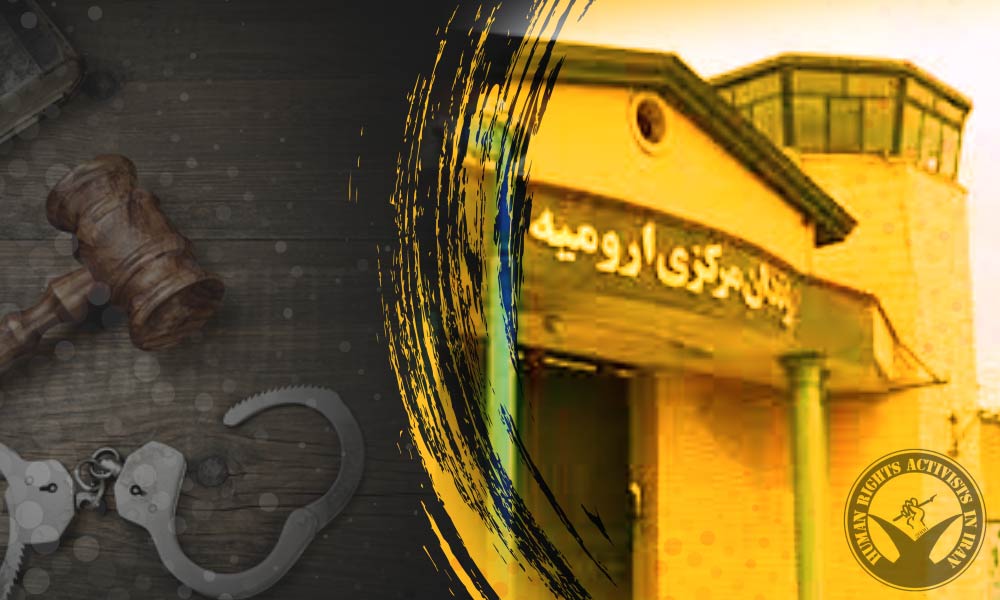
Vahedian has previously been arrested and convicted for his writings and civil activities. In one case, he was arrested in Mashhad in October 2018 and later charged by Branch 903 of the Revolutionary Court of Mashhad with “acting against national security”, and “attempting to overthrow the regime”. He was released on a bail of 350 million tomans from Vakilabad Prison in Mashhad in December 2018.

Shortly after his interrogation, in August 2019, Vahedian was again arrested and transferred to Vakilabad Prison in Mashhad. He was one of the 14 signatories of a letter of request for the resignation of Ayatollah Khamenei, the supreme leader of Iran. Mr Vahedian was released on bail from Vakilabad Prison in Mashhad in July 2020.

HRA’s Skylar Thompson Comments on Iran’s Culture of Impunity in Atlantic Council Article

HRA Senior Advocacy Coordinator Skylar Thompson discusses the Iranian government’s  ongoing issue of impunity in a recent article published by the Atlantic Council.

“Without concrete action to fight the plague of impunity that covers Iran, these violent events will only continue to occur and the Iranian people will continue to suffer,” Thompson writes in the article. “Iran has proven they are both unable and unwilling to provide a domestic judicial remedy for victims of human rights violations.”

The blog post discusses the issue specifically through the lens of the November 2019 Protests and the Khuzestan Protests of this year. Protesters in both cases faced violent government suppression, and the actors most directly responsible have since faced little to no repercussions.

“The information on those perpetrators complicit in such widespread abuse is readily available,” Thompson concludes. “The international community must speak up for the Iranian people and take concrete action to ensure that those responsible are held accountable.”

Read the full article here.

IRIB Denies that Khosro Jamalifar’s Suspicious Death in Sanadaj Prison was Result of Guard Brutality

A few days after HRANA’s report on the death of Khosro Jamalifar due to being beaten by prison officers in Sanandaj Prison, in response, the Islamic Republic of Iran Broadcasting (IRIB) claimed in a report that Jamalifar fainted from a sudden headache and died in the hospital. Their statement stands at odds with reports from numerous informed sources.

To support the claim, the report published video footage of a moment when the inmate fell on the floor in his solitary confinement cell. This claim stands at odds with what informed sources reported to HRANA: that Khosro Jamalifar was beaten brutally by prison officers before being taken back to his cell, and died in prison rather than the hospital.

The IRIB also did not mention that following day, his body was buried secretly without waiting for the forensic report and delivering the body to his family. His family was also threatened into silence.

Some eyewitnesses who have seen the injuries on his head told HRANA that, contrary to IRIB’s claim, such wounds cannot be caused by a head collision with a bed frame.

On November 2, 26-year-old Khosro Jamalifar, who had previously been indicted on a murder charge and was awaiting the verdict, died from a strike to the head sustained during the beating.

According to an informed source, Jamalifar became involved in a quarrel with a fellow inmate in the quarantine section of Sanandaj. Thereafter, as an informed source told HRANA, “Prison officers began to beat him with batons which led to his death. In this incident, the failure of the prison nurse, named Abdollahi, to send (Jamalifar) to the healthcare center in a timely manner also played a role in his death.”

In the aftermath of Jamalifar’s killing, Sanandaj inmates are calling for authorities to take accountability and conduct a real investigation.

Iran’s prisons are notorious for their frequent incidents of brutality from authorities.  Acts of violence such as this one are at serious odds with the basic responsibility of prisons to provide for the safety and health of their inmates.  Institutions’ reluctance to conduct thorough investigations into acts of violence from their officials only perpetuates, and often even reinforces, a culture of abuse within Iran’s carceral system.

Four Baha’i Citizens Sentenced to a Total of 32 Months Imprisonment by Appeals Court

The Court of Appeals in Yazd Province recently sentenced Baha’i citizens Amin Zolfaghari, Mahboobeh Misaghian, Mitra Bandi Amirabadi and Hiva Yazdan Mehdi Abadi to a total of 32 months in prison.

According to HRANA, the news agency of Human Rights Activists, in recent days, Branch 11 of the Court of Appeals in Yazd sentenced each of the four Baha’i citizens to eight months in prison on a charge of “propaganda against the regime”.

Initially, Branch 2 of the Revolutionary Court of Yazd Province had sentenced these citizens to a total of 13 years and 4 months in prison on a charge of “membership in Baha’s anti-regime groups and the propaganda against the regime”. Upon appeal, they were acquitted from the first charge.

On May 21, 2020,  intelligence agents arrested Mr. Amin Zolfaghari and transferred him to Yazd prison. He was released on bail on June 23 of that year. Ms. Misaghian was arrested by security forces on June 1, 2020, and released on bail on June 16, 2020.

Ms. Mitra Bandi Amirabadi and Ms. Hiva Yazdan Mehdi Abadi were arrested on May 30, 2020, and released on bail after three months of detention. These two citizens had previously faced other arrests and convictions. In December 2017, Yazdan Mehdi Abadi was detained for “teaching music to children” and transferred to Yazd Prison. She was released on bail on December 25 of that year.

According to an informed source, these two above-mentioned citizens were arrested and sentenced to suspended imprisonment for a period, which ended recently.

According to unofficial sources, it is estimated that more than 300,000 Baha’is live in Iran, but the Iranian constitution recognizes only Islam, Christianity, Judaism, and Zoroastrianism. Because their faith is not considered legitimate by authorities, the rights of Baha’is in Iran have been systematically violated for years.

This deprivation of the freedom to practice their religion is a breach of Article 18 of the Universal Declaration of Human Rights and Article 18 of the International Covenant on Civil and Political Rights. The United Nations covenant holds that every person has the right to freedom of religion, freedom of converting religion, as well as freedom of expression, individually or collectively; openly or secretly.

Subscribe to Our Newsletter

Now is definitely not the time to stop reading!

Two Inmates Sentenced to Death; One Spared from Execution

Two inmates were recently sentenced to death while one was spared from execution.

According to HRANA, the news agency of Human Rights Activists, quoting Rokna, physician Alireza Solhi was recently sentenced to death  for killing his wife and grandmother in Tabriz. Reportedly, in October 2016, on the day of the incident, Solhi’s family was poisoned and hospitalized from food he had prepared, after which his wife Elmira and his grandmother lost their lives.

In the first trial, though he never confessed to intentional poisoning, Solhi was sentenced to death. This verdict was overturned by the Supreme Court, and the case was sent back to criminal court. In the second trial, he could exact the satisfaction of the second victim’s ‘blood avengers’ but not the second victim’s one for which, consequently, he was condemned to death. This verdict was confirmed by Branch 24 of the Supreme Court.

According to another report, in Tehran, an inmate, identified by his first name as 23-year-old Esmail, was sentenced to death on the charge of killing a young man in a fight. In May 2017, the police station in Aboldazim city was reported over a fight among three men. In this fight, a 27-year-old man was stabbed and died in hospital from severe wounds. After two days of investigation, police arrested the convicted inmate for murder. In the trial, the defendant claimed that he stabbed the young man in self-defense.

In Ardabil City, an inmate on death row was spared from execution after exacting satisfaction of the victim’s family. In this case, in 2010, a man reported his wife missing to the police. After a one week search, the police found her body in a morass. Reportedly, the woman was strangled to death. The police arrested the victim’s husband as the primary suspect. The accused, however, neither confessed during interrogation nor trial. Finally, the family’s victim was satisfied to halt the execution. The 55-year-old man was released from jail after spending 11 years in prison.


Female Worker Dead After Veil Caught in Machinery at Factory

On the evening of Saturday, November 5, a 21-year-old worker lost her life in a workplace accident in a factory after her veil was caught in machinery.

According to HRANA, the news agency of Human Rights Activists, quoting ILNA, Marzieh Taherian was killed in the spinning factory Nasaji Kavir Semnan, located in the industrial zone on the east of Semnan City

As her coworkers stated, the veil, which female workers are forced to wear despite being unsuitable for work conditions and safety issues, became caught in a ring spinning machine, and pulled her head inside the machine.

This horrific work accident has raised again many criticisms about strict forced veil rules, which have long caused discomfort and hazards for women in the workplace.

Several Arrested in Isfahan by IRGC Intelligence

Several citizens have reportedly been arrested by an IRGC Intelligence unit in Isfahan.

According to HRANA, the news agency of Human Rights Activists, quoting IRNA, a spokesperson for the IRGC’S Intelligence unit in Isfahan City, known as Sahib al-Zaman IRGC, announced that several members of an “anti-revolutionary group” have been arrested.

“The members of this anti-revolutionary group aimed to act against national security both on social media and in public,” the IRGC’s public relations spokesperson claimed. “These acts include spreading anti-regime tracts on streets to call for protest and unrest, agitating and hiring thugs for their own purposes, planning to disturb public order and security, sabotage and causing chaos and unrest all over the province.”

This report does not reveal the identity and whereabouts of the detainees.

The Uprising of the Thirsty; An Analysis of the 2021 Khuzestan Protests

The July 2021 Iranian protests were a continuation of protests that have been erupting sporadically since 2016.

The driving force behind the July/August uprising was to protest the perennial water shortages and rolling blackouts stemming from mismanagement of resources, fueling public anger. The latest round of protests erupted on 15 July, starting in Khuzestan soon spreading to other provinces including Isfahan, Lorestan, Eastern Azerbaijan, Tehran, and Karaj. These protests have been coined the ‘Uprising of the Thirsty’.

As nearly 5 million Iranians in Khuzestan are lacking access to clean drinking water, Iran is failing to respect, protect, and fulfill the right to water, which is inextricably linked to the right to the highest attainable standard of health; both are protected by the International Covenant on Economic, Social, and Cultural Rights (ICESR), to which Iran is a signatory. It is a common cause that Iran’s water crisis has reached a critical point. Even the regime’s state-run media have acknowledged the dire situation, with at least 700 villages out of water.

According to the state-run Aftab News on July 4, 2021, “Of Iran’s population of 85 million, about 28 million live in areas with water shortages and are under pressure in this regard, mainly in the central and southern regions of the country. Water shortages have affected all sections of society, from urban households to agricultural and rural communities.”

It did not take long for the protests to take on a political character, with protesters in various cities calling for the end of the current regime and expanding the subject matter of their protests from water shortages to deteriorating living conditions.

One protester told HRA, “My ideal outcome is to see a regime official resign in response to our suffering. We are tired of all of this misery, poverty, dehydration, neglect, lies, and empty promises.

A protester living in Tehran told HRA, “Besides supporting [the people of] Khuzestan, we are protesting unemployment, high prices, poverty, and the existing problems in the country. We can no longer bear the hardships of life created by unworthy officials. The authorities must address the problems…

In the two weeks of the uprising, Human Rights Activists (HRA) verified 129 videos documenting the protests, 361 arrests, 6 deaths, and several more wounded. HRA’s Spreading Justice team (HRA-SJ) additionally identified individual violators associated with the violent crackdown. The following report analyses the events that occurred as a result of the uprising, those responsible, and concludes with a call for accountability noting that without action, this cycle of abuse will only continue.

Read the full report here.

_________________________

For further inquiries please contact Skylar Thompson, Senior Advocacy Coordinator Human Rights Activists in Iran (HRA) at [email protected]

Vahid Abhari Sentenced to 3 Months Imprisonment and Paying a Fine

Branch 111 of the Criminal Court in Tabriz recently sentenced Vahid Abhari, a resident of Tabriz, to 3 months imprisonment and paying a fine.

According to HRANA, the news agency of Human Rights Activists, the court, headed by Judge Reza Forooghi sentenced Vahid Abhari to 3 months in prison, including the detention period, and a fine of 21 million tomans on a charge of “inciting violence via cyberspace”. Two months of this sentence has been suspended for two years.

Abhari, who has been arrested for his civil activities at least once before, was arrested on July 21 by security forces and held in the detention center of the intelligence ministry until August 11 when he was sent to Tabriz Prison. He was released on bail until the end of the legal proceedings.

On October 30, Abhari was summoned and notified of the charges.