Three Days of Iran Protests Over Fuel Price Raise

Protests have erupted across Iran after the government unexpectedly announced it is rationing petrol and increasing its price. The protests took place across the country following the decision of the Iranian president, Hassan Rouhani, at midnight of November 14, 2019, to cut petrol subsidies to raise funds for social assistance to the poor. Petrol price was increased to a minimum of 15,000 Rials per liter, 50% increase from the day before.

Nationwide protests in the last three days were in at least 48 cities such as: Ahvaz, Shooshtar, Dezful, Gachsaran, Abadan, Khorramshahr, Bandar Mahshahr, Rasht, Shiraz, Bandar Abbas, Gorgan, Khorramabad, Qom, Ilam, Karaj, Sanandaj, Dorud, Qazvin, Arak, Mahdi Shahr, Garmsar, Shahroud, Najafabad, Mariwan, Tehran, Tabriz, Ardabil, Urmia, Saveh, Pasargadae, Qods (Qal’eh Hasan Khan), Varamin, Sari, Yasuj, Qaemshahr, Shahrekord, Malek Shahr, Parand, Damavand, Pol Dokhtar, Neyshabur, Sarepol Zahab, Kahnooj, Yazd, Bandar Bushehr, Bahmai, Shahriar, etc. They are still ongoing in several cities.

Peaceful demonstrations turned violent in Sanandaj, Mahshahr, and Shiraz, with online videos purporting to show police officers firing teargas at protesters and mobs setting fires. Several people were injured or killed in the first three days of protests as a result of the police’s direct shots. On November 17, 2019, students of Tehran University and Tabriz University protested inside the university. Shops at Tehran Grand Bazaar went on strike on November 17, 2019.

The protests started on November 15, 2019, and are still ongoing. The arrest of more than 1000 people across the country was confirmed. More than 150 banks and supermarkets were set on fire and a police officer was killed. Two Hawzas -a seminary where Shi’a Muslim clerics are educated- were set on fire in Shiraz and Kazerun. According to unconfirmed reports, at least 36 people were killed in Sirjan, Shiraz, Behbahan, Marivan, Khoramshahr, Isfahan, and Shahriar.

According to Fars News, protests were held in 100 cities and at least 100 banks and 57 supermarkets were set on fire. Based on this report, the number of protesters were 87400 from which 82200 are men and 5200 women. At least 1000 people were arrested. Yazd prosecutor confirmed the arrest of 40 people in the city of Yazd. Bam Prosecutor also confirmed the arrest of 15 people in the city of Bam. The prosecutor of Robat Karim confirmed the arrest of 34 protesters for vandalism. According to Mohammad Reza Amoui, Kermanshah’s chief of Law Enforcement Force of the Islamic Republic of Iran, on November 16, Major Iraj Javaheri was killed fighting with protesters in Kermanshah. A journalist resided in Mariwan, Adnan Hasanpour, reported that security forces shot people directly and at least seven people were killed in Javanrud, one person was killed in Sanandaj, and several people were injured. According to unconfirmed reports, 15 of the killed people are identified as following:

Meisam Adgipour, Khaled Maniat, Ali Ghazlavy, Milad Hamidavi, Ali Boghlani, Hamzeh Savari, Mohammad Asafi Zargani, Ehsan Abdollahnejad, Mehdi Nikouei, Osman Naderi, Mehran Tak, Shahou Validi, Javad Nazari Fathabadi, Mehrdad Dashtizadeh, Mohammad Hossein Ghanavati.

Iran has almost completely shut off access to the internet across the country. On November 16, 2019, by the approval of the National Security Supreme Council, the government has completely blocked Internet access in Iran to stymie protests. Due to the internet shut down and the lack of access to freelance reporters and citizen journalists, confirming news about demonstrations and deaths is difficult. It also caused difficulty for Iranian citizens to have access to news agencies websites. On Monday, November 18, schools are closed in 17 cities across Iran:

Shiraz, Kazerun, Alborz, Fereydun, Fereydun Shahr, Farsan, Kuhrang, Laran, Taleqan, Astara, and Najafabad. In addition, universities are closed in Shiraz.

Iran’s supreme leader, Ayatollah Ali Khamenei, has backed petrol price increases claiming opponents of the Islamic Republic and foreign enemies were guilty of sabotage and not ordinary people. According to Khabar Online, Mojtaba Zonnour, a parliament member representing Qom, is collecting parliament members signatures to impeach Ali Larijani, the head of parliament. He gathered 50 signatures so far. Mohammad Qasim Osmani, a parliament member representing Bukan, filed his resignation and added that he resigned to announce that he was not involved in this decision [raising petrol price]. Today, with respect to Ayatollah Khamenei’s views, the Ministry of Intelligence announced that the protesters will face harsh punishments. Reportedly, people received threatening text messages in Khuzestan and Karaj from the prosecutor’s offices of their province. People were warned about attending protests and not to disturb public order and facilitate the abuse of opposition groups.

Video reports of the first day protests:

Video reports of the second-day protests

Video reports of the third day of protests:

Three Baha’is were sentenced to 23 years imprisonment

Behnam Eskandari, Yalda Firouzian, and Ardeshir Fanaiyan, three Baha’i citizens residing in Semnan, were sentenced to 23 years in prison and live in exile.

They were arrested on April 30, 2019 by the security forces, their personal belongings were confiscated, and they were transferred to Semnan Prison. The Revolutionary Court of Semnan put hold on their temporary releases. They are banned from having any visitor and contact with outside of prison. Behnam Eskandari was under pressure in the course of his interrogation for forced confession. He was resilient and was transferred to the quarantine ward where he was beaten by two other prisoners.

According to the verdict issued by the Semnan Revolutionary Court headed by judge Mohammad Ali Rostami, Ardeshir Fanaiyan was sentenced to 10 years imprisonment and one year live in exile in Khash on the charge of “cooperation in establishing an illegal group inside the country with the aim of acting against the national security”. Yalda Firouzian and Behnam Eskandarian were sentenced to five years imprisonment and two years ban from living in Semnan, each on the charge of “membership in establishing an illegal group inside the country with the aim of acting against national security”. Also, each of them were sentenced to a one-year prison term for the charge of “cooperation in acting against national security in favor of opposition groups”. Based on the Article 134 of Iran’s Islamic Penal Code, the charge with the highest penalty will be considered; this means that Ardeshir Fanaiyan should spend 10 years in prison, Yalda Firouzian, and Behnam Eskandaian should spend five years in prison, each.

Ardeshir Fanaiyan’s first arrest was on January 8, 2019 and was sentenced to an eight-month prison term. Although the law of arresting the eligible ones for military service has been cancelled.

Baha’i citizens of Iran are systematically deprived of religious freedoms, while according to Article 18 of the Universal Declaration of Human Rights and Article 18 of the International Covenant on Civil and Political Rights, all people are entitled to freedom of religion, belief, and changes thereof, as well as the right to express and practice those beliefs as individuals or collectives, in public or in private. Though unofficial sources estimate the Baha’i population of Iran at more than 300,000, Iran’s Constitution officially recognizes only Islam, Christianity, Judaism, and Zoroastrianism, and does not acknowledge the Baha’i faith as an official religion. As a result, the rights of Baha’is in Iran are systematically violated.

The trial of seven civil rights activists was held in the Revolutionary Court of Tehran

On November 10, 2019, Moin Hajizadeh, Raha Ahmadi, Leila Mirghafari, Armin Sourani, Mohammad Abolhasani, Saman Zandian, and Vahid Ghadirzadeh were tried at the Branch 15 of Tehran’s Revolutionary Court headed by judge Abolghasem Salavati. They were charged with “propaganda against the state” and “assembly and collusion”.

Moin Hajizadeh was arrested on August 8, 2019 by security forces and was transferred to an unknown location. He is now in the Ward 4 of Evin Prison. Raha Ahmadi was arrested on August 4, 2019 by the security forces and was transferred to Qarchak Prison in Varamin in Late August. She was initially charged with “propaganda against the state” , “assembly and collusion”, “cooperation with enemy states”, and “promoting corruption and prostitution” in her incitement at the prosecution office of the Evin Prison. Although her bail was set after two months, her 600 million Toman [approximately 55 thousand dollars] bail has never been accepted.

Leila Mirghafari was arrested in September 2019 by security forces and was transferred to Qarchak Prison. Mohammad Abolhasani was arrested on August 14, 2019 based on a verdict of the Branch 28 of the Revolutionary Court.

Saman Zandian was arrested amid the demonstrations against the economic hardship in August 2018. He completed his sentence in prison but was notified about his new charges in August 2019. Vahid Ghadirzadeh was arrested in August 1, 2019 by security forces in Ardabil and is still in a limbo state.

At Least Two Prisoners Were Prepared for Execution in Urmia Prison

On November 11, 2019, at least two prisoners of Urmia Prison were transferred to solidarity confinement cells to get prepared for execution. They were sentenced to death earlier due to their murder felonies. One of them was identified as Mehdi Mostafazadeh. If they fail to get the victims’ family’s consent, they will be executed in few days.

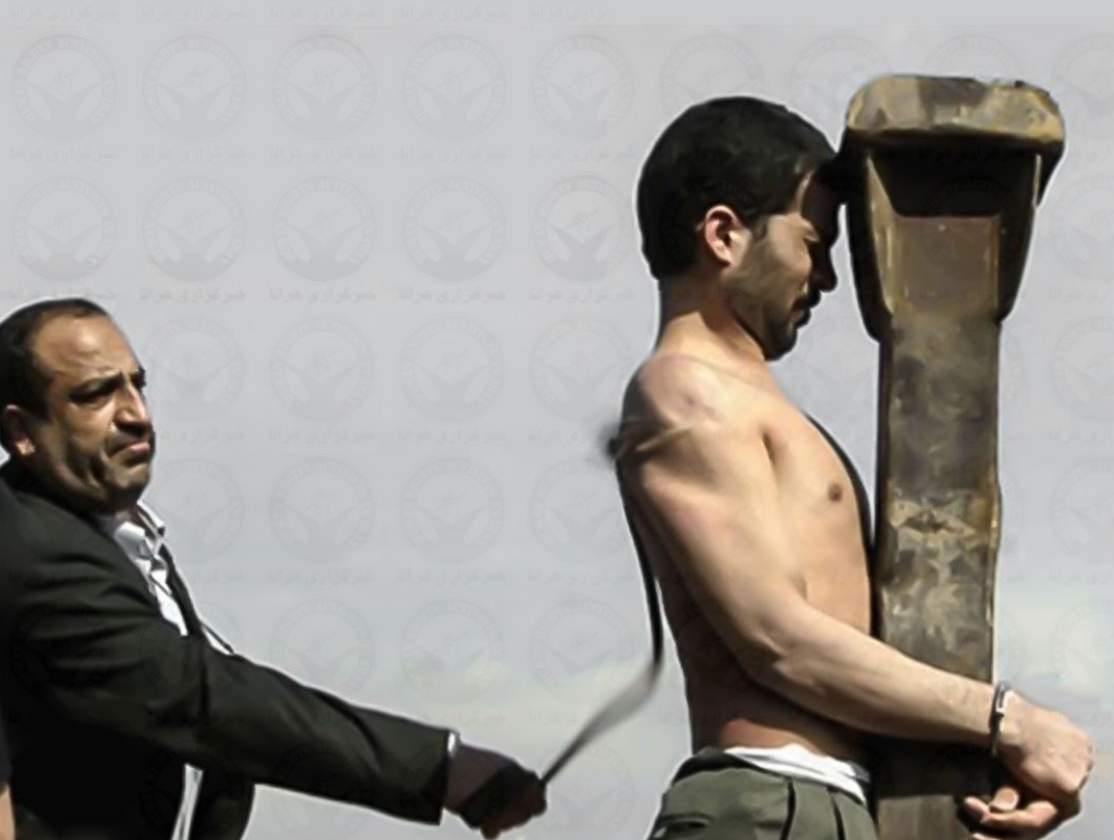
According to the international organizations, Iran ranks first in the world in executions per capita. From October 10, 2018, to October 8, 2019, the Iranian authorities issued death penalty sentence to 134 individuals and have already carried out 242 executions including 16 public executions.  At least five of the executed were juvenile offenders who were under the age of 18 at the time of committing the crime. Secret executions of prisoners reported by the independent sources and the human rights association indicate that 72% of executions are carried out in secret or without any public notice.

A Prisoner Died in Custody Due to the Prison Medical Malpractice

On November 10, 2019, a prisoner died in Urmia Prison due to lack of medical treatment and negligence of the prison authorities. He was in prison since 2015 on the charge of murder. Maran Khamoui was a prisoner of the public ward 15 of Urmia Prison. According to a close source, he was sick for a week, but prison authorities rejected his transfer to the hospital, and he was only treated with pain killers. On November 10, he was transferred to the health wad because of his deteriorating health condition. He was still waiting to be transferred to the hospital when he died on 9 pm.

Death in custody due to similar causes is precedent but state prisons and the Security and Corrective Measures Organization’s authorities did not take any action on it.

Subscribe to Our Newsletter

Now is definitely not the time to stop reading!

Three People were Sentenced to Death and Lashes in Tehran and Isfahan

Iranian authorities sentenced three prisoners to death and lashes on the charge of drug felony and sexual assault. Two prisoners were sentenced to death in Najafabad Prison in Isfahan in the past few days. 33-year-old Majid Rezaipour, and 37-year-old Afshin Rezaipour, are in prison for drug felony. Moreover, according to Khorasan newspaper, a 25-year-old man was sentenced to death and lashes in Tehran. He assaulted six women while presenting himself as a taxi driver.

It should be noted that media inside Iran use “assault” when referencing to rape and various sexual harassment cases.

According to the international organizations, Iran ranks first in the world in executions per capita. From October 10, 2018, to October 8, 2019, the Iranian authorities issued death penalty sentence to 134 individuals and have already carried out 242 executions including 16 public executions.  At least five of the executed were juvenile offenders who were under the age of 18 at the time of committing the crime. Secret executions of prisoners reported by the independent sources and the human rights association indicate that 72% of executions are carried out in secret or without any public notice.

Four Prisoners Were Executed in Tabriz, Shiraz, Ardabil, and Borujerd

At least four prisoners were executed in Tabriz, Shiraz, Ardabil, and Borujerd. On November 4, 2019, a prisoner was executed in Adel Abad Prison in Shiraz. Hossein Asgari was arrested in 2016 and had been imprisoned on the charge of murder. In addition, on November 5, 2019, a prisoner was executed in Tabriz Prison. 30-year-old Mohammad Doosti was arrested in Maragheh five years ago and was sentenced to death on the charge of murder. The same day, a prisoner was executed in Ardabil Central Prison. He was sentenced to death earlier on the charge of murder on August 15, 2017. The 39-year-old prisoner confessed to murder and stated that the motive of the incident revolves around a personal conflict case.

Finally, in the morning of November 7, 2019, another prisoner was executed in Borujerd Central Prison. Karam Sadeghi was sentenced to death on the charge of murder. He had been in prison since 2015.

The news of Mohammad Doosti, Karam Sadeghi, and Hossein Asgari’s executions has not been published by the Iranian media yet.

According to the international organizations, Iran ranks first in the world in executions per capita. From October 10, 2018, to October 8, 2019, the Iranian authorities issued death penalty sentence to 134 individuals and have already carried out 242 executions including 16 public executions.  At least five of the executed were juvenile offenders who were under the age of 18 at the time of committing the crime. Secret executions of prisoners reported by the independent sources and the human rights association indicate that 72% of executions are carried out in secret or without any public notice.

13 Workers of Kut-e Abdollah Municipality Were Arrested

On October 20, 2019, the mayor of Kut-e Abdollah, Navab Hajian Saeidi, confirmed the arrest of 13 city workers. He claimed that the arrestees were encouraging other city workers to cease work to put the municipality under pressure so the contractor filed a lawsuit against them. The mayor added that the workers’ unpaid wages of August was paid recently, and these workers demanded direct employment by the municipality due to the increasing rate of unemployment. On the other hand, one of the city workers of Kut-e Abdollah reported in June 2019 that they have requested their unpaid wages several times from the municipality without receiving any response. According to this worker, their salary is inadequate for their living expenses and they do not receive it on time.

The city workers of Kut-e Abdollah had protested several times in front of the Khuzestan governor’s building during May-June 2019. The city park workers have refused to work since May 28, 2019 demanding their unpaid wages.

Kut-e Abdollah is a city and capital of Karun County, Khuzestan Province. On 23 January 2013, Kut-e Abdollah village was merged with the villages of Khazami, Darvishabad, Shariati-ye Yek, Kut-e Navaser, Kuy-e Montazeri, Gavmishabad, Gondamakar and Hadiabad and created a city.

Three Baha’is Were Arrested in Shiraz

On October 21, 2019, three Baha’i citizens were arrested in Shiraz while their houses and several other Baha’i houses were searched and their personal belongings such as laptops, cell phones, and computers were confiscated. Farzan Masoumi, Kiana Shoaei, and Soroush Abadi were arrested by the Intelligence Department officers and were transferred to an undisclosed location. The identities of the other Baha’i citizens whose houses were searched are still unknown.

Baha’i citizens of Iran are systematically deprived of religious freedoms, while according to Article 18 of the Universal Declaration of Human Rights and Article 18 of the International Covenant on Civil and Political Rights, all people are entitled to freedom of religion, belief, and changes thereof, as well as the right to express and practice those beliefs as individuals or collectives, in public or in private. Though unofficial sources estimate the Baha’i population of Iran at more than 300,000, Iran’s Constitution officially recognizes only Islam, Christianity, Judaism, and Zoroastrianism, and does not acknowledge the Baha’i faith as an official religion. As a result, the rights of Baha’is in Iran are systematically violated.

Appeals Court Upheld Alieh Motalebzadeh’s Sentence

On October 14, 2019, the Branch 36 of Tehran’s appeals court upheld Alieh Motalebzadeh’s sentence of three years imprisonment. In 2016, Alieh Motalebzadeh, women’s rights activist, was sentenced to three years in prison by a  preliminary court. According to the Article 134 of Iran’s Islamic Penal Code, the charge with the highest penalty will be considered; this means that she should serve two years in prison.

She was summoned to Evin Prison by a text message stating that she should show up in the next five days to start serving her time. She was sentenced to three years in prison in 2016 for the charges of “assembly and collision” and “propaganda against the state”.

Alieh Motalebzadeh was arrested on November 24, 2016 and was transferred to Evin Prison’s ward 209. On December 19, 2016, she was temporarily released on a 300-million-Toman (approx. 27 thousand dollars) bail after 25 days in prison. Motalebzadeh was a member of the“One Million Signatures for the Repeal of Discriminatory Laws” campaign and had been arrested multiple times.