Two Death Sentences Issued in Tehran

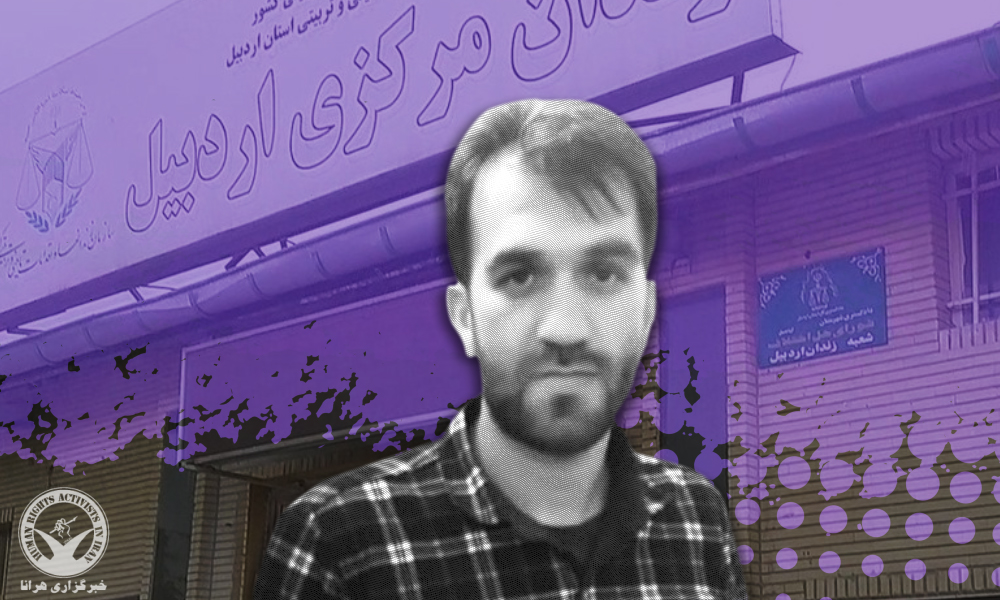
Two defendants were sentenced to death for separate murder charges by the Tenth Branch of the First Criminal Court of Tehran.

According to HRANA, the news agency of Human Rights Activists, quoting the Shargh newspaper, a man named Reza was sentenced to death by the Tehran Criminal Court for a murder committed in 2019.

According to Rokna news, Yashar was sentenced to death by the Tehran Criminal Court for murder, also committed in 2019.

Iran ranks first in the world in citizen executions per capita, according to international organizations. The Statistics and Publication Center of the Human Rights Activists in Iran (HRA) reported that between January 1 and December 20 of 2020, at least 236 citizens were executed.

One of these citizens was executed publicly, and two were juvenile offenders. An additional 95 citizens were sentenced to death.

According to the same report, more than 72% of executions in Iran are not reported by the government or the judiciary, which human rights organizations call “secret” executions.

Azerbaijani Turk Activists Mohammad Kazemi and Reza Shahrivar Transferred to Tabriz Prison

Azerbaijani Turk activists Mohammad Kazemi and Reza Shahrivar announced their transfer to Tabriz Prison during a telephone call with their families on Tuesday, August 10th.

According to HRANA, the news agency of Human Rights Activists, Mohammad Kazemi and Reza Shahrivar were arrested on July 27, 2021 by Ministry of Intelligence agents and were transferred to the detention center of this security institution in Tabriz.

These citizens were arrested on July 27, 2021 by Ministry of Intelligence agents and transferred to the detention center of this security institution in Tabriz. They have been living in the quarantine ward of Tabriz Prison since yesterday.

As of this writing, the reasons for the arrests and the charges against these citizens are unknown.

Two Inmates Executed in Kerman Prison on Drug-Related Charges

Two prisoners who were previously sentenced to death on drug-related charges were executed in Kerman Prison yesterday morning, Monday, August 9.

According to HRANA, the news agency of Human Rights Activists, quoting The Baloch Activists Campaign, the identities of the prisoners are Nabi Noti Zehi and Ebrahim Ghanbarzehi from Zahedan in Sistan and Baluchestan Province.

Iran ranks first in the world in citizen executions per capita, according to international organizations. The Statistics and Publication Center of the Human Rights Activists in Iran (HRA) reported that between January 1 and December 20 of 2020, at least 236 citizens were executed.

One of these citizens was executed publicly, and two were juvenile offenders. An additional 95 citizens were sentenced to death.

According to the same report, more than 72% of executions in Iran are not reported by the government or the judiciary, which human rights organizations call “secret” executions.

The execution of these prisoners has not been announced by Iranian media or official sources as of this writing.

At Least 4 Inmates Executed in Birjand Prison and Isfahan Prison

None of these executions have been announced by Iranian media or official sources as of this writing.

At dawn on Sunday, August 8, two inmates were executed in Birjand Prison and two other inmates were executed in Isfahan Prisons.

According to HRANA, the news agency of Human Rights Activists, quoting Rasank news, all 4 prisoners had previously been sentenced to death on drug-related charges.

The two inmates executed in Birjand Prison have been identified as Zabihollah Hormozi, known as Mehrollah Sanjarani, from Zahedan, and Majid Goleh Bacheh from Torbat-e- Jam.

The two prisoners executed in Isfahan Prison are Azam Mohammad Hosseini (Kiazehi) and Seyed Esmail Kord Tamini, both from Zahedan.

Iran ranks first in the world in citizen executions per capita, according to international organizations. The Statistics and Publication Center of the Human Rights Activists in Iran (HRA) reported that between January 1 and December 20 of 2020, at least 236 citizens were executed. One of these citizens was executed publicly, and two were juvenile offenders. An additional 95 citizens were sentenced to death.

According to the same report, more than 72% of executions in Iran are not reported by the government or the judiciary, which human rights organizations call “secret” executions.

The execution of these 4 prisoners has not been announced by Iranian media or official sources as of this writing.

Political Prisoners Salahoddin Sharifzadeh and Hassan Beit Abdollah being Denied Medical Care in Khalkhal Prison

According to HRANA, the news agency of Human Rights Activists, political prisoners Salahoddin Sharifzadeh and Hassan Beit Abdollah are being denied medical treatment by authorities in Khalkhal Prison despite suffering from COVID-19.

Lack of sanitation facilities in many prisons in the country has led to the rampant spread of Coronavirus within many Iranian prisons.

Salahoddin Sharifzadeh, a native of Buchan, was arrested by security forces in July 2018 on charges of “collaborating with opposition parties” and was transferred to the Urmia Intelligence Detention Center. He was finally sentenced by Branch 1 of the Revolutionary Court of Mahabad to 2 years and 6 months in prison.

Hassan Beit Abdollah, a resident of Shush, was arrested by intelligence agents in October 2015, and eventually sentenced by the Ahvaz Revolutionary Court to 25 years in prison. These prisoners were transferred to Khalkhal Prison shortly after their detention.

Subscribe to Our Newsletter

Now is definitely not the time to stop reading!

Activists Hashem Amini and Nosrat Beheshti Arrested; Javad Lal Mohammadi and Fatemeh Sepehri Still in Detention

Activists Hashem Amini and Nosrat Beheshti were recently arrested by security forces, while activists Javad Lal Mohammadi and Fatemeh Sepehri are still in detention.

According to HRANA, the news agency of Human Rights Activists, Hashem Amini, a civil activist native of Bajestan, was arrested and transferred to Vakilabad Prison in Mashhad on Wednesday, August 4, after being summoned by the Gonabad prosecutor’s office. Meanwhile, Nosrat Beheshti, a retired activist living in Mashhad, was detained by security forces at his home and then taken to an unknown location.

Amini was previously arrested by security forces at his home in Bajestan on June 17 and had been transferred to the Mashhad Intelligence Detention Center. He was released on bail from the Gonabad Intelligence Bureau in Khorasan Razavi Province on Thursday, July 8.

Nosrat Beheshti had previously been detained for signing the resignation request letter of Ali Khamenei the supreme leader in 2019.
Javad Lal Mohammadi and Fatemeh Sepehri are still in custody. These citizens were arrested by security forces on Sunday, August 1, during a protest rally in support of the people of Khuzestan in Mashhad.

Fatemeh Sepehri and Javad Laleh Mohammadi, are also signatories of the request letter for the Supreme Leader’s resignation, and they had previously been arrested and convicted for it.

According to a source close to the families of the two civil activists, Ms. Sepehri informed her family about her detention in the Mashhad Intelligence Office detention center on a short call. However, Javad Lal Mohammadi has not contacted his relatives since his arrest. Mr. Lal Mohammadi’s family follow-up has been inconclusive.

Hamshahri Newspaper: During the Protests, 300 People were Arrested in Susangerd Alone

Hamshahri newspaper, which is owned by Tehran Municipality, published a report yesterday stating that at least 300 have been arrested during the recent protests in the city of Susangerd alone.

According to HRANA, the news agency of Human Rights Activists, the report acknowledges that at least 12,000 people were present at a protest rally in Susangerd–a noteworthy distinction amid denials of unrest from many official sources.

According to the report, the day after the first day of the protests, July 15, Khuzestan Governor Qassem Soleimani Dashtaki denied everything about the protest, saying, “Some seek to provoke the people and publish fake images of the protests in cyberspace.” He claimed, “There were no protests in the cities of Khorramshahr and Susangerd.”

Subsequent events showed that the governor’s words were wrong. The Hamshahri newspaper also reported that the protests were peaceful until the fourth day in Susangerd and surrounding cities but escalated into violence with the arrival of troops and special forces.

Until that day, no provincial or government officials were willing to speak to the people. Finally, on the fourth day, with the arrival of the non-native special police unit in the Susangerd area, the atmosphere changed. The police were aimed at stopping protests by any means necessary. Citizens wondered why the special unit had been summoned to the city, given the peaceful nature of their protests.

According to the Hamshahri report, 2018 statistics showed that Khuzestan was the highest ranked province in number of protests, with about 300 union and non-union gatherings and sit-ins in that year alone. Given the high capabilities and abundance of resources within the province, it should be one of the wealthiest regions, but decades of mismanagement and exploitation have left Khuzestan with abysmal rates of unemployment and poverty. Regarding the water issue, citizens have been protesting, in various ways, for more than 20 years, but nothing has been done.

Three Political Prisoners Sentenced to Additional Prison Time and Lashes in Urmia Prison

Political prisoners Nayeb Hajizadeh Yangjeh, Keyhan Mokarram al-Nabi, and Nayeb Askari were sentenced to a new sentence of prison time and flogging in connection with a recently opened case against them.

According to HRANA, the news agency of Human Rights Activists, the prisoners are currently being held in Urmia Prison in West Azerbaijan Province.

According to Branch 119 of the Criminal Court of Urmia, these prisoners were each sentenced to three months in prison and 50 lashes on a charge of “disrupting the prison order”.

According to HRANA’s report in July, per an informed source, the lawsuit was filed at the request of Urmia Prison Director Amir Sohrabi after several political prisoners protested the beating of Nayeb Hajizadeh by two prisoners accused of violent crimes.

It was said that one of the assailants was also summoned to the court as a witness in the case.

Five Political Defendants Sentenced to a Total of 38 Years in Prison

Political defendants Nahid Taghavi, Somayeh Kargar, Bahareh Soleimani, Nazanin Mohammad Nejad, and Mehran Raouf were sentenced by Branch 26 of the Revolutionary Court of Tehran to a total of 38 years in prison.

According to HRANA, the news agency of Human Rights Activists,  the court hearings of these citizens, along with Ms. Elham Samimi, another defendant of this case, were held on April 28 and June 13.

Branch 26 of the Revolutionary Court of Tehran, presided by Judge Iman Afshari, sentenced Nahid Taghavi and Mehran Raouf to 10 years and eight months in prison on charges of “participation in the management of an illegal group and propaganda activities against the regime”.

Somayeh Kargar and Bahareh Soleimani were sentenced to 6 years and eight months on charges of “participation in the management of an illegal group and propaganda activities against the regime”, and Nazanin Mohammad Nejad to 3 years and 4 months each on a charge of “participation in the management of an illegal group and propaganda activities against the system”. As of this writing, the status of Elham Samimi’s case is not known.

In October 2020, HRANA reported the arrest of Ms. Taghavi, Ms. Somayeh Kargar, Mr. Mehran Raouf, and Ms. Bahareh Soleimani by IRGC intelligence forces, as well as the arrests of Ms. Mohammadnejad in December and Elham Samimi in November last year. Nahid Taghavi and Mehran Raouf are still in custody.

At Least one Prisoner Transferred to Solitary Confinement in Urmia Prison for Execution Preparation

This morning, Wednesday, August 4, at least one prisoner sentenced to death was transferred to solitary confinement in Urmia Prison.

According to HRANA, the news agency of Human Rights Activists, the prisoner was previously sentenced to death on drug-related charges.

The identity of this prisoner has been verified by HRANA as Ebrahim Nasrikhah.

Iran ranks first in the world in citizen executions per capita, according to international organizations. The Statistics and Publication Center of the Human Rights Activists in Iran (HRA) reported that between January 1 and December 20 of 2020, at least 236 citizens were executed.

One of these citizens was executed publicly, and two were juvenile offenders. An additional 95 citizens were sentenced to death.

According to the same report, more than 72% of executions in Iran are not reported by the government or the judiciary, which human rights organizations call “secret” executions.