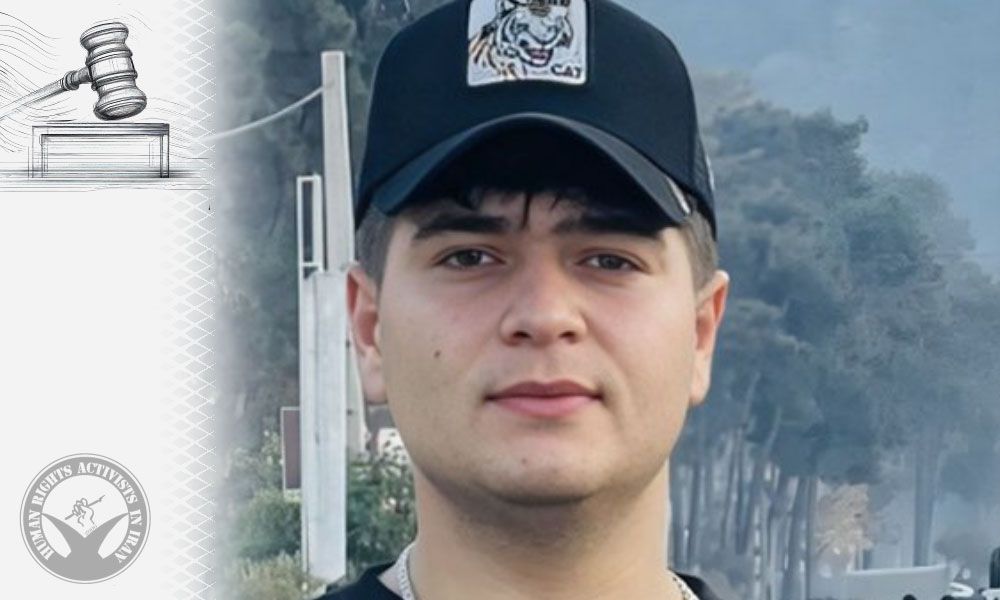
HRANA – Ali Barati, one of the individuals arrested during the January protests, has been sentenced to three years and eight months of discretionary imprisonment by the Revolutionary Court of Bojnurd.
According to a report by HRANA, citing Kurdpa, Ali Barati has been sentenced to prison.
Based on the report, in late June, a branch of the Revolutionary Court of Bojnurd, presided over by Judge Lajevardi, sentenced Mr. Barati to three years and eight months of discretionary imprisonment on the charge of “assembly and collusion against national security.” The verdict was issued despite the fact that he was denied access to legal counsel throughout the proceedings.
Ali Barati was arrested by security forces on January 9, 2026, in connection with the nationwide protests. He was temporarily released on bail on January 15, 2026, after posting bail set at 30 billion tomans.
During his detention, Mr. Barati was denied access to a lawyer, as well as the right to family visits and telephone contact with his family.
It should be noted that protests and strikes by shopkeepers and bazaar merchants began in Tehran on Sunday, December 28, 2025, and within two days spread beyond markets and commercial centers. With the participation of students, citizens, and various social groups, these protests became one of the largest protest movements of recent years. Following the crackdown by security and law enforcement forces, thousands were killed or injured, and tens of thousands were arrested or summoned by security agencies. For more information, readers may refer to HRANA’s comprehensive report titled “Crimson Winter,” documenting the first fifty days following the outbreak of Iran’s nationwide protests.
HRANA – Mahsa Amini, a 22-year-old young woman, was arrested by the morality police for the crime of improper hijab. Her arrest and death in detention fueled nationwide protests in Iran. Protesters came to the streets with the central slogan “Women, Life, Freedom” in protest against the performance, laws, and structure of the regime. The following 486-page report is dedicated to the statistical review, analysis, and summary of the first eighty-two days of the ongoing protests (September 17 to December 7, 2022). In this report, in addition to the geographic analysis and the presentation of maps and charts, the identity of 481 deceased, including 68 children and teenagers, an estimated of 18,242 arrested along with the identity of 3,670 arrested citizens, 605 students and 61 journalists or activists in the field of information is compiled. In addition, the report includes a complete collection of 1988 verified video reports by date and topic. The report examines protests across 1115 documented gatherings in all 31 provinces of the country, including 160 cities and 143 universities.
Summary
Mahsa (Zhina) Amini, a young 22-year-old woman from Saqqez, Kurdistan was visiting Tehran, when she was taken into custody on Tuesday, September 13, 2022, by the Morality Police officers at the Haqqani metro station in Tehran. The reason for her arrest: not properly observing the strict Islamic dress code. Mahsa/Zhina was taken to the infamous detention center of Moral Security Police known as Vozara.
Shortly after Mahsa’s arrest, she went into a coma with level three concussion, and her partially alive body was transferred to the intensive care unit of Kasra Hospital. Given the track record of the police and Guidance Patrols in mistreating the arrestees and similar previous incidents, with the believe that Mahsa was beaten during the arrest people were outraged.
Download full report in PDF format
Unpersuasive explanations given by the Central Command of the Islamic Republic Police Force (FARAJA) in defense of its actions regarding the death of Mahsa, the past performance of the police force, along with widespread dissatisfaction with the existence of a body called the Moral Security Police, fueled widespread protests in Iran.
The widespread protests sparked at the time Mahsa Amini was announced dead in front of Kasra Hospital on Argentina Street in Tehran, and then quickly spread to the streets despite the intimidating presence of Iran’s security forces. The protests intensified after Mahsa’s burial in a Saqqez cemetery. To the extent that after eighty-two days of nationwide protests between September 17, 2022, to December 7, 2022, they have spread to Iran’s all 31 provinces, 160 cities, and 143 major universities.
The protests did not stay limited to Mahsa’s death, it rather, quickly targeted the Iranian government’s political and ideological foundations. These protests were violently quashed by the anti-riot police and Iran’s militia force (Basij). teargas, pellets, and live ammunition were used in the repression of protestors. This widespread crackdown has led to the death of dozens of people and the wounding of hundreds of protestors.
Despite sever communication restrictions imposed by the Islamic Republic, this report attempts to give a clearer picture of the first 82 days of the protests between September 17, to December 7, 2022. It’s worth mentioning at the time of this report the protests are still ongoing in various forms.