Execution of Three Inmates in Mahabad and Kashan

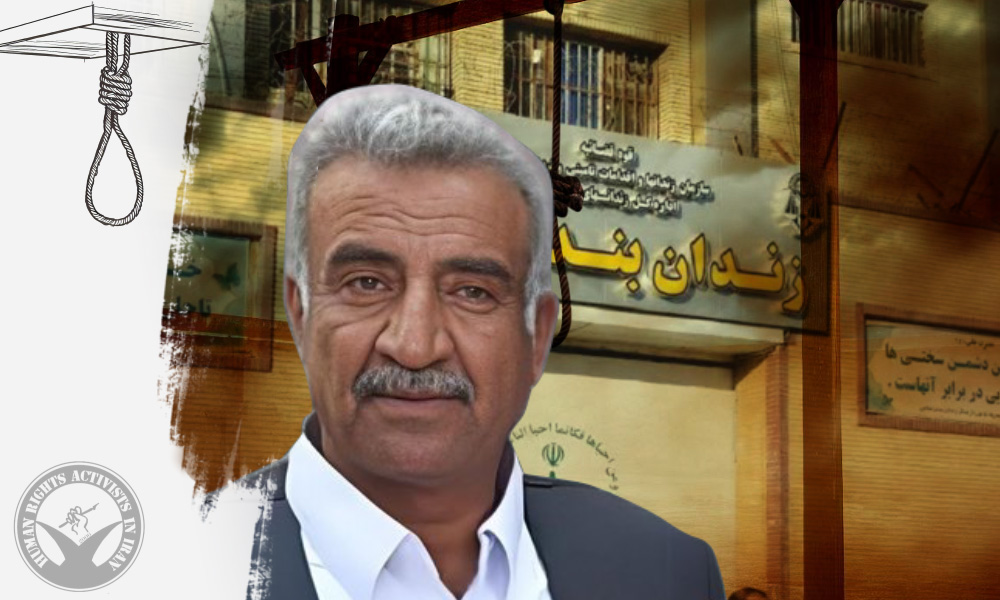
In recent days, two death-row inmates in Mahabad Prison and one in Kashan Prison were executed for murder.

Kurdpa disclosed that on March 7, 2024, Fakhredin Mangur-Nejad, a resident of Oshnavieh, and Abbas Dadvar, from Mahabad, faced the death penalty for their involvement in murders dating back four years.

The Iran Human Rights Organization also reported the execution of Salim Bagheri, a 37-year-old individual in Kashan Prison on March 6. As per sources cited in the report, Bagheri was found guilty of taking someone’s life three years ago amid a financial dispute.

No official sources or domestic media outlets within the country have provided coverage of these executions at the time of writing. The lack of official information raises concerns about transparency and accountability. In 2023, 66% of HRANA’s reports on executions lacked official announcements by judicial authorities and went unreported by media inside Iran, highlighting a troubling lack of transparency in due process.

Moreover, in 2023, the Department of Statistics and Publication of Human Rights Activists in Iran registered the execution of  746 individuals. Out of these, 6 were carried out in public. Among the executed individuals whose genders were identified, 597 were male and 20 were female. Additionally, 2 juvenile offenders, defined as individuals under the age of 18 at the time of their alleged crimes, were also executed. For a comprehensive examination of the details and statistics surrounding the executions in Iran, refer to HRANA’s annual report.

Inmate Executed in Zanjan Prison for Drug Offenses

On March 7, an inmate convicted of drug-related crimes, Mehdi Gorgij, 50 years old and a father of two, was executed in Zanjan Prison, as reported by Haal Vsh.

Gorgij had been arrested four years ago in Urmia on charges of drug offenses, subsequently imprisoned in Zanjan, and ultimately sentenced to death by the Revolutionary Court in the same province.

The execution of Gorgij occurred without prior notice to his family, denying him the opportunity for a final family visitation.

Notably, no official sources or domestic media outlets in the country have covered this execution as of the time of writing. The absence of official information raises concerns, further underscored by the fact that 66% of HRANA’s reports on executions lacked official announcements from judicial authorities and remained unreported by media outlets within Iran.

The reports from the Department of Statistics and Publication of Human Rights Activists for the year 2023 also reveal a concerning prevalence of executions for drug offenses in Iran, constituting 56.4% of the total executions. For a comprehensive examination of the details and statistics surrounding the executions in Iran, refer to HRANA’s report.

Execution of Two Inmates in Khash and Gonbad-e Kavus

In the past week, the execution of two individuals convicted of murder took place in Khash Prison, located in Sistan and Baluchestan province, and Gonbad-e Kavus Prison in Golestan province.

According to reports from Haal Vsh, Milad Galavi, a 29-year-old native of Zabol, was executed on March 3, 2024, in Khash Prison. Galavi was sentenced to death last year by the Khash Criminal Court for his alleged involvement in the killing of three members of a family.

Similarly, on March 6, Farshad Rakhshani, a 25-year-old father, was executed in Gonbad-e Kavus Prison. Rakhshani had been apprehended two years ago in connection with the death of an individual during a reported altercation.

No official sources or domestic media outlets within the country have provided coverage of these executions at the time of writing. The lack of official information raises concerns about transparency and accountability in the execution process.

In 2023, the Department of Statistics and Publication of Human Rights Activists in Iran registered the execution of  746 individuals. Out of these, 6 were carried out in public. Among the executed individuals whose genders were identified, 597 were male and 20 were female. Additionally, 2 juvenile offenders, defined as individuals under the age of 18 at the time of their alleged crimes, were also executed. For a comprehensive examination of the details and statistics surrounding the executions in Iran, refer to HRANA’s annual report.

Execution Carried Out in Hamedan Prison for Drug Offenses

On February 21, 2024, Ahmad Esmaeili, convicted of drug-related crimes, was executed in Hamedan Prison.

A reliable source informed HRANA that Esmaeili was apprehended by security forces in 2018 under suspicion of smuggling 11 kilograms of methamphetamine, leading to his subsequent death sentence.

As of now, there has been no official confirmation of this execution from domestic media outlets or official sources within the country.

In 2023, 66% of HRANA’s reports on executions lacked official announcements by judicial authorities and went unreported by media inside Iran, highlighting a troubling lack of transparency in due process. This report also reveals a concerning prevalence of executions for drug offenses in Iran, constituting 56.4% of the total executions. For a comprehensive examination of the details and statistics surrounding the executions in Iran, refer to HRANA’s report.
 

Inmate Executed in Ardabil Prison for Drug Offenses

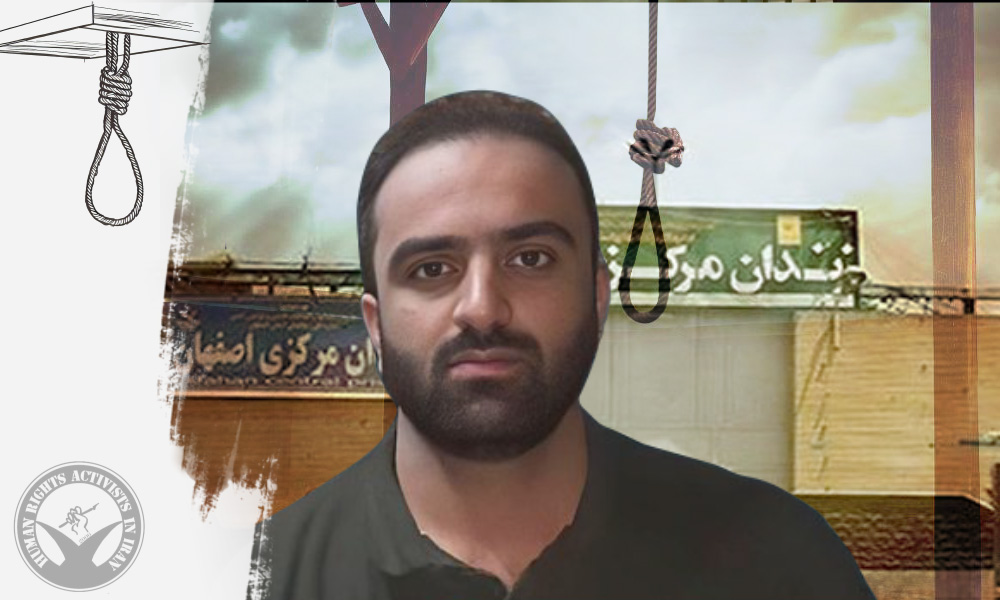
Ardabil prison officials executed Iraj Paki Delazi, a 38-year-old father of four, on February 19, 2024, for drug offenses.

Despite the execution, no official sources or domestic media outlets in the country have reported on the incident, raising concerns about transparency and accountability in the execution process. The lack of information prompts questions regarding the circumstances surrounding Delazi’s death.

The reports from the Department of Statistics and Publication of Human Rights Activists for the year 2023 reveal a concerning prevalence of executions for drug offenses in Iran, constituting 56.4% of the total executions. For a comprehensive examination of the details and statistics surrounding the executions in Iran, refer to HRANA’s report.
Subscribe to Our Newsletter

Now is definitely not the time to stop reading!

Woman Executed in Qazvin Prison for Drug Offenses

In a tragic turn of events, Hajar Atabaki, a 41-year-old mother of one, was executed in Qazvin Prison on January 20, 2024, following her conviction for drug-related crimes, as reported by the Iran Human Rights Organization.

Ms. Atabaki had been found guilty of drug offenses approximately two and a half years ago.

The execution raises concerns and renews discussions about the use of capital punishment, especially in cases related to non-violent offenses.

The reports from the Department of Statistics and Publication of Human Rights Activists for the year 2023 reveal a concerning prevalence of executions for drug offenses in Iran, constituting 56.4% of the total executions. For a comprehensive examination of the details and statistics surrounding the executions in Iran, refer to HRANA’s report.

Execution of Iraqi National Inmate in Qom

The Iran Human Rights Organization reported the execution of Abuzar Taher Arab, a 38-year-old Iraq-national inmate, in Qom prison on February 12.

Arab, hailing from Mosul, Iraq, had been convicted of murder three years ago.

As of the current writing, no official sources or domestic media outlets in the country have covered this execution. The absence of official information raises concerns regarding transparency and accountability in the execution process.

In 2023, the Department of Statistics and Publication of Human Rights Activists in Iran registered the execution of  746 individuals. Out of these, 6 were carried out in public. Among the executed individuals whose genders were identified, 597 were male and 20 were female. Additionally, 2 juvenile offenders, defined as individuals under the age of 18 at the time of their alleged crimes, were also executed. For a comprehensive examination of the details and statistics surrounding the executions in Iran, refer to HRANA’s annual report.

Sunni Cleric Mohammad Khezr-Nejad Receives Death Sentence

In a recent development, Sunni cleric Mohammad Khezr-Nejad has been sentenced to death by Branch 3 of the Urmia Revolutionary Court. The charges against him include “spreading corruption on earth” and “acting against national security,” as reported by Kurdpa.

Judge Reza Najafzadeh issued the ruling, finding Khezr-Nejad guilty of various offenses, such as “spreading corruption on earth,” “acting against national security through threatening the integrity or independence of the country,” and “propaganda against the regime.” Consequently, he has been handed a death sentence along with 16 years of imprisonment. Throughout the trial, Khezr-Nejad has consistently dismissed these charges as baseless.

The verdict was reached based on coerced confessions obtained from the defendant during interrogation, where he purportedly admitted to “leading protests in Bukan and association with anti-regime groups.” Khezr-Nejad has contested the authenticity of these confessions.

In response to the sentencing, Khezr-Nejad has reportedly filed an appeal with the Court of Appeal of West Azerbaijan province.

The cleric and his son were arrested on November 19, 2022, by security forces in Bukan and subsequently detained in Urmia Prison. The arrest occurred after Khezr-Nejad delivered a speech during the funeral of Asa’ad Rahimi, who lost his life during protests at the hands of regime forces. The arrest involved physical assault against Khezr-Nejad.

It’s worth noting that Khezr-Nejad has faced previous arrests and convictions due to his activism.

Shahab Nadali Receives Death Sentence

Branch 26 of the Tehran Revolutionary Court has handed down a death sentence to Shahab Nadali Joozani for charges related to “Baghi” (Armed rebellion) through membership in Munafiqin (a term used by the regime referring to People’s Mujahedin Organization of Iran or Mojahedin-e-Khalq). In addition, Nadali has been sentenced to five years in prison for “assembly and collusion against national security.” He is currently incarcerated in Evin Prison.

Presiding over the court, Judge Iman Afshari personally delivered the verdict to Nadali. Meanwhile, the second-row defendant, Hesamedin Alvani, has been acquitted of the charge of “assembly and collusion against national security.”

As reported by HRANA, Nadali’s lawyer, Mohammad-Saleh Noghrehkar, has filed an appeal against the verdict.

Nadali, a 41-year-old resident of Hamedan and father of a 12-year-old daughter, was arrested by the Ministry of Intelligence on June 7, 2023.

Reports from the Department of Statistics and Publication of HRA in 2023 indicate a total of 193 cases in which Branch 26 of the Tehran Revolutionary Court, presided over by Judge Iman Afshari, has been involved in issuing verdicts that infringe upon the human rights of defendants.

HRA records highest number of death sentences imposed by the Islamic Republic in more than 12 months

The Human Rights Activists News Agency (HRANA) – HRA has reported a concerning increase in the number of death sentences in the Islamic Republic, reaching a 12-month peak with 35 individuals sentenced to death in January 2024 alone.

According to documentation recorded by the Human Rights Activists in Iran (HRA) statistics team, the Islamic Republic witnessed a significant uptick in the issuance of death sentences in January 2024, with 35 individuals sentenced to capital punishment—the highest recorded in more than 12 months, and a total of 86 individuals executed.

January 2024 was also marked by the heinous execution of Mohammad Ghobadlou. Ghobadlou was executed in connection with the “Women, Life, Freedom” protests. His case gained international attention due to reports of mental illness and trials lacking any semblance of due process.

In Iran, the death penalty is routinely imposed following trials that fall short of due process guarantees, in a judicial system that lacks transparency and impartiality, and for crimes that do not amount to the most serious crimes under international law. The continued use of the death penalty in this manner amounts to a grave violation of the right to life under article 6 of the ICCPR.

Additionally, and noteworthy in the case of Mohammad Ghobadlou, the imposition of the death penalty on individuals with mental disorders is strictly prohibited under international law, as reiterated by Section 3(e) of the UN Commission on Human Rights Resolution (2000/85).

An examination of the execution of death sentences and the issuance of death sentences spanning from January 2023 to January 2024 demonstrates that the number of executions consistently surpasses the number of new death sentences issued. This disparity is evident and suggests an apparent backlog.

Iran continually ranks among the highest in the world in terms of capital punishment despite international calls for the abolishment of the death penalty, in particular for crimes that do not amount to the most serious crimes under international law. It is evident that the Islamic Republic refuses to head the calls of the international community. Members of Iran’s judiciary, complicit in its utter lack of compliance with international human rights standards, must continue to be held accountable through various international accountability mechanisms such global Magnitsky style sanctions regimes that designate judges, interrogators, and members of law enforcement for their involvement in the continued use of capital punishment as a means to victimize and silence.

DateExecution of the death sentenceDeath sentence
Jan-236323
Feb-234615
Mar-233520
Apr-231911
May-2313614
Jun-23499
Jul-236411
Aug-23675
Sep-232412
Oct-237816
Nov-2310811
Dec-2310716
Jan-248635