Baha’i Couple’s Sentence Upheld by Court of Appeals

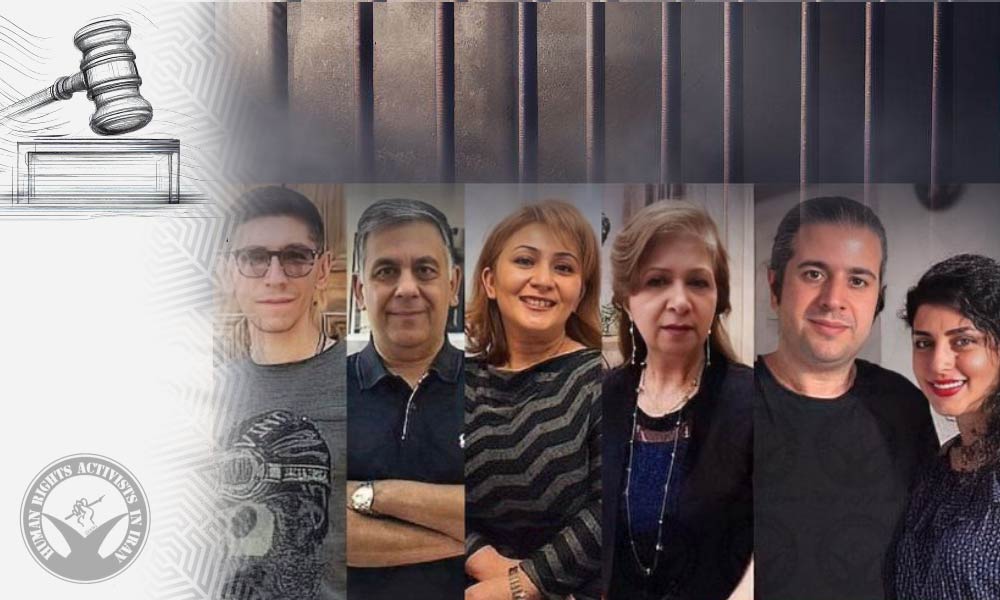
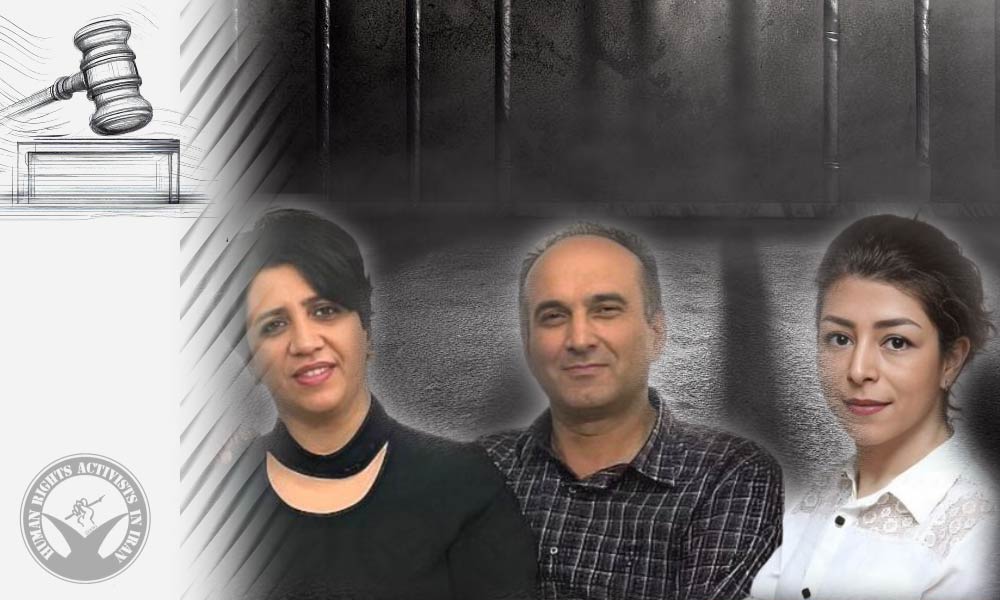
The Gilan Province Court of Appeals has maintained the prison sentence for the Baha’i couple, Vesal Momtazi and Anisa Samieian.

Originally sentenced by the Rasht Revolutionary Court, Momtazi and Samieian received a combined term of nine years and six months. Mrs. Samieian’s sentence encompasses three years and six months for “engaging in educational activities and propaganda against Sharia law,” in addition to seven months and 16 days for “propaganda against the regime.” Meanwhile, Mr. Momtazi has received seven months and 16 days for “propaganda against the regime,” along with one year and three months for “insulting the Supreme Leader of Iran” and three years and six months for “insulting Sharia law.” He is also facing a fine of 38 million tomans. Both individuals are further subjected to social restrictions lasting a decade.

Article 134 of the Islamic Penal Code dictates that each of them will serve three years and six months in prison.

According to an HRANA source close to the family, more than 50 individuals, including friends, colleagues, art students, and their parents, compiled an affidavit attesting to the couple’s adherence to the law. Regrettably, this affirmation was not permitted for presentation during the appellate court proceedings.

On November 4, 2022, security forces searched their residence, resulting in their apprehension. Following his arrest on December 6, 2022, Momtazi was granted bail. Samieian, who was pregnant at the time of her arrest, secured her release on bail after undergoing two interrogation sessions. It’s noteworthy that this Baha’i couple is responsible for the care of two young sons, aged five and about four months.

The Baha’i faith is not recognized as a legitimate religion by Iranian authorities, leading to systematic and longstanding violations of the rights of Baha’is in the country. This includes the denial of their fundamental right to practice their religion, which constitutes a clear breach of both Article 18 of the Universal Declaration of Human Rights and Article 18 of the International Covenant on Civil and Political Rights. The United Nations covenant holds that every person has the right to freedom of religion, freedom of converting religion, as well as freedom of expression, individually or collectively; openly or secretly.


Baha’is Citizens Jamaloddin Khanjani and Maria Khanjani Arrested and Incarcerated at Evin Prison

On August 13, 2023, Baha’is citizens, Jamaloddin Khanjani and his daughter Maria Khanjani, were apprehended by security forces and subsequently taken to Evin Prison. Jamaloddin Khanjani had formerly served as a manager for a dissolved Baha’i group named “Yaran e Iran” or “Friends of Iran,” an organization that aimed to address the spiritual and social needs of the Baha’i community.

According to a source who communicated with HRANA, the security agents executed a search of their residence before transferring them to Evin Prison. The specific grounds for their detention, as well as the charges against them, remain undisclosed at this time.

It’s worth noting that Jamaloddin Khanjani has previously been subject to legal actions due to his involvement in peaceful activism.

HRANA’s annual report in 2022 has highlighted a concerning trend where about 65% of reported human rights violations against religious minorities are directed toward the Baha’i community.

The Baha’i faith is not recognized as a legitimate religion by Iranian authorities, leading to systematic and longstanding violations of the rights of Baha’is in the country. This includes the denial of their fundamental right to practice their religion, which constitutes a clear breach of both Article 18 of the Universal Declaration of Human Rights and Article 18 of the International Covenant on Civil and Political Rights. The United Nations covenant holds that every person has the right to freedom of religion, freedom of converting religion, as well as freedom of expression, individually or collectively; openly or secretly.

Sentences of 20 Years Upheld for Two Baha’i Women

The Tehran Court of Appeal has maintained the original rulings against Baha’i citizens, Mahvash Sabet (Shahriari) and Fariba Kamalabadi, confirming their 20-year prison terms. Initially, both women were sentenced to ten years, along with additional penalties by the Tehran Revolutionary Court on charges of “forming and leading groups to act against national security.”

A source close to Sabet’s family revealed to HRANA that Sabet, aged 70, is battling multiple illnesses that have been aggravated by her prolonged imprisonment. Over the past few months, she has faced several hospitalizations.

These individuals were formerly associated with a dissolved Baha’i group referred to as the “Yaran e Iran” or “Friends of Iran.” Their arrests occurred on July 31, 2022, alongside five other Baha’i individuals, apprehended by security forces across different cities. Moreover, intelligence agents conducted searches at a minimum of 37 Baha’i residences.

Following these apprehensions, the Ministry of Intelligence released a video portraying these individuals as spies, alleging their involvement in infiltrating kindergartens to propagate their beliefs and advocating for the removal of hijab. In response, Simin Fahandej, the spokesperson of the Bahá’í International Community, emphasized: “Iranians of goodwill, who number in their millions, see through these lies. The incident at the kindergarten is the latest in a shameful litany of brazen deception, propaganda, and hate speech, but these efforts do not go unnoticed by the international community and only work against Iran’s interests, showing its true motives of persecuting innocent people only for their beliefs.”

Baha’i Citizen Sanaz Tafazoli Receives Lengthy Prison Sentence

The Mashhad Revolutionary Court has handed down a lengthy sentence of ten years and nine months to Sanaz Tafazoli, a Baha’i citizen currently held in Vakilabad prison.

Presiding Judge Hadi Mansouri issued the sentence, comprising six years and six months for “forming a group to act against national security,” three years and seven months for “assembly and collusion against national security,” and eight months for “educational/promotional activities against Sharia.”

During the trial, the presentation of “books and works related to the Baha’i faith” and the establishment of “educational groups for Baha’i children” were cited as evidence for the aforementioned charges.

Should this verdict be upheld upon appeal, the first charge of six years and six months will be enforceable as the most severe sentence, in accordance with Article 1434 of the Islamic Penal Code.

On Tuesday, November 22, 2022, intelligence agents apprehended Baha’i citizen Sanaz Tafazoli in Mashhad. A search of her residence resulted in the confiscation of belongings belonging to both her and her son.

After multiple extensions of her detention period, she was incarcerated at Vakilabad Prison on December 29, 2022.

In February, she was granted a ten-billion-toman bail. However, judicial authorities declined her release on bail, returning this heavy bail to her family.

Aged 45, Tafazoli has a history of arrests and imprisonment due to her activism.

According to the HRANA annual report, a significant portion, accounting for 64.63%, of human rights violations against religious minorities were related to the infringement of Baha’i rights.

The denial of the freedom to practice a religion constitutes a breach of Article 18 of the Universal Declaration of Human Rights and Article 18 of the International Covenant on Civil and Political Rights. The United Nations covenant asserts that every individual possesses the right to religious freedom, the freedom to convert, and the freedom of expression, both individually and collectively, openly or privately.

Nine Baha’i Citizens Begin Serving Prison Sentences in Karaj

On Saturday, August 5, 2023, nine Baha’i individuals were incarcerated in Kachooie Prison and the Central Prison of Karaj to commence their prison terms.

According to a reliable source who spoke to HRANA, Mahsa Tirgar Bahnemiri, Rameleh Tirgarnejad, Elham Shareghi Arani, Nakisa Sadeghi, Sadaf Sheikhzadeh, Shahrzad Mastouri, and Negin Rezaie were transferred to Kachooie prison, while Kamyar Habibi and Saman Ostovar were imprisoned in the Central Prison of Karaj.

In mid-June, the Appellate Court of Alborz province upheld a combined 40-year, seven-month sentence against these Baha’is along with four others. They have also received additional punishments as part of their conviction.

These individuals were found guilty of various charges, including “Insulting and propaganda against Sharia through engaging in educational activities” and “running groups to act against national security.”

The Iranian regime perceives the peaceful activities of Baha’is in providing humanitarian aid and education as a challenge to its own ideology.

The deprivation of the freedom to practice their religion is a blatant violation of Article 18 of the Universal Declaration of Human Rights and Article 18 of the International Covenant on Civil and Political Rights. The United Nations covenant holds that every person has the right to freedom of religion, freedom of converting religion, as well as freedom of expression, individually or collectively; openly or secretly.

Subscribe to Our Newsletter

Now is definitely not the time to stop reading!

Hami Bahadori’s Six-Year Sentence Upheld by Tehran Court of Appeals

The Tehran Court of Appeals has upheld the six-year sentence against Hami Bahadori, a Baha’i citizen currently incarcerated in Evin Prison.

On June 21, Judge Salavati, presiding over branch 15 of the Tehran Revolutionary Court, delivered a verdict sentencing Bahadori to five years for “assembly and collusion against national security” and one year for “propaganda against the regime.” Pursuant to Article 134 of the Islamic Penal Code, the five-year term for the first charge will be enforceable.

In addition to the sentence, Bahadori will face a two-year travel ban, and some of his and his wife’s belongings have been confiscated.

A reliable source close to Bahadori’s family, who spoke to HRANA, revealed that judicial officials initially attempted to link his charges to the nationwide protests in 2022. However, they eventually abandoned those allegations, invoking only his activities as examples of the charges.

Bahadori’s arrest took place on October 22, 2022, by security forces, and he was subsequently detained in Evin Prison. On April 3, 2023, he conveyed his grievances about the unjust treatment of religious minorities within the judicial system through a written letter.

According to HRANA annual report, from the total human rights reports regarding the violation of religious minorities’ rights, 64.63% belonged to the violation of the rights of Baha’is.

The deprivation of the freedom to practice their religion is a breach of Article 18 of the Universal Declaration of Human Rights and Article 18 of the International Covenant on Civil and Political Rights. The United Nations covenant holds that every person has the right to freedom of religion, freedom of converting religion, as well as freedom of expression, individually or collectively; openly or secretly.

Baha’i Citizen Rouya Malakooti Arrested, Eight Others Summoned in Mashhad

On July 29, nine Baha’i women were separately summoned to appear at Mashhad Courthouse, with one among them, Roya Malakooti, ending up arrested after hours of interrogation.

The other eight citizens, Roya Ghaneh-Ezabadi, Shohreh Salekian, Golnoosh Nasiri, Azita Foroughi, Nooshin Mesbah, Soheila Ahmadi, Fardieh Moradi, and Nasim Sabeti, have had the addressing of their legal cases postponed until further notice.

The specific allegations against these individuals remain undisclosed, leaving uncertainty surrounding the reasons behind the summoning and the subsequent arrest. According to a reliable source who spoke to HRANA, the Prosecutor’s office investigator issued a one-month detention order for Roya Malakooti, and she was subsequently transferred to Vakilabad Prison in Mashhad.

As the case unfolds, the fate of the other eight Baha’i women remains uncertain, and their legal proceedings are set to be addressed in the coming days.

According to HRANA annual report, from the total human rights reports regarding the violation of religious minorities’ rights, 64.63% belonged to the violation of the rights of Baha’is.

The deprivation of the freedom to practice their religion is a breach of Article 18 of the Universal Declaration of Human Rights and Article 18 of the International Covenant on Civil and Political Rights. The United Nations covenant holds that every person has the right to freedom of religion, freedom of converting religion, as well as freedom of expression, individually or collectively; openly or secretly.

Two Baha’i Citizens Arrested in Rasht

Last Wednesday, July 19, Baha’i citizens Shiva Kashani-Nejad (Samieian) and Mojgan Samimi were separately arrested by security forces in Rasht, Gilan Province.

Reliable sources disclosed to HRANA that the Ministry of Intelligence was responsible for their arrests. Both were apprehended at their respective residences, with the agents conducting searches and confiscating some of their belongings.

While Samimi managed to call her family and inform them of her detention at Lakan Prison, Kashani-Nejad has not yet been granted the opportunity to contact her family, leaving her loved ones anxious about her whereabouts.

According to another source, Samimi is facing charges of “propaganda against the regime.”

In a related matter, Anisa Samieian, Kashani-Nejad’s daughter, and her husband Vesal Momtazi recently received a combined sentence of nine years and six months from the Rasht Revolutionary Court, further heightening concerns over the treatment of Baha’i citizens in the region.

The deprivation of the freedom to practice their religion is a breach of Article 18 of the Universal Declaration of Human Rights and Article 18 of the International Covenant on Civil and Political Rights. The United Nations covenant holds that every person has the right to freedom of religion, freedom of converting religion, as well as freedom of expression, individually or collectively; openly or secretly.

Baha’i Citizen Keyvan Rahimian Arrested in Tehran

On July 18, 2023, security forces arrested Baha’i Citizen Keyvan Rahimian in Tehran and transferred him to Evin Prison.

A reliable source close to Rahimian’s family, who spoke to HRANA, revealed that he informed his family about his transfer to Evin Prison during a phone call following his arrest.

The grounds for this arrest and the allegation against him are unknown.

The specific reasons behind his arrest and the allegations against him remain unknown at this time.

Rahimian has a history of previous arrests and convictions related to his activism. Notably, he also serves as a lecturer at an online university affiliated with the Baha’i community. It is important to mention that Baha’is face exclusion from tertiary education in Iran.

According to HRANA annual report, from the total human rights reports regarding the violation of religious minorities’ rights, 64.63% belonged to the violation of the rights of Baha’is.

According to unofficial sources, it is estimated that more than 300,000 Baha’is live in Iran, but the Iranian Constitution recognizes only Islam as the official religion, in addition to Christianity, Judaism, and Zoroastrianism. Bahai faith is not considered legitimate by the authorities, and the rights of Baha’is in Iran have been systematically violated for years.

The deprivation of the freedom to practice their religion is a breach of Article 18 of the Universal Declaration of Human Rights and Article 18 of the International Covenant on Civil and Political Rights. The United Nations covenant holds that every person has the right to freedom of religion, freedom of converting religion, as well as freedom of expression, individually or collectively; openly or secretly.


Baha’i Citizen Payam Vali Face New Charge While Imprisoned

Payam Vali, a Baha’i citizen currently serving his sentence in Qezel Hesar Prison, Karaj, is confronted with a fresh legal case.

The Karaj Revolutionary Court has accused Vali of “spreading falsehood on the Internet through the dissemination of unlawful content.” This case has been transferred from the court to a branch of the prosecutor’s office in Karaj, as it reportedly exceeds the jurisdiction of the Revolutionary Court.

Vali’s arrest took place on September 24, 2022, when security forces apprehended him at his residence in Karaj and conducted a search of his house. Subsequently, he was detained in Rajai Shahr Prison before being relocated to Ghezel Hesar Prison.

On May 10, 2023, the Alborz Court of Appeals sentenced Vali to six years for “collaboration with adversary countries,” three years and one month for “inciting people to commit violence,” and eight months for “propaganda against the regime.” According to Article 134 of the Islamic Penal Code, the first charge carries an enforceable prison term of six years.