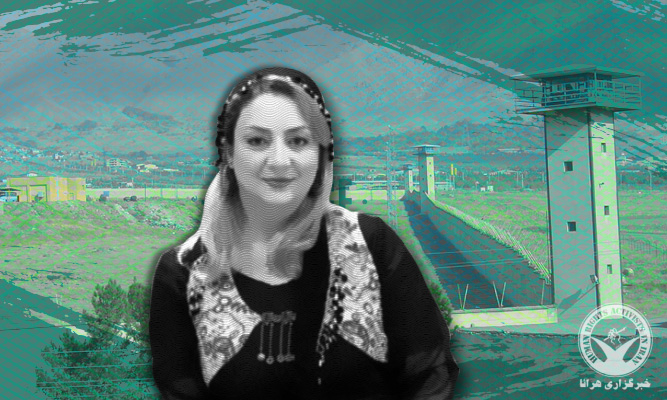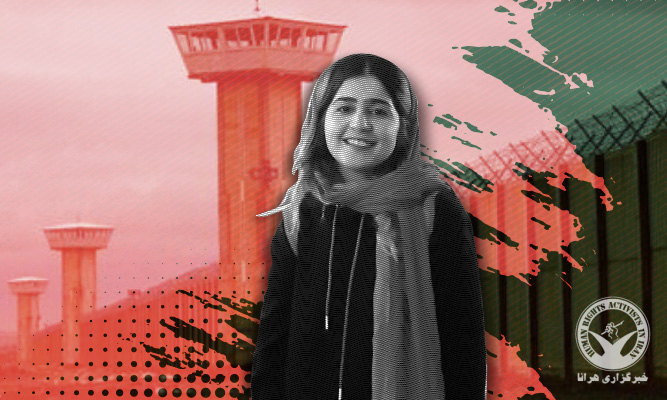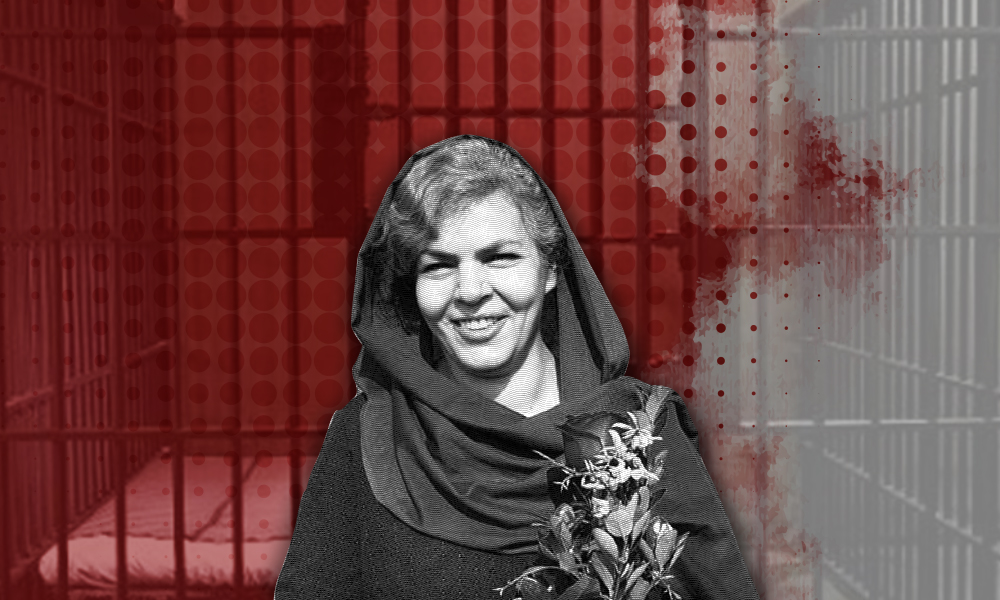
Monireh Arabshahi Forcefully Transferred Back to Kachooye Prison Before Completion of Medical Treatment

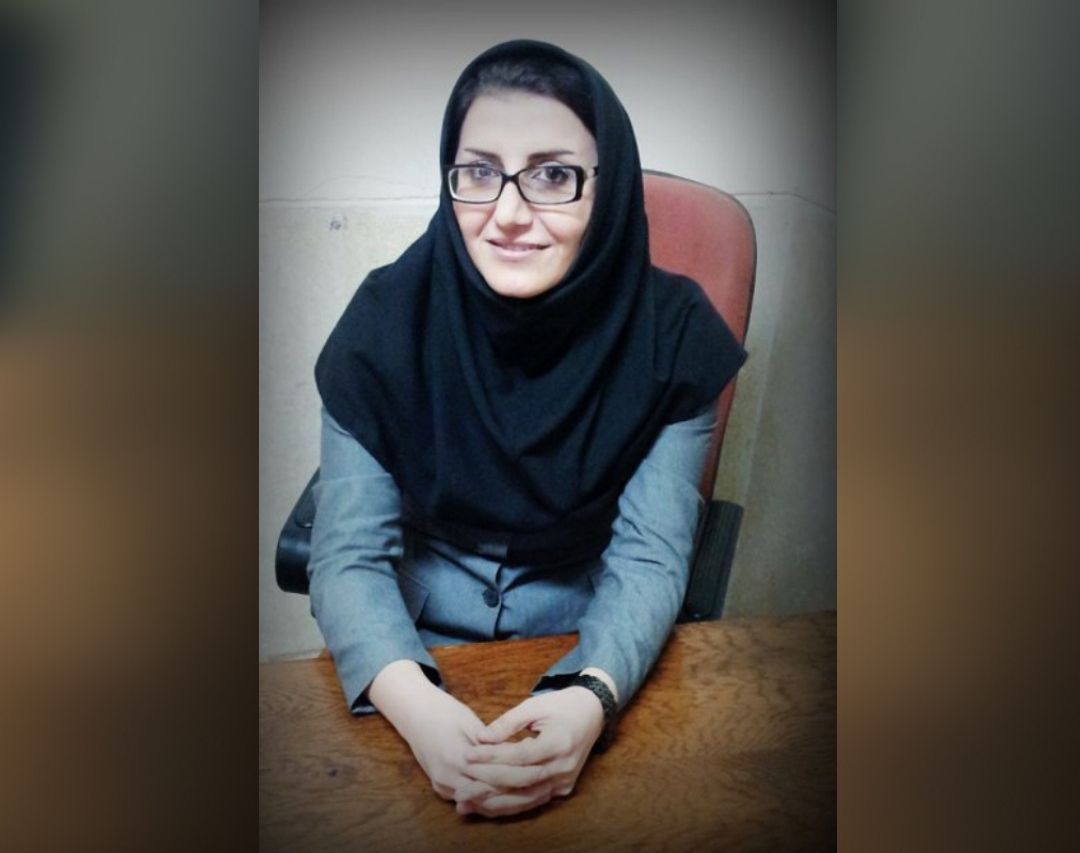
On Monday, October 4, civil activist Monireh Arabshahi was forcefully transferred from the hospital back Kachooye Prison in Karaj by judge order, despite not having completed her treatment.

According to HRANA, the news agency of Human Rights Activists, Ms. Arabshahi had been on medical leave since August 4.

Ms. Arabshahi’s medical issues have been ongoing. On May 3, 2020, Arabshahi was granted leave on bail for 500 million tomans to receive surgery to remove her thyroid gland, after which she was sent back to prison.

Yasamin Ariaani, Arabshahi’s daughter and an outspoken opponent of the compulsory hijab in Iran, who had been released after serving out her sentence on February 14, 2019, was arrested again on April 10, 2019 on new charges.

One day after the arrest of her daughter, Mrs. Arabshahi was also arrested and both were relocated to Gharchak Prison. Subsequently,  both were sent to Evin Prison and finally they end up in Kachooye Prison in Karaj.

Branch 28 of the revolutionary court has convicted this mother and daughter to a total of 16 years in prison, which were later reduced to a total of 9 years and 7 months. They were charged with “assembly and collusion against national security”, “propaganda against the regime”,  and “provoking and provision of impurity and indecency”.

Soheila Hejab Beaten in Garchak Prison While on Hunger Strike

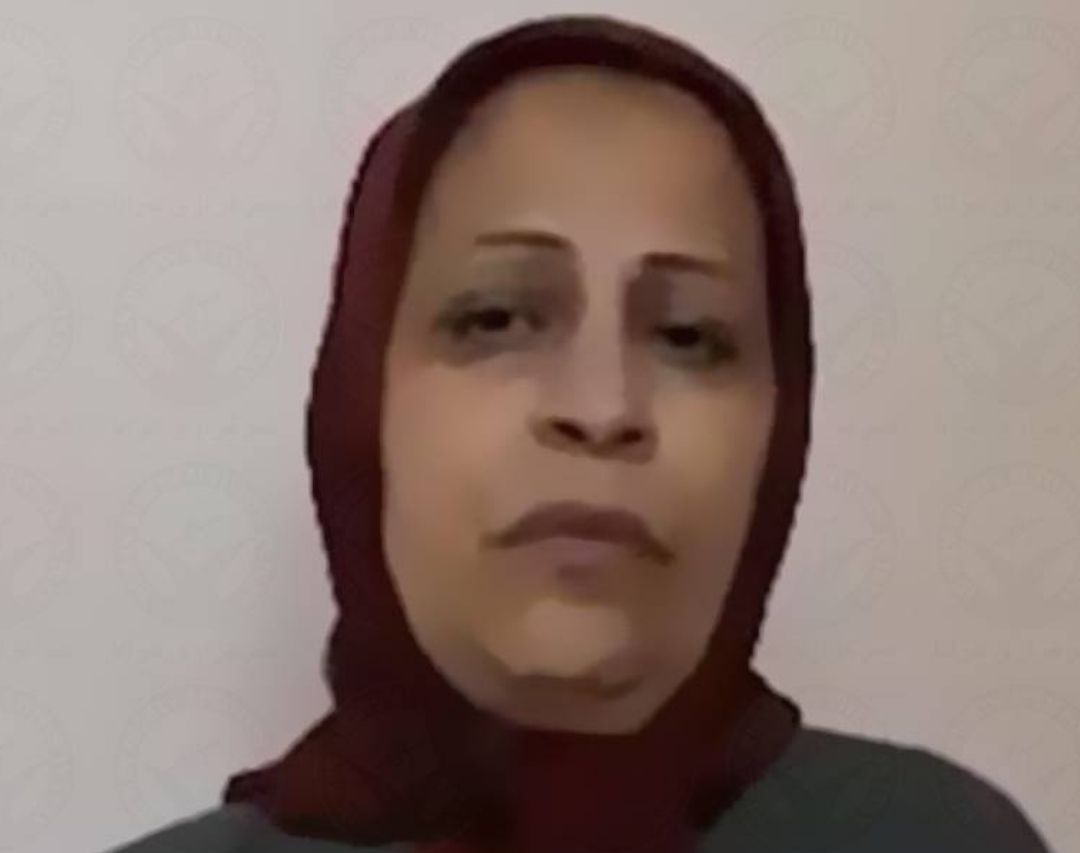
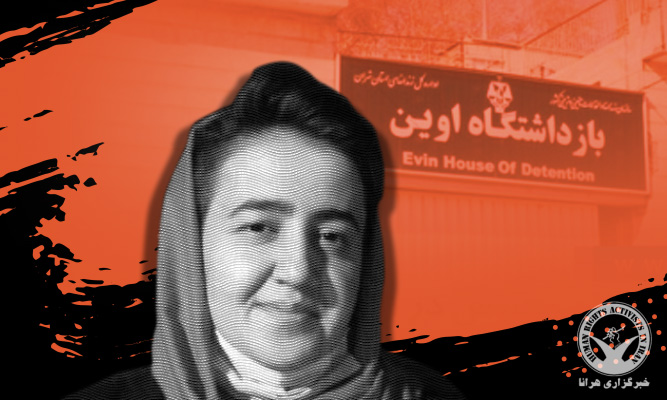
Several inmates convicted of violent crimes recently beat political prisoner Soheila Hejab while she was on a hunger strike in Gharchak Prison in Varamin.

According to HRANA, the news agency of Human Rights Activists, Hejab had been on a hunger strike since September 19 in protest of the increasing pressure on political prisoners and the intrusion of interrogators and other Judicial officers into court processing. Following promises from authorities, she ended her hunger strike on October 3.

“One of the shift officers on purpose opened the door of section 3 where inmates convicted for robbery are held,” an informed source told HRANA. “Several inmates of this section encroached into the section where she was located and took her to their section. They tore her winding-sheet which she was wearing as a sign of protest and forced her to eat in order to broke her strike. Once she resisted, they beat and took her back to her own section by dragged her on the floor.”

Mrs Hejab was arrested by security forces on June 1, 2019, and then released from Evin Prison in Tehran on a bail of 3 billion tomans on March 14, 2020.

Branch 28 of the Revolutionary Court convicted her to 18 years imprisonment on charges of “propaganda against the regime, illegal assembly, incitement of public opinions to riot and organizing unlawful political groups”.

This long imprisonment stands at odds with Article 134 of Iran’s penal code whereupon the severest enforceable punishment is 5 years.

On May 23, 2020, the intelligence unit of the Revolutionary Guards arrested and transferred her to Gharchak Prison in Varamin city to serve out her sentence.

In December 2020, the revolutionary court held a new session for new indictments such as ” propaganda against the regime” and “incitement of public opinions”. Her phone calls while in detention were published online and presented in court as evidence for the above-mentioned charges. Mrs Hejab has been once arrested in Shiraz and released by granting pardon after five-month imprisonment.


Young Woman Burned to Death by Father in what Islamic Penal Code Deems “Honor Killing”

Early on Sunday, October 3,  news spread on social media of a young woman who was burned to death by her father in Sanandaj, the capital of Kurdistan Province.

HRANA, the news agency of Human Rights Activists, has identified the victim as 22-year-old Faezeh Maleki, who had been living in Dolat-Abad (Kurkureh), a village in Sanandaj county.

Reportedly, after she passed away in hospital, her father was beaten by some people, which led to the arrest of some of these attackers.

“Faezeh Maleki got divorced shortly after her marriage,” an informed source told HRANA. “Thereafter, she wanted to marry a young man but his parent disagreed with this marriage. Once some pictures showing the continuation of their relationship came into the hands of her father, he punished his daughter by burning her with gasoline.”

In a post on social media, the victim’s surgeon announced her death and mentioned having a boyfriend as the reason why his father committed this crime. He said that her father is still free. Thereafter, his post was taken down for unknown reasons.

“They send her to hospital but medical team could not save her life and she passed away from severe injuries,” the source added. “Some furious citizens beat her father, who is drug-addicted, in Eghbal Square in Sanandaj. Police detained the father and some of these attackers.”

According to Islamic penal codes, the severity of a sentence in cases of homicide is in large part determined by the wishes of the “blood avenger”, or closest relation to the victim. If a father is convicted of killing his child, however, he can then act as his own “blood avenger”, which almost always results in a significantly lighter sentence.

Typically, a father convicted of killing his child be sentenced to “Weregild payment” and relatively short imprisonment. As case investigations have shown, this system has at times encouraged parents to commit such so-called “honor killing”, because they are aware of the sentence leniency that will be afforded to them if convicted.

Shahrooz Sokhanvari Sentenced to Death for International Human Trafficking

Shahrooz (Alex) Sokhanvari and the second defendant in the lawsuit were sentenced to death by a branch of the Revolutionary Court on charges of ‘international human trafficking’ and ‘corruption on earth’.

According to HRANA, the news agency of human rights activists, Sokhanvari was arrested abroad last year and deported to Iran from Malaysia. He has been charged by the Iranian judiciary with trafficking women for sexual exploitation.

In this law case, the first- and second-degree defendants, both known as “Alex”, were sentenced to death and 5 other participants were sentenced to 15 years in prison. The verdict of the case is not final and can be appealed in the Supreme Court.

In recent years, several women who had been identified as his accomplices have been arrested and are being held in jail on serious charges.

Iran ranks first in the world in citizen executions per capita, according to international organizations. The Statistics and Publication Center of the Human Rights Activists in Iran (HRA) reported that between January 1 and December 20 of 2020, at least 236 citizens were executed.

One of these citizens was executed publicly, and two were juvenile offenders. An additional 95 citizens were sentenced to death. According to the same report, more than 72% of executions in Iran are not reported by the government or the judiciary, which human rights organizations call “secret” executions.

Inmate Dies of COVID After Facing Medical Negligence in Qarchak Prison in Varamin

Today, Wednesday, September 22, Ms. Giti Haj Rahimi died of COVID in the quarantine section of Ward 9 of Qarchak Prison in Varamin after facing medical negligence from prison authorities.

According to HRANA, the news agency of the Human Rights Activists, Haj Rahimi had been convicted for financial crimes. HRANA has verified Ms. Haj Rahimi’s identity.

Ms. Haj Rahimi, who had been serving her sentence in Ward 6 of Qarchak Prison, was recently transferred to a solitary confinement cell for quarantine after she was diagnosed with COVID-19.

Ms. Haj Rahimi was also diabetic and had previously lost one of her fingers to this disease during her imprisonment.

Haj Rahimi’s death has not been announced by the Iranian media or official sources as of this writing.

Subscribe to Our Newsletter

Now is definitely not the time to stop reading!

Revolutionary Court Sentences Farzaneh Zilabi, Defense Lawyer for the Haft Tappeh Workers’ Case, to One Year in Prison

Farzaneh Zilabi, the defense lawyer for the Haft Tappeh workers’ case, was sentenced by the Ahvaz Revolutionary Court to one year in prison.

According to HRANA, the news agency of Human Rights Activists, quoting EMTEDAD, in addition to the prison sentence, Zilabi has received a two year ban from leaving the country.

Nasser Zarafshan, Farzaneh Zilabi’s lawyer, commented on the sentence.

“Regarding the charges against my client,” Zarafshan said, “‘gathering and collusion’, ‘spreading lies’, and ‘insulting the leadership’ were acquitted by the Revolutionary Court but she is sentenced to one-year imprisonment and two years ban on leaving the country on the charge of ‘propaganda against the regime’. This is the verdict issued against my client in the primary court.”

Zarafshan added, “The previous order on Ms. Zilabi’s six-month ban from practicing law has apparently been dropped.”

On May 16 of this year, after Farzaneh Zilabi’s interrogation session in the Ahvaz court, Nasser Zarafshan stated that “Besides issuing a bail, the case investigator has issued a six-month ban from practicing law for Ms. Zilabi” and had mentioned that his client, Ms. Zilabi, is “paying for the defending the Haft Tappeh workers”.

Concern Increases about Political Prisoner Zahra Safaei’s Condition Following her Transfer to Unknown Location

On Saturday, September 4, political prisoner Zahra Safaei was transferred from prison to an unknown location following a heart attack.

According to HRANA, the news agency of Human Rights Activists, Safaei was being held in Qarchak Prison in Varamin until  her transfer.

Neglect of Ms. Safaei’s condition, especially after her recent heart attack and poor physical condition, has raised concerns among her family. She had also been transferred to Sattari Hospital in Qarchak last week on the order of a prison doctor but was returned to prison without medical treatment.

Ms. Safaei was summoned in July 2020 and was transferred to Qarchak Prison in Varamin the next day since she was not able to provide the required bail of ten billion tomans.

In January of this year, Branch 23 of the Revolutionary Court of Tehran, presided over by Judge Mohammad Mehdi Shahmirzadi, sentenced Ms. Safaei to 5 years in prison on a charge of “propaganda activities against the national security”, one year in prison on the charge of “propaganda against the regime”, and 2 years in prison on the charge of “insulting the leadership and founder of the Islamic Republic”.

She was also sentenced to a ban from leaving the country and from joining political parties and social groups.

Zahra Safaei has a history of arrest. She spent time in prison as a social-political activist in the 1980s. Her father was executed in the 1980s for supporting MEK.

Safaei’s location and fate are unknown as of this writing.

Husband Confesses to Murder of 14-Year-Old Mobina Souri

Five days after news broke of the death of 14-year-old Mobina Souri, her husband confessed to having committed the murder. Souri is the victim of  what is classified under Islamic Law as an “honor killing”.

According to HRANA, the news agency of Human Rights Activists, “honor crimes” or “honor killings” are acts of assault or murder, usually towards women and usually committed by male relatives.

Under Islamic Law, in murder cases where the (usually-female) victim has been accused of “disgracing the family’s honor”, exemptions and sentence reductions are frequently granted to the murderers.

The scope of the ways “disgracing family honor” can be defined is extremely broad; women and girls can be accused for being victims of rape, getting a divorce (even from an abusive husband), committing adultery, or being suspected of having sexual relations before marriage.

14-year-old Mobina was also a victim of child marriage and was married to the young cleric in her village who ultimately killed her. The other suspects were released after the husband confessed.


14-Year-Old Mobina Murdered in Lorestan in what Islamic Penal Code Classifies as “Honor Killing”

On Monday, August 30, 14-year-old Mobina, who was from the Suri area of Lorestan Province was murdered by a family member in what is classified under Islamic Law as an “honor killing”.

According to HRANA, the news agency of Human Rights Activists, quoting Rokna, Mobina was the victim of a child marriage who was married to a young cleric in her village. She was murdered after relatives presumed she had an affair.

Under Islamic Law, in murder cases where the (usually-female) victim has been accused of  “disgracing the family’s honor”, exemptions and sentence reductions are frequently granted to the murderers.

“The murder happened due to family disputes, and the accused has been identified and arrested,” said the Lorestan police chief. “He is one of the relatives of the victim.”

“Honor crimes” or “honor killings” are acts of assault or murder, usually towards women and usually committed by male relatives.

The scope of the ways “disgracing family honor” can be defined is extremely broad; women can be accused for being victims of rape, getting a divorce (even from an abusive husband), committing adultery, or even just having sexual relations before marriage.

Elmira Habibi goes on a Hunger Strike in Urmia Prison

On Saturday, August 28, a defendant named Elmira Habibi went on a hunger strike in the women’s ward of Urmia Prison.

According to HRANA, the news agency of Human Rights Activists, 33-year-old Elmira Habibi,  a native of Urmia, was imprisoned after being convicted of financial crimes.

Ms. Habibi has been on a hunger strike to protest her unfair trial and the lack of accountability from officials.