Baha’i Citizen Manijeh Azamian’s One Year Sentence Upheld by Court of Appeals

The court of appeals in Mazandaran Province recently upheld Baha’i citizen Manijeh Azamian’s one year prison sentence.

According to HRANA, the news agency of Human Rights Activists, 52-year-old Azamian had previously been sentenced on a charge of “propaganda against the regime” by Branch 1 of the Revolutionary Court of Babol.

On April 10, security forces searched Azamian’s house and confiscated several of her personal belonging such as her cell phone, PC hard drive, flash drives, and books about the Baha’i faith. They summoned her to appear at the Ministry of Intelligence office on the same day afternoon.

An informed source told HRANA, “During the interrogation, they called several phone numbers from the list on her cell phone and at least three of her non-Baha’i friends or neighbors were summoned for interrogation.”

Three days later, security forces arrested her and transferred her to Babol Prison. The next day, she was released on bail of 50 million tomans.

According to unofficial sources, it is estimated that more than 300,000 Baha’is live in Iran, but the Iranian constitution recognizes only Islam, Christianity, Judaism, and Zoroastrianism. Because their faith is not considered legitimate by authorities, the rights of Baha’is in Iran have been systematically violated for years.

This deprivation of the freedom to practice their religion is a breach of Article 18 of the Universal Declaration of Human Rights, and Article 18 of the International Covenant on Civil and Political Rights. The United Nations covenant holds that every person has the right to freedom of religion, freedom of converting religion, as well as freedom of expression, individually or collectively; openly or secretly.


Susan Rezaei-Poor Executed in Central Prison of Qazvin

On Wednesday, October 27, a female inmate who had been convicted of murdering her husband was executed in the Central Prison of Qazvin.

According to HRANA, the news agency of Human Rights Activists, quoting Iran Human Rights, Susan Rezaei-Poor, who had been previously sentenced to death, was executed in the Central Prison of Qazvin after spending six years in prison.

“Susan was forced by her family to marry her cousin without her consent,” an informed source stated. “In her confession, she said that her husband used to get drunk from the afternoon until late at night and beat her every day. Completely fed up with his behavior, she ultimately killed him.”

The most recent report of the Statistics and Publication Center of the Human Rights Activists in Iran (HRA) states that between October 8 of 2020 and October 9 of 2021, at least 266 citizens, including three juvenile offenders, were executed and 90 citizens were sentenced to death.

As the report points out, Iran’s judicial authorities do not publicly announce over 82% of executions. These unreported executions are known as “secret executions” by human rights organizations.

Rezaei-Poor’s execution has not been reported by official sources in Iran as of this writing.


Golaleh Moradi Still in Detention After Six Months

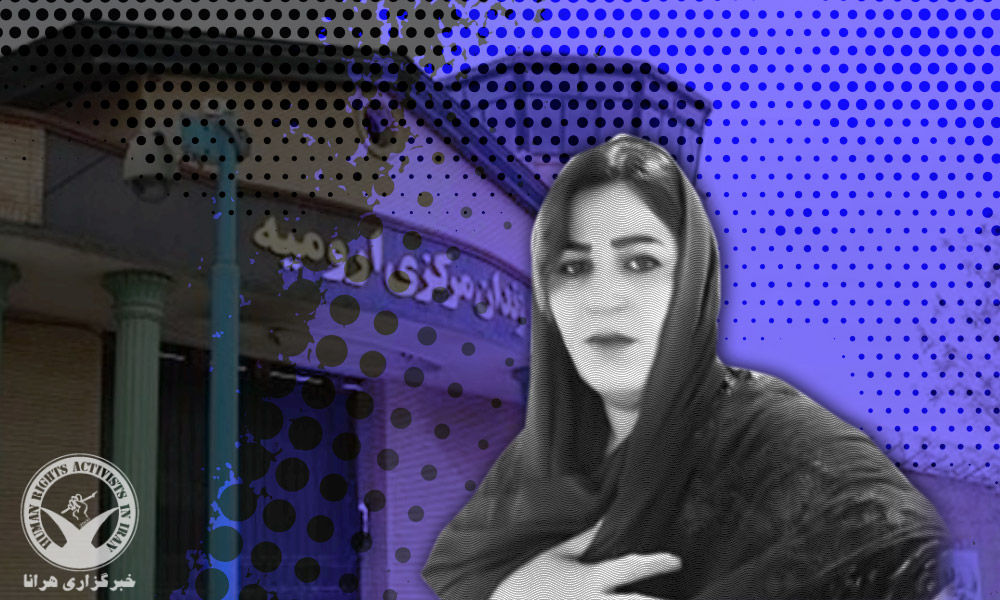
After six months, Piranshahr resident Golaleh Moradi is still in detention in Urmia Prison.

According to HRANA, the news agency of Human Rights Activists, quoting Kurdpa, no court session has been held as of yet. Moradi has has been denied conditional bail as well as access to a lawyer throughout her detention.

On April 17 of this year, Golaleh Moradi was arrested along with her two children and transferred to a detention center in Urmia City. Her children were released after completing the interrogation process, but Moradi was then relocated from the IRGC detention facility to Urmia Prison in June.

“She has been under pressure for confession,” an informed source stated.


Concerns Increase about Atena Daemi’s Condition in Rasht Prison After Two Months Incommunicado

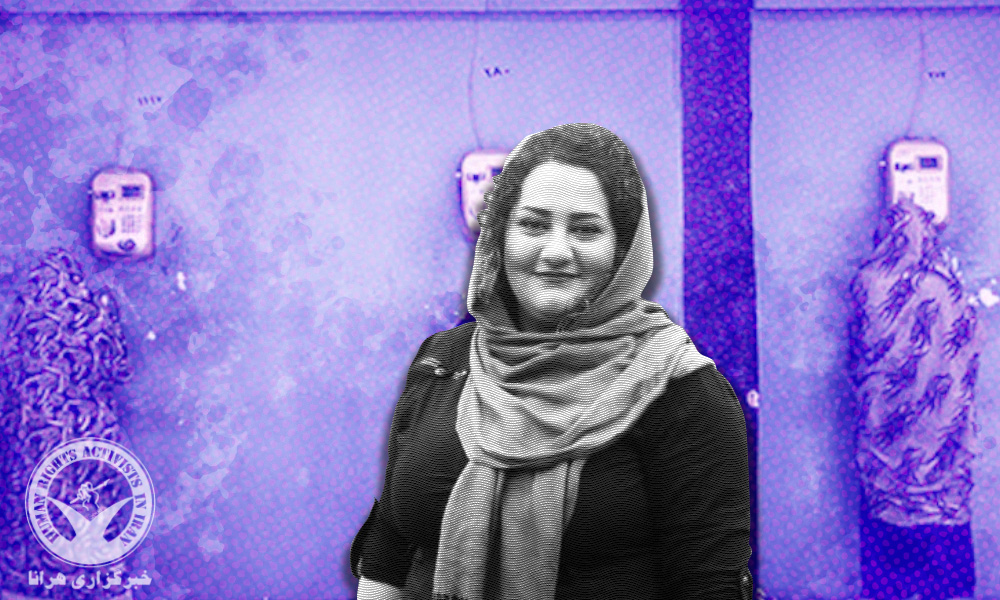
After two months in detention, civil activist Atena Daemi is still incommunicado in Rasht’s Lakan Prison.

According to HRANA, the news agency of Human Rights Activists, her family has not heard from her or received updates about her condition in two weeks, and it seems she is being denied access to phone calls, mounting concern about her situation.

On August 12, in protest against the intentional and frequent interruption of prison phone lines and the poor conditions within the prison, Atena Daemi went on a hunger strike. She broke her hunger strike after five days, after authorities restored her access to a telephone. However, according to an informed source, even at the time, she had been allowed to have only five minutes of phone time with the presence of a prison guard or at the office of the head of the prison.

Atena (Fatemeh) Daemi was sentenced to 14 years in prison on May 15, 2015, by Branch 28 of the Revolutionary Court of Tehran, headed by Judge Mohammad Moghiseh, on charges of “assembly and collusion against national security, propaganda against the regime, and offensive statements against the supreme leader”. The verdict was reduced to seven years in the court of appeal, from which five years is enforceable grounded on Article 134 of the Islamic penal code.

She began serving her prison term in December 2016. In 2018, while enduring her sentence in the women’s ward of Evin Prison, she and Golrokh Ebrahimi, another civil activist, faced a new case, for which they were sentenced to an additional three years and seven months in prison by Branch 26 of the Revolutionary Court of Tehran.

The verdict was upheld by the court of appeal. By applying Article 134, two years and one month of this term are enforceable. Additionally, they were condemned to a two-year prohibition from membership in political groups and parties.

Once again, in July 2020, the Revolutionary Court of Tehran opened a new case and sentenced her to two years imprisonment and flogging of 74 lashes. Her request for a retrial was dismissed by the Supreme Court of Iran in March 2021. She and her family have been frequently under pressure by security forces and judiciary officials.

On March 16 of this year, she was transferred from Evin Prison to Lakan Prison in Rasht.


Roya Jalali Sentenced to Two Years of Suspended Imprisonment

The Sanandaj Revolutionary Court recently sentenced Sanandaj resident Roya Jalali to two years suspended imprisonment.

According to HRANA, the news agency of Human Rights Activists, quoting Kurdpa, Branch 1 of the Sanandaj Revolutionary Court, headed by Judge Saeedi, convicted Jalali on a charge of “membership in an opposition political party”.

On February 2, Roya Jalali was arrested violently at her home and released on bail after spending one month in detention.

She suffers from multiple sclerosis (MS) and was denied access to lawyers, phone call and family visitation throughout her detention.

Earlier, her husband, Khabat Mafakheri, was also sentenced to four years suspended imprisonment on the charge of “collaboration with one of opposition political parties” by the Sanandaj Revolutionary Court.

Subscribe to Our Newsletter

Now is definitely not the time to stop reading!

Media Activist Mehrnoosh Tafian Sentenced to Six Months in Court of Appeals

Media activist and Ahvaz resident Mehrnoosh Tafian was sentenced to six months and eleven days in prison by the court of appeals in Khuzestan Province.

According to HRANA, the news agency of Human Rights Activists, from this prison term, three months and one day have been suspended for one year.

Mehrnoosh Tafian received three months and one day in prison on charges of “spreading lies with the purpose to disturb public opinions”. On a charge of “propaganda against the regime”, the court of appeal reduced the initial verdict from one year to three months and ten days imprisonment.

For the above-mentioned charges, the initial verdict of the Revolutionary Court of Ahvaz was three months and ten days imprisonment and one year respectively.

In October 2020, the IRGC’s intelligence agents raided and inspected her house. They confiscated her cell phone and some other belongings. After one month, she was summoned to appear at IRGC’s Intelligence Organization in Ahvaz for interrogation. On November 1, 2020, when she appeared at Branch 13 of the Public Prosecutor’s Office and the revolutionary Court, she was sent to Sepidar Prison because she failed to provide the required bail.

Mehrnoosh Tafian is graduated from News College and living with her two sons in Ahvaz.

Farangis Mazloum Summoned by Evin Court to Endure Eighteen Month Sentence

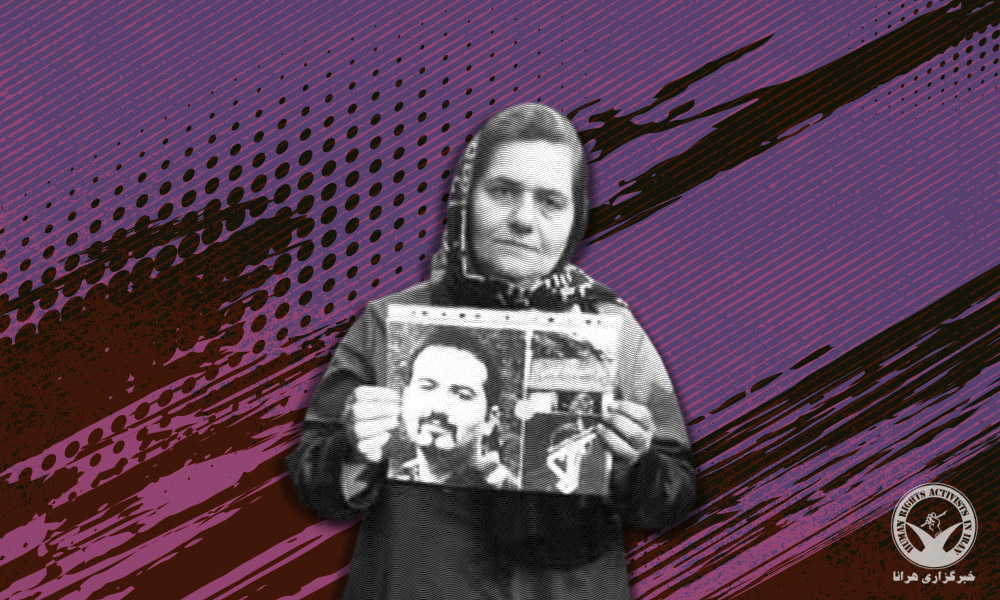
Yesterday, October 19, civil activist Farangis Mazloum was summoned to serve her 18-month prison sentence by Branch 1 of the Executive Unit of Evin Court.

According to HRANA, the news agency of Human Rights Activists, Mazloum was asked to appear at this branch within five days from the date of the summons’ issuance. Branch 29 of the Revolutionary Court had sentenced her to 18 months in prison.

Mazloum is the mother of prisoner of conscience Soheil Arabi, who recently began a hunger strike in Rajai Shahr Prison.

On July 22, 2019, Farangis Mazloum was arrested at her sister’s home and transferred to the detention center at the disposal of the ministry of intelligence, known as Ward 209 of Evin prison. On October 8, 2019, she was released on bail of 250 million tomans (approx. 9300 US dollars) until the end of legal proceedings.

She was indicted by Branch 6 of the Public and Revolutionary Court of Evin Prison.

Initially, the Branch 29 of the Revolutionary Court of Tehran held the trial in absentia and sentenced her to six years imprisonment. In this court, six other people related to this court case were also sentenced to imprisonment. After Mazloum’s objection, in a retrial, the Branch 29 of the Revolutionary Court of Tehran on August 25 and 28 2020 changed the sentence to 18 months in prison.

She was sentenced to one year on a charge of ” assembly and collusion to commit a crime through associating with The People’s Mujahedin Organization of Iran”, and 6 months on a charge of “propaganda against the regime in favor of opposition political groups”.

This verdict was upheld by the appellate court. By applying article 134 of the Islamic Penal Code, the severest punishment of one year from this sentence is enforceable.


Political Prisoner Arezoo Ghasemi Released on Leave from Evin Prison

On Wednesday, October 14, political prisoner Arezoo Ghasemi was released on furlough from Evin Prison in Tehran.

According to HRANA, the news agency of Human Rights Activists, Ghasemi has been enduring her one and a half year prison sentence since August 9, 2020. On July 20 of this year, after testing positive for COVID-19, she was also granted furlough.

Arezoo Ghasemi was arrested by security forces amid nationwide protests in November 2019. She was released on bail until August 9, 2020, when she was sent to Evin Prison to serve her sentence.

The Branch 28 of the revolutionary court, headed by Judge Mohammad Moghayeseh sentenced her to three years imprisonment on a charge of “assembly and collusion against national security”. This sentence was subsequently reduced to one and a half years after applying the “Punishment Reduction Law”.

During the wave of protests of November 2019 in dozens of cities, which broke out initially in protest of an unprecedented fuel price surge, hundreds were killed and seven thousand were arrested by regime forces.

Since Ghasemi will have served out her term by the end of the furlough, she will not return to prison.

Political Prisoner Mojgan Kavousi Transferred Back to Evin Prison from Kachooie Prison

On Wednesday, October 13, political prisoner Mojgan Kavousi was sent back to Evin Prison from Kachooie Prison in Karaj.

According to HRANA, the news agency of Human Rights Activists, Kavousi was relocated to Karaj police detention center a while ago, and from there to Kachooie Prison.

In a phone call with her family, Kavousi informed them about this relocation.  The reason for her transfer to Kachooie Prison is still unknown.

On July 26, 2021, Branch 28 of the appellate court in Mazandaran Province issued an order to transfer the political prisoner to a prison in Alborz Province for the remainder of her sentence.

“Due to  COVID-related restrictions making family visitation difficult, Mrs Kavousi asked for transferring to Noshahr where her family are living,” an informed source told HRANA. “On July 13, 2021, they transferred her to Noshahr but after spending one-night in police detention centre, they sent her back to Tehran. Considering that her family are residing in either Tehran or Noshahr, it is not clear why she should be transferred to a prison in Alborz Province.”

On November 20, 2019, Mojgan Kavousi was arrested by security forces amid nationwide protests in the mid-fall of the year, from her home in Noshahr. After being held three weeks in detention, she was sent to Noshahr Prison. On December 19, 2019, she was released on bail.

The Revolutionary Court in Noshahr sentenced her to 6 months on a charge of “the propaganda against the regime”, 33 months on a charge of “membership in opposition parties” and 30 months on a charge of “provoking to disturb the public order”. During the appeal process, the sentence was increased by seven months due to the influence of the prosecutor.

Mojgan Kavouci is a writer, researcher and follower of Yarsanism.

Civil Activist Sepideh Gholiyan Arrested by Security Forces in Ahvaz

Civil activist Sepideh Gholiyan, who has been on leave from Bushehr Prison since August 19, was recently arrested by security forces in Ahvaz from her sister’s home to serve the rest of her sentence.

According to HRANA, the news agency of Human Rights Activists, security police confiscated the cell phones of all family members during the arrest.

Confirming Gholiyan’s arrest, an informed source told HRANA, “Thirty male and female security forces entered her sister’s home, arrested Mrs. Gholiyan, and confiscated the cell phones of all family members.”

Before this arrest, on her personal page on social media, Gholiyan had informed that she had been summoned to Bushehr prison and commented “Ten days ago, they called me from Bushehr Prison that I have to return to there. I told them that I am supposed to go to Tehran where the Executive Branch of the Department of Justice would decide to which prison I had to be sent. Seemingly, they are searching to find somewhere worse than Bushehr Prison.”

On November 18, 2018, Sepideh Gholiyan was arrested along with at least 19 others, including members of the Assembly of Representatives of Haft-Tappeh’s workers, several workers’ activists and company personnel and managers by security police of NAJA in Shush city. She was released on bail on December 18, 2018.

After broadcasting her forced confession as well as some other workers’ activists, including Ismail-Bakhshi on national TV channel, they announced that the “confessions” were extracted under torture by security forces. Soon after this announcement, the security police arrested them.

On October 26, 2019, she was released on bail until the end of legal proceedings. On December 14, 2019, she was sentenced to 5 years imprisonment by Tehran appellate court.

On June 21, 2020, she began serving her prison term in Evin prison. On March 10, 2021, she was exiled to Bushehr Prison, where she was held until being granted leave, and to where she is now being transferred back.