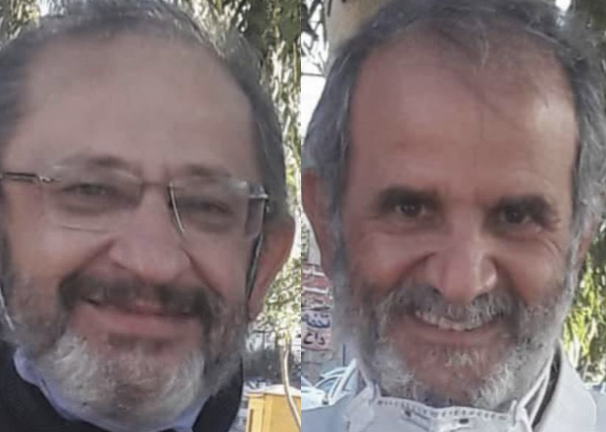
Samaneh Norouz Moradi returned to prison

Samaneh Norouz Moradi, a political prisoner, returned to Evin Prison on April 5, 2020. Ms. Norouzi is suffering from Lupus and breast infection. Even a doctor prescribed her mastectomy which has not been performed yet. She was granted furlough on March 18, 2020. Her request to extend her furlough was not accepted by Amin Vaziri, the special assistant of the prosecutor regarding political prisoners.

Ms. Moradi was arrested in August 2018 for supporting an opposition group through the internet and was released on bail after two weeks. Branch 26 of Tehran’s Revolutionary Court sentenced her to 8 years imprisonment which was reduced to three years and nine months after she accepted the court’s verdict and did not request an appeal. On April 24, 2019, she was rearrested and transferred to Evin Prison to serve her sentence.

A report on Sunni prisoners of Rajai Shahr Prison

31 Sunni prisoners are detained in ward 7 of hall 21 of Rajai Shahr prison in Karaj in an unfavorable condition. This report that is gathered by Human Rights Activists (HRANA) examines the conditions in Rajai Shahr Prison and as well, the condition of 31 Sunni political prisoners who were kept in this prison. The information of this report was gathered from the sources inside the prison. Several prisoners contacted HRANA while incarcerated in Rajai Shahr Prison or after they were released.

Prison conditions

Lack of hygiene products and sanitary necessities in the prison during the Coronavirus outbreak has raised concerns among these prisoners. Some of these prisoners, who are serving their rather long imprisonment sentences in exile, suffer from various illnesses such as shortness of breath, neck and knee arthritis, and herniated disc. As a result of the location of this hall and high humidity in the ward, the majority of the prisoners suffer from respiratory diseases. Also, unsafe and unpurified drinking-water caused kidney problems such as kidney stones for many of these prisoners. Moreover, malnutrition has weakened them physically. In addition, many of these prisoners suffer from psychiatric disorders as a result of the tortures they endured during their interrogation or detentions.


Other issues

In addition, most of these prisoners were transferred to Rajai Shahr Prison in Karaj from different towns across Iran, thus, long distances and the costs of transportation to and from their towns has led to fewer family visits for these prisoners.

In recent years, these prisoners have been subject to attacks and violent searches that led to the destruction of their belongings. In the latest attack on February 6, 2019, the security forces including the agents of the Ministry of Intelligence and more than 200 of the prison guards attacked ward 7 of hall 21 of this prison, confiscated and distracted belongings of these prisoners, and beat several of these prisoners.


31 Sunni prisoners of Rajai Shahr Prison

There are 31 Sunni prisoners with political or security charges in this prison. The latest list of the names of these prisoners and their health condition is complied by HRANA as follows:


1.Teymour Naderizadeh – arrest: June 2010 – charges: membership and collaboration with Salafi groups – sentence: 12 years of imprisonment – notes: he was first sentenced to death but after three years, his sentence was reduced to 12 years imprisonment.

2.Saeed Karimi – charges: membership in ISIS, act against the national security, waging war against God (Moharebeh) – sentence: death – health condition: he suffers from Diabetes and shortness of breath – notes: he left the country for a while and was allegedly joined the ISIS but returned and was arrested after two months.

3.Barzan Nasrollahzadeh – arrest: June 2010 – charges: waging war against God (Moharebeh) – sentence: death – health condition: he suffers from kidney stones, gastrointestinal discomfort, and herniated disc. He is physically very weak because of missing spleen – notes: when he was 17 years old, he was arrested by the security forces on the back from school. He was shot 5 times at the time of arrest in which he lost his spleen.

4.Abdolrahman Sangani – arrest: 2010 – charges: waging war against God (Moharebeh) through supporting Salafi groups – sentence: he was initially sentenced to death but his sentence was reduced to life in prison – health condition: he suffers from respiratory disease and due to a severe infection of his eye, he has lost vision in one of his eyes. Also, due to an accident before being arrested, half of his body is numb.

5.Hamzeh Darvish – arrest: 2016 – charges: waging war against God (Moharebeh) through membership in ISIS and leaving the country illegally – sentence: 15 years imprisonment – health condition: he takes psychiatric medication due to psychiatric conditions.

6.Abdollah Shariati – arrest: July 2011 – charges: waging war against God (Moharebeh) through membership in an opposition group – sentence: 10 years imprisonment – health condition: has undergone two operation on his neck discs and suffers from asthma and herniated disc.

7.Farshid Naseri – arrest: 2010 – charges: membership and collaboration with a Salafi group – sentence: 12 years imprisonment – health condition: he suffers from herniated disc and arthritis in the knee and the neck.

8.Firouz Hamidi – arrest: 2010 – charges: charges: waging war against God (Moharebeh) through membership in a Salafi group – sentence: 20 years imprisonment – health condition: he lost a kidney. He suffers from shortness of breath and stomach disease, so he is physically weak, and he only weighs 45 Kg.

9.Khosro Besharat – arrest: January 2010 – charges: involvement in assasination of Mamusta Abdolrahim Tina, membership in a Salafi group, corruption on earth, act against the national security and propaganda against the state – sentence: death – health condition: he suffers from psychiatric diseases but the prison authorities refuse to provide him with his medications.

10.Farzad Shahnazari – arrest: 2010 – charges: membership and collaboration with a Salafi group – sentence: 12 years imprisonment – health condition: he suffers from a heart condition, shortness of breath and gastrointestinal discomfort.

11.Borhan Asgharian – arrest: 2012 – charges: act against the national security and waging war against God (Moharebeh) through membership in a Salafi group – sentence: 10 years imprisonment – health condition: he suffers from herniated disc and in need of a surgery.

12.Tohid Ghoreishi – arrest: April 2014 – charges: assembly and collusion with an intent to act against the national security, supporting opposition groups, and propaganda against the state – sentence: 16 years imprisonment – notes: he was previously sentenced to 5 years imprisonment which was completed in March 2019 but when he was expecting to be released, a new case was opened for him and was sentenced to 16 years in prison.

13.Abdoljabbar Hasani – arrest: 2012 – charges: acting against the national security and waging war against God (Moharebeh) through membership in a Salafi group – sentence: 10 years imprisonment – health condition: he suffers from neck arthritis and kidney stone.

14.Foad Babaei – arrest: 2012 – his charges and details of his case are not known – sentence: 10 years imprisonment – health condition: he suffers from herniated discs and vision of one of his eyes is severely distorted.

15.Mokhtar Kakaei – arrest: 2014 – his charges and details of his case are not known – sentence: 15 years imprisonment – health condition: because of he was severely hit in his head during interrogation, he is having difficulty in his hearings in both ears. He also suffers from foot ache.

16.Abdolaziz Pirabi – arrest: 2016 – his charges and details of his case are not known – sentence: 15 years imprisonment – health condition: he suffers from severe headaches and has fainted several times.

17.Omid Sotoudeh – arrest: 2016 – charges: cooperation with ISIS – sentence: 15 years imprisonment.

18.Ahmad Anjezari – arrest: 2014 – his charges and details of his case are not known – sentence: 15 years imprisonment

19.Adnan Hosseini – arrest: 2016 – his charges and details of his case are not known – sentence: 15 years imprisonment – notes: he was a store owner at Paveh Border Market before being arrested.

20.Yasin Abbas Joubi – arrest: 2014 – his charges and details of his case are not known – sentence: 15 years imprisonment.

21.Kamran Sheikheh – arrest: January 2011 – charges: involvement in assassination of Mamusta Abdolrahim Tina, membership in Salafi groups, corruption on earth, act against the national security, and propaganda against the state – sentence: death.

22.Farhad Salimi – arrest: January 2011 – charges: involvement in assassination of Mamusta Abdolrahim Tina, membership in Salafi groups, corruption on earth, act against the national security, and propaganda against the state – sentence: death.

23.Anvar Khezri – arrest: January 2011 – charges: involvement in assassination of Mamusta Abdolrahim Tina, membership in Salafi groups, corruption on earth, act against the national security, and propaganda against the state – sentence: death – health condition: he suffers from respiratory diseased due to tortures during his detention. The physicians believe that his condition is because he was hit hard on his chest.

24.Ayoub Karimi – arrest: January 2011 – charges: involvement in assassination of Mamusta Abdolrahim Tina, membership in Salafi groups, corruption on earth, act against the national security, and propaganda against the state – sentence: death.

25.Ali Mafakheri – arrest: 2014 – charges: leaving the country illegally and act against the national security – sentence: 1o years imprisonment – notes: his sentence was initially rejected by the Supreme Court but was sentenced to 10 years imprisonment by judge Salavati.

26.Ismaeil Rashidi – arrest: August 2016 – charge: act against the national security (unknown details) – sentence: 5 years imprisonment.

27.Hossein Palani – arrest: 2016 – charge: cooperation with ISIS – notes: he has been in a limo state from the time of his arrest. The first and only session to investigate his charges was held five months ago. He and Ahmad Abdolrahman used to sell foreign currencies (Dollars) before being arrested.

28.Yasin Mahmoudian – arrest: 2017 – charges: membership and cooperation with ISIS and waging war against God (Moharebeh) – sentence: death – notes: he was arrested at his residence after the armed attack to the Parliament. He was charged with providing a vehicle for the attackers to the Parliament.

29.Fereidoun Zakeri Nasab – arrest: 2017 – charges: membership and cooperation with ISIS and waging war against God (Moharebeh) – sentence: death – notes: he was arrested at his residence after the armed attack to the Parliament. He was charged with providing a vehicle for the attackers to the Parliament.

30.Mohammad Abdolrahman – arrest: 2014 – charges: leaving the country illegally and act against the national security – sentence: 10 years imprisonment – notes: he is a citizen of Iraq. He claimed that he traveled to Iran to meet his friend, Ali Mafakheri. He was a construction worker before being arrested. Three years ago, the authorities promised to release him earlier, but he has not yet been released.

31.Ahmad Abdolrahman – arrest: 2016 – charge: cooperation with ISIS – notes: he is a citizen of Iraq. He has been in a limo state since he was arrested. The first and only session to investigate his charges was held five months ago. He and Hossein Palani used to sell foreign currencies (Dollars) before being arrested.

Babak Dadbakhsh sentence was increased to 25 years imprisonment

Branch 28 of Tehran’s Revolutionary Court presided by Judge Moghiseh sentenced Babak Dadbakhsh to 17 years in prison for the charges of “corruption on earth” and “waging war against God (Moharebeh)”. He did not request an appeal because his public defender convinced him to accept his sentence. On March 29, 2020, he was summoned and informed that there was a mistake in his verdict and his new sentence is 25 years in prison.

Babak Dadbaksh was arrested by the security police on October 28, 2018, in Tehran and was transferred to the Ministry of Intelligence detention center. Babak Dadbakhsh was charged with “corruption on earth” and “waging war against God (Moharebeh)” by Branch 15 of Tehran’s Revolutionary Court presided by Judge Salavati. During his detention, he was held in various prisons such as Ward 209 of Evin Prison and Fashafoyeh Prison. On October 28, 2018, he was transferred to Razi Psychiatric Hospital (Amin Abad) where he was handcuffed and chained to the bed. He was eventually transferred to Rajai Shahr Prison on February 16, 2019. He was kept in the mental ward of the prison for a while and then was transferred to the political prisoners’ ward. Although suffering from mental illness, he was deprived of medical treatments. Moreover, the prison authorities did not permit family visits for him. Babak is 37 years old, originally from Ardabil and residing in Tehran. He is married and has a child. He spent time in Evin Prison during 2007-2009. Babak Dadbakhsh and his sister have separately written open letters to the head of the judiciary system explaining his severe mental illness and emphasizing his innocence.

November Protests; the details of the case of three prisoners who were sentenced to death

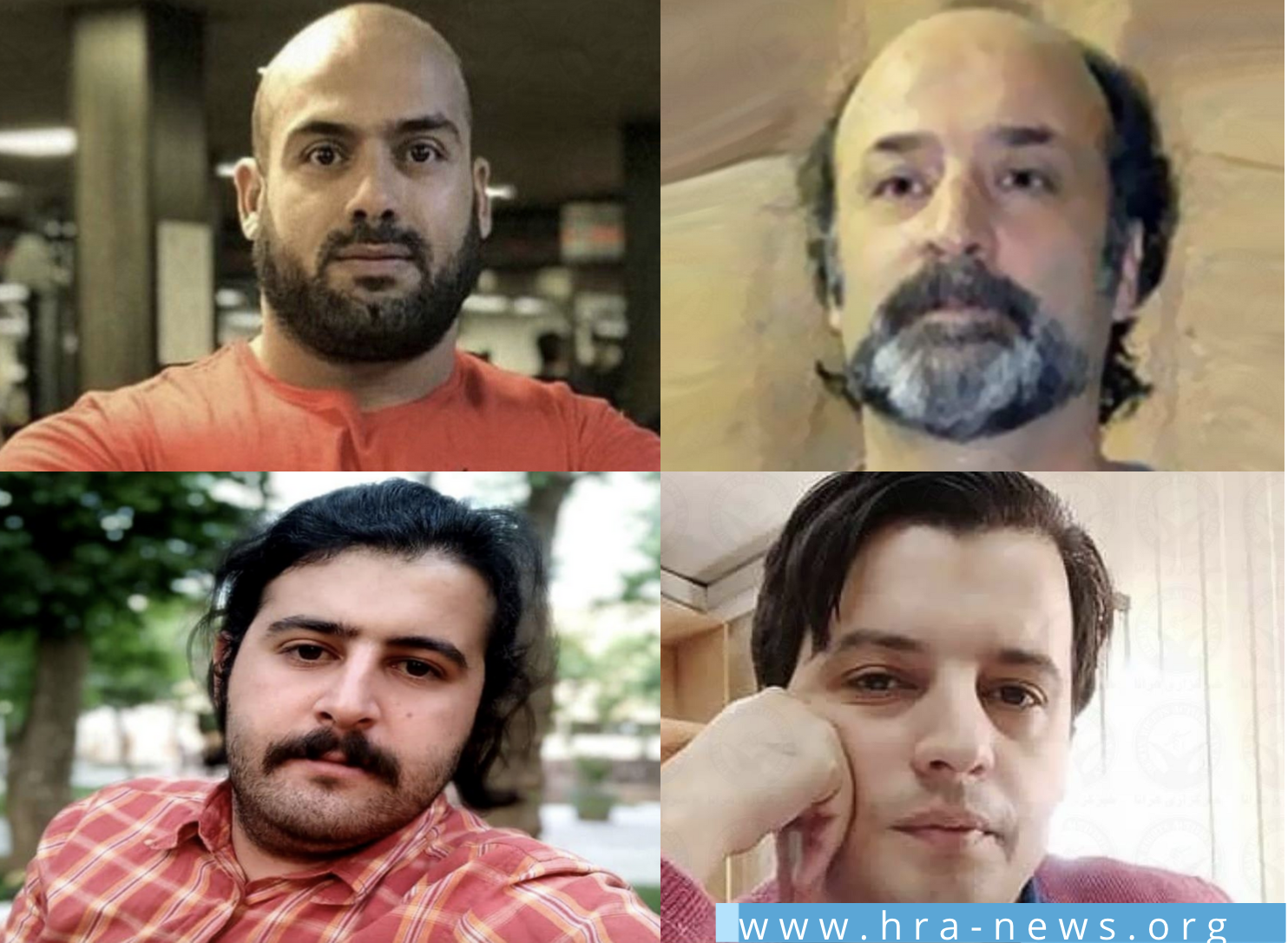
Amir Hossein Moradi, Saeed Tamjidi, Mohammad Rajabi, and Mojgan Eskandari, and Shima R. who were arrested for their attendance in the last November protests were tried on the same case.

Mr. Moradi, Mr. Tamjidi, and Mr. Rajabi were sentenced to execution, imprisonment, and lashes.

They asked for an appeal request. But their lawyers have not yet filed an appeal request, so the court date and place are not scheduled. In addition, Mr. Tamjidi and Mr. Rajabi are going to find another lawyer.


Attending protest

On November 16, 2019, Amir Hossein Moradi, Saeed Tamjidi, and Mohammad Rajabi were attending protests on Sattar Khan street in Tehran where they accidentally met Mojgan Eskandari for the first time during the protests. According to a source close to Ms. Eskandari’s family, she met Saeed Tamjidi and Mohammad Rajabi during the last November protests in one of the streets in Tehran for the first time. She did not know them prior to that date. They were arrested together after they have been together briefly.

There is a fifth convict in this case named Shima R. (the family name is not revealed by HRANA for security reasons) who was not present at the protests but with a good deed and through helping and acting as an interpreter, happened to meet and know the convicts of this case.


Arrest

On November 19, Amir Hossein Moradi was identified and arrested by the security services (through observing the CCTV footage). Mr. Moradi was kept in a solidarity confinement cell in ward 240 and 209 of Evin Prison for a month. He was beaten by the security agents during his arrest and interrogation. He was then transferred to Greater Tehran Central Penitentiary.

Mojgan Eskandari was also identified by the help of CCTV footage and was arrested on December 10, 2019, by the security forces. She was eventually transferred to Qarchak Prison from the detention center of an intelligence organization upon completion of her interrogation.

Mohammad Rajabi and Saeed Tamjidi, and Shima R. entered Turkey illegally on November 20, 2019. They first went to Van and then went to Ankara. On their way from Ankara to Antalya, they were arrested and were transferred to the security police station in Antalya where they explained their situations and provided documents about their friend Amir Hossein Moradi’s arrest and requested to file for asylum. Turkish Police introduced them to a woman who was claimed to be a representative of the United Nation. They gave her all their documents such as proof of their attendance in protests and explained their cases to her with the help of an interpreter.

Although they were told by the police that if they want their asylum case processed, they should stay in asylum camp for a year, they were arrested by the Turkish police before being extradited to the officials of the Islamic Republic. on December 26, 2019, the police transferred them to the city of Agri close to the Iranian border by a bus without any food or water for two days.

On December 28, 2019, the police officers deported them along with 30 other people including Adel Bahrami. At the border, they were told that their names have been listed as “escaped from Evin Prison”. Then, they were transferred to the security police in Maku and since their warrant was issued on behalf of Tehran security police, officers from Tehran came and transferred them to the Gisha security police detention center and then Evin Prison. On January 4, 2020, Mr, Rajabi was released from Greater Tehran Central Penitentiary on 500 million Toman bail. On January 19, 2020, he was summoned to Tehran’s Revolutionary Court and was arrested. On the same day, judge Abolghasem Salavati canceled his set bail and issued an arrest warrant for him. Then, he was arrested and transferred to Greater Tehran Central Penitentiary.


Interrogation

Mr. Moradi was kept in a solidarity confinement cell in ward 240 of Evin Prison for a month. He was beaten by the security agents during his arrest and interrogation. A source close to his family told HRANA that Mr. Moradi told his family that he was attacked by stun gun, threatened to spend more time in solidarity confinement, and was promised to have medical treatment (he suffers from a kind of nervous system disease) to put pressure on him to do a forced confession. He added that during one of his 13 interrogation sessions, a security agent stood on Mr. Moradi’s chest which caused injury to his ribs. Moreover, Amir Hossein Moradi was threatened and beaten by the officers at Gisha security detention center and Evin Prison and eventually, he was forced to have videotaped forced confessions. Because he was assuming Mr. Rajabi and Mr. Tamjidi had left Iran and are safe, in his forced confessions, he said that he did the alleged crimes with them.

Mr. Rjabai, Mr, Tamjidi, and Shima R, were severely beaten at Gisha security detention center and were forced to confess against each other. Mohammad Rajabi and Saeed Tamjidi also said that they were beaten by the security police to pressure them to do a forced confession. A source close to them who wanted to stay anonymous told HRANA that they told their families that “We confessed under torture and most of the accusations are false such as cooperating with People’s Mojahedin Organization of Iran (Mojahedin-e Khalq) which is an excuse to execute us. we attended the protests, but we did not set any bank or any properties ablaze. They added that “we were tired of the injustice in the country and we went to the street to protest that”.


Trial

Amir Hossein Moradi, Saeed Tamjidi, Mohammad Rajabi, Mojgan Eskandari, Shima R. were tried and have two hearings on January 25-26, 2020 at Branch 15 of Tehran’s Revolutionary Court presided by Judge Abolghasem Salavati.

During the trial, Amir Hossein Moradi repeatedly mentioned that he confessed and was forced to have videotaped confession under pressure, torture, and threats and he denied all the charges. He added that he was assuming Mr. Rajabi and Mr. Tamjidi had left Iran and are safe, in his forced confessions, he said that he did the alleged crimes with them, but they did not do anything.

Also, Mohammad Rajabi told the judge that during interrogations he accepted things that he had never done, and he denied all the accusations.

According to a source close to the matter, Saeed Tamjidi and Mr. Rajabi were not allowed to choose a lawyer and their public defenders (Mr. Daryabeygi for Mr. Tamjidi) did not defend them properly and even told the judge that we are sad about his client’s actions.

The prosecutor’s representative, Amin Vaziri, accused them of planning the assembly and collusion since they attended protests on the other side of the city although they resided in the south side of Tehran. They responded that “we did not plan to be there, we were returning home from work, and on our way home we saw people chanting to protest the rise in fuel prices. We are humans and we got emotional because we were under financial pressure. We did not set any place on fire, you said that we set a gas station on fire but there is no gas station in a five kilometers radius of the place that we were at”.

Amin Vaziri (prosecutor’s representative)

Verdict

Branch 15 of Tehran’s Revolutionary Court presided by Judge Salavati on February 19, 2020, sentenced Amir Hossein Moradi to death on the charge of “cooperating in vandalism and arson with an intent to act against the Islamic Republic of Iran”, 15 years in prison and 74 lashes for the charge of “cooperation in aggravated armed robbery at night” and one-year imprisonment for the charge of “crossing the border unlawfully”.

Saeed Tamjidi, and Mohammad Rajabi: They were each sentenced to death on the charge of “cooperating in vandalism and arson with an intent to act against the Islamic Republic of Iran”, 10 years in prison and 74 lashes for the charge of “cooperation in aggravated armed robbery at night” and one-year imprisonment for the charge of “crossing the border unlawfully”.

The reason for sentencing him to execution was mentioned as instructing protesters, the leadership of the protests, and armed fight with the agents. He was accused of instructing protesters on Telegram to seize the camera while the security agents are filming protesters to protect protesters’ identities.

Mojgan Eskandari was sentenced to three years in prison for the charge of “assembly and collusion”. She was arrested on December 10, 2019.


Bio

Amir Hossein Moradi was born on August 6, 1994, in Tehran. He finished high school in computer science and was working as a cell phone, computer, and software seller in Tehran. He has two sisters.

Saeed Tamjidi was born on May 22, 1992, and he is an undergraduate student in electrical engineering. He is suffering from a nervous system disease. He immigrated to Germany, but he returned to Iran because of a family issue. He has a brother.

Mohammad Rajabi was born on August 12, 1994, and holds a high school diploma. He was working as a real estate agent. He has four brothers.

Mr, Moradi, Mr.Tamjidi, and Mr. Rajabi are residing in Khazaneh on the south side of Tehran. Their workplaces are in Ponak. They were providing for their families. They are now in section five of the Great Tehran Penitentiary.

Mojgan Eskandari was born in 1969. Ms. Eskandari is now in ward 1 (Mother’s ward) of Qarchak Prison in Varamin.

Shima R was born in 1969 and she was arrested because she helped Mr.Tamjid and Mr, Rajabi in Turkey.

Coronavirus outbreak in Iranian prisons

On February 29, 2020, Ebrahim Raisi, the Chief Justice of Iran, issued a circular laying out policies to prevent the spread of Coronavirus in prisons.  This order mandates giving 15 -30 days furlough to prisoners with sentences less than five years. Another part of this order is about reducing entries into prisons, temporary releases, and public activities in prisons. In addition, this order mandates to increase alternative sentences and suspended prison terms instead of imprisonments.

Although the Chief Justice of Iran announced that the prisoners with less than five years prison term will be granted furlough, the prison authorities are not cooperative with political prisoners and prisoners of conscience to implement this regulation. As an example, Esmaeil Abdi and Negin Ghadamian were sentenced to five years imprisonment and after spending four and three years in prison respectively, they were not granted any furlough. Nazanin Zaghari’s husband reported that she is suspected to have Coronavirus. She is serving the 4th year of her five-year imprisonment sentence. Reportedly, three women were diagnosed with Coronavirus in Evin Prison.

The number of prisoners suspected of having coronavirus is increasing. Several prisoners suspected of having coronavirus were identified in Urmia, Khorramabad, Gorgan, Sanandaj, Qom, and other prisons.


A letter from political prisoner’s families

With the current spread of Coronavirus in prisons in Iran, some of the families of the political and security prisoners have written a letter to the judicial authorities on February 26, 2020, requesting furlough for prisoners until this crisis (Coronavirus) is over in the prisons. Considering the closed environment of the prison, malnutrition of the prisoners, shortage of medical care and facilities, high density of prisoners, and the occurrence of some cases suspected to be related to coronavirus has raised concerns of the families of prisoners.

The families of the following prisoners have signed this letter:

Mahmoud Beheshti Langeroudi, Esmaeil Abdi, Mohammad Habibi, Narges Mohammadi, Amir Salar Davoudi, Farhad Meisami, Roeen Otoufat, Jafar Azimzadeh, Shahnaz Akmali, Majid Azarpey, Atena Daemi, Sam Rajabi, Morad Tahbaz, Niloufar Bayani, Abdolreza Kouhpaieh, Amirhossein Khaleghi, Houman Jokar, Taher Ghadirian, Neda Naji, Mehrdad Mohammadnejad, Mohammad Abolhasani, Peyman Koushkbaghi, Aras Amiri, Jafar Fazel, and Alireza Golipour.

In some of the prisons, such as Khorramabad or Sanandaj Prisons, the prisoners asked the authorities to provide them with medical and hygiene necessities and to quarantine the prisoners who are suspected to be infected and have threatened that if this negligence is continuous, they will go on hunger strike. Other prisons such as Karaj, Tabriz, Evin and many other prisons across the country are also demanding similar precautions.


A death in Greater Tehran Central Penitentiary

It should be noted that on the same day, a prisoner of Greater Tehran Central Penitentiary who had symptoms similar to that of Coronavirus passed away after the prison authorities delayed in transferring him to the hospital to receive proper medical care. His name was Hamid Reza and he was 44 years old. He was convicted of a financial felony who was serving his sentence in Greater Tehran Central Penitentiary. He was initially diagnosed with symptoms of flu but after a few days, he started to cough and eventually passed away in the prion.

In addition, 60 prisoners of Greater Tehran Central Penitentiary who were working in the kitchen or service sector, were transferred to Rajai Shahr Prison. Moreover, 7 other prisoners in section 5 ward 2 have Coronavirus symptoms; they were kept in the medical ward without receiving medical care and were not transferred to the hospital.


Evin Prison and the violation of the Prisoners Classification Regulation

Amir Hossein Moradi, Saeed Tamjidi, Mohammad Rajabi, Milad Arsanjani, Jamil Ghahremani, and 15 other arrestees of the last November’s protests who were kept in Greater Tehran Central Penitentiary, were moved from their cell after an inmate was diagnosed with Coronavirus in their cell. Amir Hossein Moradi returned to prison on February 29, 2020, after spending a week in the hospital for another disease. He returned to his cell but after an hour he was transferred to the medical ward for his positive test results of Coronavirus. Although they were told that they will be transferred to Yaft Abad Hospital, they were transferred to ward 1 of this prison, which belongs to the prisoners who committed violent crimes. In June 2019, Alireza Shir Mohammadi, a political prisoner, was fatally stabbed in this ward by two other inmates of this ward who were charged with a drug felony. After this incident, the prison authorities moved other political prisoners from this ward to avoid future incidents. This is against prisoners’ segregation rule. According to a close source “section, 1 of the Greater Tehran Central Penitentiary has 10 wards and one suite which had been used as an exile to punish the prisoners who get in the fight or carry drugs. Since 2018, the political prisoners have been transferred to this suite. This suite has limited facilities and does not even have access to prison commissaries. Their door should be locked all the time however, in the case of Mr. Shir Mohammadi, the warden intentionally did not lock the door which was illegal.

Alireza Shir Mohammadi, a 21-year-old political prisoner at the Greater Tehran Central Penitentiary was murdered in prison on June 10, 2019. He was attacked by two other prisoners, who were later convicted of murder and sentenced to death. The prisoner in question was stabbed in the neck and stomach and died before arriving at the hospital. Shir Mohammad Ali was arrested on July 14, 2018, and was sentenced to eight years in prison on charges of “blasphemy”, “insulting the former and current Supreme Leaders”, and “propaganda against the state”.  He was detained in a solitary confinement cell for 36 days after being arrested. His bail was set at 80 million Tomans but the Revolutionary Court illegally rejected his release on bail. Throughout his prosecution process, he did not have access to an attorney because of his financial conditions. He was waiting for the decision of the appeal’s court when he was murdered. He protested his detention along with non-political prisoners and went on a hunger strike on March 14, 2019, which ended on April 16 after prison authorities accepted his demands. He also wrote open letters criticizing the “unsafe” and “inhumane” conditions of Greater Tehran’s Penitentiary Prison. He wrote an open letter five days into his hunger strike on March 18, 2019. In this letter, he explained the awful condition he was experiencing in prison. In addition, he claimed that he was denied regular social rights that any prisoner is entitled to have. However, his main request, reflected in this letter, was to be transferred to another prison (Evin prison). No judicial authorities or prison officials reacted to his open letter. 

A prisoner of ward 4 of Evin Prison was transferred to an unknown place for his positive test results of Coronavirus. He kept with several other prisoners and political prisoners of this ward who are on hunger strike and are more vulnerable to this disease.


Khorramabad and Ghezel Hesar Prisons

On March 1, 2020, the prisoners of Khorramabad Prison have started a sit-in to protest not being sent to furlough although Coronavirus has spread in this prison. There is a shortage of access to medical care and hygiene products for the diagnosis and treatment of Coronavirus. Several prisoners who have symptoms of this disease did not receive any treatment and were kept with other prisoners. Several prisoners who went on furlough were returned to prison. A close source to a family of a prisoner in this prison told HRANA that a sick inmate with severe coughs received neither medical care nor disinfecting substances and hygiene products such as alcohol, mask, and gloves.

Two prisoners of Qezelhesar Prison, Basat Ali Khazaei, and Gholamhossein Abolfavaei were moved to the quarantine section in the health ward due to having positive test results of Coronavirus. They were charged with drug felony and kept in a ward with 500 other inmates.


Rajai Shahr and Urmia Prisons

The prisoners are deprived of medical care, disinfecting substances, and hygiene products such as alcohol, mask, and gloves.  Payam Shakiba, Mohammad Banazadeh Amirkhizi, and Majid Asadi are serving their third year in prison. Arash Sadeghi, who is diagnosed with Chondrosarcoma (bone cancer), has had an infection in his right hand, digestion issues, and because of his weak immune system should be prioritized to be granted a furlough. Saeed Shirzad is spending the last months of his prison sentence.

On March 2, 2020, Mohammad Ghanbardoost, a political prisoner, was transferred to the hospital due to having symptoms of coronavirus disease. He kept with other political prisoners and may infected others. He was arrested on August 16, 2017, and was sentenced to five years in prison on the charge of “cooperating with Takfiri groups”.

Several Coronavirus suspected patients in Urmia Prison were transferred to hospitals outside the prison. One Urmia prisoner died in hospital, but prison authorities claimed that he was infected outside the prison.


Update on political prisoners temporary releases

On March 3, 2020, Mohammad Karimi granted a furlough and temporarily released until April 3, 2020. Mr. Karimi was sentenced to one-year imprisonment on the charge of “propaganda against the state” which was upheld by the appeals court. on July 3, 2020, he was arrested and transferred to Evin Prison to serve his sentence.

On March 2, 2020, Shahnaz Akmali, political prisoner, was granted a furlough and temporarily released until April 3, 2020. She was arrested on January 15, 2020. She was sentenced to one-year imprisonment and was banned from having any social media account, membership in any group, and leaving the country on the charge of “propaganda against the state”. An appeals court upheld her sentence without hearing either Ms. Akmali or her attorney. She is the mother of Mostafa Karim Beygi one of the people who was killed by security forces during green movement uprising in 2009.

On February 29, 2020, Reza Gholamhosseini, a political prisoner of Bandar Abbas Prison, was granted a furlough and temporarily released until April 3, 2020. He was arrested on September 25, 2019, and was sentenced to three years imprisonment on the charges of “propaganda against the state” and “insulting supreme leader”. His sentence was reduced to 18 months later because he did not request an appeal.

Subscribe to Our Newsletter

Now is definitely not the time to stop reading!

Qarchak Prison; a List of Political Prisoners and Prison Conditions

Qarchak Women’s Prison also known as Shahre Rey Penitentiary is located in Varamin and has 11 wards. Each ward in this prison holds several female prisoners, disregarding the rules of segregation of prisoners by age and crime.

Political prisoners are transferred to this prison to put them under more pressure. The lack of medical care, dental care, and regular checkups, poor hygiene, and a great number of prisoners has caused several issues. The poor quality of food, drug use and easily accessibility narcotics, not isolating prisoners with a contagious disease from others, rape, and negligence of the prison authorities are some of the issues of this prison.

This report that is gathered by Human Rights Activists (HRANA) examines the conditions in Qarchak Prison and as well, the condition of nine female political prisoners who were kept in this prison. In addition, this report is investigating the condition of arrestees of the recent protests in Iran who are kept in a separate ward of this prison.

The information of this report was gathered from the sources inside the prison. Several prisoners contacted HRANA while incarcerated in Qarchak Prison or after they were released.

Prisoners Classification Regulation

The prison hosts a large number of inmates despite its small size. The prison does not separate inmates according to the crimes committed and this leads to violence; thus, worsening the situation as they are not offered medical services and are subjected to torture.

More than 130 prisoners of this prison are infected with HIV or Hepatitis and are kept in the same ward with others, not having access to medical treatment or medicine. These inmates are usually charged with crimes such as prostitution or drug felony. They threaten other inmates by self-harming with a sharp object or threaten to infect other prisoners by injuring them with the same sharp object or their body. Other prisoners filed several complaints about this issue but were told by the head of the Medical Ward that these diseases are not transferable, and the routine to keep these prisoners with others is practiced all over the world.

The Quarantine Ward of the prison was shut down months ago and therefore, new inmates enter general wards without being tested for diseases. Also, if by any chance, they are tested a few days after they entered, they usually return to the ward from the Medical Ward regardless of the test result being positive or negative.  The prisoners warned the prison authorities especially the head of the prison, Mehdi Mohammadi, and other authorities such as Sakineh Shahali, Zahra Mirzaei, and Maryam Mirzaei about the shortage of a Quarantine Ward but they never received any response.

A prisoner who was released recently from Qarchak Prison told HRANA that six women inmates have Scabies which is a contagious disease. She added that other inmates asked the prison authorities several times to transfer these six women to a separate ward since this disease is easily contagious through skin touch like shaking hands, sheets, or even from their clothes. The prison authorities’ responses were that this disease is not contagious.


Number of prisoners and prison’s area

According to the report, the prison’s seven sections contain more than 1400 prisoners with 120-300 prisoners held in each section, although the capacity of each section is 100 inmates. Some of these prisoners are incarcerated along with their children while the number of prisoners increases every year.

Each ward has 10 cubicles where each has four triple bunk beds. Several prisoners have to sleep on the floor.


Food

Food is one of the prison’s major problems as the food has a low quality and prison commissary sells low-quality food at a high price. The prison foods contain an unknown ingredient that causes extreme sourness in foods. The high level of acidity of these foods could cause hormonal diseases and other issues. To enrich the prison food with protein, oil cake (its common use is in animal feeding) has been replaced as the main ingredient.

15 prisoners are working in the kitchen from 7 am to 7 pm. They should receive a salary in return for their services but only a few of them received 100-150 thousand Toman [10-15 dollars] in total for six months. They do not have proper clothes, so they have to work with their everyday clothes in the kitchen that destroys their clothes due to the working condition.


Hygiene

At least 12 toilets and 10 bathrooms are in each ward. They are always not enough due to the high number of prisoners, facilities being out of order, and shortage of water. Cleaning the prison is prisoners’ responsibility but due to the lack of cleaning products, rubber gloves, and trash bags, inmates run out of these stuff in the first few days of the month and it leaves the bathrooms dirty with a lot of trash. As a result, infectious and skin diseases are common in this prison due to poor hygiene as well, roofless bathrooms increase the occurrence of cold and pneumonia during cold seasons.

In addition, there is no hot water running for the past two months although hot water used to run for one hour in the morning and one hour at night. The rest of the day, prisoners can only take a cold bath. Moreover, the prison water is coming from wells and it is not purified. The water is not proper for drinking and using it for bathing caused women-related diseases especially during menstruation. Even this water was shut off for a few hours in some days and sewer water comes up. Prisoners should buy drinking water from the prison commissary at a high price.

Overall, there are mothers and children in this prison who are suffering from nutrition deficiency, lack of access to child clothes, and poor hygiene. For example, in February 2019 during the prison wardens’ violent attack to this prison after the prisoners protested not having access to medical treatment and other issues in the prison, tear gas was fired in the prison and a 20-day old infant lost his/her life.


Visits

The telephone contact allowance of the prisoners is not controlled by the prison authorities which resulted in a chaos of selling and buying telephone allowance between inmates. Prisoners are unable to contact the prison’s supervision office to complain about the prison conditions. Visiting times are only 15 minutes and it should be granted at least two months after the prisoners started serving time there. The visitors can not sit close to the prisoner or hug them.


Air condition

Only half of each ward has a heater which forces the prisoner to walk in blankets. The only response the prisoners get when they complain about it is to put on more clothes which leads to another issue which is the difficulty of access to clothes. Bringing clothes to prison was forbidden and inmates should obtain their clothes from the prison commissary. The price of clothes is double or even triple of it outside of prison. Prisoners should purchase their pillow and blanket and the price of the cheapest pillow is 35 thousand Toman.

Because of housing more prisoners than the capacity, the air ventilation and the number of toilets is below the required standards.


Prison authorities

Sadegh Deldadeh, the judge supervisor of Branch 1 of Shahriar Court, reportedly insulted or threatened prisoners of Qarchak Prison during trials.

The social services department of Qarchak Prison is inactive, and prisoners could not follow up on their cases from inside the prison. For example, Simin Khosravi, a prisoner of Qarchak, sewed her lips protesting the situation of her case and its lengthy process. She wrote letters to judicial authorities requesting some attention to her case seven months ago and has recently figured out that none of those letters even left the prison. Three days later, she opened her lips after the prison authorities made promises to follow up on her requests.


Rape

In addition, several reports indicate that younger prisoners are raped by older prisoners who have more violent crimes. Prison authorities neglect these reports and even stop checking on the wards which have a high rate of violence. Atena Daemi and Monireh Arabshahi wrote open letters about their experience in these prison conditions especially sexual assaults and rapes.


Women prisoners arrested during recent protests

Women who were arrested during the last November and January protests were transferred to Qarchak Prison. In order to open up space for these new prisoners, prison authorities shut down the prison gym and place these prisoners there. This new ward does not have required facilities and standards such as proper air ventilation or air conditioning. As a result, 1400 prisoners of Qarchak are deprived of having a gym. Most of the prisoners of this ward were released on bail later but still, 11 prisoners were kept in this ward. Also, Zahra Sadeghi, Mary Mohammadi, and Elnaz Pakravan who were arrested during January protests are still in this ward.


Nine political prisoners of Qarchak Prison:

Elnaz Pakravan is an 18-year old prisoner of this prison. She was arrested on January 31, 2020, for attending a demonstration near the Turkish embassy in Tehran, protesting the arrest of an Iranian singer, Amir Hossein Maghsoudlo also known as Tataloo. She was charged with “propaganda against the state” and “assembly and collusion by having a leadership role in an unlawful protest”. She is in the new ward of Qarchak prison (Gym).

Maryam Ebrahimvand’s first arrest was on July 26, 2016, and she was transferred to the IRGC’s Intelligence detention center in Evin Prison. She was released on 300 million Toman [cash] bail after spending 35 days in solitary confinement. On July 22, 2018, she was arrested for the second time by the Intelligence Department officers on the charge of “publishing lies against the IRGC ”, and “using government properties and misusing it”. Her bail was set for 8 billion Toman. She is in Qarchak Prison in a limbo state without trial. She is now in ward 2 of the Qarchak Prison and was banned from entering the cultural part of the prison and receiving books.

Zahra Zare Seraji and her husband, Morteza Nazari Sedehi, were arrested on February 8, 2018. They were transferred to ward 209 of Evin Prison. She was transferred to the general ward of Evin Prison from February 26, 2018, till April 20, 2018, after initial investigations and interrogations. She was released on 200 million Toman bail from Evin Prison. In September 2018, Ms. Zare Seraji was tried along with three others including her husband. She was sentenced to eight years imprisonment and paying fines for the charges of “establishing illegal group”, “publishing lies in cyberspace”, and “propaganda against the state”. In February 2019, the appeals court reduced her sentences to two years imprisonment. She was arrested in September 2019 in Baharestan to serve her sentence. She is now in ward six of Qarchak Prison.

Zahra Sadeghi was an employee of the UN and traveled to Sudan and Iraq for her work. She was arrested by the security forces at the airport after returning from a trip to Iraq. On January 28, 2019, she was transferred to the ward 209 of the Evin Prison. In January 2020, she was transferred to Qarchak Prison. She was sentenced to 10 years imprisonment for the charge of espionage by Branch 15 of Tehran’s Revolutionary Court. Her sentence was reduced by an appeals court to three years. During her trial, none of her cooperation with the UN was mentioned in her accusations, and she was charged with espionage because of a trip to Turkey with a friend was considered as her accusations.

She was born in 1987 and she was arrested for the first time in 2014 by the Intelligence department agents and was released on bail from ward 209 of the Evin Prison after three months.

She is now in the new ward of Qarchak Prison (Gym).

Fatemeh (Mary) Mohammadi was arrested on January 12, 2020, during the wave of protests erupted in Tehran and other Iranian cities on January 11, after Iran admitted that it shot down a Ukrainian passenger jet, killing 176 people. She was arrested in Azadi square and was transferred to Vozara detention center. She was severely beaten both in Azadi square and at Vozara detention center. On February 26, Ms. Mohammadi was released from Qarchak Prison on 30 million Toman bail. Her trial is scheduled for March 2, 2020, at Branch 1167 of Tehran’s criminal court.

Fatemeh Mohammadi, a former prisoner, and Christian convert was arrested on November 18, 2017, for the first time. She was detained in Tehran and was transferred to Evin prison. On April 7, 2018, Mohammadi, who was 19 years old at that time, was sentenced by Branch 26 of the Revolutionary Court of Tehran, presided by judge Ahmadzadeh, to six months imprisonment for the charges of “membership in proselytizing groups,” “Christian activity,” and “acting against the national security through propaganda against the regime.” She was released from Evin Prison’s women’s ward in spring 2018 after completing her sentence. She was charged with “disturbing public order through attending an unlawful protest”. Her trial is not scheduled yet. Although her bail was set for 30 million Tomans [approx. $3000], the prosecutor did not accept her bail. She was being kept in a limbo state for a month. She is now in the new ward of Qarchak Prison (Gym).

Leila (Khadijeh) Mirghafari and six others were arrested by the security forces on December 4, 2019. On November 10, 2019, they were tried at Branch 15 of Tehran’s Revolutionary Court presided by Judge Abolghasem Salavati. Ms. Mirghafari was sentenced to five years imprisonment on the charge of “assembly and collusion”. On May 18, 2019, her appeal court hearing was in session without her attendance and the appeals court upheld her sentences in February 2020.

Leila Mirghafari was arrested on October 2, 2018, by the security forces for supporting people who are against mandatory vail and was released after one day. She was sentenced to pay three million and 220 thousand Toman fine and was forced to pay the fine on May 21, 2019.

She is now in the new ward 5 of Qarchak Prison.


Raha Ahmadi was arrested on August 4, 2019, by the security forces and was transferred to Qarchak Prison in Varamin in late August. She was initially charged with “propaganda against the state”, “assembly and collusion”, “cooperation with enemy states”, and “promoting corruption and prostitution” in her incitement at the prosecutor’s office of Evin Prison. Although her bail was set after two months, her 600 million Toman [approximately 55 thousand dollars] bail has never been accepted. On November 10, 2019, she was tried at Branch 15 of Tehran’s Revolutionary Court presided by Judge Abolghasem Salavati. Ms.  Ahmadi was sentenced to two years imprisonment on the charge of “assembly and collusion”. On May 18, 2019, her appeal court hearing was in session without her attendance and the appeals court upheld her sentences in February 2020. A video was published earlier that shows Ms. Ahmadi handing out flowers and talking to people in the subway.

She is now in the new ward 5 of Qarchak Prison.


Marjan Davari was arrested on September 24, 2015, in Mehrshahr of Karaj. After spending one week in Rajai Shahr Prison, she was transferred to ward 209 of Evin Prison. She had been in solitary confinement from September 30 to January 3 (approximately 4 months) and then transferred to the women’s ward of Evin Prison.

She graduated from the Arts Department of Alzahra University in Tehran and is the translator of Islamic, esoteric and Illuminati books and a researcher of Rah-e-Marefat Institute for Metaphysical Studies and Research. She was arrested by the security forces after the Rah-e-Marefat Institute was shut down and its officials were arrested. Her court sessions were held at Branch 15 of the Revolutionary Court, presided by Judge Salavati, on 16, 17 and 18 October 2016, as well as on 11 and 12 December 2016. She was accused of “corruption on earth”, “adultery”, “assembly and collusion against the regime”, and “membership in Eckankar mystical sect”. Branch 15 of Tehran Revolutionary Court presided by Judge Salavati sentenced her to death. Her death sentence was rejected twice by the Supreme Court and was returned to Branch 23 of Tehran’s Revolutionary Court to try again. Her trial was on January 11, 2019, and she was sentenced to 75 years in prison by Branch 23 of Tehran’s Revolutionary Court. Based on Article 134 of Iran’s Islamic Penal Code, the charge with the highest penalty will be considered; this means that he should serve 25 years in prison. She is now in the new ward 1 of Qarchak Prison.


Golrokh Ebrahim Iraee was arrested along with her husband on September 6, 2014. First was held at an IRGC safe house for two days, then she spent 20 days in a solitary cell of Evin Prison’s ward 2A, under the IRGC jurisdiction, before being released on a bail of 80 million Toman [approximately $19,000 USD].

On October 24, 2016, the IRGC arrested Ms. Iraee again without a warrant. She was sentenced to six years in prison for “blasphemy” and “assembly and collusion against the state.” She was later granted amnesty per Article 134 of the Islamic Penal Code, which reduced her prison term to 2.5 years. After finishing her sentence, on April 8, 2019, she was released on bail for her new case.

While she was serving her time in prison, she was sentenced for another case to three years and seven months of imprisonment by Branch 26 of Tehran’s Revolutionary Court and she was banned for two years from membership in political groups and parties. Based on Article 134 of Iran’s Islamic Penal Code, the charge with the highest penalty will be considered; this means that she should serve two years and one month in prison. Her sentence was upheld by the appeals court without any hearing. On November 9, 2019, she was arrested without a warrant at her house in Tehran. According to judge Mohammad Berae’s verdict, she should have been transferred to Evin Prison but because Gholamreza Ziaei, the head of Evin Prison, refused to admit her, she was transferred to Qarchak Prison and her house was searched.

She is now in the new ward 1 of Qarchak Prison.

An appeals court sentenced Yousef Kari to two years in prison

On February 16, 2020, appeals court presided by Judge Yousef Khodadadi reduced Yousef Kari’s sentence to two years imprisonment.

Mr. Kari, an Azerbaijani Turkic ethnic minority rights activist, was sentenced to a six-year prison term by Branch 1 of Ardabil’s Revolutionary Court. In December 2019, Mr. Kari was sentenced to one-year imprisonment for the charge of “propaganda against the state” and five years of imprisonment for the charge of “membership in the civil-ethnic group by attending their meetings with the intent of acting against the national security”.

On September 3, 2019, Mr. Kari was arrested in Shariati Square in Ardabil by the security forces. Although his bail was set at 50 million Tomans, his bail was not accepted by the authorities and his family was told that Mr. Kari’s bail had been increased to 200 million Tomans.

First arrest

On August 10, 2018, he was arrested along with others, after the security forces attacked Azerbaijani Turkic minority activists camp in Mount Sabalan. These activists reportedly planned to climb Mount Sabalan. They were arrested while reading poetry in their camp. Mr. Kari was released after few hours.

Zia Nabavi was arrested

On February 25, 2020, Zia Nabavi, former political prisoner, was arrested at his home by the security forces. They searched his house and confiscated his personal belongings. Further information about the reason for his arrest is not available yet.

Zia Nabavi is a graduate student in sociology at Allameh Tabatabaei University, a former member of Students’ Islamic Association of the Babol Noshirvani University and a member of the Council of Defending the Right to Education.

He was arrested in June 2009 and was sentenced to 15 years imprisonment and 74 lashes by Branch 26 of the Revolutionary Court on the charge of “Moharebeh through connection with the MEK” presided by Judge Pirabbasi. The appeals court reduced his sentence to a 10-year prison term in exile. In October 2010, he was transferred to Karun prison, and then to Semnan Prison in May 2014. Mr. Nabavi was released on the eve of the 9th year of imprisonment from Semnan prison, on February 14, 2018.

Three arrestees of November protests were sentenced to death

Amir Hossein Moradi, Saeed Tamjidi, and Mohammad Rajabi who were arrested during the last November’s protests were tried on January 25-26, 2020 at Tehran’s Revolutionary Court presided by Judge Abolghasem Salavati. Their sentences are as the following:

Amir Hossein Moradi was sentenced to death on the charge of “cooperating in vandalism and arson with an intent to act against the Islamic Republic of Iran”, 15 years in prison and 74 lashes for the charge of “cooperation in aggravated armed robbery at night” and one-year imprisonment for the charge of “crossing the border unlawfully”.

Saeed Tamjidi, and Mohammad Rajabi: They were each sentenced to death on the charge of “cooperating in vandalism and arson with an intent to act against the Islamic Republic of Iran”, 10 years in prison and 74 lashes for the charge of “cooperation in aggravated armed robbery at night” and one-year imprisonment for the charge of “crossing the border unlawfully”.

According to their verdict, they will have another trial on March 3, 2019, but according to their attorneys, their verdict is finalized.

Arrest, torture, and forced confession

On November 16, 2019, Amir Hossein Moradi, Saeed Tamjidi, and Mohammad Rajabi were attending protests on Sattar Khan street in Tehran.

Amir Hossein Moradi was born on August 6, 1994, in Tehran. He finished high school in computer science and was working as a cell phone, computer, and software seller in Tehran. On November 19, Amir Hossein Moradi was identified and arrested by the security services (through observing the CCTV footage). Mr. Moradi was kept in a solidarity confinement cell in ward 240 of Evin Prison for a month. He was beaten by the security agents during his arrest and interrogation. A source close to his family told HRANA that Mr. Moradi told his family that he was attacked by stun gun, threatened to spend more time in solidarity confinement, and was promised to have medical treatment to pressure him to do a forced confession. He added that during one of his 13 interrogation sessions, a security agent stood on Mr. Moradi’s chest which caused injury to his ribs.

The reason for sentencing Mr. Moradi to execution was mentioned as instructing protesters, the leadership of the protests, and armed fight with the agents. He was accused of instructing protesters on Telegram to seize the camera while the security agents are filming protesters to protect protesters’ identities.


Saeed Tamjidi was born on May 22, 1992, and he is an undergraduate student in electrical engineering and Mohammad Rajabi was born on August 12, 1994, and holds a high school diploma.

On November 20, 2019, Mr. Tamjidi and Mr. Rajabi sought asylum to a neighboring country but on December 28, 2019, they were deported to Iran upon Iran’s request. They were arrested and transferred to Evin Prison.

Mohammad Rajabi and Saeed Tamjidi also said that they were beaten by the security police to pressure them to do a forced confession. A source close to their family who wanted to stay anonymous told HRANA that they told their families that most of the accusations are false and they confessed under torture. They added that “we were tired of the injustice in the country and we went to the street to protest that”.


An update on arrestees of last November’s protests

The nationwide protests of last November are the most significant events of 2019. During the November protests that lasted more than 10 days simultaneously in 719 spots in the country, at least 7133 people were arrested, hundreds died on the streets, and many protesters got gunshot wounds.

1. The trial of four residents of Kermanshah was on February 10, 2020. Three of them were sentenced by Branch 3 of the Revolutionary Court of Kermanshah as the following:

Sohbatollah Omidi: He was sentenced to five years imprisonment for the charge of “membership in an opposition group” and five years of imprisonment for the charge of “assembly and collusion”. Based on Article 134 of Iran’s Islamic Penal Code, the charge with the highest penalty will be considered; this means that he should serve five years in prison.

Khalil Asadi Bouzhani: He was sentenced to three years imprisonment for the charge of “membership in an opposition group” and three and half years of imprisonment for the charge of “assembly and collusion against the national security”. Based on Article 134 of Iran’s Islamic Penal Code, the charge with the highest penalty will be considered; this means that he should serve three and a half years in prison.

Mehdi Ebdali: He was sentenced to one-year imprisonment.

Mohieldin Asghari: the court announced that it does not have the eligibility to try him for his charge of “assembly and collusion”.

It should be noted that Mohieldin Ashghari and Sohbatollah Omidi were released on a 200 million Tomans bail in January 2020.


Sohbat Omidi                    Khalil Asadi


2. Ali Nanvaei: was sentenced to six months imprisonment and 74 lashes (this sentence is suspended for two years). He is also sentenced to hand copy three books. He was initially charged with “assembly and collusion” but his charge was later changed to “disrupting public order”. He was arrested when he was leaving Tehran University on November 18, 2019. He is a student of Tehran University.

Ali Nanvaei


3.Mohammad Eghbali Golhin: On February 16, 2020, he was sentenced to 11 years imprisonment, 74 lashes, and one-year exile to Rask by Branch 10 of Shahriar’s Criminal Court. He was sentenced to ten years for vandalism and one year for the charge of “disturbing public order”, and 74 lashes and one year exile for the charge of “fight with Basij militia”. Based on Article 134 of Iran’s Islamic Penal Code, the charge with the highest penalty will be considered; this means that he should serve 10 years in prison. He was arrested on November 19, 2019, in Karaj.


4.Gita Hor: Ms. Hor, 30-years old, was sentenced to six years imprisonment by Branch 24 of the Revolutionary Court of Tehran. She was sentenced to five years imprisonment for “assembly in collusion against the national security” and one-year imprisonment for the charge of “propaganda against the state”. Based on Article 134 of Iran’s Islamic Penal Code, the charge with the highest penalty will be considered; this means that she should spend five years in prison. She was arrested on November 21, 2019. She is currently in Qarchak prison. Her trial was presided by judge Mohammad Reza Amouzadeh.


Arrests:

Tehran University students, Bahareh Hedayat, Amir Mohammad Sharifi, and Moin Zareian were arrested by the national security police because of attending last November’s protests. They were arrested on the following days:

Amir Mohammad Sharifi on February 9, Bahareh Hedayat on February 10, and Moin Zareian on January 22, 2020.

It should be noted that Bahareh Hedayat was arrested at Tehran University and was transferred to Qarchak Prison in Varamin. She went on a hunger strike after her arrest. Her health condition is deteriorating due to the hunger strike and prison condition. Amir Mohammad Sharifi and Moin Zareian are in Evin Prison.