At Least 27 Prisoners Executed Across Iran from December 7 to 9

HRANA – Between Sunday and Tuesday, December 7 to 9, at least 27 prisoners were executed in prisons across Iran.

Sunday, December 7

Iran Human Rights reported that in addition to the execution of a prisoner named Farshid Jafarzadeh, two other prisoners were hanged in Lakan Prison of Rasht. Their identities were reported as Sirus Zabihi, 32, and Ali Soudi, 27. Mr. Zabihi had been sentenced to death about three years ago following a group altercation that resulted in a murder charge. Ali Soudi had been arrested about two years earlier on charges related to drug offenses.

The organization also reported the execution of Hassan Bahmani, 28, on a murder charge in Neyshabur Prison.

Monday, December 8

According to HRANA, on this day, Sultan Morad Bahmani was executed in Kerman Prison and Nima Karami in Neyshabur Prison, both on drug-related charges. Two other prisoners were also hanged in Dastgerd Prison of Isfahan on similar charges. HRANA has confirmed the identity of one of them as Mohammad-Baqer Souri.

Additionally, Borzu Beigi in Saveh Prison, Bahram Mousavi in Dorud Prison, Reza Raoufi in Kashan Prison, Kermshah Zaki-Pour in Zanjan Prison, and Ali Rostgari in Gorgan Prison were executed on murder charges.

Tuesday, December 9

As previously reported by HRANA, six prisoners were hanged on drug-related charges in Birjand Prison on this day. HRANA has confirmed the identities of three of them as Mirzakhan Basati, Behzad Mazarzahi, and Ali Barahouei. The identity of a fourth prisoner has been confirmed by Haal Vsh as Ramazan Deldadeh.

HRANA also reported the following executions:

Emad Rashidi, on drug-related charges, in Jiroft Prison
Ghanbar Eslami, on drug-related charges, in Khaf Prison
Kermali Farhadi, on a murder charge, in Bam Prison
Shahmorad Abdi, on a murder charge, in Ilam Prison
Abdollah Ghasemi, on a murder charge, in Borazjan Prison
Jalil Shahsavari, on a murder charge, in Yazd Prison
Houshang Jadidi, on a murder charge, in Sheiban Prison in Ahvaz

As of the time of compiling this report, prison officials and relevant authorities have not announced these executions.

Ahvaz: Two Citizens Arrested by Security Forces

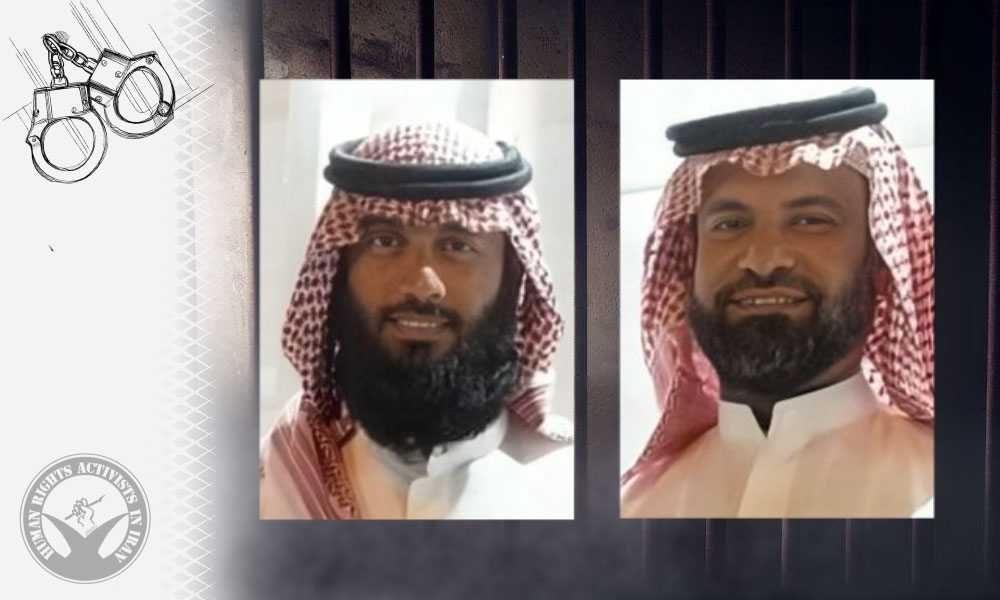
HRANA – Reza Betarani and Mohammad Nisi, two residents of Ahvaz, were arrested yesterday by security forces and taken to an undisclosed location.

Based on information received by HRANA, on Monday, December 8, plainclothes agents entered the homes of these citizens without presenting a judicial warrant and arrested them. Their homes were also searched by security forces.

As of the time of this report, no information is available regarding the reasons for the arrests, their whereabouts, or the charges brought against Mr. Betarani and Mr. Nisi.

Reza Betarani has previously faced judicial actions and served prison time due to his activities.

Arbitrary arrests, transferring detainees to undisclosed locations, and leaving families in the dark about the fate of their loved ones are routine practices of the Iranian regime’s security agencies, such as the Ministry of Intelligence and the IRGC Intelligence Unit. This pattern of behavior stands in clear violation of the United Nations Standard Minimum Rules for the Treatment of Prisoners, known as the Nelson Mandela Rules.

HRANA’s Report on the Execution of 31 Prisoners in Recent Days

HRANA – In recent days, authorities in several prisons across Iran have carried out the execution of dozens of inmates on drug-related and murder charges. The pace of executions this year has been unprecedented compared to previous years.

HRANA has documented the following executions in recent days:

Tuesday, November 11

Reza Geraei, on drug-related charges, in Behbahan Prison

Yaqub Dachi, 28, on murder charges, in Ilam Prison

Wednesday, November 12

Abbas Beigi, on murder charges, in Yasuj Prison

Saber Fallah, 33, on murder charges stemming from a street altercation, in Qom Prison

Thursday, November 13

Qomri Abbaszadeh, 29, and Iraj Aghaei, 30, on murder and drug-related charges respectively, in Sari Prison

Saturday, November 15

Nour Mohammad Rahmati, on drug-related charges, in Aligudarz Prison

Yar Morad Hassanvand, on murder charges, in Khorramabad Prison

Two prisoners executed in Dizelabad Prison in Kermanshah on murder charges; HRANA has confirmed the identity of one of them as Kamyar Fathi

Jaber Saki and Jahan Rasouli, on murder and drug-related charges respectively, in Dezful Prison

Sunday, November 16

Seyed Ali Hashemi of Karaj, on drug-related charges, in Salmas Prison

(First name unknown) Yeganeh, on drug-related charges, in Bam Prison

Habib Ezzati, on murder charges, in Sanandaj Prison

Mohammad Amin Safari, on murder charges, in Bukan Prison

Yasin Esfandiari, on drug-related charges, in Semnan Prison

An unidentified prisoner, on murder charges, in Nahavand Prison

Shokat Veisi (female), on drug-related charges, in Damghan Prison

Amin Shokarkhodaei, on murder charges, in Arak Prison

Mosib Khalavand, on drug-related charges, in Bandar Abbas Prison

Monday, November 17

Reza Kamayi, on murder charges, in Sepidar Prison of Ahvaz

Alireza Keshavarz, on murder charges, in Sabzevar Prison

Amir Farkhnezhad, on drug-related charges, in Zanjan Prison

Behzad Hasani, on murder charges, in Gorgan Prison

Two prisoners previously convicted on drug-related charges in Taybad Prison; HRANA has verified the identity of one of them as Javad Sattari

 Four prisoners were executed in Vakilabad Prison in Mashhad on drug-related charges. HRANA has confirmed the identities of two of them as Shamseddin (surname unknown), an Afghan national, and Alimardan Barani.

As of the time of this report, prison authorities and responsible institutions have not publicly announced these executions.

From the beginning of this year until the end of October, the Iranian regime has executed 1,286 people, marking an unprecedented increase compared to previous years.

Three Citizens Arrested for Writing About the Self-Immolation of an Ahvazi Vendor

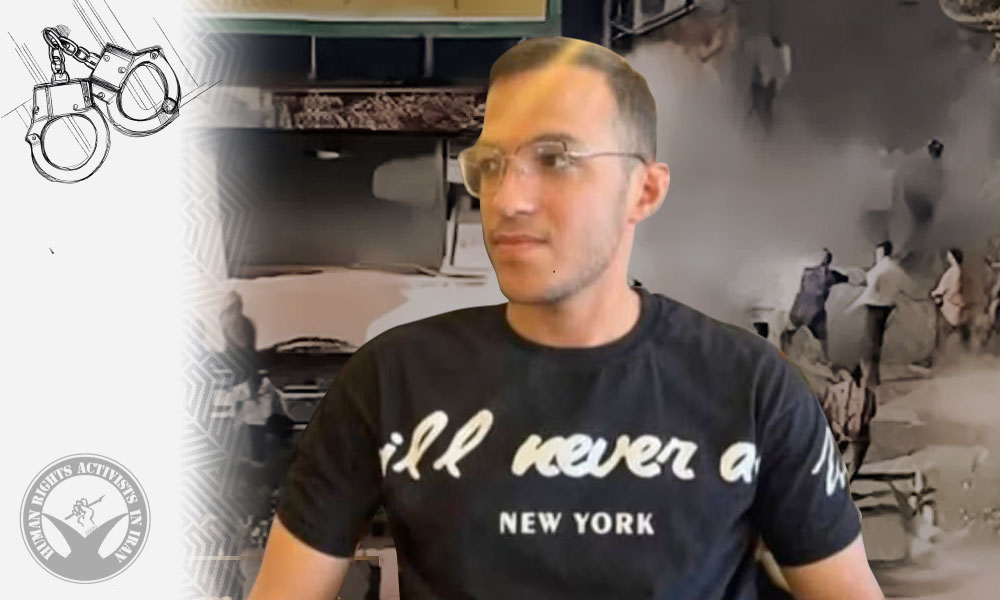
HRANA – Following the self-immolation of Ahmad Baldi, a 20-year-old student and street vendor from Ahvaz who set himself on fire in protest against the demolition of his family’s kiosk by municipal agents, three citizens have been arrested for writing about his situation on social media.

According to a report by HRANA, at least three individuals have been detained in Ahvaz. HRANA has identified them as Hassan Salamat, Javad Saedi, and Seyed Sadegh Alboshoukeh. The reason for their arrest has been cited as posting and sharing information about Ahmad Baldi and his family’s condition online.

According to a source familiar with the matter, “A heavy security presence surrounds Ayatollah Taleghani Hospital in Ahvaz, and security agents are preventing journalists and citizens from contacting the Baladi family. Public gatherings near the hospital and online discussions about the incident have led to more arrests.”

On the morning of Sunday, November 2, municipal officers demolished the Baldi family’s kiosk in Zeytoon Park. Ahmad and his mother remained inside the kiosk to stop the demolition, but officers forcibly removed them. After the violent confrontation, Ahmad Baldi set himself on fire. His health condition remains critical.

The Ahvaz Public and Revolutionary Prosecutor’s Office issued an official statement warning that any reporting on this incident constitutes “exploiting a tragic event to sow division among ethnic groups” and announced that it would take action against those who “agitate public sentiment.”

On the evening of Thursday, November 6, following Baldi’s self-immolation, a group of citizens gathered in protest outside the hospital where he is being treated.

Local sources have reported a higher number of arrests, which HRANA is currently investigating.

Supreme Court Upholds Death Sentence of Political Prisoner Reza Abdali

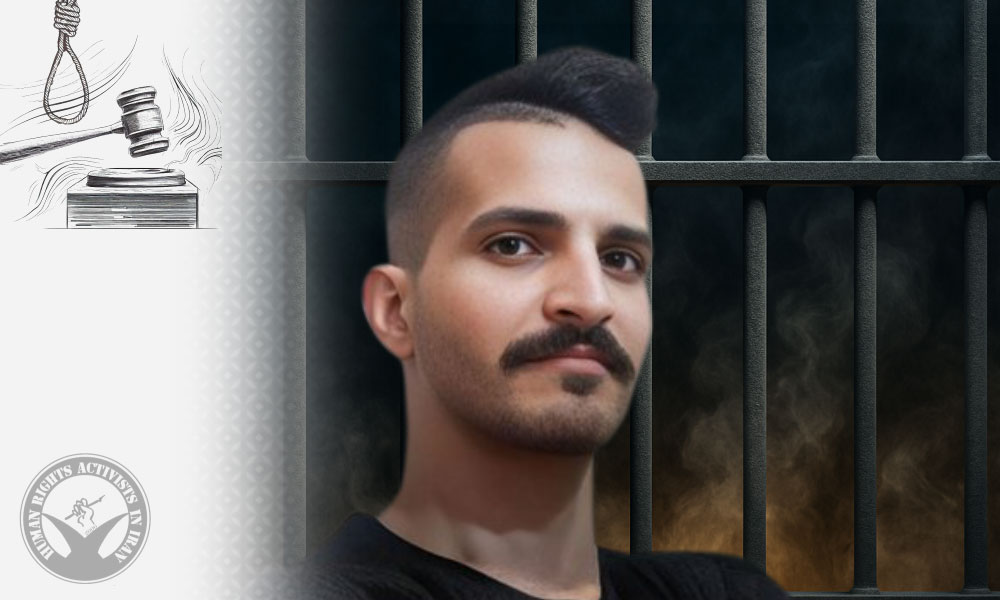
HRANA – The death sentence and prison term of Reza Abdali, a political prisoner held in Sheiban Prison in Ahvaz, have been upheld by Iran’s Supreme Court, the country’s highest judicial authority.

Abdali had previously been sentenced to death and 15 years in prison by the Ahvaz Revolutionary Court on the charge of “enmity against God” (moharebeh).

According to information obtained by HRANA, the Supreme Court recently confirmed and notified Abdali’s verdict. He had been convicted in June-July 2025 by one of the branches of the Ahvaz Revolutionary Court on charges of moharebeh, with “connection with the Mojahedin-e Khalq Organization (MEK)” cited as an instance of the accusation.

Reza Abdali, aged 35 and a resident of Ahvaz, is currently held in Ward 8 of Sheiban Prison.

He was arrested in February 2025 (Bahman 1403) by security forces, and after interrogation, was transferred to Sheiban Prison. During his detention, he has been denied access to a lawyer of his choice.

Subscribe to Our Newsletter

Now is definitely not the time to stop reading!

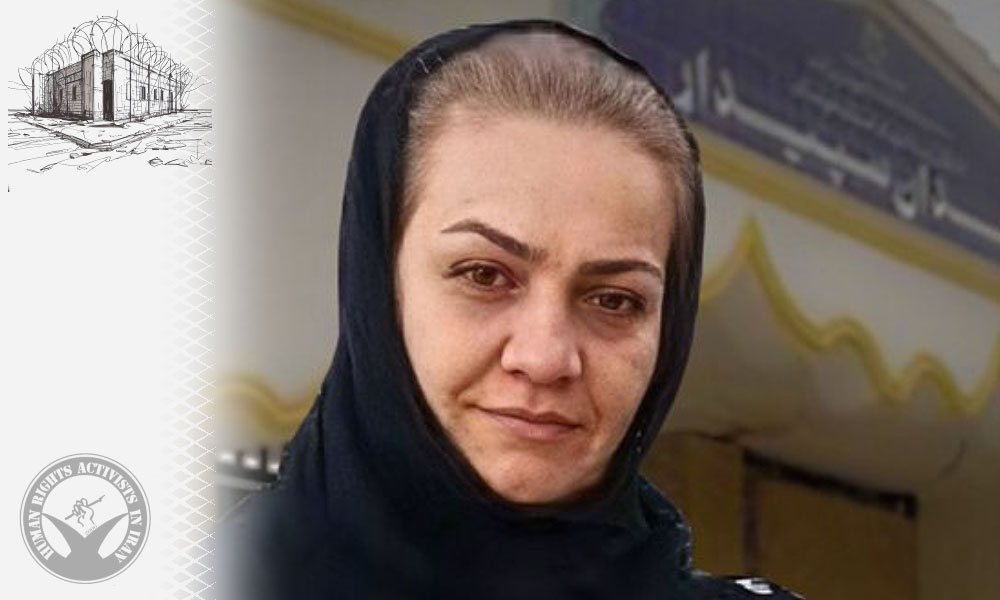
Maryam Zubeidi Arrested and Transferred to Sepidar Prison in Ahvaz

HRANA – Maryam Zubeidi, a resident of Ahvaz, was arrested on Saturday, November 1, to serve her prison sentence and transferred to Sepidar Prison in Ahvaz.

Ms. Zubeidi was taken into custody after appearing at the Enforcement of Judgments Branch of the Ahvaz Revolutionary Court. She had previously been summoned to this branch to begin serving her four-year prison sentence.

A source close to the case told HRANA that eight months of Ms. Zubeidi’s previous detention period were not credited toward her final sentence.

In October this year, the Court of Appeals upheld a four-year prison sentence against Ms. Zubeidi on charges including acting against national security. The Branch 1 of the Ahvaz Revolutionary Court had previously issued the same sentence in the initial trial.

Maryam Zubeidi, 58, who suffers from respiratory and digestive illnesses, has a history of prior arrest.

Two prisoners executed in Sepidar Prison of Ahvaz

HRANA – Yesterday, October 28, the death sentences of two prisoners previously convicted of murder were carried out in Sepidar Prison in Ahvaz.

The two prisoners, who had been sentenced to death on charges of murder, were hanged. Further details, including the identities of those executed, are still being investigated by HRANA.

At the time of this report, the executions have not yet been announced by prison officials or judicial authorities.

In 2024, according to 812 reports compiled by HRANA, the Iranian regime executed 930 individuals in its prisons, marking the highest number of executions in the past 12 years. Despite the scale of these executions, prison officials and other relevant authorities publicly acknowledged only 6% of them, highlighting the regime’s lack of transparency and accountability.

Execution of Two Prisoners, Including a Juvenile Offender, in Sepidar Prison, Ahvaz

HRANA – At dawn on Monday, October 20, the death sentences of two prisoners, including a juvenile offender, were carried out in Sepidar Prison, Ahvaz. Both individuals had previously been convicted of murder.

HRANA has identified the executed prisoners as Ali Aghajeri Peyvand, a resident of Behbahan, and Sajad Shokri.

According to information obtained by HRANA, five years ago, when Aghajeri was 17 years old, he was arrested following a group altercation over farmland that led to one person’s death. He was subsequently sentenced to death by a criminal court.

A source close to the prisoner’s family confirmed the execution, noting that despite years of efforts by Aghajeri’s family to obtain the victim’s family’s consent and pay blood money (diya), these efforts were ultimately unsuccessful.

Based on HRANA’s findings, Mr. Shokri had also been arrested on a murder charge and later sentenced to death by a criminal court.

As of the time of this report, judicial and prison authorities have not officially announced the executions.

Families of Six Executed Prisoners in Ahvaz Threatened Against Holding Mourning Ceremonies

HRANA – Security forces in Khuzestan Province have severely threatened the families of six executed Arab prisoners, warning them not to hold mourning ceremonies or communicate with media outlets and human rights organizations.

The six men – Ali Mojaddam, Mohammadreza Moghaddam, Moein Khanfari, Habib Deris, Adnan Ghobeishavi, and Salem Mousavi – were executed at dawn on Saturday, October 4, 2025, in Sepidar Prison, Ahvaz, without prior notice to their families or lawyers.

According to HRANA, agents of the Ministry of Intelligence contacted the families by phone on the day of the execution to inform them of the death of their loved ones. Prior to these calls, the families had received no information regarding the scheduled execution or the prisoners’ transfer to solitary confinement.

Sources close to the families told HRANA that, following the executions, security authorities summoned several relatives and tribal elders to intelligence offices, including the local headquarters of the Ministry of Intelligence, and explicitly forbade them from holding mourning ceremonies in mosques or public halls. The authorities also prohibited the recitation of the Quran, poetry, or other religious rituals over loudspeakers – traditional mourning practices among the Arab community in Khuzestan.

According to information obtained by HRANA, family members and tribal elders were compelled to sign written pledges promising not to organize any public gatherings. They were further warned that any communication with media or international human rights organizations would result in punitive measures.

The six Arab prisoners were arrested by security forces in February 2019 and later sentenced to death by a branch of the Ahvaz Revolutionary Court in March 2023. The judiciary of the Islamic Republic accused them of “membership in the armed wing of Harakat al-Nidal al-Arabi li-Tahrir al-Ahwaz and armed action against the foundations of the Islamic Republic.”

As of two days after the executions, the families remain unaware of the burial locations or the circumstances under which the sentences were carried out.

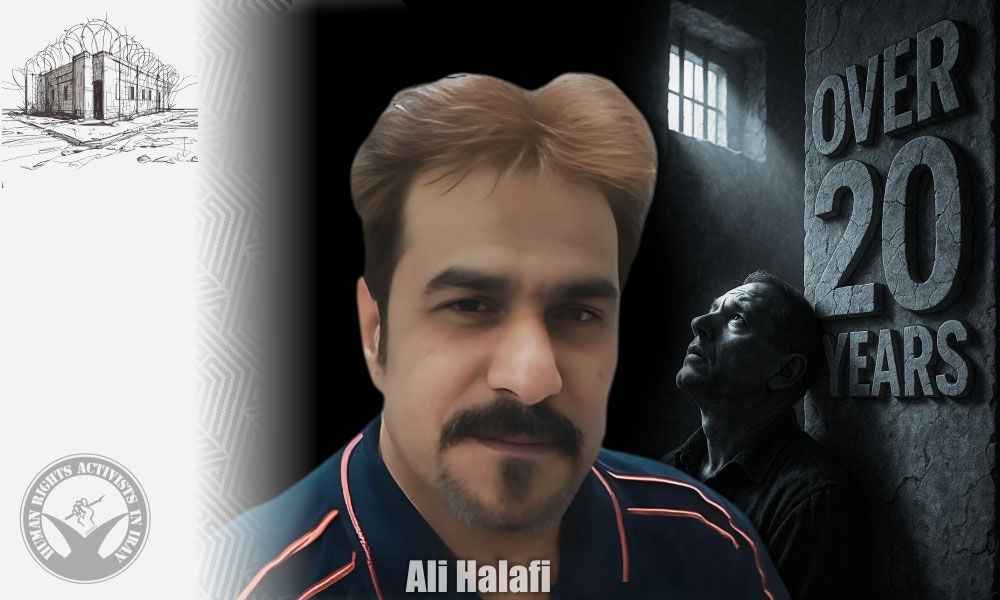
More than Two Decades Behind Bars, Prisoner Profiles – No. 9: Ali Halafi

HRANA – Numerous political and religious prisoners in Iran have spent more than two decades in detention. To ensure their stories are not lost amid the constant churn of daily news, HRANA publishes a series of reports dedicated to them. Each report reviews the prisoner’s case history, prison conditions, access to basic rights, and urgent needs.

In this report, HRANA, the news agency of Human Rights Activists in Iran, examines the latest situation of Ali Halafi after two decades of imprisonment.


Information Sheet

• Name: Ali Halafi
• Year of Arrest: 2005
• Charges Announced: “Acting against national security, moharebeh (enmity against God), and corruption on earth”
• Initial Sentence: 30 years in prison in exile
• Current Sentence: 30 years in prison in exile
• Prison Locations: After sentencing, he spent one year in Karun Prison in Ahvaz. He was then exiled to Gonabad Prison, where he served ten years. In 2016, Halafi was transferred to Masjed Soleyman Prison and later to Sheiban Prison in Ahvaz, where he has since been held without observance of the principle of separating prisoners by offense.
• Furlough / Access: No furlough has been reported in recent years; access to family and lawyer has been limited.
• Current Status: Still in long-term imprisonment despite legal changes that could allow for review or sentence reduction.

Case Narrative and Judicial Process

Ali Halafi was arrested in 2005 by security forces in connection with the so-called “Salman Farsi Street explosion in Ahvaz.” Although not one of the main defendants in the case, he was later sentenced by the Ahvaz Revolutionary Court to 30 years in prison in exile on charges of “acting against national security, moharebeh, and corruption on earth.” This sentence was upheld in full by the Court of Appeals.

The ruling placed him among prisoners with de facto indefinite terms, a status that can extend incarceration for many years and severely restrict access to mechanisms of legal review.

Key Points in the Process:

• Heavy Security Charges: The “moharebeh” charge is one of the most severe in Iran’s political-security cases, carrying wide-reaching judicial and executive consequences.
• Continued Imprisonment Despite Legal Changes: Although legal reforms have allowed for retrials, sentence reductions, or conditional release in some moharebeh cases, Halafi remains imprisoned.

Prison Conditions and Transfers

Over his imprisonment, Halafi has been held in Karun Prison (Ahvaz), Gonabad Prison, Masjed Soleyman Prison, and Sheiban Prison (Ahvaz). After sentencing, he spent one year in Karun Prison, then ten years in Gonabad Prison. In 2016, he was moved to Masjed Soleyman Prison, and shortly thereafter transferred to Ward 5 of Sheiban Prison in Ahvaz, where he remains, without proper separation of offenses.

Observations on Detention Standards

• Frequent Transfers: Repeated relocations between wards and prisons disrupt family contact, legal access, and medical care.
• Exposure to Violence in Prison: Reports indicate verbal abuse and beatings. During his arrest, Halafi suffered broken ribs from beatings by security agents, requiring surgery. In April 2024, he was reportedly beaten by guards in Ward 5 of Sheiban Prison. In December of the same year, after protesting poor conditions, denial of medical care, and the transfer of violent-crime prisoners to his ward, he was threatened with solitary confinement or exile to a remote prison. These instances highlight the urgent need for independent documentation and legal follow-up.
• Denial of Medical Care: Despite suffering from stomach ulcers, intestinal infections, and lung problems, Halafi has consistently been denied hospital transfers and specialized treatment for over two decades. Denying prisoners access to medical care constitutes inhumane treatment and violates the right to health—and in some cases, even the right to life—recognized under Iranian law, international standards, and human rights instruments. It is also used as a tool of coercion and repression.

Access to Family, Lawyer, and Furlough

Halafi has not received furlough in recent years, and his access to family and legal counsel has been limited. Such restrictions carry severe psychological and social consequences, while also undermining his ability to mount an effective defense or pursue retrial mechanisms.

Potential Legal Avenues (General Recommendations):

1. Retrial: Review based on new evidence or substantive/procedural flaws.

2. Request for Sentence Reduction or Commutation: If legal conditions allow.

3. Conditional Release / Suspension of Sentence: If criteria such as time served, good conduct, or health are met.

4. Addressing Rights Violations in Prison: Including the right to healthcare, protection from violence, regular visitation, and legal counsel.

5. Documentation and International Advocacy: Utilizing international reporting and human rights mechanisms where domestic remedies are blocked.

Timeline Summary

2005: Arrest; charges of “acting against national security, moharebeh, corruption on earth.”
Initial Sentence: 30 years in prison in exile.
2005: Reports of beating during arrest; severe rib fractures requiring surgery.
Post-sentencing: One year in Karun Prison (Ahvaz).
2006: Exiled to Gonabad Prison for ten years.
2016: Transferred to Masjed Soleyman Prison.
April 2024: Reported beating in Ward 5 of Sheiban Prison.
Recent years: No furlough, denial of proper medical care, limited access to family and lawyer.
Current Status: Continued imprisonment despite legal changes that could affect case review.

Conclusion and Importance of Case Review

Despite legal changes that provide avenues for retrial, sentence reduction, or release for those convicted of moharebeh, Halafi remains imprisoned. His case exemplifies long-term political-security imprisonment in Iran, highlighting the importance of legal review to secure justice and possible release.

His file underscores both the difficulties of accessing fundamental rights in prison (furlough, visits, legal counsel) and the urgent need to employ all available domestic and international mechanisms for sentence review and reduction.

Urgent Needs:

Regular and non-discriminatory access to lawyer and family.
Independent medical evaluation for alleged beatings and long-term complications.
Examination of eligibility for retrial or other mechanisms for sentence reduction/suspension.
Guarantee of compliance with prison regulations on contact, visits, and furlough.
Access to adequate medical services and treatment.


About This Series

This report is part of the “More than Two Decades Behind Bars” series, which aims to continuously document long-term imprisonment cases and remind the public of the collective responsibility to ensure they are seen and their conditions are pursued.