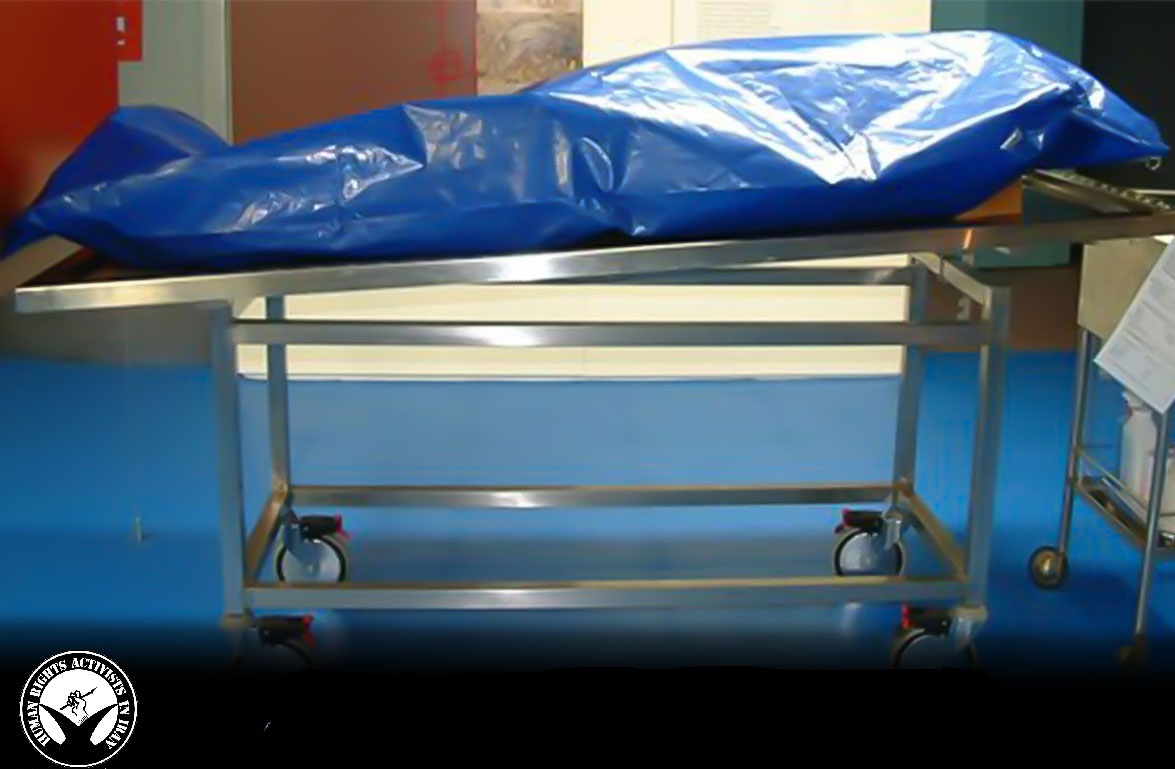
Prisoner Dies After Urmia Officials Refuse to Transfer him to Hospital in the Aftermath of a Heart Attack

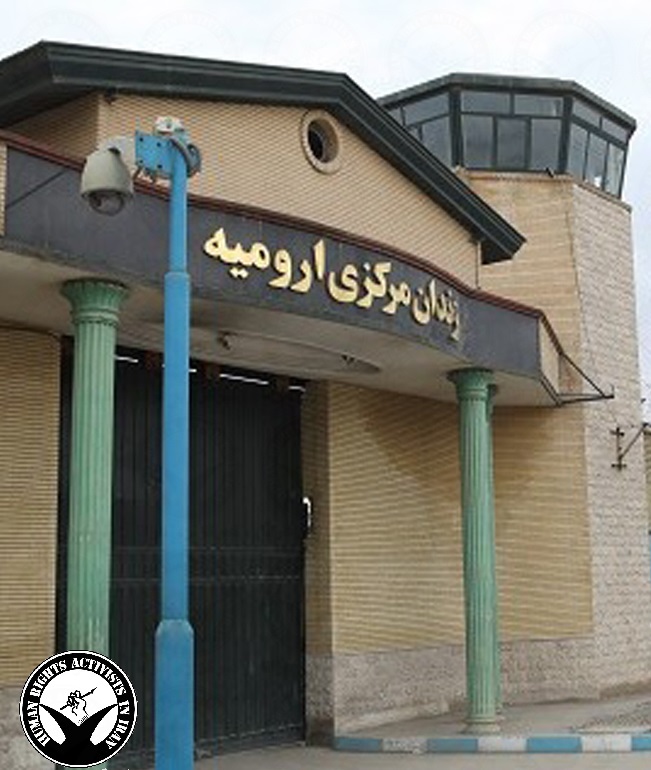
On Saturday, June 12, an inmate who was on death row in Urmia Prison died after prison officials refused to send him to the hospital in the aftermath of a heart attack.

According to HRANA, the news agency of Human Rights Activists, 55-year-old Shamsuddin Tatari suffered a heart attack at noon and died within the day after being denied the transfer.

Tatari was from the city of Salmas in the West Azerbaijan province. He was previously sentenced to death on drug-related charges and had been held in Urmia Prison for two years.

HRANA Recap: Recent Hunger Strikes in Iranian Prisons

Khalid Pirzadeh on a hunger strike in the Greater Tehran Prison


On May 31, political prisoner Khaled Pirzadeh went on a hunger strike for the second time this year in the Greater Tehran Prison.

According to HRANA, the news agency of Human Rights Activists, Pirzadeh has been denied visitations and leave in the 25 months since his imprisonment.

Earlier this year, Pirzadeh went on a hunger strike following the failure of authorities to fulfill their promise to agree to parole. Pirzadeh ended his hunger strike in March after authorities promised that his demands would be met.

In May of 2019, the political prisoner was sentenced by Branch 28 of the Revolutionary Court of Tehran, headed by Judge Mohammad Moghiseh, to 5 years in prison, and an additional 2 years for “insulting the leadership”.  According to Article 134 of the Islamic Penal Code, of the 7 total years, 5 can be enforced on Pirzadeh on the charge of “conspiracy and collusion”.

Khaled Pirzadeh underwent foot surgery in August 2020. His legs and spine were severely damaged during detention and required further surgery and physiotherapy. He was also barred from being hospitalized in December 2020 despite having a heart problem.


Iraj Hatami on a hunger strike in protest of continued imprisonment in Rajai Shahr Prison 


On May 30, Iraj Hatami, currently being held in Rajai Shahr Prison in Karaj, went on a hunger strike to protest his continued imprisonment and the fact that previous time served in detention has not been counted towards his 10 year sentence.

According to HRANA, the news agency of Human Rights Activists,  Hatami was arrested by security forces in October 2010 and sentenced to 10 years in prison on charges of “collaborating with a hostile US government”.

Before his arrest, Hatami worked for the Ministry of Defense and spent two years and three months in military detention. Had this time been counted by prison officials, Hatami’s 10 year sentence would have ended last year. Mr. Hatami suffers from diabetes and high blood pressure.


Farzad Samani on a hunger strike in the IRGC Intelligence Detention Center in Urmia


Farzad Samani, a student detained in one of the IRGC intelligence detention centers in Urmia, went on a hunger strike on May 30.

According to HRANA, the news agency of Human Rights Activists, quoting Kurdpa, Samani has been on a hunger strike to protest pressure from the IRGC’s intelligence services and the extension of his and Sakar Eini’s imprisonment for the sixth consecutive time.

The undergraduate student was arrested in his dormitory at Kharazmi University in Karaj in December 2020, and was later transferred to the IRGC Intelligence Detention Center in Urmia.

So far, no information is available on the charges against Samani and Eini.


Hossein Hashemi on a hunger strike in Tehran Prison after his punitive transfer


On Tuesday, June 1, political prisoner Hossein Hashemi went on a hunger strike in the Greater Tehran Prison.

According to HRANA, the news agency of Human Rights Activists,  Hashemi is one of the detainees from the November 2019 nationwide protests.

Per the report, Hashemi was taken from the ward under the pretext of going to interrogation, but was then transferred to the 4th section of the Greater Tehran Prison, which holds prisoners accused of violent crimes.

It is said that Mr. Hashemi’s transfer took place following a verbal argument with Eliassi, the supervising prosecutor of the Evin court. Eliassi had previously threatened to move Hussein Hashemi to a place where he would regret his actions.


Abolfazl Ghasali went on a hunger strike in Evin prison in Tehran

Tehran resident Abolfazl Ghasali, currently serving out a sentence in Evin Prison, has been on a hunger strike since May 27.

According to HRANA, the news agency of Human Rights Activists, Ghasali demands to be granted leave of absence during the COVID-19 outbreak, release on parole due to family’s financial problems, and a retrial.

Ghasali has had several nosebleeds since the day he started the hunger strike. The prisoner is also said to have suffered heart and lung problems during his detention due to poor nutrition and poor prison conditions. He also went on a hunger strike in December last year to protest the failure to address his needs.

In 2018, Branch 28 of the Revolutionary Court of Tehran, presided by Judge Mohammad Moghiseh, sentenced Ghasali to a total of 7 years in prison on charges of “Gathering and colluding and disturbing public order with the intention of committing a crime against national security”, and “insulting the Supreme Leader”.

3 years and 6 months of imprisonment are enforceable under Article 134 of the Islamic Penal Code.


Seyed Mohammad Hosseini Sentenced to 40 Years in Urmia Prison

On May 25, the Mahabad Revolutionary Court sentenced Seyed Mohammad Hosseini, a resident of Naqadeh in West Azerbaijan, to 40 years in prison.

According to HRANA, the news agency of Human Rights Activists, quoting Kurdpa, The First Branch of the Revolutionary Court of Mahabad summoned Hosseini and informed him upon arrival that he had been sentenced in absentia.

Hosseini is facing 40 years in Urmia Prison on charges of Moharebeh (rebellion, or “waging war against God” in Shariah Law) through membership in an opposition group.

In April, Hosseini’s last hearing was held in the First Branch of the Revolutionary Court of Mahabad, presided over by Judge Javad Gholami. The political prisoner also faced a hearing for Moharebeh in July 2019.

Hosseini is currently being held in Naqadeh Prison in the West Azerbaijan Province.

Prison Officials Beat Inmate Amir Rezaei to Death in Urmia Prison

According to HRANA, the news agency of Human Rights Activists, an inmate at Urmia Prison died on Monday after being ruthlessly beaten by on-duty guards. The identity of this prisoner has been verified by HRANA as 35-year-old Amir Rezaei.

According to an informed source, on Monday, after a clash between prisoners in Ward 14 of Urmia Prison, several prisoners were transferred to solitary confinement.

“After being released from solitary confinement, Mr. Rezaei escaped toward the 1-2 dormitory of the prison,” the informed source said. “Four prison guards followed him and arrested him; two of them beat him and one of them lifted Amir Rezaei on his head and knocked him to the ground. The prisoner’s head hit the ground, causing unconsciousness and eventually death.”

The source emphasized that guards’ aggressive handling continued long after Rezaei  had been subdued.

“Three officers dragged him to the ground, even after he lost consciousness, and transferred him to another place,” the source said.  “They took him to the hospital and found out that he had lost his life when they saw that he was unconscious. Last night [May 17], around 11 o’clock, the body was taken out of the prison.”

Prison official brutality towards inmates is an ongoing issue in Iran. Rezaei had served out half of a 20-year sentence in prison on drug-related charges when he was killed.


Coronavirus outbreak in Iranian prisons

On February 29, 2020, Ebrahim Raisi, the Chief Justice of Iran, issued a circular laying out policies to prevent the spread of Coronavirus in prisons.  This order mandates giving 15 -30 days furlough to prisoners with sentences less than five years. Another part of this order is about reducing entries into prisons, temporary releases, and public activities in prisons. In addition, this order mandates to increase alternative sentences and suspended prison terms instead of imprisonments.

Although the Chief Justice of Iran announced that the prisoners with less than five years prison term will be granted furlough, the prison authorities are not cooperative with political prisoners and prisoners of conscience to implement this regulation. As an example, Esmaeil Abdi and Negin Ghadamian were sentenced to five years imprisonment and after spending four and three years in prison respectively, they were not granted any furlough. Nazanin Zaghari’s husband reported that she is suspected to have Coronavirus. She is serving the 4th year of her five-year imprisonment sentence. Reportedly, three women were diagnosed with Coronavirus in Evin Prison.

The number of prisoners suspected of having coronavirus is increasing. Several prisoners suspected of having coronavirus were identified in Urmia, Khorramabad, Gorgan, Sanandaj, Qom, and other prisons.


A letter from political prisoner’s families

With the current spread of Coronavirus in prisons in Iran, some of the families of the political and security prisoners have written a letter to the judicial authorities on February 26, 2020, requesting furlough for prisoners until this crisis (Coronavirus) is over in the prisons. Considering the closed environment of the prison, malnutrition of the prisoners, shortage of medical care and facilities, high density of prisoners, and the occurrence of some cases suspected to be related to coronavirus has raised concerns of the families of prisoners.

The families of the following prisoners have signed this letter:

Mahmoud Beheshti Langeroudi, Esmaeil Abdi, Mohammad Habibi, Narges Mohammadi, Amir Salar Davoudi, Farhad Meisami, Roeen Otoufat, Jafar Azimzadeh, Shahnaz Akmali, Majid Azarpey, Atena Daemi, Sam Rajabi, Morad Tahbaz, Niloufar Bayani, Abdolreza Kouhpaieh, Amirhossein Khaleghi, Houman Jokar, Taher Ghadirian, Neda Naji, Mehrdad Mohammadnejad, Mohammad Abolhasani, Peyman Koushkbaghi, Aras Amiri, Jafar Fazel, and Alireza Golipour.

In some of the prisons, such as Khorramabad or Sanandaj Prisons, the prisoners asked the authorities to provide them with medical and hygiene necessities and to quarantine the prisoners who are suspected to be infected and have threatened that if this negligence is continuous, they will go on hunger strike. Other prisons such as Karaj, Tabriz, Evin and many other prisons across the country are also demanding similar precautions.


A death in Greater Tehran Central Penitentiary

It should be noted that on the same day, a prisoner of Greater Tehran Central Penitentiary who had symptoms similar to that of Coronavirus passed away after the prison authorities delayed in transferring him to the hospital to receive proper medical care. His name was Hamid Reza and he was 44 years old. He was convicted of a financial felony who was serving his sentence in Greater Tehran Central Penitentiary. He was initially diagnosed with symptoms of flu but after a few days, he started to cough and eventually passed away in the prion.

In addition, 60 prisoners of Greater Tehran Central Penitentiary who were working in the kitchen or service sector, were transferred to Rajai Shahr Prison. Moreover, 7 other prisoners in section 5 ward 2 have Coronavirus symptoms; they were kept in the medical ward without receiving medical care and were not transferred to the hospital.


Evin Prison and the violation of the Prisoners Classification Regulation

Amir Hossein Moradi, Saeed Tamjidi, Mohammad Rajabi, Milad Arsanjani, Jamil Ghahremani, and 15 other arrestees of the last November’s protests who were kept in Greater Tehran Central Penitentiary, were moved from their cell after an inmate was diagnosed with Coronavirus in their cell. Amir Hossein Moradi returned to prison on February 29, 2020, after spending a week in the hospital for another disease. He returned to his cell but after an hour he was transferred to the medical ward for his positive test results of Coronavirus. Although they were told that they will be transferred to Yaft Abad Hospital, they were transferred to ward 1 of this prison, which belongs to the prisoners who committed violent crimes. In June 2019, Alireza Shir Mohammadi, a political prisoner, was fatally stabbed in this ward by two other inmates of this ward who were charged with a drug felony. After this incident, the prison authorities moved other political prisoners from this ward to avoid future incidents. This is against prisoners’ segregation rule. According to a close source “section, 1 of the Greater Tehran Central Penitentiary has 10 wards and one suite which had been used as an exile to punish the prisoners who get in the fight or carry drugs. Since 2018, the political prisoners have been transferred to this suite. This suite has limited facilities and does not even have access to prison commissaries. Their door should be locked all the time however, in the case of Mr. Shir Mohammadi, the warden intentionally did not lock the door which was illegal.

Alireza Shir Mohammadi, a 21-year-old political prisoner at the Greater Tehran Central Penitentiary was murdered in prison on June 10, 2019. He was attacked by two other prisoners, who were later convicted of murder and sentenced to death. The prisoner in question was stabbed in the neck and stomach and died before arriving at the hospital. Shir Mohammad Ali was arrested on July 14, 2018, and was sentenced to eight years in prison on charges of “blasphemy”, “insulting the former and current Supreme Leaders”, and “propaganda against the state”.  He was detained in a solitary confinement cell for 36 days after being arrested. His bail was set at 80 million Tomans but the Revolutionary Court illegally rejected his release on bail. Throughout his prosecution process, he did not have access to an attorney because of his financial conditions. He was waiting for the decision of the appeal’s court when he was murdered. He protested his detention along with non-political prisoners and went on a hunger strike on March 14, 2019, which ended on April 16 after prison authorities accepted his demands. He also wrote open letters criticizing the “unsafe” and “inhumane” conditions of Greater Tehran’s Penitentiary Prison. He wrote an open letter five days into his hunger strike on March 18, 2019. In this letter, he explained the awful condition he was experiencing in prison. In addition, he claimed that he was denied regular social rights that any prisoner is entitled to have. However, his main request, reflected in this letter, was to be transferred to another prison (Evin prison). No judicial authorities or prison officials reacted to his open letter. 

A prisoner of ward 4 of Evin Prison was transferred to an unknown place for his positive test results of Coronavirus. He kept with several other prisoners and political prisoners of this ward who are on hunger strike and are more vulnerable to this disease.


Khorramabad and Ghezel Hesar Prisons

On March 1, 2020, the prisoners of Khorramabad Prison have started a sit-in to protest not being sent to furlough although Coronavirus has spread in this prison. There is a shortage of access to medical care and hygiene products for the diagnosis and treatment of Coronavirus. Several prisoners who have symptoms of this disease did not receive any treatment and were kept with other prisoners. Several prisoners who went on furlough were returned to prison. A close source to a family of a prisoner in this prison told HRANA that a sick inmate with severe coughs received neither medical care nor disinfecting substances and hygiene products such as alcohol, mask, and gloves.

Two prisoners of Qezelhesar Prison, Basat Ali Khazaei, and Gholamhossein Abolfavaei were moved to the quarantine section in the health ward due to having positive test results of Coronavirus. They were charged with drug felony and kept in a ward with 500 other inmates.


Rajai Shahr and Urmia Prisons

The prisoners are deprived of medical care, disinfecting substances, and hygiene products such as alcohol, mask, and gloves.  Payam Shakiba, Mohammad Banazadeh Amirkhizi, and Majid Asadi are serving their third year in prison. Arash Sadeghi, who is diagnosed with Chondrosarcoma (bone cancer), has had an infection in his right hand, digestion issues, and because of his weak immune system should be prioritized to be granted a furlough. Saeed Shirzad is spending the last months of his prison sentence.

On March 2, 2020, Mohammad Ghanbardoost, a political prisoner, was transferred to the hospital due to having symptoms of coronavirus disease. He kept with other political prisoners and may infected others. He was arrested on August 16, 2017, and was sentenced to five years in prison on the charge of “cooperating with Takfiri groups”.

Several Coronavirus suspected patients in Urmia Prison were transferred to hospitals outside the prison. One Urmia prisoner died in hospital, but prison authorities claimed that he was infected outside the prison.


Update on political prisoners temporary releases

On March 3, 2020, Mohammad Karimi granted a furlough and temporarily released until April 3, 2020. Mr. Karimi was sentenced to one-year imprisonment on the charge of “propaganda against the state” which was upheld by the appeals court. on July 3, 2020, he was arrested and transferred to Evin Prison to serve his sentence.

On March 2, 2020, Shahnaz Akmali, political prisoner, was granted a furlough and temporarily released until April 3, 2020. She was arrested on January 15, 2020. She was sentenced to one-year imprisonment and was banned from having any social media account, membership in any group, and leaving the country on the charge of “propaganda against the state”. An appeals court upheld her sentence without hearing either Ms. Akmali or her attorney. She is the mother of Mostafa Karim Beygi one of the people who was killed by security forces during green movement uprising in 2009.
On February 29, 2020, Reza Gholamhosseini, a political prisoner of Bandar Abbas Prison, was granted a furlough and temporarily released until April 3, 2020. He was arrested on September 25, 2019, and was sentenced to three years imprisonment on the charges of “propaganda against the state” and “insulting supreme leader”. His sentence was reduced to 18 months later because he did not request an appeal.
Subscribe to Our Newsletter

Now is definitely not the time to stop reading!

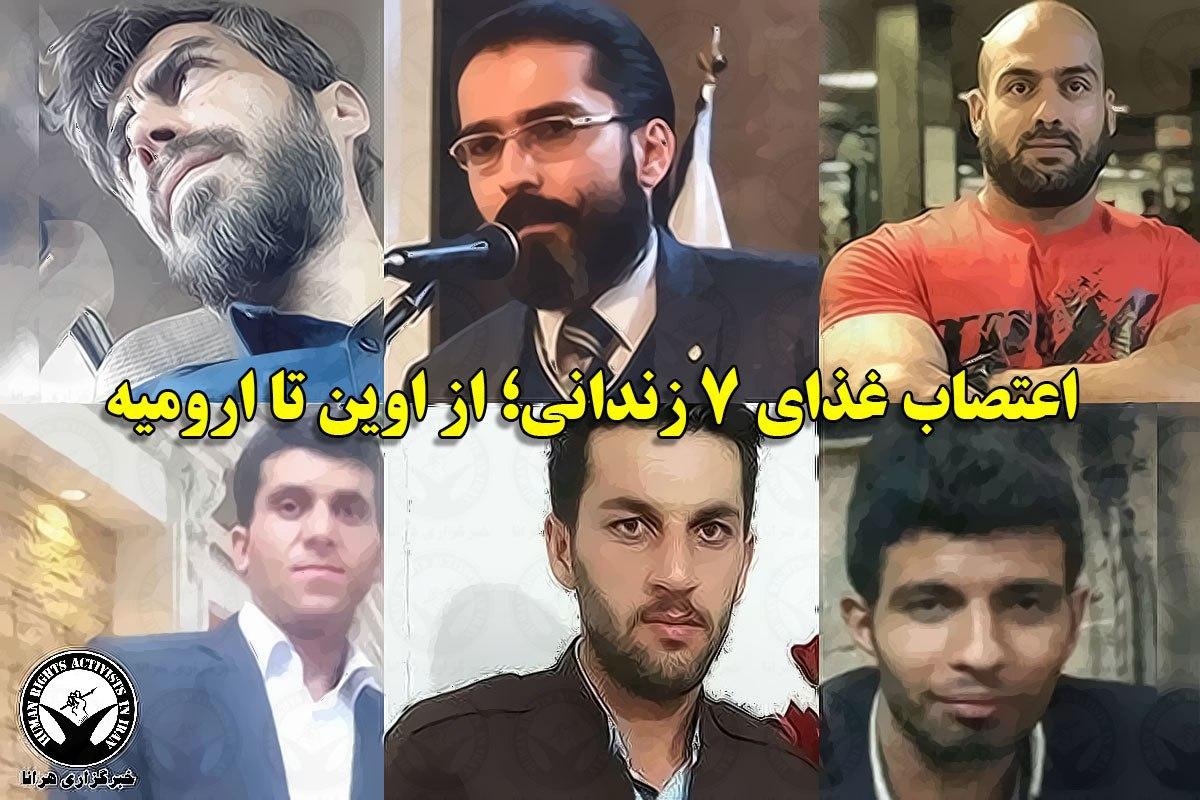
Seven prisoners are on hunger strikes in Urmia and Evin prisons

Evin Prison

Amir Salar Davoudi, attorney detained in Evin Prison, has been on hunger strike from February 9, 2020, protesting not being granted a furlough. In a note published on February 12, 2020, Amir Salar Davoudi explained his motives to go on hunger strike protesting authorities who refused to grant him a furlough and added “I have been incarcerated for 15 months of which I spend 190 days in a solitary confinement cell but my request for a furlough has been denied. I am going on hunger strike to protest this decision. I hold the judicial authorities responsible.” He has been detained in Evin Prison since November 20, 2018. On June 1, 2018, he was sentenced by Branch 15 of the Revolutionary Court of Tehran to 30 years in prison of which the highest penalty is 15 years imprisonment for the charge of “establishing a channel in the Telegram app”. His other charges are “insulting officials”, “propaganda against the state”, “cooperating with enemy states through interviewing with Voice Of America (VOA) television channel”, and “forming a group to overthrow the state”.

Four other political prisoners of Evin Prison, Barzan Mohammadi, Reza Mohammad Hosseini, Mehdi Meskinnavaz, and Khaled Pirzadeh have been on hunger strike from February 1, 2020, protesting denial of their request for parole, neglecting political prisoners requests, not conforming to the prison classification regulation, lengthy prosecutions, receiving unreasonable prison sentences, and finalizing the primary courts verdicts without an opportunity to appeal.

Barzan Mohammadi was arrested in August 2017 because of his activities on social media. He was sentenced to six years in prison for the charges of “assembly and collusion with an intention to disrupt the public order”, and “propaganda against the state” by the primary court. His appeal court was in session in March 2019 where his sentence was reduced to 3.5 years imprisonment

Reza Mohammad Hosseini’s was sentenced to 16.5 years imprisonment; he was sentenced to seven years imprisonment for the charge of “assembly and collusion”, three years imprisonment for the charge of “insulting the Supreme Leader”, three years imprisonment for the charge of “crossing the border unlawfully”, two years imprisonment for the charge of “unlawful entry to the country” and 1.5 years imprisonment for the charge of “disobeying the officers’ orders”. He was arrested in May 2019 by the IRGC intelligence officers and was taken to the IRGC’s detention center in Evin Prison. He was later transferred to the Ward 4 of Evin Prison. Reza Mohammad Hosseini was taken to the hospital on February 11, 2020, after experiencing asthenia. His situation is unknown after the transfer.

Khaled Pirzadeh was sentenced to five years imprisonment for the charge of “assembly and collusion”, and to two years imprisonment for the charge of “insulting the Supreme Leader”.

Mehdi Meskinnavaz tried at Branch 26 of the Revolutionary Court of Tehran in August 2019 and was sentenced to five years imprisonment for the charge of “assembly and collusion and propaganda against the state”. He was also exiled to Fahraj in Kerman Province and ban from membership in political parties and groups.


Urmia Prison

Siamak Ashrafi Ashgasou, a political prisoner of Urmia Prison, is on hunger strike from January 21, 2020, protesting the denial of his request to parole and his family being disrespectfully treated by the court employees. He was arrested in June 2016 by the security forces and was sentenced to five years imprisonment for the charge of “membership in an opposition group” and to eight months imprisonment for “draft evasion” by Branch 2 of the Revolutionary Court of Urmia. He requested parole after serving more than three years of his sentence.

Bashir Pirmawaneh has been on hunger strike from January 25, 2020, protesting his request for parole not being processed. He was arrested in March 2016 and was tried in April 2016 at Branch 2 of the Revolutionary Court of Urmia where he was sentenced to five years imprisonment for “membership in an opposition group”. The sentence was later reduced to four years. He has served more than a third of his sentence at the time of his request.

Three Prisoners Were Executed in Urmia and Zahedan

In the morning of December 3, 2019, two prisoners were executed in Urmia Prison. They were transferred to solidarity confinement cells a day before to get prepared for the execution. Morteza Ashrafi and Ali Mahmoudpour, prisoners of Urmia Prison, were sentenced to death earlier on the charge of murder. On the same day, a prisoner was executed in Zahedan Prison. Elyas Nooti Zehi, 27-year-old, was sentenced to death on the charge of murder three years ago. The news of these executions has not been published by the Iranian media yet.

According to the international organizations, Iran ranks first in the world in executions per capita. From October 10, 2018, to October 8, 2019, the Iranian authorities issued death penalty sentence to 134 individuals and have already carried out 242 executions including 16 public executions.  At least five of the executed were juvenile offenders who were under the age of 18 at the time of committing the crime. Secret executions of prisoners reported by the independent sources and the human rights association indicate that 72% of executions are carried out in secret or without any public notice.

At Least Two Prisoners Were Prepared for Execution in Urmia Prison

On November 11, 2019, at least two prisoners of Urmia Prison were transferred to solidarity confinement cells to get prepared for execution. They were sentenced to death earlier due to their murder felonies. One of them was identified as Mehdi Mostafazadeh. If they fail to get the victims’ family’s consent, they will be executed in few days.

According to the international organizations, Iran ranks first in the world in executions per capita. From October 10, 2018, to October 8, 2019, the Iranian authorities issued death penalty sentence to 134 individuals and have already carried out 242 executions including 16 public executions.  At least five of the executed were juvenile offenders who were under the age of 18 at the time of committing the crime. Secret executions of prisoners reported by the independent sources and the human rights association indicate that 72% of executions are carried out in secret or without any public notice.

A Prisoner Died in Custody Due to the Prison Medical Malpractice

On November 10, 2019, a prisoner died in Urmia Prison due to lack of medical treatment and negligence of the prison authorities. He was in prison since 2015 on the charge of murder. Maran Khamoui was a prisoner of the public ward 15 of Urmia Prison. According to a close source, he was sick for a week, but prison authorities rejected his transfer to the hospital, and he was only treated with pain killers. On November 10, he was transferred to the health wad because of his deteriorating health condition. He was still waiting to be transferred to the hospital when he died on 9 pm.

Death in custody due to similar causes is precedent but state prisons and the Security and Corrective Measures Organization’s authorities did not take any action on it.

Seyed Aram Aminzadeh Was Sentenced to 11-year Prison Term by Appeals Court

On October 11,2019, West Azerbaijan appeals court upheld Seyed Aram Aminzadeh’s sentence of 11 years imprisonment. He was sentenced to an 11-year prison term by the preliminary court of the Branch 1 of Urmia Prison.

Seyed Aram Aminzadeh, prisoner of Urmia Prison, was sentenced to 10 years imprisonment for the charge of “propaganda against the state through establishing Salafi groups in cyber space” and one-year imprisonment for the charge of “propaganda against the state”. According to the article 134 of Iran’s Islamic Penal Code, he should serve the sentence for the charge with the highest penalty which is 10 years.