
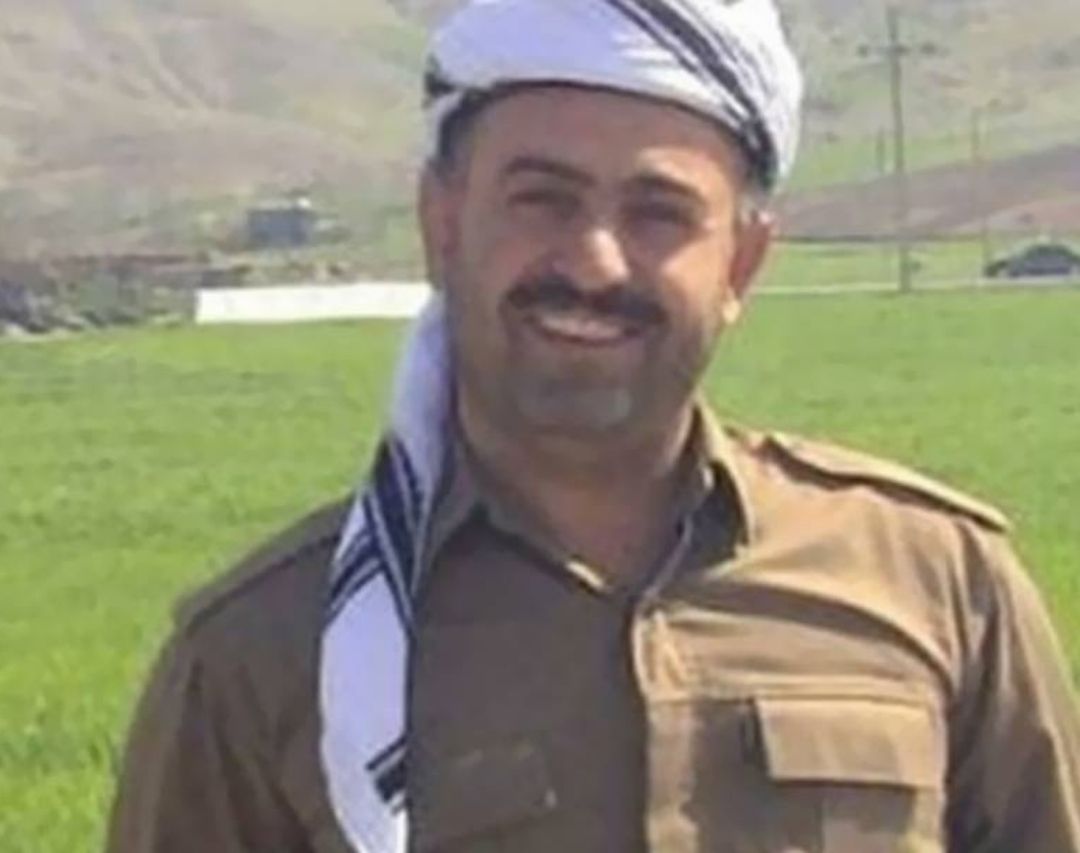
Supreme Court Rejects Heydar Ghorbani’s Request for Retrial

Branch 27 of the Supreme Court rejected political prisoner Heydar Ghorbani’s latest request for retrial.

According to HRANA, the news agency of Human Rights Activists, Mr. Ghorbani has been previously sentenced to death by the Sanandaj Revolutionary Court on a charge of “insurgency”.

Heydar Ghorbani, a native of the village of Bazvash in Kamyaran area in Kurdistan Province, was first sentenced in October 2019 to three charges of imprisonment each for 30 years on charges of assisting in murder, assault with a deadly weapon, helping offenders to escape from law enforcement, involvement in premeditated murder, murder attempt, affixing a license plate to another car, attempt to kidnap, and the acquisition of stolen property.

The First Branch of the Revolutionary Court of Sanandaj eventually sentenced Mr. Ghorbani to death on the charge of insurgency.

In August 2020, Branch 2 of the Supreme Court in Qom upheld the sentence and sent the case to the Kamyaran Public and Revolutionary Prosecutor’s Office for enforcement of the judgment.

Saleh Nikbakht, Mr. Ghorbani’s attorney, announced in August 2020 that his client’s request for retrial had been filed. In September 2020, this request was overturned by Branch 27 of the Supreme Court.

In December 2020, another retrial was requested which was overturned last week. Saleh Nikbakht, Gorbani’s defense lawyer, said he will request a retrial again.

“From a legal and jurisprudential point of view, the accusation of insurgent against Mr. Ghorbani is not valid because someone who is called [rebel] insurgence is someone who is a member of a group which revolts against the Islamic Republic,” Nikbakht said. “If the group members use weapons, then they will be sentenced to death. None of these are true about Mr. Heydar Ghorbani.”

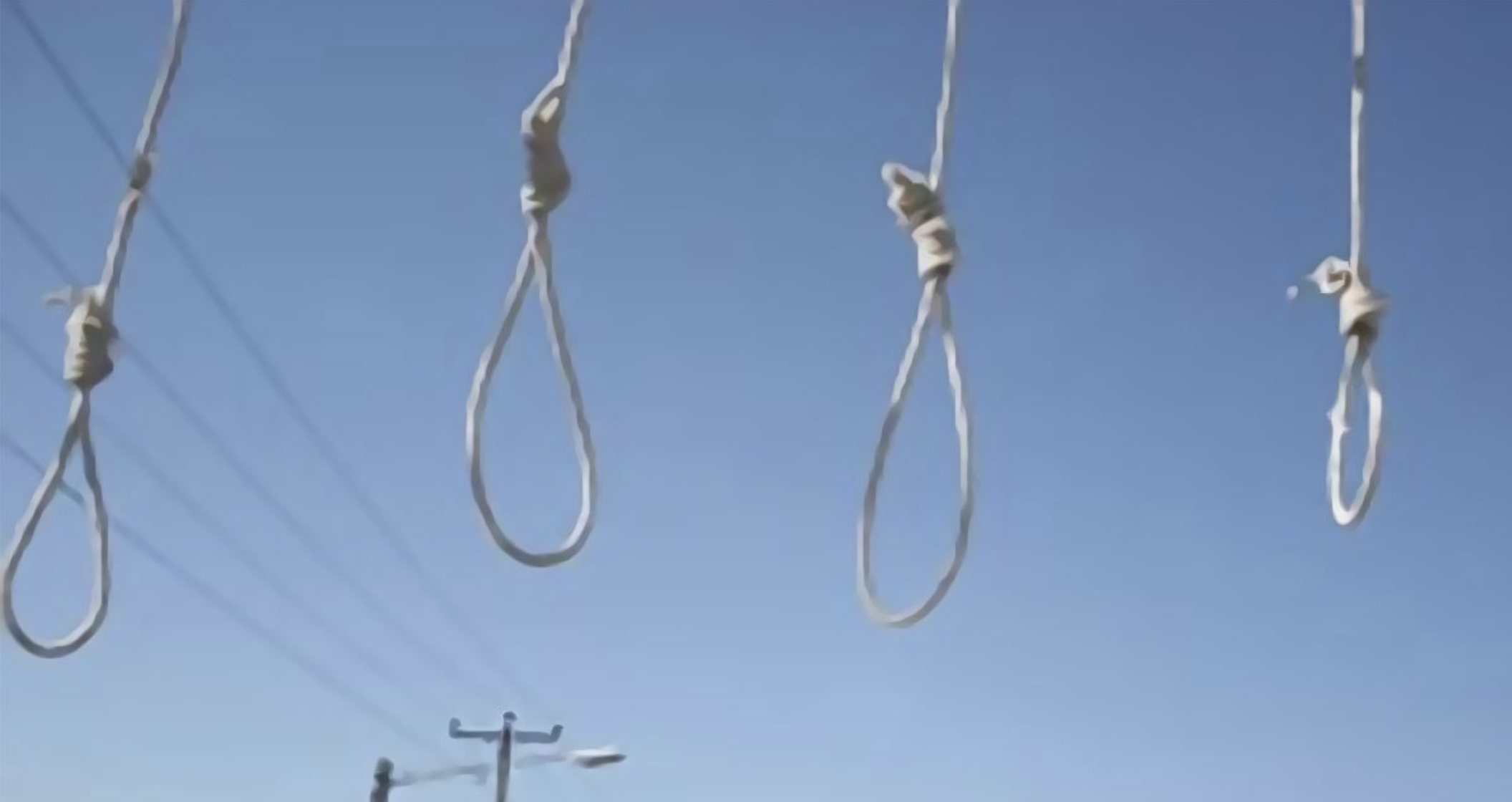
Citizen Executed in Esfarayen City on Charge of Murder

The death sentence of a prisoner who had previously been sentenced to death for murder was recently carried out in Esfarayen City.

According to HRANA, the news agency of Human Rights Activists, quoting ISNA, the prisoner had been sentenced to flogging and imprisonment in addition to the death sentence.

Regarding this case, Nader Nejad Aghdash, the Public Prosecutor of Esfarayen said, “After receiving the news of the disappearance of a 31-year-old woman in March 2018, a judicial case was filed and after a few days, the accused in this case was identified and arrested. The defendant confessed to the crime after his arrest”

Nejad Aghdash added, “Based on the available evidence, the most likely motive behind murder was the theft of the victim’s gold and jewelry. More so, after committing the crime, the accused mutilated and burned the body in order to get rid of the evidence.”

“After completing the various stages of the trial,” Nejad Aghdash added, “according to the lawsuit issued by the First Branch of the Criminal Court of North Khorasan Province, the accused was sentenced to death. He was also sentenced to 10 years in prison and 74 lashes for aggravated robbery, and 74 lashes for cutting off both legs and burning a corpse. ”

The initial verdict was upheld in Branch 13 of the Supreme Court and the death sentence was carried out.

Iran ranks first in the world in citizen executions per capita, according to international organizations. The Statistics and Publication Center of the Human Rights Activists in Iran (HRA) reported that between January 1 and December 20 of 2020, at least 236 citizens were executed.

One of these citizens was executed publicly, and two were juvenile offenders. An additional 95 citizens were sentenced to death.

According to the same report, more than 72% of executions in Iran are not reported by the government or the judiciary, which human rights organizations call “secret” executions.

The report does not mention the identity of the prisoner or the exact location and date of the execution.

Two Inmates Executed in Kerman Prison on Drug-Related Charges

Two prisoners who were previously sentenced to death on drug-related charges were executed in Kerman Prison yesterday morning, Monday, August 9.

According to HRANA, the news agency of Human Rights Activists, quoting The Baloch Activists Campaign, the identities of the prisoners are Nabi Noti Zehi and Ebrahim Ghanbarzehi from Zahedan in Sistan and Baluchestan Province.

Iran ranks first in the world in citizen executions per capita, according to international organizations. The Statistics and Publication Center of the Human Rights Activists in Iran (HRA) reported that between January 1 and December 20 of 2020, at least 236 citizens were executed.

One of these citizens was executed publicly, and two were juvenile offenders. An additional 95 citizens were sentenced to death.

According to the same report, more than 72% of executions in Iran are not reported by the government or the judiciary, which human rights organizations call “secret” executions.

The execution of these prisoners has not been announced by Iranian media or official sources as of this writing.

At Least 4 Inmates Executed in Birjand Prison and Isfahan Prison

None of these executions have been announced by Iranian media or official sources as of this writing.

At dawn on Sunday, August 8, two inmates were executed in Birjand Prison and two other inmates were executed in Isfahan Prisons.

According to HRANA, the news agency of Human Rights Activists, quoting Rasank news, all 4 prisoners had previously been sentenced to death on drug-related charges.

The two inmates executed in Birjand Prison have been identified as Zabihollah Hormozi, known as Mehrollah Sanjarani, from Zahedan, and Majid Goleh Bacheh from Torbat-e- Jam.

The two prisoners executed in Isfahan Prison are Azam Mohammad Hosseini (Kiazehi) and Seyed Esmail Kord Tamini, both from Zahedan.

Iran ranks first in the world in citizen executions per capita, according to international organizations. The Statistics and Publication Center of the Human Rights Activists in Iran (HRA) reported that between January 1 and December 20 of 2020, at least 236 citizens were executed. One of these citizens was executed publicly, and two were juvenile offenders. An additional 95 citizens were sentenced to death.

According to the same report, more than 72% of executions in Iran are not reported by the government or the judiciary, which human rights organizations call “secret” executions.

The execution of these 4 prisoners has not been announced by Iranian media or official sources as of this writing.

Dizelabad Prison Authorities Execute Juvenile Offender Sajad Sanjari Without Notifying Family

At dawn on Monday, August 2, Sajad Sanjari was executed in Dizelabad Prison in Kermanshah. His family was not notified or allowed to visit him before the execution.

According HRANA, the news agency of Human Rights Activists, quoting Amnesty International, Sanjari was arrested in 2010 at the age of 15 on murder charges and sentenced to death.

Diana Eltahawy, Deputy Director for the Middle East and North Africa at Amnesty International, stated, “With the secret execution of Sajad Sanjari, the Iranian authorities have yet again demonstrated the utter cruelty of their juvenile justice system. The use of the death penalty against people who were under 18 at the time of the crime is absolutely prohibited under international law and constitutes a cruel assault on child rights.”

In December 2016, the spokesman for the UN High Commissioner for Human Rights called on the authorities of the Islamic Republic to suspend the execution of Sajad Sanjari, a juvenile accused of murder.

Iran ranks first in the world in citizen executions per capita, according to international organizations. The Statistics and Publication Center of the Human Rights Activists in Iran (HRA) reported that between January 1 and December 20 of 2020, at least 236 citizens were executed.

One of these citizens was executed publicly, and two were juvenile offenders. An additional 95 citizens were sentenced to death. According to the same report, more than 72% of executions in Iran are not reported by the government or the judiciary, which human rights organizations call “secret” executions.

Recently, in an interview with Agence France-Presse, Secretary of the state-run High Council for Human Rights, Majid Tafreshi, said that the Islamic Republic executes juvenile offenders “three to four times a year”, and claimed this should not be considered a human rights violation.

“The fact that Sajad Sanjari was executed in secret, denying his family and him even the chance to say goodbye, is an alarming pattern of the Iranian authorities carrying out executions in secret or at short notice to minimize the chances of public and private interventions to save people’s lives” Eltahawy further stated of Sanjari’s execution. “We urge the Iranian authorities to put an end to these abhorrent violations of the right to life and children’s rights by amending the penal code to ban the use of the death penalty against anyone who was under 18 at the time of the crime immediately.”

Subscribe to Our Newsletter

Now is definitely not the time to stop reading!

At Least one Prisoner Transferred to Solitary Confinement in Urmia Prison for Execution Preparation

This morning, Wednesday, August 4, at least one prisoner sentenced to death was transferred to solitary confinement in Urmia Prison.

According to HRANA, the news agency of Human Rights Activists, the prisoner was previously sentenced to death on drug-related charges.

The identity of this prisoner has been verified by HRANA as Ebrahim Nasrikhah.

Iran ranks first in the world in citizen executions per capita, according to international organizations. The Statistics and Publication Center of the Human Rights Activists in Iran (HRA) reported that between January 1 and December 20 of 2020, at least 236 citizens were executed.

One of these citizens was executed publicly, and two were juvenile offenders. An additional 95 citizens were sentenced to death.

According to the same report, more than 72% of executions in Iran are not reported by the government or the judiciary, which human rights organizations call “secret” executions.

82 Executions in Iran Between April and July

According to HRANA, the news agency of Human Rights Activists, in July, Iran executed a staggering 38 individuals for crimes related to drugs, murder, and sexual offenses. In the previous three months, an additional 44 individuals faced the same fate. All of these executions took place under the direction of president-elect Ebrahim Raisi, who will assume office on Friday.

Raisi, who has been colloquially referred to as the “Ayatollah of Massacre” for his role in the extra-judicial executions of political prisoners in 1988, continues to evade accountability for his endless violations of human rights.

According to Senior Advocacy Coordinator, Skylar Thompson, “The impending Ebrahim Raisi presidency is a frightening illustration of the culture of impunity in the Islamic Republic of Iran; it shows that without international support for a meaningful pathway to accountability, Iranian citizens will continue to suffer at the hands of the regime.” She continued, “As Head of the Judiciary, Raisi presided over the highest number of executions per capita, and in addition has committed some of the most egregious crimes imaginable throughout his career, his impending position as President promises comparable ruthlessness”

In addition to the staggering number of executions, capital punishment sentencing is also on the rise [See figure 1]. In July alone, a total of 10 people were sentenced to death, compared with 6 in June, 3 in May, and 5 in April.


While the death penalty is not prohibited under international law,  in countries that have not abolished the death penalty, the sentence may only be legally imposed for ‘the most serious crimes’. According to HRC General Comment no. 36 on The Right to Life (GC 36), the phrase “the most serious crime” must be “read restrictively and apply only to crimes of extreme gravity”.

Iran’s judicial system interprets the phrase, to put it lightly, in a way that is less-than-restrictive.  Despite recent legal reforms, drug-related offenses accounted for the highest number of executions between April and July (48.8%).  GC 36 also establishes that “sexual offenses, while serious in nature, must never serve as a basis for the imposition of the death penalty”, but from April to July 2021, 4 individuals were executed in Iran on charges of a sexual offense.


One of the 10 executed in July was juvenile offender Baha al-din Ghasemzadeh. Juvenile executions are explicitly prohibited under international law, but they are an enduring practice within Iran’s criminal justice system. In fact, in a recent interview with Agence France-Presse, Secretary of the state-run High Council for Human Rights Majid Tafresh said that the Islamic Republic executes juvenile offenders “three to four times a year”, and claimed this should not be considered a human rights violation.

According to HRA’s Spreading Justice Project Manager, Parasto Azizi, “HRAs Spreading Justice team has documented several individuals including judges and prosecutors responsible for imposing the death penalty for crimes falling outside of those internationally recognized as most serious including illegally imposing the death penalty in cases involving juveniles.”

*In addition to the numbers analyzed in this report, on August 2nd, the day of publishing, two juvenile offenders were executed in Urmia Prison on drug-related charges.


Two Defendants Sentenced to Death in Tehran

According to HRANA, the news agency of Human Rights Activists, quoting Rokna, two defendants were recently sentenced to death in Tehran.

A defendant named Jalil was sentenced to death by the Second Branch of the Criminal Court of Tehran Province for murder. Another defendant, Kamran, was sentenced to death by the Eighth Branch of the Criminal Court of Tehran Province for murder.

Iran ranks first in the world in citizen executions per capita, according to international organizations.

The Statistics and Publication Center of the Human Rights Activists in Iran (HRA) reported that between January 1 and December 20 of 2020, at least 236 citizens were executed. One of these citizens was executed publicly, and two were juvenile offenders. An additional 95 citizens were sentenced to death.

Three Prisoners Executed in Urmia Prison on Drug-Related Charges

At dawn on Monday, August 2, three prisoners were executed  in Urmia Prison in West Azerbaijan Province.

According to HRANA, the news agency of Human Rights Activists, the three prisoners had previously been sentenced to death on drug-related charges.

HRANA has verified the identities of the executed prisoners as Sepehr Abbasnejad (Beigzadeh), son of Bahman, Eskandar Zar’e, son of Ebrahim, and Hamzeh Rezaei, son of Reza.

Iran ranks first in the world in citizen executions per capita, according to international organizations. The Statistics and Publication Center of the Human Rights Activists in Iran (HRA) reported that between January 1 and December 20 of 2020, at least 236 citizens were executed.

One of these citizens was executed publicly, and two were juvenile offenders. An additional 95 citizens were sentenced to death.
According to the same report, more than 72% of executions in Iran are not reported by the government or the judiciary, which human rights organizations call “secret” executions.

The execution of these citizens has not yet been announced by Iranian media or official sources as of this writing.

Two Prisoners Executed in Mashhad Prison on Charges of Murder

On Sunday, August 1, two prisoners who were previously sentenced to death in separate cases on murder charges were executed in Mashhad Prison.

According to HRANA, the news agency of Human Rights Activists, quoting Rokna, the report identifies the executed prisoners as 57-year-old Hassan and 61-year-old Ali.

Iran ranks first in the world in citizen executions per capita, according to international organizations. The Statistics and Publication Center of the Human Rights Activists in Iran (HRA) reported that between January 1 and December 20 of 2020, at least 236 citizens were executed.

One of these citizens was executed publicly, and two were juvenile offenders. An additional 95 citizens were sentenced to death. According to the same report, more than 72% of executions in Iran are not reported by the government or the judiciary, which human rights organizations call “secret” executions.