25-Year-Old Prisoner Executed in Adelabad Prison After Being Tortured and Forced to Confess

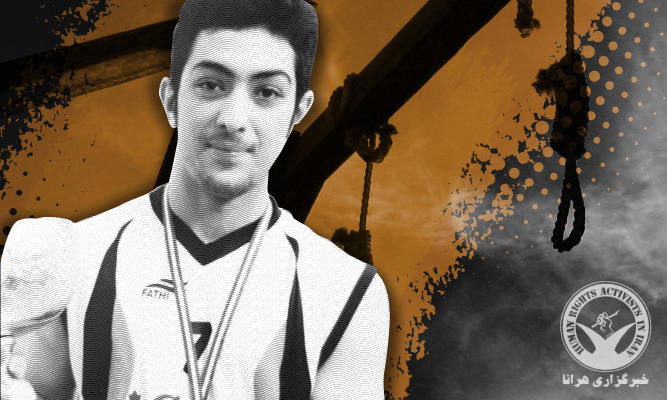
On May 15, 2021, an inmate in Adelabad Prison in Shiraz was executed on a charge of rape. The prisoner’s identity was confirmed by HRANA as 25-year-old Behzad Ad’l.

According to HRANA, the news agency of Human Rights Activists, Ad’l  was transferred to solitary confinement for execution along with three others sentenced to death on the morning of the 15th.

In June of last year, Ad’l was arrested and sentenced to death and 99 lashes by Branch 1 of the criminal court in Fars Province, presided over by Judge Rajaeinia. The case was appealed and referred to the Supreme Court, and the previous ruling was upheld in less than 18 days.

According to an informed source, the Ad’l’s execution was carried out very hastily, despite at least 2 of his 3 plaintiffs’ agreement on the withdrawal of the sentence.   Start to finish, the  process of issuance, approval, and execution of the sentence took place over the course of less than seven months.

Ad’l did not have a lawyer.  According to the lawsuit in Branch 1 of criminal court in the Fars Province, issued in October 2020, Behzad Ad’l had stated that during interrogation he was tortured and forced to confess to the charges. If he did not cooperate, authorities threatened that his “grandmother (would) be run-over by car.”

At least three other prisoners were transferred to solitary confinement along with Mr. Ad’l for execution. The fate and identities of the other three prisoners are currently unknown.

According to international organizations, considering its population, Iran ranks first in the world in the execution of its citizens. The Statistics and Publication Center of the Human Rights Activists in Iran (HRAI) reported that between January 1st and  December 20th of 2020, at least 236 citizens were executed. One of these citizens was executed publicly, and two were juvenile offenders. An additional 95 citizens were sentenced to death.

The report states that more than 72% of executions in Iran are not reported by the government or the judiciary. Human rights organizations call these “secret executions.”

As of this writing, the execution of this prisoner has not been announced by any Iranian media or official sources.

Prison Officials Beat Inmate Amir Rezaei to Death in Urmia Prison

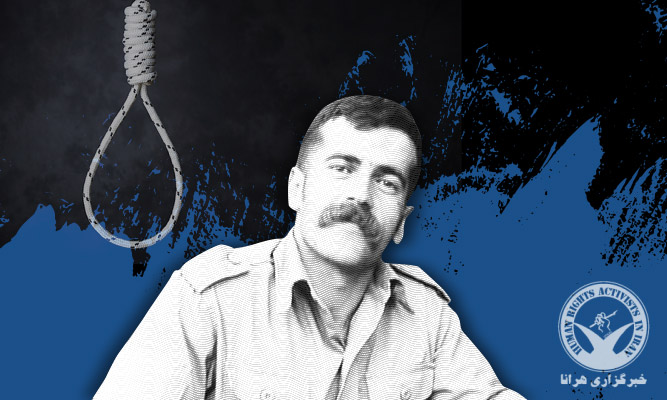
According to HRANA, the news agency of Human Rights Activists, an inmate at Urmia Prison died on Monday after being ruthlessly beaten by on-duty guards. The identity of this prisoner has been verified by HRANA as 35-year-old Amir Rezaei.

According to an informed source, on Monday, after a clash between prisoners in Ward 14 of Urmia Prison, several prisoners were transferred to solitary confinement.

“After being released from solitary confinement, Mr. Rezaei escaped toward the 1-2 dormitory of the prison,” the informed source said. “Four prison guards followed him and arrested him; two of them beat him and one of them lifted Amir Rezaei on his head and knocked him to the ground. The prisoner’s head hit the ground, causing unconsciousness and eventually death.”

The source emphasized that guards’ aggressive handling continued long after Rezaei  had been subdued.

“Three officers dragged him to the ground, even after he lost consciousness, and transferred him to another place,” the source said.  “They took him to the hospital and found out that he had lost his life when they saw that he was unconscious. Last night [May 17], around 11 o’clock, the body was taken out of the prison.”

Prison official brutality towards inmates is an ongoing issue in Iran. Rezaei had served out half of a 20-year sentence in prison on drug-related charges when he was killed.


Prisoner Amir Bayati Executed in Shiraz

On May 17th, Amir Bayati was executed in Adelabad Prison on a charge of murder under the Qisas (“eye for an eye”) principle of Shariah Law. The execution has not been announced by any Iranian media or official sources at the time of this writing.

According to HRANA, the news agency of Human Rights Activists, quoting Iran Human Rights (IHR), on May 17th, Amir Bayati was executed after being sentenced to death on a charge of murder.

Amir Bayati was arrested in 2017 and was being held in prison up until his execution on Monday. An informed source repeatedly stated that Bayati committed the murder unintentionally after a fight escalated. Per the report, Bayati lost his temper after the victim shouted obscenities in his direction.  The death sentence falls under the Qisas (loosely translated as “eye for an eye”) principle of Sharia Law.

According to the Statistics and Publication Center of the Human Rights Activists in Iran (HRAI), between January 1st and  December 20th of 2020, at least 236 citizens were executed. One of these citizens was executed publicly, and two were juvenile offenders. An additional 95 citizens were sentenced to death.

The report states that more than 72% of executions in Iran are not reported by the government or the judiciary.  Human rights organizations call these “secret executions.”

On May 15, 2021, HRANA reported the execution of a prisoner named Behzad Ad’l, and the transfer of at least three other prisoners for the execution of death sentences in Adelabad Prison in Shiraz.

At the time of writing, the execution of Mr. Bayati has not been reported by domestic media or officials in Iran.

Prisoner Jamal Mohammadi Executed in Ilam Prison

On May 16th, Jamal Mohammadi was executed in Ilam Prison on a charge of murder under the Qisas (“eye for an eye”) principle of Shariah Law. The execution has not been announced by any Iranian media or official sources at the time of this writing.

According to HRANA, the news agency of Human Rights Activists, on May 16th, Jamal Mohammadi  was executed after being sentenced to death by a court on a charge of murder.

About two years ago, during his military service in one of the barracks in Ilam, Mohammadi killed one of his superiors after a verbal conflict. The death sentence falls under the Qisas (loosely translated as “eye for an eye”) principle of Shariah Law.

According to international organizations, considering its population, Iran ranks first in the world in the execution of its citizens. The Statistics and Publication Center of the Human Rights Activists in Iran (HRAI) reported that between January 1st and  December 20th of 2020, at least 236 citizens were executed. One of these citizens was executed publicly, and two were juvenile offenders. An additional 95 citizens were sentenced to death.

According to the report, more than 72% of executions in Iran are not reported by the government or the judiciary. Human rights organizations call these “secret executions.”

Mohammadi was executed in the presence of his relatives. At the time of this writing, the execution has not been announced by any Iranian media or official sources.

Mehran Naruyi Executed in Isfahan After IRGC Refuses to Provide Letter of Suspension to Prison Officials

On May 16th, Mehran Naruyi was executed on drug-related charges in Dastgerd Prison in Isfahan, despite widespread calls to suspend the process until a fair trial could take place.

According to HRANA, the news agency of Human Rights Activists, quoting The Baloch Activists Campaign, on May 15th, Naruyi was transferred to solitary confinement in Dastgerd Central Prison before the execution.

Per the report, an informed source said “during the prisoner’s last meeting with his family, prison officials pointed out that they would suspend the sentence if they received a letter from the imam of Isfahan and Revolutionary Guards. However, the IRGC’s Intelligence Organization refused to provide the letter.”

On May 16, 2021, Amnesty International called for an stop to the execution of Naruyi, writing: “The Iranian authorities should grant this prisoner the right to a fair trial without resorting to the death penalty, as well as forcing confessions under torture.”

According to international organizations, considering its population, Iran ranks first in the world in the execution of its citizens. The Statistics and Publication Center of the Human Rights Activists in Iran (HRAI) reported that between January 1 and December 20 of 2020, at least 236 citizens were executed. One of these citizens was executed publicly, and two were juvenile offenders. An additional 95 citizens were sentenced to death.

According to the report, more than 72% of executions in Iran are not reported by the government or the judiciary. Human rights organizations call these “secret executions.”

Mehran Naruyi, son of Khodadad, is from Nosratabad city of Zahedan in Sistan and Baluchestan province. As of this writing, this execution has not been announced by any Iranian media or official sources.

Subscribe to Our Newsletter

Now is definitely not the time to stop reading!

Court Hearing Postponed Again for Amirhossein Moradi, Mohammad Rajabi, and Saeed Tamjidi

On May 12th, the court hearing for political prisoners Amir Hossein Moradi, Saeed Tamjidi, and Mohammad Rajabi, detained since the national protests of November 2019, was postponed for a second time.

According to HRANA, the news agency of Human Rights Activists, the prosecutor’s representative, defendants, and lawyers were all present, but the hearing was unable to proceed in the absence of a second judge. The hearing has not yet been rescheduled.

Amir Hossein Moradi, Saeed Tamjidi, and Mohammad Rajabi were previously sentenced to death by the Tehran Revolutionary Court. They were also sentenced to a total of 38 years in prison and 222 lashes.

On Jun 24, 2020, the Human Rights Activists News Agency (HRANA)  announced that the death sentence of the three political prisoners had been upheld by the Supreme Court. On July 14, 2020, the spokesman of the Judiciary officially announced the confirmation of their  death sentence and said that the sentences had been sent to the prosecutor’s office for execution.

However, according to the lawyers, permission to enter the trial and study the case was given to them on July 15, 2020–weeks after HRANA news agency reported that the death sentence was confirmed in the Supreme Court.

Less than an hour after the official confirmation of the death sentences for Amir Hossein Moradi, Saeed Tamjidi, and Mohammad Rajabi, “#Don’t_execute” became the world’s top trend with hundreds of thousands of tweets. Human Rights Watch, US President Donald Trump, the Writers’ Association of Iran, and others all reacted to this news. The hashtag has now been used more than ten million times.

The following day, UN human rights experts issued a statement and condemned the death sentences. The statement expressed that Amir Hossein Moradi, Saeed Tamjidi, and Mohammad Rajabi were tortured and forced to confess and that these forced confessions were later used against them in their trials. HRANA has previously conducted numerous conversations with informed sources and extensive research to determine what happened to the prisoners in the various processes of activity up to the conviction.

On July 19, 2020, the three defendants’ lawyers issued a joint statement announcing that the case had been referred to a different branch for retrial after the Supreme Court’s acceptance of Article 477.

In mid December of 2020, in the aftermath of the global outcry, the young activists’ request for a retrial was finally accepted by Branch 1 of the Supreme Court and their death sentences were overturned.

The case was then referred to Branch 23 of the Revolutionary Court of Tehran, but, due to a change of chief judge of the branch, the first hearing was postponed from March to May 12th.

Now, it has been postponed from May 12th to a date that has yet to be determined.

Kermanshah province: Civilian Shot and Killed by Law Enforcement in Dalahu

A civilian was shot dead by law enforcement forces in Dalahu. According HRANA, the news agency of Human Rights Activists, quoting Kordpa, Sohbat Samadi Nasab died in Taleghani hospital on May 4, 2021 from injuries sustained from the firing.

According to the report,  the military forces shot Mr. Samadi Nasab directly on suspicion of “carrying contraband “, without any prior notice, on April 26, 2021. He was transferred to Taleghani hospital in Kermanshah for treatment and died the following week.

Military and security forces have a long history of shooting citizens without evidence, often fatally. Article 7 of the Law on the Use of Firearms by Officials at necessary cases states: “officers subject to this law, when using a firearm, should target the leg, as much as possible and be vigilant their actions will not cause death and assure to not harm third parties who are not involved in the incident.”

The note to this article also states that “the care for the injured is the responsibility of law enforcement officers and injured must be taken to medical centers as fast as possible”.

World Day Against the Death Penalty: Annual Report on Execution in Iran 2019-2020

Human Rights Activists News Agency (HRANA)- On the World Day Against the Death Penalty, the Center of Statistics of Human Rights Activists in Iran (HRAI) has published its annual report, in efforts to sensitize the public about the situation of the death penalty in Iran.

HRANA’s Statistics Center relies on the work of HRANA reporters, as well as a network of independent and verifiable sources. It also incorporates disclosures to the media by judicial authorities announcing or confirming prisoner executions, and as such is exposed to a margin of error representing efforts by the Iranian authorities to omit, conceal, or restrict the collection of such data.

Between October 10, 2019, and October 8, 2020, the death penalty and executions have been the focus of 264 HRANA reports. Over this time period, the Iranian authorities issued the death penalty sentence to 96 individuals and have already carried out 256 executions including 2 public executions.

Click here to download report in PDF format

While execution numbers went down by 2% in comparison to the same time last year, Iranian courts have issued 16% less death sentences. Public hangings and executions of women have decreased by 78% and increased 12%, respectively.

Females account for only 15 of the 256 HRANA-confirmed execution victims this year. . In addition, 2 juvenile offenders, under the age of 18 when they allegedly committed the crime they were charged with, were executed.

The report includes a breakdown of executions by capital offense: 80.08% were charged with murder, 7.42% were charged with drug and narcotic offenses, 5.08% were charged with Rape, 2.34% were charged with armed robbery/offenses classified as “corruption on earth”, 3.13% were charged with political or security-related offenses, 0.39% were charged with drinking alcohol and 1.56% had unknown charges.

The chart below displays execution numbers by the province in which they took place. According to this chart, Alborz had the highest number of executions at 16%.  Khorasan Razavi and West Azerbaijan come second and third, with 11% and 9% respectively.

The chart below is a distribution of execution information sources. The chart indicates that 77% of HRANA-confirmed executions were not announced by the official Iranian sources. Undisclosed executions are referred to as “secret” executions.

The chart below displays execution numbers by their location in prison or public. According to statistics, 1% of the executions in Iran were carried out in public.


Click here to download the report in PDF format

1980s executions; Demolition of Sajedi brothers’ gravesite in Azna / Images

HRANA News Agency – The graves of Seyed Masoud (Nabi) Sajedi and Seyed Saeed (Hadi) Sajedi, two victims of the massacre of political prisoners in the 1980s, that were in their father’s private garden located in Azna of the Lorestan province, were demolished. The families of these victims were barred from placing headstones all these years, despite burying their children on their private property. Decades later, the Sajedi family recently had laid headstones, but after a while, the Azna city intelligence office demanded that the headstones must be removed. Eventually, the graves of the two victims were destroyed without informing their families.

According to the report of Human Rights Activists News Agency (HRANA), the headstone of Seyed Masoud Sajedi and Seyed Saeed Sajedi in their father’s private property located in Azna of the Lorestan province was demolished.

Masoud Sajedi was arrested in 1981 and about a year later was Executed by a firing squad. Saeed Sajedi, Twin Brother of Masoud, was also arrested by the security forces the next day and was taken to Khorramabad Hospital 17 days later due to severe torture and a ruptured spleen, and eventually died of internal bleeding.

After several decades, the Sajedi family recently attempted to place a headstone, but after some time, the city intelligence office contacted them and demanded that the headstone must be removed, the Sajedi brothers’ relatives did not comply. Eventually, in August of this year, the Sajedi family became aware that their children’s graves were destroyed at night.

Seyed Masoud (Nabi) Sajedi, born in 1954, was a teacher and not married, and Seyed Saeed (Hadi) Sajedi, also born in 1954, was a teacher, married, and had two children.

The mass executions of political prisoners in the 1980s are an undeniable yet at the same time bitter reality of Iran’s contemporary history and a long-standing wound on the body of civil society. These mass executions were carried out throughout the country between 1981 and 1988, and its victims were buried in various forms and regions.

In addition to the fact that the burial sites of many were never identified, in some places the bodies of executed people were inevitably buried by their families in private homes due to the fact that victims were not allowed to be buried in public cemeteries.

As this report shows, burials on private property and the passage of time, decades after burial, have not prevented these sites from being destroyed or insulted by security agencies or their affiliates.

10 prisoners on death row in Tabriz Prion

At least 50 prisoners in ward 11 of Tabriz Prison are on death row. HRANA identified 10 of them as following:

Mohammad Khosravi was sentenced to death on the charge of murder. He is in prison for six years.

Akbar Norouzi was sentenced to death on the charge of murder. He is in prison for eight years.

Gholamreza Tahouneh was sentenced to death on the charge of murder. He is in prison for five years.

Ali Tahouneh (younger brother of Ghoamreza Tahouneh) was sentenced to death on the charge of murder. He is in prison for five years.

Safar Chalak was sentenced to death on the charge of rape. He is in prison for two years.

Ahmad Ahmadi was sentenced to death on the charge of murder. He is in prison for two years.

Bahram Almasi was sentenced to death on the charge of murder. He is in prison for four years.

Majid Khalilvand was sentenced to death on the charge of murder. He is in prison for two years.

Hadi Khoshfetrat was sentenced to death on the charge of murder. He is in prison for three years.

Javid Mohammadpour was sentenced to death on the charge of murder. He is in prison for two years.

Hamid Asgarpour was executed in Tabriz Prison on January 28, 2020, two years after a case was filed against him. He was told that he will be transferred to court, but instead, he was executed. According to a report by Human Rights Activists News Agency (HRANA), his execution has not been announced by the authorities or published in the media, and its report has just recently been given to HRANA.

In 2019, the Iranian authorities issued death penalty sentences to 108 individuals and have already carried out 248 executions including 13 executions in public. In addition, 4 juvenile offenders have also been executed in 2019 who were under the age of 18 at the time of committing the crime. Secret executions of prisoners, reported by the independent sources and the human rights associations, indicate that 75% of executions are carried out in secret or without any publicity.