UN Special Rapporteur Alarmed by Deterioration of Human Rights Condition in Iran

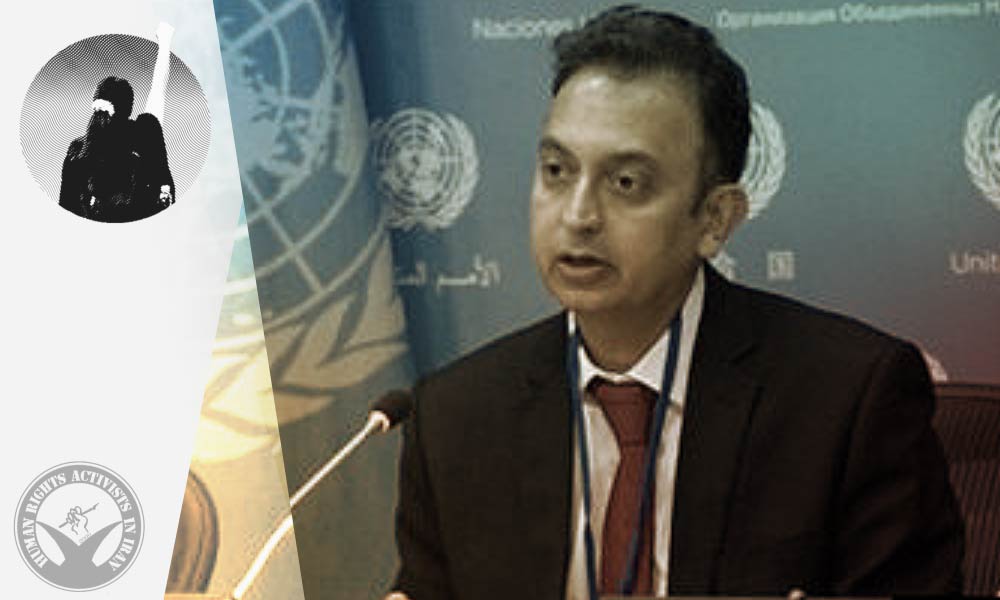
In his latest report, the UN Special Rapporteur on the situation of human rights in Iran, Javaid Rehman, has expressed alarm about the worsening human rights situation in the country. He highlights a range of flagrant human rights violations committed by Iranian authorities, with a focus on the events surrounding the death of Jina Mahsa Amini in September 2022.

Below is a summary of the key points from the report:

– The state authorities have failed to conduct a transparent and impartial investigation into the death of Jina Mahsa Amini. The family’s requests for an independent investigation were rejected and they were threatened and denied access to the autopsy report.

-Iranian authorities responded brutally to the protests following Jina Mahsa Amini’s death. The regime’s unlawful use of force and deliberate killings led to the deaths of at least 476 persons, including at least 64 children and 34 women.

-The Special Rapporteur is concerned about the mass arrests and detention of peaceful protesters, which have affected over 18,000 individuals including human rights defenders, students, lawyers, journalists, and civil society activists.

-The Special Rapporteur is alarmed at the continuing violence against women and girls, including cases of killings, physical and sexual abuse and fierce repression of ethnic and religious minorities, in particular the Baluch and the Kurds.

-The Special Rapporteur is outraged that, despite appeals by the international community, the Iranian authorities executed two protesters, Mohsen Shekari and Majidreza Rahnavard, in December 2022 after arbitrary, summary and sham trials, which violated the right to a fair trial and due process rights

-There have been widespread disruptions to the Internet, including blackouts and restrictions on the use of social media. The families of those killed during the protests have been harassed and intimidated, including restrictions on burials and memorial ceremonies.

-The report highlights the increase in executions, particularly of drug offenders and people from ethnic and religious minorities.

The report concludes that the investigations into the death of Jina Mahsa Amini were not credible, and there is evidence pointing to state culpability. The highest levels of the state have instigated violence and instructed the security forces to confront protesters, resulting in hundreds of deaths.

Javaid Rehman makes several recommendations to the government of Iran, including accepting responsibility for the death of Jina Mahsa Amini, releasing all those arrested and detained, ending violence, and protecting human rights defenders. The report also makes recommendations to the international community, including supporting accountability efforts, engaging with the Iranian authorities within the UN, and continuing to apply targeted sanctions for organizations and individuals that perpetrate serious violations of human rights in Iran.

Reza Pourjafar Arrested in Urmia

Security forces arrested Reza Pourjafar (Pour Jafar) in Urmia and took him to an undisclosed location.

According to HRANA, the news agency of Human Rights Activists, Reza Pourjafar was arrested by security forces in Urmia, West Azerbaijan Province.

The reason for his arrest, his whereabouts, and the allegations against him are still unknown.


Student Ghanbarzahi Sentenced to Ten Years in Prison

The Zahedan Revolutionary Court sentenced Abdolmalek Isa Ghanbarzahi to ten years in prison.

According to HRANA, the news agency of Human Rights Activists, quoting Haal Vsh, Abdolmalek Isa Ghanbarzahi, a resident of Zahedan, was sentenced to ten years imprisonment.

Ghanbarzahi received this sentence for the charges of “membership in anti-regime groups” and “propaganda against the regime.”

He was also sentenced to one year for “crossing the border illegally.”
Two years ago, intelligence agents arrested Ghanbarzahi in Zahedan and held him in a detention facility for three months.

Security and judicial officials reportedly prosecuted Ghanbarzahi for being a relative of Molavi Abdoljalil Ghanbarzahi, an anti-regime figure killed by regime forces.
Abdolmalek Isa GhanbarZahi, is an Arabic literature student at the University of Sistan & Baluchestan.

Iran Protests: Samaneh Asghari Sentenced to over 18 Years

The Tehran Revolutionary Court recently sentenced jailed student Samaneh Asghari to 18 years and 3 months in prison. If the verdict is upheld on appeal, based on Article 134 of the Islamic Penal Code, six years and three months for one charge will be enforceable.

According to HRANA, the news agency of Human Rights Activists, student Samaneh Asghari was sentenced to eighteen years and three months imprisonment.

In January 2023, Asghari’s lawyer, Erfan Karam-Veisi, stated that the Shahr-e-Rey Public and Revolutionary Court pressed multiple charges against her client, including “assembly and collusion against national security,” “disturbing public order and peace,” “inciting people to wage war,” “propaganda against the regime,” “going in public without a hijab,” “membership in groups to act against national security,” and “spreading falsehood.” Karam-Veisi also stated that the court refused her temporary release on bail.

On October 11, 2022, amid nationwide protests, Asghari, an industrial engineering student at Kharazmi University, was arrested by security forces and jailed in Evin Prison. After a while, she was relocated to Qarchak Prison in Varamin.

About Iran Nationwide Protests 2022
The arrest of Mahsa Amini by Tehran Morality Police for her alleged improper hejab and her suspicious death on September 16 sparked protests sweeping across Iran. During these protests, at least about 19760 people, including journalists, artists, lawyers, teachers, students and civil rights activists, were arrested.

Statistical Report on Recent Poison Attacks on Schools

Over the past few months, there have been disturbing reports of serial poison attacks on schools with toxic gas across Iran, mainly targeting girls’ schools. Recent statistics reveal that between November 22, 2022, and March 8, 2023, at least 297 schools and educational institutions reported incidents of poisoning involving their students. These included 113 high schools, 38 elementary schools, 23 middle schools, and 2 student dormitories, with the level of education unspecified in 121 cases.

Targets of Poison Attacks

The gender composition of affected educational institutions is also alarming. There were 224 girls’ schools, 18 boys’ schools, and 4 mixed schools out of the 246 cases in which the gender of the students was determined. These numbers indicate that female students are targeted at a significantly higher rate than male students.
For only 103 incidents, schools or officials specified the number of affected students, which amounts to 7168.

Poisoned Students’ Gender

The attacks have been reported in at least 103 cities across 29 provinces, with Tehran province recording the highest number of incidents with 33, followed by Qom province with 28 and Ardabil province with 26. Families and human rights activists are concerned about the safety of students and the possibility of additional attacks in light of these incidents.

In response to these incidents, there have been forty-five protests in thirty-two cities. Unfortunately, security forces cracked down on these demonstrations and arrested at least eleven protesters. Yesterday, 27 protest gatherings were held nationwide, and 9 people were arrested. Two individuals were released a few hours after their arrests.

As of the time this report was compiled, below is a map depicting the distribution of these attacks.

The serial poisoning of predominantly schoolgirls has prompted inquiries into the motivations behind these attacks. There is speculation that the attacks are the result of discrimination based on gender, but no one has claimed responsibility for the incidents. The Iranian government has pledged to prevent future attacks and bring those responsible to justice.

Subscribe to Our Newsletter

Now is definitely not the time to stop reading!

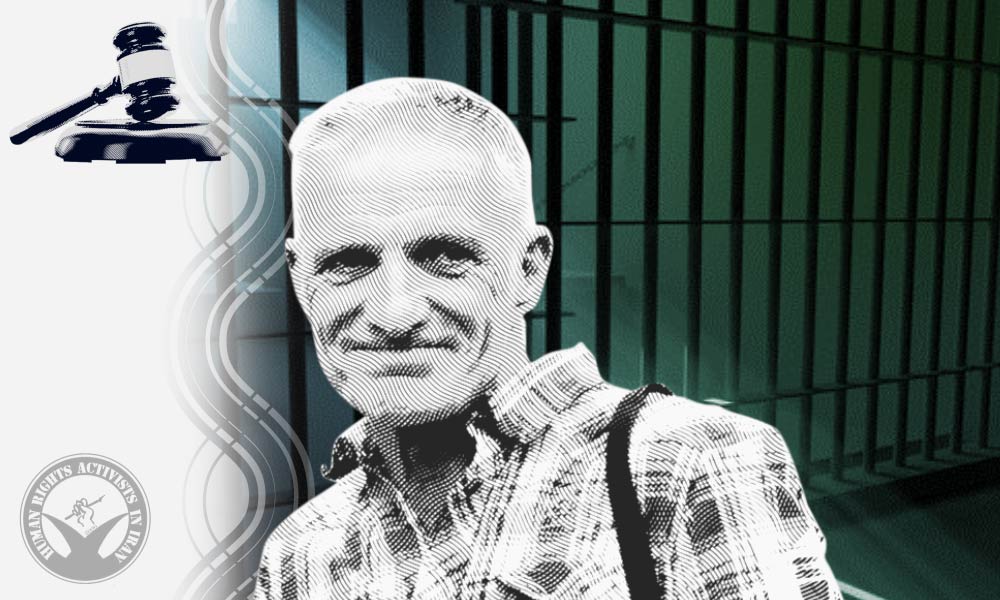
French-Irish National Bernard Phelan Sentenced to 6.5 Years

Detained French-Irish Bernard Phelan was sentenced to six years and six months.

According to HRANA, the news agency of Human Rights Activists, quoting Reuters, French-Irish Bernard Phelan was sentenced to six-and-a-half years in prison.

Quoting Phelan’s sister, the report mentioned “providing information to another country” as one charge against Phelan.

On October 3, 2022, Phelan, 64, was arrested by security forces during his last trip to Iran.

Earlier, The Irish Times revealed that he is jailed in Vakilabad Prison, Mashhad.

Women’s Rights Activist Akram Nasirian Released from Evin Prison

On March 7, 2023, women’s rights activist Akram Nasirian was released from Evin Prison.

In August 2022, Nasirian was summoned to Evin Courthouse and jailed to serve her two-year-and-three-month sentence in Evin Prison.
The details of her release are still unknown.

On April 29, 2019, security forces arrested Nasirian in Tehran and detained her in solitary confinement under interrogation in Evin Prison for 20 days. In Late May, she was relocated to double cell solitary in this ward.
On May 26, 2019, she was released on 200-million-toman bail until the end of legal proceedings.

On September 4, 2019, along with Nahid Shaghaghi, Nasirian was summoned to the Evin Courthouse investigation office, presided by Judge Nasiripour.

The Branch 26 of Tehran Revolutionary Court, presided by Judge Iman Afshari, sentenced Nasirian and three other women’s rights activists, Asrin Darkaleh, Maryam Mohammadi and Nahid Shaghaghi, each to four years and two months. These verdicts were reduced to two years and three months after the defendants waived their rights to appeal.

In March 2020, Nasirian and three other women’s rights activists were summoned to Evin Courthouse for sentencing, which was postponed until April 3, 2022, due to the Head of Judiciary’s directive to keep health prisons condition in control during the Covid-19 pandemic. In August 2022, she was jailed in Evin Prison.


Sakineh Parvaneh and Sadegh Samerehei Arrested

On March 7, 2023, security forces arrested former political prisoner Sakineh Parvaneh in Tehran and teacher Sadegh Samerehei in Kermanshah. The agents took them to undisclosed locations.

According to HRANA, the news agency of Human Rights Activists, quoting Kurdpa, on March 7, 2023, teacher and filmmaker Sadegh Samerehei were arrested at his home in Kermanshah. The agent reportedly searched Samerehei’s house and confiscated some of his belonging.

Also, the Independent Iranian Workers Union reported that former political prisoner Sakineh Parvaneh was arrested in Tehran.

The Reason for these arrests and their whereabouts are still unknown.

In February 2020, IRGC intelligence agents arrested Parvaneh. Subsequently, the Tehran Revolutionary Court sentenced her to five years and additional punishments. Last February, she was set free following the “pardon and commute” directive.


Teachers and Other Citizens Stage Nationwide Rallies against Poison Attacks on School Students

On March 7, 2023, following mounting serial poison attacks with toxic gas on school students in dozens of schools across Iran, the Coordination Council of Iranian Teachers’ Trade Associations (CCITTA), called for protests. In response to this call, teachers, educators, parents of poisoned students and other citizens rallied before the Ministry of Education headquarters in at least 25 cities. Also, the students held similar protests at Allameh Tabataba’i University in Tehran and the Tabriz University of Medical Sciences.

The protestors demanded maintaining security for students against the recent chemical attacks on schools. The protesting teachers also asked for teacher’s union demands including the implementation of the “Job Ranking Plan” as passed in Iran’s parliament, closing pension disparities, adjusting the pension with inflation, updating lesson plans and materials, the release of jailed teachers, and stopping the State TV’s smear campaign to divide between teachers and people.

During these protests, several teachers including Golamreza Gholami Kondazi and Mohammad-Ali Zahmatkesh in Shiraz, Baha Maleki and Rahman Abedini in Sanadaj and several students’ parents in Karaj were arrested by security forces. Maleki and Abedini are still in detention, and the rest were released after a few hours.

Moreover, according to CCITTA, security forces injured two protesting teachers with air guns in Sanandaj.

On the same day, several families of death-row prisoners gathered before Ghezel Hesar prison in Karaj to demand halting executions. At present, in this prison, at least seven inmates convicted of drug-related crimes are in danger of imminent execution.

The videos below show these protests in several cities:

Gezel-Hesar Prison, Karaj, the protest of death-row prisoners’ families

Sanandaj

Mashhad

Babol

Karaj

Shiraz

Qazvin

Saqqez

Sari

Ahvaz

Tabriz University of Medical Sciences

Allameh Tabataba’i University

Other Cities

Report on the Situation of Women in Iran for International Women’s Day

Iran is a country in which women’s rights are severely restricted. Women continue to face numerous challenges and obstacles, and despite the advances made in recent years, women in Iran are still struggling to achieve equality and basic rights. The following statistical information highlights the current situation of women in Iran, which is alarming.

In the reporting period (March 2022 – March 2023), 327 women were arrested for reasons directly related to the suppression of women’s rights. These arrests indicate that the government is cracking down on women’s rights activists and those advocating for gender equality. The arrests serve as a warning to others who may wish to speak out against the oppression of women.

During the protests from Sep 2022 to Mar 2023, at least 3,953 women were arrested, of which 1,019 were identified by Hrana,160 of them were female university students. It is estimated that at least 66 women were killed in Iran during the protests. These numbers show that women are not only being targeted for their activism, but also for their participation in peaceful protests. The arbitrary arrests and detentions of women demonstrate that the government is willing to use excessive force to silence dissent.

In the same period, at least 2,003 women were reprimanded in different ways, including being summoned to police authorities, due to the improper wearing of the hijab. The mandatory hijab law in Iran is a clear violation of women’s rights and freedom of expression. The fact that women are being punished for not adhering to the hijab law indicates that the government is imposing its religious beliefs on its citizens.

At least 15 women and 7 men were killed for “honor” reasons. “Honor” killings are a brutal practice in which women are murdered by their family members for bringing “dishonor” to their family. This practice is not only a violation of women’s rights, but the practice also serves as a grave violation of human rights and the right to life.

In this period, at least 14 female death-row inmates were executed in different prisons and two women received the death penalty.

In the reporting period, 92 cases of closure of guilds and organizations have been reported due to non-observance of hijab by the owner or staff. In this case, 62 reports of discrimination in social environments were reported due to women’s gender. The closure of businesses and organizations due to non-observance of hijab laws is not only discriminatory but also negatively impacts the economic opportunities available to women.

In the same period, 38 cases involving the murder of women and 14 cases of a severe beating, which were rooted in domestic violence, were reported. Domestic violence against women is a pervasive issue in Iran, and it is often considered a private matter. The lack of laws to protect women from domestic violence means that women are vulnerable to abuse and violence from their partners or family members.

At least 12 cases of suicide, 4 of which were self-immolation, were reported due to the lack of guaranteeing equal laws by the government. Things like the difficulty of divorce by women or loss of custody of children were among these reasons. The lack of legal protections for women in Iran makes it difficult for them to escape abusive situations, and the consequences can be fatal.

During the time period covered by this report, poisonous substances were used in organized attacks on schools, which primarily targeted girls’ schools. Since the beginning of December 2022, at least 290 attacks on schools affecting at least 7,060 students have been reported. This number of affected students is exclusive to the 103 schools that have reported data in this regard.

These attacks have been documented in at least 99 cities across 28 provinces. The day with the highest number of recorded attacks was March 3, with 81 attacks.

At the forefront of these attacks are the provinces of Tehran with 33 cases, Qom with 28 cases, Ardabil with 26 cases, Kohgiluyeh and Boyer-Ahmad province with 21 cases, and Khuzestan province with 20 cases. As of the time this report was compiled, below is a map depicting the distribution of these attacks.

student-poisoning-distribution-map

In conclusion, the situation of women in Iran is dire. It is of note that this report serves as a mere glimpse into the dire situation of women in Iran. Several factors prevent documentation groups from analyzing the full scope of violations committed against women in Iranian society. Urgent action is required to address the issues faced by women in Iran on a daily basis rooted solely in gender-based discrimination codified in both law and practice. The government must take concrete steps to protect women’s rights, end discriminatory laws and practices, and ensure that perpetrators of violence against women are brought to justice. On this International Women’s Day, we must continue to raise awareness of the struggles faced by women in Iran and advocate for their rights and equality.