Workers’ Rights Activist Hirad Pirbodaghi Sentenced to Four Years and Eight Months In Prison

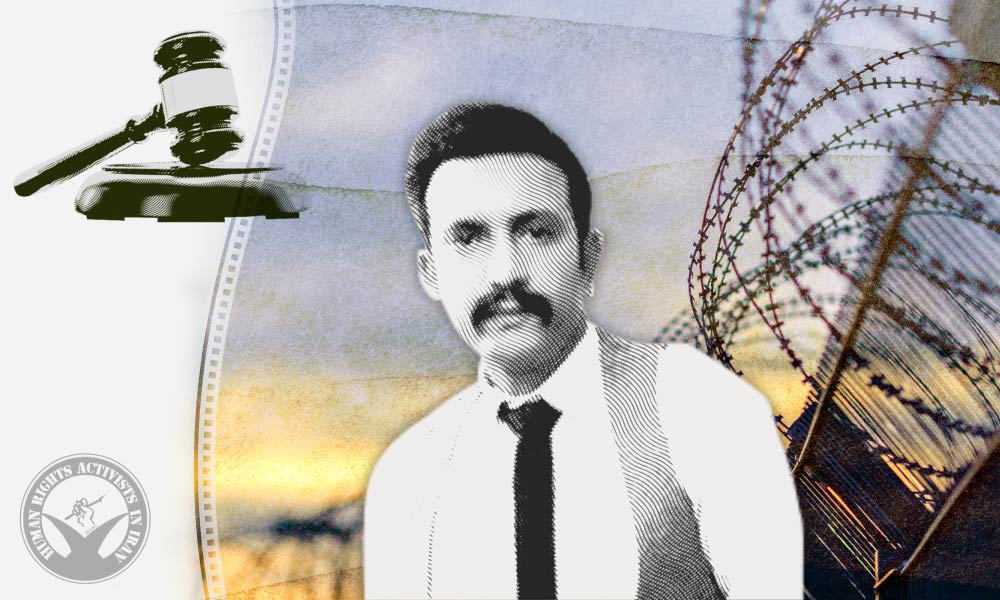
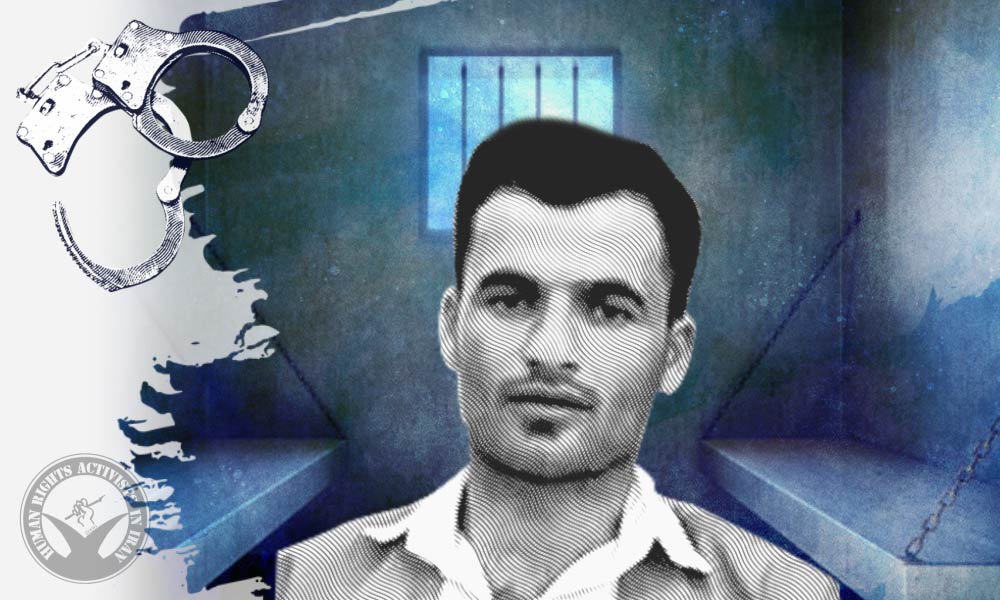
Branch 26 of the Revolutionary Court of Tehran sentenced workers’ rights activist Hirad Pirbodaghi to four years and eight months in prison, two years prohibition from membership in political parties and groups, and a two year ban from leaving the country. If the verdict is confirmed on appeal, four years imprisonment as the severest punishment of one count will be enforceable for him.

According to HRANA, the news agency of Human Rights Activists, he was charged with “propaganda against the regime and assembly and collusion against national security”.

As examples of the above-mentioned charges, the courts have cited frequent referring to Electronic Judicial Services Offices and complaints about detention conditions in solitary confinement.

On November 6, 2021, Pirbodaghi was arrested violently by security forces alongside Asal Mohammadi. Their houses were searched during the arrest. He was held in Ward 209 of Evin Prison until December 24, when he was relocated to the Public Ward of Evin Prison. On January 1, 2022, he was released on bail.

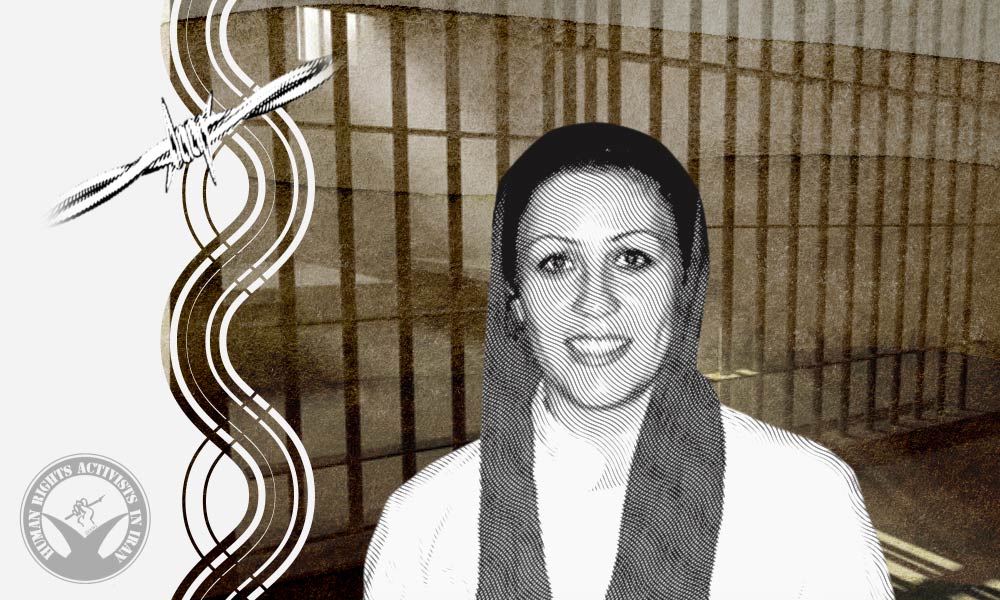
Political Prisoner Mohammad Moradi Sentenced to 15 Years in Prison

The Revolutionary Court of Mahabad sentenced political prisoner Mohammad Moradi, a resident of a village in Piranshahr County, to 15 years imprisonment in exile in Zanjan Province.

According to HRANA, the news agency of Human Rights Activists, quoting Kurdpa, an informed source reported that “on Saturday 5, he was summoned and notified about the verdict”.

The initial verdict of 40 years in prison was quashed by the Supreme Court and the case was handed over to Branch 1 of Mahabad’s Revolutionary Court for a retrial. On February 27, the branch held a court session through video conference, changed the verdict to 15 years in prison and issued a bail of 8 billion tomans for his release.

Moradi was charged with “enmity against God (Moharebeh) through membership in an anti-regime political party”.

Earlier, he left Iran to join a Kurdish party. In September 2017, he left the party and returned to Iran. Upon return, he was arrested by security forces and transferred to an IRGC detention centre in Urmia City. After the interrogation process, he was sent to Urmia Prison and then to Naghadeh Prison.

Moradi is 35 years old, married and the father of two children. Currently, he is detained in Naghadeh Prison.

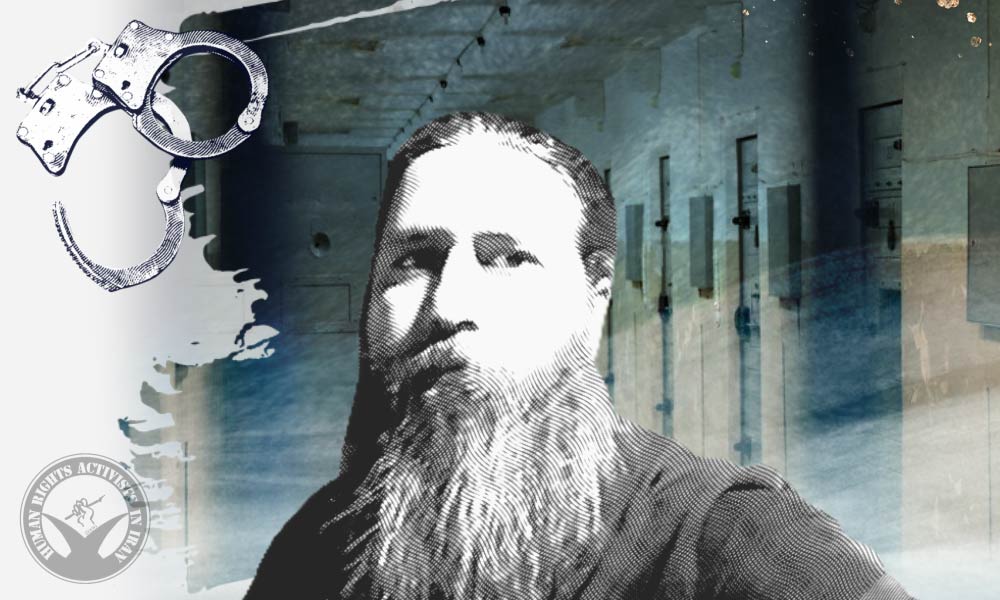
Three Sunni Prisoners Sentenced to Death

Branch 2 of the Revolutionary Court of Zahedan City has recently sentenced three Sunni prisoners, Mohamad-Karim Barakzai Akson, Mohmmad Barahooi Anjomani and Edirs Bilrani to death on the one charge and 15 years imprisonment on another. These citizens are currently jailed in Zahedan Prison and have been accused of membership in dissident groups and what the court called “terrorist acts”.

According to HRANA, the news agency of Human Rights Activists, according to a verdict issued by Branch 2 of Zahedan’s Revolutionary Court on February 24, the defendants have each been sentenced to 15 years imprisonment on the charge of “membership in a rebel group” and the death penalty on the charge of “spreading corruption on earth through terrorist activities”, per Article 287 of the Islamic Penal Code.

Article 287 of the Islamic Penal Code states that groups which launch an armed insurrection against the Islamic Republic of Iran are considered rebellious and members, if they use a weapon, will be punished by death.

The specific acts on which the charge is invoked are unknown.

These citizens were apprehended in September of 2020 and have since been jailed in Zahedan Prison.

International Women’s Day: An Overview on Women Rights and Its Defenders in Iran

In many countries, International Women’s Day, celebrated on March 8, is designated to commemorate women’s historical struggle for rights, honor their sacrifices and celebrate their cultural and political achievements. The Islamic Republic of Iran, however, refuses to follow this path. The regime never agreed to the Convention on the Elimination of All Forms of Discrimination Against Women, and its law blatantly violates the most fundamental rights of women, including the right of women to make decisions relating to their bodies and clothing choices, as well as equal opportunities in both social and economic realms.

According to HRANA, the news agency of Human Rights Activists, in the absence of any protective laws and punishments against “honor killings”, both domestic and non-domestic violence against women is widespread. Women’s rights defenders and gender equality advocates are frequently subjected to pressure and arbitrary detention by regime security forces, leading to prosecution, unfair trials and convictions by judicial authorities. Currently, many women’s rights activists await verdicts, and others are serving sentences in prison— often in the same ward as prisoners of violent crimes, jeopardizing their safety.

According to HRANA’s Annual Analytical and Statistical Report on Human Rights in Iran, based on 90 registered reports by the Department of Statistics, at least 43 women reported physical and sexual abuse in the last year. In addition, there were 24 reported cases of honor killings, eight self-immolations, three acid attacks, and four cases where women’s rights activists were summoned to judicial and security organizations. There were 20,187 reported cases of domestic abuse against women and 13 murders. This report also details that seven women were detained for reasons related to women’s rights and at least four women’s rights activists were sentenced to a total of 282 months in prison.

It is worth mentioning that this data is merely collected from media reports. The real figures are likely much higher and more daunting, as many domestic violence cases are never reported to legal authorities.

Women’s Rights Violations

Honor Killings:  An honor killing is the murder of an individual, often a girl or woman, by a family member or relative in an attempt to restore the honor of the family. The victim’s act, such as refusing forced marriage, being the victim of a rape, getting a divorce, or adultery, is deemed traditionally or religiously shameful or dishonorable by the family or community.

In Iran’s law system, the punishment for murder is usually decided by the “blood avenger”, most often the father, as he is the first degree male relative. Consequently, the perpetrator in an honor killing is either identical to or related to the blood avenger. Thanks to this legal flaw, many honor killers get away without heavy punishment.

For example, Romina Ashrafi, age 13, was beheaded by her father in an honor killing. His father was sentenced to nine years in prison, which is considered a light sentence compared to the death penalty, normally a routine punishment for homicide in Iran.

Violence Against Girls and Women- Iran is one of the four countries in the world that has not recognized the Convention on the Elimination of All Forms of Discrimination against Women. Through the efforts of a number of women’s rights activists, a bill known as the Protection, Dignity, and Security of Women Against Violence was approved by the government on January 3, 2021. However, when the bill was drafted in Hassan Rouhani’s first cabinet, 40 of the 90 articles of the bill were removed. Former Vice President for Women and Family Affairs, Masoumeh Ebtekar, announced that the bill was not presented Parliament for approcal five months after the approval of the cabinet. Recently, Shiva Ghasemipour of the Women’s Faction in Parliament announced that the bill was handed over to the Judiciary for further review.

Bodily Autonomy- In February of 2022, the Medical Equipment Department imposed a regulation whereby pharmacies all over the country were prohibited to provide contraceptives pills without a prescription. The regulation addresses department deputies at medical universities, prohibiting them from distributing free or subsidized birth control or contraceptive implantation. It also prohibits the promotion of contraceptive pills and treatments. In an effort to implement the Rejuvenation of The Population And Support of Family bill such regulations aim to make birth control and abortion harder for women to access. These restrictions on providing contraceptive pills, contraceptive-related services and strict rules against abortion blatantly violate the inalienable rights of women to make decisions relating to their bodies and increase the risk of sexually transmitted diseases and vaginal cancer.

Forced Veiling- Among other restrictions, forcing women to wear a veil is one of the most flagrant violations of women’s rights. As UN Human Rights Council asserts, any coercion pertaining to women’s clothes signifies the blatant violation of the International Covenant on Civil and Political Rights by the government. Nonetheless, Iran’s regime, both in law and practice, not only forces women to wear a veil but also prosecutes and suppress women who oppose the compulsory veil. While Iran’s law cites punishments ranging from a fine of 50,000 tomans to two months imprisonment, citizens are in practice faced with more serious and groundless accusations such as “spreading corruption on earth” which can be punishable up to 10 years in prison. All these penalties stand in violation of Article 9 of the International Covenant on Civil and Political Rights.

Right to Education- According to the Society for Protecting the Rights of the Child’s CEO, in Iran, about one million children in poor areas are deprived of school. From them, 49,000 children are barred from education due to either lacking birth certificates or being forced to work. These numbers vary wildly each year. For example, during the COVID-19 pandemic, the number of children out of school tripled.

Besides poverty, lack of birth certificates and child labour, some girls are barred from school by families who are adhere to traditional norms and prejudices. In 2020, 4142 girls left school because of child marriage or family disallowance.

Cultural Rights- Iran’s regime prohibits women from dancing and singing in the public, which violates Article 15 of the International Covenant on Economic, Social and Cultural Rights, which asserts the right of everyone to take part in cultural activities. Despite women being legally allowed to be in sports stadiums, they face many obstructions by authorities in practice.

Marriage and Family Rights- In violation of the International Covenant on Economic, Social and Cultural Rights, which asserts the abolition of any gender discrimination in the law system, Iranian women are legally subjected to discrimination in many aspects of their family life, such as divorce and child custody. Married women require their husband’s permission to receive passports and leave the country.. Additionally, they do not have the right to choose where they live. The law allows the man to bar his wife from working outside the home if he considers the work in conflict with “family values”. In addition, as a duty of marriage, women are obliged to satisfy their husband’s sexual desires, arguably denying the right to consent during marital intercourse.

The UN Human Rights Council has stated that these discriminative laws violate Article 23.4 of the International Covenant on Economic, Social and Cultural Rights.

Women’s Rights Activists

Convicted (But Not Imprisoned) Women’s Rights Activists


Tahmineh Mofidi

On January 2, 2021, women’s rights activist Tahmineh Mofidi was arrested by IRGCS intelligence agents at her house and transferred to Ward 2-A of Evin Prison On February 2, 2021, she was released on bail of 1.5 billion tomans until the end of legal proceedings. Thereafter, Branch 26 of the Revolutionary Court of Tehran sentenced her to three years and seven months in prison and a fine of 15 million tomans on charges of “acting against national security through assembly and collusion” and “promotion of sexual perversion on social media”. Based on her refusal to appeal, as well as Article 34 of the Islamic Penal Code where only the severest punishment from multiple counts is enforceable, the verdict was reduced to a fine of 37 million tomans.

During the trial, actions such as writing the stories of women who have been the victim of sexual assault, advocating for a symbolic protest against the compulsory veil known as “Girls of Enghelab Street”, and coaching without a veil were invoked to support these charges. Initially, she was also accused of “promoting impurity and indecency ” which later was changed to “promotion of sexual perversion on social media”.


Imprisoned Women’s Rights Activists


Yasaman Aryani and Monireh Arabshahi

Yasaman Aryani and her mother Monireh Arabshahi, both civil activists and outspoken opponents of the forced veil, are currently serving sentences in Kachooie Prison in Karaj City. On April 10, 2019, one day after the arrest of her mother, Aryani was arrested and transferred to Qarchak Prison in Varamin City. They both were relocated to Evin Prison on August 13, 2019, and transferred again on October 21, 2021 to Kachooie Prison in Karaj.

On August 7, 2021, each was sentenced to 16 years in prison on the charge of “propaganda against the regime” and “provoking impurity and indecency”. These verdicts were reduced for each to nine years and seven months in prison. Per 134 of the Islamic Penal Code, the severest punishment of five years and six months is enforceable. Arabshahi is still imprisoned and denied adequate medical treatment, despite being certified intolerant of punishment, and both an endocrinologist and neurologist asserting her need for lumbar disc and thyroid surgery.

On February 23, Aryani, who is co-housed with prisoners of violent crimes, was beaten by some fellow prisoners.


Saba Kord Afshari and Raheleh Ahmadi

Civil activists Saba Kord Afshari and her mother Raheleh Ahmadi were arrested on June 1 and July 10 2019, respectively. On August 27, 2019, Afshari was sentenced to 15 years imprisonment on the charge of “promoting corruption and obscenity by appearing without a headscarf in public”, one year and six months on the charge of “propaganda against the regime” and seven years and six months on the charge of “assembly and collusion to act against national security”, totaling 24 years imprisonment.

This verdict was increased two and half times more due to a previous record, before finally being corrected in March of last year and reduced from 15 years to 7 years and 6 months. Per Article 134 of the Islamic Penal Code, the severest punishment of seven years and six months is enforceable.

On January 26, 2021, she was violently relocated from Ward 8 to Ward 6 of Qarchak Prison. Currently, she is held in the same ward as prisoners of violent crimes, which violates Iran prison rules.

On December 10, 2019, Ahmadi was sentenced to three years and six months in prison on charges of “assembly and collusion against national security through collaboration with anti-regime media” and eight months on the charge of “propaganda against the regime”. Ahmadi was granted medical furlough after contracting COVID-19 on February 16. Afshari was also granted short term furlough one day after she was beaten by a prisoner of violent crime on February 20, and was therefore able to meet her mother on furlough.

Aliye Motallebzadeh

On November 26, 2016, Aliye Motallebzadeh, photographer and women’s rights defender, was arrested during her appearance at the Ministry of Intelligence office after phone summons. She was detained in Ward 209 at the Ministry of Intelligence’s disposal until December 19 2016, when she was released on bail of 300 million tomans until the end of legal proceedings.

The Revolutionary Court of Tehran sentenced her to three years imprisonment for the charges of “assembly and collusion against national security” and “propaganda against the regime.” This verdict was upheld by Branch 36 of the Court of Appeals.

On October 11, 2020, Motallebzadeh was sent to Evin Prison to serve her sentence after appearing at Evin Courthouse. On January 10, she was transferred to Qarchak Prison in Varamin City to serve the rest of her sentence in exile. On February 23, she was granted medical furlough after contracting COVID-19.


Women’s Rights Activists Who Are Awaiting Imprisonment


Nahid Shaghaghi, Akram Nasirian, Maryam Mohammadi and Asrin Darkaleh

All four activists were arrested by security forces; Akram Nasirian on April 29, 2019, Nahid Shaghaghi on May 15, 2019, Maryam Mohammadi on July 8, 2019 and Asrin Darkaleh on July 28, 2019. They all were released on bail from May to August. Branch 24 of the Revolutionary Court of Tehran, headed by Judge Iman Afshari, sentenced the activists to a total of 16 years and 8 months imprisonment. Per Article 134 of the Islamic Penal Code, the severest punishment of three years sentence on one count was enforceable for each. This was later reduced on appeal to two years and three months each. Recently, they were summoned by the Executive Unit of Evin Courthouse to serve their sentences.


Raha (Raheleh) Askarizadeh

On November 28, 2019, journalist, photographer and women’s rights activist Raha (Raheleh) Askarizadeh was arrested at Imam Khomeini International Airport while leaving the country. On December 31 of that year, she was released on bail until the end of legal proceedings. Initially, the Revolutionary Court of Tehran sentenced her to two years imprisonment, a two year ban from leaving the country and a two year prohibition from political activities in media, political groups and social media. The verdict was upheld on appeal. In April of 2021, she was summoned by the Executive Unit of Evin Courthouse to serveher sentence.


Najmeh Vahedi and Hoda Amidi

On September 1, 2018, women’s rights activists, Najmeh Vahedi and Hoda Amidi were arrested by IRGC intelligence agents and then released on bail in November of that year. For the charge of “collaboration with the hostile country (U.S.) against the regime regarding women and family issues”, the Revolutionary Court of Tehran sentenced Hoda Amidi to eight years imprisonment, two years prohibiti

on of membership in political groups and parties, prohibition of political activities in media and on the internet, two years ban from leaving the country, two years prohibition of the exercise of the profession as a la

wyer. For the same charge, Najmeh Vahedi was sentenced to seven years imprisonment, two years prohibition of membership in political groups and parties, prohibition of political activities in media and on the internet, two years ban from leaving the country.

These verdicts were upheld on appeal. Running the educational workshops for women on setting out preconditions in marriage such as having the right to divorce (in order to restore the denied rights on divorce for women), was invoked during the trial as examples of the above-mentioned charges.


Atsa Ahmadai Rafsanjani

On January 20, 2019, the Baha’i resident of Tehran was arrested by security forces at her house and transferred to a solitary confinement cell in Ward 241 of Evin Prison at the disposal of the Judiciary’s counterintelligence. On March 6, 2019, she was released on bail of 200 million tomans until the end of legal proceedings. In May 2021, Branch 26 of the Revolutionary Court of Tehran sentenced her to four years imprisonment on the charge of “formation of a group to act against national security through registering an NGO on women empowerment”, three years in prison on the charge of “assembly and collusion to act against national security”, and one year in prison on the charge of “propaganda against the regime”.

She was condemned for the first charge despite the Ministry of Interior had already rejecting her request to form an NGO due to being Baha’i. If the verdict is upheld on appeal, four years imprisonment for the first count is enforceable per Article 134 of the Islamic Penal Code.


_________________________

For further inquiries please contact Skylar Thompson, Senior Advocacy Coordinator Human Rights Activists in Iran (HRA) at skylar@hramail.com

Two Citizens Arrested in Rask County, One Arrested in Mahabad City by Security Forces

On March 1, security forces arrested two citizens in Rask County. On March 5, a citizen in Mahabad City was arrested by security forces.

According to HRANA, the news agency of Human Rights Activists, quoting Rasank news, two citizens identified as Zahed Hayat-Zehi and Abdolghafar Arbabi were arrested in Rask County. Reportedly, they have been transferred to Zahedan City.

Kurdpa reported that a citizen identified as Shahab Alizadeh was arrested in Mahabad City and was transferred to a detention centre at disposal of the Ministry of Intelligence.

The reasons for these arrests and charges are unknown at the time of this writing.

Subscribe to Our Newsletter

Now is definitely not the time to stop reading!

Political Prisoner Shakila Monfared Goes on Hunger Strike in Qarchak Prison

On March 3, political prisoner Shakila Monfared went on a hunger strike in protest against the housing of political prisoners in the same ward as prisoners of violent crime, the irresponsibility of prison officials towards her safety and the recent threat from one of her fellow inmates.

According to HRANA, the news agency of Human Rights Activists, an informed source told HRANA that one of the prisoners of violent crimes threatened her with a sharpened piece of a can and intended to injure her.

In violation of prison rules, many political prisoners are housed in the same ward as prisoners of violent crimes, which make them subject to threats, battery and even murder.

On August 31, 2020, security forces arrested Monfared while she was leaving her home. They transferred her to a detention centre at the disposal of the IRGC in Tehran. Reportedly, they did not have a warrant for this arrest.

On September 9 of last year she was relocated to the quarantine section of the women’s ward of Evin Prison. On September 14, she was released on a bail of 400 million tomans until the end of legal proceedings.

In January of this year, the joint court trial of Shakila Monfared, Arsham Rezaei, and Mohammad Abolhassani was held in Branch 26 of the Revolutionary Court of Tehran, presided over by Judge Iman Afshari. 27 year old Monfared was sentenced to 6 years in prison and 4 months of probation work in the Agricultural Jihad on charges of “propaganda activities against the system” and “insulting the sanctities of Islam”.

Monfared was granted furlough on August 23 of this year and returned to jail on September 7.

Two Citizens Arrested For Chanting Anti-Regime Slogans

Iran’s Commander-in-Chief announced that two citizens have been arrested in Shahriar County in Tehran Province for chanting anti-regime slogans over a loudspeaker.

According to HRANA, the news agency of Human Rights Activists, quoting Mehr News Agency, the Commander-in-Chief stated that the citizens were “in some parts of the Shahriar City, chanting anti-regime slogans with small size loudspeakers. The police in Western Tehran began to investigate the case and subsequently, two citizens were arrested”.

According to this announcement, the police searched the house of the arrestees and confiscated some of their belongings, including flash memories, speakers, SIM cards and cell phones. The police did not reveal the identity of these citizens.

Earlier, in Bazar Reza in Mashhad, anti-regime slogans were shouted and one citizen was arrested by the IRGC Intelligence forces of Razavi Khorasan.

Kolbar Freezes to Death in Sardasht County

On March 4, a Kolbar (cross border carrier) froze to death at a border area in Sardasht County. Last Monday, in an accident in Baneh County, a Kolbar was severely injured and lost his right foot and vision in his left eye due to a landmine explosion.

According to HRANA, the news agency of Human Rights Activists, quoting Kurdpa, the Kolbar who died was identified as Mohammad Soor-Vardeh, a resident of Sardasht.

Kurdpa also reported that last Monday, a landmine explosion severely injured severely another Kolbar, identified as Foad Mehdi Ebrahimian, age 24, also a resident of Sardasht.

Many poor people living in border areas work as Kolbars to make ends meet. This work is illegal and involves carrying loads on foot across national borders. Yearly, dozens of Kolbars are injured and killed from accidents, dangerous conditions, and border guard shootings.

HRANA’s annual human rights report has specifically documented cases in which military forces’ use of live ammunition against citizens has led to their injury or death. According to the 2020 report, beyond material damages— such as loss of pack animals due to road accidents, frost, or avalanche— 36 Kolbars have been shot dead, and 109 have been injured by military forces and border guards. In this year, five Kolbars lost their lives and five were injured due to freezing cold weather or falling from high.

HRANA Recap: This Week’s Protests in Iran

According to HRANA, the news agency of Human Rights Activists, a number of protests took place this week in Iran, many of which were continuations of ongoing movements.  Read our recap below for details, photos, and videos from the demonstrations.

Saturday, February 26

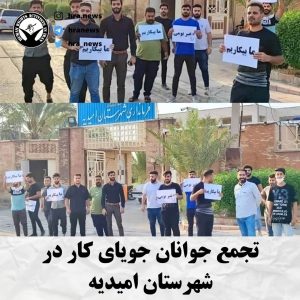
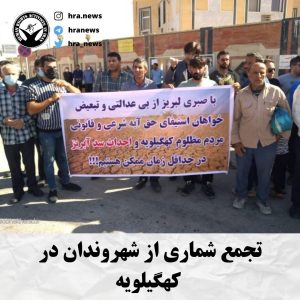
A group of teachers whose earnings are based on tuition fees held protests before Parliament in Tehran. The teachers are awaiting to be recruited by the Ministry of Education, which has not yet happened despite earlier announcements.

A group of workers of the Karun Agro-Industry assembled at their workplace to ask for official contracts, wage raises, and employment contracts with the company rather than with contractors.

The workers of the Tazareh Coal Mine assembled before mining company headquarters in Shahrud City. They demanded to be recruited by the company rather than by contractors. They also asked for job safety and the implementation of Job Classification Plan.

A group of people who have pre-purchased cars from the car company Sanat Khodro Azerbaijan, yet have not received their cars, protested against before the Economic Crimes Courthouse in Tehran where the trial against the company’s manager was held.

A group of personnel of the East Azerbaijan Telecommunication Company held protests before company headquarters in Tabriz to protest against compulsory retirement and delays in payments.

Sunday, February 27

A group of retirees and pensioners of the Social Security Organization held protests in various cities. In Tehran, the protests were held before Parliament. In other cities, they were held be for the organization’s building. They asked for payment of government debt to the Social Security Organization, raising pensions above the poverty line, free medical services and the elimination of discrimination.

A number of citizens who lost their money through fraudulent acts by the Fardad-Kar Amitis Company gathered before the Prosecutor’s Office of the Judiciary in Tehran. Since December 2018, this company held education courses about cryptocurrency for free in order to encourage people to invest. More than 18 thousand people who lost their investments have a complaint against the company.

A group of citizens who have not received their pre-purchased cars from the Negin Khodro and Irtoya vehicle companies after five years gathered before Tehran Public Prosecutor’s Office.

A group of workers of the Municipality of Kut Abdollah protested in front of the Governorate building in Ahvaz City. They asked for the payment of several months of delayed wages.

For the sixth consecutive day, a number of contracted teachers held protests before Parliament in Tehran. They are awaiting official recruitment by the Ministry of Education, which has not yet taken place.

A group of retired and working personnel of Telecommunication Company from various cities gathered and held protests before the company building in Tehran.

In Gorgan, Ahvaz and Ilam cities, a number of retired healthcare staff gathered before the building of Civil Servants Pension Organization. They asked to raise pensions and close disparities in pensions.

A group of the retirees of Fulad Pension Fund gathered before the fund’s office in Tehran, Ahvaz and Isfahan to ask for wage demands.

Monday, February 28

A group of retired and working personnel of military forces together with their families gathered before the governorate building in Mashhad and Shahrekord cities and before Parliament in Tehran. The protest was held to demand their poor living conditions are addressed.

For the seventh consecutive day, the contracted teacher came from various cities and gathered before the Administrative and Recruitment Affairs Organization in Tehran. These teachers asked the Ministry of Education to recruit them as it had planned and announced before.

A group of seasonal workers of the Sugarcane Agro-Industry Company Haft-Tappeh went on strike in protest of the organization’s failure to address their issues. In violation of labour law, the company refuses to sign an employment contract with them.

Like in recent days, workers of the Municipality of Kut Abdollah protested in front of the Governorate building in Ahvaz City to ask for the payment of several months of delayed wages. One of the protestors said: “It has been about ten days since we went on strike. The authorities do not respond to us so we went to Ahvaz to protest. We ask the governor to address our issues”.

Tuesday, March 1

A number of the workers of the Pars Paper Haft-Tappeh Company went on strike and gathered at factory premises. They asked to be recruited directly by the company rather than contractors.

A number of families of the victims of Ukrainian International Airlines Flight 752 gathered before Ukraine Embassy to show their sympathy and support towards the Ukrainian people in the face of Russian aggression. Reportedly, this gathering turned violent with the interference of security agents.

Wednesday, March 2

A number of the victims of the Cryptocurrency network “Kink Money” run by the Baadraan Gostaran Company gathered before the Public and Revolutionary Court in Tehran as well as before Criminal Courthouse No. 1 of Tehran Province. They asked to revoke the company license and take legal action against the financial offenders.

Residents of a village located in Ramhormoz County gathered before the city’s Justice Building. The protestor said that recently, unknown arsonists set fire to their houses, vehicles and well pumps. Police and authorities have done nothing to detect criminals and restore safety to the village.

Once again, workers of the Pars Paper Haft-Tappeh Company went on strike and gathered on factory premises. They asked for job safety, recruitment by the company rather than contractors and the implementation of the Job Classification Plan.

About fifty butchers in Borujerd City gathered before the county’s Veterinary Network building county to protest against delays in meat delivery from the slaughterhouses. A new rule in the Veterinary Network that requires meat to be kept in cold storage for 24 hours before delivery has caused the delays.

Contracted staff of the Electricity Distribution Company of Lorestan Province held protests before the governorate building to ask for direct recruitment by the company rather than contractors.

Thursday, March 4

A number of the workers of the Pars Paper Haft-Tappeh Company went on strike and gathered on factory premises. Their demands include having a job contract with the company rather than contractors and the implementation of the Job Classification Plan.

A group of medical staff of private health center in Tabriz city gathered before the governorate building in this city. Reportedly, they protested against eight months delays in payment.

About 25 guards working for the Sangrud Coal Mine Company gathered at mine premises to protest unpaid wages and insurance contributions.

Detained Civil Activist Zartosht Ahmadi Ragheb Still on Hunger Strike

Detained Civil Activist Zartosht Ahmadi Ragheb has been on hunger strike since his arrest on February 21. Last Monday, he was sent to a solitary confinement cell in Evin Prison. Yesterday, he was transferred to the Greater Tehran Central Penitentiary.

According to HRANA, the news agency of Human Rights Activists, yesterday, in blatant violation of prison rules, they sent him to Ward 4 of the Greater Tehran Central Penitentiary, where the prisoners of violent crimes are held.

An informed source told HRANA that his health condition is poor and so far, he has not received any medical treatment.

On February 21, security forces arrested him at his home. They searched the house and confiscated some of his personal belongings.

On June 15, 2020, Ragheb was arrested during an appearance at Branch 4 of Public and Revolutionary Court in Shahriar City to serve his nine-month sentence in the Greater Tehran Prison. On January 15, 2021, he was released from jail after serving his sentence.

However, following a complaint by the Ferdosiye City Municipality, a new legal case was opened against him by Branch 28 of Tehran’s Revolutionary Court on the charge of “propaganda against the regime”. During the trial, a piece of evidence invoked to support this charge included proof that he had signed a petition asking the Supreme Leader of Iran to step down.

Ragheb is a firefighter with 17 years of work experience who was fired from his work due to his civil activities.