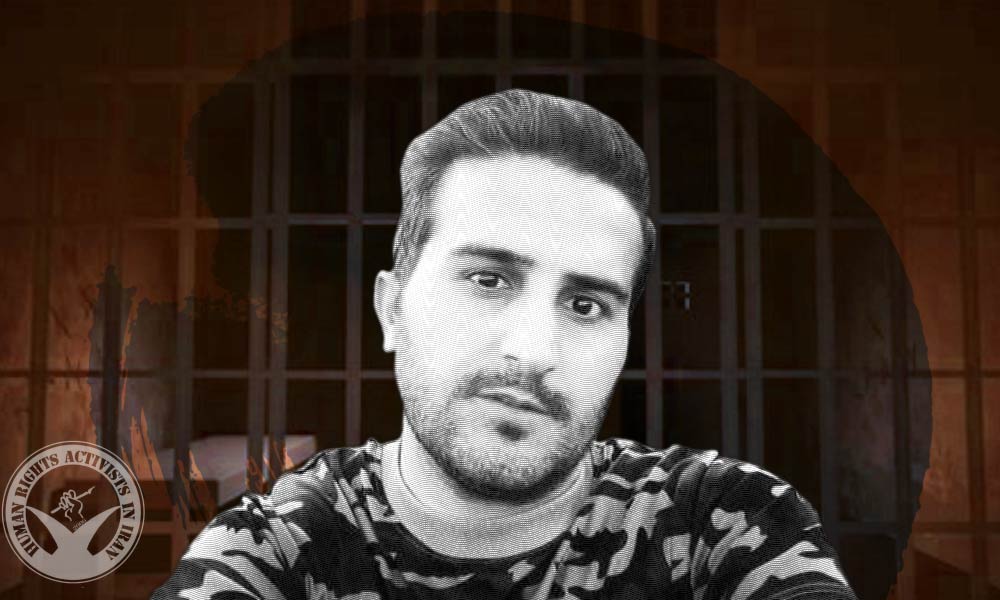
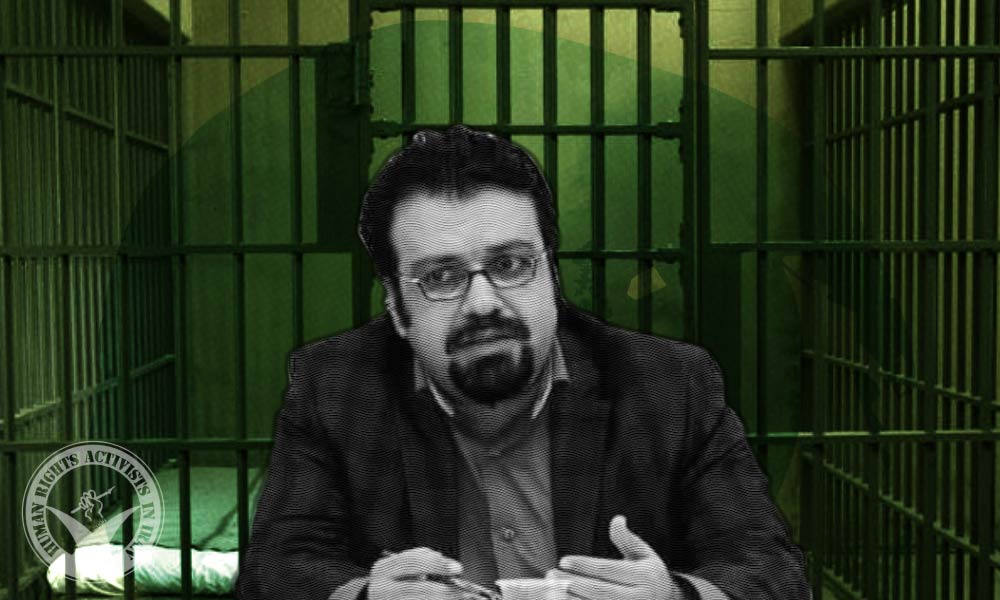
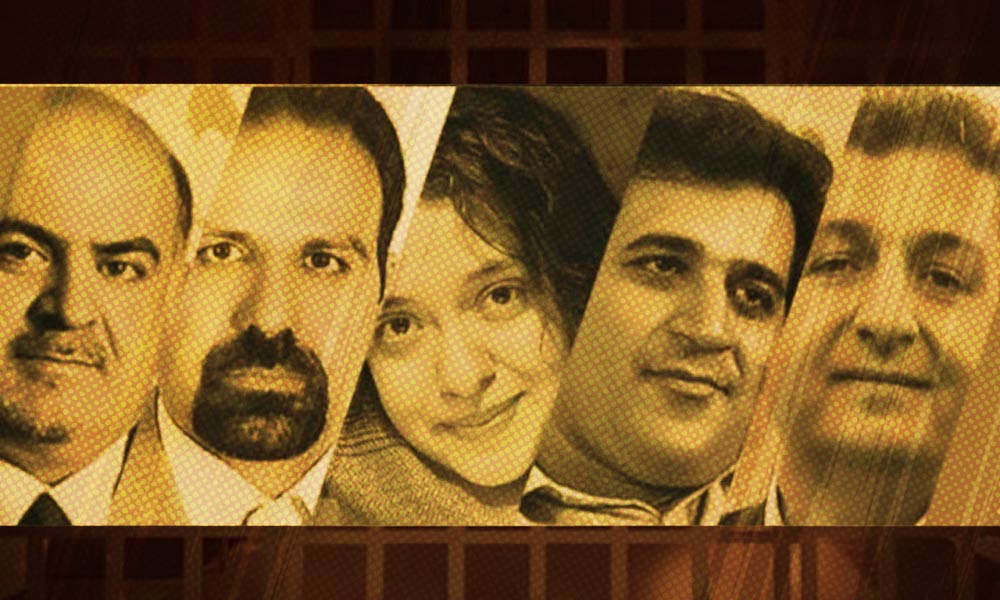
Reza Khandan Mahabadi Contracts COVID-19, Is Dispatched to Hospital

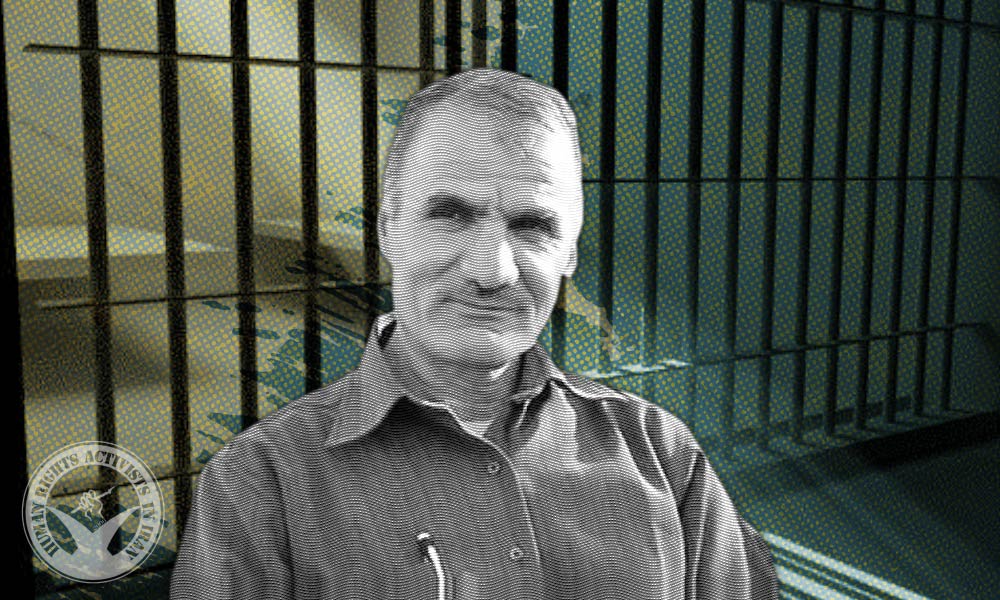
On December 21, Reza Khandan Mahabadi, a prisoner of conscience, writer and member of the Iranian Writers Association (IWA) was dispatched from Evin Prison to a hospital outside the prison after his COVID-19 symptoms worsened. Earlier, he and another prisoner of conscience, Baktash Abtin, tested positive. This has raised alarms about the spread of the virus amongst prisoners in Evin Prison.

According to HRANA, the news agency of Human Rights Activists, Mahabadi was hospitalized due to a high fever and other severe symptoms. Abtin was hospitalized earlier in Tehran due to poor health and COVID-19 symptoms.

Mahabadi  was sentenced on May 15, 2019 by Branch 28 of the Revolutionary Court, headed by Judge Mohmmad Mohammad Moghayeseh. His sentence included one year in prison on the charge of “propaganda against the regime” and five years on the charge of “assembly and collusion with the intention of acting against national security”. On September 26, 2020, he was arrested and sent to Evin Prison to serve his sentence.

Mahabadi’s career as a writer kicked off in 1978 with the publication of his book “Local Children”. Some of his works include “Nothing Comes Out of the Sack, But What Was In It”, a seven-volume story collection called “My Favorite Stories”, a collection of research titled “Razi War”, and the 19-volume tale collection “Encyclopedia of Iranian Legends and Fairy Tales” (co-author Ali Ashraf Darvishian).

Aram Moradian Detained After 37 Days

Aram Moradian, a resident of Tangsir Village in Kurdistan Province, is still in detention after 37 days. On November 14, he was arrested after his appearance at the Revolutionary Court in Sanandaj City.

According to HRANA, the news agency of Human Rights Activists, quoting Kurdpa, Moradian has been denied a lawyer and family visitation. He was reportedly allowed to make two short phone calls.

According to an informed source, Aram Moradian was summoned to the Revolutionary Court of Sanandaj. During the session, the court issued a detention warrant against him.

On April 27, he was arrested by security forces without a warrant. After being charged with “collaboration with one of the opposition political parties”, he was released on bail of 500 million tomans (approx. 18000 dollars) until the end of legal proceedings.

Hassan Ghorbani, Brother of Heidar Ghorani, Arrested By Security Forces

On December 19, security forces arrested Hassan Ghorbani following the execution of his brother, Heidar Ghobrani, in Sanandaj Prison.

According to HRANA, the news agency of Human Rights Activists, quoting Kurdpa, an informed source revealed that “security forces refused to deliver Heidar Ghorbani’s body to his family and instead buried him secretly”.

Heidar Ghorbani was a political prisoner who was sentenced to death for alleged “armed insurrection against the regime” (Baghi). Last Sunday, he was executed in Sanandaj Prison despite international outcry.

Two Workers Dead, Three Injured Due to Unsafe Workplace Conditions

On December 20, two workers were killed and three others were injured in three workplace accidents caused by unsafe conditions.

According to HRANA, the news agency of Human Rights Activists, quoting ISNA, a worker in Savojbolagh County, Alborz Province cut his hand on fan blades while lubricating a ventilation system. He passed away in the hospital due to blood loss.

Also according to ISNA, a fire broke out in a commercial building in Ardabil City, severely injuring three service workers.

According to IRIB News Agency, a construction worker in Neka County, Mazandaran Province lost his life. The worker fell while installing silo parts for a livestock input production company. For unknown reasons, he fell from high and died immediately.

Iran ranks 102nd in workplace safety out of 189 countries.

Director-General of Forensic Medicine of East Azerbaijan, Ali Safai, stated that during the first eight months of this year, 61 workers lost their lives in his province alone.

He elaborated, stating that, “35 workers died due to falling from high, 12 by being hit by a hard object, six by electrification, two from suffocation, one by drowning and five by fire. In addition, 1003 people have been hospitalized due to workplace accidents, of which 34 victims are women and the rest men”.

Leila Hosseinzadeh Still Detained and Denied Access to Medical Treatment

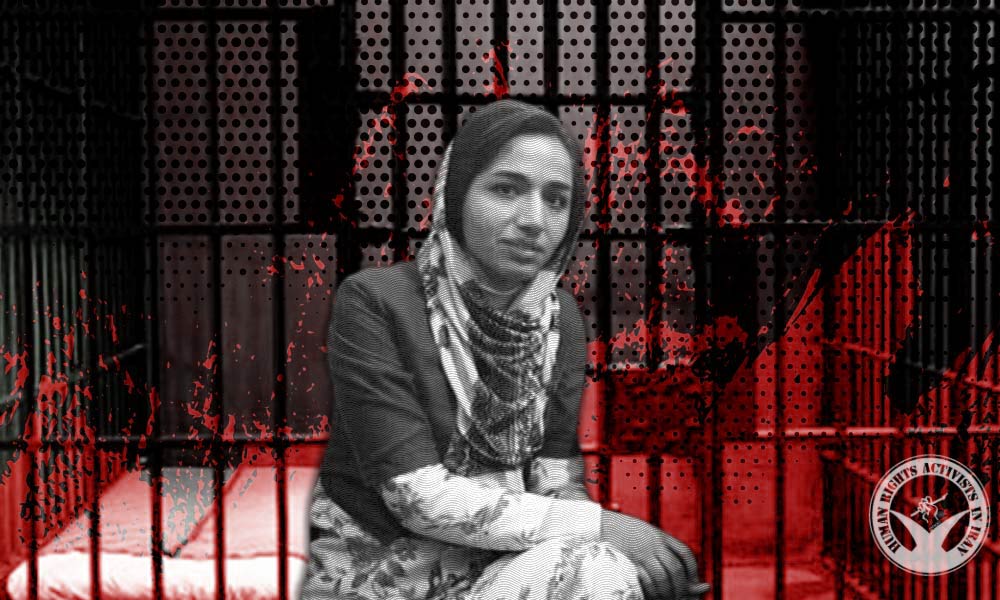
Student activist and former political prisoner Leila Hosseinzadeh informed her family in a phone call that she is still in Ward 209 of Evin Prison. Despite suffering from Crohn’s disease, she has not yet received her medication, exacerbating her condition. She was beaten by security forces during her interrogation in a notorious Shiraz detention center known as Facility No. 100.

According to HRANA, the news agency of Human Rights Activists, Hosseinzadeh was arrested on December 7 by security forces at her relative’s house in Shiraz City. During the arrest, she was beaten by agents.

On the same day, security institution-affiliated media outlets claimed that several individuals “associated with anti-revolutionary groups under the leadership of L.H.” (referring to Hosseinzadeh) have been arrested.

Earlier this week, the initial verdict against Hosseinzadeh was upheld by Branch 36 of the Court of Appeals in Tehran. Hosseinzadeh was sentenced to five years in prison and a two year ban on online social activity by Branch 28 of the Revolutionary Court of Tehran due to her attendance at the birthday ceremony of imprisoned Gonabadi Dervish, Mohammad Sharifi Moghaddam, held at the entrance of the Sharif University of Technology.

Amid the nationwide protests which broke out in December 2017, Hosseinzadeh was arrested alongside other student activists and released on bail after spending 16 days in detention. On March 7, 2018, she was sentenced to five years in prison on the charge of “propaganda against the regime”, as well as one year in prison and a two-year ban on leaving the country. The sentence for her first charge was reduced on appeal from five years to two years and six months. Grounded on Article 134 of the Islamic Penal Code, 30 months of this sentence was enforceable.

On July 28, 2019, she was arrested and detained for 10 days in a facility at the IRGC’s intelligence unit. Afterwards, she was sent to Evin prison to serve her sentence.

On March 11, 2020, while on furlough, she was set free due to her “intolerance of punishment”.

Subscribe to Our Newsletter

Now is definitely not the time to stop reading!

Three Inmates Executed in Shiraz Central Prison and Dastgerd Prison

On December 19, two death row inmates previously convicted of drug-related crimes were executed in Shiraz Central Prison. In Dastgerd Prison in Isfahan, a female inmate was executed for committing murder.

According to HRANA, the news agency of Human Rights Activists, quoting ‏the Baloch Activists Campaign, Naeem She-Bakhsh and Abdolkhalegh Salar-Zehi, were executed in Shiraz Central Prison. They were natives of Kolahoor Village in Sistan and Baluchestan Province.

Per a report by Iran Human Rights, a woman identified as Fatemeh Aslani was executed in the Dastgerd Prison of Isfahan. In the report, and informed source stated that “Nine years ago, Fatemeh Aslani was arrested allegedly for killing her husband for abetting one of her relatives with whom she secretly had affairs. She pleaded not guilty. Because the murderer had left the country, they executed her instead”.

The most recent report from the Statistics and Publication Center of the Human Rights Activists in Iran (HRA) states that between October 8 of 2021 and October 9 of 2021, at least 266 citizens, three of whom were juvenile offenders, were executed and 90 citizens were sentenced to death.

As the report points out, Iran’s judicial authorities do not publicly announce over 82% of executions. These unreported executions are known as “secret executions” by human rights organizations.

Political Prisoner Heidar Ghorbani Executed in Sanandaj Prison

On the morning of December 19, political prisoner Heidar Ghorbani was executed in Sanandaj Prison. He was convicted for “armed insurrection against the regime” (Baghi) and sentenced to the death penalty. This execution was carried out despite international outcry, including from UN human rights experts, to halt the execution.

According to HRANA, the news agency of Human Rights Activists, Ghorbani’s lawyer, Saleh Nikbakht, confirmed the news of the execution. He told HRANA that “by order of chief justice, Heidar Ghorbani’s case had been sent to Kurdistan’s Chief Justice for further examination. They told us yesterday that they will notify both Iran’s chief justice as well as his family about the result of this examination. I talked to Mr Ghorbani just yesterday morning. Nonetheless, they executed him today at 4 am. His family was told to come to the cemetery but they did not deliver the body to his family”.

Pointing out that the charge of “armed insurgency” is not supported by substantial evidence, he added that, “despite these legal considerations and the request for retrial by the Supreme Court, they carried out the execution under pressure by some authorities”

On September 30, 2016, several members of the IRGC were killed by gunmen in a village in Kamyaran County. Ghorbani was arrested on October 16, 2016 along with two others.

A regime TV channel broadcasted Ghorbani’s forced confession in March of 2016. In the broadcast, security and judicial officials accused him of murdering several members of the IRGC. However, Ghorbani only confessed that he had been forced to transport several armed members of Kurdish anti-regime parties.

In October 2019, he was tried on the charges of “assisting in murder, assault with a deadly weapon, helping offenders to escape from law enforcement, involvement in premeditated murder, attempted murder, affixing a license plate to another car, attempted kidnapping, and the acquisition of stolen property”. He was sentenced to 30 years in prison for every three charges.

However, Branch 1 of Sanandaj’s Revolutionary Court sentenced him to death on the charge of “armed insurgency”. This verdict was confirmed by the Supreme Court and the case was delivered to the Public and Revolutionary Court in Kamyaran. On August 12, his lawyer asked for a retrial, which was rejected by Branch 27 of the Supreme Court. When the conviction was publicized, Sanandaj Prison officials banned him from visitation.

HRANA Recap: This Week’s Protests in Iran

According to HRANA, the news agency of Human Rights Activists, a number of protests took place this week in Iran, many of which were continuations of ongoing movements.  Read our recap below for details, photos, and videos from the demonstrations.

Friday, December 10

Following Iran’s president, Ibrahim Raisi’s, visit to Lorestan Province, a group of villagers from the area near Khorramabad gathered at the entrance of the airport, where the president was going to be received. The villagers protested against water supply management, chanting, “we don’t have drinking water”.

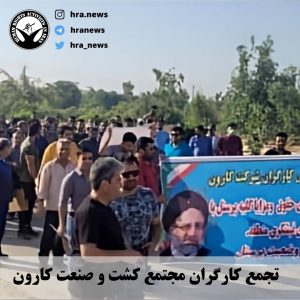
Similarly, a number of railway workers assembled and demanded that issues regarding supplementary insurance, official contracts and access to safety equipment be addressed.

Saturday, December 11

In response to a call by the Coordination Council of Iranian Teachers’ Trade Associations, the educators and teachers of 100 cities across the country went on a strike and held protest to demand the implementation of a plan already enacted by Parliament whereby teachers’ income will be raised in accordance with a ranking.

A number of workers of the Ahvaz Water and Wastewater Company assembled before the company building to ask for their delayed payments. A number of the workers of the Ahvaz Water and Wastewater Company assembled before the company building to protest against the recent company merger with its counterparts in rural areas. According to these protesters, the company can hardly afford to pay salaries due to the cost of the 500 additional personnel that accompanied the merger. Workers said the merger has brought the company to the verge of destruction.

A group of the workers at the mining company Toos, located in Khaf County, assembled at their workplace to protest against delays in payments and insurance issues. This protest ended with the promise by some company managers and other local authorities to address these issues.

A group of the workers of the car company Azim Khodro assembled to ask their wage demands be met and to protest against factory closure. These workers blocked the road connecting Oshtorinan City to Lorestan. Reportedly, due to some legal issues, the company is banned from operating and consequently, 180 workers have been laid off without pay.


Sunday, December 12

For the second consecutive day, educators and teachers in dozens of cities across the country assembled to ask for the implementation of an enacted plan to raise wages.

A group of the retirees of the Gilan’s Social Security Organization assembled before organization headquarters to ask that demands, such as raising wages above the poverty line, be filled.

Similarly, a group of the retirees of the Khuzestan’s Social Security Organization assembled in front of the organization building in Ahvaz City. They asked for the elimination of pension disparities and other demands.

Retirees of the Fulad Company Pension Fund assembled in front of the pension fund office in Isfahan City to ask for demands regarding pensions.

A group of the workers of steel company Fulad Yasuj assembled before the governorate building in Yasuj City to protest against a factory shut down due to power outages and the consequential layoff of 226 workers.

Monday, December 13

Thousands of retired and working teachers and educators, joined by other citizens, demonstrated in more than 100 cities across the country. These protests were held on December 13 at the call of the Coordination Council of Iranian Teachers’ Trade Associations.

Their more important demand was the implementation of a plan whereupon the incomes of teachers will be increased depending on rank, to up to 80% of the salaries of faculty members.

Several workers of petrochemical company Regal assembled in front of the governorate building in Bandar Mahshahr City. They demanded implementation a Job Ranking Plan, as well as unpaid benefits and supplementary insurance.

Tuesday, December 14

In Shiraz City, retirees of the Iran Telecommunication Industry (ITI) assembled in protest against long unpaid benefits and wages accumulated over 15 years. Reportedly, the benefits and wages of about 1500 retired workers have never been fully paid during and after company closure in the last decade.

A group of workers under recruitment of the contracting companies affiliated with Iran Electric Power Distribution Companies travelled to Tehran and assembled in front of Parliament. On that day, the conditions of contractual workers were discussed in the parliament. The protesters asked for removing private contracting companies and to be employed directly by the Electric Power Distribution Companies.

Workers of petrochemical company Takhte-Jamshid, located in Bandar Imam Khomeini Petrochemical Special Economic Zone, assembled before the company entrance to protest against low wages. They said that after adopting the Job Classification Plan, wages have not been significantly raised. Even worse, in some cases, wages have been decreased.

Residents of the village Lavar-Sharghi in Dashti County, located in Bushehr Province, assembled on the road connecting the village to the center part of the county. They said that heavily loaded vehicles from a cement factory caused consdierable damage to the road.

Wednesday, December 16

A number of personnel of the Ministry of Culture and Islamic Guidance in East Azerbaijan Province held a protest before ministry offices to protest against low wages and irregularity in payments.

A number of contracted teachers assembled before Tehran’s <inistry of education to ask for their demands. They chanted that they would not go to work until their issues were addressed.

In Tehran, a group of taxi drivers assembled before the Municipal Taxi Organization’s building. Sccording to a protestor, the company has refused to deliver cabs despite the drivers paying 60 million tomans (14,280 USD). In a violation of the purchase contract, the company has requested additional payment, claiming the price of a car has increased by 18%.

A number of farmers in Hirmand City in Sistan and Baluchestan Province assembled in front of governorate building to protest against cuts to fuel portions for water engines and tractors. 

Thursday December 16

Hundreds of educators and teachers in Hamedan Province held protests in front of the building the Ministry of Education. They asked for the implementation of the Ranking Plan, wage raises, and the freeing of detained teachers.

Educator and Trade Union Activist Asghar Amirzadegan Sentenced to One Year In Prison

On December 17,  the Criminal Court of Firuzabad City sentenced Asghar Amirzadegan, an educator and trade union activist, to one year in prison. As an additional punishment, his Instagram page was removed and he was banned from using social media and messengers for two years.

According to HRANA, the news agency of Human Rights Activists, Branch 101 of Firuzabad’s Criminal Court sentenced Amirzadegan in a trial in absentia. He was charged with “propaganda against the regime”.

On July 27, 2021, Amirzadegan was arrested and on August 15 was released on bail from Firuzabad Prison. According to an informed source, he was arrested when he went to a police station to take back his confiscated cell phone.

Earlier also in 2019, he was sentenced by the same court to one year and six months in prison on charges of “offensive statements against the regime’s authorities and propaganda against the regime.” On appeal, these verdicts for these two charges were suspended for 18 months and 2 years respectively.

Moreover, in 2018, he was accused of sending pictures and videos to anti-regime media abroad, a detained for two days before being released on bail of 30 million tomans (7140 USD). Later, the Public and Revolutionary Court exonerated him from this charge.

Report on Recent Executions of Eight Inmates in Five Prisons

Eight inmates on death row for different criminal cases were executed in Amol, Gorgan, Rajai-Shahr, Meshgin, and Arabail prisons. 

According to HRANA, the news agency of Human Rights Activists, 45 year old Hashem Amiri was executed in Gorgan Prison on Sunday. In 2013, he committed murder during a house burglary.

According to another HRANA report, a female inmate who was convicted of killing her husband seven years ago was executed in Amol prison last Tuesday. “Since the prison guards refused to put the rope around her neck, she had to wait hours at the gallows until a prison officer from outside prison came and hung the woman”, an informed source told HRANA.

In Rajai Shahr Prison, located in Karaj City, ten inmates on death row were transferred to solitary confinement cells awaiting their executions. Four inmates were executed on December 15. HRANA has identified one of these executed inmates as Mahmood Mohmoodi. Iran Human Rights Organization has identified three others as Hamed Mousavi, Kurosh Mazaheri and Davoud (family name is unidentified). The six other inmates each could obtain a moratorium from the victim’s family.

According to the Iran Human Rights Organization, an inmate identified as Mohammad Tazehkar was executed in Meshgin Shahr Prison last Sunday. In 2017, he was convicted of killing his friend. It is likely that he was underage at the time of committing the crime.

The Iran Human Rights Organization also reports the execution of 40 year old Mohammad Khodai in Ardabil Prison. Five years ago, he was sentenced to death for murdering his wife.

None of the official sources and media outlets inside the country has reported these executions at the time of writing.

The most recent report from the Statistics and Publication Center of the Human Rights Activists in Iran (HRA) states that between October 8 of 2020 and October 9 of 2021, at least 266 citizens, three of whom were juvenile offenders, were executed and 90 citizens were sentenced to death.

As the report points out, Iran’s judicial authorities do not publicly announce over 82% of executions. These unreported executions are known as “secret executions” by human rights organizations.