Female Worker Dead After Veil Caught in Machinery at Factory

On the evening of Saturday, November 5, a 21-year-old worker lost her life in a workplace accident in a factory after her veil was caught in machinery.

According to HRANA, the news agency of Human Rights Activists, quoting ILNA, Marzieh Taherian was killed in the spinning factory Nasaji Kavir Semnan, located in the industrial zone on the east of Semnan City

As her coworkers stated, the veil, which female workers are forced to wear despite being unsuitable for work conditions and safety issues, became caught in a ring spinning machine, and pulled her head inside the machine.

This horrific work accident has raised again many criticisms about strict forced veil rules, which have long caused discomfort and hazards for women in the workplace.

Several Arrested in Isfahan by IRGC Intelligence

Several citizens have reportedly been arrested by an IRGC Intelligence unit in Isfahan.

According to HRANA, the news agency of Human Rights Activists, quoting IRNA, a spokesperson for the IRGC’S Intelligence unit in Isfahan City, known as Sahib al-Zaman IRGC, announced that several members of an “anti-revolutionary group” have been arrested.

“The members of this anti-revolutionary group aimed to act against national security both on social media and in public,” the IRGC’s public relations spokesperson claimed. “These acts include spreading anti-regime tracts on streets to call for protest and unrest, agitating and hiring thugs for their own purposes, planning to disturb public order and security, sabotage and causing chaos and unrest all over the province.”

This report does not reveal the identity and whereabouts of the detainees.

The Uprising of the Thirsty; An Analysis of the 2021 Khuzestan Protests

The July 2021 Iranian protests were a continuation of protests that have been erupting sporadically since 2016.

The driving force behind the July/August uprising was to protest the perennial water shortages and rolling blackouts stemming from mismanagement of resources, fueling public anger. The latest round of protests erupted on 15 July, starting in Khuzestan soon spreading to other provinces including Isfahan, Lorestan, Eastern Azerbaijan, Tehran, and Karaj. These protests have been coined the ‘Uprising of the Thirsty’.

As nearly 5 million Iranians in Khuzestan are lacking access to clean drinking water, Iran is failing to respect, protect, and fulfill the right to water, which is inextricably linked to the right to the highest attainable standard of health; both are protected by the International Covenant on Economic, Social, and Cultural Rights (ICESR), to which Iran is a signatory. It is a common cause that Iran’s water crisis has reached a critical point. Even the regime’s state-run media have acknowledged the dire situation, with at least 700 villages out of water.

According to the state-run Aftab News on July 4, 2021, “Of Iran’s population of 85 million, about 28 million live in areas with water shortages and are under pressure in this regard, mainly in the central and southern regions of the country. Water shortages have affected all sections of society, from urban households to agricultural and rural communities.”

It did not take long for the protests to take on a political character, with protesters in various cities calling for the end of the current regime and expanding the subject matter of their protests from water shortages to deteriorating living conditions.

One protester told HRA, “My ideal outcome is to see a regime official resign in response to our suffering. We are tired of all of this misery, poverty, dehydration, neglect, lies, and empty promises.”

A protester living in Tehran told HRA, “Besides supporting [the people of] Khuzestan, we are protesting unemployment, high prices, poverty, and the existing problems in the country. We can no longer bear the hardships of life created by unworthy officials. The authorities must address the problems…”

In the two weeks of the uprising, Human Rights Activists (HRA) verified 129 videos documenting the protests, 361 arrests, 6 deaths, and several more wounded. HRA’s Spreading Justice team (HRA-SJ) additionally identified individual violators associated with the violent crackdown. The following report analyses the events that occurred as a result of the uprising, those responsible, and concludes with a call for accountability noting that without action, this cycle of abuse will only continue.

Read the full report here.

_________________________

For further inquiries please contact Skylar Thompson, Senior Advocacy Coordinator Human Rights Activists in Iran (HRA) at [email protected]

Vahid Abhari Sentenced to 3 Months Imprisonment and Paying a Fine

Branch 111 of the Criminal Court in Tabriz recently sentenced Vahid Abhari, a resident of Tabriz, to 3 months imprisonment and paying a fine.

According to HRANA, the news agency of Human Rights Activists, the court, headed by Judge Reza Forooghi sentenced Vahid Abhari to 3 months in prison, including the detention period, and a fine of 21 million tomans on a charge of “inciting violence via cyberspace”. Two months of this sentence has been suspended for two years.

Abhari, who has been arrested for his civil activities at least once before, was arrested on July 21 by security forces and held in the detention center of the intelligence ministry until August 11 when he was sent to Tabriz Prison. He was released on bail until the end of the legal proceedings.

On October 30, Abhari was summoned and notified of the charges.

Workers’ Rights Activists Hirad Pirbodaghi and Asal Mohammadi Arrested by Security Forces

Two workers’ rights activists were arrested by security forces on Saturday, November 6.

According to HRANA, the news agency of Human Rights Activists, on Saturday, Hirad Pirbodaghi and Asal Mohammadi were arrested yesterday after security forces searched their homes. Hirad Pirbodaghi made a phone call to his family earlier this morning and informed them that he is currently being held in the notorious Ward 209 of Evin Prison. Mohammadi’s situation and whereabouts are still unknown as of this writing.

An informed source told HRANA that security forced raided and searched their houses violently. Sunday morning, Hirad Pirbodaghi was notified about the charges against him, which include “assembly” and “collusion”.

Asal Mohammadi and Hirad Pirbodaghi have previously faced other arrests and convictions for their non-violent activism and worker’s rights advocacy.

Yesterday, before their arrest, Pirbodaghi and Mohammadi, along with seven other civil activists, filed a complaint in a judicial office against using solitary confinement as a tool of torture.

As of yet, the reason for these arrests is unknown.


Subscribe to Our Newsletter

Now is definitely not the time to stop reading!

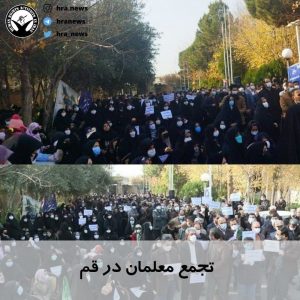
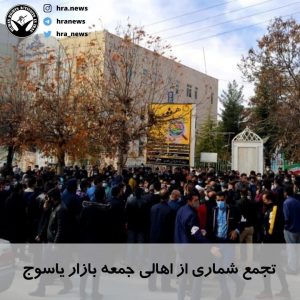
HRANA Recap: This Week’s Protests in Iran

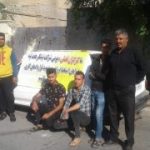
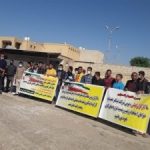
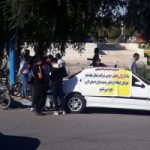
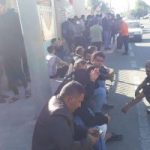
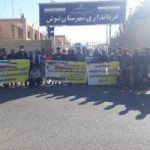
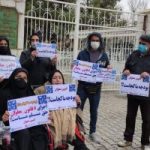
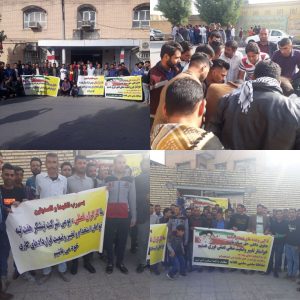
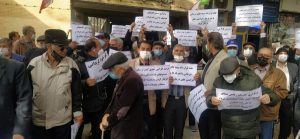
According to HRANA, the news agency of Human Rights Activists, a number of protests took place this week in Iran, many of which were continuations of ongoing movements.  Read our recap below for details, photos, and videos from the demonstrations.


Saturday, October 30

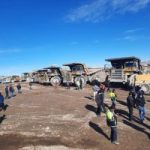
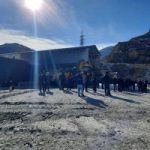
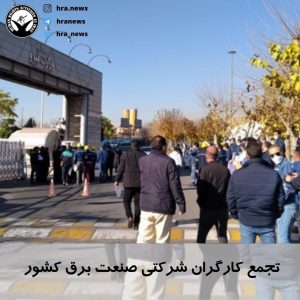
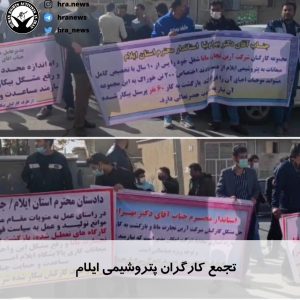
The workers of Abadan Petrochemical Company assembled at the company premises to demand the right to form an Islamic Workers’ Council, as the labor code allows, the adjustment of their contracts according to their job classification plans, job security, preservation of the dignity of workers and an end to punitive measures towards employees who advocate for their rights.

A number of workers of the Golnar Vegetable Oil Factory protested at the company premises.  As well as fostering a number of other internal problems, the factory employer reportedly has been announcing temporary business closure each month, and sending about 300 workers on compulsory leave.

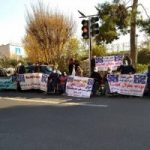
Dozens of teachers and educators from various cities came to Tehran on Saturday and and assembled in front of Parliament. They asked for implementation of the Ranking Income Bill, whereby the salaries of teachers must be raised to at least 80% of university board members’ salaries. They also demanded the fortification of pension funds, in adherence with Civil Service Management Law.


In Bandar Mahshahr, the workers of Razi Petrochemical Company went on strike for several consecutive days. They assembled in front of the company headquarters and demanded bonuses and benefits, improvement in the quality of meals, implementation of the Jobs Classification Plan, and supplementary health insurance.

The concierges and service workers of schools assembled in front of Parliament in Tehran and protested poor living conditions and low wages.

A number of residents of the village Shahr-e Kohneh in Neyshabur County protested infrastructural negligence, particularly in regard to road maintenence. Residents currently have to travel a long distance to reach an unsafe underpass in order to cross the railway.


A number of residents of Mahabad City in Isfahan assembled in the dried up stretches of the river Taherabad and protested water withdrawal from this river for the usage of the Fulad Natanz factory. Moreover, reportedly, as a result of this water withdrawal a 3000-year-old Qanat has been dried up.


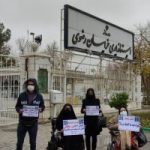
In Tehran, A number of lawyers of the judiciary assembled in front of the building of the Iran Bar Association to show their opposition to enactment of a plan whereby the issuance of some business licenses will be facilitated.

A group of specialized hospital assistants of Imam Hossein Hospital went on a strike at their workplace in protest against their poor living conditions.

About 40 workers of Kayson Company stopped working and went on a strike to ask for their demands, including the payment of wages that have been delayed by three months.

Sunday, October 31

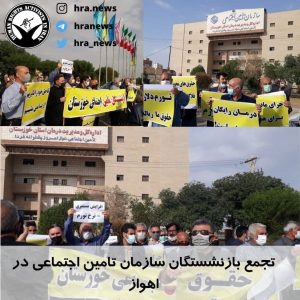
A number of retirees and pensioners of the Iran Social Security Organization assembled in front of their local units in various cities such as Tehran, Mashhad, Ahvaz, Kermanshah, Rasht and Tabriz. They asked for a pension above the poverty line, implementation of article 96 of the Social Security Acts, closing the disparity in pension incomes, end-year bonuses and factoring in employment history in hazardous jobs when calculating pension income.


Service workers of Tehran Metro on Line 2 assembled to protest the three-month delay in their wages. Moreover, they have not received end of year bonuses for two years and the employer’s insurance contribution has also been delayed.


For a second consecutive day,  workers of the vegetable oil factory Golnar assembled at the factory premises to demand action.

“After two days of protests, no one from the company responds to us,” one of these workers stated. “Since the privatization of the factory, in recent years, there have raised many conflicts between the company and the workers including compulsory unpaid leaves, the deduction of leave from the salary, reducing in production, imposing one-month contracts and continuous two-week night work, and the most important, threatening workers to be fired.”

For the second consecutive day, a group of workers of Abadan Petrochemical Company (TAPPICO) assembled at the company premises to ask for the implementation of the Job Classification plan. They also protested against the layoffs of four fellow workers.


In Qazvin, the garden maintenance workers of Rojan Dasht Caspian went on strike to demand their wages, which have been delayed by 4 months.


Workers of Arak Machine Manufacturing Factory assembled and protested at the company premises. They demanded increased wages in accordance with inflation and real living costs.


A group of the retirees of Telecommunication Company of Iran assembled at premises of the building of the finance department of the company to ask for their demands.

A number of farmers from Shush and Shushtar assembled in front of their government buildings to protest rice exports outside the province.

Monday, November 1

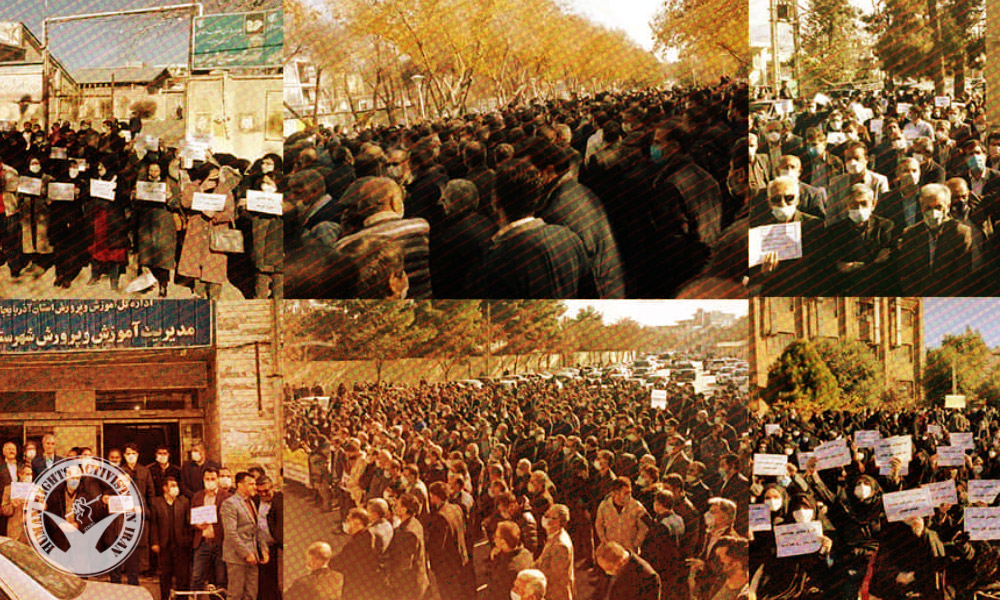
Judiciary personnell assembled in front of the Justice building of various cities across the country including Tehran, Mashhad, Shush, Yazd, Zanjan, Farahan, Ray Shahr, Kuhrang, Neyshabur, Meybod, Gorgan, Azadshahr, Sanandaj, Ahvaz, Elam, Arak, Divandareh, Paveh, Damavand, Kasmar, Tafresh, Boroujen. They protested against poor living conditions and inattention to their demands.

A number of the workers in the lead and zinc mine in Gojar in Kerman Province assembled in front of the building of the Ministry of Cooperatives, Labour and Social welfare in Kerman to demand increased wages.

A number of workers of Kut-e Abdollah Municipality assembled in front of the building of the Islamic Council in this city. They protested unpaid wages and unpaid employers’ contributions to health insurance.

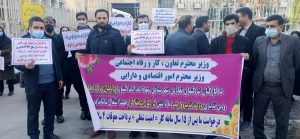
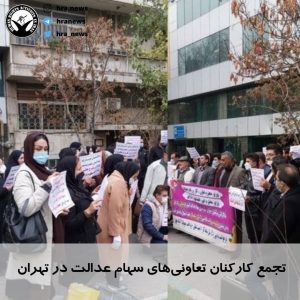
A group of citizens in Tehran assembled in front of the building of the Securities and Exchange Organization to protest capital market collapse and demanded that measures be taken to protect people’s investments.

Workers of the Razi petrochemical company went on a strike at their workplace in Bandar Mahshah. They asked for benefits and bonuses in accordance with workplace conditions, improvment in the quality of meals, implementation of the Job classification plan, and supplementary insurance.

Tuesday, November 2

A group of personnel and board members of Islamic Azad University of Shushtar City assembled on campus to protest unpaid wages.


The residents of the town “Poshte Bagh-e Parandgan” in Astara County assembled in front of the building of the Ministry of Roads and Urban Development office to protest against the decision to demolish a number of local residential complexes.

Personnel of the Regional Telecommunication Company of Eastern Azerbaijan Province assembled inside the company headquarters and in front of the management office.

A number of people who have not received their pre-ordered cars from Azvico Company (Azerbaijan Vehicle Industry) assembled in front of the office of the Head of the Judiciary .


Residents of the village Malek-Abad in Arak County protested the unlawful confiscation of their pieces of land by semi-government Awqaf and Charity Affairs Organizations. A few days prior, they had blocked the road from Arak to Qom City as a demonstration of protest.


A group of transport service drivers of the hospital Shahid Mohammadi went on a strike to protest poor living conditions and low wages.


Workers of Arak Machine Manufacturing Factory assembled at the company premises and went on strike.

Wednesday, November 3

Victims of the financial fraud of the cryptocurrency exchange “Cryptoland” assembled in front of the Tehran Courthouse this Wednesday and demanded that their complaints be addressed and their money returned.

A number of workers of Kut-e Abdollah Municipality assembled in front of the building of the Islamic Council in this city. Reportedly, 400 workers have not been fully paid since July.

A number of people with hearing impairment in Mariwan assembled in front of the State Welfare Organization building to protest poor living conditions and unemployment. They asked for enforcing the Comprehensive Law on Protection of the Rights of Persons with Disabilities.


A group of shareholders who lost money due to fraudulent transactions in the Tehran stock exchange assembled in front of the Tehran Courthouse in protest.


Two Inmates Executed in Zahedan and Rajai Shahr Prisons

In the last two days, two inmates were executed in Zahedan and Rajai Shahr Prisons.

According to HRANA, the news agency of Human Rights Activists,  an inmate who was previously convicted of murder was executed this Wednesday, November 3, in Rajai Shahr Prison in Karaj.

HRANA has identified the inmate as 33-year-old Manuchehr Kazemi Varmaleh, who was a resident of Harsin County in Kermanshah Province.

Another inmate, who has been identified as Javad Qoljai, was executed on Thursday, November 4, in Zahedan Prison on a charge of murder.

According to HRANA, quoting Rasank, Qoljai was arrested two years ago and convicted of the murder of one of his friends. He had been in prison since, until his execution yesterday.

The most recent report of the Statistics and Publication Center of the Human Rights Activists in Iran (HRA) states that between October 8 of 2020 and October 9 of 2021, at least 266 citizens, three of whom were juvenile offenders, were executed and 90 citizens were sentenced to death.

As the report points out, Iran’s judicial authorities do not publicly announce over 82% of executions. These unreported executions are known as “secret executions” by human rights organizations.

Neither Qoljai’s nor Varmaleh’s executions have been reported by official sources in Iran as of this writing.

Mashhad Resident Mahmood Niroomand Sentenced to 10 Years Imprisonment

Recently, Mashhad resident Mahmood Niroomand was sentenced to ten years in prison by the Revolutionary Court.

According to HRANA, the news agency of Human Rights Activists, quoting Kurdpa, he was charged with “acting against national security, propaganda against the regime on the internet and association with anti-regime groups”.

36-year-old Niroomand, who was notified of the verdict in recent days, is a native of Polgard village in Dargaz County in Razavi Khorasan Province.

On May 25 of this year, security forces arrested Niroomand without a warrant and transferred him to the detention center, at disposal of the Ministry of Intelligence, for interrogation. On June 24, he was relocated to Vakilabad Prison in Mashhad. He was denied access to lawyer and family visitation throughout the detention.


Writer and Philosophy Researcher Nima Ghasemi Sentenced to Four years and Eight Months

Branch 26 of the Revolutionary Court of Tehran recently sentenced writer and philosophy researcher Nima Ghasemi to four years and eight months imprisonment.

According to HRANA, the news agency of Human Rights Activists, Ghasemi, a resident of Tehran, was sentenced to 4 years in prison on a charge of “assembly and collusion against the regime” and eight months in prison on a charge of “propaganda against the regime “.

In the trial, Ghasemi’s notes and posts published on social media were invoked in support of these charges against him.

From this verdict, if upheld by the court of appeal, a severest punishment of four years is enforceable, grounded on Article 134 of the Islamic Penal Code.

On February 8 of this year, Nima Ghasemi was arrested by security forces at his home and transferred to the public section of Evin Prison. At the time of arrest, the security agents searched his house and confiscated several of his belongings including his written notes and laptop. On March 13, he was released on bail until the end of legal proceedings.

Nima Ghasemi is has a PhD in Philosophy from Shahid Beheshti University.


Political Prisoner Kamran Rezaiefar Sentenced to Death by Revolutionary Court of Tehran

Recently, Branch 28 of the Revolutionary Court of Tehran sentenced political prisoner Kamran Rezaiefar to death. Rezaiefar’s trial began on December 28, 2020.
According to HRANA, the news agency of Human Rights Activists, political prisoner Kamran Rezaiefar has been sentenced to death on the charge of the so-called “spreading corruption on earth”. He was notified about his charges in September of this year.

In January 2020, Kamran Rezaiefar was arrested by the security forces on a charge of “association with The People’s Mujahedin Organization of Iran (MEK)”. He was released on bail after enduring 77 days in solitary confinement in wards 240 and 209 of Evin Prison.

In June 2020, he was arrested again this time for a charge of “spreading corruption on earth” and transferred to Evin Prison.