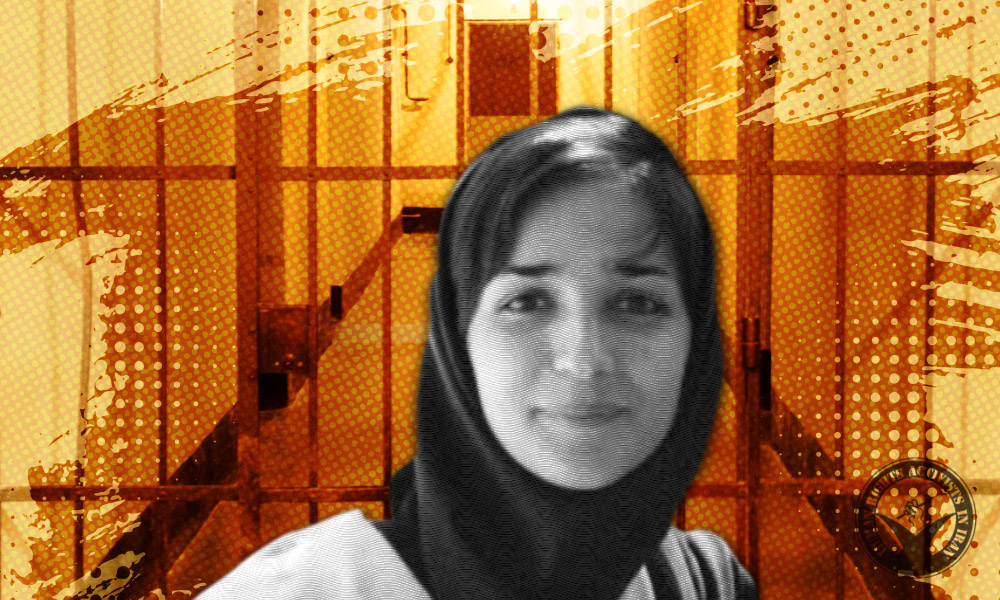
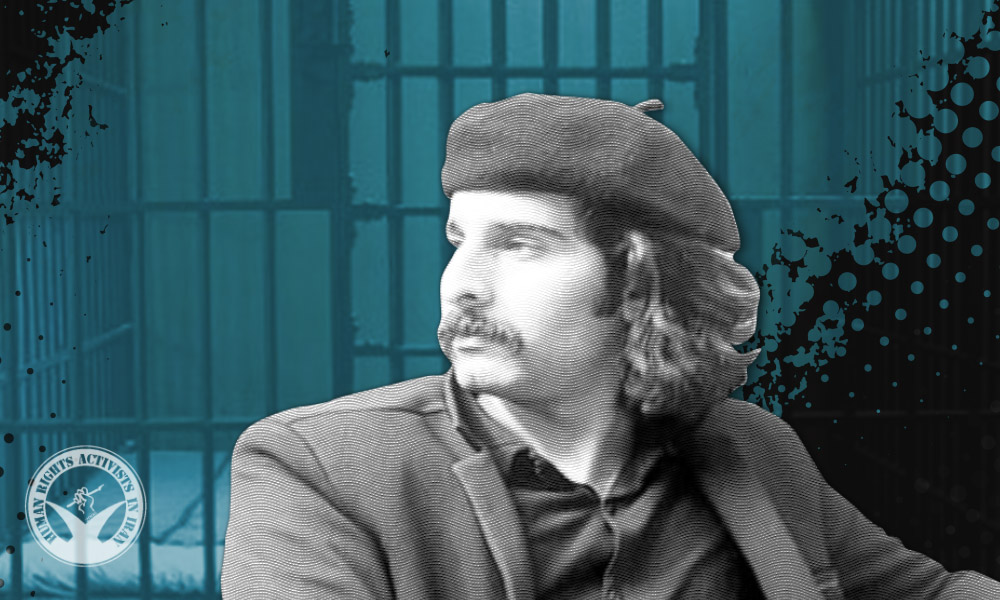
Arash Gangi Detained and Sent to Evin Prison to Endure 11 Year Sentence

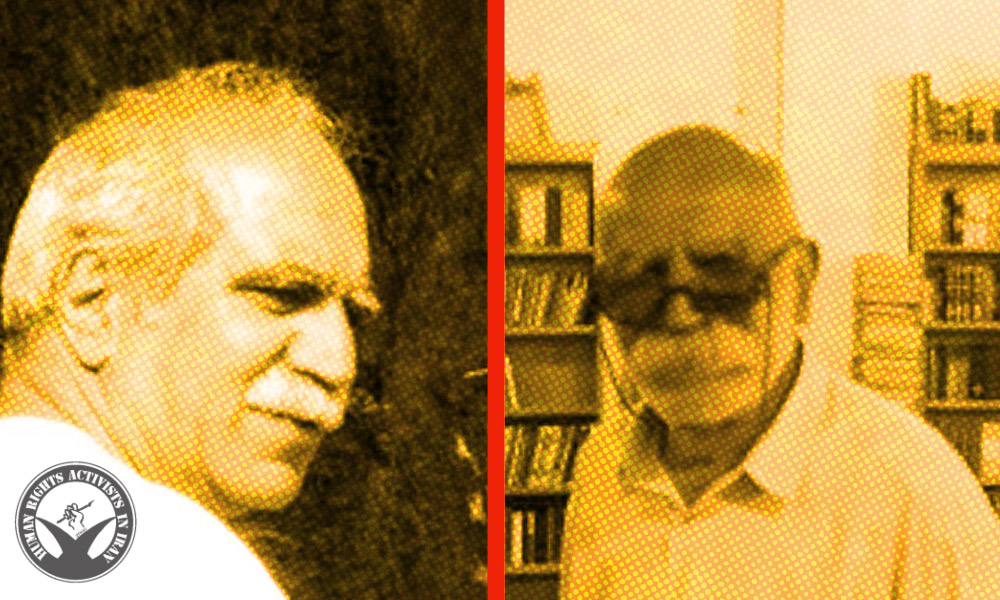
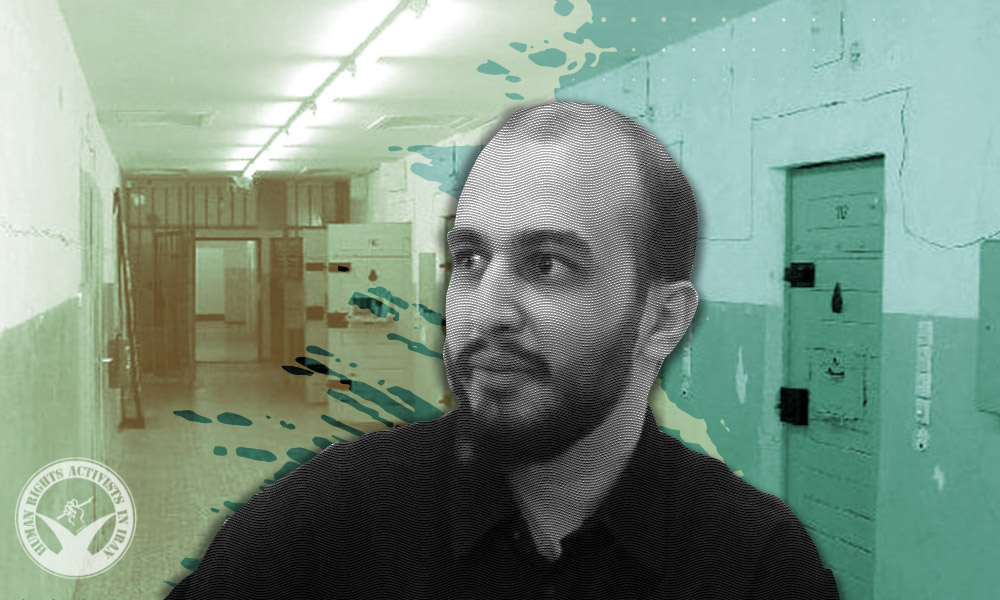
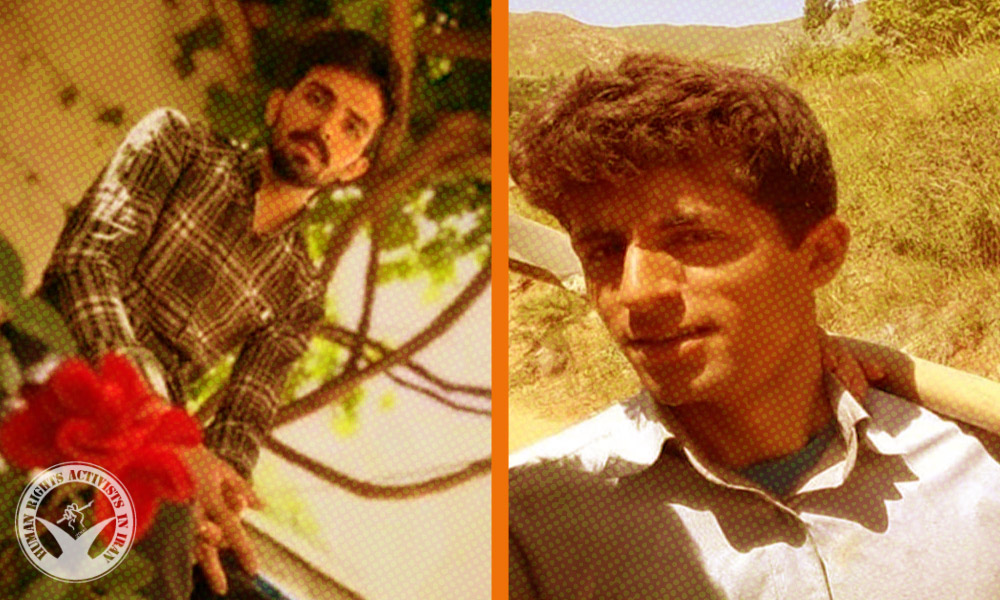
On Monday, November 1, translator and board member of the Iranian Writers’ Association (IWA) Arash Gangi was sent to Evin Prison to endure his 11-year sentence.

According to HRANA, the news agency of Human Rights Activists, recently, PEN America in a statement condemned Arash Gangi’s summons and asked for the quashing of this “wildly disproportionate” sentence.

Gangi had been previously sentenced to eleven years in prison by Branch 28 of the Revolutionary Court of Tehran. Grounded on Article 134 of the Islamic Penal Code, a severest punishment of five years is enforceable.

Following the summons he received on October 16 of this year, Arash Gangi appeared at the Executive Unit of Evin prison and from there he was sent to Evin Prison.

On December 22, 2019, the security forces raided his house, and then arrested and transferred him to Ward 209 of Evin Prison, which is at the disposal of the intelligence ministry.  Security agents searched his house and confiscated some of his personal belongings during the arrest.

After a while, he was transferred from the Ward 209 to the public section of Evin Prison. On January 19, 2020, he was released on a bail of 450 million tomans until the end of legal proceedings.

In the first court session, on June 14, 2020, the judge increased the bail to 3 billion tomans, and hence he was arrested and transferred to Evin Prison until providing the new bail. He was released on bail on June 21, 2020.

In the second court session, which took place on November 29, 2020, only his attorney attended the court and Mr Ganji could not appear at the court due to having COVID-19 symptoms.

Ultimately, in December 2020, the court, headed by judge Mohammad-Reza Amoozad, sentenced Gangi to five years in prison on a charge of “assembly and collusion in purpose to act against national security”, one year on a charge of “propaganda against the regime” and five years on a charge of “membership in and collaboration with one of the ant-regime groups.”, for a total of 11 years imprisonment. In February 2021, this verdict was upheld by the court of appeals of Tehran.

According to Naser Zarafshan, Mr. Gangi’s lawyer, all these charges were invoked from his translation of a book under the title of “A Small Key Can Open A Big Door: The Rojava Revolution”, which is about Kurdistan upheavals in Syria.

The non-governmental organization IWA was founded by a group of intellectual writers in 1968, originally with the objective of promoting freedom of speech and fighting against censorship.

Although IWA was banned in 1981 by the Iranian authorities, a group of writers created a “consulting assembly” to revive the banned IWA in 1993. On September 8, 1996, 12 writers who had gathered to draft a new charter for the IWA were arrested, interrogated and warned not to hold further meetings for the advancement of the IWA. Since then, the members and board members of IWA have been subject to systematic persecution, long prison sentences and even targeted killing from 1988–98, when certain Iranian dissident intellectuals who had been critical of the Islamic Republic disappeared and their bodies found afterwards.

Journalist Reza Jolodarzadeh Released from Greater Tehran Prison

This Monday, November 1,  journalist Reza Taleshian Jolodarzadeh, who has been on furlough since mid-September, was released from The Greater Tehran Prison.

According to HRANA, the news agency of Human Rights Activists, while he was on furlough Jolodarzadeh was granted an imprisonment intolerance certificate by forensic medicine, and will therefore not be required to return to prison.

In June 2019, Reza Taleshian Jolodarzadeh was sentenced to three years in prison, a fine of 40 million rials and two years prohibition from any political or journalistic activities on charges of “propaganda against the regime, spreading lies and disturbing public opinions on the internet”.  The verdict was upheld by the appellate court.

In January 2021, Jolodarzadeh was summoned by Branch 1 of the Executive Unit of Evin Prison to endure his sentence in The Greater Tehran Prison. On February 12, despite having regular seizures, he was not allowed to be dispatched to a hospital outside the prison. Jolodarzadeh is an injured veteran of the Iran-Iraq war and suffers from a serious brain lesion.

On March 2, Jolodarzadeh went on a hunger strike to protest authorities’ refusal to take his medical needs seriously. After one week, he ended the hunger strike after hospitalization and receiving medical treatment. Once again, on April 28, in protest against prison’s officials’ inattention to his demands and requirements, he went on a hunger strike. After a while, he ended his strike after officials promised to meet his demands.

On July 14, he went furlough from The Greater Tehran Prison as well as once again on September 22, for medical treatment and providing medicines. This time, forensic medicine issued an imprisonment intolerance certificate whereby he was set free.

Reza Taleshian Jolodarzadeh is the Editor of  the newspaper “Sobhe-Azadi” , which was banned by the regime in 2011.

Three Workers Killed and Two Injured in Workplace Accidents in Birjand and Nazarabad

This Saturday, October 30th, two fatal workplace accidents took place in Birjand and Nazarabad.

According to HRANA, the news agency of Human Rights Activists, quoting ILNA, two were killed while working in an underground aqueduct in Birjand. On Saturday at 9 am, two workers died working on dredging a Qanat tunnel after the wall collapsed. Only after many hours of effort and using an excavator was the rescue team able to pull the bodies out from the debris.

On the same day, according to HRANA, quoting Rokna,  one died and two others were injured in Nazarabad after being electrocuted while working on a utility pole for the Nazarabad Power Distribution Company.

In recent months, many workers have died due to Debris falling in the wall or Qanat, which, according to experts, is caused by a failure to take workplace safety measures. Iran ranks 102 in workplace safety out of 189 countries.

Azerbaijani Turk Activist Vodood Asadi Arrested and Transferred to an Unidentified Location

On Saturday, October 30, Azerbaijani Turk Activist Vodood Asadi, a resident of Rasht City, was arrested by security forces.

According to HRANA, the news agency of Human Rights Activists, Asadi was transferred to an unknown location following the arrest.

Security forces searched his house and confiscated both his and his family’s cell phones. Vodood Asadi has also previously been detained and summoned.

The reason for the arrest and the charges are still unknown as of this writing.

Political Prisoner Saeed Sangar Released After 21 Years in Prison

On Saturday, October 30, political prisoner Saeed Sangar was released on parole from Urmia Prison.

According to HRANA, the news agency of Human Rights Activists, Sangar’s release comes after 21 years of imprisonment.

On August 31, 2000, Sangar was arrested. However, in his legal case, October 29 of that year has been wrongly recorded as the arrest date.

On November 18, 2000, the Revolutionary Court of Sanandaj, headed by judge Fatemi, sentenced him to death on the charge of “enmity against God (Moharebeh) through membership in The People’s Mujahedin Organization of Iran”. Following this conviction, Sangar was transferred from the detention center of the ministry of intelligence in Sanandaj to ward 209 of Evin Prison in Tehran, where he was held in solitary confinement cells until 2003. In the fall of 2003, the appellate court changed the verdict to life imprisonment and sent him to Urmia Prison.

Years later, on December 23, 2016, the executive branch No. 4 of the Department of Justice in Sanandaj reduced the verdict to 18 years imprisonment.

In 2017, a new case was opened against him for the charge of “propaganda against the regime”  of which, however, he was later acquitted.

Despite that by December of 2020, not only he had served out two years more than his 18-years sentence, he was sentenced again to 11 months imprisonment sentence on the charge of ” propaganda against the regime and in favor of dissident groups against the regime”. This sentence was reduced to eight months, which led to his final release this Saturday, October 30.

Subscribe to Our Newsletter

Now is definitely not the time to stop reading!

HRANA Recap: This Week’s Protests in Iran

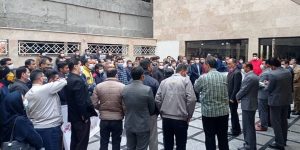
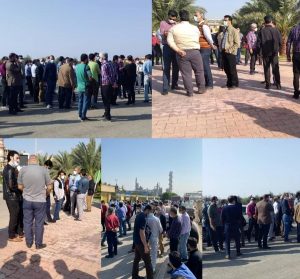
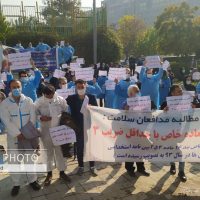
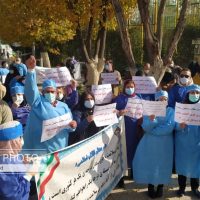
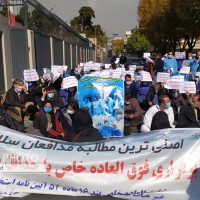
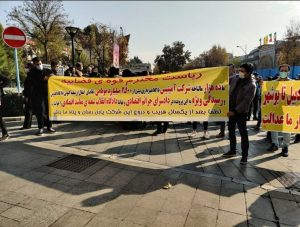
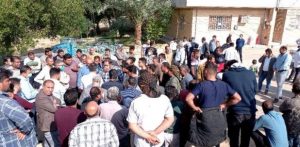
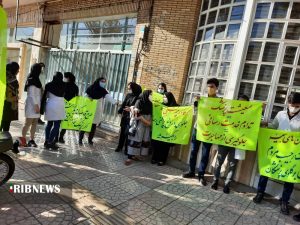
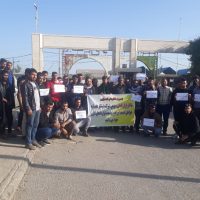
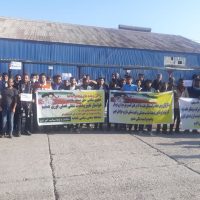
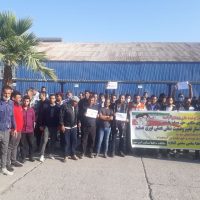
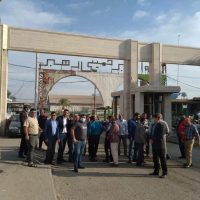
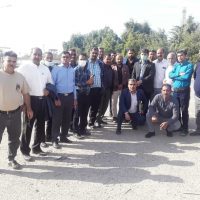
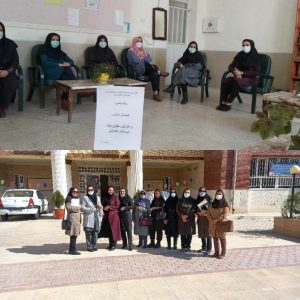
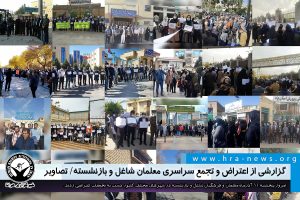
According to HRANA, the news agency of Human Rights Activists, a number of protests took place this week in Iran, many of which were continuations of ongoing movements.  Read our recap below for details, photos, and videos from the demonstrations.

Saturday, October 23

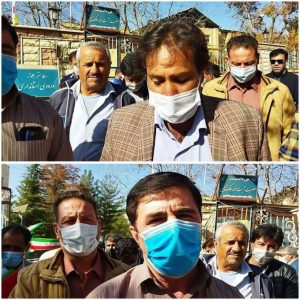
A group of contracted teachers and educators from the counties of Chaharmahal and Bakhtiari Province assembled in front of the government building in Shahrekord to protest this year layoffs.

“126 teachers have been fired this academic year,” one protestor stated at the demonstration. “These layoffs happened only to the educators of this province. The teachers with the same conditions, all over the county, continue their work.”, he added.

Sunday, October 24

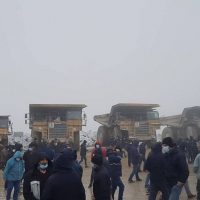
Workers for a heap leaching project at the copper mine Sungun Varzaghan assembled and protested their unpaid benefits this Sunday. 

Monday, October 25

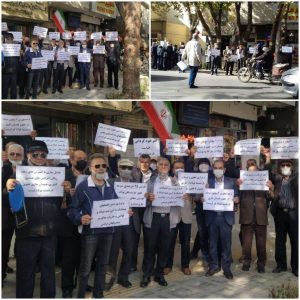
In various cities across the country, judiciary personnel assembled in front of their local justice buildings and protested worsening job conditions and the failure of authorities to address their demands.

These protests were held in Tehran, Zanjan, Hamedan, Qom, Arak, Babol, Borujerd, Chaedgan, Firuzabad, Kerman, Khandab, Kuhrang, Meybod, Lenjan, Sari, Mehr, Nahavand, Urmia, Paveh, Rumeshkan, Semirom, Shahrekord, Shirvan,Shut, Taft, Razan, Eslamshahr, and Tuyserkan.

A group of patients with the blood disorder thalassemia assembled in front of the Ministry of Health and Medical Education building in Tehran. They protested the shortage of medicine and the institution’s shortcomings in addressing their issues.

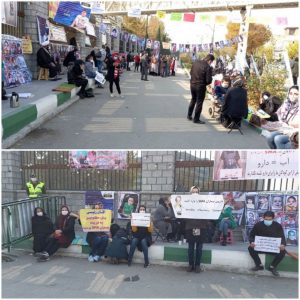
A number of retirees on the pension fund of steel corporation Fulad traveled from various cities to Tehran and assembled in front of the pension fund building. As a symbolic act, they spread tablecloths without any food to show they hardly afford living costs. They asked for a pension above the poverty line, free medical treatment and closing the gap in pension incomes. They claimed that Fulad’s pension fund has breached regulations.

A group of teachers and educators in Rafsanjan City who has passed the recruitment exam taken by the Ministry of Education assembled in front of the building of this ministry in Rafsanjan.

“We are 62 teachers and all have been passed the recruitment exam, nonetheless, we have not been recruited,” one of the teachers commented. He added,  “Given that the Ministry of Education needed more than 200 teachers and there are a lot of local labour forces to be hired, why do they recruit from other cities?”

A number of athletes and paralympic medalists assembled in front of the government building in Damghan City. They protested the mismanagement of the county Ministry of Sport and Youth, as well as a shortage of sports facilities. According to these protestors, the sport salon allocated to them is often closed and each time they have to wait three hours for using the salon.

Bus and minibus drivers working in the transportation service of Southern Pars (Asaluyeh and Bandar-e Kangan) assembled outside the premises of the refineries. They protested against low wages in comparison to increasing transportation costs.

“Our wage is lower in comparison to the vehicle depreciation costs,” one protestor said, “and even though it is not enough, they delay payment.”

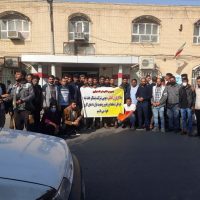
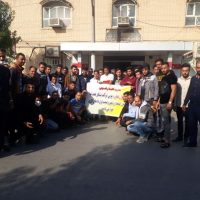
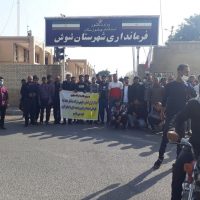
A number of young job seekers in Shushtar city assembled in front of the Karun Agro-industry Complex. They asked for recruitment of local job seekers in this industry complex. They find it unfair that, despite having several big corporation in this city, many skilled and educated workers remain jobless.

Some personnel of the Real Estate Registration Organization of Iran assembled and protested in front of the office of a member of the parliament in Qazvin.

A group of market workers in the border village Sheykh Salleh assembled to protest against the assigning  of border affairs to a non-native company.

Tuesday, October 26

A number of workers of Omidiyeh Water and Wastewater Company assembled in front of the government building of this city.

These workers said that despite promises from supervisors, they have four-month unpaid wages. Moreover, the end of year bonuses and three years end of service benefits have not been paid. They have protested several times in the past, but every time, they have not received an adequate response from authorities.

The retirees of Imam Khomeini hospital in Karaj assembled in front of this hospital to promote their demands on Tuesday.

For the second day, the retirees of the pension fund of the steel corporation Fulad assembled in front of the pension fund building in Tehran.

A group of retirees and working personnel of airline company Homa assembled in front of the building of Iran Ministry of Roads & Urban Development. They asked for fair and timely wages. According to these protestors, not only is the pension insignificant, but also there have been significant payment delays.

A number of farmers from eastern Isfahan assembled in front of the building of the Ministry of Agriculture Jihad. They protested not receiving their water shares and rights.

Workers of contractor companies delivering services like gardening, maintenance and transport for Pars Oil and Gas Company assembled in Asaluyeh to demand increased wages, supplementary insurance, and implementation of the Job Classification plan.

In Isfahan and Yazd Provinces, a number of people with hearing impairment assembled in front of the buildings of the State Welfare Organization of Iran. They cited livelihood problems, including denial of right to housing and insurance, as the reasons for their protest.

Wednesday, October 27

For the third consecutive day, a group of workers of Gachsaran Petrochemical Company protested at their workplace and then in front of the government building of Gachsaran.

They said that the contractors discriminates against the native laborers and threatens them to be fired. Reportedly, these contractor companies have raised the wage of non-native labor but not the native ones.

Some personnel of the Azad University, unit “Yadegare Imam” in Shahr-e-Rey city assembled and protested at the university premises to protest ongoing mismanagement. Reportedly, this protest turned somewhat violent.

A number of people who have lost their money in their accounts with Cryptoland, a cryptocurrency exchange, protested in front of the Tehran Courthouse. They demanded that legal processing return their losses.

A number of disabled war veterans assembled in front of the building of the Foundation of Martyrs and Veterans Affairs in Tehran. They protested poor living conditions and the non-implementation of some protective laws

Thursday, October 28

A number of workers of Khorramshahr municipality assembled in front of the building of the municipality to protest against a six-month delay in payment and other demands.

In Isfahan, a number of people with hearing loss assembled in front of the buildings of the State Welfare Organization of Iran.

A number of workers of the Kut-Abdollah municipality protested in front of the Governorate building of Khuzestan Province. They asked for the payment of their delayed wages.

Susan Rezaei-Poor Executed in Central Prison of Qazvin

On Wednesday, October 27, a female inmate who had been convicted of murdering her husband was executed in the Central Prison of Qazvin.

According to HRANA, the news agency of Human Rights Activists, quoting Iran Human Rights, Susan Rezaei-Poor, who had been previously sentenced to death, was executed in the Central Prison of Qazvin after spending six years in prison.

“Susan was forced by her family to marry her cousin without her consent,” an informed source stated. “In her confession, she said that her husband used to get drunk from the afternoon until late at night and beat her every day. Completely fed up with his behavior, she ultimately killed him.”

The most recent report of the Statistics and Publication Center of the Human Rights Activists in Iran (HRA) states that between October 8 of 2020 and October 9 of 2021, at least 266 citizens, including three juvenile offenders, were executed and 90 citizens were sentenced to death.

As the report points out, Iran’s judicial authorities do not publicly announce over 82% of executions. These unreported executions are known as “secret executions” by human rights organizations.

Rezaei-Poor’s execution has not been reported by official sources in Iran as of this writing.


Ahmadreza Haeri Summoned to the Cybercrime Court of Tehran

Following a complaint from the Prisons and Security and Corrective Measures Organization of Tehran Province (PSCMO), former political prisoner Ahmadreza Haeri was recently summoned to the Cybercrime Court of Tehran.

According to HRANA, the news agency of Human Rights Activists, this Friday, October 29, Haeri was summoned on charges of “spreading lies, accusative, insulting and slanderous words”.

One month after the incident known as “Black Thursday of Evin Prison”, when dozens of political prisoners in Evin Prison were beaten brutally by security agents in Ward 350 of Evin prison, Ahmadreza Haeri was sentenced to 42 months in prison by Branch 15 of the Revolutionary Court of Tehran, headed by Judge Salavati.

This initial verdict was upheld by Branch 36 of the appellate court. However, following his lawyer’s objection, the verdict was revoked and this time the case was undertaken by Branch 54 of the court of appeals which sentenced him to six months in prison and 74 lashes.

On July 25, 2020, Haeri endured the flogging by the Intelligence and Public Security Police of NAJA and then was sent to the Greater Tehran prison to serve his six-month sentence. On October 8, 2020, he was released on probation from the Greater Tehran prison.

In this new subpoena from the Cybercrime Court of Tehran, Haeri was instructed to appear there within five days.

Mohammad Davari Released from Adel-Abad Prison in Shiraz

On Thursday, October 29, workers’ rights activist Mohammad Davari was released by a guarantor from Adel-Abad Prison in Shiraz.

According to HRANA, the news agency of Human Rights Activists, Ministry of Intelligence forces arrested Mohammad Davari in Shiraz  on October 2, 2019, and transferred him to the detention center known as House No. 100 at the disposal of the intelligence ministry.

Thereafter, security forces searched his house and confiscated some of his belongings including books and written notes. After successive interrogations in the detention center, on January 11, 2020, Davari was relocated to Adel-Abad Prison. From there Davari was released on bail of 1.5 billion tomans temporarily, until the end of the legal proceedings.

In April 2020, the Revolutionary Court of Shiraz, headed by judge Seyed Mahmood Sadati, sentenced Davari to seven years and six months imprisonment on a charge of “membership in one of opposition political parties” and one year in prison on a charge of “propaganda against the regime”.

This verdict was reduced to three years and nine months in prison by Branch 1 of the Court of Appeal of Fars Province. Grounded on Article 134 of the Islamic Penal Code, a severest punishment of two years and nine months for both charges is enforceable.

On December 16, 2020, Davari appeared at the executive unit of the General Court to endure his prison sentence in Adel Abad Prison.

Davari has a graduate degree in civil engineering from Islamic Azad University and is a masters student of Political Science at Shiraz Golestan University.

He had previously faced other arrests and convictions due to his civil activities. In one case, he was arrested following the death of Hashemi Rafsanjani when he pulled down a banner bearing Rafsanjani’s photo. He was later released on bail.

On September 9 of this year, the court granted Davari release by a guarantor. Despite providing a guarantor by his family, he was not released. Instead, without informing his family and lawyer, he was secretly relocated from Adel-Abad prison to a solitary confinement cell in the detention center of the intelligence ministry where he faced news charges. Two days later, he was sent back to Adel-Abad prison. Just a few hours after his relocation, he was denied having phone calls. Nearly two months later, Davari has finally been released.


Seventeen People Arrested for “Promoting Western Lifestyle” on Instagram Pages in Behshahr

Seventeen people were recently arrested in Behshahr for reasons related to their activity on their personal social media pages.

According to HRANA, the news agency of Human Rights Activists, quoting Rokna News, the Iranian Cyber Police cited “promoting a western lifestyle, publishing obscene pictures and modelling ads” as the reasons for the arrests.

By order of a judge, the police erased all contents of the cited posts and replaced them with FATA’s logo. What the regime labels as “promoting a western lifestyle” has long been a source of tension between the regime and the Iranian people.

Imposing a certain lifestyle on citizens stands in blatant violation of Article 3 of the Universal Declaration of Human Rights which entitles everyone the right to life, liberty and security of person. Additionally, Article 12 of this declaration affirms, “One shall be subjected to arbitrary interference with his privacy, family, home or correspondence, nor to attacks upon his honor and reputation. Everyone has the right to the protection of the law against such interference or attacks.”