Political Prisoner Injured After Protest by Self-Immolation in Evin Prison

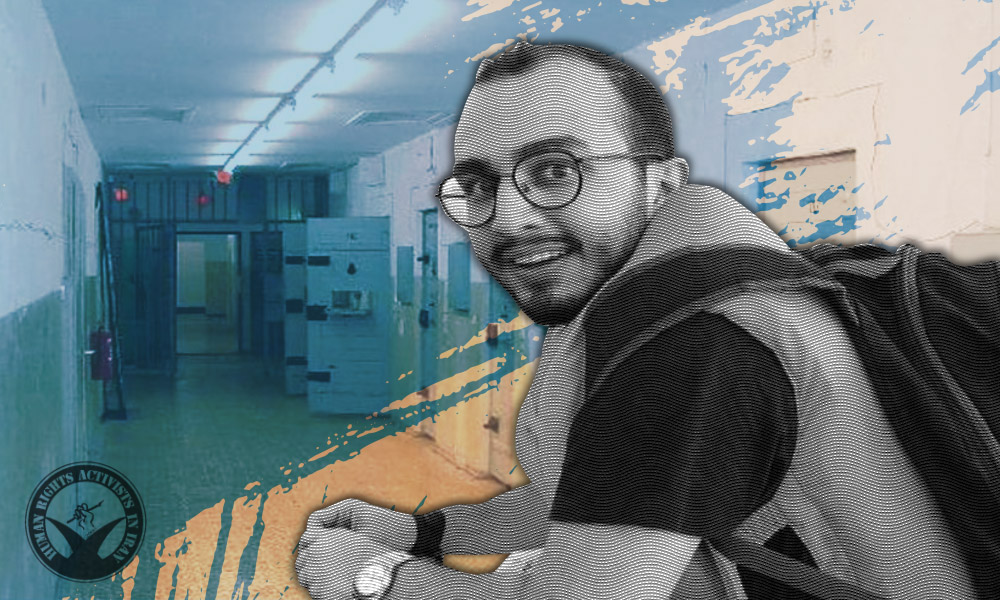
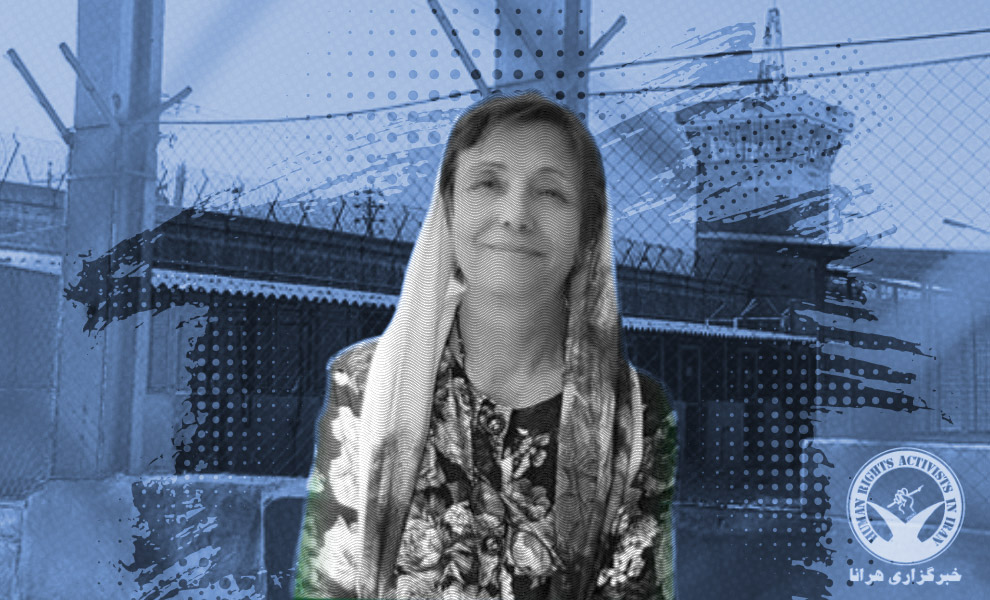
On Wednesday, October 27, political prisoner Mehdi Darini was injured by self-immolation and hospitalized in the healthcare center of Evin Prison.

According to HRANA, the news agency of Human Rights Activists, Darini’s demonstration was in protest of prison authorities’ refusal to release him on probation. He is currently enduring the second year of a five year term in Evin Prison in Tehran.

An informed source told HRANA that Darini had previously warned prison officials about his intentions if the interrogator refused to consider his demand to be released.

During the last interrogation, in response to his stating his intention to go on a hunger strike, the interrogator reportedly said, “All the better; the regime has already too many hungry mouths to feed.”

35-year-old Mehdi Darini, a production engineer, was sentenced to five years in prison by the Revolutionary Court of Tehran on a charge of ” blasphemy” and one year on a charge of “propaganda against the regime”. According to Article 134 of the Islamic Penal Code, a severest punishment of five years is enforceable.

Editor of News Outlet ‘Miandoab Press’ Summoned to Endure Eight Month Prison Sentence

On Wednesday, October 5,  Manoochehr Aghai, Editor of the news outlet Miandoab Press, was sent to Miandoab Prison to begin his sentence.

According to HRANA, the news agency of Human Rights Activists, Aghai had previously been sentenced to eight months in prison on a charge of “propaganda against the regime”.

Aghai was sentenced in absentia. During the trial, published online news reports and viewers’ comments under his posts on social media were invoked as evidence against him.

Four Workers Killed and Three Injured due to Unsafe Workplace Conditions

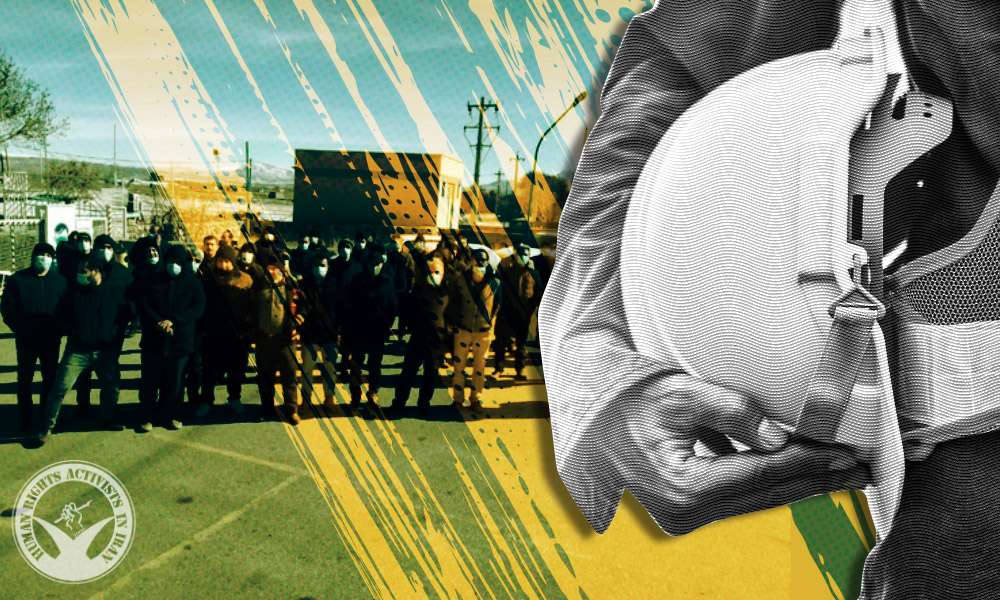
On Tuesday, October 26, in Abhar City, unsafe workplace conditions at steel company Fulad-Nab Arash led to a fatal accident in which four workers were killed and three injured.

According to HRANA, the news agency of Human Rights Activists, quoting ISNA, the cause of death for the three killed workers was nitrogen asphyxiation.

“On Tuesday at 4 pm, the medical emergency center was called about a work accident in Fulad-Nab Arash Company located in one of the industrial estates in Abhar City,” the public relations officer of the medical emergency of Abhar commented. “Immediately three ambulances were dispatched to the spot.”

He added, “One worker lost consciousness due to suffocation by nitrogen gas. Two others rushed to save him, but, unfortunately, they  suffocated too and all three lost their lives on the spot.”

The medical superintendent of forensic medicine of Abhar added that four other workers were injured. Three have been discharged from the hospital and the last is still under medical treatment.

The medical superintendent of forensic medicine in Lorestan Province reported that only in the first six months of this year, 346 workers have killed or injured in this province.

Iran ranks 102 in workplace safety out of 189 countries.

Inmate Executed in the Central Prison of Karaj City

On Wednesday, October 20, an inmate was executed in the Central Prison of Karaj City.

According to HRANA, the news agency of Human Rights Activists, quoting Iran Newspaper, the inmate had been previously sentenced to death for murdering his wife.

The report states that on November 12, 2018, a middle-aged man reported to the police station in Khoramdasht in Karaj city that his daughter was missing and had not returned home after leaving to go to university.

After a few days, the police found the missing girl’s half-burnt body beside a road. Forensic medicine revealed that the victim had been suffocated to death before the body was burned.

From further investigation, it turned out that after she found out about her husband’s cheating, she was killed by her husband and with the aid of his mistress. Reportedly, the man confessed the crime at trial. Subsequently, the court sentenced him to death and his mistress to ten years in prison on the charge of aiding in kidnapping and murder. The verdict was confirmed by the supreme court of Iran.

The most recent report of the Statistics and Publication Center of the Human Rights Activists in Iran (HRA) states that between October 8 of 2020 and October 9 of 2021, at least 266 citizens, including three juvenile offenders, were executed and 90 citizens were sentenced to death.

The report does not mention the name of the executed man.

Three Political Prisoners Transferred from Urmia Prison to an Unknown Location

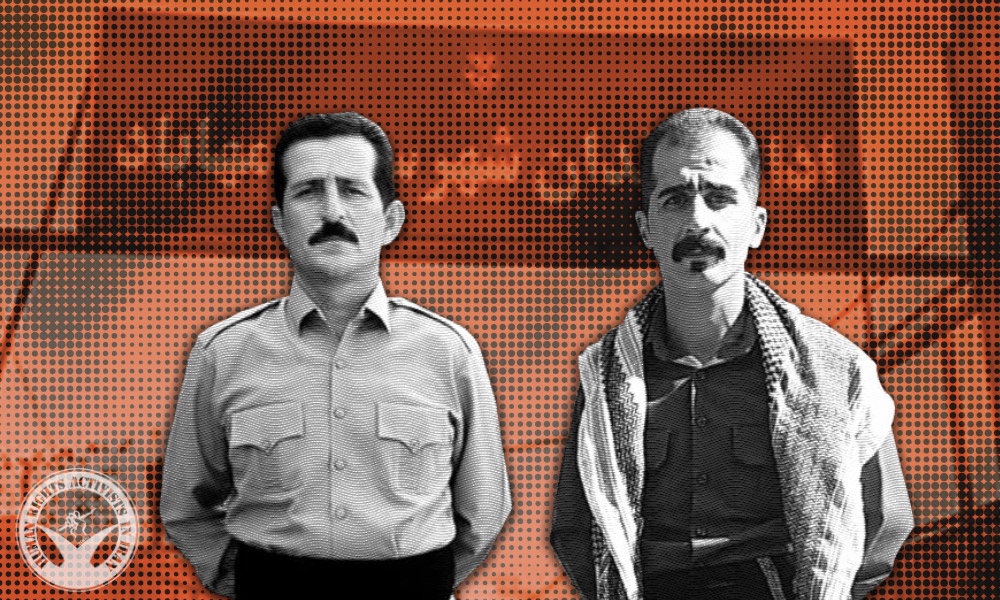
Sunni political prisoners Mohyedin Ebrahimi, Mohyedin Tazehvared and Davood Jabbari were recently transferred from Urmia Prison to an unidentified location. Given that two of these prisoners have been sentenced to death, this relocation raises concerns about them.

According to HRANA, the news agency of Human Rights Activists, the whereabouts and conditions of these prisoners are unknown as of this writing. This relocation took place following the confirmation of the death sentences for Mohyeldin Ebrahimi and Mohyeldin Tazehvared. They have asked for a retrial.

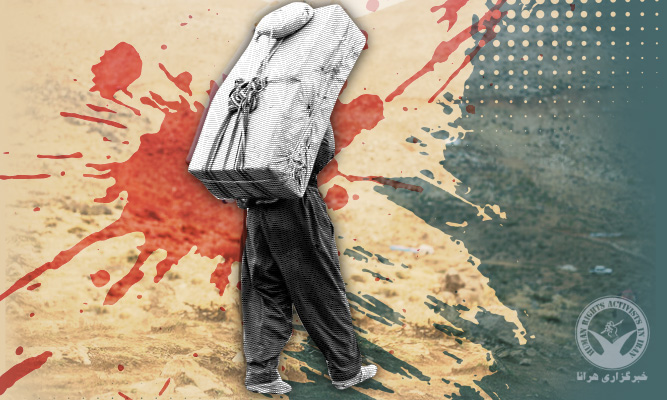
On October 23, 2017, Mohyedin Ebrahimi was wounded by direct fire from an Iranian officer at Iraq’s border and arrested on a charge of smuggling alcoholic beverages. Branch 2 of the Revolutionary Court of Urmia subsequently sentenced him to death. Following an overturn of the verdict by the supreme court of Iran, the case was sent back to Branch 2 of the Revolutionary Court for re-examination. The supreme court confirmed the verdict, and the death sentence was upheld.

On October 29, 2018, Mohyedin Tazehvared was arrested by security forces and transferred to Urmia Prison until the end of legal proceedings. He was also sentenced to death by Branch 2 of the Revolutionary Court of Urmia. Until now, his request for a retrial has not been answered.

On June 4, 2017, Davood Jabbari was arrested and then sentenced to 18 years imprisonment on the charge of “membership in ISIS (Daesh)”.

Subscribe to Our Newsletter

Now is definitely not the time to stop reading!

Four Baha’i Citizens Released on Bail in Shiraz

On Tuesday, October 27, Baha’i citizens Moeen Misaghi, Negareh Ghaderi, Hayedeh Forootan and her son Mehran Mosala-Nejad were released on bail in Shiraz until the end of legal proceedings.

According to HRANA, the news agency of Human Rights Activists, each of these citizens has been granted a bail of 800 million tomans.

On September 22 and 23, security forces arrested the citizens and transferred them to solitary confinement cells in block 201 of the police detention center in Shiraz City, where were held until their release.

On September 22,  after the inspection of their house, Moeen Misaghi and Negareh Ghaderi were arrested and transferred to an unidentified location. Meanwhile, security forces raided Hayedeh Forootan and her son’s house to arrest them, but they were not at home. The security forces searched the house and confiscated some of their belongings. These citizens were summoned to the Shiraz CID Police of NAJA office to give some explanations. She was arrested upon arrival. Twice before, their house had been searched by security forces. According to an informed source, during the search, the security forces behaved brutally and carelessly so that they caused their two-year old daughter to be burnt by a bowl of hot soup.

According to unofficial sources, it is estimated that more than 300,000 Baha’is live in Iran, but the Iranian constitution recognizes only Islam, Christianity, Judaism, and Zoroastrianism. Because their faith is not considered legitimate by authorities, the rights of Baha’is in Iran have been systematically violated for years.

This deprivation of the freedom to practice their religion is a breach of Article 18 of the Universal Declaration of Human Rights, and Article 18 of the International Covenant on Civil and Political Rights. The United Nations covenant holds that every person has the right to freedom of religion, freedom of converting religion, as well as freedom of expression, individually or collectively; openly or secretly.

Amir Hossein Moradi Offered Release on Bail

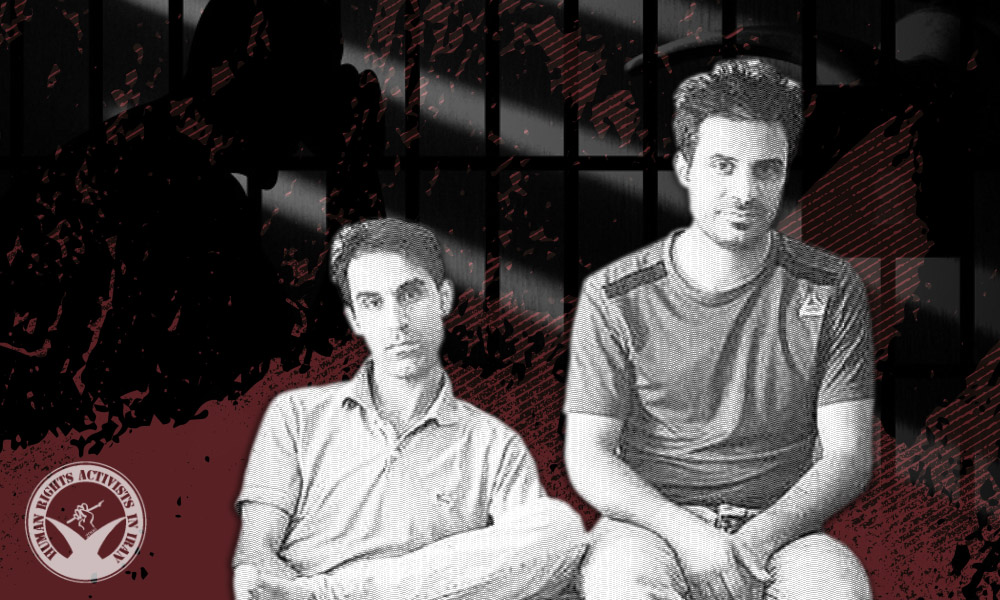
Earlier this Tuesday, October 26, the court granted bail to Amir Hossein Moradi, who was arrested in relation to the nationwide protests of November 2019.

According to HRANA, the news agency of Human Rights Activists, Moradi is currently hospitalized for a skin disease. Based on this court order, if he pays the required 4 billion tomans bail, he will be set free upon being discharged from the hospital. This has been confirmed on the personal social media page of Babak Pak-Nia, Moradi’s lawyer.

Amir Hossein Moradi, Saeed Tamjidi, and Mohammad Rajabi were sentenced to death by the Tehran Revolutionary Court, before a global outcry led to the re-examination of their case.

On Jun 24, 2020, the Human Rights Activists News Agency (HRANA)  announced that the death sentence of the three political prisoners had been upheld by the Supreme Court. On July 14, 2020, the spokesman of the Judiciary officially announced the confirmation of their death sentences and said that the sentences had been sent to the prosecutor’s office for execution.

However, according to the lawyers, permission to enter the trial and study the case was given to them on July 15, 2020–weeks after HRANA reported that the death sentence had been confirmed in the Supreme Court.

Less than an hour after the official confirmation of the death sentences for Amir Hossein Moradi, Saeed Tamjidi, and Mohammad Rajabi, “#Don’t_execute” became the world’s top trend with hundreds of thousands of tweets. Human Rights Watch, US President Donald Trump, the Writers’ Association of Iran, and others all reacted to this news. The hashtag has now been used more than ten million times.

The following day, UN human rights experts issued a statement and condemned the death sentences. The statement expressed that Amir Hossein Moradi, Saeed Tamjidi, and Mohammad Rajabi were tortured and forced to confess and that these forced confessions were later used against them in their trials. HRANA has previously conducted numerous conversations with informed sources and extensive research to determine what happened to the prisoners in the various processes of activity up to the conviction.

On July 19, 2020, the three defendants’ lawyers issued a joint statement announcing that the case had been referred to a different branch for retrial after the Supreme Court’s acceptance of Article 477.

In mid-December of 2020, in the aftermath of the global outcry, the young activists’ request for a retrial was finally accepted by Branch 1 of the Supreme Court and their death sentences were finally overturned.

The retrial process since has been comparably unstructured. The cases were submitted to Branch 23 of the Revolutionary Court of Tehran for retrial following overturn of their death sentnece, but, due to turnover in the head of the branch, the court session was postponed to May 12. Once again, the court session was cancelled due to the absence of the second judge. In July, their court session was postponed for a fourth time.

Moradi’s release would mark a rare victory in the ongoing legal battle facing so many of those who were involved in the nationwide protests of November 2019.

Golaleh Moradi Still in Detention After Six Months

After six months, Piranshahr resident Golaleh Moradi is still in detention in Urmia Prison.

According to HRANA, the news agency of Human Rights Activists, quoting Kurdpa, no court session has been held as of yet. Moradi has has been denied conditional bail as well as access to a lawyer throughout her detention.

On April 17 of this year, Golaleh Moradi was arrested along with her two children and transferred to a detention center in Urmia City. Her children were released after completing the interrogation process, but Moradi was then relocated from the IRGC detention facility to Urmia Prison in June.

“She has been under pressure for confession,” an informed source stated.


One Worker Killed, Two Others Injured due to Unsafe Workplace Conditions

In recent days one worker lost his life and two others were injured due to due to unsafe workplace conditions.

According to HRANA, the news agency of Human Rights Activists, quoting ILNA, spokesperson of the Tehran Fire Department Jalal Maleki announced the severe injury of one firefighter during a recent firefighting operation.

“At 1:24 am, the Fire Department was called on about an extensive fire in a commercial building and immediately firefighters of five stations dispatched to the spot,” Maleki commented. “The building had three floors as well as an attic. On the third floor, five stores were totally burned and the fire (had) spread to the attic. When the firefighters reached on spot, the fire had swept through the entire third floor. They began immediately to extinguish the fire with regard to all (safety) issues. But a part of the roof was demolished and one of the firefighters who was wounded was transferred to the hospital.”

According to IRIB, a fire incident in a cotton products factory in Garmsir City caused injury to a worker.

“Two teams were dispatched to the spot and extinguished the fire after thirty minutes,” the head of the fire department in Garmsir City commented.

According to him, a man about 70 years old was injured from the fire and subsequently transferred to a hospital.

According to ISNA, the head of the fire department of Mashhad City additionally announced the death of a young worker due to the debris falling in a building during the demolition process.

According to him, for unknown reasons, the debris fell on a worker and killed him, after which firefighters pulled his body from the debris.

Zia Nabavi’s One-Year Sentence Upheld by Court of Appeals

Branch 36 of the Court of Appeals in Tehran recently upheld a one year sentence for student activist Zia (Zia-el-din) Nabavi.

According to HRANA, the news agency of Human Rights Activists, the Revolutionary Court of Tehran had initially convicted Nabavi on a charge of “propaganda against the regime”.

The sentence included one year in prison including other unconventional punishments like monthly attendance of martyrs’ burial grounds in Behesht-e Zahra cemetery, disabled veteran sanatorium, emotional control courses and the prohibition of leaving the country for two years.

On February 25, 2020, Nabavi was arrested by security forces in Tehran and released on bail on March 2, 2020. He had previously faced other arrests and convictions due to his non-violent activities.