At Least Four Civil Activists Detained for Several Hours Following a Protest Rally in Tehran

On Wednesday, September 8, a number of civil activists were arrested in a protest rally related to the recent changes in Afghanistan and taken to an unknown location.

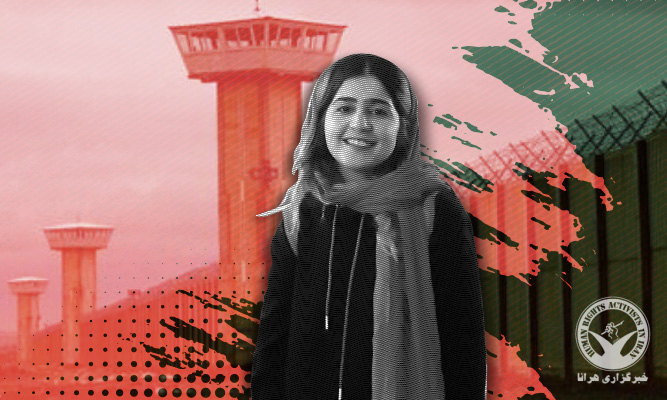
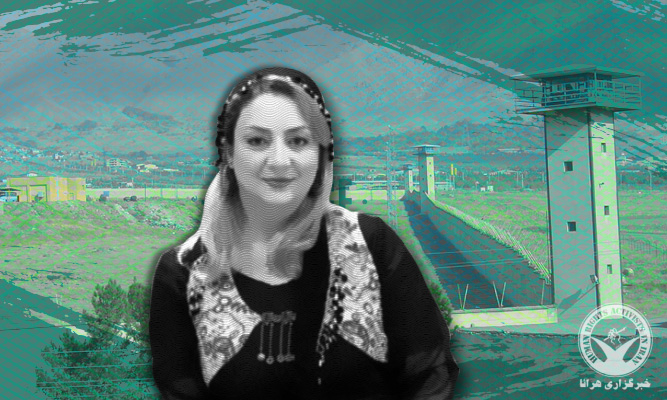
According to HRANA, the news agency of Human Rights Activists, Narges Mohammadi, Ahmad Reza Haeri, Pouran Nazemi, Vida Rabbani were among the arrested activists.

The rally was marred by violence by security and police forces. The mobile phones of several protesters were confiscated and only returned on condition of deleting the taken videos and photos. Some Afghans are said to be among the detainees.

Protesters carried placards and chanted slogans in support of Panjshir resistance and Afghan women, and against the Taliban and the Islamic Emirate.

The arrested activists were released after a couple of hours, on the evening of the same day.

Recently, Branch 2 of the Evin Prosecutor’s Office filed a lawsuit against Ms. Nazemi and Ms. Mohammadi, and seven other activists. These activists were also arrested and detained for a couple hours on July 20 during a rally in support of the people of Khuzestan in Tehran.


Two Citizens Detained in Sanandaj and Taken to Unknown Location

On Monday, September 6, two citizens were arrested by security forces in Sanandaj in Kurdistan Province.

According to HRANA, the news agency of Human Rights Activists, quoting Kurdpa, the citizens were taken to an unknown location following their arrest.

The report has identified the detainees as Behrouz Azizi and Rasoul Azizian, both from the village of Mehrab in the Sanandaj area. The reasons for their detention and whereabouts are still unknown.

Supreme Court Upholds Death Sentence Issued in Yazd

According to HRANA, the news agency of Human Rights Activists, quoting Tasnim, the Supreme Court recently upheld the death sentence issued in Yazd.

Gholam-Ali Dehshiri, the Chief Justice of Yazd Province, announced a death sentence of a person who was “fortune-teller” on a charge of “corruption”, and said that this sentence had recently been upheld by the Supreme Court.

Iran ranks first in the world in citizen executions per capita, according to international organizations. The Statistics and Publication Center of the Human Rights Activists in Iran (HRA) reported that between January 1 and December 20 of 2020, at least 236 citizens were executed.

One of these citizens was executed publicly, and two were juvenile offenders. An additional 95 citizens were sentenced to death. According to the same report, more than 72% of executions in Iran are not reported by the government or the judiciary, which human rights organizations call “secret” executions.

Eight Economic Defendants Sentenced to Lashes in Tehran

Recently, eight economic defendants in Tehran were sentenced to imprisonment and lashes.

According to HRANA, the news agency of Human Rights Activists, quoting the IRIB, part of the case is still under process in court.

Based on this report, Zabihollah Khodaeian, the spokesman of the Judiciary, announced that Reza Hamzeh-Lou, Abbas Samimi Na’eb, Alireza Alaei Rahmani, Mostafa Tehrani, Mohsen Ahmadian, and Marjan Shaykh-ol-Eslami received the same charges and sentences.

According to Khodaeian, they were charged with “participating in major disruptions in the economic system through manipulation in the distribution of 6 billion and 656 million euros, earned from the export of petrochemical products”, and each were sentenced to 20 years in prison, 74 lashes, financial penalties, and permanent deprivation of any government services.

Khodaeian added, “Also, Sam Hamed Sa’edian and Abolfazl Maleki Shamsabadi were each sentenced to 15 years in prison, 74 lashes in public, and deprivation of any government services along with financial punishment on charges of participating in major disruptions in the country’s economic system.”

According to Khodaeian, these rulings are final and unable to be appealed unless by retrial.

Iran is one of the few countries that has continued to use humiliating punishments despite the International Covenant on Civil and Political Rights explicit prohibition of the use of inhumane and degrading punishments, including the death penalty and flogging.

Azerbaijani Turk Activist Ali Shahi Arrested by Security Forces in Ardabil

On Friday, September 3, Azerbaijani Turk activist Ali Shahi was arrested by security forces and taken to an unknown location.

According to HRANA, the news agency of Human Rights Activists, security forces searched Shahi’s home in Ardabil and confiscated some of his belongings, including his cell phone and computer.

As of this writing, the reasons for his arrest, the charges against him, and his whereabouts are unknown.

Subscribe to Our Newsletter

Now is definitely not the time to stop reading!

60% of Workers in Iran are Uninsured, a New Statistical Report Says

A statistical report published by the Research Center of the Islamic Consultative Assembly shows that 60% of the country’s workers are uninsured.

According to HRANA, the news agency of Human Rights Activists, quoting Keyhan, this means that the employed person is not only deprived of insurance benefits but the years he or she worked will not be counted as part of his or her working records.

As a result, the worker will be deprived of both unemployment insurance and retirement benefits when they need them.

Mentioning that the insurance status of workers is not acceptable at all, Fathollah Bayat, chairman of the Union of Contract Workers, said, “The government can identify uninsured workers in various ways, including self-declaration.”

“The government must provide a registration system for uninsured workers to identify these people and must think of a plan to insure them,” Bayat added. “If a worker is not insured, s/he has no future, and in case of work accidents, disability, or retirement s/he will have no income.”

Prisoner who was Sentenced to Death Based Solely on Qassameh (Swearing) in Imminent Danger of Execution

Ali Mardan Boland Gerami, a citizen of Yasuj, is on the verge of execution despite a clear lack of sufficient evidence.

According to HRANA, the news agency of Human Rights Activists, Gerami’s sentence is based only on “Qassameh”.  Qassameh is an accepted form of proof of guilt within Iran’s legal system based solely on relatives’ oaths.

Mr. Gerami was sentenced to death for murdering his wife while the court did not find adequate evidence, it made the ruling based on the swearing of the family of the wife.

After filing the appeal request, the case was referred to a court of equal rank where the death sentence was confirmed. The Supreme Court also upheld the sentence. Mr. Gerami’s case has been transferred to the Judgment Enforcement Unit and now he is on the verge of execution.

“Six days ago, the death sentence was supposed to carry out, but the family was able to get more time,” an informed source said. “This opportunity will end tomorrow and he may be executed at any moment.”

Swearing (Qasameh) is one way, within the Islamic jurisprudence and criminal law in Iran, to prove crimes related to murder and physical injuries when there is no enough evidence against the suspect. In case of premeditated murder, the relatives of a plaintiff must bring 50 relatives to the court to swear an oath that the defendant is guilty. The number is 25 for unpremeditated murder.

Inmate Executed in Vakilabad Prison on Charge of Murder

At dawn on Sunday, September 5, a prisoner named Karamat who had previously been sentenced to death for murder was executed in Vakilabad Prison in Mashhad.

According to  HRANA, the news agency of Human Rights Activists, quoting Rokna, the sentence was upheld by Branch 31 of the Supreme Court.

Iran ranks first in the world in citizen executions per capita, according to international organizations. The Statistics and Publication Center of the Human Rights Activists in Iran (HRA) reported that between January 1 and December 20 of 2020, at least 236 citizens were executed.

One of these citizens was executed publicly, and two were juvenile offenders. An additional 95 citizens were sentenced to death. According to the same report, more than 72% of executions in Iran are not reported by the government or the judiciary, which human rights organizations call “secret” executions.

University Professor Bijan Abdolkarimi Fired for Defending Pahlavi Monarchy

On Saturday, September 4, Bijan Abdolkarimi was fired from his position at the North Tehran Branch of Azad University

According to HRANA, the news agency of Human Rights Activists, quoting Didban Iran, Abdolkarimi was dismissed from his position as associate professor in the Department of Philosophy for “defending Pahlavi monarchy”.

“He is not qualified to be a member of the faculty of the Islamic Azad University,” a section of the order states. “By this ruling, Bijan Abdolkarimi’s [teaching] code has been annulled since yesterday (Saturday, September 4), and the issued verdict is final and must be enforced.”

Bijan Abdolkarimi has 20 years of teaching experience. He is the director of the Culture Critique press and the translator of several books. According to Didban Iran, Mohammad Mehdi Tehranchi, the President of the Islamic Azad University, has issued a letter ordering a re-examination of Bijan Abdolkarimi’s file.

“The Supreme Board of Appeal examined the issue again and the execution of the sentence should be stopped until the hearing in the board,” Tehranchi said.

Azerbaijani Turk Activist Abbas Nikravan Arrested by Security Forces in Salmas

On Sunday, September 5, Azerbaijani Turk activist Abbas Nikravan was arrested by security forces and taken to an unknown location.

According to HRANA, the news agency of Human Rights Activists, Nikravan is a native  of Salmas in West Azerbaijan Province.

Mr. Nikravan has a history of detention. He was arrested in July 2018, during the annual gathering of Babak Castle, and was released on bail a week later.

As of this writing, no information is available on the reasons for his detention, the charges against him, or his whereabouts.