Exclusive Report: The Extra-Territorial Assassination of Mousa Babakhani

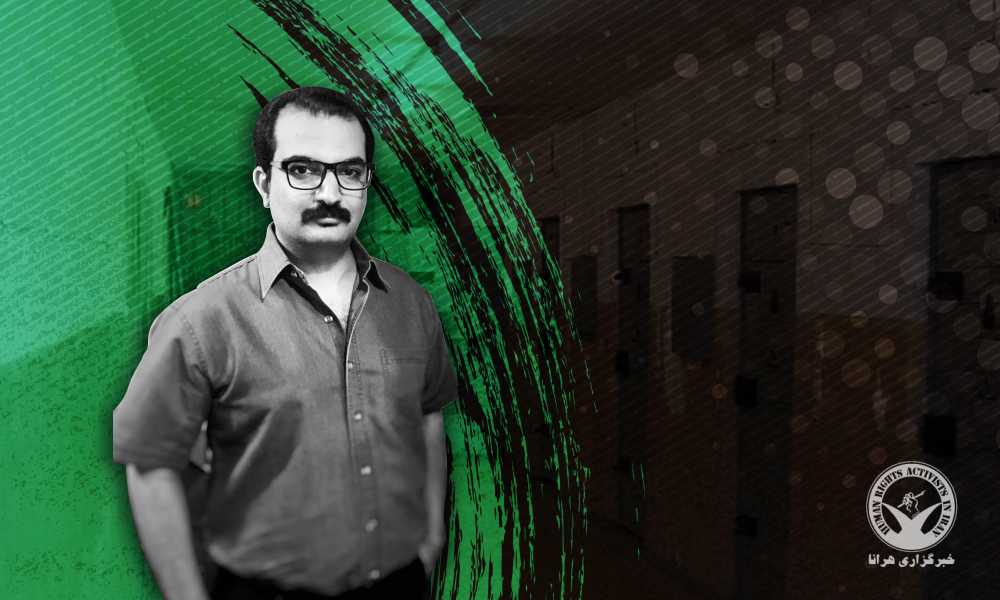
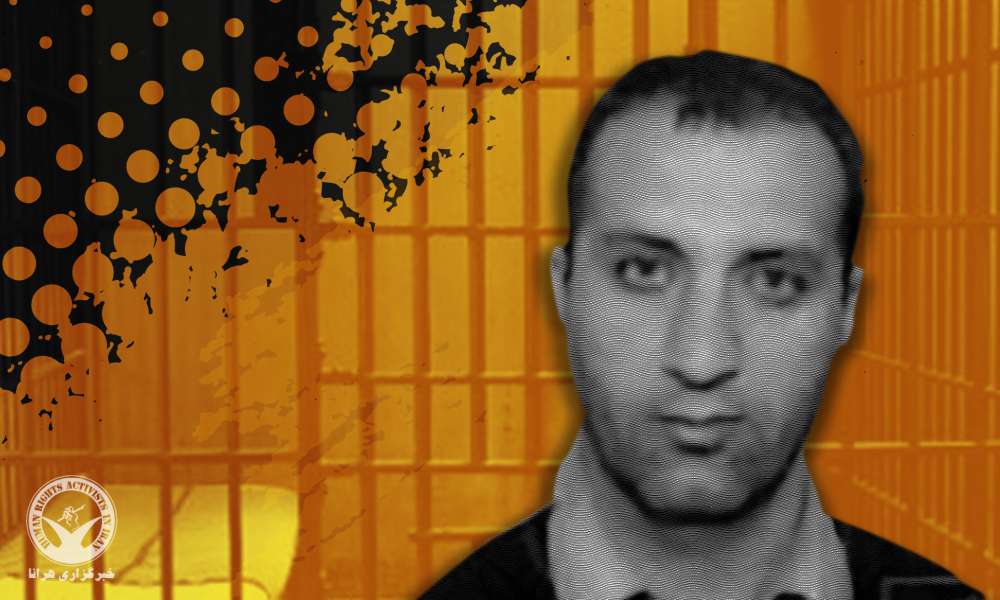
Human Rights Activists in Iran’s Spreading Justice team (HRA-SJ) has identified and profiled Sarmad Nazerfard as the individual responsible for the assassination of Mousa Babakhani in Iraqi Kurdistan.
Mousa Babakhani was a member of the Central Committee of the Kurdistan Democratic Party (KDP), a known opposition party of the Islamic Republic. Nazerfard is believed to have assassinated Babakhani before fleeing to Iran.


The Assassination


According to sources close to HRA, it is believed Nazerfard was commissioned by the security services of the Islamic Republic, namely the Revolutionary Guards Intelligence Organization.

Erbil police and third party news sources have confirmed that Nazerfard shot and killed Babakhani in an Erbil hotel on August 6th, 2021. An informed source stated to HRA-SJ, “The room where Mousa Babakhani’s body was found is a room registered to Nazerfard, who is also wanted by the Erbil police.”

Sources revealed to HRA-SJ that Babakhani traveled to Erbil to meet with Nazerfard. The two were in contact the night preceding the assasination.

Nazerfard allegedly stayed at the Goli Soleimani Hotel for eight months and had been in contact with Mr. Babakhani for several years, working to gain his trust. According to Ismail Sharafi, a member of the Central Committee, Mr. Babakhani believed that Nazerfard was a friend.

Hotel staff testified that Mousa Babakhani entered the hotel on his own and reported directly to Nazerfard’s room. Nazerfard reportedly confiscated Babakhani’s personal belongings, including  his mobile phone. Sourced believe Nazerfard carried the belongings with him upon fleeing to Iran.


Nazerfard Flees to Iran


It is believed that Nazerfard entered Iran via the Iraq-Iran border at Khanaqin. According to the Iraqi Kurdistan Regional Security Agency, in Erbil, Sarmad Nazerfard travelled to the border town of Khanaqin after leaving Babakhani.

According to the KDP, “Nazerfard was not a member of the Peshmerga or even a member of the party and his relationship with Mousa Babakhani was not a party affiliation at all.” The source continued,  “Sarmad’s name does not exist in any of the party’s organizational records.”


Who is Sarmad Nazerfard?


Born in Baghdad, Nazerfard, immigrated to Iraq at least four years before fleeing to Iran. Kamal Karimi, a member of  leadership of the KDP, confirmed in an interview with the judiciary that the history of Sarmad Nazerfard’s presence in Erbil dates back at least four years. According to Karimi, “Sarmad Nazerfard, also known as Saman Abdi and Sarmad Abdi in Erbil, had been in friendly relations with Mr. Babakhani after arriving in Erbil and had met him regularly.”

According to Kamal Karimi, Sarmad Nazerfard regularly traveled to Iraq and Khanaqin and always claimed that he was going to Baghdad to visit his father. According to Karimi, Sarmad even told the hotelier when he was about to leave the hotel after Babakhani’s assassination that he had to go to Baghdad immediately to visit his father.

The Role of the IRGC


There is a long history of IRGC commission murders in Iraqi-Kurdistan.

A member of KDP leadership stated, “Although we do not have reliable information about Nazerfard’s relationship to Iran’s security agencies, the Revolutionary Guards have previously carried out such work, and through this agency, people from Iran are given missions.” “They have previously come to Kurdistan to carry out sabotage and assassination.” Nazerfard, and those believed to have commissioned his services must be held accountable.

Extra-Territorial Assassinations


Extra-territorial targeted killing outside of war is a violation of international human rights law prohibiting the arbitrary deprivation of life. “Iran has long practiced extra-territorial assassinations against dissidents abroad. This illegal practice of state-sanctioned targeted killing must be condemned by the international community and perpetrators must be brought to justice,” said Skylar Thompson, Senior Advocacy Coordinator at HRA-SJ.

More information on Nazerfard can be found via this link to his unique Spreading Justice profile. If you have any additional information on Nazerfard you can anonymously submit to HRA-SJ  here. 

—–

For media inquiries please contact HRA Senior Advocacy Coordinator Skylar Thompson at [email protected]

Husband Confesses to Murder of 14-Year-Old Mobina Souri

Five days after news broke of the death of 14-year-old Mobina Souri, her husband confessed to having committed the murder. Souri is the victim of  what is classified under Islamic Law as an “honor killing”.

According to HRANA, the news agency of Human Rights Activists, “honor crimes” or “honor killings” are acts of assault or murder, usually towards women and usually committed by male relatives.

Under Islamic Law, in murder cases where the (usually-female) victim has been accused of “disgracing the family’s honor”, exemptions and sentence reductions are frequently granted to the murderers.

The scope of the ways “disgracing family honor” can be defined is extremely broad; women and girls can be accused for being victims of rape, getting a divorce (even from an abusive husband), committing adultery, or being suspected of having sexual relations before marriage.

14-year-old Mobina was also a victim of child marriage and was married to the young cleric in her village who ultimately killed her. The other suspects were released after the husband confessed.


Branch 13 of the Supreme Court Upholds Death Sentence

Branch 13 of the Supreme Court recently upheld the death sentence of a man.

According to HRANA, the news agency of Human Rights Activists, quoting Rokna, the defendant had been previously sentenced to death for murder by the Fifth Branch of the Criminal Court in Tehran.

Iran ranks first in the world in citizen executions per capita, according to international organizations. The Statistics and Publication Center of the Human Rights Activists in Iran (HRA) reported that between January 1 and December 20 of 2020, at least 236 citizens were executed.

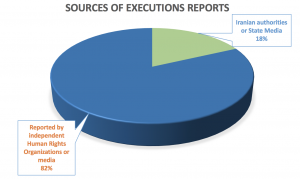
One of these citizens was executed publicly, and two were juvenile offenders. An additional 95 citizens were sentenced to death. According to the same report, more than 72% of executions in Iran are not reported by the government or the judiciary, which human rights organizations call “secret” executions.


Death Sentence Issued in Tehran

A man in Tehran was recently sentenced to death by the first criminal court of Tehran Province.

According to HRANA, the news agency of Human Rights Activists, quoting ILNA, the man was sentenced after being charged with murder.

Iran ranks first in the world in citizen executions per capita, according to international organizations. The Statistics and Publication Center of the Human Rights Activists in Iran (HRA) reported that between January 1 and December 20 of 2020, at least 236 citizens were executed.

One of these citizens was executed publicly, and two were juvenile offenders. An additional 95 citizens were sentenced to death. According to the same report, more than 72% of executions in Iran are not reported by the government or the judiciary, which human rights organizations call “secret” executions.

HRANA Recap: This Week’s Protests in Iran

According to HRANA, the news agency of Human Rights Activists, a number of protests took place this week in Iran, many of which were continuations of ongoing movements.  Read our recap below for details, photos, and videos from the demonstrations.


Saturday, August 28

A group of workers from Arkan-Sales of the National Iranian Drilling Company NIDC, a group of teachers  and educators in Tehran, and workers of Omidieh Municipality held protest rallies this Saturday.

Workers from Arkan-Sales of NIDC:

Workers of Omidieh Municipality:

Teachers and educators in Tehran:


Sunday August 29 and Monday August 30

A group of workers of Omidieh Municipality for the second and third day in a row, some workers of Bostan Municipality, a number of staff and employees of Khuzestan Health plan Project in Ahvaz, some employees of Jihad Nasr Company of Kermanshah, and a group of workers of Miandoab Municipality held demonstrations on Sunday and Monday of this week.

Employees of Jihad Nasr Company of Kermanshah:

Workers of Omidieh Municipality:

Workers of Khuzestan Health Project:

Workers of Bostan Municipality:

Workers of Miandoab Municipality:

Tuesday, September 31

A group of project workers of Izeh City, several employees of Shiraz Health Center, a group of workers of Miandoab municipality, a number of workers of Omidieh municipality for the fourth consecutive day, some of the shareholders of Rigan Khodro and Shahr Khodro in Tehran, and contractor workers of ODCC  of Isfahan refinery all rallied this Tuesday to protest authorities’ ongoing neglect of their demands.

Employees of Shiraz Health Center:

Project workers of Izeh city:

Workers of Miandoab municipality:

Workers of Omidieh Municipality:

Protest of shareholders of Rigan Khodro and Shahr Khodro in Tehran:

Workers of ODCC of Isfahan refinery:

Wednesday, September 1

A group of employees of Kurdistan University of Medical Sciences in Sanandaj, a number of workers of Omidieh Municipality for the fifth day in a row, a group of fired workers of Haft Tappeh Sugarcane Agro-Industry Co., and a number of workers of Khorramshahr Municipality held protest rallies on Wednesday. 

Employees of Kurdistan University of Medical Sciences:

Workers of Omidieh Municipality:

Dismissed workers of Haft Tappeh Sugarcane Agro-Industry Company:

Thursday, September 2

A group of municipal service workers of Miandoab Municipality and a number of employees of Sarvan Municipality demanded their requests to be addressed in protest rallies.

Workers of Miandoab Municipality:

Subscribe to Our Newsletter

Now is definitely not the time to stop reading!

14-Year-Old Mobina Murdered in Lorestan in what Islamic Penal Code Classifies as “Honor Killing”

On Monday, August 30, 14-year-old Mobina, who was from the Suri area of Lorestan Province was murdered by a family member in what is classified under Islamic Law as an “honor killing”.

According to HRANA, the news agency of Human Rights Activists, quoting Rokna, Mobina was the victim of a child marriage who was married to a young cleric in her village. She was murdered after relatives presumed she had an affair.

Under Islamic Law, in murder cases where the (usually-female) victim has been accused of  “disgracing the family’s honor”, exemptions and sentence reductions are frequently granted to the murderers.

“The murder happened due to family disputes, and the accused has been identified and arrested,” said the Lorestan police chief. “He is one of the relatives of the victim.”

“Honor crimes” or “honor killings” are acts of assault or murder, usually towards women and usually committed by male relatives.

The scope of the ways “disgracing family honor” can be defined is extremely broad; women can be accused for being victims of rape, getting a divorce (even from an abusive husband), committing adultery, or even just having sexual relations before marriage.

Mostafa Nili, Arash Kaykhosravi and Mehdi Mahmoudian Still in Detention in Evin Prison

According to HRANA, the news agency of Human Rights Activists, lawyers and civil activists Mostafa Nili, Arash Kaykhosravi, and Mehdi Mahmoudian are still in detention weeks after their arrest.

The citizens are being held in Ward 241 of Evin Prison under the supervision of the intelligence service of Judiciary.

On August 14, several lawyers and civil activists, including Mostafa Nili, Arash Kaykhosravi, Mehdi Mahmoudian, Mohammad Reza Faghihi, Mohammad Hadi Erfanian Kaseb, Maryam Afrafraz, and Leila Heydari, were arrested during a meeting at the office of the Association for the Protection of Civil Rights in Tehran.

Leila Heydari and Mohammad Hadi Erfanian Kaseb were released on bail a day after their arrest, and Mohammad Reza Faghihi and Maryam Afrafaraz were released on bail on August 29, but Nili, Kaykhrosravi, and Mahmoudian remain in detention.

These lawyers and civil activists have been accused of “running an illegal organization” under Article 498 of the Islamic Penal Code. Apart from being allowed to contact their families on the first day of their detention, these citizens have been largely denied the right to make telephone calls.

Appellate Court Upholds Prison Sentence for Baha’i Citizens Abbas Taef and Ataollah Zafar

Branch 26 of the Tehran Court of Appeals recently upheld the primary court’s sentence for Baha’i citizens Abbas Taef and Ataollah Zafar.

According to HRANA, the news agency of Human Rights Activists, on July 6, Branch 26 of the Tehran Court of Appeals, presided by Judge Seyed Ahmad Zargar, had sentenced each of these citizens to one year in prison on charges of “acting against national security through the administration and activity in the Baha’i sect”.

According to unofficial sources, more than 300,000 Baha’is live in Iran, but the Iranian constitution recognizes only Islam, Christianity, Judaism, and Zoroastrianism. Because their faith is not considered legitimate by authorities, the rights of Baha’is in Iran have beeen systematically violated for years.

This deprivation of the freedom to practice their religion is a violation of Article 18 of the Universal Declaration of Human Rights, and Article 18 of the International Covenant on Civil and Political Rights. The United Nations covenant holds that every person has the right to freedom of religion, freedom of converting religion, as well as freedom of expression, individually or collectively; openly or secretly.

Below is the picture of the AppealsCourt verdict.

Five Citizens Arrested in Naqadeh in West Azerbaijan Province

On Wednesday, September 1, five citizens were arrested by security forces in Naqadeh City.

According to HRANA, the news agency of Human Rights Activists, quoting Kurdpa, after the citizens were arrested they were transferred to an unknown location.

The report identifies  these citizens as As’ad Ramin, Khaled Ramin, Davood Rahimi, Sardar Ramin, and Ramin Ramin, all of whom are from the villages of Qarna and Chaqal Mostafa in the Naqadeh area.

As of this writing, no information is available on the whereabouts of the detainees and the charges against them.

Baha’i Citizen Arsalan Yazdani Arrested in Tehran

On Wednesday, September 1, Bah’ai citizen Arsalan Yazdani was arrested and transferred to an unknown location by security forces in Tehran.

According to HRANA, the news agency of Human Rights Activists, security forces searched Mr. Yazdani’s home and confiscated some of his personal belongings at the time of the arrest.

According to unofficial sources, more than 300,000 Baha’is live in Iran, but the Iranian constitution recognizes only Islam, Christianity, Judaism, and Zoroastrianism. Because their faith is not considered legitimate by authorities, the rights of Baha’is in Iran have beeen systematically violated for years.

This deprivation of the freedom to practice their religion is a violation of Article 18 of the Universal Declaration of Human Rights, and Article 18 of the International Covenant on Civil and Political Rights. The United Nations covenant holds that every person has the right to freedom of religion, freedom of converting religion, as well as freedom of expression, individually or collectively; openly or secretly.

No information is available on the detainee or his whereabouts as of this writing.