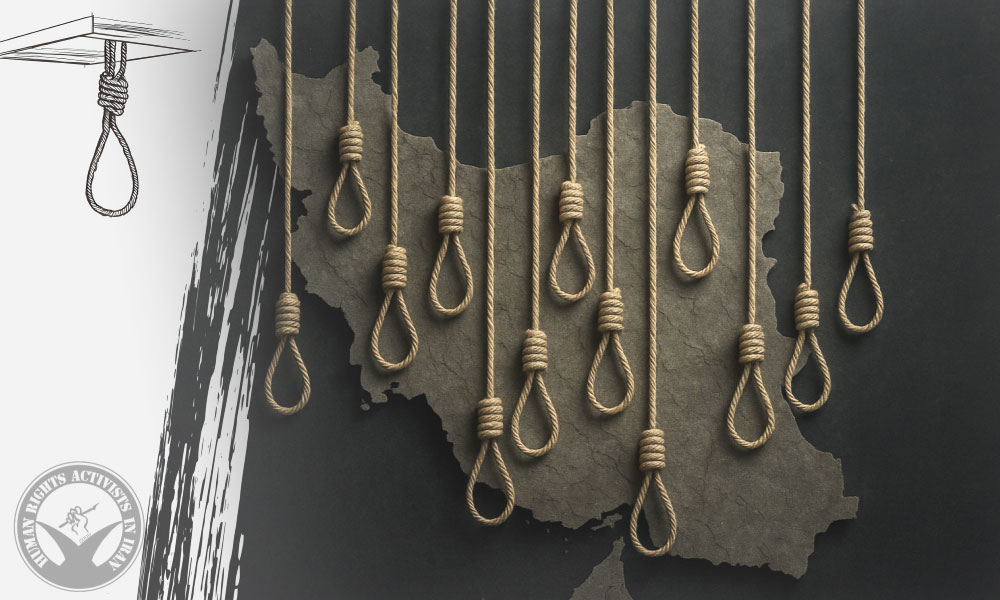
Execution of 24 Prisoners in Various Prisons Across Iran in Recent Days

HRANA – Amid an unprecedented surge in executions in recent months, HRANA and Iran Human Rights have reported the execution of dozens of prisoners in multiple prisons across Iran in recent days.

According to HRANA, on Sunday, November 9, a prisoner named Allahkaram Nazari was executed on murder charges in Dezful Prison. On the same day, Dariush Amini in Ilam Prison and Seyed Mohammad Haeri in Saveh Prison were also executed on murder charges.
Iran Human Rights additionally reported that Hassan Hajizadeh, 30, from Semnan, was executed in Semnan Prison. Hajizadeh had been arrested a year earlier on charges of possessing three kilograms of narcotics and later sentenced to death by the Revolutionary Court.

On Monday, November 10, HRANA reported the execution of Shahab Nazemi in Bojnourd Prison and two prisoners in Qazvin Prison, one of whom has been identified only as Shahriar, all on drug-related charges. On the same day, a prisoner identified as Ghasemi (first name unknown) was executed in Damghan Prison, Behzad Zeidi in Zanjan Prison, Noushad Mousavi on murder charges in Chabahar Prison, and Milad Nemati on murder charges in Jiroft Prison.
Iran Human Rights also reported the execution of Abdolrahman Mehrbani, 57, in Gorgan Prison, on murder charges. Mehrbani had been arrested about six years ago for murder during a dispute over farmland and was later sentenced to death.

On Tuesday, November 11, Shahin Saleh was executed in Birjand Prison on murder charges, Khodayar Joghtai in Sabzevar Prison (charges unknown), Omid Beqlani in Sepidar Prison, Ahvaz, on murder charges, Mostafa Al-Khamis on murder charges in Bushehr Prison, Kaka Morad Panahi on drug-related charges in Kashmar Prison, and Arash Karimi on drug-related charges in Ardabil Prison.
Iran Human Rights also reported that Vahid Fazeli, 42, was executed in Lakan Prison, Rasht, on murder charges.

On Wednesday, November 12, HRANA reported the execution of Mehdi Moridi in Aligudarz Prison and Nezam Saeedi in Kerman Prison, both on murder charges.
Iran Human Rights also confirmed the execution of Saeed Mokhtari, 35, from Jahrom, and Shahrokh Mostafavi, 40, a father of one from Karaj, in Dastgerd Prison, Isfahan, both on drug-related charges.

Finally, on Thursday, a prisoner named Ali Safa Niazi was executed in Shahrekord Prison on murder charges.

As of the time of this report, the executions of these prisoners have not yet been announced by prison officials or judicial authorities.

Execution of Six Prisoners in Various Prisons

HRANA – This report covers the execution of six prisoners in recent days on charges related to drug offenses and murder.

On October 25, a prisoner named Jamal Zare, a resident of Khorramabad, was executed in Bam Prison. According to information obtained by HRANA, Mr. Zare had previously been arrested on drug-related charges and later sentenced to death by the Revolutionary Court.

On October 27, a prisoner named Hamid Babaei was hanged in Sanandaj Prison. Based on HRANA’s information, Mr. Babaei had previously been arrested on a murder charge and sentenced to death by the Criminal Court.

On Sunday, November 2, another prisoner named Ashkan Mirali was executed in Dezful Prison. Mr. Mirali had also been arrested on a murder charge and later sentenced to death by the Criminal Court.

Yesterday, Monday, November 3, the death sentences of two prisoners convicted on drug-related charges were carried out in Adelabad Prison in Shiraz. HRANA has confirmed the identity of one of these prisoners as Mehran Hosseini.

Finally, HRANA has learned that yesterday, another prisoner named Yousef Khani, a resident of Varamin, who had also been sentenced to death on drug-related charges, was executed in Semnan Prison.

As of the time of this report, the executions of these prisoners have not been announced by prison authorities or official judicial sources.

In October alone, a total of 258 people were executed in Iran, a figure unprecedented since the beginning of this year.

Two Prisoners Executed in Dezful Prison

HRANA – At dawn on Sunday, October 12, two prisoners were executed in Dezful Prison.

HRANA has confirmed the identity of one of the prisoners as Hamid Abdali. Separately, Iran Human Rights has reported the identity of the other prisoner as Saadi Khalifeh, 36, a resident of Dezful.

According to information obtained by HRANA, Mr. Abdali had previously been arrested on charges of murder and later sentenced to death by the Criminal Court. Khalifeh was also arrested in 2018 on a murder charge and subsequently sentenced to death by the same court.

As of the time of this report, the execution of these prisoners has not been announced by prison officials or other relevant authorities.

According to HRANA reports, in 2024, only 6% of executions were announced by official bodies or domestic media outlets. Over the past five years, 77% of executions have gone unreported—commonly referred to as secret executions. In some of these cases, the lack of transparency is so severe that the death-row prisoners are denied even the chance for a final visit with their families.

More than Two Decades Behind Bars, Prisoner Profiles – No. 7: Gholamhossein Kalbi

HRANA – Many political and religious prisoners in Iran have endured over twenty years behind bars. To prevent their cases from fading from public memory in the flow of daily news, HRANA has launched a series of reports highlighting their situations. Each installment outlines the prisoner’s legal case, detention conditions, access to rights, and immediate needs.

In this report, HRANA, the news arm of Human Rights Activists in Iran, examines the latest situation of Gholamhossein Kalbi after more than twenty years of imprisonment.


Information Sheet

• Name: Gholamhossein Kalbi

• Year of arrest: 2000 (1379 in the Iranian calendar)

• Charge: Moharebeh (“enmity against God”) through membership in the Mojahedin-e Khalq Organization (MEK)

• Initial sentence: Death penalty

• Current sentence: Life imprisonment (commuted with one degree of reduction)

• Places of detention: After arrest, he spent 14 months in solitary confinement at The Ministry of Intelligence’s detention facility in Ahvaz, later held in Ward 209 and then Ward 350 of Evin Prison. In October 2007, following conviction, he was transferred to Mahshahr Prison, and later to Karoon Prison in Ahvaz. After the closure of Karoon Prison in February 2016, he was moved to Sheiban Prison in Ahvaz, where he remains incarcerated to this day.

• Furlough / Access: No reports of furlough in recent years; limited access to family and lawyer.

• Current status: Still serving a life sentence, despite legal changes that could allow for review or reduction.

Case Narrative and Judicial Process

On January 8, 2001, Gholamhossein Kalbi was arrested in Dezful on charges of membership in the Mojahedin-e Khalq Organization. In 2002, the Tehran Revolutionary Court sentenced him to death on the charge of Moharebeh. His sentence was later commuted to life imprisonment. While this commutation avoided the escalation of punishment, it placed him in a category of indefinite imprisonment, which in practice can extend for decades and limit access to review mechanisms.

Key Points in the Case:

• Severe security charge: The label of Moharebeh in political-security cases in Iran is among the heaviest accusations, usually carrying wide-ranging judicial and executive consequences.

• Sentence reduction: The initial death sentence and its conversion to life imprisonment show both the gravity of the charges and the scope for judicial intervention—but do not necessarily correct potential injustices in the trial process.

• Continued imprisonment despite legal changes: Although legal reforms have made retrial, sentence reduction, or conditional release possible in some cases, Kalbi remains in prison.

Detention Conditions and Transfers

Over his decades in prison, Kalbi has been moved between several facilities. After his arrest, he spent 14 months in solitary confinement at The Ministry of Intelligence’s detention facility in Ahvaz, then was transferred to Ward 209 and later Ward 350 of Evin Prison. In October 2007, he was moved to Mahshahr Prison, where he was held for several years. Despite his family residing in Mahshahr, he was later transferred to Karoon Prison in Ahvaz. After that prison was closed, in February 2016, he was transferred to Sheiban Prison in Ahvaz, where he has been held in various wards ever since.

In July 2021, after protesting prison conditions, officials at Sheiban Prison punished him by binding his hands and feet and leaving him for hours under the scorching sun. He was then transferred to a ward worse than the previous one, prompting him to go on hunger strike.

In April 2024, he was placed in Ward 5 of Sheiban Prison without regard for the principle of separation of crimes. Later, in November 2024, he was transferred to the prison’s security ward, under overcrowded conditions without adequate space for walking. He remains there today.

Observations on Standards of Detention

• Repeated transfers: Frequent movements between wards and prisons disrupt access to family, lawyer, and medical care.

• Solitary confinement as punishment: Kalbi spent 14 months in solitary confinement at The Ministry of Intelligence’s detention facility in Ahvaz. International standards require solitary confinement to be exceptional, time-limited, and supervised.

• Exposure to violence: Reports document both physical and verbal abuse during his imprisonment in Sheiban Prison. Notably, in July 2021, he was tied up and left under extreme heat as punishment for protesting prison conditions. Such incidents highlight the need for independent documentation and legal accountability.

• Medical neglect: Despite suffering from heart disease, hernia, dental infections, jaw and gum problems, spinal and neck arthritis, fungal infection leading to severe toenail disease, high cholesterol, chronic ear infection with hearing loss, Kalbi has consistently been denied transfer to hospitals or specialized treatment. “Access to medical care” is a fundamental right recognized in Iranian law, international treaties, and human rights standards. Systematic denial of medical care constitutes inhuman treatment and violates both the right to health and, in some cases, the right to life, often being used as an instrument of coercion and repression.

Access to Family, Lawyer, and Furlough

In recent years, Kalbi has not been granted furlough. His access to his family and lawyer has been reported as limited. These restrictions not only have psychological and social consequences but also undermine his ability to mount an effective legal defense or pursue retrial mechanisms.

Potential Legal Remedies (General Recommendations)

1. Retrial: Based on new evidence or substantive/procedural flaws in the original ruling.

2. Sentence reduction or conversion: If legal grounds exist.

3. Conditional release / suspension of sentence: Subject to conditions such as time served, good behavior, or health status.

4. Redress for rights violations during detention: Including access to healthcare, protection from violence, and regular visits.

5. International advocacy and documentation: If domestic remedies are blocked, use of international reporting and human rights mechanisms.


Summary Timeline

• 2001: Arrest; charge of Moharebeh through MEK membership.

• Initial sentence: Death; commuted to life imprisonment.

• Post-arrest: 14 months in solitary at The Ministry of Intelligence’s detention facility in Ahvaz, then Ward 209 and 350 of Evin.

• 2007 (1386): Transferred to Mahshahr Prison.

• 2016 (1394): Transferred to Sheiban Prison in Ahvaz.

• July 2021 (Tir 1400): Punitive torture reported—hands and feet tied, left for hours under scorching sun.

• April 2024 (Farvardin 1403): Moved to Ward 5 of Sheiban Prison without separation of crimes.

• November 2024 (Aban 1403): Transferred to security ward of Sheiban Prison.

• Recent years: No furlough, denial of medical care, restricted access to family and lawyer.

• Current status: Serving life sentence despite potential legal changes allowing review.


Conclusion and Importance of Case Review

Despite legal changes that allow retrials, sentence reductions, or conditional release for those convicted of Moharebeh, Kalbi remains imprisoned. His case illustrates the plight of long-term political-security prisoners in Iran, whose files deserve review as a crucial step toward freedom and justice.

His situation highlights both the denial of fundamental rights during detention (furlough, visits, legal representation) and the urgent need to use all domestic and international legal mechanisms for review and reduction of such lengthy sentences.

Urgent Needs

Regular, non-discriminatory access to lawyer and family.

Independent medical evaluation, especially regarding torture allegations and chronic illnesses.

Consideration for retrial or other legal remedies for sentence reduction/termination under current laws.

Enforcement of prison regulations regarding calls, visits, and furlough.

Adequate medical services and treatment.


About this Series

This report is part of the “Two Decades Behind Bars” series, which aims to document the cases of long-term prisoners and to highlight the collective responsibility to ensure their visibility and pursue their rights.

Three Prisoners Executed in Nahavand, Dezful, and Hamedan

HRANA-Between Monday and Wednesday, August 11–13, three prisoners were executed in the prisons of Nahavand, Dezful, and Hamedan.

According to HRANA, on Monday, Saber Akbari, who had been arrested on a murder charge, was executed in Nahavand Prison. He had been sentenced to death by the Criminal Court.

On Tuesday, Dezful Prison carried out the execution of Hamid Sarlak, also convicted of murder.

On Wednesday, another prisoner, identified as Javad Esfandiari, was executed in Hamedan Prison. He had previously been arrested on drug-related charges and sentenced to death by the Revolutionary Court.

At the time of this report, the executions have not been announced by prison authorities or official sources.

In 2024, according to 812 reports compiled by HRANA, the Iranian regime executed 930 individuals in its prisons—marking the highest number of executions in the past 12 years. Despite the scale of these executions, prison officials and other relevant authorities publicly acknowledged only 6% of them, highlighting the regime’s lack of transparency and accountability.

Subscribe to Our Newsletter

Now is definitely not the time to stop reading!

Three Prisoners Executed in Shiraz, Kerman, and Dezful

In recent days, three prisoners were executed in the prisons of Kerman, Dezful, and Shiraz on charges related to drug offenses and murder.

On Monday, authorities at Dezful Prison carried out the execution of a prisoner named Reza Abdoli. According to information received by HRANA, Mr. Abdoli had previously been arrested on murder charges and was later sentenced to death by the criminal court.

On the same day, a prisoner named Sanjar Navabi was executed in Kerman Prison on drug-related charges. His sentence had been issued by the Revolutionary Court.

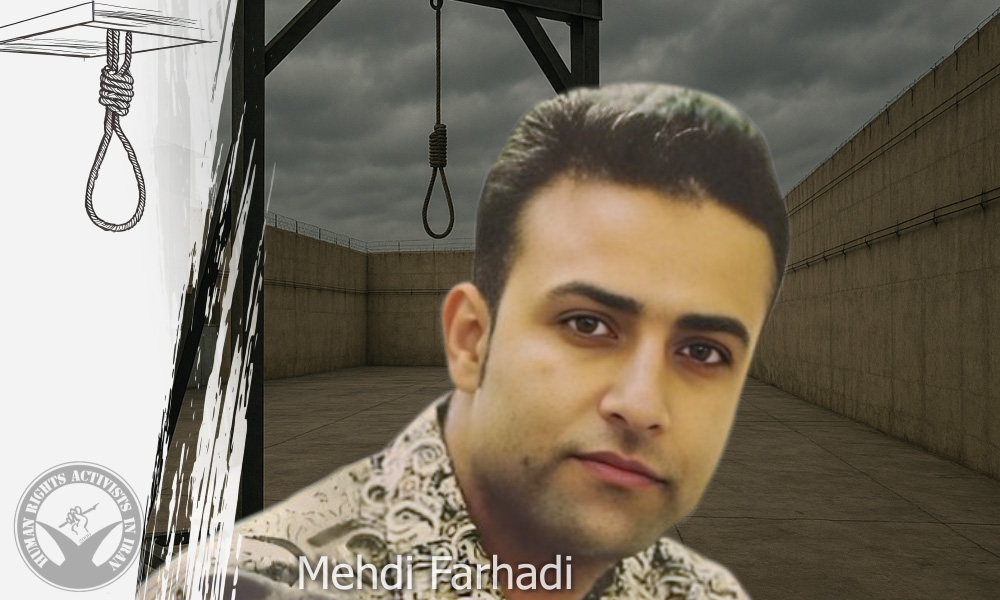
Finally, yesterday, May 28, Adelabad Prison in Shiraz witnessed the execution of a prisoner named Mehdi Farhadi. According to information received by HRANA, Mr. Farhadi had previously been arrested on murder charges and sentenced to death by the criminal court.

As of the time of this report, none of these executions have been officially announced by prison officials or responsible institutions.

According to HRANA reports, in 2024, only 6% of executions were announced by official bodies or domestic media outlets. Over the past five years, 77% of executions have gone unreported—commonly referred to as secret executions. In some of these cases, the lack of transparency is so severe that the death-row prisoners are denied even the chance for a final visit with their families.

Dezful Artist Peyman Yousefi Sentenced to One Year in Prison

HRANA News Agency – Peyman Yousefi, head of the “Sol-La” music group in Dezful, has been sentenced to one year in prison by a criminal court in Dezful.

According to HRANA, the news agency of Human Rights Activists in Iran, Yousefi received the one-year sentence in absentia from Branch 104 of the Dezful Criminal Court II in February–March 2025.

The charge against him is “producing, sending, distributing, and publishing obscene and vulgar content.”

Yousefi stated that the case was opened following a complaint filed by the Public Security and Morality Police. However, when he visited the police office to inquire about the matter, officials there claimed to have no knowledge of the case.

Peyman Yousefi leads “Sol-La,” a music group based in Dezful. In 2021, the group released a music video filmed at the historic Sanee’i House in Dezful. Shortly after the video’s release, Dezful’s police chief announced that those involved in the video had been summoned and a legal case had been opened against them.

Legal Uncertainty for Four Political Detainees in Masjed Soleyman

HRANA News Agency – Karim Jalili, Moslem Alipour, Ali Soltani, and Hajat (also referred to as Hojjat) Susani, political defendants involved in a shared case, have been held in legal limbo for over 50 days in Masjed Soleyman Prison.

HRANA has learned that Branch 2 of the Masjed Soleyman Prosecutor’s Office has formally charged the four individuals, who share a joint case file, with offenses including “propaganda against the regime” and “insulting officials.”

A source close to the family of one of the defendants confirmed the report and told HRANA: “Their case has been transferred to the Dezful County Judiciary, but the presiding court branch has yet to be determined. They’ve been told that the court branch and hearing date will be set this week or next. According to officials, the hearing will be held remotely due to their detention in Masjed Soleyman Prison.”

Moslem Alipour was arrested by security forces in Masjed Soleyman on March 10, 2025. Hajat Susani was detained the following day, and Karim Jalili and Ali Soltani were arrested separately on March 12, all in the same city. Following their arrests, all four were transferred to Masjed Soleyman Prison.

Karim Jalili is 40 years old, Ali Soltani is 23, and both Moslem Alipour and Hajjat Sousani are also residents of Masjed Soleyman.

Over 5 Executions Per Day on Average: 26 Prisoners Executed Across Iran Since Start of the Week

HRANA News Agency – Since the beginning of this week, Iranian prisons have witnessed a significant surge in executions. Over the past five days, at least 26 prisoners—mostly convicted of murder and drug-related offenses—have been executed across various prisons in Iran. Among them were five prisoners executed on political-security charges.

According to HRANA, the news agency of Human Rights Activists in Iran, executions in Iranian prisons have sharply increased in recent days.

Since the start of the week, at least 26 prisoners have been executed in Ghezel Hesar (Karaj), Shiraz, Kermanshah, Gonabad, Shahrud, Vakilabad (Mashhad), Aligudarz, Bukan, Dezful, Qom, Zanjan, and Sepidar (Ahvaz) prisons. This averages over five executions per day. Vakilabad Prison alone accounted for at least 10 executions in a single day, the highest recorded among these facilities.

On Wednesday, April 9, four prisoners—Bahram Hodavand-Khani, Salar Amir Jalali, Abolfazl Karimi, and another unidentified individual—were executed in Ghezel Hesar Prison for separate murder cases. Also on Wednesday, Esmail Dahmardeh, convicted on drug-related charges by the Revolutionary Court of Gonabad, was executed in Gonabad Prison. Gholamreza Pardakhteh faced a similar fate in Shahroud Prison. Another prisoner, Kambiz Fathi, was hanged in Kermanshah Prison for murder. Two more prisoners, Vahid Ashouri (30) and Afghan national Saud Mirzaei, were executed in Shiraz Prison, both convicted of murder.

On Tuesday, April 8, at least 10 prisoners—including three women—were executed in Vakilabad Prison, Mashhad. Five of them—Farhad Shakeri, Abdolhakim Azim Gorgij, Abdolrahman Gorgij, Taj Mohammad Khormali, and Malek Ali Fadaie Nasab—were executed on political-security charges. Four others, including two women, were executed on drug-related charges. HRANA identified two of them as Ahmad Sanaie and Mohammadreza Damideh. Additionally, one woman convicted of murder was also executed at the same facility.

On Monday, April 7, Shahram Goodarzi (36) and Taher Shabani (35) were executed in Aligudarz Prison in separate murder cases. That same day, Seyed Taha Hassani, a prisoner from Bukan, was executed in Bukan Prison, and Hamid Abdouli was hanged in Dezful Prison—both convicted of murder.

On Sunday, April 6, a prisoner named Samir Ghasemi was executed in Qom Prison. He had been sentenced to death by the criminal court for murder.

On Saturday, April 5, Hossein Molazadeh (29), convicted on drug charges, was executed in Zanjan Prison. Simultaneously, Zahir Shamsi (32), a father of a five-year-old girl from Dezful, was executed in Sepidar Prison, Ahvaz. Shamsi had been arrested four years ago for the alleged murder of his cousin.

This recent escalation in executions has sparked serious concerns over widespread violations of the right to life in Iran. Human rights organizations consider Iran’s extensive use of the death penalty to be in stark violation of its international obligations and have called for an immediate moratorium on capital punishment.

A Prisoner Executed in Sepidar Prison in Ahvaz

HRANA News Agency – At dawn on Saturday, April 5, the death sentence of a prisoner previously convicted of murder was carried out in Sepidar Prison in Ahvaz.

Iran Human Rights has identified the prisoner as Zahir Shamsi, 32 years old, a resident of Dezful and father of a five-year-old daughter.

According to the report, Mr. Shamsi was arrested four years ago on charges of murdering his cousin and was later sentenced to death by the judiciary. Before his arrest, he worked as a tile and ceramic installer.

As of the time of this report, the execution has not been officially announced by prison authorities or relevant institutions.

In 2024, the Department of Statistics and Publication of Human Rights Activists in Iran documented 812 cases related to the right to life, including the sentencing of 214 individuals to death and the execution of 930 individuals. Among these, 4 executions were carried out in public. Of those executed, 818 were male, 26 were female, and 5 were juvenile offenders—individuals under 18 years old at the time of their alleged crimes.