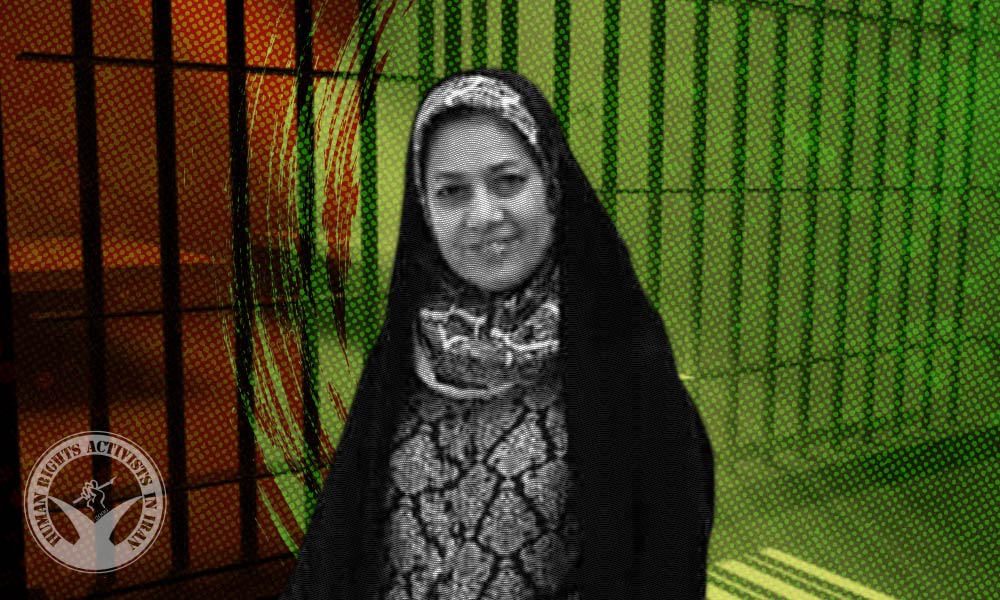
Political Prisoner Arezoo Ghasemi Released on Leave from Evin Prison

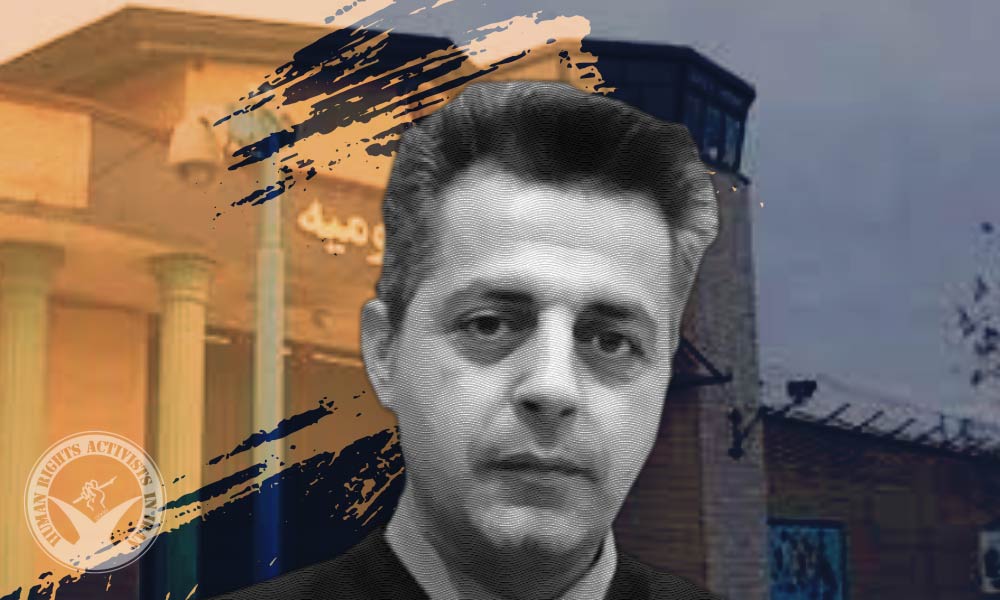
On Wednesday, October 14, political prisoner Arezoo Ghasemi was released on furlough from Evin Prison in Tehran.

According to HRANA, the news agency of Human Rights Activists, Ghasemi has been enduring her one and a half year prison sentence since August 9, 2020. On July 20 of this year, after testing positive for COVID-19, she was also granted furlough.

Arezoo Ghasemi was arrested by security forces amid nationwide protests in November 2019. She was released on bail until August 9, 2020, when she was sent to Evin Prison to serve her sentence.

The Branch 28 of the revolutionary court, headed by Judge Mohammad Moghayeseh sentenced her to three years imprisonment on a charge of “assembly and collusion against national security”. This sentence was subsequently reduced to one and a half years after applying the “Punishment Reduction Law”.

During the wave of protests of November 2019 in dozens of cities, which broke out initially in protest of an unprecedented fuel price surge, hundreds were killed and seven thousand were arrested by regime forces.

Since Ghasemi will have served out her term by the end of the furlough, she will not return to prison.

Two Inmates Sentenced to Death, Two Other Spared from Execution

Two inmates were recently sentenced to death in Tehran and Gorgan, while reportedly two other inmates on death-row were recently spared from execution.

According to HRANA, the news agency of Human Rights Activists, quoting IRIP News Agency, on Wednesday, October 13, the Judiciary spokesperson announced the conviction of two inmates to the death penalty in Tehran and Gorgan. In another report, he announced that two on death-row inmates were spared from execution.

Without providing any details about the court, which has issued these sentences, Zabihollah Khodaeyan commented, “these inmates have been convicted for their association with a network of human traffickers.” However, since other the defendants of this case, have been convicted to lengthy prison terms, he added that “the verdict is not final”.

According to Iran Newspaper, an inmate in Greater Tehran Prison was spared from execution after he could exact satisfaction from the victim’s family in a meeting. The inmate, named Shayan, had been previously convicted for stabbing a man to death.

According to Rokna, In Gorgan, a 30-year-old man was spared from execution by exacting satisfaction from the victim’s family through the mediation of deputy of the criminal executive branch in Golestan Province and members of Dispute Resolution Council. As Chief Justice of Golestan Province pointed out, this is the fourteenth death-row inmate who has been spared from execution this year by the mediation of the Dispute Resolution Council.


Baha’i Citizen Sheida Taeed Released on Bail

On Monday, October 11, Baha’i citizen Sheida Taeed, a resident of Qaemshahr city in Mazandaran Province, was released on a bail of 900 million Tomans (approx 33,000 dollars)  from a security detention center in this city.

According to HRANA, the news agency of Human Rights Activists, Taeed had been arrested by security forces at her home on September 23, 2021, and then transferred to an unknown location. During the arrest, officers inspected her home and confiscated a number of her belongings, including her cell phone, electronics, books, photographs, and manuscripts.

According to an informed source, the security forces initially put Farideh Taeed, Sheida’s elderly mother, in the car as well, and dropped her off somewhere along the road.

Sheida Taeed had been detained and convicted once before because of her faith. She was arrested in the city of Noor in January of 2013 and was finally sentenced to one year in prison in 2015, which she served out in Babol Prison.

According to unofficial reports, by estimated there are more than 300,000 Baha’is in Iran. While the constitution recognizes Islam, Christianity, Judaism, and Zoroastrianism as accepted religions (People of Book, as articulated in Sharia law), it denies recognizing the Baha’i faith, which conclusively leads to the systematic violation of their rights.

Baha’i citizens are denied the right to exercise their religion. This systematic deprivation stands in violation of Article 18 of the Universal Declaration of Human Rights and Article 18 of the International Covenant on Civil and Political Rights, which both affirm that everyone has the right to freedom of thought, conscience, and religion.

Inmate Hanged in Dastgerd Prison in Isfahan

On Monday, October 13, an inmate who had previously been sentenced to death on a charge of murder was executed in Dastgerd Prison in Isfahan.

According to HRANA, the news agency of Human Rights Activists, the executed inmate has been identified as Ismail Ghassabi.

The most recent report of the Statistics and Publication Center of the Human Rights Activists in Iran (HRA) states that between October 8 of 2020 and October 9 of 2021, at least 266 citizens were executed and 90 citizens were sentenced to death.

As the report points out, Iran’s judicial authorities do not publicly announce over 82% of carried-out executions, dubbed as “secret executions” by human rights organizations.

Ghassabi’s execution has not been announced by official sources in Iran as of this writing.

Political Prisoner Mojgan Kavousi Transferred Back to Evin Prison from Kachooie Prison

On Wednesday, October 13, political prisoner Mojgan Kavousi was sent back to Evin Prison from Kachooie Prison in Karaj.

According to HRANA, the news agency of Human Rights Activists, Kavousi was relocated to Karaj police detention center a while ago, and from there to Kachooie Prison.

In a phone call with her family, Kavousi informed them about this relocation.  The reason for her transfer to Kachooie Prison is still unknown.

On July 26, 2021, Branch 28 of the appellate court in Mazandaran Province issued an order to transfer the political prisoner to a prison in Alborz Province for the remainder of her sentence.

“Due to  COVID-related restrictions making family visitation difficult, Mrs Kavousi asked for transferring to Noshahr where her family are living,” an informed source told HRANA. “On July 13, 2021, they transferred her to Noshahr but after spending one-night in police detention centre, they sent her back to Tehran. Considering that her family are residing in either Tehran or Noshahr, it is not clear why she should be transferred to a prison in Alborz Province.”

On November 20, 2019, Mojgan Kavousi was arrested by security forces amid nationwide protests in the mid-fall of the year, from her home in Noshahr. After being held three weeks in detention, she was sent to Noshahr Prison. On December 19, 2019, she was released on bail.

The Revolutionary Court in Noshahr sentenced her to 6 months on a charge of “the propaganda against the regime”, 33 months on a charge of “membership in opposition parties” and 30 months on a charge of “provoking to disturb the public order”. During the appeal process, the sentence was increased by seven months due to the influence of the prosecutor.

Mojgan Kavouci is a writer, researcher and follower of Yarsanism.

Subscribe to Our Newsletter

Now is definitely not the time to stop reading!

Judiciary Announced Shahin Naseri’s Cause of Death as “Drug Poisoning”

In a recent news conference,  Judiciary spokesperson Zabihollah Khodaeyan claimed the Shahin Naseri’s death in prison was caused by ” drug poisoning”, without providing any details.

According to HRANA, the news agency of Human Rights Activists, quoting IRNA, Shahin Naseri was an eyewitness to the torture of Navid Afkari. On September 21, 2021, he went to Prison healthcare of the Greater Tehran Prison for treatment, where he died mysteriously after 45 minutes.

“In the previous meeting, we said that forensic results have not yet been announced, ” Khodaeyan said in regard to Naseri’s death, “but recently forensic has detected drug poisoning as the cause of death.”

According to fellow inmates and friends close to Shahin Naseri, who had talked to him before his death, he did not express any depressive symptoms or any intention to commit suicide. Rather, he was concerned about his life and health due to the threats he had received in solitary confinement.

After testifying about the torture of Navid Afkari, he was exiled to the Greater Tehran Prison where he was held in solitary confinement for a while.

Two days after Shahin Naseri’s death, Public Relations of Tehran Prisons General Administration said in a statement,  “The inmate was urgently transferred to Prison healthcare, where he was under the resuscitation operation for 45 minutes, but despite the efforts of the medical staff, he died.”

In a voice message recorded before the death of Navid Afkari, Shahin Naseri reveals a part of tortures his fellow inmate has gone through.

“One day when they were taking me to the police station in Shiraz, in the corridor, I heard screams, begging and obscenities,” Naseri says in the recording.  “When I passed along the torture place, I saw that two undercover cops were beating on his face with batons.”

An informed source close to his family told HRANA that in coincide with the anniversary of Navid Afkari’s execution, they relocated him to an unknown location. Based on threats he had received from security forces, we thought he was transferred to a location of a security unit. But a few days ago, we found out that he was held somewhere in the Greater Tehran Prison. Since he did not have any acute background diseases, his death is quite suspicious.

“I heard clearly that they told him that you should write down and confess whatever we tell you,” Naseri added in the recorded message. “When I went to Security Court for testifying, I told the Branch Investigator about his torture. He said with slanderous words that ‘you are meddling in a security case. I will force the agents to file a complaint against you for these accusations. If you play with fire you are going to get burnt.'”

Navid Afkari was an Iranian wrestler who, despite serious ambiguities in his case and worldwide outcry to halt the execution, was executed on September 13, 2019, in Adelabad Prison in Shiraz.

Morteza Parhizgar Released on Probation from Vakilabad Prison

On Sunday night, October 10, political prisoner, Morteza Parhizgar was released on probation from Vakilabad Prison in Mashhad.

According to HRANA, the news agency of Human Rights Activists, Parhizgar was released after spending three years and nine-month in prison and receiving 74 lashes.

On December 30, 2017, Morteza Parhizgar was arrested by security forces amid protests across the country.

After nine months, in December 2018, Branch 131 of criminal court and Branch 4 of the Revolutionary Court of Mashhad, each in a separate case, sentenced him to nine years imprisonment and flogging of 74 whips. They convicted him  on the charges of ” offensive statements against the supreme leader of Iran”,  ” disrupting public order through participation in unlawful assemblies”, “assembly and collusion in the purpose of acting against national security”, ” propaganda against the regime “, “arson of police motorcycles in the purpose of opposing the regime.”

During the nationwide protests in December 2017, numerous citizens in various cities across the country were arrested and interrogated. At least 35 people were killed by police and five thousand were detained.

Inmate Executed in Ghayen Prison on Drug-Related Charges

On Monday morning, October 11, 2021, an inmate who had previously been sentenced to death on drug-related charges was executed in Ghayen Prison.

According to HRANA, quoting The Baloch Activists Campaign, the inmate has been identified as Ibrahim Rakhshani, a native of Zabol.

According to the last report of the Statistics and Publication Center of the Human Rights Activists in Iran (HRA), between October 8 of 2020 and October 9 of 2021, at least 266 citizens were executed and 90 citizens were sentenced to death.

As the report points out, Iran’s judicial authorities do not publicly announce over 82% of carried-out executions, dubbed as “secret executions” by human rights organizations.

This execution has not been announced by official sources in Iran as of this writing.

14 Political Prisoners Punitively Transferred to Locked-Door Ward of Greater Tehran Prison

Following a beating of political prisoners by a mob of fellow inmates of violent crimes in the Greater Tehran prison, the official authorities forced 14 of these political prisoners to relocate to a ward with locked doors and inadequate conditions.

According to HRANA, the news agency of Human Rights Activists, these political prisoners were housed in section 1, type 2 of the Greater Tehran prison. They were said that if they refuse to relocate, Special Prison Guards would take action to relocate them by force.

The inmates have been identified as Hossein Ghasghaie, Mehran Delfan-Azari, Meysam Gholoami, Hojatollah Rafei, Reza Salavati, Morteza Olangi, Shahab Soltanian, Dawood Abdollahi, Shapur Ehsani-rad, Pouya Ghobadi, Ismail Gerami, Akbar Bagheri, Alireza Farshi and Akbar Faraji.

The day after this incident, in response to this news, the head of state prisons and Security and Corrective Measures Organization, Muhammad Mehdi Haj-Mohammadi confirmed the news.

“In regard to inaccurate news of beating in the Greater Tehran prison, I would say that not intellectuals but criminals belong to the prison,” Haj-Mohammadi wrote on his personal page on social media. “Despite all controls, tensions and quarrels happen.”

On Friday, October 8, the above-mentioned prisoners were beaten by a mob of prisoners of violent crimes. Contrary to the laws of the prison, these political prisoners were being housed in the same ward as the prisoners of violent crimes. Reportedly, Pouya  Ghobadi and Akbar Bagheri were severely injured.


Juvenile Offender Arman Abdolali in Imminent Danger of Execution in Rajai Shahr Prison

Arman Abdolali, who was previously sentenced to death for a murder charge from when he was a child, is in imminent danger of execution in Rajai Shahr Prison.

According to HRANA, the news agency of Human Rights Activists, despite his denial of having committed the crime, and despite the fact that the victim’s body was never found, the criminal court of Tehran Province sentenced Abdolali to death. The verdict was upheld twice by the supreme court of Iran.

Abdolali was reportedly transferred to a solitary confinement cell, as is the protocol for inmates on death row in the days before their execution, yesterday. In July of this year, his lawyer had informed about the forwarding Abdolali’s case to the Executive Branch of Tehran Criminal Court.

“Iran continues to use the death penalty for crimes committed by people under the age of 18, in violation of its obligations under the International Covenant on Civil and Political Rights and the Convention on the Rights of the Child,” Amnesty International expressed in a statement, calling for Iranian authorities to halt Abdolali’s execution.

In 2013, when he was underage, Arman Abdolali was indicted on the charge of murdering his girlfriend, Ghazaleh Shakur. During interrogation, he confessed to killing her but later on, he denied the charges and pleaded his innocence.

After the first confirmation of the sentence, Abdolali’s lawyer claimed him as innocent and asked for a retrial, which was granted by the Supreme Court of Iran. In the second retrial, the death sentence was upheld after six months both by the Supreme Court of Iran and thereafter by an appellate court.